Warm Water Fishing Techniques for New Mexico
Fishing in New Mexico's warm waters can be incredibly rewarding, but it often presents a unique set of challenges compared to the serene pursuit of trout in cooler streams. The scorching summer sun, fluctuating water levels, and the sometimes-finicky nature of species like bass, catfish, and walleye can leave even seasoned anglers scratching their heads. This comprehensive guide will dive deep into the strategies, gear, and local insights you need to master warm water fishing across the Land of Enchantment.
Understanding New Mexico's Warm Water Fisheries
New Mexico might be famous for its high-desert trout streams and pristine mountain lakes, but a vast and exciting warm water fishery exists across the state's larger reservoirs and lower elevation rivers. These waters teem with species that thrive in warmer temperatures, offering diverse opportunities for anglers willing to adapt their approach.
What Defines Warm Water in New Mexico
When we talk about "warm water" in New Mexico, we're generally referring to lakes and rivers where surface temperatures consistently rise above 60-65 degrees Fahrenheit, often pushing into the 70s and 80s during the peak summer months. These conditions are typically found at lower elevations and in larger, shallower impoundments. Unlike the cold, oxygen-rich environments preferred by trout, these waters support species that can handle warmer temperatures and often lower dissolved oxygen levels, especially in deeper thermoclines. Understanding the thermal stratification of these lakes is crucial; as the surface warms, a thermocline forms—a layer where the temperature drops rapidly. Fish will often orient themselves above or within this layer where conditions are most favorable.
Key Warm Water Lakes and Rivers
New Mexico boasts several fantastic warm water destinations, each with its own character and resident fish populations. Among the most popular are the sprawling Elephant Butte Lake Fishing Guide, the diverse Conchas Lake Fishing Guide, and the expansive Ute Lake. Elephant Butte, for instance, is New Mexico's largest lake, a veritable inland sea offering incredible opportunities for striped bass, largemouth bass, walleye, and catfish. Conchas Lake, nestled in the northeastern part of the state, is renowned for its walleye, crappie, and both species of bass. Ute Lake, another eastern gem, is a consistent producer of walleye and largemouth bass. Even rivers like sections of the Rio Grande, especially below major impoundments, offer excellent warm water fishing for catfish and various panfish. Other notable spots include Sumner Lake and Santa Rosa Lake, both offering great bass and walleye action.
Primary Warm Water Species Targets
The diversity of warm water species in New Mexico is impressive. You'll primarily be targeting black bass (largemouth and smallmouth), various species of catfish (channel, flathead), walleye, crappie, and sunfish. In some unique situations, like at Elephant Butte, you'll also find a robust population of striped bass, which offer a powerful fight. Each of these species has distinct behaviors, preferred habitats, and feeding patterns that necessitate different techniques. For example, largemouth bass often lurk in shallow, cover-rich areas, while walleye prefer deeper, rocky structures. Learning the habits of your target species is the first step to consistent success. To get a comprehensive overview, you might want to check out the guide on Fish Species Found in New Mexico.
Essential Gear for Warm Water Success
Having the right equipment can make all the difference when tackling New Mexico's warm water fisheries. From robust rods and reels to a diverse tackle box and crucial safety accessories, preparing your gear ensures you're ready for whatever the lake or river throws at you.
Rods, Reels, and Lines for Warm Water
For most warm water applications in New Mexico, you'll want a versatile spinning or baitcasting setup. A medium-heavy action rod, around 6'6" to 7'6" in length, will handle everything from casting crankbaits for bass to jigging for walleye. Paired with a sturdy reel, capable of holding 100-150 yards of line, you'll be well-equipped. For line, a general-purpose 10-15 pound monofilament or fluorocarbon is a great starting point, offering a good balance of strength and sensitivity. However, if you're targeting larger species like flathead catfish or Elephant Butte striped bass, consider stepping up to 20-30 pound braid with a fluorocarbon leader for maximum power and abrasion resistance. Braided lines, easily found on platforms like Amazon, offer superior sensitivity and casting distance, making them a popular choice for many experienced anglers.
Must-Have Lures and Baits
Your tackle box for warm water fishing should be well-stocked with a variety of lures and baits. For bass, an assortment of soft plastic worms, creature baits (like those from Zoom or Strike King), spinnerbaits, and crankbaits will cover most situations. Consider different colors and sizes to match the local forage and water clarity. For walleye, jigs tipped with minnows or grubs, crankbaits, and bottom bouncers with crawler harnesses are perennial favorites. Catfish anglers will rely heavily on natural baits such as chicken liver, shrimp, hot dogs, or stink baits, though cut bait from local shad can also be incredibly effective. Don't forget a selection of hooks (worm hooks, treble hooks, circle hooks), sinkers, and swivels to complete your rigging options. It’s always a good idea to research Best Lures for New Mexico Bass before heading out.
Accessory Gear for Comfort and Safety
Beyond your primary fishing setup, a few key accessories will significantly enhance your warm water fishing experience. Sun protection is paramount in New Mexico's intense climate: wide-brimmed hats, polarized sunglasses, and long-sleeved UPF-rated shirts are a must. A good cooler stocked with plenty of water and ice is essential to stay hydrated and keep any harvested fish fresh. Pliers, a measuring tape, and a sturdy landing net are vital for handling fish safely and efficiently. If you plan to be out on the water in a boat or kayak, ensure you have all the required safety equipment, including life jackets for everyone on board. For navigation and finding those hidden structures, a reliable fish finder can be a game-changer, helping you locate thermoclines and schooling fish.
Top Techniques for Different Warm Water Species
Warm water fishing is all about adapting your approach to the specific species and conditions. What works for bass might not entice a walleye, and a catfish couldn't care less about your fancy crankbait. Here's a breakdown of effective techniques for New Mexico's most popular warm water residents.
Bass Fishing Strategies Largemouth and Smallmouth
Both largemouth and smallmouth bass are abundant in New Mexico's warm waters, each requiring slightly different tactics.
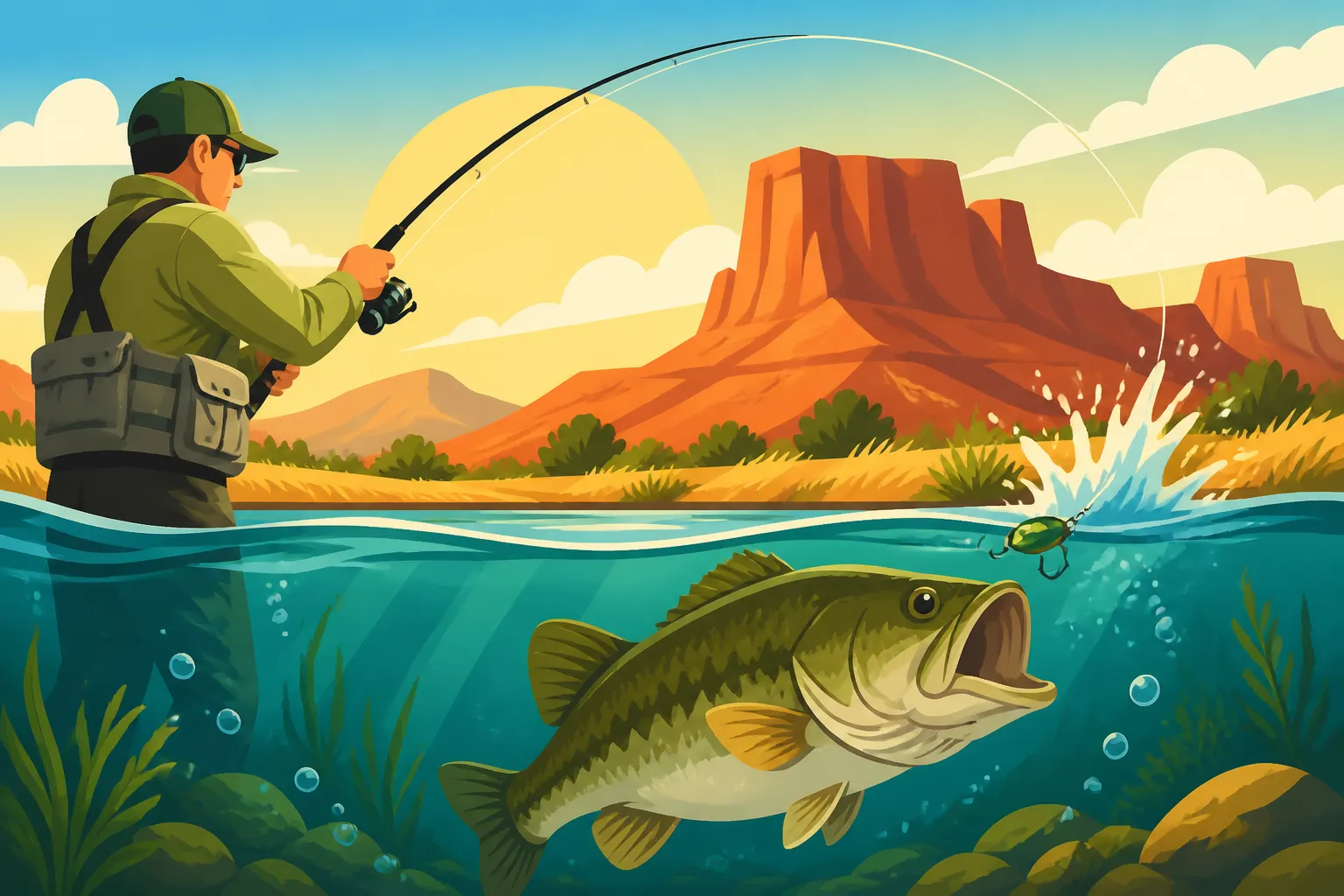
- Largemouth Bass: These ambush predators love cover. Focus your efforts around submerged brush piles, weed beds, rocky points, and standing timber in lakes like Elephant Butte, Conchas, and Ute. Topwater lures like poppers and frogs work wonders in low light or over thick vegetation. As the day heats up, switch to soft plastics fished on a Texas rig or Carolina rig, slowly working them through structure. Crankbaits are excellent for covering water and targeting bass holding near drop-offs or submerged humps. You'll find more in-depth strategies in the Largemouth Bass Fishing in New Mexico guide.
- Smallmouth Bass: Known for their hard fights and preference for rocky habitats, smallmouth bass are often found in clearer, deeper sections of reservoirs, particularly around rocky shorelines, bluffs, and points. Small crankbaits, jerkbaits, and tube jigs are highly effective. Cast parallel to rocky banks or fan-cast over rocky flats, letting your lure bounce along the bottom. They are often schooling fish, so where you catch one, there are likely more.
Catfish Tactics for Rivers and Lakes
Catfish are a favorite among many New Mexico anglers due to their abundance and excellent eating quality.
- Channel Catfish: These opportunistic feeders are widespread across the state's warm water lakes and rivers, including the Rio Grande and its tributaries. They respond well to a variety of smelly baits. Try fishing chicken liver, cut bait (like shad or carp), or prepared stink baits on a Carolina rig or a simple bottom rig with a weight and a circle hook. Focus on deeper holes in rivers, or flats and points in lakes, especially during evening and nighttime hours when they become more active. Look for areas where creeks or washes feed into the main body of water, as these can concentrate food.
- Flathead Catfish: The true giants of New Mexico's catfishing scene, flatheads prefer live bait. Small sunfish, bluegill, or carp are excellent choices. They inhabit deeper, slower-moving sections of rivers and large reservoirs, often associating with large submerged logs or rock piles. A heavy-duty rod and reel with strong braided line are essential, as these fish can pull with incredible power. Fishing for these monsters is often a waiting game, so patience is key. For more details on targeting these delicious bottom dwellers, see the Catfish Fishing in New Mexico article.
Walleye and Crappie Approaches
Walleye and crappie are highly sought after for their delicate flavor and sporting qualities.
- Walleye: These elusive, light-sensitive predators are abundant in lakes like Conchas, Ute, and Elephant Butte. During the day, they often hold in deeper water, preferring rocky points, humps, and submerged timber. Trolling with crankbaits or bottom bouncers with crawler harnesses is a highly effective way to cover water and locate schooling walleye. Jigging with blade baits or spoons can also be productive when fish are concentrated. In low light conditions, such as dawn, dusk, or cloudy days, walleye may move shallower. A fish finder is invaluable for locating these fish, especially when they're hugging the bottom.
- Crappie: Known for their schooling behavior and papery mouths, crappie are often found around brush piles, submerged trees, and bridge pilings. They respond well to small jigs tipped with minnows or soft plastic grubs, fished under a bobber. In lakes like Conchas, finding a productive brush pile can lead to catching dozens of these tasty panfish. As with walleye, crappie tend to be more active during cooler parts of the day or in low light. Ultralight gear is perfect for crappie fishing, providing excellent sensitivity for their subtle bites.
Seasonal Considerations and Best Times
Fishing New Mexico's warm waters isn't a one-size-fits-all endeavor; fish behavior changes dramatically with the seasons. Understanding these shifts is crucial for consistent success. The New Mexico Fishing Season Dates and Limits offers valuable context for planning your trips around peak activity.
Spring Warm-Up and Pre-Spawn Activity
As winter gives way to spring, the warming water temperatures trigger a surge in fish activity. This is arguably one of the best times for warm water fishing. Bass and crappie begin moving from their deeper wintering grounds to shallower coves and flats in preparation for spawning. This "pre-spawn" period sees fish feeding aggressively to build energy.
- Bass: Look for bass in water temperatures ranging from 50-60 degrees. Lipless crankbaits, spinnerbaits, and jigs fished around developing weed beds and warming rock banks can be incredibly productive. As temperatures climb into the low 60s, bass will move onto beds, and sight fishing with soft plastics becomes a popular, albeit challenging, technique.
- Walleye & Crappie: Walleye will also move into shallower, rocky areas to spawn, making them more accessible to shore anglers or those casting from boats. Crappie will school up in tight groups around brush and submerged structures in relatively shallow water before moving to spawn. Small jigs and minnows are highly effective during this period.
Summer Heat and Deep Water Tactics
New Mexico summers are intense, and the heat significantly impacts warm water fishing. As surface temperatures soar into the 80s, many fish species move to deeper, cooler, more oxygenated water or become nocturnal. This is where your deep-water tactics truly shine. The article on Fishing New Mexico Reservoirs in Summer Heat provides even more specialized advice.
- Deep Water Focus: Use your fish finder to locate thermoclines and submerged structures like humps, ledges, and channels. Bass will often suspend over deep water or hug the bottom in 20-40 feet of water. Drop shots, deep-diving crankbaits, and heavy jigs are essential.
- Nocturnal Fishing: Catfish, and often walleye and even bass, become much more active after sunset when water temperatures drop. Night fishing can be incredibly productive, especially for large channel and flathead catfish in the Rio Grande or big reservoirs. Use glow-in-the-dark lures or fish with natural baits.
- Early Morning/Late Evening: If you prefer fishing during daylight, target the first few hours after sunrise and the last few before sunset. These cooler periods often see fish moving shallower to feed before retreating to the depths.
Fall Transition and Feeding Frenzies
Fall brings a welcome cool-down and another fantastic fishing season. As water temperatures begin to drop, fish sense the approaching winter and embark on a major feeding spree. They become incredibly aggressive, trying to pack on calories before the lean months.
- Forage Focus: Baitfish like shad will school up, and predatory species like bass, walleye, and even striped bass at Elephant Butte will actively chase them. Look for birds diving, which often indicates baitfish schools near the surface.
- Aggressive Lures: Crankbaits, spinnerbaits, and swimbaits that imitate baitfish are incredibly effective. Fish will often be scattered but actively hunting, so covering water is key.
- Crappie Schools: Crappie will once again congregate in larger schools, moving from deeper summer haunts into shallower areas as the overall water temperature homogenizes before winter. Finding these schools can lead to epic days. This period offers some of the most consistent and exciting action for nearly all warm water species.
Common Challenges and How to Overcome Them
Warm water fishing in New Mexico, while rewarding, definitely comes with its own unique set of obstacles. Understanding these challenges and having a plan to overcome them is what separates a frustrating day from a successful one.
Dealing with High Temperatures and Low Water Levels
New Mexico is no stranger to heat and drought, which directly impact its warm water fisheries. High temperatures reduce dissolved oxygen in the water, pushing fish deeper or making them sluggish. Low water levels, often seen in major reservoirs like Elephant Butte, can drastically change the shoreline, expose structure, and concentrate fish, but also make boat access difficult.
Strategies:
- Target Cooler Water: Focus on fishing during the coolest parts of the day – early mornings, late evenings, and through the night. During the day, concentrate on the deepest available water, especially near thermoclines or structures that offer shade.
- Slow Down Your Presentation: Heat-stressed fish are less likely to chase fast-moving lures. Slower presentations, like Texas-rigged worms dragged along the bottom or live bait, can be more effective.
- Adapt to Exposed Structure: When water levels are low, previously submerged structures like old roads, tree lines, or rock formations become visible. These are excellent targets, as fish will still relate to them, just in deeper sections. Pay attention to new hazards for boating.
- Check Conditions: Always check local conditions and lake reports before you go. The New Mexico Department of Game and Fish website often provides updates, and local tackle shops are invaluable sources of current information.
Navigating Crowded Summer Spots
New Mexico's popular warm water lakes can become quite busy during the summer months, especially on weekends and holidays. Dealing with boat traffic, jet skis, and other anglers can be frustrating and impact fishing success.
Strategies:
- Go During Off-Peak Times: Fish on weekdays if possible, or head out very early in the morning before the crowds arrive. Evenings can also be less crowded than midday.
- Seek Out Less Accessible Areas: If you have a boat, explore coves or remote sections that are harder to reach or have fewer amenities. Shore anglers can hike to less-traveled banks.
- Fish Different Depths: While others might be fishing the obvious shallow points, try targeting deeper structure or suspend fish. Sometimes the biggest fish move deeper to avoid the commotion.
- Be Considerate: Practice good boating and fishing etiquette. Give other anglers space and avoid running over their lines or casting into their spots. A little courtesy goes a long way in creating a better experience for everyone.
Adjusting to Changing Fish Behavior
Fish are constantly reacting to environmental changes – weather fronts, water clarity, barometric pressure, and even moon phases can affect their feeding habits and locations. What worked yesterday might not work today, leading to frustration.
Strategies:
- Experiment with Lures and Depths: Don't be afraid to change your lure color, size, or type if you're not getting bites. If fish aren't biting shallow, try deeper. If they're not hitting fast retrieves, slow it down.
- Observe and Adapt: Pay attention to any signs of fish activity – baitfish schooling, birds diving, or even subtle changes in water temperature. These clues can guide your approach.
- Understand Weather Patterns: A rapidly dropping barometric pressure (often before a storm) can trigger a feeding frenzy, while a stable, high-pressure system might make fish more lethargic. Adjust your expectations and tactics accordingly.
- Consult Local Knowledge: Talk to locals at tackle shops or boat ramps. They often have invaluable insights into recent patterns and what's currently working. Online forums and local fishing groups can also provide real-time updates.
Safety and Conservation in Warm Waters
Beyond the thrill of the catch, being a responsible and safe angler in New Mexico's warm waters is paramount. The unique conditions, especially during peak season, demand extra vigilance regarding personal safety and a strong commitment to conserving our valuable fisheries. Before heading out, it’s always a good idea to review the New Mexico Fishing Regulations Overview.
Water Safety and Sun Protection
The vastness of New Mexico's reservoirs and the intensity of its sun can pose significant risks if you're unprepared.
- Stay Hydrated: This cannot be stressed enough. Carry more water than you think you'll need, especially during summer. Dehydration can lead to serious heat-related illnesses.
- Sun Protection is Key: Wear a wide-brimmed hat, long-sleeved, lightweight clothing with UPF protection (many options are available on Amazon), and liberal amounts of high-SPF sunscreen. Polarized sunglasses are also crucial to protect your eyes and help you see into the water.
- Know Your Boat and Water: If you're on a boat, ensure it's in good working order and you have all required safety equipment, including properly fitting life jackets for everyone onboard. Be aware of potential hazards like submerged obstacles, especially if water levels are low. Let someone know your float plan and expected return time.
- Swim Safely: If you decide to take a dip, be aware of sudden drop-offs, currents, and potential underwater snags. Never swim alone, especially in unfamiliar waters.
Responsible Catch and Release Practices
While many warm water species are excellent table fare, practicing responsible catch and release is vital for sustaining healthy fish populations, especially for larger breeding fish.
- Minimize Stress: Land fish quickly to reduce their exhaustion. Avoid playing a fish to complete exhaustion, particularly in warm water where oxygen levels are lower.
- Wet Your Hands: Always wet your hands before handling a fish to protect its protective slime coat.
- Support the Fish: When holding a fish for a photo or hook removal, support its full body weight, especially larger fish. Avoid holding fish vertically by the jaw, as this can damage their internal organs and spine.
- Quick Hook Removal: Use needle-nose pliers or a dehooking tool to remove hooks quickly and gently. If a fish is deeply hooked, it's often best to cut the line as close to the hook as possible rather than tearing internal organs. Using barbless hooks can make release much easier and less traumatic for the fish.
- Revive Carefully: If a fish seems sluggish, hold it gently in the water, facing into any current, allowing water to flow over its gills until it regains strength and can swim away on its own.
Understanding Local Regulations
New Mexico has specific regulations for fishing its warm waters, covering everything from bag limits and size restrictions to bait use and special area rules. Ignorance of the law is not an excuse, and violations can result in significant fines.
- Get the Current Proclamation: Always obtain the most current New Mexico Fishing Rules and Information Booklet from the New Mexico Department of Game and Fish website or a local license vendor. Regulations can change annually.
- Know Your Limits: Understand the daily bag and possession limits for each species you're targeting. For instance, there are specific New Mexico Warm Water Fish Bag Limits that differ from trout regulations.
- Bait Restrictions: Be aware of any restrictions on live bait, especially in certain waters. For example, using live baitfish from one body of water in another can spread invasive species or diseases.
- Habitat Stamp: Most anglers over the age of 17 need a Habitat Management & Access Validation in addition to their fishing license. This helps fund conservation efforts. Ensure you understand New Mexico Habitat Stamp and Validation Requirements.
- License Requirements: Confirm you have the correct New Mexico Fishing License Guide for your residency and age. There are different licenses for residents, non-residents, juniors, and seniors, and some exemptions may apply.
By being informed, responsible, and prepared, you can enjoy New Mexico's fantastic warm water fishing opportunities for years to come while helping to preserve these precious resources for future generations.
Warm Water Species Quick Reference
To help you quickly identify some key characteristics of New Mexico's popular warm water species, here's a handy table:
| Species | Preferred Habitat | Key Lure/Bait Types | Typical Feeding Behavior | New Mexico Lakes/Rivers |
|---|---|---|---|---|
| Largemouth Bass | Weeds, submerged brush, timber, rocky points | Soft plastics (worms, creatures), crankbaits, spinnerbaits, topwater | Ambush predator, cover-oriented | Elephant Butte, Conchas, Ute |
| Smallmouth Bass | Rocky shorelines, bluffs, deeper rock piles | Jigs, small crankbaits, jerkbaits, tube baits | Active hunter, schooling fish | Navajo, Ute, Elephant Butte |
| Channel Catfish | Deeper holes, flats, river channels, creek mouths | Cut bait, chicken liver, stink baits, shrimp | Scavenger, nocturnal | Rio Grande, Elephant Butte, Ute |
| Flathead Catfish | Large submerged timber, deep holes, slow current | Live bait (sunfish, bluegill), large cut bait | Opportunistic predator, nocturnal | Rio Grande, Elephant Butte |
| Walleye | Deep rocky points, humps, ledges, main lake basins | Jigs, crankbaits (trolled), bottom bouncers w/ crawlers | Low-light predator, bottom-oriented | Conchas, Ute, Elephant Butte |
| Crappie | Brush piles, submerged trees, bridge pilings | Small jigs, live minnows, soft plastic grubs | Schooling, structure-oriented | Conchas, Elephant Butte, Ute |
Disclaimer
The information provided in this guide is for general informational purposes only and does not constitute legal advice. Fishing regulations in New Mexico are subject to change. Always consult the most current New Mexico Department of Game and Fish official regulations booklet or website before engaging in any fishing activities.