How Barometric Pressure Affects New Mexico Trout Fishing
Ever had one of those New Mexico fishing days where the weather feels absolutely perfect—blue skies, light breeze—but the trout just aren't biting? Or maybe you've been out when a storm is rolling in, and suddenly, the fish are in a frenzy? It's incredibly frustrating when you can't figure out why the fish seem to vanish or appear on a whim. This guide is all about demystifying one of the most significant, yet often overlooked, factors in trout fishing: barometric pressure. Understanding how changes in atmospheric pressure influence New Mexico trout can dramatically improve your success, helping you plan your trips and adapt your techniques to what the fish are actually doing.
The Invisible Force Beneath the Surface: Understanding Barometric Pressure
Think of barometric pressure as the weight of the air pressing down on everything, including our beautiful New Mexico lakes and rivers. This isn't just some abstract scientific concept; it's a tangible force that impacts our fishing more than many of us realize. It's constantly fluctuating, rising and falling with weather systems, and those subtle shifts can send ripples through the underwater world, directly affecting how trout behave.
What Exactly is Barometric Pressure, Anyway?
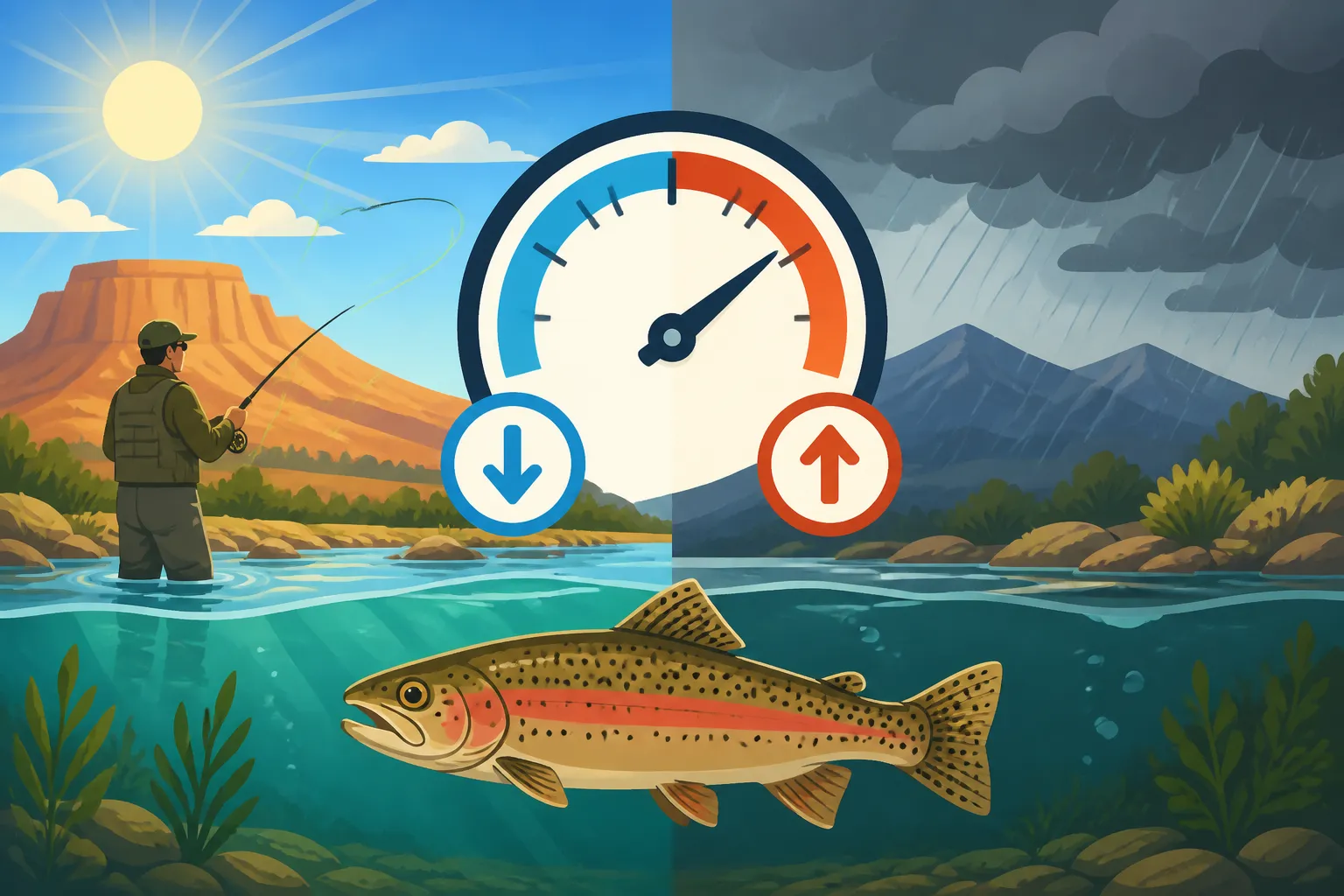
At its simplest, barometric pressure is the measure of the force exerted by the air above us. When we talk about "high pressure," it means the air column is heavy, pushing down firmly on the water. This usually corresponds with clear skies, calm winds, and generally settled weather. Conversely, "low pressure" means the air column is lighter, often bringing clouds, wind, and precipitation—think of those dramatic thunderstorms that roll through the Sangre de Cristos. These changes aren't just for meteorologists; they're vital clues for anglers trying to figure out the fish. You don't need a fancy scientific instrument glued to your wrist, but having a basic barometer or even just checking a detailed weather app can give you a heads-up.
These pressure changes don't just happen in a vacuum; they're tied directly to the weather systems moving across our state. A big, stable high-pressure system might settle in for days, leading to very consistent conditions. But then a low-pressure trough might sweep through, bringing a sudden drop in pressure and a noticeable change in the weather. For us anglers, it's not just the absolute pressure reading that matters, but the direction and speed of the change. A slowly falling barometer is different from a rapidly plummeting one, and the fish react accordingly. It's all about anticipating what the weather is doing next.
How Fish Sense Pressure Changes
You might be wondering how a trout, swimming peacefully beneath the surface, could possibly know what the air above them is doing. Well, fish have evolved some pretty incredible senses to survive their underwater world, and detecting pressure changes is one of them. The two main players here are their swim bladder and their lateral line. The swim bladder is an internal gas-filled sac that helps fish maintain buoyancy at different depths. As the external barometric pressure changes, it affects the pressure within the water column, which in turn impacts the pressure on the fish's swim bladder.
Imagine blowing up a balloon and then taking it into an airplane as it ascends. The balloon expands because the external air pressure drops. A fish's swim bladder reacts in a similar, though more controlled, way. When atmospheric pressure drops, the water pressure on the fish lessens, causing their swim bladder to expand slightly. This can make them feel uncomfortable or even disoriented, compelling them to move to different depths or feed more aggressively to compensate. On the flip side, rising pressure compresses the swim bladder, and fish might descend to deeper water to equalize the pressure.
Beyond the swim bladder, fish also possess a lateral line system, a row of sensory organs running along their sides. This system is primarily for detecting vibrations and movements in the water, but it also helps them sense subtle changes in water pressure and current. So, while we might only feel the wind pick up or see clouds gather, trout are feeling the actual atmospheric shift acutely through these specialized biological instruments. It's a constant, internal recalibration that guides their behavior, and learning to interpret those signals from the fish can be the difference between a slow day and a successful one on the water.
High Pressure, Low Spirits? When the Barometer is Rising or Stable
Understanding how trout react to different pressure systems is key to unlocking more consistent success. Many anglers lament those beautiful, clear, high-pressure days, and often for good reason. But it's not always a lost cause, especially if you know how to adapt. It's all about looking at the trend of the barometer, not just a single snapshot.
Rising Pressure: The "Green Light" for Active Fish (Sometimes)
When the barometer is steadily rising, it often indicates improving weather after a period of instability. This is generally good news for trout fishing. As the pressure rises and stabilizes, fish tend to feel more comfortable and become more active. They've often hunkered down during the stormy, low-pressure period, and now they're ready to forage. You'll often find that trout move out of their sheltered holding lies and start cruising for food. This can be a fantastic time for various Trout Fishing Techniques for New Mexico
During a rising barometer, especially after a storm or a cold front has passed, you might find trout more willing to chase down your offerings. They're feeling good, their swim bladders are equalizing, and their metabolism is kicking into gear. This is a prime time to use more active presentations, like retrieving spinners or spoons, or even swinging streamers if you're fly fishing. Don't be afraid to cover more water, as the fish are likely spread out and actively searching. However, keep in mind that "rising" implies it was low. If the pressure has been high and stable for a while, the fish might become a bit more wary, which we'll discuss next.
Stable High Pressure: The Post-Frontal Blues
Ah, the classic "bluebird day" after a cold front. The sky is crystal clear, the sun is shining, and there's barely a cloud in sight. It looks perfect for fishing, right? Unfortunately, stable, high atmospheric pressure, especially immediately following a cold front, often translates to tough fishing conditions. The fish can become lethargic, shy, and incredibly picky. This is often when anglers experience the most frustration, wondering why the trout seem to have disappeared from their favorite spots.
When a strong high-pressure system settles in, the increased pressure can make fish uncomfortable, pressing down on their swim bladders. They often react by moving to deeper water where the external water pressure helps to equalize their internal pressure. This means the shallow, easily accessible areas you love to fish might be empty. On these days, fish tend to feed less aggressively and are far more sensitive to any disturbances. Think subtle presentations, smaller baits or flies, and slower retrieves. This is where patience truly becomes a virtue.
For fly anglers, this might mean tiny nymphs fished dead-drift, or an ultra-fine tippet with small dry flies if fish are rising. For spin fishermen, it could involve very light line and small baits like PowerBait fished on the bottom, or tiny jigs slowly worked near structure. It's not about forcing a bite, but about presenting something irresistible in their comfort zone. It's a time to really think about How to Catch Trout in New Mexico when they're at their most finicky, often requiring a total shift in your approach compared to more active periods. You might even find yourself looking for gear that helps with subtle presentations, perhaps browsing for sensitive ultralight rods on Amazon.
Low Pressure, High Hopes? When the Barometer is Dropping
Just as rising pressure has its nuances, so does a dropping barometer. The lead-up to a storm can be some of the most exciting fishing, but once the storm settles in, things can get tricky again. It's a roller coaster, and understanding its phases is crucial.
Falling Pressure: The Pre-Frontal Feeding Frenzy
This is often the golden hour for many anglers! When the barometric pressure starts to drop, it signals an approaching weather front – think clouds gathering, perhaps a change in wind direction, and a feeling of impending rain or storms. For trout, this change can often trigger an intense feeding period. As the pressure drops, their swim bladders expand, and they often become more buoyant and agitated. This can make them feel uncomfortable at their current depth, prompting them to move higher in the water column and feed aggressively to prepare for the coming unpleasant weather.
During these pre-frontal conditions, trout tend to be much less cautious. They're actively searching for food, trying to pack on calories before the main storm hits and conditions become truly unfavorable. This is when those larger, more flashy lures or flies often shine. Consider throwing bigger streamers or woolly buggers, or larger spin baits like spoons and Rapalas. Retrieval speeds can often be increased, and you might even find fish hitting aggressively near the surface. It's a fantastic time to be on the water, whether you're targeting the San Juan River Fishing Guide or a high mountain lake. Just be ready for the weather to turn!
However, it's important to differentiate between a slow, steady drop and a rapid, sudden plummet. A slow, steady fall often signals a prolonged feeding window, while a very rapid drop, especially if accompanied by strong winds and darkening skies, can be a short burst of activity followed by the fish shutting down just before the storm's full intensity hits. Pay attention to the speed of the pressure change; it's as important as the direction. Sometimes checking the forecast for the next 24-48 hours can give you a better idea of how long this feeding window might last.
Stable Low Pressure: The Rainy Day Doldrums
Once the storm front has fully arrived and settled in, bringing with it consistent rain, heavy clouds, and stable low pressure, fishing can again become challenging. Unlike the energetic pre-frontal bite, during a prolonged period of stable low pressure, fish often become less active and seek shelter. The constant expansion of their swim bladders, coupled with potentially murky water from runoff, can make them less inclined to chase food.
In these conditions, trout might move into areas with slower currents or find cover under fallen logs, undercut banks, or deeper pools. Their feeding will likely be subdued, and you'll need to adapt your presentation accordingly. Think about slowing things down considerably. If you're fly fishing, try heavy nymphs bounced slowly along the bottom or even egg patterns. For spin fishing, working small worms or PowerBait right into their holding lies, or using jigs with soft plastics fished very slowly, can entice a strike. Water clarity is a big factor here; if the water is muddy from rain, brighter, more visible baits might be necessary, but presentations still need to be slow and deliberate.
It's also a time when you might want to rethink your approach to New Mexico Fishing by Season if you’re out in the midst of a summer monsoon. Trout might be more concentrated in areas where clearer water from tributaries enters a main river, or where deep springs provide a refuge. Don't be afraid to experiment with depth and location, as the fish won't be as spread out as they would during a rising barometer. Carrying a compact, waterproof fishing backpack, perhaps one you found on Amazon, is a good idea to protect your gear from the elements during these wet conditions.
Putting It All Together: Fishing Strategies for New Mexico's Shifting Skies
So, now that we understand how barometric pressure influences trout, how do we actually apply this knowledge on the water? It's not just about knowing the science; it's about translating that into actionable fishing strategies. New Mexico's diverse waters, from the high mountain streams to large reservoirs, demand adaptability.
Reading the Signs: Beyond Just the Barometer
While barometric pressure is a powerful indicator, it's never the only factor influencing fish behavior. You need to combine it with other environmental cues to get the full picture. Things like air and water temperature, light conditions, and water clarity all play significant roles. For example, a rapidly falling barometer might signal a great bite, but if the water temperature has plummeted dramatically due to recent snowmelt, the fish might still be sluggish. Similarly, during stable high pressure, bright sunshine can make fish even more wary, driving them further into cover or deeper water.
Always observe the water itself. Are there insects hatching? Is the water clear or murky? Is there any surface activity? These visual cues, combined with your understanding of the barometric trend, will help you fine-tune your approach. For instance, a dropping barometer on a cloudy day with a good hatch happening is a recipe for success with dry flies, whereas a rising barometer on a sunny day might call for sub-surface presentations. It's like solving a puzzle, and the more pieces you have, the clearer the picture becomes. Understanding How to Read Water on the San Juan River and other fisheries is just as important as knowing the weather.
Gear and Techniques to Adapt to Pressure Changes
Adapting your gear and techniques based on barometric pressure means being flexible. There's no one-size-fits-all solution, but here are some general guidelines:
-
Falling Pressure (Pre-Frontal Frenzy):
- Lures/Flies: Go a bit bigger and more aggressive. Spinners, spoons, crankbaits, larger streamers (e.g., Woolly Buggers).
- Presentation: Faster retrieves, more erratic action. Fish often move to shallower water or suspend higher, so cover the mid-column to topwater.
- Depth: Mid-column to shallower water. Trout are often more willing to rise for food.
- Locations: Actively cruising open water, edges of current, structure that might offer a quick meal.
- This is a good time to review your Best Lures for New Mexico Trout and grab some of those more aggressive patterns.
-
Rising/Stable High Pressure (Post-Frontal Blues):
- Lures/Flies: Downsize. Small jigs, tiny nymphs, midge patterns, small PowerBait, worms. Subtle colors often work best.
- Presentation: Slow, deliberate, and natural. Dead-drifting, slow retrieve, bottom bouncing. Avoid anything that spooks them.
- Depth: Deeper water is often key, as fish seek comfort. Focus on bottom structure, deep pools, or shaded areas.
- Locations: Deep runs, undercuts, log jams, dense vegetation, where they can feel safe and comfortable.
- You might need a lighter Best Rod Setup for New Mexico Trout Fishing to feel those subtle takes.
-
Stable Low Pressure (During a Storm):
- Lures/Flies: Often still subtle, but brighter colors might be needed if water is murky. Scented baits can be very effective.
- Presentation: Slow and methodical. Fish are often hunkered down.
- Depth: Deeper water or areas with reduced current.
- Locations: Sheltered areas, near points of clearer water (like tributary mouths), or deep pockets.
- Don't forget to pack good rain gear, perhaps some durable waders and a jacket you sourced from Amazon, for those stormy days.
Here's a quick summary table to help you visualize these adaptive strategies:
| Barometric Pressure Trend | Trout Behavior | Recommended Techniques & Gear | Depth Focus |
|---|---|---|---|
| Rapidly Falling | Aggressive feeding, active, less wary, move higher. | Larger, flashy lures/flies; faster retrieves; cover water; active presentation. | Mid-column to shallower |
| Slowly Falling | Increased activity, moderate feeding. | Standard lures/flies; moderate retrieves; explore various depths. | Varied, mid-column |
| Stable Low | Less active, seeking shelter, sluggish. | Smaller baits/flies; natural presentation; scented baits; slow retrieves. | Deeper, sheltered areas |
| Slowly Rising | Increasing activity, comfortable, moderate feeding. | Standard lures/flies; moderate retrieves; exploring new spots; active presentation becoming viable. | Varied, mid-column to shallower |
| Rapidly Rising | Increasing comfort, active, moving out of cover. | Aggressive lures/flies; faster retrieves; cover water; active presentation. | Mid-column to shallower |
| Stable High | Lethargic, wary, seek deep cover, picky. | Smallest baits/flies; ultra-fine tippet; subtle, slow, natural presentation; focus on scent. | Deepest water, heavy cover |
Remember, every day on the water in New Mexico is a learning experience. Use a detailed weather app that shows you the barometric trend. Over time, you'll start to recognize patterns in fish behavior that align with pressure changes. This understanding will not only lead to more successful outings but also deepen your appreciation for the intricate connection between weather and the wild world beneath the surface. For a broader view, always consult the New Mexico Fishing Season Calendar and plan your Seasonal Checklist for Planning a New Mexico Fishing Trip with these pressure insights in mind!
Disclaimer
This article is for general informational purposes only and does not constitute professional advice. Laws, prices and regulations vary by location and change over time. Consult a qualified professional for guidance on your specific situation.