How to Tie a San Juan Worm Fly
There are those frustrating days on the river when it feels like the trout have developed a sixth sense, ignoring everything you throw at them. Whether it’s post-runoff turbidity or just heavily pressured waters, finding a fly that consistently gets bites can be a real challenge for New Mexico anglers. This comprehensive guide will walk you through the surprisingly simple yet incredibly effective process of tying your very own San Juan Worm fly, ensuring you have a secret weapon ready for those tough fishing conditions.
Why the San Juan Worm is a New Mexico Angler's Secret Weapon
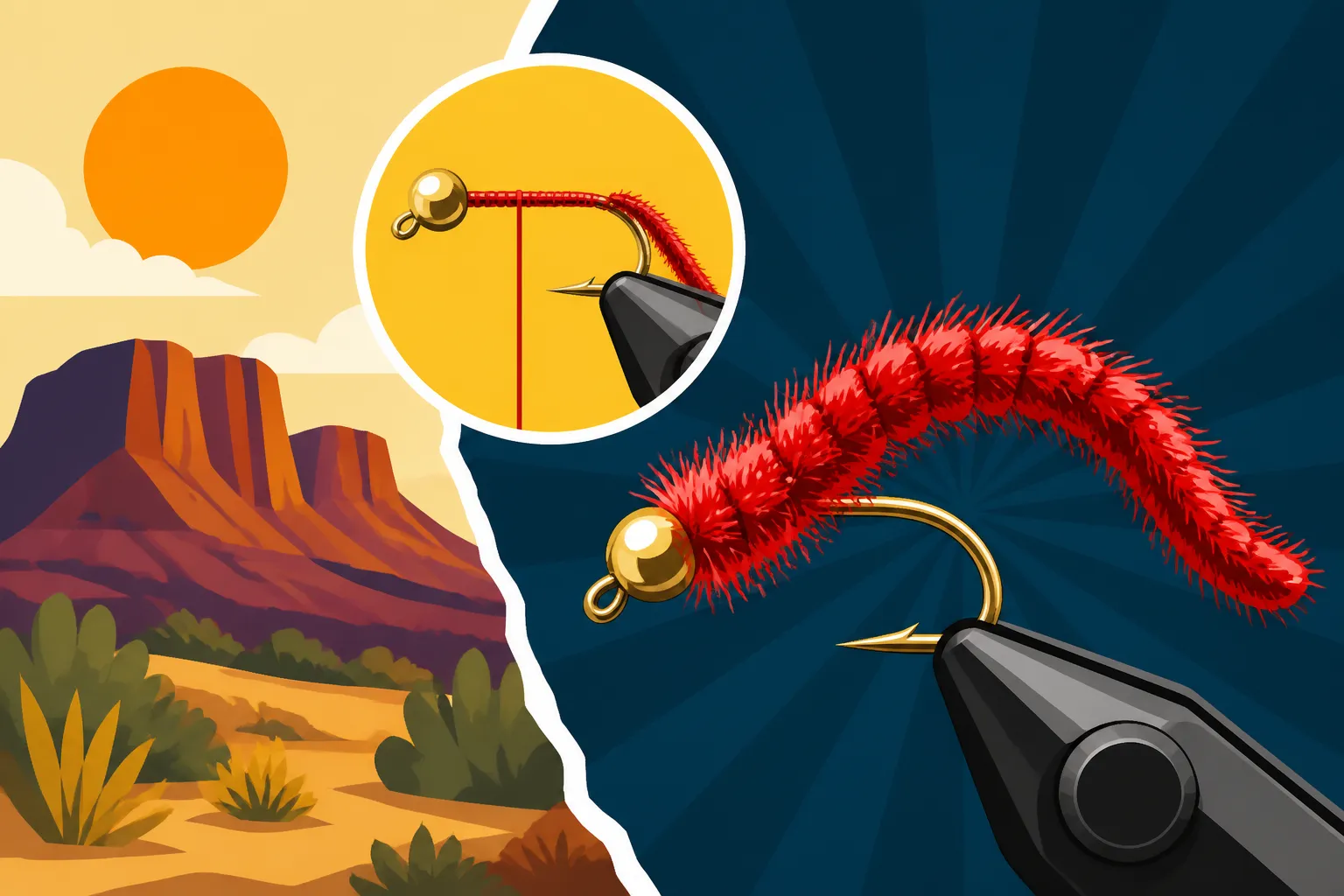
The San Juan Worm might not look like much – it’s essentially a segment of chenille tied onto a hook – but don't let its humble appearance fool you. This fly is a consistent fish-catcher, especially in the diverse waters of New Mexico, and it has earned its reputation for a reason. Anglers flock to the San Juan River and other prime spots across the state, and often, it's this unassuming pattern that saves the day.
The Magic Behind Its Simplicity
What makes the San Juan Worm so incredibly effective? It primarily imitates aquatic worms or annelids that are a natural food source for trout. These worms are constantly being dislodged from the river bottom by currents, especially after rain, snowmelt, or dam releases. When the water gets murky, or the fish are less aggressive, a San Juan Worm drifts naturally, looking like an easy, protein-packed meal floating by. Its soft, wiggly nature under the water is irresistible to trout, who often strike it out of instinct rather than active predation. It’s not about mimicking a specific insect hatch; it's about presenting a readily available, high-calorie food source that fish are accustomed to seeing and eating. This makes it an essential pattern for any angler's fly box, particularly when other more complex patterns are failing to elicit a response.
When and Where to Fish It in New Mexico
The San Juan Worm shines in a variety of New Mexico's fishing scenarios. It's particularly famous on the San Juan River Quality Waters Section below Navajo Dam, where consistent cold water temperatures and nutrient-rich flows create an ideal habitat for aquatic worms and, consequently, large, discerning trout. However, its effectiveness isn't limited to just tailwaters. You'll find it incredibly useful in:
- High and Murky Water: After spring runoff or summer monsoons, when rivers like the Pecos or Rio Chama are swollen and off-color, the San Juan Worm's profile and color stand out, making it easier for fish to find.
- Cold Water Conditions: During the cooler months of fall and winter, when trout are less likely to chase fast-moving insects, a slowly drifted San Juan Worm can be deadly.
- Stocked Waters and Urban Ponds: Stocked rainbow trout in urban ponds or high-mountain lakes are often eager to gobble up anything resembling a worm, making this fly a go-to.
- Freestone Rivers: Even in clear freestone streams, a San Juan Worm fished as part of a nymphing rig can pick up opportunistic trout.
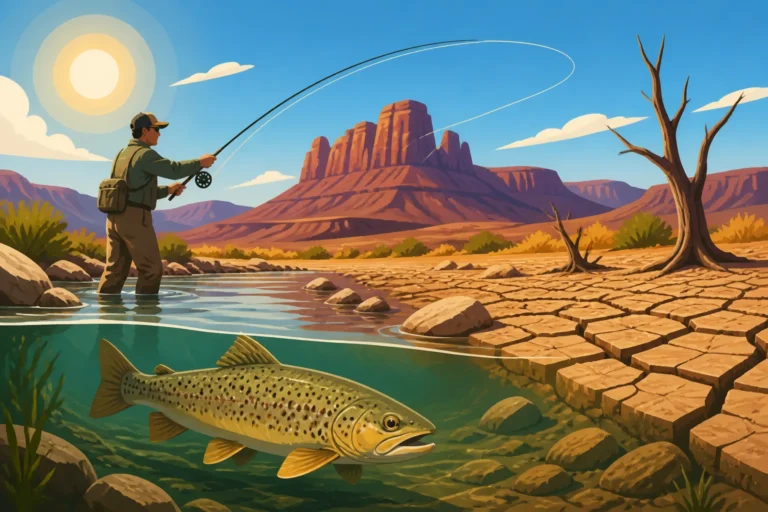
- Fishing New Mexico During Drought Years: In years with lower water flows, concentrations of worms can still be abundant in certain river sections, making the San Juan Worm a reliable choice when other insect hatches are sparse.
Essentially, whenever water conditions are less than ideal, or when fish are being particularly finicky, tying on a San Juan Worm can dramatically turn your luck around. It's a year-round pattern that belongs in every New Mexico angler's arsenal, adaptable to nearly any section of the New Mexico Fishing Season Calendar.
Essential Materials for Tying a San Juan Worm
Before you can craft your own trout-tempting worm, you need to gather a few key materials and tools. Don't worry, most of these are readily available online through retailers like Amazon, or at your local fly shop. The beauty of the San Juan Worm is its material simplicity, making it a great pattern for beginners to learn and for experienced tiers to churn out quickly.
The Basic Ingredient: Chenille
Chenille is the heart and soul of the San Juan Worm. It's a fuzzy, worm-like material that comes in various colors and sizes.
- Type: You'll want standard chenille, often labeled as "standard chenille" or "fly tying chenille." Avoid the super-thick or metallic craft chenille. Some tiers prefer "ultra chenille" for a slightly thinner, more pliable body, but standard works perfectly well.
- Size: For typical trout flies, a size Small or Medium chenille is usually appropriate. This translates to diameters roughly between 1/16th and 1/8th of an inch. For smaller flies on smaller hooks, go for the thinner stuff; for larger worms or larger hooks, a medium size is fine.
- Colors: This is where you can get creative, but some colors are universally more effective in New Mexico:
- Red: The classic San Juan Worm color. Mimics natural annelids and is excellent in off-color water.
- Pink/Hot Pink: Often surprisingly effective, especially in clear, cold water or when fish are seeing a lot of red.
- Wine/Maroon: A darker, more subtle red that can be great in clearer water or on heavily pressured fish.
- Brown/Natural: For a more subdued, natural look, mimicking worms found in clearer, less disturbed environments.
- Orange: Can be a good "attractor" color, especially during certain times of year or in specific situations.
Having a few spools of different colored chenille in your tying kit, sourced from a place like Amazon, will ensure you're ready for any water condition.
Hook Selection and Thread Choice
The right hook and thread are crucial for the integrity and presentation of your San Juan Worm.
- Hooks: You'll want a curved shank hook, often referred to as a "scud" or "egg" hook. These hooks have a nice, open gap that helps with hook-ups and their curved shape lends itself perfectly to the natural arc of a worm.
- Size: Common sizes range from #12 down to #18. For general New Mexico trout fishing, #14 or #16 are excellent starting points. On the San Juan River or other quality waters, you might go as small as #18, while in larger, murkier rivers, a #12 might be appropriate.
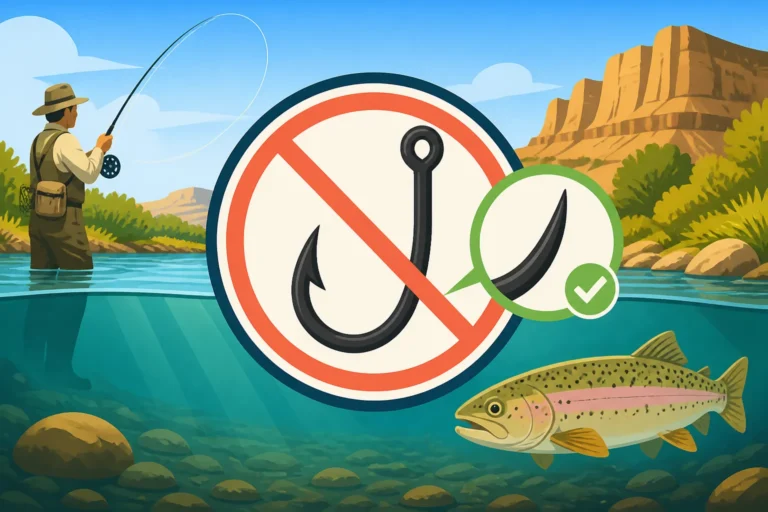
- Barbless: If you're fishing catch and release waters or New Mexico Special Trout Water Regulations that require barbless hooks, make sure to use barbless hooks or pinch down the barbs on barbed hooks.
- Thread: You'll need a strong, relatively fine fly tying thread.
- Size: 6/0 (140 denier) or 8/0 (70 denier) are standard choices. 8/0 is finer and allows for more precise wraps on smaller flies, while 6/0 is more durable.
- Color: Match your thread color closely to your chenille. For a red worm, use red thread. For a pink worm, pink thread. This helps the thread blend in and prevents an unnatural color contrast.
Tools of the Trade
While the San Juan Worm is simple, you'll still need a basic set of fly tying tools. If you're just starting, entry-level kits often found on Amazon will have everything you need.
- Vise: Essential for holding the hook securely while you tie. Any basic fly tying vise will work.
- Bobbin: Holds your spool of thread and allows you to apply tension evenly as you wrap.
- Scissors: Sharp, fine-tipped scissors are necessary for precise cuts of chenille and thread. You don't want to use your household scissors, as fly tying requires a delicate touch.
- Whip Finisher: While you can learn to do a whip finish by hand, a whip finishing tool makes the process much easier and creates a clean, durable knot to secure your thread.
- Hackel Pliers (Optional): Can be useful for gripping and wrapping the chenille, though many tiers just use their fingers.
Step-by-Step: Tying Your Own San Juan Worm Fly
Now that you have all your materials, let's get down to the fun part: tying! This process is straightforward and repetitive, making it perfect for developing good tying habits. You'll be cranking out dozens of these in no time, ensuring you always have enough of these reliable patterns.
Prepping the Hook and Thread Base
The foundation of any good fly is a well-prepped hook and a solid thread base. This ensures your materials are securely attached and won't spin or unravel when you're fighting a feisty New Mexico trout.
- Secure the Hook: Place your curved shank hook (#14 or #16 is a great starting point) into your vise, making sure it's held firmly. The hook shank should be horizontal and accessible.
- Attach the Thread: Take your chosen fly tying thread (matching the chenille color, like red for a red worm) and start it behind the eye of the hook. Make a few wraps backward towards the bend of the hook. Then, cut off the tag end of the thread, leaving a neat, short stub.
- Lay a Thread Base: Continue wrapping your thread in neat, overlapping turns, working your way back towards the bend of the hook. Stop when your thread hangs roughly above the hook point, or slightly past it. The purpose of this thread base is to provide a solid, non-slip foundation for attaching the chenille, preventing it from rotating on the hook shank. This also helps build a slightly thicker body for the worm.
Attaching the Chenille Body
This is where your worm starts to take shape. Getting the chenille attached properly ensures a durable and realistic body.
- Prepare the Chenille: Take a piece of chenille, about 3-4 inches long. Gently strip away about 1/4 inch of the fuzzy fibers from one end, exposing the core thread. This bare core will be used to tie it in.
- Tie in the Chenille: Position the stripped end of the chenille on top of the hook shank, directly above where your thread is hanging. Make a few tight thread wraps over the bare chenille core, securing it firmly to the top of the hook shank. The fuzzy part of the chenille should extend backward, past the bend of the hook. Trim off any excess bare chenille core that might be poking out forward.
- Advance the Thread: Now, wrap your thread forward, in neat, even turns, over the chenille you just tied in, stopping just behind the eye of the hook. This not only further secures the chenille but also creates a smooth underbody for the next step.
Forming the Worm Segments
The segmented look is key to making the San Juan Worm appear natural. This is achieved by carefully wrapping the chenille.
- Wrap the Chenille: Bring your chenille forward, laying it over the top of the hook shank. You're going to make a series of gentle, slightly overlapping wraps with the chenille, moving it towards the eye of the hook. Don't pull too tightly, you want the chenille to retain its full, fuzzy profile. As you wrap, try to create distinct "segments" with the chenille, mirroring the look of a natural worm.
- Continue Wrapping: Keep wrapping the chenille forward until you've reached approximately two-thirds to three-quarters of the way up the hook shank, leaving enough space behind the eye for a neat head and whip finish. The exact length is a matter of preference, but aim for a worm body that isn't too long or too short.
- Secure the Chenille: Once you've reached your desired length, use your thread to make a couple of tight wraps over the chenille, securing it firmly in place. Don't cut the chenille yet!
Finishing the Fly with a Whip Finish
The whip finish is the final, crucial step to lock everything in place and prevent your fly from unraveling after catching a few fish.
- Create the Front Segment: With your thread securing the chenille, take the chenille and fold it back over itself, towards the bend of the hook, forming a small loop at the front. This creates the "head" or the front segment of the worm. Use your thread to make several tight wraps directly behind this new segment, securing it down.
- Trim the Excess: Once the front segment is securely tied down, carefully trim the excess chenille, leaving a short, stubby "tail" extending forward. Make sure your cut is clean and close to the thread wraps.
- Whip Finish: Now, your thread should be hanging just behind the eye of the hook, with the front segment of chenille tied in. Perform a whip finish (using your tool or by hand) directly behind the eye of the hook. Aim for 3-5 solid turns. This creates a strong, clean knot that will hold everything together.
- Cut the Thread: Once your whip finish is complete, carefully snip the tying thread close to the knot. Give your finished San Juan Worm a gentle tug to ensure everything is secure. You've just tied a functional and effective fly!
Tips and Tricks for San Juan Worm Success on New Mexico Waters
Tying a San Juan Worm is one thing, but fishing it effectively on New Mexico's diverse waters takes a little finesse. Even with the simplest fly, understanding how to present it and adapt to conditions can make all the difference between a slow day and a successful one.
Varying Colors and Sizes
Just like with any pattern, having a variety of San Juan Worms in different colors and sizes can significantly increase your success rate. Fish can become accustomed to seeing the same fly, so changing it up is key.
- Color Matching: While red is classic, don't underestimate the power of other hues. Pink and wine are fantastic on clearer, colder waters, especially during the colder months on tailwaters like the San Juan River. Browns and olives can be excellent on natural-flowing rivers where actual worms might be darker. Fly Selection for New Mexico's San Juan River often includes various worm patterns for different flow and clarity conditions. Always observe the water: if it's muddy, a brighter color like red or hot pink might be more visible; if it's crystal clear, a more natural shade might be better.
- Size Matters: Carry hooks in sizes from #12 down to #18. Larger worms might entice bigger fish or be more visible in deep, fast water, while smaller worms are crucial for spooky trout in clear, slow runs or on highly pressured waters. Don't be afraid to experiment! If fish are ignoring your #14 red worm, try a #16 pink one.
Presentation is Key
Even the perfect fly won't catch fish if it's not presented correctly. Trout, especially in New Mexico's colder rivers and tailwaters, are often holding close to the bottom and won't move far for a meal.
- Dead Drift: The most effective way to fish a San Juan Worm is with a dead drift. This means letting the fly float naturally downstream, without any drag or unnatural movement from your line. You want it to look like a dislodged worm tumbling along the bottom.
- Weighting: To get your worm down to where the fish are, you'll almost always need some weight. This could be split shot placed on your leader a foot or so above the fly, or a heavier nymph pattern tied as your lead fly in a multi-fly rig. For a two-fly setup, you might use a heavier stonefly or Caddis larva pattern on top, with the San Juan Worm trailing behind. Learning How to Rig a Two-Fly Setup for Trout is an essential skill for fishing worms effectively.
- Indicator Use: A strike indicator (often called a bobber by spin fishers) is crucial for detecting subtle takes. Trout often inhale a worm and spit it out quickly, so a momentary twitch or pause in your indicator could be the only sign you have a bite.
- Focus on Structure: Cast your worm upstream of likely holding water – behind large rocks, in seams where fast water meets slow, or along current breaks. These are the places where trout expend minimal energy to wait for food.
Storage and Durability
While San Juan Worms are durable, a little care goes a long way in keeping them in prime fishing condition.
- Proper Storage: Store your San Juan Worms in a Best Fly Boxes for New Mexico Trout Flies with individual compartments or slits to prevent them from tangling or getting crushed. A well-organized fly box not only protects your flies but also makes it easier to find the right pattern when you're on the water.
- Post-Fishing Care: After a day of fishing, especially if you've caught a lot of fish or fished in dirty water, gently rinse your flies in clean water and allow them to air dry completely before returning them to your fly box. This prevents mildew and keeps your hooks from rusting.
- Inspect Regularly: Before and after each trip, inspect your San Juan Worms. Check the hook point for sharpness (sharpen if needed), and ensure the chenille is still securely wrapped. If a fly is starting to unravel, it might be time to retire it or re-tie a new one.
Knowing these tips and having a well-stocked box of homemade San Juan Worms will undoubtedly boost your confidence and your catch rates on New Mexico's beautiful fishing waters.
| Chenille Color | Best New Mexico Fishing Conditions | Notes |
|---|---|---|
| Red | High, murky water (runoff), post-rain, cold water, general attractor | Classic, highly visible, great year-round, especially in turbid water. |
| Pink | Clear, cold tailwaters (San Juan River), finicky fish, winter | Subtle, can be very effective when fish are pressured or lethargic. |
| Wine | Clearer freestone rivers, subtle conditions, picky trout | Darker red, more natural look for less aggressive presentations. |
| Brown | Natural rivers/streams, very clear water, matching natural annelids | Excellent when fish are highly visual and wary of bright colors. |
| Orange | Attractor pattern, during certain insect hatches (caddis pupa look) | Can be surprisingly effective as a change-up color or in discolored water. |
| Chartreuse | Off-color water, high visibility, aggressive fish | Brightest option, use when you need maximum visibility. |
Disclaimer
This article is for general informational purposes only and does not constitute professional advice. Laws, prices and regulations vary by location and change over time. Consult a qualified professional for guidance on your specific situation.