Do You Need to Register a Kayak With a Trolling Motor in New Mexico?
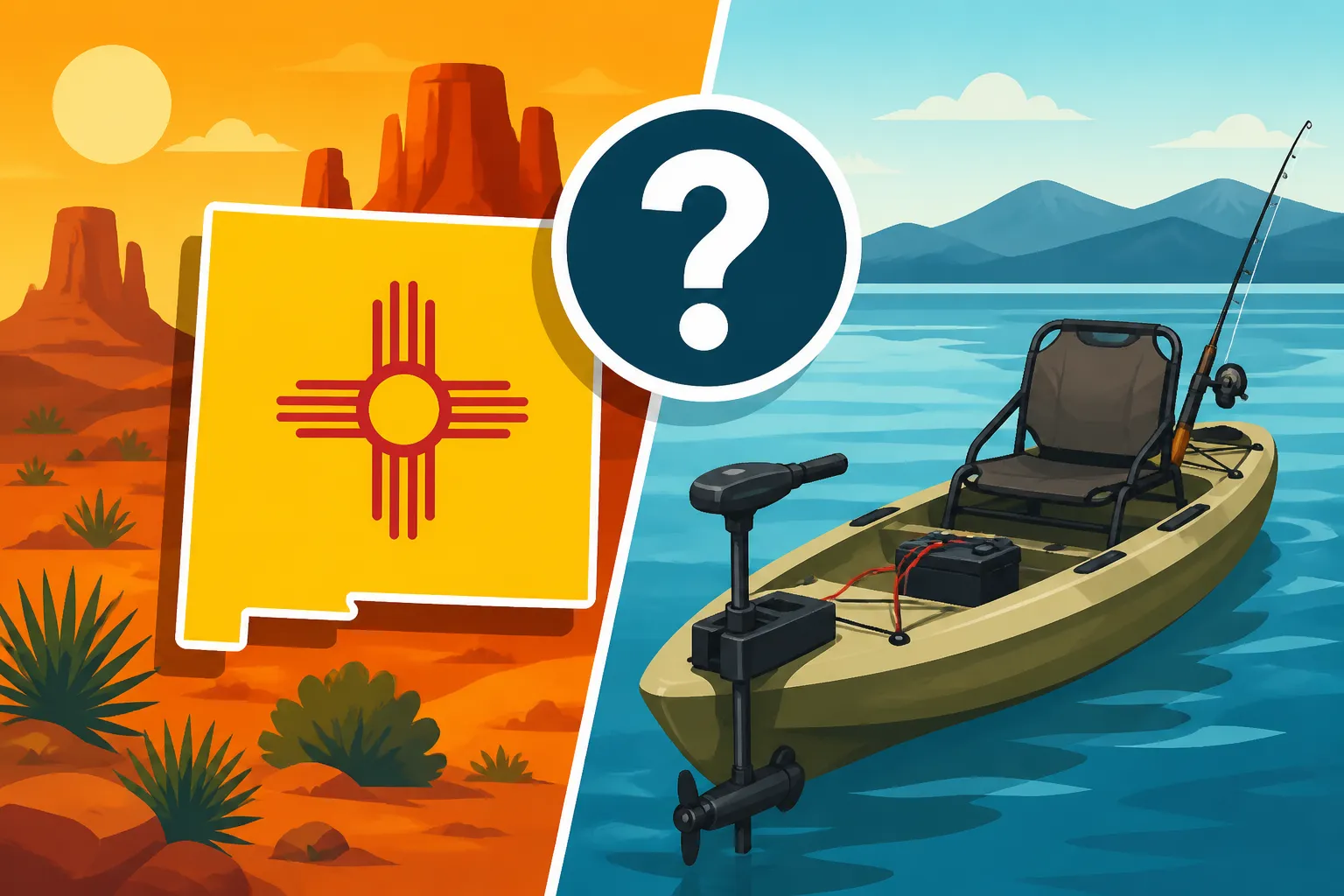
It’s a common scenario for many New Mexico anglers: you love the stealth and simplicity of your kayak, but you’re tired of paddling against the wind or currents, so you’ve been eyeing a small electric trolling motor. The question quickly arises – does adding that motor mean your once-simple kayak now needs to be registered with the state? This guide will dive deep into New Mexico’s regulations to clear up the confusion and ensure you're compliant before you hit the water.
Understanding New Mexico's Vessel Registration Laws
The Land of Enchantment has clear, albeit sometimes confusing, regulations regarding watercraft. The core principle revolves around what the state defines as a "vessel" and whether it’s propelled by machinery. This distinction is crucial for determining if your kayak, once equipped with a trolling motor, falls under the registration requirement.
What Constitutes a "Vessel" in New Mexico?
In New Mexico, a "vessel" is generally defined as every description of watercraft, other than a seaplane on the water, used or capable of being used as a means of transportation on water. This broad definition includes everything from large powerboats to small fishing boats. The key factor that often trips up kayak owners is the method of propulsion. If a vessel is propelled by any kind of motor, it’s typically subject to registration. This means that a kayak, which is primarily designed for human propulsion, crosses a regulatory line once a motor is attached.
Think of it this way: a kayak that relies solely on your paddle power is generally exempt because it doesn't fit the "mechanically propelled" criteria. However, once you bolt on that quiet electric trolling motor, even if it's just a small one for hands-free maneuvering, your kayak instantly acquires mechanical propulsion. It changes its classification in the eyes of the law from a simple paddlecraft to a motorized vessel. This is where many folks get caught unaware, assuming their small, personal kayak remains exempt, but the law looks at the how it moves, not just its size or original design.
Defining "Mechanical Propulsion" for Small Watercraft
The term "mechanical propulsion" is quite encompassing and doesn't discriminate based on horsepower or fuel type. Whether it's a gas-powered outboard, a small kicker motor, or a quiet electric trolling motor, if it uses a machine to move the vessel through the water, it counts. This is why a simple 30-pound thrust electric trolling motor can put your kayak into the same registration category as a much larger bass boat. The intent is to regulate all powered craft, ensuring safety and accountability on public waters.
Many anglers initially assume that because their trolling motor is electric and low-powered, it might fall under some kind of minor exemption. Unfortunately, New Mexico's regulations are generally quite clear: if there's a motor involved, regardless of its type or size, registration is usually required. This means that even a temporary setup where you occasionally attach a motor to your kayak will likely necessitate registration if you plan to use it on public lakes, rivers, or reservoirs within the state. It’s always safer and more compliant to assume that any motor equals a registration requirement.
The Definitive Answer: Yes, You Do
To put it plainly, yes, if your kayak is equipped with an electric trolling motor – or any other form of mechanical propulsion – you generally need to register it with the New Mexico Motor Vehicle Division (MVD). This isn't just a suggestion; it's a legal requirement.
The reason for this lies in the state's intent to regulate all motorized vessels for safety, environmental protection, and enforcement purposes. A trolling motor, no matter how small or seemingly insignificant, transforms your kayak from an unpowered vessel into a powered one. This change in classification triggers the need for registration, just like any other motorboat. Ignoring this requirement can lead to fines and other penalties, which can quickly ruin a peaceful day of fishing.
The Registration Process for Your Motorized Kayak
Navigating the registration process might seem a bit daunting, especially if you’ve never had to register a boat before. However, it's a fairly straightforward process once you know what documents to gather and where to go. The New Mexico MVD handles all vessel registrations, and they typically have clear guidelines available.
Required Documents and Information
Before you head to the MVD, make sure you have all your ducks in a row. You'll need several key pieces of documentation:
- Proof of Ownership for the Kayak: This is paramount. If you bought it new from a retailer like Bass Pro Shops or a local sporting goods store, you should have a manufacturer's statement of origin (MSO) or a bill of sale. If you bought it used, a notarized bill of sale from the previous owner is essential. This proves you are the legal owner of the hull.
- Proof of Ownership for the Trolling Motor: While the motor itself might not be titled separately, you'll need proof of purchase for it, often a sales receipt. The MVD will want to know the make, model, and serial number of the motor.
- Completed Application Form: The MVD provides specific forms for vessel registration. You can usually find these online on their official website or pick them up in person.
- Identification: Your valid New Mexico driver's license or state ID.
- Fees: Be prepared to pay the registration fees, which are based on the length of your vessel.
It's a good idea to call ahead to your local MVD office or check their website for the most current list of required documents. Sometimes, specific situations might call for additional paperwork, and being prepared can save you a lot of time and hassle. Don't forget that proof of ownership is absolutely critical; without it, you won't be able to proceed.
Where and When to Register
You’ll need to complete your vessel registration at a New Mexico Motor Vehicle Division (MVD) office. While many MVD services can be initiated online, the initial registration of a vessel often requires an in-person visit to verify documents and complete the process. It's advisable to check the specific MVD website for branch locations and hours.
Generally, you should register your motorized kayak as soon as possible after acquiring the motor and certainly before you take it out on any public waters. New Mexico law typically requires registration within a certain timeframe after purchase or after the vessel becomes subject to registration (i.e., when you add the motor). If you're new to the state or just purchased a used kayak with a motor, don't delay. The sooner you get it registered, the sooner you can enjoy New Mexico's beautiful lakes and rivers without worry. For more details on this, check out New Mexico Boat Registration and Titling Guide.
What About Titling?
Here's where it gets a little nuanced. In New Mexico, certain vessels require both registration and titling, while others only need registration. Generally, boats that are 10 feet or longer, or vessels with permanently attached motors, often require titling in addition to registration. Many kayaks, even with motors, might fall under the "less than 10 feet" category or have motors that are considered removable.
However, the MVD’s rules can sometimes differ, and it's always best to confirm directly with them if your specific kayak and motor setup requires titling. Even if your kayak doesn't technically require a title due to length, titling it can be a good idea for proving ownership and protecting against theft. This is particularly true if your kayak represents a significant investment. Consider reading New Mexico Boat Titling and Registration for a deeper understanding.
Displaying Registration Numbers and Decals
Once your motorized kayak is registered, you’ll be issued a registration number and validation decals. These aren't just pretty stickers; they are legally required to be displayed prominently on your vessel.
Proper Placement on a Kayak
Displaying your registration numbers and decals on a kayak can be a bit tricky compared to a traditional powerboat due to the limited flat surface area. However, the requirements are strict:
- Numbers: The registration numbers must be painted or permanently attached to each side of the forward half of the vessel. They need to be block letters, at least 3 inches high, and in a color that contrasts sharply with the background. They must be legible from a distance. For example, if your kayak is a light color, dark numbers would be appropriate.
- Decals: The validation decals should be affixed within six inches of the registration numbers, generally towards the stern.
This might mean getting creative on your kayak. Some anglers use vinyl decals ordered online (you can often find custom vinyl lettering on sites like Amazon) or from local sign shops. The key is permanence and visibility. You can't just write them on with a marker or attach them with tape; they need to be durable and securely fixed. Think about where they will be least obscured by gear or fishing rods.
Safety Equipment Requirements for Motorized Kayaks
Adding a motor to your kayak doesn't just trigger registration requirements; it also means your kayak must now comply with the safety equipment rules for motorized vessels. This is a critical area, as safety on the water is paramount.
Essential Gear You Must Carry
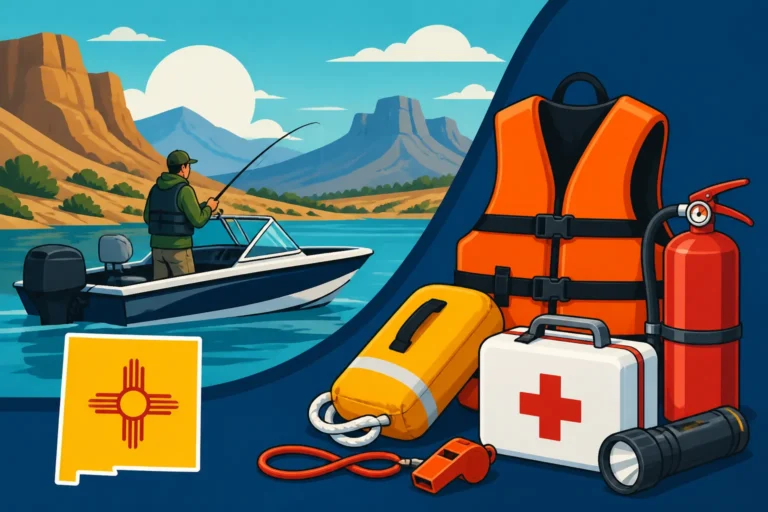
Even if your kayak feels small, once it's motorized, it's considered a vessel with mechanical propulsion, and as such, it must carry certain safety equipment. This typically includes:
- Life Jackets (PFDs): You must have at least one wearable personal flotation device (PFD) for each person on board. Children under 13 typically must wear their PFDs at all times when underway. Make sure the PFDs are U.S. Coast Guard approved and in good, serviceable condition. This is non-negotiable and one of the first things a game warden will check. If you're curious about the specifics, check out Life Jacket Requirements for New Mexico Boaters.
- Sound-Producing Device: A whistle, horn, or other sound-producing device is required to signal intentions or alert others in emergencies. Even a simple plastic whistle attached to your PFD can fulfill this requirement.
- Visual Distress Signals (VDS): For vessels operating on federal waters (which includes many of New Mexico’s larger lakes), visual distress signals like flares or an electric distress light are required, especially at night. While many kayaks stick to smaller, state-regulated waters, it's good to be aware.
- Navigation Lights: If you plan to operate your motorized kayak between sunset and sunrise, or during periods of restricted visibility, you will need proper navigation lights. This typically means a white all-around light and sometimes red/green sidelights, though for kayaks, a single all-around white light visible 360 degrees is often sufficient.
- Fire Extinguisher: Depending on the type of motor and fuel storage, a fire extinguisher might be required. For electric trolling motors, this is often not necessary, but if you carry any liquid fuel, it could apply.
These requirements are in place to keep you and others safe on the water. A small, motorized kayak can still pose a risk, especially in crowded areas or during adverse weather. Having the proper safety gear not only ensures compliance but could literally save a life. For a full rundown on all required gear, consult Required Safety Gear on a New Mexico Boat.
Penalties for Non-Compliance
It's tempting to think you might slip by unnoticed, especially on a large lake. However, game wardens and other law enforcement officials are diligent, and the penalties for fishing or operating a motorized vessel without proper registration can be significant.
Fines and Potential Consequences
Getting caught without your motorized kayak properly registered can result in fines that far outweigh the cost of registration itself. These fines can vary depending on the specific violation and the discretion of the enforcing officer, but they can easily run into hundreds of dollars. Beyond monetary penalties, an officer might require you to remove your vessel from the water immediately, effectively ending your fishing trip.
Repeated offenses can lead to even harsher penalties, and in some cases, could involve your equipment being impounded. It’s simply not worth the risk. Imagine planning a long-awaited fishing trip to Elephant Butte Lake, only to have it cut short and costly because you skipped a simple registration step. It’s a frustration that’s entirely avoidable. You can learn more about this by reading New Mexico Fishing Violations and Penalties.
Habitat Stamp and Other Considerations
Beyond vessel registration, remember that fishing in New Mexico often comes with other requirements, such as a valid fishing license and sometimes a Habitat Management & Access Validation (often referred to as a Habitat Stamp).
New Mexico Habitat Stamp Requirements
If you're going to be fishing on certain state or federal lands managed by the New Mexico Department of Game and Fish (NMDGF), you'll likely need a Habitat Management & Access Validation (HMAV), commonly known as a Habitat Stamp. This stamp helps fund crucial habitat improvement projects and ensures access for anglers and hunters. While not directly tied to boat registration, it’s an essential part of your annual fishing preparation in New Mexico.
Many popular fishing destinations in New Mexico, including federal lands managed by the Bureau of Land Management (BLM) or the U.S. Forest Service, require this stamp. So, even if your motorized kayak is fully registered, don't forget to secure your fishing license and Habitat Stamp. You can purchase these through the NMDGF website or at authorized vendors. For detailed information on this, refer to New Mexico Habitat Stamp and Validation Requirements and New Mexico Fishing License Guide.
Annual Renewals and Staying Current
Vessel registrations in New Mexico are not a one-time thing. They expire periodically and must be renewed. Typically, registrations are valid for a specific period, often two or three years. It's your responsibility to keep track of the expiration date and renew your registration before it lapses.
The MVD often sends out renewal notices, but it’s best not to rely solely on these. Mark your calendar or set a reminder! Renewing your registration is usually a simpler process than the initial registration, often doable online or through the mail. Staying current means avoiding those unnecessary fines and ensuring uninterrupted enjoyment of New Mexico's waters. For renewal specifics, you can check out New Mexico Boat Registration Renewal Steps.
Table: Kayak Registration Scenarios in New Mexico
To help clarify when registration is and isn't needed for kayaks, here's a quick reference table:
| Kayak Setup | Mechanical Propulsion? | New Mexico Registration Required? |
|---|---|---|
| Kayak with paddles only | No | No |
| Kayak with foot pedal drive | No | No (human-powered) |
| Kayak with electric trolling motor | Yes | Yes |
| Kayak with gas outboard motor | Yes | Yes |
| Inflatable kayak (under 10 ft) with paddles | No | No |
| Inflatable kayak (under 10 ft) with motor | Yes | Yes |
| Any kayak 10 ft or longer with a motor | Yes | Yes (and potentially titling) |
| Kayak with sail (no motor) | No (wind-powered) | No |
Note: This table provides general guidance. Always confirm with the New Mexico MVD for specific, up-to-date requirements for your vessel.
Final Thoughts: Fish Smart, Stay Compliant
Fishing in New Mexico is an incredible experience, offering diverse waters and abundant opportunities. Whether you're exploring the quiet coves of Navajo Lake with a paddle or cruising across Elephant Butte Lake with your trolling motor, you want your focus to be on the fish, not on worrying about legalities.
Investing a little time upfront to understand and comply with New Mexico's boat registration and safety laws for your motorized kayak is a small price to pay for peace of mind. Not only does it keep you on the right side of the law, but it also contributes to the safety of all recreationists on the water and the conservation efforts that keep New Mexico’s fisheries thriving. So, get that motor registered, display your numbers proudly, grab your New Mexico Fishing License Costs Explained, and enjoy the stunning waters of New Mexico!
Disclaimer
This article is for general informational purposes only and does not constitute professional advice. Laws, prices and regulations vary by location and change over time. Consult a qualified professional for guidance on your specific situation.