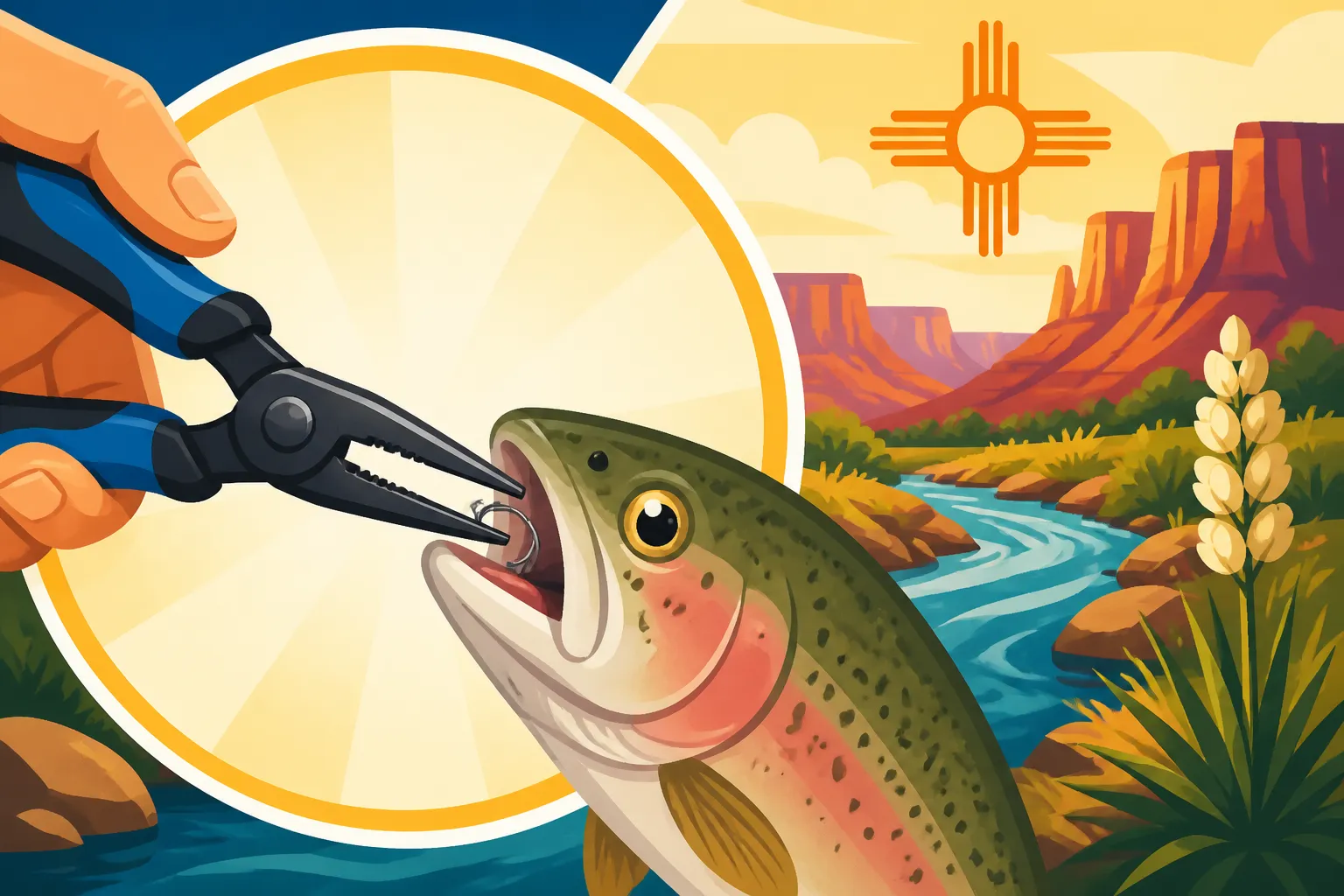
Best Pliers for Removing Barbless Hooks
One of the trickiest parts of a successful day out on New Mexico's beautiful waters, especially when you're diligently practicing catch and release, is getting that hook out safely and quickly. It can be a real struggle to extract a deeply set hook without further injuring your prized catch, or even yourself, which is why having the right pair of pliers for removing barbless hooks isn't just a convenience – it's an absolute necessity for ethical angling and a smooth fishing experience. This guide will help you understand what makes a great pair of pliers for this specific task and how to use them effectively.
Why Barbless Hooks Matter and Why Pliers Are Essential
When we talk about fishing here in New Mexico, especially for our precious trout species, the conversation often turns to conservation. Many of our most cherished fisheries, like sections of the legendary San Juan River, operate under strict catch-and-release regulations or encourage the use of barbless hooks to protect fish populations. But just because a hook is barbless doesn't mean it's always easy to remove. That's where a dedicated pair of pliers comes into play.
The "Catch and Release" Ethos and Fish Health
The entire philosophy behind catch and release is to minimize stress and injury to the fish, ensuring they swim away strong enough to thrive and spawn another day. A barbed hook, even a small one, can cause significant tissue damage upon removal, tearing flesh as it's pulled back through. Barbless hooks, on the other hand, slide out much more smoothly, leading to higher survival rates for the fish. This is particularly important in sensitive areas like New Mexico's Quality Waters Program, where every fish counts towards maintaining a robust ecosystem. Using barbless hooks is a commitment to the future of our fisheries, but that commitment also requires the right tools to execute the release properly. Without the proper technique and tools, even a barbless hook can become problematic, especially if it's swallowed or deeply embedded.
The Challenge of Removing Barbless Hooks Safely
While barbless hooks are designed for easier release, they can still be challenging to remove, especially if the fish is actively thrashing, the hook is deeply set, or you're trying to work quickly to minimize the fish's time out of water. Your bare fingers often don't have the grip or the reach needed to get a good hold on a small hook, particularly if it's tucked away in the corner of a fish's mouth or gill plate. This is where a good pair of pliers becomes indispensable. They allow you to apply firm, precise pressure to the shank of the hook, rotating it or pushing it out from the point of entry without having to put your fingers too close to sharp teeth or flailing fins. Furthermore, having a tool that gives you a solid grip means you can manipulate the hook with confidence, reducing the likelihood of dropping the fish or causing unnecessary trauma.
Key Features to Look for in Barbless Hook Removal Pliers
Choosing the right pliers isn't just about grabbing any old tool from your garage. There are specific design elements that make certain pliers far superior for the delicate, yet urgent, task of removing barbless hooks from a fish. Thinking about these features before you buy can save you a lot of frustration on the water and help you be a more responsible angler.
Length and Reach
One of the most crucial features for fishing pliers, especially for hook removal, is adequate length. Hooks can be swallowed or lodged deep within a fish's mouth, particularly if you're targeting species with larger mouths like bass or walleye found in many New Mexico lakes. A longer pair of pliers, typically ranging from 6 to 11 inches, provides the reach you need to access those difficult spots without having to force your hand too far into the fish's mouth, which can stress the fish or put your fingers at risk. Imagine trying to remove a tiny nymph from the gullet of a good-sized trout on the Rio Chama with short, stubby pliers – it would be nearly impossible without causing major harm. Longer pliers also keep your hands further from any sharp teeth the fish might possess.
Jaw Design: Straight vs. Bent Nose
The shape of the plier jaws is another critical consideration, and generally, you'll find two main types: straight nose and bent nose.
- Straight Nose Pliers: These are versatile and excellent for a direct pull on hooks that are easily accessible in the fish's mouth. They offer strong, straightforward grip and are often preferred for larger hooks or when you have a clear shot at the hook shank. If you're often fishing for larger species like those found in Elephant Butte Lake, a straight-nose option might be your go-to.
- Bent Nose Pliers: These are a game-changer for hooks that are lodged at awkward angles or deep within the mouth. The slight bend, usually between 45 and 90 degrees, allows you to maneuver around jaws, teeth, and other obstructions to get a direct grip on the hook shank without twisting the fish's head into unnatural positions. For smaller fish or when fishing with delicate flies, a bent-nose design can provide that extra bit of precision and care. When targeting trout in many New Mexico rivers and streams, where delicate flies are common, bent-nose pliers can truly shine.
Many anglers choose to carry both a straight and bent-nose pair to cover all their bases, as different fishing scenarios call for different tools.
Material and Corrosion Resistance
New Mexico might be arid, but our fishing often involves water, and water means rust if your tools aren't up to snuff. Fishing pliers are constantly exposed to moisture – river water, lake water, fish slime, and even just the humidity in your tackle box. Therefore, the material they're made from is incredibly important for longevity and performance.
- Stainless Steel: This is a common and generally good choice. Look for "surgical grade" or "marine grade" stainless steel, as these variations offer superior corrosion resistance. While not entirely rust-proof, they hold up well with proper care (a quick rinse and dry after each use goes a long way).
- Aluminum: Lightweight and highly corrosion-resistant, aluminum pliers are fantastic for minimizing weight in your fishing vest or pack. They often feature stainless steel jaws for added strength where it counts. Aluminum is excellent for saltwater applications, but its benefits of lightweight and corrosion resistance are equally valuable for long days on the San Juan River Fishing Guide or the high mountain lakes.
- Titanium: The ultimate in corrosion resistance and strength, titanium pliers are top-tier but come with a higher price tag. If you're serious about your gear and want something that will last a lifetime, titanium is an excellent investment.
Beyond the base material, look for coatings like anodized finishes or Teflon, which add an extra layer of protection against the elements. You might find great options for various materials, from robust stainless steel models to lightweight aluminum pliers, at places like Bass Pro Shops or on Amazon.
Grip and Ergonomics
You'll be using these pliers with wet hands, possibly cold hands, and often under pressure when a fish is wiggling. A good grip is paramount. Look for handles with textured surfaces, rubberized coatings, or ergonomic designs that fit comfortably in your hand. This not only prevents accidental slips – which can be dangerous for you and the fish – but also reduces hand fatigue during a long day of fishing, especially if you're doing a lot of catch and release. Some pliers even come with spring-loaded handles, which keep the jaws open and ready for action, a small but significant detail that can make a big difference when you need to act fast.
Types of Pliers Best Suited for Barbless Hooks
While many general-purpose pliers can technically remove a hook, certain designs are specifically engineered for the delicate task of hook removal from a fish. Understanding these types will help you pick the best tool for your typical angling scenarios in New Mexico.
Forceps/Hemostats: Precision for Small Flies
Forceps, often referred to as hemostats in the fishing world, are absolutely indispensable for fly anglers or anyone using small hooks. They are essentially medical clamps, characterized by their slender, elongated jaws and a locking mechanism that allows them to hold onto an object firmly. For removing tiny nymphs, dry flies, or small jigs from the delicate mouths of trout in places like Fenton Lake Fishing or the Pecos River, nothing beats their precision.
The fine tips of forceps can get into tight spaces that larger pliers simply can't reach. The locking mechanism means you can secure the hook and then work on the release without constantly having to squeeze the handles, freeing up a hand to hold the fish if necessary. They come in various lengths, with longer options being excellent for reaching deeply ingested hooks. However, their primary drawback is their smaller size and limited leverage, making them less suitable for larger, more robust hooks or bigger, stronger fish. For the dedicated trout angler in New Mexico, a good pair of straight or curved forceps is practically a mandatory item in the fishing vest.
Long-Nose Pliers: Versatility for Various Species
If there's one type of plier that serves as a workhorse for a wide range of fishing situations, it's the long-nose plier. These are more robust than forceps but still offer excellent reach and precision. Their elongated jaws, which can be straight or bent, make them ideal for reaching hooks lodged in the mouths of various fish, from the walleye at Ute Lake to the bass at Navajo Lake.
Long-nose pliers provide more leverage than forceps, meaning you can get a better grip on larger hooks and apply more force if needed. They are also versatile enough to handle other tasks that might come up while fishing, such as crimping split shot, cutting light leader material (if they have a cutter built-in), or adjusting tackle. Many models are made from stainless steel or aluminum for corrosion resistance, and a good ergonomic grip is common. These pliers strike a fantastic balance between reach, power, and precision, making them a great all-around choice for many New Mexico anglers who might target multiple species in different environments. You can easily find high-quality long-nose pliers in various sizes and materials from brands offered at Bass Pro Shops or through online retailers like Amazon.
Specialty Fishing Pliers: Integrated Features
Beyond the basic forceps and long-nose designs, there's a whole category of specialty fishing pliers that integrate multiple tools into one convenient package. These are often designed with the modern angler in mind, aiming to reduce the number of individual tools you need to carry.
Typical integrated features might include:
- Line Cutters: Often made from tungsten carbide for sharpness and durability, these can cut through mono, fluoro, and even braided lines with ease. This saves you from carrying a separate pair of scissors or nippers.
- Split Ring Openers: A small, pointed tip on one jaw designed to easily open split rings, which are commonly found on lures and hooks. This is incredibly handy for quickly changing out trebles or attaching new leaders.
- Crimp Points: Some pliers include a section near the pivot point for crimping sleeves or split shot securely.
- Lanyard Attachments: A small hole or ring for attaching a lanyard, ensuring your pliers don't end up at the bottom of the lake if they slip from your grasp.
These multi-function pliers are often constructed from high-grade aluminum or stainless steel, offering excellent corrosion resistance and a lightweight feel. While they might be a bit bulkier than simple long-nose pliers, the convenience of having several essential tools in one can be a real advantage, especially for anglers who like to travel light or fish from a kayak on bodies of water like Heron Lake. When you're looking for a comprehensive tool that handles more than just hook removal, a specialty fishing plier can be a fantastic investment.
Here's a quick comparison of some common plier types for fishing:
| Plier Type | Best Use Case | Key Strengths | Potential Drawbacks |
|---|---|---|---|
| Forceps/Hemostats | Small hooks, delicate flies, deep hooksets in small fish | Precision, reach, locking mechanism | Limited leverage, not for large hooks |
| Straight-Nose Pliers | Direct hook removal, larger hooks, general tasks | Strong grip, good leverage, versatile | Less effective for awkward angles/deep hooks |
| Bent-Nose Pliers | Awkwardly set hooks, maneuvering around obstructions | Excellent angle access, good visibility | Slightly less direct leverage than straight-nose |
| Specialty Fishing Pliers | All-in-one tool for various tasks, general hook removal | Multi-functional (cutters, crimpers) | Can be bulkier, sometimes less specialized in one area |
How to Use Pliers Effectively for Barbless Hook Removal
Having the best pliers in your tackle box is only half the battle; knowing how to use them correctly and quickly is just as important. The goal is always to release the fish unharmed, minimizing its stress and time out of the water. This is particularly crucial for species like the Rio Grande Cutthroat Trout in New Mexico, which are often found in sensitive, high-altitude environments.
The Right Technique for a Quick Release
A quick, clean release is the hallmark of a responsible catch-and-release angler. Here’s a general approach:
- Minimize Handling: As soon as you land the fish, try to keep it in the water if possible. If you must remove it, handle it gently with wet hands. Avoid squeezing its belly or gill plates. For smaller fish, a wet landing net can be very helpful.
- Locate the Hook: Identify exactly where the hook is set. If it's visible in the lip, great. If it's deeper, you'll need to use your pliers' reach.
- Gain Control: With one hand, gently but firmly support the fish. For smaller fish, hold them by the base of the tail or gently cradle them. For larger fish, a firm grip just behind the head can help, but always avoid putting pressure on the eyes or gills.
- Grip the Hook Shank: Insert your pliers, selecting either the straight or bent-nose depending on the hook's position. Get a firm grip on the bend or shank of the hook, as close to the hook point as possible without touching the fish. Avoid gripping the line or the very tip of the hook.
- Reverse the Entry Path: This is the key for barbless hooks. Instead of pulling straight out, gently but firmly push the hook backwards along the exact path it entered. If the hook went in from the top, push it back up and out. If it went in from the side, push it back out from the side. A slight twisting motion can sometimes help, but avoid excessive force or jerking. The barbless design allows it to slide out smoothly with minimal effort once the path is reversed.
- Release Immediately: Once the hook is free, gently place the fish back into the water, headfirst if possible. Allow it to recover before letting it swim away. Sometimes, a gentle forward and backward motion of the fish in the water can help oxygenate its gills if it seems sluggish.
Practicing this technique, even on an old lure at home, can build muscle memory and confidence. The faster and smoother you can perform the removal, the better for the fish. For techniques specific to trout, you might find more detailed guidance in resources like New Mexico Trout Fishing Rules or Catch and Release Best Practices in New Mexico.
Safety First: Protecting Yourself and the Fish
When you're dealing with sharp hooks and potentially powerful, thrashing fish, safety is paramount for both you and your catch.
- Wear Eye Protection: This might seem overkill, but a hook can spring loose and become a projectile. A good pair of polarized sunglasses not only helps you see into the water but also protects your eyes during hook removal. This is especially true when fishing in open, sunny areas typical of many New Mexico reservoirs.
- Beware of Teeth: Even smaller fish can have surprisingly sharp teeth. Larger species like pike or muskie (if you're lucky enough to hook a tiger muskie in Bluewater Lake) have formidable dental work. Always be aware of where your fingers are relative to the fish's mouth.
- Keep Pliers Maintained: Ensure your pliers are clean, rust-free, and in good working order. Dull or rusty pliers can slip, leading to frustration, injury, or unnecessary harm to the fish. A quick rinse and dry after each outing will keep them in prime condition.
- Minimize Air Exposure: A fish out of water cannot breathe. The longer it's exposed to air, the more stress it endures. Work quickly and efficiently. If you're struggling, gently place the fish back in the water for a few moments to allow it to recover before trying again. This is particularly important on hot days common during Summer Fishing in New Mexico.
- Avoid Over-Squeezing: While you need a firm grip on the hook, avoid squeezing the fish excessively. This can damage internal organs. Gentle support is all that's needed.
By keeping these safety tips in mind, you can ensure that your fishing adventures remain enjoyable and respectful of the aquatic life you seek to catch.
Disclaimer
This article is for general informational purposes only and does not constitute professional advice. Laws, prices and regulations vary by location and change over time. Consult a qualified professional for guidance on your specific situation.