Best Weather Conditions for New Mexico Bass Fishing
It's incredibly frustrating, isn't it, when you head out to your favorite New Mexico bass lake with high hopes, only to find the fish have seemingly vanished or developed a sudden case of lockjaw? You've got all the right gear, your presentation is spot-on, but the bass just aren't cooperating. Oftentimes, the unseen hand of the weather is at play, silently dictating the mood and movement of those elusive largemouth and smallmouth. This comprehensive guide is here to unravel the mysteries of how New Mexico's diverse weather patterns influence bass behavior, helping you understand the best conditions to hit the water and what adjustments to make when Mother Nature throws a curveball.
The Dance of Temperature and Bass Behavior
Temperature is, without a doubt, one of the most critical factors influencing bass in New Mexico's lakes and reservoirs. These cold-blooded creatures have their entire metabolism dictated by the water around them, which means a few degrees can make all the difference between an aggressive bite and a tough day on the water. Understanding how bass react to temperature fluctuations throughout the year is key to consistent success.
Optimal Temperature Ranges for Active Bass
Just like us, bass have their comfort zones, and when the water temperature falls within these ideal ranges, they tend to be most active, feeding, and cruising with vigor. For largemouth bass, you're generally looking at a sweet spot in the mid-60s to low 70s Fahrenheit. Smallmouth bass, often found in deeper, clearer New Mexico waters, might prefer things a touch cooler, perhaps from the high 50s into the high 60s. When the water settles into these temperatures, their metabolism is high, they digest food efficiently, and they're more willing to chase down a meal. You'll often find them roaming shallower flats, cruising points, and exploring submerged cover, making them more accessible to anglers. This is typically when you experience those fantastic spring and fall fishing days.
Cold Fronts: The Angler's Nemesis
Ah, the dreaded cold front. Every angler in New Mexico knows the pain of fishing the day after a strong cold front rolls through. What was a hot bite yesterday can turn into a grind overnight. Cold fronts bring a sharp drop in air temperature, often accompanied by clear skies, high pressure, and blustery winds. The sudden change sends a shockwave through the aquatic environment. Bass become sluggish, their metabolism slows dramatically, and they often retreat to deeper, more stable water or bury themselves in the thickest cover they can find. They're trying to conserve energy and avoid the uncomfortable conditions. Your retrieves need to slow down significantly, and smaller, less aggressive presentations become the name of the game. It's not impossible to catch them, but it certainly requires patience and a change in strategy.
Heat Waves and Their Impact
Conversely, sustained periods of high temperatures, especially during New Mexico's scorching summers, can also put the bass off their feed during the brightest parts of the day. As water temperatures climb into the high 70s and 80s, oxygen levels can deplete in shallower areas, and bass will seek refuge in deeper, cooler water. They'll gravitate towards thermoclines in larger reservoirs like Elephant Butte Lake or Navajo Lake, or hide under dense canopy in shaded areas along the Rio Grande. Fishing becomes a dawn and dusk affair, with bass making quick forays into shallower water to feed before retreating to their cool havens. Understanding New Mexico Fishing by Season can help you adapt your approach to these temperature extremes. Early mornings, late evenings, and even night fishing can be incredibly productive during these hot stretches when bass become more active under the cloak of darkness.
Wind: Friend or Foe on New Mexico Waters
Wind is a constant companion for anglers in New Mexico, and it's rarely a neutral factor. It can be a blessing, stirring up the water and activating fish, or it can be a curse, making boat control and casting a nightmare. Learning to read the wind and use it to your advantage is a crucial skill for bass anglers here.
The Positive Effects of a Moderate Breeze
A gentle to moderate breeze, generally 5 to 15 miles per hour, can be an angler's best friend. Wind creates chop on the water's surface, which breaks up light penetration and makes it harder for bass to spot you or your boat. This cover makes them feel more secure and encourages them to move into shallower feeding areas. The ripple also oxygenates the surface water, which can be beneficial, especially in warmer conditions. Furthermore, wind pushes baitfish and other forage, concentrating them against wind-blown points, banks, and submerged structures. These "wind-blown banks" are often prime spots for bass to ambush unsuspecting prey. Targeting these areas with crankbaits, spinnerbaits, or even topwater lures can be incredibly effective when there's a good chop on the water.
When Wind Becomes a Challenge
Of course, too much of a good thing quickly turns sour. High winds, often exceeding 20 mph, especially common in the spring across open expanses like Ute Lake or Conchas Lake, can turn fishing into a battle against the elements. Casting becomes difficult and inaccurate, boat control is nearly impossible without a strong trolling motor, and maintaining proper bait presentation is a constant struggle. Big waves can also make for an uncomfortable and even dangerous experience. In these conditions, bass often hunker down on the leeward side of structures, seeking refuge from the relentless current and turbulence. They may still feed, but they'll be much harder to locate and present a bait to effectively. Sometimes, the best strategy in extreme wind is to find sheltered coves or switch to a different, less exposed fishing spot.
Using Wind to Your Advantage: Wind-Blown Banks and Points
As mentioned, wind-blown areas are bass magnets. The wind creates a current that washes nutrients, plankton, and disoriented baitfish against a particular bank or point. Predator fish like bass recognize this as an easy meal opportunity. When you approach a lake, try to identify these wind-blown areas. Look for points extending into the lake, long stretches of shoreline, or humps that receive direct wind exposure. These areas often have stained water, which provides additional cover for the bass. Fan casting parallel to the bank or working lures along the wind-swept side of a point can yield excellent results. However, remember to stay safe and manage your boat effectively, especially if you're not used to dealing with strong gusts. Understanding How Wind Affects Fishing at Elephant Butte Lake specifically can give you an edge on one of New Mexico's largest and often windiest reservoirs.
Cloud Cover and Light Penetration
The amount of light hitting the water's surface plays a huge role in bass activity, dictating where they position themselves and when they choose to hunt. New Mexico's intense sun can be a blessing and a curse.
Overcast Days: The Bass Angler's Delight
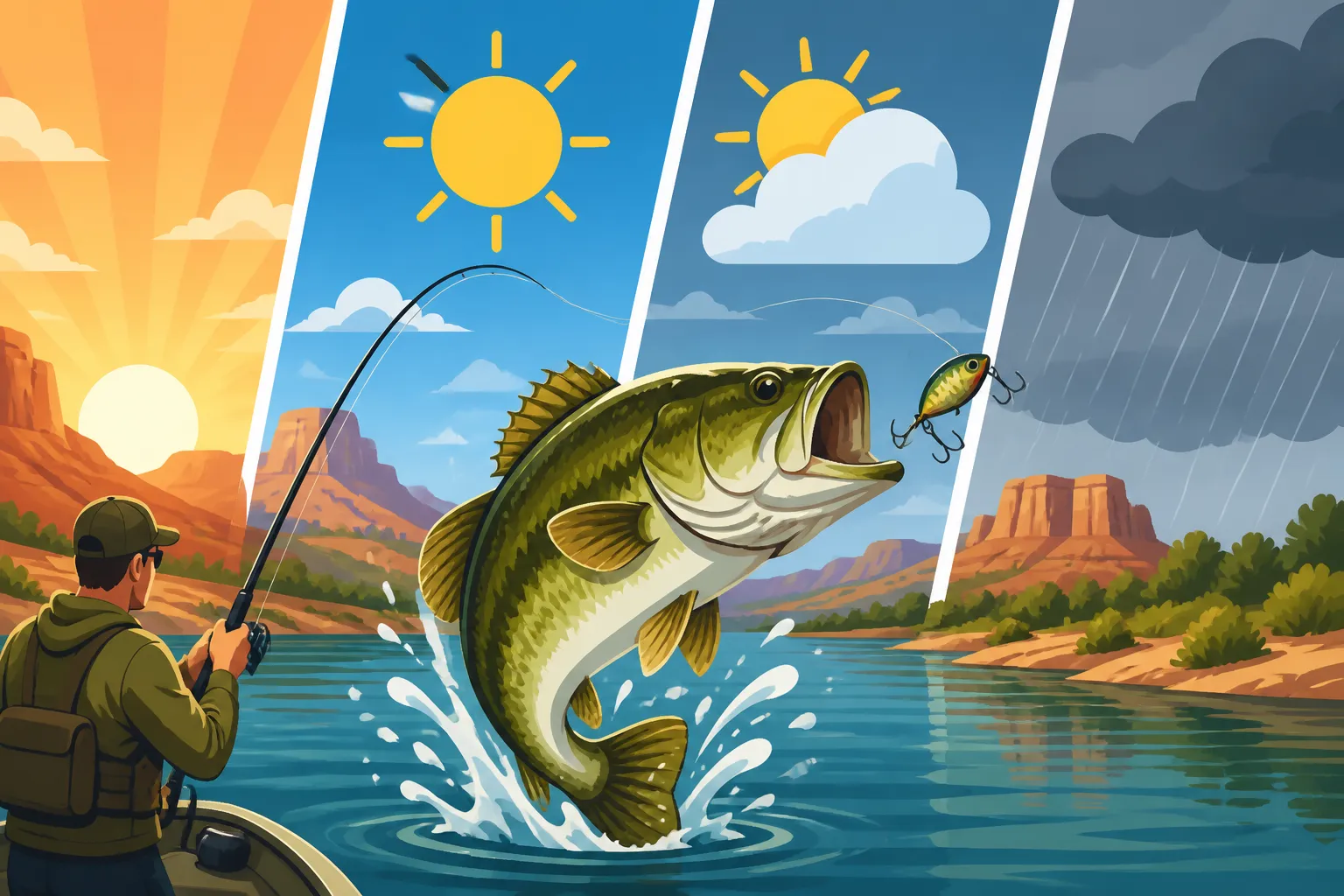
If you could pick one weather condition for bass fishing, many seasoned anglers would choose an overcast day. Cloudy skies diffuse the sunlight, reducing glare and making the water feel less exposed to bass. This decreased light penetration encourages bass to move shallower and roam more freely, often making them more aggressive throughout the day. They're not as confined to deep cover or shaded areas. On these days, you can often find bass actively hunting along shorelines, around docks, and in areas they might avoid on bright, sunny days. This is a great time to experiment with moving baits like spinnerbaits, crankbaits, and even topwater lures, as bass feel more comfortable chasing down prey.
Bright Sunny Skies: Adapting to the Glare
New Mexico is known for its abundant sunshine, and while beautiful for hiking, it can make bass fishing challenging. Under bright, clear skies, bass become much more light-sensitive. They'll typically retreat to deeper water, seek out dense cover like submerged trees, weed beds, or rock piles, or hold tightly to shade created by overhanging banks, docks, or bridges. Their lateral line and vision are highly attuned to detecting prey, but they also want to be comfortable. Fishing open water under a high sun can be tough. Your approach needs to change: focus on pinpointing shaded areas, working lures slowly and precisely into heavy cover, or fishing deeper structures where light doesn't penetrate as harshly. During these bright days, it's also a good idea to consider fishing during the low-light periods of dawn and dusk when bass are more likely to venture out of cover. A good pair of polarized sunglasses, available from retailers like Amazon, can make a huge difference in spotting fish or structure in these bright conditions.
The Power of Low-Light Conditions: Dawn, Dusk, and Night
Some of the most epic bass fishing in New Mexico occurs during low-light conditions. As the sun rises or sets, the light intensity drops, signaling to bass that it's prime feeding time. This is when they often move into extremely shallow water, chasing baitfish and actively hunting. Topwater lures can be incredibly effective during these twilight hours, producing explosive strikes that get the adrenaline pumping. For those adventurous enough, night fishing for bass in New Mexico's warmer months can be absolutely phenomenal. With virtually no light, bass lose their wariness and become much more aggressive. Big, noisy topwater lures, spinnerbaits, and dark-colored jigs fished slowly can entice huge strikes. Night fishing also offers a welcome escape from the summer heat.
Barometric Pressure: The Unseen Influence
Barometric pressure, the weight of the air above us, is a subtle but powerful force that often goes unnoticed by novice anglers. Yet, experienced bass fishermen know that pressure changes can dramatically affect how bass behave, often more so than temperature on a micro-level.
High Pressure: Clear Skies and Tight Lips
Rising or stable high pressure usually coincides with clear skies, calm winds, and falling temperatures – the classic post-cold front conditions. While the stable high pressure itself isn't always terrible, the transition to high pressure often puts bass off. The increased pressure can make fish feel uncomfortable, causing their swim bladders to expand slightly, which they then have to adjust. This discomfort, combined with the clear water and bright sun often associated with high pressure, sends bass deep and makes them lethargic. They'll often hug the bottom or bury themselves in the thickest cover. When fishing under stable high pressure, you'll need to use slower presentations, downsize your baits, and target deep structure or dense cover. Precision and patience are paramount.
Low Pressure: Stormy Skies and Feeding Frenzies
Conversely, falling or low barometric pressure, often preceding a storm, can be a fantastic time to fish for bass. As the pressure drops, fish tend to become more active and aggressive. They feel more comfortable, their swim bladders are less compressed, and the impending weather often signals a feeding window before conditions deteriorate. Cloud cover usually accompanies low pressure, which, as we discussed, also helps activate bass. This is when you can often experience those pre-front bites where bass seem to hit anything you throw at them. Moving baits like crankbaits, spinnerbaits, and jerks can be incredibly effective. However, it's crucial to prioritize safety if lightning or severe weather is in the forecast. Fishing during the leading edge of a low-pressure system is often one of the Best Time of Year to Fish in New Mexico for active bass.
Stable Pressure: The Most Predictable
While falling pressure can ignite a feeding frenzy, stable barometric pressure, whether high or low, is generally good for fishing because fish have acclimated to the conditions. Stable low pressure, particularly with overcast skies, can provide excellent fishing. Stable high pressure, though it might make fish less aggressive than stable low pressure, is still better than a rapidly changing pressure system. The key takeaway is that change in pressure, especially a rapid change, often puts bass off their feed. Once the pressure stabilizes, even if it's high, bass will eventually adjust and resume their normal activities, albeit perhaps at a slower pace if the pressure is consistently high. Your job as an angler is to observe and adapt to the prevailing stability or instability.
Rain and Storms: Mixed Blessings
New Mexico's monsoon season can bring dramatic thunderstorms, and while fishing in a storm is generally a bad idea, understanding how rain and the pre/post-storm conditions affect bass can be advantageous.
Fishing Before a Rainstorm
The hours leading up to a significant rainstorm can be some of the most productive for bass fishing. As mentioned with low pressure, bass often go on a feeding binge, anticipating the turbulent conditions ahead. The sky darkens, the wind picks up, and the barometric pressure drops, creating an ideal scenario for active fish. Use aggressive moving baits, capitalize on the low light, and target areas where bass might be looking for a quick meal. However, keep a very close eye on the weather radar and any signs of lightning. Safety always comes first, and it's better to pack it in early than risk being caught in a dangerous storm.
The Impact of Rain on Water Conditions
Light, steady rain can sometimes improve fishing conditions. The rain breaks up the surface, adds oxygen, and can wash terrestrial insects and worms into the water, providing new food sources. Bass often feel more comfortable and will move shallower to feed. However, heavy downpours can muddy the water significantly, especially in smaller lakes or rivers with high runoff. While some bass will still feed in stained water, they often rely more on their lateral line to detect prey, making noisy or vibratory lures more effective. You might need to adjust your Best Lures for New Mexico Bass selection to include baits with strong vibrations or bright colors that stand out in murky conditions. After heavy rain, especially if the water is very muddy, fishing can become quite challenging until the water starts to clear.
Post-Storm Fishing: Clearing Skies and Active Fish
Once a storm has passed, and the skies begin to clear, fishing can pick up again. The rain may have lowered the water temperature slightly, increased oxygen levels, and washed in new nutrients, stimulating bass activity. If the water isn't too muddy, bass might be quite active, feeding on dislodged bait or taking advantage of the refreshed environment. Pay attention to inflows from creeks and culverts, as these can concentrate baitfish and bass looking for an easy meal. This post-storm period, especially after a warm rain in summer, can offer excellent opportunities.
Here's a quick reference table to help you adapt your bass fishing strategy based on different weather conditions:
| Weather Factor | Condition | Bass Behavior | Suggested Approach |
|---|---|---|---|
| Temperature | Mid-60s to Low 70s | Highly active, roaming shallow | Moving baits (crankbaits, spinnerbaits), topwater |
| Cold Front (Drop) | Sluggish, deep, tight to cover | Slow presentations (jigs, worms), target dense cover/depth | |
| Heat Wave (High) | Deep, shaded areas, thermoclines, dawn/dusk active | Early/late fishing, deep jigs, drop-shots, night fishing | |
| Wind | Moderate (5-15 mph) | Active, pushed to wind-blown areas, less wary | Crankbaits, spinnerbaits, topwater on wind-blown banks |
| High (>20 mph) | Hunkered down, difficult to fish | Seek sheltered coves, heavy jigs, vertical presentations | |
| Calm/Still | Wary, deeper, avoid open water | Finesse techniques, target shaded/deep cover, stealth | |
| Light | Overcast | Active, shallow, roaming freely | Moving baits, topwater, cover more water |
| Bright Sun | Deep, tight to cover/shade, light-sensitive | Deep presentations, jigs in cover, dawn/dusk, stealth | |
| Barometric Pressure | Falling (Pre-Storm) | Highly active, feeding aggressively | Aggressive moving baits, capitalize on low light |
| High/Stable | Less active, deep, lethargic (after front) | Slow, precise presentations, target deep structure | |
| Rising (Post-Front) | Sluggish, uncomfortable, deep | Extremely slow, small baits, deep cover | |
| Rain | Light/Steady | Active, less wary, surface disturbance | Topwater, spinnerbaits, capitalize on new food sources |
| Heavy (Muddy Water) | Rely on lateral line, seek clearer water | Noisy/vibratory lures, target current breaks, slower | |
| Post-Storm | Can be active, feeding on dislodged forage | Target inflows, renewed activity, adapt to water clarity |
Putting It All Together: Becoming a Weather-Wise Angler
The beauty and challenge of fishing in New Mexico lie in its dynamic weather. You're rarely going to find perfectly "ideal" conditions all day, every day. The trick isn't to wait for the perfect weather, but to learn how to adapt your strategy to whatever conditions you face.
Always check the forecast before you go, paying close attention to temperature trends, wind speed and direction, cloud cover, and barometric pressure. Websites or apps that provide hourly forecasts can be incredibly helpful for seeing how these factors might change throughout your fishing day. For instance, knowing that a cold front is expected later can inform you to fish aggressively early on, then switch to a slower, deeper approach as the front moves in.
Remember that bass, particularly Largemouth Bass Fishing in New Mexico and Smallmouth Bass Fishing in New Mexico, are creatures of habit but also opportunists. They seek comfort and food. By understanding how different weather elements affect these basic needs, you can predict their likely locations and behaviors, significantly increasing your chances of success. Don't be afraid to experiment with different lures, depths, and retrieval speeds. Sometimes the smallest adjustment can make all the difference. Keep an eye on reports from popular New Mexico bass fisheries like Elephant Butte Lake and Conchas Lake, and always be prepared to adjust your tactics. Good luck out there, and may the weather be ever in your favor!
Disclaimer
This article is for general informational purposes only and does not constitute professional advice. Laws, prices and regulations vary by location and change over time. Consult a qualified professional for guidance on your specific situation.