Best Battery Setup for a Trolling Motor
There’s nothing quite as frustrating as being out on the vast, beautiful waters of a New Mexico lake, you've just found that perfect drop-off or weed line, and then… nothing. Your trolling motor sputters, dies, and you're left paddling or firing up the main engine, feeling like your day is cut short. The truth is, a solid, reliable battery setup for your trolling motor isn't just a luxury; it's the heartbeat of a successful day on the water, especially when you're navigating the sprawling reservoirs or quieter coves around places like Elephant Butte Lake or Navajo Lake. This guide is all about helping you understand the intricacies of battery power, so you can build a setup that keeps you moving, silently stalking fish, and enjoying every moment without worrying about running out of juice.
Understanding Your Trolling Motor's Power Needs
Before you even think about buying a battery, you absolutely must understand what your trolling motor requires to operate efficiently. It’s not just about hooking up any old battery; it’s about matching the power source to the demands of your motor and, crucially, to the kind of fishing you do here in New Mexico. Overlooking these details is a surefire way to end up stranded or constantly short on power, which can quickly turn a peaceful day into a frustrating one.
Trolling Motor Voltage 12V, 24V, 36V
The first thing you’ll notice about any trolling motor is its voltage rating. Most common freshwater trolling motors, especially those used on smaller boats, kayaks, or for lighter applications, operate on a 12-volt system. These are typically powered by a single 12V deep-cycle battery. However, as you move up to larger boats or more powerful trolling motors designed for bigger water or heavier boats, you’ll quickly encounter 24V and 36V systems.
A 24V system usually requires two 12V batteries wired in series, while a 36V system demands three 12V batteries in series. This increase in voltage directly relates to the motor's thrust — more voltage generally means more power and efficiency, which can be critical when battling headwinds on a vast reservoir like Ute Lake or navigating stronger currents. Mismatching your battery voltage to your motor's requirement won't just hinder performance; it could potentially damage your motor or prevent it from operating at all. Always check your trolling motor's specifications first and foremost.
Amp-Hour Ah Rating and Run Time
Beyond voltage, the Amp-hour (Ah) rating of a battery is your key indicator of how long your trolling motor can run. Essentially, the Ah rating tells you how much stored energy the battery holds. A higher Ah rating means more run time. For example, a 100 Ah battery theoretically can deliver 10 amps for 10 hours, or 20 amps for 5 hours, and so on.
However, it's not quite that simple in the real world. Trolling motors don't draw a constant current; they draw more amps when running at higher speeds or against wind and current, and less at slower speeds. So, a 55 lb thrust motor might draw 12-15 amps at medium speed, but jump to 50 amps at full throttle. If you're constantly running at higher speeds on a windy day at Conchas Lake, your battery will drain much faster than if you're slowly creeping along a sheltered shoreline. Understanding your typical usage pattern will help you estimate the Ah capacity you truly need for a full day of fishing.
How New Mexico's Diverse Waters Affect Power Draw
New Mexico offers an incredibly diverse range of fishing environments, and each can place different demands on your trolling motor and, by extension, your battery setup. You might be gently navigating a quiet, secluded pond one day and battling substantial chop on a sprawling lake the next. These varied conditions directly impact how much power your trolling motor needs to draw.
Consider the large, open waters of Elephant Butte Lake or Navajo Lake, especially on a breezy afternoon. The wind can create significant waves and currents, forcing your trolling motor to work much harder to maintain position or move your boat. This constant higher power draw will deplete your battery bank far quicker than if you were fishing a calm, smaller lake or a protected cove. Similarly, if you're trying to hold position against a gentle current on a river like the Rio Grande or an arm of a reservoir, your motor will be pulling amps steadily. Planning for these tougher conditions, rather than just assuming ideal calm, is paramount to prevent unexpected power loss.
Types of Batteries for Trolling Motors
When it comes to powering your trolling motor, you're not stuck with a single option. Battery technology has come a long way, offering different solutions with varying price points, performance characteristics, and maintenance requirements. Each type has its pros and cons, especially when considering the specific needs of New Mexico anglers who might encounter everything from sweltering summer days to freezing winter mornings.
Lead-Acid Deep Cycle Batteries Flooded, AGM, Gel
Lead-acid batteries are the traditional workhorses for trolling motors and remain a popular choice, primarily due to their affordability. Within the lead-acid family, you'll typically encounter three main types:
-
Flooded Lead-Acid (FLA): These are the most common and least expensive. They require regular maintenance, specifically checking and refilling electrolyte levels with distilled water. They vent gases, so proper ventilation is key, and they aren't spill-proof. They perform well for deep-cycle applications, meaning they are designed to be discharged significantly and recharged repeatedly, which is exactly what a trolling motor battery needs. You might find good options at your local auto parts store or a big box retailer like Bass Pro Shops.
-
Absorbed Glass Mat (AGM): AGM batteries are a step up. They use a fiberglass mat saturated with electrolyte, making them spill-proof and maintenance-free (no water to add). They charge faster and handle vibrations better than FLAs, which is a plus when bumping around on choppy New Mexico lakes. They also perform better in colder temperatures, which is a consideration for early spring or late fall fishing. The downside is they are heavier and more expensive than flooded batteries.
-
Gel Cell: Gel batteries use a gelled electrolyte, making them spill-proof and maintenance-free like AGMs. They are also excellent at deep cycling and perform well in high temperatures. However, they are sensitive to overcharging and don't deliver as much power as AGMs for their size, and they are generally the most expensive lead-acid option. They are less common for trolling motor applications compared to FLAs or AGMs.
Lithium Iron Phosphate LiFePO4 Batteries
Lithium Iron Phosphate (LiFePO4) batteries are the modern, high-performance option that has revolutionized portable power. While they come with a higher upfront cost, they offer significant advantages that can quickly justify the investment for serious anglers.
-
Lighter Weight: This is often the biggest draw. LiFePO4 batteries are dramatically lighter than their lead-acid counterparts for the same usable capacity. This reduction in weight can significantly improve your boat's performance, fuel efficiency, and ease of handling, especially for smaller craft or kayaks where every pound counts. Imagine not having to lug heavy batteries around!
-
Longer Lifespan: These batteries boast a much longer cycle life – often 10 times more cycles than lead-acid batteries. This means they can be discharged and recharged many more times before their capacity degrades, translating to years of reliable service and potentially offsetting the initial cost over time.
-
Consistent Power Output: Unlike lead-acid batteries, which see a voltage drop as they discharge, LiFePO4 batteries maintain a much more consistent voltage throughout their discharge cycle. This means your trolling motor performs at its peak longer, rather than gradually losing power as the day goes on.
-
Faster Charging and Deeper Discharge: They charge much faster and can be discharged almost completely without damage, giving you more usable capacity. This is incredibly convenient after a long day of fishing, getting you ready for your next outing much quicker. While the initial investment might seem steep, many anglers find the long-term benefits and performance make them worthwhile. Companies offering these batteries are increasingly accessible online through platforms like Amazon or specialized marine retailers.
Pros and Cons for New Mexico Anglers
Choosing between battery types often boils down to a balance of budget, performance, and the specific demands of your New Mexico fishing adventures.
| Feature | Flooded Lead-Acid (FLA) | AGM Lead-Acid | Lithium LiFePO4 |
|---|---|---|---|
| Initial Cost | Lowest | Moderate | Highest |
| Weight | Heaviest | Heavy | Lightest (significant difference) |
| Lifespan (Cycles) | 100-300 | 400-800 | 2,000-5,000+ |
| Usable Capacity | ~50% (discharging deeper reduces lifespan) | ~70-80% | ~90-100% |
| Maintenance | High (water levels) | None | None |
| Charging Speed | Slowest | Faster than FLA | Fastest |
| Performance | Good, drops off with discharge | Consistent, good in cold | Very consistent, excellent in various temps |
| Spill-Proof | No | Yes | Yes |
| Vibration Resist. | Low | High | High |
| Good For NM | Budget-conscious, occasional angler | Mid-range, reliable, good for varied conditions | Serious angler, long trips, performance-focused, kayaks |
For many, the lower upfront cost of flooded lead-acid batteries makes them an attractive entry point. If you're just getting into fishing or only hit the water a few times a year, a good quality FLA deep cycle battery can serve you well. Just remember the maintenance and weight. However, if you're a passionate angler who spends countless hours targeting trout in the higher elevation lakes or chasing bass across vast reservoirs like Elephant Butte, the investment in AGM or especially LiFePO4 batteries will pay dividends in consistent performance, less hassle, and greater longevity. The weight savings of lithium batteries are particularly appealing for anglers with smaller boats or those who launch frequently, as wrestling heavy lead-acid batteries can be a real pain. New Mexico Boat Registration for Anglers is another resource you might find helpful.
Designing Your Trolling Motor Battery Bank
Once you've decided on the type of battery, the next step is to correctly set up your battery bank. This isn't just about tossing batteries into your boat; it's about understanding how to wire them together to achieve the correct voltage and amp-hour capacity for your trolling motor and desired run time. Doing this incorrectly can lead to poor performance, damage to your equipment, or even safety hazards.
Series Wiring for Increased Voltage
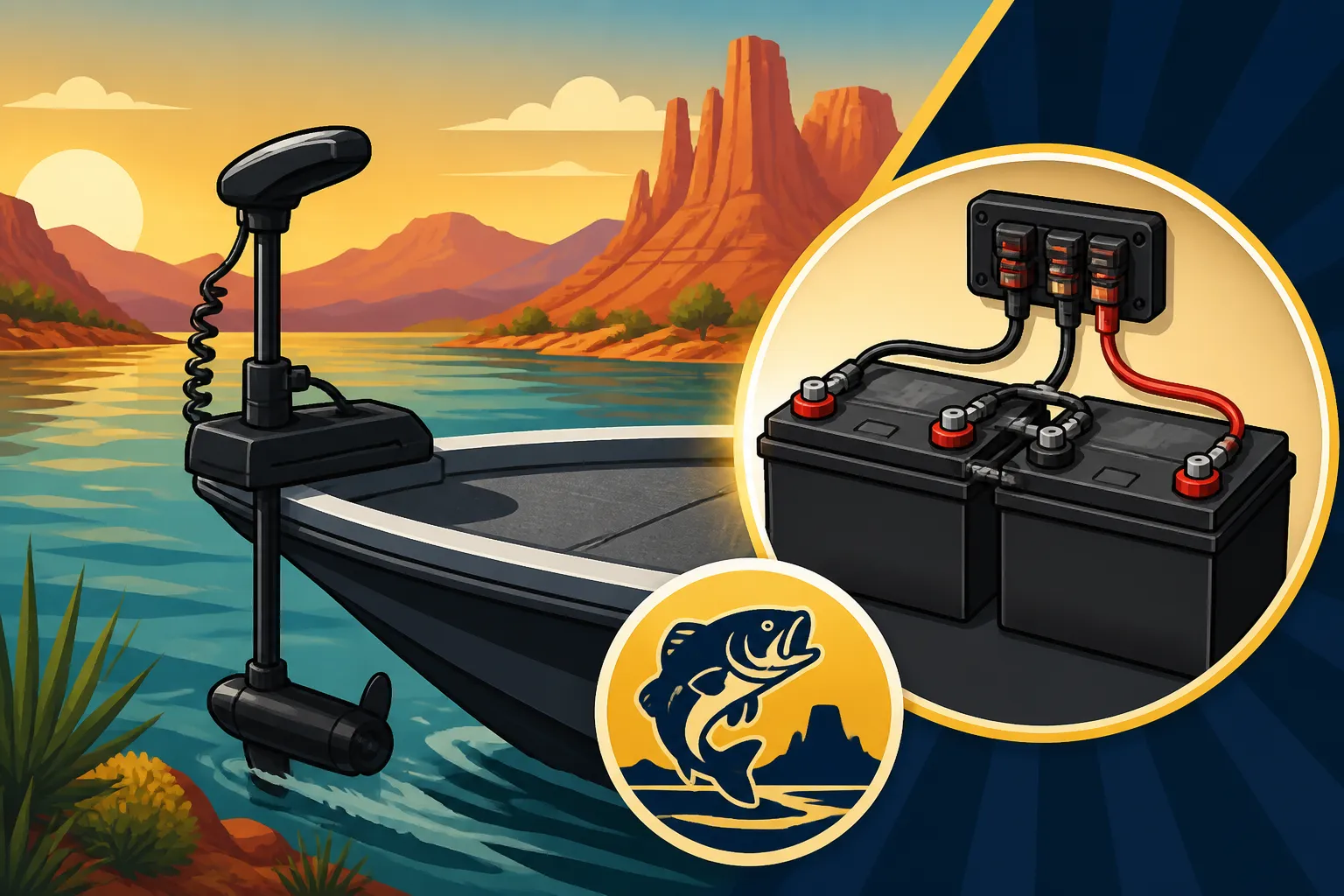
If your trolling motor requires more than 12 volts – say, 24V or 36V – you'll need to wire multiple 12-volt batteries in series. When you wire batteries in series, you connect the positive terminal of one battery to the negative terminal of the next. The voltage adds up, but the amp-hour capacity remains the same as that of a single battery.
For a 24V system, you'd connect the positive terminal of Battery 1 to the negative terminal of Battery 2. Your trolling motor would then connect to the negative terminal of Battery 1 and the positive terminal of Battery 2. This creates a 24-volt circuit. For a 36V system, you'd repeat this process with three batteries. Always use identical batteries (same brand, age, and Ah rating) when wiring in series to ensure balanced discharge and charging, otherwise, you risk shortening the life of one or all batteries. It’s a common mistake that can leave you with less power than you expect, far from shore.
Parallel Wiring for Increased Amp-Hours
If you have a 12V trolling motor but need significantly more run time, you can wire multiple 12-volt batteries in parallel. When wiring in parallel, you connect the positive terminals of all batteries together and the negative terminals of all batteries together. The voltage remains at 12V, but the amp-hour capacities add up.
For instance, if you have two 12V 100Ah batteries wired in parallel, you'll have a 12V system with a total capacity of 200Ah. This is fantastic for anglers who spend long days on the water, perhaps trolling for walleye at Conchas Lake or casting for bass on the vast expanse of Elephant Butte Lake. More amp-hours mean you can run your trolling motor longer at various speeds without worrying about losing power prematurely. Just like with series wiring, it’s best practice to use identical batteries to avoid one battery drawing down faster than another, which can lead to inefficient power delivery and a shorter overall lifespan for your battery bank.
The Importance of Proper Wiring and Connections
Regardless of whether you're wiring in series or parallel, the quality of your wiring and connections is absolutely critical. Poor connections can lead to voltage drops, overheating, reduced performance, and even fire hazards.
Always use appropriate gauge marine-grade wire for your connections. The heavier the gauge (lower number), the more current it can carry without resistance and heat build-up. For trolling motors, typically 6-gauge or 8-gauge wire is recommended, depending on the motor’s draw and the length of the run. Make sure all connections are clean, tight, and corrosion-free. Using proper crimp connectors and heat shrink tubing will protect against moisture and vibration, which are prevalent in a boat environment. Investing in high-quality battery terminals and a good crimping tool will save you headaches and ensure a reliable, safe power supply for years to come. Many resources on New Mexico Boat Registration for Anglers will also touch on safety.
Charging and Maintenance for Longevity in New Mexico
Having the best battery setup in the world won't do you much good if you don't take care of it. Proper charging and regular maintenance are paramount to extending the life of your batteries, regardless of whether you choose lead-acid or lithium. New Mexico's climate, with its hot summers and often cold winters, can be particularly demanding on batteries, making diligent care even more important.
On-Board vs. Portable Chargers
When it comes to recharging your trolling motor batteries, you essentially have two main options: on-board chargers or portable chargers. Each has its own set of advantages and is suited to different types of anglers and boats.
-
On-Board Chargers: These are permanently mounted in your boat, typically in a dry, accessible compartment. They usually have multiple banks, allowing you to charge all your trolling motor batteries (and often your cranking battery) simultaneously with just one plug. This is incredibly convenient; after a day on the water, you simply plug in your boat, and the charger takes care of the rest, automatically switching to maintenance mode once batteries are full. Many high-quality on-board chargers are designed to be waterproof or water-resistant, and some even have specific settings for different battery types (like flooded, AGM, or lithium). This is an excellent choice for serious anglers or those with larger boats who want a hassle-free, integrated charging solution.
-
Portable Chargers: As the name suggests, these are standalone units that you connect to your batteries after removing them from the boat, or while they are still in the boat but not permanently mounted. They are more versatile if you use your batteries for multiple applications or if you don't have space for a permanent installation. Portable chargers are often less expensive than multi-bank on-board units and can be a good option for smaller boats, kayaks, or for anglers with a single battery setup. The downside is the extra effort of connecting and disconnecting leads, and they typically only charge one battery at a time unless you buy multiple units or a multi-bank portable charger. You can find reliable portable chargers at any good outdoor retailer or online on Amazon.
Cold Weather Storage and Maintenance Tips
New Mexico winters can be surprisingly cold, especially in the northern parts of the state. These frigid temperatures can be harsh on batteries, particularly lead-acid types, if not properly managed during storage.
For lead-acid batteries, cold weather can reduce their capacity and, if stored in a discharged state, can lead to sulfation (a permanent capacity loss) or even freezing and cracking of the battery case. The key is to store them fully charged and check their charge periodically throughout the off-season, topping them off if needed. For flooded batteries, also ensure the electrolyte levels are correct before storage. Ideally, store them in a cool, dry place that doesn't freeze, like a garage or basement, rather than leaving them in an unheated boat shed. Lithium batteries are generally more resilient to cold and can be stored at lower states of charge, but still benefit from being stored in a climate-controlled environment if possible. Always refer to the manufacturer’s recommendations for specific cold weather storage guidelines for your battery type.
Monitoring Battery Health and When to Replace
Knowing the health of your batteries is crucial to avoid unexpected failures. A simple voltmeter can give you an immediate reading of your battery's voltage, but it doesn't tell the whole story, especially for lead-acid batteries which can show a good resting voltage but quickly drop under load if their capacity is diminished.
For a more accurate assessment, a battery load tester can apply a specific load to the battery and measure its voltage response, giving you a better idea of its true remaining capacity. For lithium batteries, a dedicated battery monitor that tracks amp-hours in and out provides the most precise real-time data. Look for signs like longer charging times, quicker discharge, or visible bulging on lead-acid batteries. Most lead-acid deep cycle batteries have a lifespan of 3-5 years with good care, while lithium batteries can last significantly longer, often 10 years or more. Don't wait until your battery leaves you stranded in the middle of a remote area like the Gila River to replace it; proactive monitoring is your best friend.
Practical Considerations for New Mexico Fishing
Beyond the technical specs and battery types, there are several real-world factors unique to fishing in New Mexico that should heavily influence your battery setup choices. Ignoring these practical aspects can lead to discomfort, inconvenience, or even safety issues on the water. Thinking through these details before you buy will save you a lot of headaches down the line.
Weight Distribution and Boat Performance
The weight of your battery setup is a significant factor, especially for smaller boats or those sensitive to weight distribution. Lead-acid batteries, particularly when you're using two or three for a 24V or 36V system, are incredibly heavy. This weight can affect your boat's performance, hull speed, and even how it sits in the water. Improper weight distribution can lead to a less stable ride, making it harder to handle in choppy conditions common on large reservoirs. It can also impact your main engine's efficiency and how quickly your boat planes.
If you have a smaller jon boat or a specific bass boat with limited space, a heavy lead-acid bank might push your weight limits or compromise your boat's handling characteristics. This is where the significantly lighter weight of LiFePO4 batteries becomes a massive advantage. Switching to lithium can shave dozens, if not hundreds, of pounds off your boat, improving everything from acceleration to top speed and overall stability. For kayak anglers, the weight savings are even more critical, as it directly impacts portability and paddling effort. This is particularly relevant if you're frequently launching and retrieving your boat yourself, or if you plan to explore those beautiful but sometimes remote High Mountain Lakes for Trout in New Mexico where lighter gear is a blessing.
Space Constraints in Different Boat Types
Every boat is different, and the amount of available space for batteries can vary wildly. A large bass boat often has dedicated battery compartments, but a smaller aluminum fishing boat, a pontoon, or a fishing kayak might have very limited options.
- Bass Boats: These usually have ample, well-ventilated compartments in the bow or stern. You'll likely have room for a multi-battery setup, but still consider the overall weight.
- Jon Boats/Small Aluminum Boats: Space can be at a premium. You might be limited to a single battery box or need to get creative with placement. Spill-proof AGM or lithium batteries are a safer bet here, as you might not have dedicated, sealed compartments.
- Fishing Kayaks: This is where space (and weight!) becomes the ultimate dictator. Many kayak anglers opt for a single, lightweight LiFePO4 battery that can fit into a dry bag or small battery box, often placed in the hull or strapped to the deck. Bulkier lead-acid batteries are generally impractical for serious kayak fishing. When considering Kayak Fishing Techniques for New Mexico Lakes, remember how much simpler a lightweight battery makes your rigging.
- Pontoons/Deck Boats: These often have compartments under seats or in consoles that can accommodate batteries, but again, ensure proper ventilation for flooded lead-acid types.
Always measure your available space before purchasing batteries, and consider battery boxes for protection and organization, especially in open-boat layouts.
Budgeting for Your Battery Setup
Let's be realistic: fishing gear, especially reliable power systems, can get expensive. When planning your battery setup, it's essential to consider your budget and weigh the initial cost against long-term benefits and desired performance.
- Entry-Level Budget: If you're on a tight budget, a good quality flooded lead-acid deep cycle battery (or two, depending on your motor's voltage) is usually the most economical option upfront. You might find great deals at local big box stores or general retailers, but be prepared for the maintenance.
- Mid-Range Budget: Stepping up to AGM lead-acid batteries offers a significant improvement in convenience (maintenance-free, spill-proof), performance, and lifespan compared to flooded batteries, but at a higher cost. This is often the sweet spot for many casual to semi-serious anglers who want reliability without the top-tier lithium price tag.
- Premium Budget: Lithium LiFePO4 batteries represent the highest initial investment. However, for serious anglers, frequent users, or those who prioritize performance, weight savings, and extreme longevity, the total cost of ownership over many years can actually be competitive with, or even lower than, repeatedly replacing lead-acid batteries. Plus, the intangible benefits of lighter weight and consistent power are hard to put a price on. Explore options from reputable brands at places like Bass Pro Shops or specialized marine battery dealers, or look for deals online through Amazon. Don't forget to factor in the cost of a compatible charger, especially for lithium batteries which require specific chargers. While it may seem like a large sum at first, a reliable power setup is truly an investment in your enjoyment and success on the beautiful New Mexico waters.
Disclaimer
This article is for general informational purposes only and does not constitute professional advice. Laws, prices and regulations vary by location and change over time. Consult a qualified professional for guidance on your specific situation.