Best Stringer for Keeping Fish in a Reservoir
There’s nothing quite like a day out on a New Mexico reservoir, the sun glinting off the water, and the anticipation of a bite. But let's be honest, figuring out how to keep your hard-earned catch fresh, especially in our often-warm desert climate, can be a real head-scratcher. This guide is all about helping you navigate the world of fishing stringers, ensuring your fish stay alive and healthy if you plan to keep them, or are in good shape for release.
Why a Good Stringer Matters in New Mexico Reservoirs
Imagine this: you've just landed a beautiful rainbow trout or a feisty smallmouth bass at Cochiti Lake, and you're planning on taking it home for dinner. What's the next step to ensure that fish stays fresh and doesn't spoil in the heat? This is where a reliable stringer comes into play. It’s not just about convenience; it’s about responsible angling and preserving the quality of your catch.
The Challenge of Warm Water and Predators
New Mexico’s reservoirs can get pretty toasty, especially during the long summer months. Water temperatures in places like Elephant Butte Lake or Ute Lake can rise significantly, and stringing a fish in warm surface water is practically a death sentence for it. The fish will struggle, stress out, and often die quickly, which isn't ideal if you're hoping to keep it alive until you're ready to head home, or if you plan to release it later.
Even if the water isn't scorching, strung fish are vulnerable. They can become targets for opportunistic predators like gulls, ospreys, or even larger predatory fish lurking nearby. I’ve heard countless stories of anglers losing their entire stringer because a hawk decided their catch looked like an easy meal. A well-chosen stringer helps mitigate these risks by allowing you to submerge your fish deeper into cooler water, away from direct sunlight and the immediate sightline of aerial predators. It's about giving your fish the best chance to survive until it's time to process them.
Legal and Ethical Considerations
Beyond freshness, using a stringer also ties into the regulations and ethics of fishing. Every angler has a responsibility to understand and adhere to the New Mexico Fishing Regulations Overview, including bag and possession limits. A stringer helps you keep track of your catch, making it easier to stay within those limits. You don't want to get home and realize you accidentally over-harvested because you lost count of loose fish in a cooler.
Ethically, if you intend to keep your fish, the goal is a humane dispatch. A stringer allows you to keep fish alive in the water, minimizing stress until you're ready to clean them, rather than letting them suffocate in a bucket or on the bank. For fish you don't intend to keep, even if they're hooked in a way that requires a moment to recover, a stringer can provide a temporary, safe holding spot before a proper release. However, this is generally only for very short periods and the focus should always be on getting them back into the water as quickly and gently as possible if you're practicing Catch and Release Best Practices in New Mexico.
Types of Fishing Stringers: Pros and Cons for Reservoir Use
When you walk into a tackle shop or browse online at retailers like Bass Pro Shops, you'll see a few main types of stringers. Each has its place, but some are definitely better suited for the unique demands of reservoir fishing in New Mexico. Choosing the right one can make a big difference in the health of your catch.
Rope Stringers
The classic, most recognizable stringer is often just a length of rope with a metal needle or a loop at one end and sometimes a float at the other. You thread the needle through the fish's gill plate or lower jaw, then secure it. These are incredibly simple, inexpensive, and lightweight, making them easy to pack for a day of bank fishing at, say, Sumner Lake or a smaller pond. You can find basic rope stringers pretty much anywhere fishing gear is sold, from small local shops to large online retailers like Amazon.
However, rope stringers have some notable drawbacks, especially in a reservoir setting. Because fish are all strung together on a single line, they can easily become tangled, especially if you have multiple fish or if they’re still feisty. This tangling increases stress and can lead to injury, making it harder for them to breathe. If the water is warm, the lack of individual spacing can lead to quicker oxygen depletion and warmer water around the fish, reducing their chances of survival. For a larger catch, the rope can also chafe or cut into the fish, further compromising their health or even the quality of the meat if you plan to eat them. They're best for short periods with a few small, quickly dispatched fish.
Chain Stringers
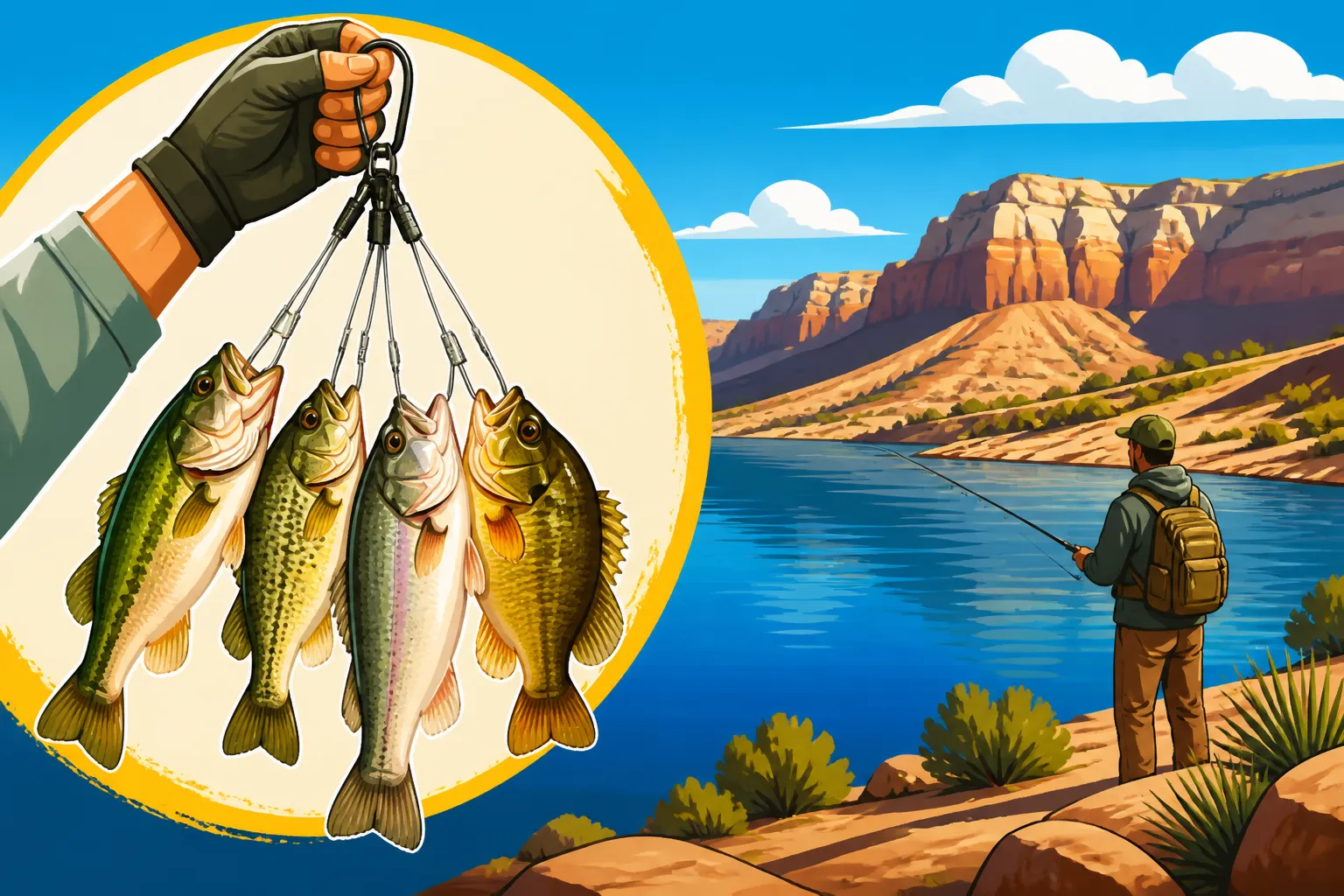
Chain stringers represent a significant upgrade for reservoir anglers. These consist of a metal chain with several individual clips or pins attached at intervals. Each clip can be opened, passed through a fish's gill plate or lower jaw, and then closed securely. This design offers several advantages over a simple rope. First, each fish has its own space, preventing tangling and allowing better water circulation around it, which is crucial for keeping fish alive in warmer reservoir waters. The individual clips are also generally more secure, reducing the chance of a fish escaping if it thrashes or if the stringer is bumped.
While heavier and often a bit more expensive than rope stringers, chain stringers are far superior for keeping multiple fish alive and healthy. They are robust and can handle the weight of a larger catch, like a stringer full of walleye from Conchas Lake or striped bass from Elephant Butte Lake. The metal chain is also more resistant to abrasion from rocks or submerged debris. However, even with a chain stringer, vigilance is key. If conditions are too warm or fish are severely stressed from the fight, even individual clips won't guarantee their survival. Always submerge your chain stringer as deep as safely possible into cooler water to maximize your fish's chances.
Livewells and Other Alternatives
While the focus here is on stringers, it's worth briefly mentioning alternatives, especially if you're serious about keeping fish alive for extended periods. A livewell, common on many fishing boats, is essentially a circulating tank that constantly refreshes water, keeping fish oxygenated and cool. This is the gold standard for catch and release tournaments or for anglers who want to keep a large number of fish alive throughout a long day on the water, whether at Navajo Lake or Heron Lake.
For those without a livewell or who are fishing from the bank, a cooler filled with ice can be a viable alternative for fish you intend to keep and consume immediately. The moment you catch a fish you want to harvest, dispatch it humanely and place it directly on ice. This chills the fish quickly, preserving its freshness and flavor better than struggling on a stringer in warm water. Soft-sided coolers can be great for this too, offering portability for bank anglers. Ultimately, the best method depends on your fishing style, the species you're targeting, and your intentions for the fish.
Key Features to Look for in a Reservoir Fishing Stringer
Choosing the right stringer isn't rocket science, but paying attention to a few key features can really elevate your experience and success in keeping fish. Think about the conditions you'll typically face on New Mexico's larger waters – wind, currents, varying depths, and often plenty of sun. A well-designed stringer can make all the difference.
Length and Material
The length of your stringer is more important than you might think, especially when fishing from the bank or a dock on a reservoir. You want a stringer long enough to reach cooler, deeper water where fish will be less stressed. On a sunny afternoon at a lake like Caballo Lake, the surface water can be significantly warmer than just a few feet down. A stringer that's too short will leave your fish languishing in the hot, oxygen-depleted upper layer, which can quickly lead to their demise. Consider stringers that are at least 10-15 feet long, or even longer if you anticipate fishing from higher banks or docks.
The material of the stringer is also critical. For chain stringers, look for stainless steel or other rust-resistant metals. New Mexico's waters, while not saltwater, can still cause cheaper metals to corrode over time, weakening the stringer and potentially harming fish. For rope stringers, choose a durable, braided nylon or synthetic material that won't fray easily or absorb too much water, which can make it heavier and harder to manage. The thicker the rope, the less likely it is to cut into a struggling fish, improving its chances of survival.
Clip Design and Security
This is where chain stringers really shine. The design of the individual clips dictates how easily and securely you can attach and detach fish, as well as how much stress the fish experiences. Look for clips that are sturdy and have a strong spring or locking mechanism. You don't want a clip that can accidentally pop open if a fish thrashes violently or if the stringer gets snagged. Swivel connectors between the clips and the main chain are also a huge plus, as they allow fish to orient themselves naturally in the water, reducing tangles and stress.
The shape of the clip itself matters. Some clips are designed with a blunt end to pass through the fish's lower jaw or gill plate, minimizing tissue damage. Avoid clips with sharp points that can pierce vital organs or cause excessive bleeding, which is not only inhumane but can also spoil the meat quickly. Ease of operation is another factor; you want clips that are simple to open and close with one hand, especially when you're trying to quickly string a lively fish while managing your rod.
Buoyancy and Visibility
Losing your stringer, and your hard-won catch with it, is a frustrating experience. That's why buoyancy is a non-negotiable feature for any reservoir stringer. A bright, clearly visible float at the end of the stringer is essential. This float serves multiple purposes: it prevents your stringer from sinking to the bottom (where it could get snagged or lost), and it makes it easy to locate your fish from a distance, even in choppy water or changing light conditions. Look for floats in high-visibility colors like orange, yellow, or bright green.
Some stringers integrate a float directly into the design, while others might require you to add one separately. If you're adding your own, make sure it's buoyant enough to support the weight of a full stringer of fish. Beyond buoyancy, visibility applies to the stringer itself. While not always practical for the entire length, a brightly colored segment near the float or even the main rope/chain can help other boaters or anglers spot your stringer, preventing accidental collisions or snags. This is especially important on busy lakes or during times when you might be moving around your fishing spot.
Best Practices for Using a Stringer in New Mexico Reservoirs
Using a stringer correctly isn't just about clips and chains; it's about understanding how to care for your fish once they're caught. Proper technique, regular monitoring, and knowing when to use an alternative can significantly impact the freshness and quality of your catch, or the success of a release.
Proper Fish Handling and Placement
When you're ready to string a fish, handle it as gently and quickly as possible. For fish you intend to keep alive until you're done fishing, thread the stringer through the lower jaw, making sure not to pierce the gills or any vital organs. This allows the fish to open its mouth and breathe naturally as water flows over its gills. If you're putting the fish directly onto the stringer for immediate harvest, some anglers prefer to run the stringer through the eye socket – a quick, definitive action that ensures the fish is dispatched and won't suffer, and also won't damage the meat if done correctly. Always consult New Mexico Trout Bag and Possession Limits or New Mexico Warm Water Fish Bag Limits to ensure you're within legal harvest numbers.
Once strung, immediate placement in the water is critical. Try to submerge the fish into the deepest, coolest water you can safely reach. Away from direct sunlight, boat traffic, and strong currents. Fish need oxygenated, cool water to survive. If fishing from a boat, keep the stringer on the shady side. If bank fishing, look for overhanging trees or structure that provides natural shade and deeper access. Avoid shallow, stagnant coves where water can heat up quickly and oxygen levels drop.
Monitoring and Maintenance
A stringer isn't a "set it and forget it" tool. Regularly check on your strung fish throughout your fishing trip. Look for signs of stress: fish lying on their sides, sluggish movement, or gasping. If you see these signs and you still have hours left to fish in warm conditions, it might be time to either harvest them immediately and put them on ice, or, if permitted and the fish is still viable, consider a quick, careful release. The goal is to minimize suffering and ensure the best quality if you're keeping them.
After each fishing trip, thoroughly clean your stringer. Rinse off any fish slime, blood, or debris. This prevents unpleasant odors, bacterial growth, and corrosion, especially on metal components. Allow it to air dry completely before storing it. Proper maintenance extends the life of your stringer and keeps it hygienic for future use. A clean stringer is also less likely to transfer diseases between different water bodies, which is an important consideration for aquatic health.
When to Opt for Alternatives
While stringers are convenient, there are times when opting for an alternative is simply the better, more responsible choice. If you're fishing in the peak of summer at a reservoir like Elephant Butte where surface water temperatures can soar, even the best stringer might not keep fish alive for very long. In such conditions, especially if you plan to keep your catch, it's often more humane and practical to immediately dispatch the fish and place them on ice in a cooler. This ensures maximum freshness and prevents spoilage.
Similarly, if you're practicing strictly catch and release, or targeting species with specific handling requirements like Gila Trout, a stringer is generally not appropriate. For these situations, a soft, knotless landing net and prompt, careful handling for release are paramount. Always consider the fish's well-being and the environmental conditions. If you notice fish on your stringer are showing severe signs of stress or dying quickly, that's a clear signal that the conditions are not suitable for holding them, and it's time to switch to a different strategy, whether that's immediate harvest or releasing future catches.
Stringer Types for New Mexico Reservoir Fishing Comparison
Here's a quick comparison to help you decide which stringer might be best for your next New Mexico reservoir fishing adventure:
| Feature | Rope Stringer | Chain Stringer |
|---|---|---|
| Cost | Low | Moderate |
| Durability | Varies (rope can fray, hooks rust) | High (especially stainless steel) |
| Fish Security | Moderate (fish can slip off or untie if not tight) | High (individual clips secure each fish) |
| Fish Health | Low (tangling, poor circulation, high stress) | Moderate to High (better circulation, less tangling) |
| Capacity | Limited by rope length and tangling | Moderate (number of clips) |
| Weight | Very lightweight | Moderate to heavy |
| Ease of Use | Simple, but threading can be awkward | Easy clip operation |
| Best For | Quick trips, a few panfish, immediate harvest | Longer trips, multiple game fish, keeping alive longer |
| Ideal Reservoir Use | Small ponds, short bank fishing sessions | Large lakes, boat fishing, longer bank sessions |
Disclaimer
This article is for general informational purposes only and does not constitute professional advice. Laws, prices and regulations vary by location and change over time. Consult a qualified professional for guidance on your specific situation.