How to Choose Trout Fly Size by Season
There's nothing more frustrating than standing knee-deep in a pristine New Mexico river, casting your perfectly tied fly, and watching trout lazily ignore it. Often, it's not your technique or even your fly pattern that's the problem, but the size. Trout are incredibly tuned into the subtle nuances of their food sources, and fly size changes dramatically with the seasons and available hatches. This guide will walk you through how to choose the right trout fly size for your New Mexico fishing adventures, season by season, helping you connect with more fish.
Understanding the "Match the Hatch" Principle and Why Size Matters So Much
Before we dive into specific seasons, it's crucial to grasp the fundamental concept of "matching the hatch." This isn't just a catchy phrase; it's the cornerstone of effective fly fishing. Trout primarily feed on aquatic insects like mayflies, caddisflies, and stoneflies, as well as terrestrials like grasshoppers and ants. These insects have life cycles that involve different stages (nymph, larva, pupa, adult) and, critically, varying sizes throughout the year.
The "hatch" refers to the emergence of adult insects from the water, making them readily available to feeding trout. When trout are actively feeding on a specific emerging insect, they become incredibly selective. If your fly doesn't match the natural insect in terms of shape, color, and, most importantly, size, they'll often ignore it. This pickiness is especially true in clear, pressured waters, which New Mexico has plenty of, like sections of the San Juan River. Think about it from a trout's perspective: if hundreds of juicy size #18 mayflies are drifting by, why would they waste energy on a size #12 fly that looks subtly "off"? Getting the size right can often be more important than the exact pattern or color, particularly on challenging days.
The Role of Water Conditions and Trout Behavior
Water temperature, flow, and clarity significantly impact trout behavior and, consequently, what they're eating and what size flies you should present. In colder water, trout are more lethargic, their metabolism slows down, and they're less likely to chase a large, fast-moving meal. Conversely, in warmer water with abundant food, they might be more aggressive and willing to strike at larger, more visible flies. High, turbid water from runoff or monsoons might call for larger, darker patterns that create more contrast, while crystal-clear, low flows demand smaller, more natural imitations. Understanding these dynamics is key to truly mastering fly size selection.
Decoding Fly Sizes
Fly sizes are counter-intuitive if you're new to the game. The smaller the number, the larger the hook and therefore the fly. So, a size #8 fly is much bigger than a size #22. Common sizes for trout flies range from a hefty #4 or #6 (think big streamers or stoneflies) down to microscopic #24 or even #28 for tiny midges. Knowing this scale is your first step to making informed choices. When you're browsing for fly assortments on Amazon, you'll often see them labeled with these numbers, so it's good to familiarize yourself.
Springtime's Delicate Dance: When Waters Awaken and Insects Emerge
Spring in New Mexico is a season of transition, often characterized by warming temperatures, increasing sunlight, and the start of snowmelt runoff. This period brings a surge of aquatic insect activity, but the exact timing and species can vary wildly depending on elevation and water source. Lower elevation rivers and stillwaters will warm up faster, leading to earlier hatches, while high mountain streams might remain frozen well into late spring.
As the ice recedes and water temperatures climb into the 40s and 50s Fahrenheit, trout metabolism kicks into gear, and they start actively feeding. This is when the "match the hatch" principle truly shines.
Early Spring: Nymphs and Patience
In early spring, especially March and April, water temperatures are still quite cold. While some insects might be thinking about emerging, a significant portion of a trout's diet still consists of subsurface nymphs and larvae. This is a prime time for nymphing. Look for stoneflies, caddis larvae, and larger mayfly nymphs.
Common early spring flies might include:
- Stonefly Nymphs: Sizes #8 to #14. Patterns like a Pat's Rubber Legs or a 20 Incher Stone are excellent imitations. Stoneflies are hardy insects that often withstand cold water, making them available early.
- Caddisfly Larvae/Pupae: Sizes #14 to #18. Green Rock Worms or LaFontaine's Sparkle Pupa are great choices. Caddis are abundant in many New Mexico rivers.
- Mayfly Nymphs: Sizes #16 to #20. Pheasant Tail Nymphs, Hare's Ears, and BWO (Blue-Winged Olive) nymphs are essential. BWOs are particularly important as they can hatch even on overcast, cooler days.
When runoff begins, water levels can rise, and clarity might decrease. In these conditions, don't be afraid to go a size or two larger, or use flies with more flash or weight to get down to the fish. Larger nymphs stand out better in off-color water. Consider how river flows affect Fishing After Runoff in New Mexico.
Late Spring: Emerging Hatches and Delicate Dries
As spring progresses into May and early June, especially before heavy runoff or after it subsides, the variety and density of insect hatches really pick up. This is when you'll start to see more dry fly action. Mayflies like Blue-Winged Olives (BWO) and March Browns, along with various caddisflies, become very active.
- Blue-Winged Olives (BWOs): These are tiny, dark mayflies that often hatch on cloudy days. You'll typically need sizes #18 to #22 for adult BWOs, and matching nymphs in similar sizes. They're a staple for Spring Trout Fishing in New Mexico.
- Caddisflies: Various species of caddis hatch throughout spring, from smaller Grannom caddis to larger Mother's Day caddis. Sizes can range from #14 to #18 for the adults (Elk Hair Caddis, X-Caddis), with matching pupa patterns.
- March Browns: A larger mayfly, usually around size #12 or #14. These can offer some exciting dry fly fishing when they appear.
Remember that trout will key into the size of the emerging insect, not just the adult. If you're seeing fish rise but they're ignoring your dry fly, try a pupa or emerger pattern a size smaller, fished just below the surface. This mimics the insect struggling to break free from its nymphal shuck, a highly vulnerable stage for a trout to exploit.
Summer's Bounty: Adapting to Low Flows and Terrestrials
Summer in New Mexico brings warmer water temperatures, typically lower flows (unless monsoons are active), and a change in the trout's diet. While aquatic insects are still present, the warmer weather and lush vegetation along the banks introduce a whole new food source: terrestrials. These are land-dwelling insects that accidentally fall into the water, becoming an easy meal for opportunistic trout.
Early Summer: Post-Runoff Nymphing and Emerging Dries
Once spring runoff completely subsides, usually by late June or early July, rivers often settle into clearer, lower flows. Trout can become a bit wary in these conditions, and you might need to scale down your flies. However, there are still excellent opportunities. Caddisflies continue to be important, and some larger mayfly species might still be hatching in cooler sections.
- Caddisflies: Still prominent, especially in the evenings. Sizes #14-16 for adults and pupae.
- Yellow Sallies (Stoneflies): A smaller, yellow stonefly that hatches in summer, usually sizes #14-16. Their nymphs are also good.
- Green Drakes/Pale Morning Duns (PMDs): In certain, higher elevation or cooler rivers, larger mayflies like Green Drakes (size #10-14) or the more common Pale Morning Duns (size #16-18) can provide fantastic dry fly action.
Consider using smaller nymphs like a Copper John or Zebra Midge in sizes #18-22 as "droppers" below a larger dry fly. This dual presentation covers both subsurface and surface feeding.
Mid-to-Late Summer: The Terrestrial Feast and Tiny Midges
As July and August roll around, terrestrial insects become a dominant food source. Grasshoppers, ants, beetles, and cicadas can be incredibly effective, especially on breezy days when they're blown into the water. This is when you can often get away with larger, more visible dry flies.
- Grasshoppers: Foam hoppers, Dave's Hoppers, and Parachute Hoppers in sizes #8 to #12. These are fantastic for prospecting along grassy banks on warmer days.
- Ants: Often overlooked, ants are a trout staple throughout the summer. Black or Cinnamon Ants in sizes #16 to #20 can be deadly.
- Beetles: Foam beetles or deer hair beetles in sizes #14 to #18 are also excellent imitations.
- Cicadas: In areas where cicadas are active, large cicada patterns (sizes #6-10) can induce aggressive strikes.
Even with terrestrials, always keep an eye out for smaller, more subtle insect activity. During the heat of the day, when other hatches are sparse, trout will often switch to feeding on tiny midges. These can be absolutely microscopic, requiring flies in sizes #20 to #26 (or even #28). A well-presented Griffith's Gnat or Zebra Midge can fool even the most selective trout. Don't forget to check out Summer Fishing in New Mexico for more tips.
Autumn's Golden Hour: The Season of Transition and Opportunity
Fall in New Mexico is arguably one of the best times to fish for trout. The oppressive summer heat begins to wane, water temperatures become ideal, and trout become incredibly active as they prepare for winter and, for some species like brown trout, their spawning season. This means trout are often aggressive and willing to chase larger meals.
Early Fall: Last of the Terrestrials and Renewed Hatches
As September and October begin, you might still find success with terrestrial patterns, especially on warmer, sunny days. However, the aquatic insect hatches start to pick up again, mirroring some of the spring activity but often with larger, heartier insects.
- Fall Caddis: Often larger caddis species emerge, sometimes a vibrant orange or tan. Sizes #12 to #16 are common.
- BWO Mayflies: Blue-Winged Olives make a strong comeback in fall, particularly on overcast days. Again, expect sizes #18 to #22 for the adults and matching nymphs.
- Mahogany Duns: Another important fall mayfly, usually around sizes #14-16.
This is a great time to fish attractor patterns, especially dry-dropper rigs, where a visible dry fly supports a nymph beneath. Trout are looking for food and might be less finicky than in summer.
Late Fall: Bigger Meals and Spawning Aggression
As November approaches and water temperatures cool further, many trout species, especially brown trout, begin their spawning rituals. While you should always avoid targeting actively spawning fish on redds, their pre-spawn and post-spawn aggression can make them eager to strike. This is often a time for larger streamers and egg patterns.
- Streamers: Black, olive, or brown streamers in sizes #4 to #10. Patterns like Woolly Buggers, Sculpzillas, or articulated streamers can entice aggressive strikes from larger trout looking for a substantial meal. Focus on stripping these near cover or in deeper pools.
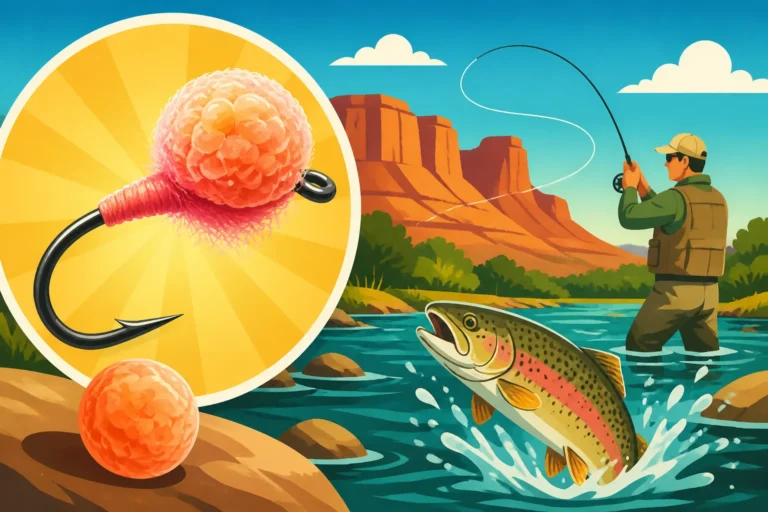
- Egg Patterns: As brown trout begin to spawn, other trout species and even non-spawning browns will key into the easy protein of loose eggs. Bright orange, pink, or chartreuse egg patterns in sizes #12 to #16 can be highly effective.
- Stonefly Nymphs: Large stonefly nymphs (sizes #6 to #12) continue to be a consistent food source as trout bulk up for winter.
During this period, trout are focused on calories. Don't be shy about fishing larger flies, both nymphs and streamers, especially in the deeper, slower sections of rivers. Fall Fishing in New Mexico can be incredibly rewarding for those willing to brave the cooler weather.
Winter's Whisper: Tiny Baits for Lethargic Fish
Winter fishing in New Mexico, while challenging, can be incredibly rewarding for the patient angler. With cold water temperatures, insect activity slows dramatically, and trout become far less active. Their metabolism is at its lowest, and they conserve energy, often holding in deeper, slower pools. This means you need to present small, subtle flies, often in extremely small sizes, right in their feeding lane.
Cold Water, Small Flies: The Midge Dominance
In winter, midges (tiny two-winged flies) often become the primary food source. They are one of the few aquatic insects that can hatch even in very cold water. Trout will often sip these tiny insects off the surface or feed on their even tinier larvae and pupae subsurface. This is where your smallest flies come into play.
- Midge Larvae and Pupae: The most important winter flies. Zebra Midges, Top Secret Midges, and Bling Midges in sizes #18 to #26 are absolute necessities. Fish these in tandem rigs, often with a heavier nymph to get them down.
- Small Mayfly Nymphs: Even tiny BWOs can be present. Pheasant Tail Nymphs or Two-Tone BWO Nymphs in sizes #20 to #24 are sometimes effective.
- Small Streamers: On exceptionally warm, sunny winter days or in tailwater fisheries like the San Juan River, a small, sparsely tied streamer in black or olive (sizes #12 to #18) can sometimes entice a sluggish but opportunistic trout.
The key to winter fishing is slow, deliberate presentations and perfect drifts. Trout won't move far for a meal, so your fly needs to come right to them. Focus on the slower, deeper water where trout can conserve energy. Winter Fishing in New Mexico requires a different mindset but can lead to some incredible catches. For specific patterns, consult Best Flies for the San Juan River in Winter.
The Importance of Tippet Size and Stealth
When fishing such small flies, your tippet (the fine end of your leader) becomes critical. You'll need to go down to very light tippet, often 5x, 6x, or even 7x, to achieve a natural drift and avoid spooking fish. The thinner line is less visible and allows the tiny fly to move more freely in the current. Combining small flies with light tippet and a stealthy approach is paramount for success in winter's clear, cold waters. You can find a good selection of high-quality fluorocarbon tippet on Amazon to help with this.
Seasonal Fly Size Chart for New Mexico Trout
Here's a quick reference chart to help you visualize typical fly sizes by season and insect type. Remember, these are general guidelines; always observe the water for actual hatches!
| Season | Primary Insect Types | Common Fly Patterns (Examples) | Typical Dry Fly Sizes | Typical Nymph/Streamer Sizes | Notes |
|---|---|---|---|---|---|
| Spring | Stoneflies, Caddis, BWOs, March Browns | Pat's Rubber Legs, Pheasant Tail, Elk Hair Caddis, Parachute BWO, March Brown Dry | #14 – #22 | #8 – #20 | Early spring focuses on subsurface nymphs. As water warms, dries emerge. Consider larger sizes during runoff for visibility. |
| Summer | Terrestrials (Hoppers, Ants, Beetles), PMDs, Midges | Foam Hopper, Ant Pattern, Foam Beetle, Parachute PMD, Griffith's Gnat, Zebra Midge | #8 – #26 | #16 – #26 | Terrestrials are key, allowing for larger dries. In slower, clear water or during sparse hatches, tiny midges are essential. |
| Fall | Fall Caddis, BWOs, Mahogany Duns, Stoneflies, Eggs | October Caddis Dry, Parachute BWO, Mahogany Dun, Woolly Bugger, Egg Pattern, Stonefly Nymph | #12 – #20 | #4 – #16 | Trout bulk up; larger patterns and streamers can be very effective, especially for brown trout. Egg patterns are crucial during spawning. |
| Winter | Midges, Small BWOs | Griffith's Gnat, Matt's Midge, Zebra Midge, Bling Midge, Small Pheasant Tail | #20 – #28 | #18 – #26 | Focus heavily on tiny midge patterns, presented slowly and precisely in deeper, slower water. Light tippet is a must. |
This table is a great starting point when you're stocking your fly box or deciding what to tie on. It helps consolidate the knowledge on How to Catch Trout in New Mexico year-round.
Final Thoughts on Fly Size Selection
Choosing the right fly size by season isn't an exact science, but rather an art refined through observation, experience, and a willingness to adapt. Always start by observing the water: are there insects flying? Are fish rising, and if so, what do the "shucks" or drowned insects look like? What's the water clarity and temperature? These clues will guide you far more than any rulebook.
Don't be afraid to experiment. If fish aren't taking your size #16 dry fly, try a #18 or even a #20. Sometimes that tiny difference is all it takes. Similarly, if you're nymphing in off-color water, a slightly larger, darker nymph might be exactly what the trout are looking for. Having a good range of sizes for your most productive patterns is always a smart move. You can often find comprehensive fly assortments on Amazon that cover various sizes, making it easier to be prepared.
Ultimately, successful fly fishing in New Mexico is about connecting with the natural world and understanding the subtle cues it provides. By mastering the art of fly size selection by season, you'll be well on your way to more memorable days on the water.
Disclaimer
This article is for general informational purposes only and does not constitute professional advice. Laws, prices and regulations vary by location and change over time. Consult a qualified professional for guidance on your specific situation.