How to Fish a Spinner in Fast Current
Trying to effectively fish a spinner in a fast-moving New Mexico river can feel like a constant battle against the current, often resulting in your lure getting washed downstream too quickly or not reaching the fish-holding pockets you know are there. It's incredibly frustrating when your presentation isn't right, and you feel like you're just casting and retrieving without purpose. This comprehensive guide is here to equip you with the knowledge, techniques, and gear insights you need to confidently and successfully fish spinners in even the swiftest currents New Mexico's amazing waters have to offer.
The Unique Challenges of Fast Current for Anglers
Fishing in fast current isn't just about casting further or retrieving faster; it's a completely different ballgame than stillwater fishing. The dynamics of moving water present a unique set of obstacles that, once understood, can be turned into advantages. Many anglers, especially those new to river fishing, often find themselves struggling to maintain control of their lure or even locate fish effectively in these conditions.
Why Fast Water Is So Different
Imagine standing in a powerful river. The water isn't moving uniformly; it's a complex system of eddies, seams, riffles, and pools, each with its own speed and direction. The sheer force of the water current acts upon your line, your lure, and even your body if you're wading. This force creates drag, pulling your line and spinner in ways you don't intend, making it incredibly difficult to achieve a natural presentation. Fish in these environments are also adapted to the current; they'll position themselves in specific ways to conserve energy, using current breaks as their shelter and feeding lanes. Understanding these hydrodynamics is the first step to conquering fast water.
Furthermore, fast current often means colder, more oxygenated water, which can be fantastic for trout and other cold-water species. However, it also means the fish might be more spread out or concentrated in very specific, harder-to-reach lies. Visibility can also be a factor; highly oxygenated, turbulent water can sometimes make it harder for fish to see your lure, or conversely, it might provide cover for you to approach them more closely. It's a constant dance between adapting to the environment and outsmarting the fish.
Common Frustrations When Spinner Fishing Strong Flows
We've all been there: you cast your beautiful spinner into what looks like a prime spot, only for it to be instantly swept away downstream, tumbling unnaturally, or just not getting deep enough to where the fish are holding. This can lead to a lot of wasted casts and demoralization. Another common frustration is the inability to feel your lure. When the current is pulling hard on your line, it masks the subtle bumps and takes that signify a fish biting. You might be missing strikes completely because the current is dominating the feel of your rod.
Then there's the battle of maintaining contact. Losing touch with your spinner means you can't control its depth, retrieve speed, or direction. It becomes a passive offering to the river, hoping a fish happens upon it, rather than an active presentation designed to entice a strike. This lack of control is often the biggest hurdle for anglers. Plus, if you're wading, the current itself can be physically demanding, making precise casting and delicate retrieves even more challenging. It’s no wonder many anglers opt for slower water, but with the right approach, fast current can be incredibly rewarding.
Selecting the Perfect Spinner for Swift New Mexico Waters
Choosing the right spinner isn't just about picking a pretty lure; it's about selecting a tool specifically designed to perform under the pressures of fast-moving water. The right spinner will cut through the current, maintain its depth, and still offer that irresistible flash and vibration.
Understanding Spinner Design and Weight
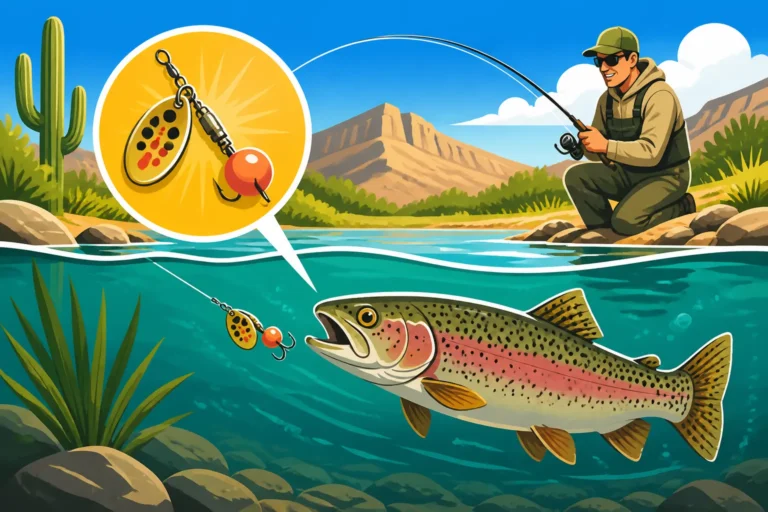
When you're dealing with fast currents, weight is your best friend. A spinner that's too light will simply ride the surface or get pushed around effortlessly by the water, never reaching the fish that are hunkered down on the bottom. Look for spinners with heavier bodies or those specifically marketed as "heavy current" or "deep diving" models. Brands like Mepps and Rooster Tail offer a variety of weights in their popular lines. A heavier spinner will sink faster and stay deeper in the water column, allowing you to get your presentation to the fish-holding zones without excess effort.
The overall profile of the spinner also matters. A more compact, streamlined design will slice through the water with less resistance than a bulky one, reducing drag and making it easier to control. Some spinners might have a slightly wider body that offers a bit more resistance, which can be useful in certain situations to slow its descent slightly, but generally, for piercing fast current, you want something dense and sleek. When browsing online, you'll find plenty of options on platforms like Amazon, but pay close attention to the weight specifications and customer reviews regarding performance in strong flows.
Blade Types and Their Performance in Current
The blade is the heart of the spinner, responsible for the flash and vibration that attracts fish. Different blade types behave differently in current:
- Willowleaf Blades: These are long, slender blades that create less resistance and spin closer to the body of the spinner. They are excellent for fast currents because they don't "blow out" (stop spinning) easily and can be retrieved at higher speeds without excessive drag. They create a more subtle flash but a tight vibration, often mimicking a fleeing baitfish.
- Colorado Blades: These blades are rounder and wider, designed to create maximum flash and vibration even at slow retrieve speeds. While great in slower water or for getting fish's attention, in very fast current, they can sometimes create too much drag, causing the spinner to rise in the water column or "blow out" if retrieved too quickly against the flow. They are better suited for slightly slower sections or when you need a lot of thump.
- French Blades (e.g., Aglia-style): These are teardrop-shaped blades that spin at about a 45-degree angle to the body. They offer a good balance of flash and vibration and are quite versatile. In moderately fast current, they perform well, but in extreme conditions, they might be prone to blowing out or riding too high if not adequately weighted.
For most fast-current situations in New Mexico, especially when targeting trout, a willowleaf or a well-weighted French blade spinner is often the most effective choice. They maintain their action and depth better under pressure.
Color and Size Considerations for Clear and Turbid Flows
The water conditions will dictate your spinner's color and size.
- Clear Water: In the gin-clear waters of many New Mexico trout streams, especially in high-mountain areas or tailwaters like the San Juan River Quality Waters, you'll want to opt for more natural and subtle colors. Silver, gold, black, or even copper blades are excellent choices. Sizes ranging from #0 to #2 are often ideal, mimicking the smaller insects and baitfish trout feed on. A smaller, natural presentation is less likely to spook wary fish in clear conditions. Fly Selection for New Mexico's San Juan River delves into similar principles for flies, which also apply here.
- Turbid or Stained Water: If the river is running a bit off-color due to runoff or recent rain, you need something that stands out. Brighter colors like chartreuse, orange, or even neon green can be highly effective. The increased visibility helps fish locate your lure in murky conditions. Larger sizes (e.g., #2 to #4) can also be beneficial as they create more vibration and offer a bigger profile for fish to see. The contrast is key here.
- Cloudy Days or Low Light: On overcast days, during dawn or dusk, or in deeper, shaded pools, a spinner with a gold or brass blade can often outperform silver. Gold has a unique ability to catch and reflect what little light is available, creating an attractive glow. A spinner with a painted blade in a bright, contrasting color might also prove effective in these low-light situations.
When considering sizes, remember that fish in fast current are often opportunistic; they need to make quick decisions. A slightly larger, more aggressive presentation can sometimes trigger a reactionary strike. However, always start with a size that matches the prevalent baitfish or insect size if you have an idea of what the fish are feeding on.
Mastering Retrieve Techniques for Fast Current Spinner Fishing
The best spinner in the world won't catch fish if you're not retrieving it correctly. In fast current, your retrieve isn't just about reeling; it's a careful dance with the river, utilizing its forces to your advantage while maintaining control.
Casting Strategies to Maximize Drift and Presentation
Casting in fast current is about more than just distance. It's about placement and angle.
- Upstream Angle: Often, the most effective cast is slightly upstream and across the current. This allows your spinner to sink to the desired depth before it reaches the target zone. As it drifts downstream, you can mend your line (toss a loop of line upstream) to reduce drag and keep the spinner moving at a natural speed, ideally slightly slower than the current, or just fast enough to make the blade spin. This "swing" allows the spinner to cover a lot of water and present naturally.
- Pocket Water Precision: In rivers with lots of pocket water – small, calm areas behind rocks or logs – precision is key. Cast directly into these pockets or just above them, letting the current carry the spinner in. The fish will be waiting in these calmer areas, ready to ambush anything that washes by. A soft, accurate cast prevents spooking the fish.
- Downstream Cast (Limited Use): While less common for active retrieves, casting directly downstream and letting the current wash your spinner into deeper pools can sometimes be effective. However, it's harder to maintain control and feel for strikes this way. This technique is more about letting the current do the work to present to fish holding deep.
- Reading the Seams: Focus your casts on the seams where fast water meets slow water. Fish often hold in the slower water, darting into the fast current to grab food. Casting your spinner to drift along or just inside these seams is a highly productive strategy. How to Read Water on the San Juan River offers excellent insights into identifying these crucial fish-holding areas.
The Art of the Controlled Drift and Retrieve
This is where the magic happens. A controlled drift and retrieve means your spinner is moving at a speed that allows its blade to spin consistently, but not so fast that it looks unnatural or blows out.
- Matching the Current: Ideally, you want your spinner to drift at a speed that's slightly slower than the main current, making it appear like an easy meal. This often means casting upstream, letting it sink, and then reeling just enough to take up slack and keep the blade turning. You're not actively reeling the spinner against the current for the entire retrieve; you're often just controlling its descent and ensuring blade rotation.
- High Sticking and Line Control: Keep your rod tip high, especially when wading. This keeps as much line as possible off the water, reducing the amount of current that can grab your line and create drag. Use your rod tip to guide the spinner through the current. If you see your line bowing excessively, it means the current is pulling it too hard, and your spinner isn't getting a natural drift. Make small mends (lifting and repositioning your line upstream) to counteract the current.
- The "Stop and Go" Retrieve: Sometimes, a steady retrieve isn't enough. In pockets or behind structure, a short "stop and go" retrieve can trigger strikes. Allow the spinner to drift, then give it a quick crank or twitch, then let it pause briefly before continuing. This erratic movement can mimic a struggling baitfish, making it irresistible.
- Feathering the Spool: If you're using a spinning reel, gently feathering the spool with your finger after the cast can help control the rate of descent and prevent backlashes, especially with heavier spinners or in windy conditions. This small touch gives you more precise control over where your spinner lands and how it initially enters the water column.
Working Eddies, Seams, and Pocket Water
These are prime locations where fish congregate, conserving energy while waiting for food.
- Eddies: Eddies are calmer areas where the current swirls back upstream or creates a slow-moving circular flow. Cast your spinner into the upstream edge of the eddy, letting it swing through the calmer water. Fish often sit at the very edge where the fast current meets the slower eddy. Retrieve your spinner slowly here, letting it hang in the sweet spot for as long as possible.
- Seams: As mentioned, seams are the transition zones between fast and slow water. These are fish highways. Cast your spinner upstream of the seam and let it drift down, just on the slower side of the seam, so it can be seen by fish holding in the calmer water but appearing as if it's drifting out of the fast water.
- Pocket Water: These small, protected areas behind boulders, logs, or other obstructions are perfect ambush points for trout. Make short, accurate casts directly into these pockets. Let the spinner sink quickly, then start a retrieve that keeps it in the pocket for as long as possible. You might only get a few feet of retrieve before it's out of the prime zone, so make those few feet count. Sometimes, a single cast to a pocket is all you get, so make it a good one.
- Runs and Riffles: These are shallower, turbulent sections where water rushes over rocks. While challenging, fish do feed here. Use a heavier spinner and cast upstream, allowing it to bump along the bottom, mimicking a minnow or insect dislodged by the current. Short, precise casts are better than long, uncontrolled ones. Remember, trout often hold directly behind larger rocks in these areas.
Essential Gear Upgrades for High-Current Success
Having the right techniques is crucial, but your gear plays a significant role in how effectively you can apply those techniques in fast current. A little investment in appropriate tackle can make a world of difference. Best Fishing Gear for New Mexico Anglers offers a broader perspective, but here we'll zoom in on fast current needs.
Rod, Reel, and Line for Fighting the Flow
Your setup needs to be robust enough to handle the stress of constant current and strong enough to fight powerful fish without exhausting you.
- Rod: A medium-light to medium power spinning rod, typically 6'6" to 7'6" in length, is often ideal. Look for a rod with a fast action, meaning the tip bends easily but the backbone is stiff. This provides the sensitivity to feel subtle bites through the current while having the power to set the hook and control a fish. The extra length can help with line control (high sticking) and managing your drift. You can find excellent options for specific needs, like Best Rod Setup for New Mexico Trout Fishing, which will cover similar ground.
- Reel: A reliable spinning reel in the 2000-3000 size range is a good choice. It should have a smooth drag system, which is paramount when fighting fish in strong currents. The drag needs to give line smoothly under pressure to prevent break-offs. A higher gear ratio can be beneficial for quickly taking up slack line or retrieving your spinner through fast water if needed, but smooth operation is key. Consider a reel made with corrosion-resistant materials, especially if you plan on extended use in rivers.
- Line: This is perhaps the most critical component for fast current fishing.
- Braided Line: Many experienced anglers prefer braided line as their main line. Its zero stretch provides unparalleled sensitivity, allowing you to feel every bump and subtle strike, even with significant current drag. It's also incredibly strong for its diameter, cutting through water better than mono. Use 8-15 lb test braid.
- Fluorocarbon Leader: Because braid is highly visible, you'll want to add a fluorocarbon leader (4-8 lb test, 3-6 feet long) to your main line. Fluorocarbon is nearly invisible underwater and sinks, helping your spinner get deeper. Its abrasion resistance is also a huge plus when fishing around rocks and snags common in rivers.
- Monofilament (Alternative): If you prefer monofilament, choose a low-stretch, clear or subtle-colored option in 6-10 lb test. It's more forgiving than braid, but you'll sacrifice some sensitivity to the current. Keep in mind that mono will float more than fluorocarbon or braid, potentially causing more current drag.
Using a good quality swivel or snap swivel (barrel swivel) between your main line and leader is also important, as spinners can sometimes twist your line.
Leader and Terminal Tackle Considerations
Beyond your main line, the small components matter just as much.
- Leader Length and Strength: For clear water conditions, a longer fluorocarbon leader (5-7 feet) can be beneficial for stealth. In murkier water or when fishing aggressive species, you can shorten it to 3-4 feet. The strength should match the fish you're targeting and the cover you're fishing. Typically, 4-6 lb test fluorocarbon is a good all-around choice for trout in New Mexico rivers, but if you're targeting larger fish in heavy cover, bumping up to 8 lb test might be wise.
- Swivels: Spinners, by their very nature, twist your line. To prevent severe line twist, which can lead to tangles and knots, always use a high-quality barrel swivel or ball-bearing swivel between your main line and leader. Some anglers prefer a snap swivel to quickly change lures. Just ensure it's small enough not to impede the spinner's action or spook fish. Brands like Owner or Sampo make excellent swivels that won't fail you.
- Hooks: Most spinners come with treble hooks. While effective, many anglers, especially on catch-and-release waters or New Mexico Special Trout Water Rules areas, will swap them out for a single, barbless hook. This makes unhooking fish much easier and reduces harm. Check local regulations, as some areas may mandate barbless hooks. If keeping fish, ensure your trebles are sharp.
Safety and Comfort While Wading Fast Rivers
Fishing fast rivers isn't just about the fish; it's also about your personal safety and comfort. New Mexico's rivers, especially those in mountainous regions, can be deceptively powerful.
- Waders and Wading Boots: High-quality chest waders are essential for staying dry and warm. Pair them with sturdy wading boots that offer excellent ankle support and grip. Felt soles provide superior traction on slick river rocks, though some areas might restrict felt. Rubber soles with studs are another excellent option, especially for mixed terrain. Best Wading Boots for New Mexico's San Juan River provides more specific guidance. Never wade alone in unfamiliar or swift waters.
- Wading Staff: A collapsible wading staff is an absolute must-have. It provides a third point of contact with the bottom, helping you maintain balance and test water depth and current strength before taking a step. It can literally be a lifesaver.
- PFD (Personal Flotation Device): If you're wading in deep, swift water, especially where currents are unpredictable, consider wearing a low-profile PFD. Modern inflatable PFDs are comfortable and don't restrict casting. It's better to be safe than sorry.
- Sun Protection: New Mexico's high-altitude sun can be intense. Wear polarized sunglasses to reduce glare and spot fish, a wide-brimmed hat, and sun-protective clothing. Sunscreen on exposed skin is also critical.
- Hydration and Snacks: While you're concentrating on fishing, it's easy to forget to drink water. Carry a hydration pack or water bottle and some high-energy snacks, especially if you plan on being out for several hours. You can find reliable packs and bottles on Amazon.
By taking these steps to prepare your gear and prioritize your safety, you'll be much more comfortable and effective when spinner fishing in New Mexico's fast currents. The combination of the right lure, skilled retrieve, and appropriate tackle will significantly increase your chances of success and make the experience far more enjoyable.
| Spinner Blade Type | Primary Use in Current | Key Characteristics | Pros | Cons |
|---|---|---|---|---|
| Willowleaf | Fast Current, Deep Water | Long, slender, tight spin | Low drag, won't "blow out," sinks fast, subtle flash | Less vibration than other types, can be less flashy |
| French (Aglia) | Moderate to Fast Current | Teardrop shape, 45° spin | Good balance of flash/vibration, versatile | Can "blow out" in extreme current, may ride higher |
| Colorado | Slow Current, Attractor | Round, wide, aggressive spin | Maximum flash and vibration, good for murky water | High drag, prone to riding high, can "blow out" in fast current |
Disclaimer
This article is for general informational purposes only and does not constitute professional advice. Laws, prices and regulations vary by location and change over time. Consult a qualified professional for guidance on your specific situation.