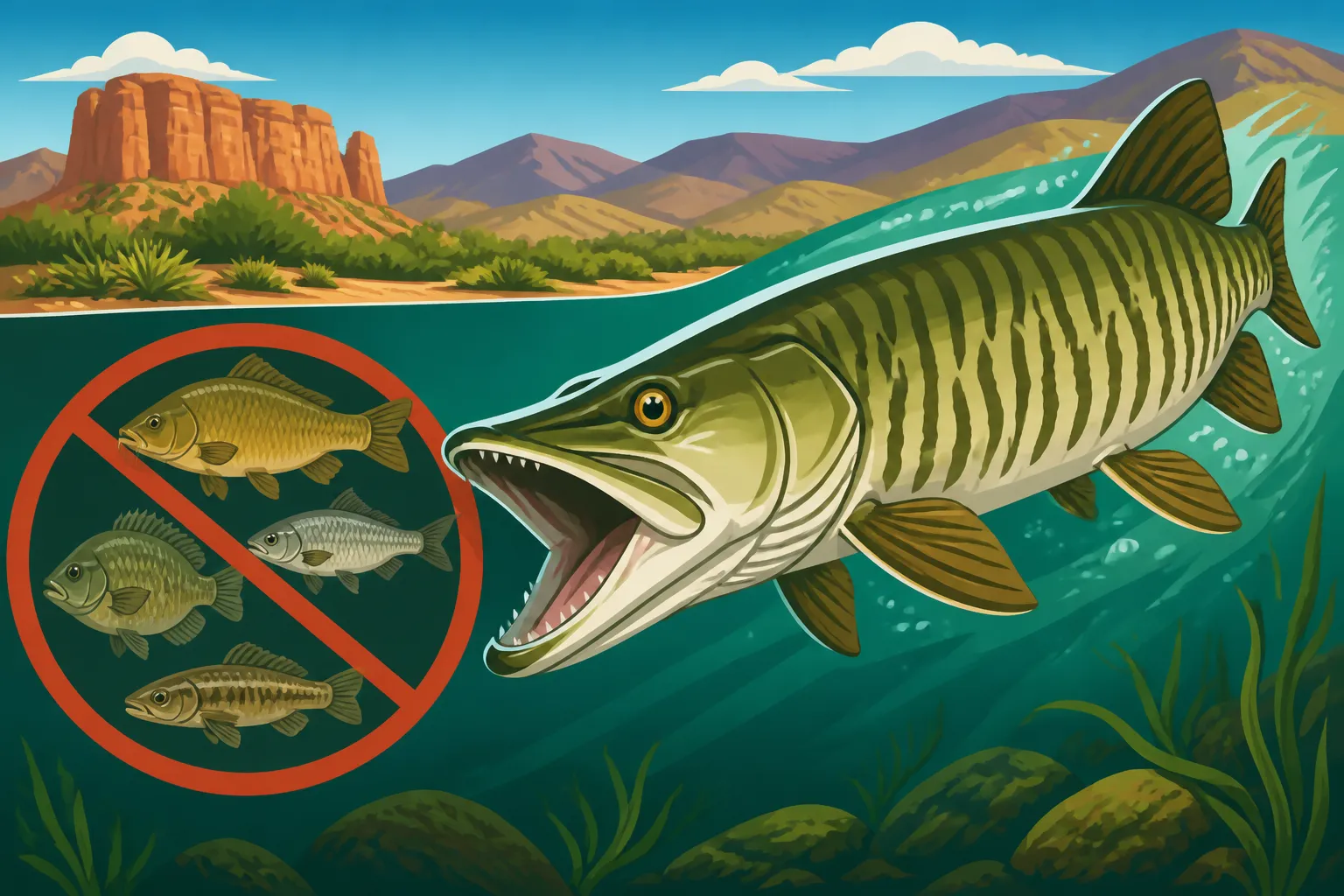
Why Tiger Muskies Are Used to Control Invasive Fish
It can be incredibly frustrating to see our beloved New Mexico waters, which are such a vital part of our outdoor heritage, fall prey to species that don't belong there. Invasive fish populations can wreak havoc on delicate ecosystems, outcompeting native species and disrupting the natural balance we cherish. This guide delves into one fascinating and often debated solution employed by fisheries managers: the strategic use of the Tiger Muskie as a biological control to help manage these disruptive invaders.
The Pesky Problem of Invasive Fish in New Mexico
Imagine a pristine high-mountain lake or a tranquil stretch of river, a place you've fished for years, suddenly changing. The native trout populations seem to dwindle, and different, aggressive fish you don't recognize start dominating the catch. This isn't just a bad dream for New Mexico anglers; it's the harsh reality when invasive fish take hold. Understanding what makes a species "invasive" and the specific challenges they pose is the first step in appreciating the innovative solutions our wildlife agencies pursue.
Understanding What Makes a Fish "Invasive"
An "invasive" species isn't just a fish that happens to be in a new place. It's a species that, when introduced to an ecosystem where it doesn't naturally occur, causes or is likely to cause environmental harm, economic harm, or harm to human health. Think of it like a guest who not only overstays their welcome but also starts rearranging your furniture, eating all your food, and scaring away your pets. In the natural world, this "guest" might be introduced accidentally, perhaps through bait bucket releases, or even intentionally through misguided stocking efforts from decades past that we now know were problematic. The key is their ability to outcompete native species for resources, reproduce rapidly, and often lack natural predators in their new environment. For a deeper dive into the challenges, you might find our article on Invasive Fish Species in New Mexico particularly enlightening.
Once established, these fish can quickly dominate. They don't have the same evolutionary pressures as the native fish that have adapted over millennia to the specific conditions and competition of that particular ecosystem. This gives them an unfair advantage, allowing them to thrive and spread, often at the expense of species that truly belong. The waters of New Mexico are home to many Fish Species Found in New Mexico, and ensuring the health and balance of these populations is paramount.
We often think of invasive plants or insects, but invasive fish are a huge concern for aquatic ecosystems. They can be incredibly resilient, adapting to different water conditions and food sources, which makes them particularly difficult to manage once they gain a foothold. The challenge is amplified because these fish are underwater, making observation and intervention far more complicated than with terrestrial invaders.
The Damage Invasive Species Inflict on New Mexico Waters
The harm caused by invasive fish goes far beyond simply catching a different type of fish. They can decimate native fish populations by preying on their eggs and fry, competing for food and spawning grounds, and even introducing diseases that native species have no natural immunity to. For instance, some invasive carp species can root around on the bottom of lakes, stirring up sediment and degrading water quality, which negatively impacts aquatic vegetation and the insect life that many native fish depend on. This cascading effect can destabilize an entire food web.
Consider the delicate balance of a trout stream. Native trout, like the Rio Grande Cutthroat Trout in New Mexico, rely on specific water temperatures, insect hatches, and stream structures. An invasive species introduced to such a habitat might be more tolerant of warmer, less oxygenated water, or it might consume the same insects that the native trout need to survive. Over time, the native species get squeezed out, sometimes to the point of local extinction. This isn't just an ecological tragedy; it also impacts the angling experience, changing the character of our cherished fishing spots.
Beyond the direct ecological impact, there are economic implications. Declining native fish populations can hurt local tourism, especially in areas renowned for specific fisheries. Management and eradication efforts also consume significant resources, diverting funds that could otherwise be used for habitat restoration or stocking programs for desirable species. It's a complex problem with far-reaching consequences for New Mexico's aquatic natural resources.
Why Traditional Methods Fall Short for Eradication
When facing an invasive species problem, fisheries managers typically have a few tools in their arsenal. Chemical treatments, like rotenone, can effectively remove all fish from a water body, but they are expensive, labor-intensive, and carry significant environmental considerations. They also require restocking the entire system afterward, which is a massive undertaking. Furthermore, in large, complex systems like expansive reservoirs or interconnected river systems, chemical treatments are often simply not feasible without causing widespread ecological disruption to non-target areas.
Physical removal methods, such as netting or electrofishing, can help reduce invasive populations, but achieving complete eradication, especially for highly reproductive species, is incredibly difficult. It's like trying to empty a bathtub with a spoon while the faucet is still running. These methods are often temporary fixes that require continuous effort, which is unsustainable in the long run. They might knock back a population, but they rarely eliminate it entirely.
Because of these limitations, managers often look for more targeted, self-sustaining solutions. This is where the concept of biological control comes into play—introducing a predator that can help keep the invasive population in check without becoming a problem itself. It's a tricky balance to strike, as introducing any new species carries inherent risks. This critical thinking about solutions led to exploring options like the Tiger Muskie, especially in certain types of water bodies.
Enter the Tiger Muskie: A Hybrid Hero for Fisheries Management
When traditional methods for controlling invasive fish fall short, fisheries biologists sometimes turn to innovative, biological solutions. One such solution that has proven effective in specific scenarios is the stocking of the Tiger Muskie. This unique fish isn't a native New Mexican species, but its particular characteristics make it an excellent tool for specific conservation goals.
What Exactly is a Tiger Muskie?
A Tiger Muskie isn't a naturally occurring species in the wild; it's a hybrid, specifically a cross between a Northern Pike ( Esox lucius) and a Muskellunge (Esox masquinongy). This intentional crossbreeding creates a fish that often exhibits hybrid vigor, meaning it grows faster and is more aggressive than either of its parent species. Visually, they get their "tiger" name from the distinctive, irregular dark vertical bars on a lighter background that run along their sides, resembling tiger stripes. These markings can vary from faint to quite bold, but they are generally present.
Tiger Muskies are apex predators in the water. They have elongated bodies, powerful tails, and mouths full of sharp teeth, perfectly adapted for ambushing and consuming other fish. They can grow to impressive sizes, making them a thrilling catch for anglers, but more importantly, formidable hunters of smaller, often undesirable, fish. They are also known for their hardiness, able to tolerate a wider range of water conditions than some more sensitive native species, which makes them suitable for stocking in various New Mexico waters. If you're curious about What a Tiger Muskie Is, we have a detailed piece that covers their biology and characteristics.
Because they are hybrids, Tiger Muskies are typically sterile. This is a crucial characteristic for their role in fisheries management, and it’s a key reason why they are preferred over stocking one of their parent species. Their sterility ensures that they cannot reproduce and establish a self-sustaining population, thereby preventing them from becoming an invasive problem themselves down the line. This biological "dead end" is central to their utility as a management tool, allowing biologists to introduce a powerful predator without the long-term ecological risks associated with introducing a fertile, non-native species.
Why Sterility is a Key Feature for Invasive Control
The sterility of the Tiger Muskie is perhaps its most vital attribute when it comes to being used as a biological control agent. Unlike introducing a fertile, non-native species, which could inadvertently create a new invasive problem, Tiger Muskies are essentially a controlled, temporary solution. They are stocked in specific numbers, grow, perform their predatory role, and eventually, their population naturally declines as individuals reach the end of their lifespan without reproducing. This means fisheries managers retain tight control over their presence in any given water body.
Imagine the nightmare scenario of introducing a predator to control one invasive species, only for that predator to then breed unchecked, establish its own population, and start preying on native fish or other valuable game species. That's a risk that fisheries biologists simply cannot take. The lesson has been learned many times over with past introductions that seemed like good ideas at the time but ended up causing more harm than good. The Tiger Muskie bypasses this risk entirely because its biological makeup prevents it from reproducing.
This characteristic allows for targeted, short-to-medium-term population control. Agencies can decide exactly how many Tiger Muskies to stock based on the severity of the invasive fish problem and the size of the water body. They can then monitor the impact, and if the invasive population is reduced, they can simply stop stocking Tiger Muskies, allowing the existing population to phase out naturally over time. This offers a level of precision and risk management that other biological control methods often lack. It truly highlights Why New Mexico Stocked Tiger Muskies in Its Lakes for specific management goals.
The Tiger Muskie's Predatory Prowess
Tiger Muskies are voracious predators. They are essentially perfectly engineered eating machines, equipped with powerful jaws and numerous sharp teeth, an elongated body built for bursts of speed, and excellent camouflage. This makes them incredibly effective at hunting down and consuming other fish. When stocked into a water body plagued by overpopulated invasive species, they act as a living, breathing population control mechanism. Their diet consists almost entirely of other fish, and they aren't particularly picky about the species, making them ideal for targeting a variety of invasive coarse fish.
They primarily use ambush tactics, hiding among submerged vegetation or structures, waiting for unsuspecting prey to swim by. Once they strike, their powerful bite and quick acceleration leave little chance for escape. This predatory behavior is exactly what fisheries managers leverage when introducing them to areas where invasive species have taken over. Their sheer size and aggressive nature deter smaller fish, and they actively reduce the numbers of larger, undesirable fish.
This isn't about eradicating every single invasive fish, which is often an impossible task in large water bodies. Instead, it's about shifting the balance. By continuously preying on the younger and more vulnerable invasive fish, Tiger Muskies can significantly reduce the recruitment of those species, preventing them from dominating the ecosystem. They thin out the herd, so to speak, giving native fish a much-needed reprieve and a better chance to compete for resources and reproduce successfully.
How Tiger Muskies Act as Biological Control Agents
The decision to introduce a non-native species, even a sterile hybrid, for management purposes is never taken lightly. It's a carefully considered strategy, part of a broader ecosystem management plan. Tiger Muskies are deployed with a specific mission: to rebalance an ecosystem by bringing down runaway invasive fish populations. Their effectiveness lies in their ability to target specific problem species while their sterility ensures they don't become a new problem themselves.
Targeting Specific Invasive Prey Species
The real genius of using Tiger Muskies for invasive species control is their effectiveness in targeting many of the common invaders that plague New Mexico's waters. Fish like common carp, white suckers, and various non-native sunfish or minnow species can quickly overpopulate, especially in reservoirs and warmer waters. These species often outcompete native fish for food and habitat, or disturb the ecosystem in other ways, such as degrading water quality by rooting around on the bottom. Tiger Muskies, being opportunistic and aggressive piscivores (fish-eaters), readily prey on these abundant, easy targets.
For example, in a lake inundated with small, stunted perch or sunfish that consume zooplankton critical for the growth of desired game fish, a well-placed stocking of Tiger Muskies can reduce the numbers of these smaller invasive species. This reduction lessens competition for food and allows the zooplankton population to rebound, ultimately benefiting the native or stocked game fish like trout or walleye. It's like bringing in a natural "clean-up crew" for the ecosystem. The managers aim to create a healthier, more balanced fishery, and the muskie plays a vital role in that strategy.
The species of invasive fish targeted often dictates the timing and size of muskie stocked. Younger, smaller muskies might be released to tackle abundant smaller prey, while larger individuals can help thin out mature invasive fish. This precise deployment is part of a complex management strategy that ensures the muskie are working on the right problem, in the right place, at the right time.
The Ecological Balance: A Temporary Solution
It’s crucial to understand that Tiger Muskie stocking is typically seen as a management tool, not a permanent fix. Because the fish are sterile, they won't establish a breeding population, meaning the invasive fish problem could potentially resurface if stocking ceases and the original cause of the invasion isn't addressed. However, this temporary nature is also a strength. It allows fisheries managers to adjust their strategy as conditions change or as the invasive population is brought under control.
The goal isn't to eradicate every single invasive fish, but to reduce their numbers to a point where they no longer pose a significant threat to the ecosystem's health and native populations can recover. This re-establishment of ecological balance is a delicate dance. If invasive populations surge again due to environmental factors or further introductions, managers can resume or increase Tiger Muskie stocking. This adaptive management approach provides flexibility.
Furthermore, the introduction of Tiger Muskies is often part of a multi-pronged strategy. This might include habitat restoration efforts, tighter regulations on bait use, public education campaigns to prevent further introductions, or even targeted fishing efforts for the invasive species. The muskies are a powerful tool, but rarely the only tool in the box. Their role is to provide a much-needed predatory pressure that helps stabilize the system while other, longer-term solutions are pursued.
Success Stories and Ongoing Management
New Mexico has seen the positive impacts of Tiger Muskie stocking in several water bodies. A prime example is Bluewater Lake, located near Grants. For many years, Bluewater was plagued by an overabundance of illegally introduced carp and other undesirable species that had severely impacted the lake's ecological health and sport fishing opportunities. The introduction of Tiger Muskies played a significant role in reducing these carp populations, leading to improved water quality and a more balanced fishery. Anglers at Bluewater Lake now have the exciting opportunity to pursue these formidable predators, which adds another dimension to the angling experience.
The success at places like Bluewater demonstrates the potential of Tiger Muskies. While they might not be everyone's idea of a "beautiful" fish, their utility in combating a real ecological threat is undeniable. This ongoing management involves continuous monitoring of fish populations—both muskie and their prey—to assess the effectiveness of the program. Biologists use electrofishing, netting, and angler reports to track progress and make informed decisions about future stocking needs.
Another important aspect of managing these populations involves informing the public. Anglers need to be aware of the presence of Tiger Muskies, their role, and any specific regulations related to fishing for them, such as size limits or bag limits. This ensures that anglers can both enjoy the unique challenge of catching a Tiger Muskie and understand their vital role in maintaining the health of New Mexico's fisheries. If you're interested in fishing these specific areas, be sure to check the New Mexico Fishing Regulations Overview for the most current rules.
| Feature | Tiger Muskie (Hybrid) | Typical Invasive Fish | Native Game Fish |
|---|---|---|---|
| Origin in NM Waters | Stocked (non-native hybrid) | Illegally or accidentally introduced (non-native) | Naturally occurring (native) |
| Reproduction | Sterile (cannot reproduce) | Highly reproductive | Naturally reproductive |
| Diet | Primarily other fish (piscivore) | Varies; often generalist feeder, can be voracious on native eggs/fry | Varies; specific insects, baitfish, etc. |
| Ecological Role | Apex predator, biological control agent | Competitor, predator of natives, habitat disruptor | Key part of local food web, sport fish |
| Management Goal | Reduce invasive populations | Eradication or control | Conservation, sport fishing |
| Longevity | Moderate (years, eventually die out) | Long-lived, self-sustaining populations | Varies by species |
Considerations and the Future of Tiger Muskie Stocking in New Mexico
While Tiger Muskies offer a powerful tool for fisheries management, their use isn't without careful consideration. Like any intervention in a complex natural system, the decision to introduce a predatory fish requires weighing the benefits against potential risks and ensuring that the public understands the long-term vision for these unique programs.
Weighing the Benefits Against Potential Risks
The primary benefit of stocking sterile Tiger Muskies is clear: they are highly effective predators that can significantly reduce populations of undesirable or invasive fish. This, in turn, can help restore ecological balance, improve water quality, and foster healthier populations of native or desirable game fish. For anglers, they also provide a challenging and exciting trophy fish opportunity, drawing interest and potentially boosting local economies. You can often find fishing gear suitable for these larger predators on platforms like Amazon, making it easier for anglers to gear up.
However, risks, although mitigated by their sterility, must always be considered. Even a sterile predator can, in theory, consume some desirable fish if food sources are limited or if their population becomes too dense in relation to the target invasive species. This is why careful monitoring of stocking densities and prey populations is paramount. Biologists must continuously assess whether the muskies are primarily targeting the intended invasive fish or if there are unintended impacts on other species.
There's also the public perception aspect. Introducing any "monster" fish, even for good reason, can sometimes generate misconceptions or concerns among anglers and the general public. Education plays a critical role in explaining the scientific rationale behind these programs and reassuring stakeholders about the controlled nature of Tiger Muskie stocking. For anglers interested in these challenging fish, knowing their behavior can greatly improve success, and resources like What a Tiger Muskie Is provide excellent background.
Angler Perspectives and Community Engagement
For many anglers, the prospect of catching a large, hard-fighting Tiger Muskie is a thrilling addition to New Mexico's diverse fishing opportunities. They are often referred to as "the fish of 10,000 casts" due to their elusive nature and the dedication required to land one. This challenge can attract anglers specifically seeking these trophy fish, which can be beneficial for local communities near stocking lakes. Specialized gear, often found from retailers or even online like on Amazon, becomes part of the pursuit for these formidable fish.
However, some anglers might initially be concerned about the introduction of a non-native species, fearing it might negatively impact their preferred fishing for trout or bass. This is where clear communication and community engagement from wildlife agencies become vital. Explaining the specific problem the muskies are addressing, highlighting their sterile nature, and demonstrating the positive outcomes through data and success stories helps build understanding and support. When done correctly, anglers can become advocates for the program, appreciating the complex science behind healthy fisheries management.
Educational initiatives, public meetings, and easily accessible information through regulation guides or online resources are essential. These efforts help bridge the gap between scientific management and public perception, ensuring that the angling community understands and supports the strategic use of these unique fish. Anglers are often the first line of defense in observing changes in fisheries, and their feedback is invaluable.
The Long-Term Vision for Healthy New Mexico Fisheries
The use of Tiger Muskies in New Mexico's aquatic ecosystems is part of a larger, long-term vision: to maintain and enhance healthy, balanced fisheries that support both native species conservation and quality recreational angling. It's a testament to the adaptive nature of modern fisheries management, which continually seeks innovative solutions to complex environmental challenges. While not suitable for every water body, in specific cases where invasive species have gained a strong foothold, Tiger Muskies offer a targeted, controlled, and effective biological intervention.
The success of these programs helps safeguard New Mexico's unique aquatic biodiversity, allowing native species to thrive and ensuring that future generations of anglers can enjoy the diverse fishing opportunities our state has to offer. This forward-thinking approach is critical as environmental pressures continue to evolve. By managing invasive species now, we're investing in the health and resilience of our waters for years to come. Remember to always consult the New Mexico Fishing Regulations Overview for any specific rules related to fishing for Tiger Muskies or other species in our state's waters.
Ultimately, the Tiger Muskie stands as a fascinating example of how strategic, scientifically sound introductions can be used as a precision tool in the ongoing battle against invasive species. They're not a magical cure-all, but a valuable component in the multifaceted approach to preserving the natural beauty and ecological integrity of New Mexico's precious water resources.
Disclaimer
This article is for general informational purposes only and does not constitute professional advice. Laws, prices and regulations vary by location and change over time. Consult a qualified professional for guidance on your specific situation.