Largemouth Bass Fishing in New Mexico
Finding the best spots and techniques for largemouth bass fishing in New Mexico can feel like a real challenge. You're often up against vast reservoirs, fluctuating water levels, and unique high-desert conditions that are a far cry from the dense, weed-choked lakes of the southeastern U.S. Many anglers get frustrated trying to translate general bass fishing advice to our unique New Mexico environment. This comprehensive guide is here to cut through the confusion, offering you an in-depth look at how to successfully target largemouth bass across the Land of Enchantment, from understanding their behavior to mastering seasonal tactics and choosing the right gear.
Understanding Largemouth Bass in New Mexico
When you think of New Mexico, trout or even walleye might be the first fish that come to mind, but our state actually offers some fantastic, albeit often overlooked, largemouth bass fishing opportunities. These aren't your typical swamp-dwelling bass; New Mexico's largemouth have adapted to our often-turbid, fluctuating reservoir environments, making them a unique and rewarding species to pursue. Getting to know their biology and preferred habitats here is the first step to a successful outing.
The Biology and Behavior of Largemouth Bass
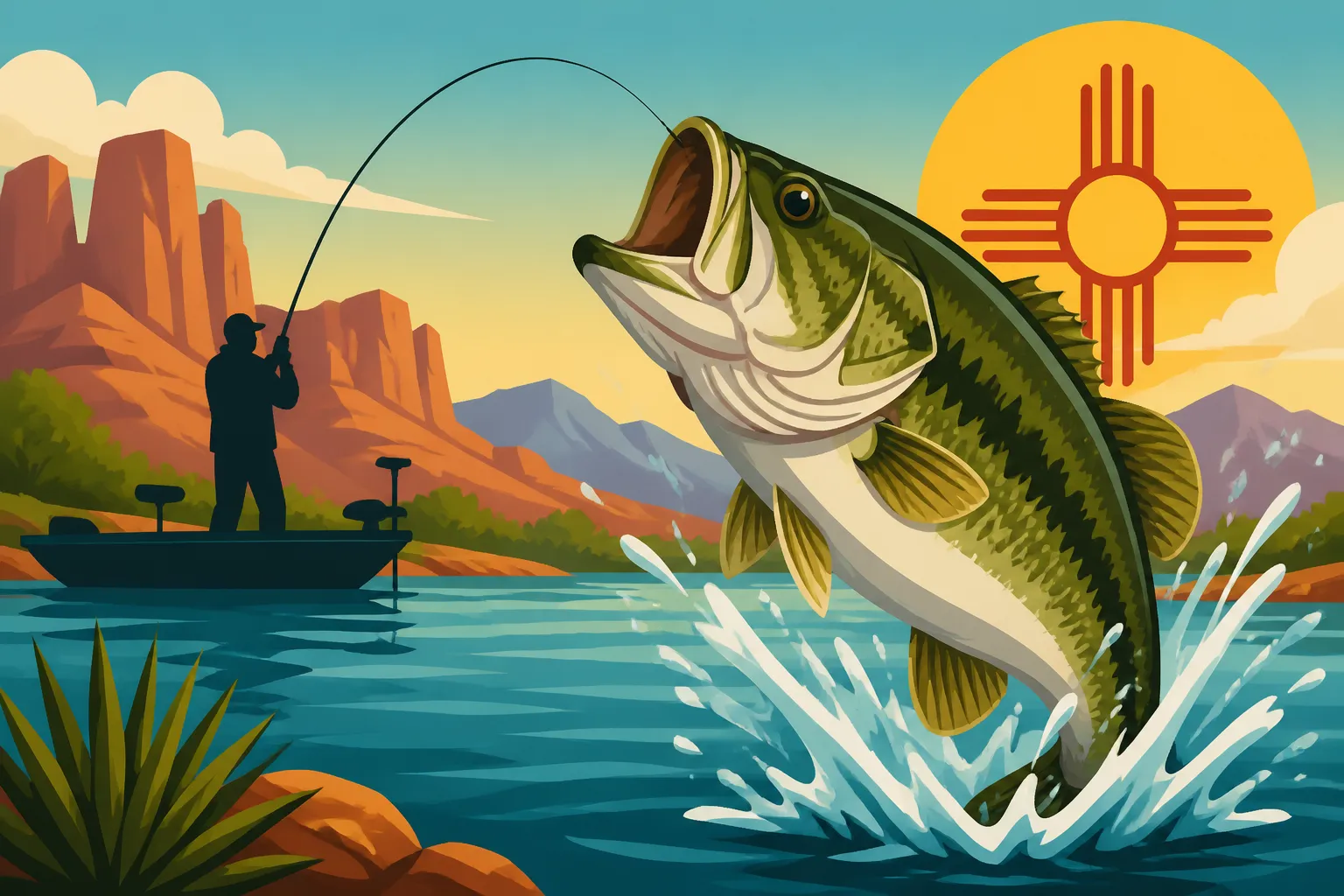
The largemouth bass (Micropterus salmoides) is a true apex predator in many of New Mexico's warm-water impoundments. They're characterized by that distinct jawline extending beyond their eye, a good indicator for identification, though in our waters, you'll find them in a range of colors from olive green to almost black, depending on the water clarity and bottom composition of their specific lake.
Their diet is pretty varied, and they're opportunistic feeders, meaning they'll eat just about anything they can fit in their mouth. In New Mexico, this often includes smaller baitfish like shad, sunfish, and even juvenile crappie. Crayfish are another huge staple in their diet, especially in rocky reservoirs, and they won't hesitate to gulp down frogs or even small rodents that happen to fall into the water. Understanding their local forage helps immensely in selecting the right lures. For example, if you know a particular lake has a strong shad population, a silver or white swimbait or crankbait can be incredibly effective. Their behavior is largely dictated by water temperature and light conditions. They are ambush predators, meaning they love to hide in cover – be it submerged timber, rock piles, brush, or even artificial fish attractors – waiting for an unsuspecting meal to swim by. This reliance on cover makes precise lure placement and presentation absolutely critical.
Where Largemouth Bass Thrive in New Mexico's Waters
New Mexico's warm-water reservoirs are where you'll find the most robust populations of largemouth bass. These aren't natural lakes, but rather man-made impoundments built for irrigation, flood control, or municipal water supply. This means they often feature distinct characteristics like fluctuating water levels, extensive submerged timber from flooded canyons, and rip-rap shorelines. Largemouth bass absolutely love these environments because they offer a diverse array of structure and cover for both hunting and spawning.
The most productive bass lakes tend to be those with good fertility, meaning plenty of nutrients to support a healthy baitfish population. They also need ample shallow areas for spawning in the spring, followed by deeper zones or extensive cover where they can retreat during the heat of summer or the cold of winter. New Mexico's major bass fisheries like Elephant Butte, Conchas Lake, Ute Lake, and Santa Rosa Lake all fit this bill beautifully. While they each have their unique personalities, they share the common thread of providing the necessary habitat for largemouth bass to thrive and grow to impressive sizes. Knowing these characteristics will help you narrow down your search and maximize your time on the water.
Prime Largemouth Bass Fishing Spots in New Mexico
New Mexico's vast landscape offers a variety of fishing experiences, and for the largemouth bass angler, several reservoirs stand out as prime destinations. These aren't quaint farm ponds; we're talking about large, sometimes sprawling bodies of water that demand a different approach than smaller, more predictable fisheries. But with that scale comes the potential for truly trophy-sized bass and unforgettable days on the water.
Southern New Mexico's Bass Hotbeds
When it comes to southern New Mexico, one name rises above the rest for largemouth bass: Elephant Butte Lake. This immense reservoir, the largest in New Mexico, is often heralded as the place to go if you're serious about catching big bass. It's a lake of extremes, characterized by its fluctuating water levels that can expose vast mudflats or drown entire forests, constantly changing the fishing landscape. This dynamic environment keeps anglers on their toes, but it's also what makes Elephant Butte so productive.
The lake boasts extensive submerged timber, particularly in its upper reaches and along the old river channel, which acts as a magnet for largemouth. Canyons, rocky points, and steep drop-offs are also key features. During the warmer months, especially, bass will relate to these deeper structures, often suspending over them or holding tight to cover at specific depths. Anglers here often employ a variety of techniques, from throwing deep-diving crankbaits around points to flipping jigs into brush piles. The sheer size of Elephant Butte means you could spend years exploring and still find new water, but focusing on areas with baitfish activity and good cover is always a solid starting point. It's also known for its strong population of striped bass, so don't be surprised if you hook into one of those hard fighters while targeting largemouth. To really dive deep into this gem, check out our Elephant Butte Lake Fishing Guide.
Eastern New Mexico's Hidden Gems for Largemouth
Moving east, you'll find a trio of excellent bass fisheries that offer a different, but equally rewarding, experience: Conchas Lake, Ute Lake, and Santa Rosa Lake. Each has its own distinct charm and challenges.
Conchas Lake, situated in northeastern New Mexico, is another large reservoir known for its clear to moderately clear waters and extensive rocky shorelines, coves, and submerged humps. Largemouth here often relate to rocky structure, making jigs, crankbaits, and soft plastics fished slowly along the bottom particularly effective. The lake has numerous arms and creek channels that provide excellent cover in the form of brush and timber when water levels permit. Early morning and late evening topwater action can be incredible, especially around the countless rocky points and submerged islands. While we often hear about the walleye here, the largemouth fishing is truly exceptional, with healthy numbers and good size.
Further east, near Logan, lies Ute Lake. This is New Mexico's second-largest lake and offers a fantastic blend of rocky structure and submerged brush. Like Conchas, Ute's largemouth often hug the rocky banks and points, but also seek refuge in the standing timber and brush-filled coves that become prominent when the water levels are up. Anglers often find success here with spinnerbaits, jerkbaits, and Texas-rigged worms worked along contours and around cover. Ute Lake also has a strong population of smallmouth bass, so you might catch both species in the same outing, offering a fun challenge.
Lastly, Santa Rosa Lake, near the town of Santa Rosa, is a smaller, but often highly productive, bass fishery. It's characterized by its unique red rock cliffs and canyon walls, offering a distinct visual appeal. The largemouth here are very structure-oriented, relating closely to the ledges, drop-offs, and submerged trees within the canyons. During the spring, the shallower coves can hold spawning bass, while in summer, they retreat to deeper rock piles and shade. Fishing here often involves precise casts to cover, using jigs, Texas rigs, and drop-shots to pick apart the structure. Don't let its size fool you; Santa Rosa can produce some truly impressive bass.
Other Notable Largemouth Waters
While the big three (Elephant Butte, Conchas, Ute, plus Santa Rosa) get most of the attention, New Mexico has other waters that hold decent largemouth populations, especially for those looking for a different experience or a less crowded spot. Sumner Lake, for instance, nestled between Fort Sumner and Santa Rosa, is another good option. It's often overshadowed by its larger neighbors but can deliver solid largemouth action, particularly in its coves and along its rocky points. Like many New Mexico reservoirs, its bass populations fluctuate with water levels and baitfish availability, but it's always worth a look, especially in spring and fall.
Beyond these larger impoundments, you'll find smaller community ponds and even some private waters across the state that are stocked or naturally hold largemouth bass. These smaller bodies of water can be excellent for beginners or for those who prefer bank fishing. They often warm up faster in the spring, providing earlier spawning action, and can be easily fished with simpler setups. For example, many urban ponds maintained by the New Mexico Department of Game and Fish will occasionally get stocked with warm-water species, including largemouth. While these won't produce state record fish, they offer a convenient and fun way to get a quick bass fix. Always check the specific regulations for any smaller or private waters before you cast a line, as rules can vary significantly.
Essential Gear for Largemouth Bass Anglers in New Mexico
Having the right gear is crucial for success, especially when tackling New Mexico's unique bass fisheries. These aren't always easy-to-fish waters, and your equipment needs to stand up to the challenge of varied cover, deep water, and often big, strong fish. Investing in quality gear isn't just about catching more; it's about making the experience more enjoyable and efficient.
Rods, Reels, and Line for New Mexico Bass
When it comes to rods and reels for largemouth bass in New Mexico, versatility is key. You'll want a setup that can handle a variety of lures and presentations, from flipping jigs into heavy cover to casting open-water crankbaits.
For most bass anglers, a combination of baitcasting and spinning setups will cover all your bases. Baitcasting combos are your workhorses for heavier lures, thicker lines, and presentations that require precision and power. A medium-heavy to heavy action rod, typically 6'6" to 7'6" in length, is ideal. This power allows you to drive hooks through tough mouths and muscle fish out of cover. Consider a fast or extra-fast tip for sensitivity and quick hooksets. Pair this with a good quality baitcasting reel with a decent gear ratio (around 7.1:1 is a good all-around choice) for quick line retrieval and fighting power. When shopping for these, reputable brands offer a wide range, and you can find excellent options on platforms like Amazon that cater to different budgets.
Spinning combos, on the other hand, excel with lighter lures, finesse presentations, and for beginners. A medium to medium-heavy action spinning rod, around 6'6" to 7' in length, coupled with a smooth, reliable spinning reel, will handle everything from weightless worms to small crankbaits. This setup is perfect for pitching soft plastics to wary bass or for situations where a lighter touch is required.
As for line, your choices typically fall into three categories: monofilament, fluorocarbon, and braided line.
- Monofilament (mono): This is a great all-around choice for topwater lures and crankbaits due to its stretch and buoyancy. It's relatively inexpensive and easy to tie. Use 10-17 lb test for most applications.
- Fluorocarbon (fluoro): Known for its invisibility underwater and low stretch, fluorocarbon is excellent for finesse techniques like drop-shotting, Carolina rigging, and jigs. It's also more abrasion-resistant than mono, which is a plus when fishing around rocks and wood. Use 12-20 lb test as a main line or a leader.
- Braided line: The strongest and most sensitive option, braid has virtually no stretch. It's fantastic for fishing in heavy cover where you need to cut through weeds or pull fish out of thick brush. Many anglers use 30-65 lb test braid as a main line, often tying a fluorocarbon leader to it for stealth.
Having a selection of these lines on hand, spooled on different reels, will give you the versatility needed for various New Mexico fishing scenarios. You might be surprised how much our recommendations for Best Rods and Reels for New Mexico Trout Fishing differ from what's ideal for bass, highlighting the species-specific needs.
Lures and Baits That Catch New Mexico Largemouth
The world of bass lures is vast, but focusing on a few key categories will get you far in New Mexico. The key is to match the hatch (or the perceived hatch) and consider the depth and cover you're fishing.
- Jigs: These are indispensable for New Mexico bass. Football jigs, swim jigs, and flipping jigs are all effective. Football jigs excel on rocky bottom, mimicking crayfish, while flipping jigs are perfect for pitching into dense brush and timber. Swim jigs are versatile and can be fished through grass or open water. Colors often include greens, browns, and black-and-blue.
- Soft Plastics: Worms, creature baits, flukes, and senkos are incredibly versatile. Texas rigging a plastic worm or creature bait is a go-to technique for fishing heavy cover without snagging. Drop-shot rigs are excellent for deep, clear water. Colors like green pumpkin, junebug, and watermelon red are perennial favorites. Brands like Zoom and Strike King offer a huge selection, easily found on Amazon.
- Crankbaits: These are great for covering water and eliciting reaction strikes. Squarebills are perfect for shallow, rocky areas, deflecting off cover. Medium and deep-diving crankbaits are essential for fishing points, humps, and ledges. Choose colors that mimic local baitfish or crayfish.
- Spinnerbaits and Chatterbaits: When bass are aggressive or in stained water, these are highly effective. The flash and vibration can draw strikes from a distance. White, chartreuse, and shad patterns are typically good.
- Topwater Lures: Nothing beats the explosive strike of a bass on a topwater lure. Poppers, walk-the-dog baits, and frogs are fantastic in low light conditions or around emergent vegetation. They're especially exciting on calm mornings or evenings.
- Swimbaits: Hard or soft, swimbaits effectively imitate larger baitfish and can tempt bigger bass. Slow-rolling a large swimbait along ledges or through open water can be a game-changer.
Always carry a variety, and don't be afraid to experiment. What works one day might not work the next, and bass in New Mexico can be finicky. For a deeper dive, check out our insights on Best Lures for New Mexico Bass.
Electronics and Accessories for Bass Fishing
While you can certainly catch bass without all the bells and whistles, modern electronics and key accessories can significantly increase your success rate on New Mexico's larger reservoirs.
- Fish Finders/Sonar Units: A good fish finder is almost essential for finding structure, identifying baitfish schools, and even locating bass holding at specific depths. Modern units with side-imaging and down-imaging capabilities allow you to see vast areas of the bottom, pinpointing humps, old roadbeds, and submerged timber that would otherwise remain hidden. Learning to interpret what your sonar shows you is a skill that pays dividends.
- Trolling Motors: For boat anglers, a reliable trolling motor (preferably with GPS spot-lock capabilities) is invaluable for precise boat control, especially when fishing specific pieces of structure or battling wind on a large lake. It allows you to focus on fishing rather than constantly maneuvering the boat.
- Anchors: Whether it's a traditional anchor or a shallow-water anchor system, being able to hold your position is critical when you've found a productive spot. This is especially true on windy days.
- Pliers and De-hookers: Essential for quickly and safely removing hooks from a bass's mouth, especially if you're practicing catch and release. Long-nosed pliers are a must.
- Scales and Measuring Boards: If you're into documenting your catches or participating in local tournaments, a reliable digital scale and a measuring board are key.
- Polarized Sunglasses: These aren't just for looking cool; they dramatically reduce glare on the water, allowing you to see submerged structure, weed lines, and even cruising bass in shallower, clearer waters. This visibility can make a huge difference in your ability to make accurate casts. You can find quality polarized options on Amazon for every budget.
Don't forget the basics like a good fishing backpack, sturdy tackle box, and appropriate clothing for New Mexico's often extreme weather. For a broader overview of essential gear for various species, our Best Fishing Gear for New Mexico Anglers guide has more information.
Effective Techniques for Largemouth Bass Fishing by Season
The beauty of bass fishing in New Mexico lies in its dynamic nature throughout the year. Largemouth bass behaviors are heavily influenced by water temperature and the changing seasons, meaning what works in spring might be completely ineffective in summer. Adapting your techniques to the time of year is paramount to consistent success.
Spring and Spawning Season Tactics
Spring is arguably the most anticipated time for bass anglers. As water temperatures begin to rise, usually from late March through May, largemouth bass transition through distinct pre-spawn, spawn, and post-spawn phases, each demanding specific tactics.
During the pre-spawn phase, when water temperatures are typically in the 50s Fahrenheit, bass are actively feeding and bulking up before the energy-intensive spawning process. They'll start moving from deeper wintering holes towards shallower staging areas near spawning flats, often congregating on points, humps, and channel swings. This is a fantastic time for crankbaits, spinnerbaits, and lipless crankbaits, which allow you to cover water and find these aggressive fish. A slow-rolled spinnerbait through submerged brush can be deadly. You'll often find them just outside the shallowest cover, waiting for the water to warm further.
As water temperatures climb into the 60s Fahrenheit, the spawn begins. Bass move onto shallow flats, often in protected coves or along gradually sloping banks, to build and guard their nests. Male bass will aggressively protect the eggs and fry, making them susceptible to sight fishing. Flipping or pitching jigs, soft plastic worms, or creature baits into visible nests can trigger a strike. However, it's crucial to practice ethical spawning-season fishing: try to minimize stress on the fish, release them quickly, and avoid overfishing a single nest, as the male's absence can leave the eggs vulnerable. Remember, these fish are the future of the fishery.
After the spawn, during the post-spawn period, female bass are often lethargic and recuperating in slightly deeper water nearby, while males remain guarding the fry for a short time. As the fry disperse, both sexes start feeding more actively again, though often in scattered groups. This can be a tricky time. Finesse techniques like weightless worms, shaky heads, or small crankbaits can be effective for the less active fish. As they recover, they'll begin relating to deeper cover and structure, setting the stage for summer patterns.
Summer Bass Fishing Strategies
New Mexico summers can be brutal, with scorching heat and intense sunlight. Largemouth bass respond by seeking refuge from the heat and bright light, often retreating to deeper, cooler water or dense, shady cover. This means your summer tactics need to change dramatically from spring.
One of the most effective strategies for summer bass is to target them in deeper water. Look for main lake points, submerged humps, ledges, and creek channels where bass can find cooler temperatures and access to abundant baitfish. Carolina rigs with soft plastics, deep-diving crankbaits, and heavy jigs are excellent choices for probing these depths. Using your fish finder to locate bait schools and structure is paramount here. Bass will often suspend over these deep structures, so don't be afraid to try vertical jigging or even drop-shotting for suspended fish.
Early morning and late evening hours offer a brief reprieve from the heat, and bass will often move shallower during these times to feed. This is prime time for topwater lures – poppers, buzzbaits, and walking baits can provoke explosive strikes as bass capitalize on the low light. Fishing shady areas, like under docks or overhanging trees, can also extend this shallow-water bite into brighter parts of the day.
Perhaps the most exciting summer strategy is night fishing. When the sun sets and the water cools, largemouth bass in New Mexico's reservoirs can become incredibly active, often moving into shallower water to feed. Large dark-colored spinnerbaits, Jitterbugs, and black plastic worms or jigs fished slowly along the bottom can be incredibly effective. The cooler temperatures and reduced boat traffic make for a much more pleasant fishing experience too. Our New Mexico Night Fishing Guide offers a deep dive into this rewarding technique.
Fall and Winter Largemouth Approaches
As the oppressive summer heat gives way to cooler autumn temperatures, New Mexico's largemouth bass enter one of their most active feeding periods: the fall feeding frenzy. Just like other animals, bass are preparing for winter, meaning they're focused on putting on as much weight as possible.
In the early fall, as water temperatures start to drop from the 80s into the 70s, bass will often chase schools of baitfish, especially shad, into the backs of coves or along main lake flats. This is a prime time for reaction baits like crankbaits, spinnerbaits, jerkbaits, and topwater lures (especially walk-the-dog baits). Look for schooling baitfish on your electronics or visual cues like birds diving. When you find the bait, the bass usually aren't far behind. As fall progresses and water temperatures continue to drop into the 60s and 50s, bass will move deeper, often congregating on primary and secondary points, channel swings, and large rock piles. Slower presentations become more effective, such as jigs, Texas-rigged worms, or even slow-rolled swimbaits along the bottom.
Winter fishing for largemouth bass in New Mexico can be tough but highly rewarding for those willing to brave the cold. Water temperatures can drop into the 40s or even upper 30s. Bass become much less active, their metabolism slowing down significantly. They'll typically relate to deep, stable structure like channel bends, deep points, bluff walls, and large submerged timber. Think deep water with easy access to even deeper water, where temperatures are more consistent. The key here is to fish extremely slowly. Finesse jigs, drop-shots, and small blade baits or spoons fished vertically right on top of the fish are often the most productive. The bite will be subtle, often feeling like just extra weight on your line. Patience is your biggest virtue during the winter months, but if you find a concentration of fish, you can have an incredible day. Understanding the New Mexico Fishing Season Calendar can help you predict these seasonal shifts.
Navigating Regulations and Best Practices
Fishing in New Mexico, like anywhere else, comes with a set of rules and a responsibility to protect the resource. Understanding these regulations and adopting best practices ensures not only that you stay on the right side of the law but also that our amazing bass fisheries remain healthy for generations to come.
New Mexico Largemouth Bass Regulations
The New Mexico Department of Game and Fish (NMDGF) establishes regulations to manage fish populations and ensure sustainable fishing. For largemouth bass, these regulations typically involve statewide bag and possession limits, and sometimes length restrictions on specific bodies of water.
Generally, you'll find a statewide daily bag limit and a possession limit. The daily bag limit refers to the number of fish you can keep in one 24-hour period, while the possession limit is the maximum number of fish you can have on hand at any given time, including those at home. It's crucial to always consult the current NMDGF fishing proclamation, which is updated annually, as these numbers can change. For instance, a common regulation might be a daily bag limit of a certain number of bass, with a possession limit twice that amount. However, some lakes might have special regulations, such as slot limits (e.g., all bass between 14-18 inches must be immediately released) or reduced bag limits to protect specific age classes or encourage trophy growth. These exceptions are critical to know.
Before heading out, especially to a new lake, always review the specific regulations for that body of water. You can usually find the most up-to-date information on the NMDGF website or in their annual fishing guide, often available at license vendors. This guide provides an New Mexico Fishing Regulations Overview for all species, which is essential reading for any angler in the state. Remember, ignorance of the law is not an excuse, and violations can result in fines and loss of fishing privileges. And, of course, you'll need a valid New Mexico Fishing License Guide before you even cast a line.
Catch and Release for Bass Conservation
Largemouth bass are a prized sport fish, and many anglers, particularly those targeting larger specimens, practice catch and release. This conservation-minded approach is vital for maintaining healthy populations and ensuring good fishing for the future. Proper catch and release techniques significantly increase a fish's survival rate.
Here are some key tips for handling bass you intend to release:
- Minimize handling time: The less time a fish is out of water, the better. Have your camera, measuring board, and de-hooking tools ready before you land the fish.
- Wet your hands: Always wet your hands before touching a fish. Dry hands can remove the fish's protective slime coat, making it susceptible to disease.
- Support the fish's weight: When holding a bass horizontally, support its belly with one hand. Avoid holding large fish by the jaw alone, as this can damage their jaw and internal organs, especially if they are heavy.
- Use appropriate tools: Barbless hooks make de-hooking much easier. Long-nosed pliers or a de-hooking tool can help remove hooks quickly and cleanly, minimizing injury.
- Revive the fish: If a bass seems lethargic or stressed, gently hold it upright in the water, facing into a current if possible, and move it back and forth to force water over its gills. Release it only when it can swim away under its own power. Avoid tossing fish back into the water from a height.
- Avoid holding by the gills or eyes: These are incredibly sensitive areas and easily damaged.
By following these practices, you play a crucial role in conserving New Mexico's bass resources. For a more general approach to ethical angling, our article on Catch and Release Best Practices in New Mexico provides excellent guidance.
Respecting the Resource and Other Anglers
Beyond the legal requirements, being a responsible angler also means showing respect for the environment and other people enjoying the outdoors. New Mexico's fishing spots are shared spaces, and how you conduct yourself impacts everyone.
Leave no trace is a golden rule. Pack out everything you pack in, and perhaps even a little more. This means all your trash, including discarded fishing line (which can be deadly to wildlife), bait containers, and food wrappers. Litter not only degrades the beauty of our landscapes but can also harm fish and other animals. Always make sure your boat, if you have one, is free of invasive aquatic species before moving it from one body of water to another.
Boat ramp etiquette is important at our popular reservoirs. Be mindful of others waiting to launch or retrieve their boats. Have your boat prepped and ready to go before you get to the ramp, and move quickly once you're on the ramp itself. Similarly, retrieve your boat efficiently. On the water, be aware of your wake around other boats, especially smaller craft or those fishing from shore. Give other anglers plenty of space, particularly if they appear to be fishing a specific spot. Nobody appreciates a boat roaring through their fishing hole.
Lastly, be an ethical and courteous angler. This includes not only your fishing practices but also your interactions with others. A simple wave or friendly greeting goes a long way. Share the water, and if you see someone struggling or in need of assistance (within safe reason), offer a helping hand. We're all out there to enjoy the tranquility and excitement of fishing, and a little common courtesy makes the experience better for everyone.
Local Insights and Tips for Success
New Mexico's bass fishing often requires a bit of local know-how that you won't find in generic fishing manuals. Our high-desert environment presents unique challenges and opportunities that, once understood, can unlock incredible success. Beyond the gear and techniques, paying attention to environmental factors can make all the difference.
Understanding Water Levels and Clarity
One of the most significant factors influencing largemouth bass behavior in New Mexico's reservoirs is the fluctuating water levels. Our lakes are often primarily fed by snowmelt and rain, and their levels can change dramatically throughout the year due to irrigation demands and drought conditions. This constant change means that what was a prime fishing spot one month might be high and dry the next, or conversely, new cover might become submerged.
When water levels are rising, bass often move shallow, exploring newly inundated areas for food and cover. This can be a fantastic time to fish emergent vegetation or brush that was previously dry. Conversely, when water levels are dropping, bass tend to retreat to deeper, more stable cover or follow the contours of creek channels and old riverbeds. Understanding the historical patterns of your chosen lake's water levels, and checking current conditions before you go, is crucial. Resources from the Bureau of Reclamation or lake specific websites often provide this data.
Water clarity also plays a huge role in lure selection and presentation. New Mexico lakes can range from crystal clear (especially after a long period of stable weather or in certain areas) to quite turbid after heavy rains or significant runoff.
- In clear water, bass rely heavily on sight. This calls for more natural-looking lures, fluorocarbon line for stealth, and more subtle presentations. Finesse techniques like drop-shotting, shaky heads, and weightless worms shine here. Natural colors like green pumpkin, watermelon, and browns are usually best.
- In stained or murky water, bass rely more on their lateral line to detect vibration and their sense of smell. This is when you can get away with heavier line and more aggressive lures. Spinnerbaits, chatterbaits, and dark-colored jigs with strong scent additives are excellent choices. Bright colors like chartreuse, orange, and black-and-blue can also stand out. Pay attention to how the clarity changes, as it often dictates how shallow or deep bass will hold.
Weather Patterns and Their Influence on Bass Behavior
Just like water conditions, New Mexico's weather can be unpredictable and has a profound impact on bass activity. Paying attention to the forecast, not just for your comfort, but for the fish's behavior, can give you a significant edge.
Barometric pressure is a subtle but powerful influence. Stable or slowly rising barometric pressure usually correlates with active fish. A sudden drop in pressure (often preceding a storm) can trigger a pre-front feeding frenzy, but after the front passes and pressure stabilizes at a high point, fishing can become tough as bass become less active and often move deeper.
Cold fronts are notorious for shutting down a bass bite. After a cold front, skies are usually clear, winds are calm, and temperatures drop sharply. Bass often become lethargic and move off primary feeding areas into denser cover or deeper water. This is when finesse tactics, slower presentations, and smaller baits are usually more effective. Don't be afraid to slow down your retrieve to a crawl.
Wind can be your friend or foe. A light to moderate breeze can be fantastic for bass fishing, as it breaks up the water's surface, making lures look more natural and helping to position baitfish. It also concentrates plankton, which attracts baitfish, which attracts bass. Target wind-blown points and banks. However, strong winds can make boat control and casting difficult, and often lead to rough water conditions, which can make fishing unproductive. On very windy days, seeking out protected coves or leeward sides of islands might be your best bet.
Sunny vs. Cloudy Days: On bright, sunny days, bass often seek shade and cover to ambush prey. Flipping jigs or pitching soft plastics into dense brush, under docks, or along shady bluff walls can be productive. On cloudy or overcast days, bass tend to be more comfortable ranging out in open water or shallower areas for longer periods, making reaction baits like crankbaits and spinnerbaits very effective. Always consider how the light penetration changes with cloud cover.
Tapping into Local Knowledge and Resources
While guides like this offer a great foundation, nothing beats current, localized information for immediate success. Tapping into local knowledge and resources is like having a secret weapon in your tackle box.
Local tackle shops are often goldmines of information. The folks who work there are usually avid anglers themselves and know the local waters intimately. They can tell you what lures are currently working, what depths fish are being caught at, and even recommend specific areas or presentations. Support them by buying your bait and tackle there, and don't be shy about asking questions. They can also provide up-to-date information on water levels and clarity.
Fishing forums and social media groups dedicated to New Mexico fishing can be excellent platforms for gleaning recent reports and tips. Anglers often share their successes (and sometimes failures), providing valuable insights into what's happening on the water right now. Just remember that not all information online is created equal, and some spots or techniques might be kept secret!
Finally, consider hiring a local fishing guide, especially if you're new to a particular lake or to New Mexico bass fishing in general. A good guide can teach you more in a single day than you might learn in months of trial and error. They have specialized knowledge of current patterns, productive spots, and the nuances of fishing specific New Mexico waters. It's an investment, but one that often pays off with a steep learning curve and, of course, a great day of fishing. While we can't recommend specific guides or provide contact info, a quick online search for "New Mexico bass fishing guides" should point you in the right direction. For general information on licenses and regulations, don't forget resources like New Mexico Resident Fishing License Options or New Mexico Fishing License Costs Explained.
| New Mexico Largemouth Bass Lakes Comparison | Primary Features | Typical Water Clarity | Best Seasons | Key Techniques |
|---|---|---|---|---|
| Elephant Butte Lake | Immense, submerged timber, vast canyons, rocky points. Fluctuating levels. | Moderate to Stained | Spring, Fall, Summer (early/late/night) | Flipping/pitching jigs, deep crankbaits, Carolina rigs, topwater (low light) |
| Conchas Lake | Rocky shorelines, coves, humps, submerged brush. | Clear to Moderate | Spring, Fall, Summer (early/late), Winter (slow) | Jigs, crankbaits, soft plastics (Texas/Carolina rigs), topwater |
| Ute Lake | Rocky banks, standing timber, brushy coves. | Moderate to Stained | Spring, Fall, Summer | Spinnerbaits, jerkbaits, Texas-rigged worms, jigs |
| Santa Rosa Lake | Red rock cliffs, canyon walls, ledges, submerged trees. | Clear to Moderate | Spring, Fall, Summer | Jigs, Texas rigs, drop-shots, small crankbaits (precision casting) |
| Sumner Lake | Coves, rocky points, varied bottom structure. | Moderate | Spring, Fall | Crankbaits, spinnerbaits, soft plastics |
Disclaimer
This article is for general informational purposes only and does not constitute professional advice. Laws, prices and regulations vary by location and change over time. Consult a qualified professional for guidance on your specific situation.