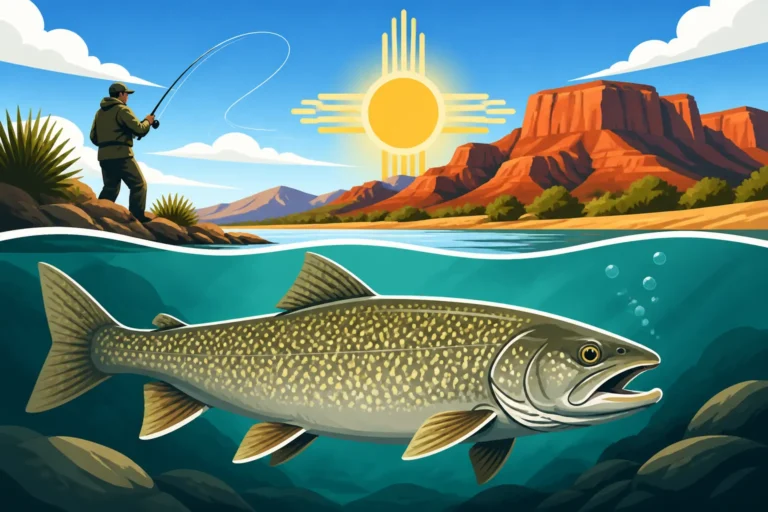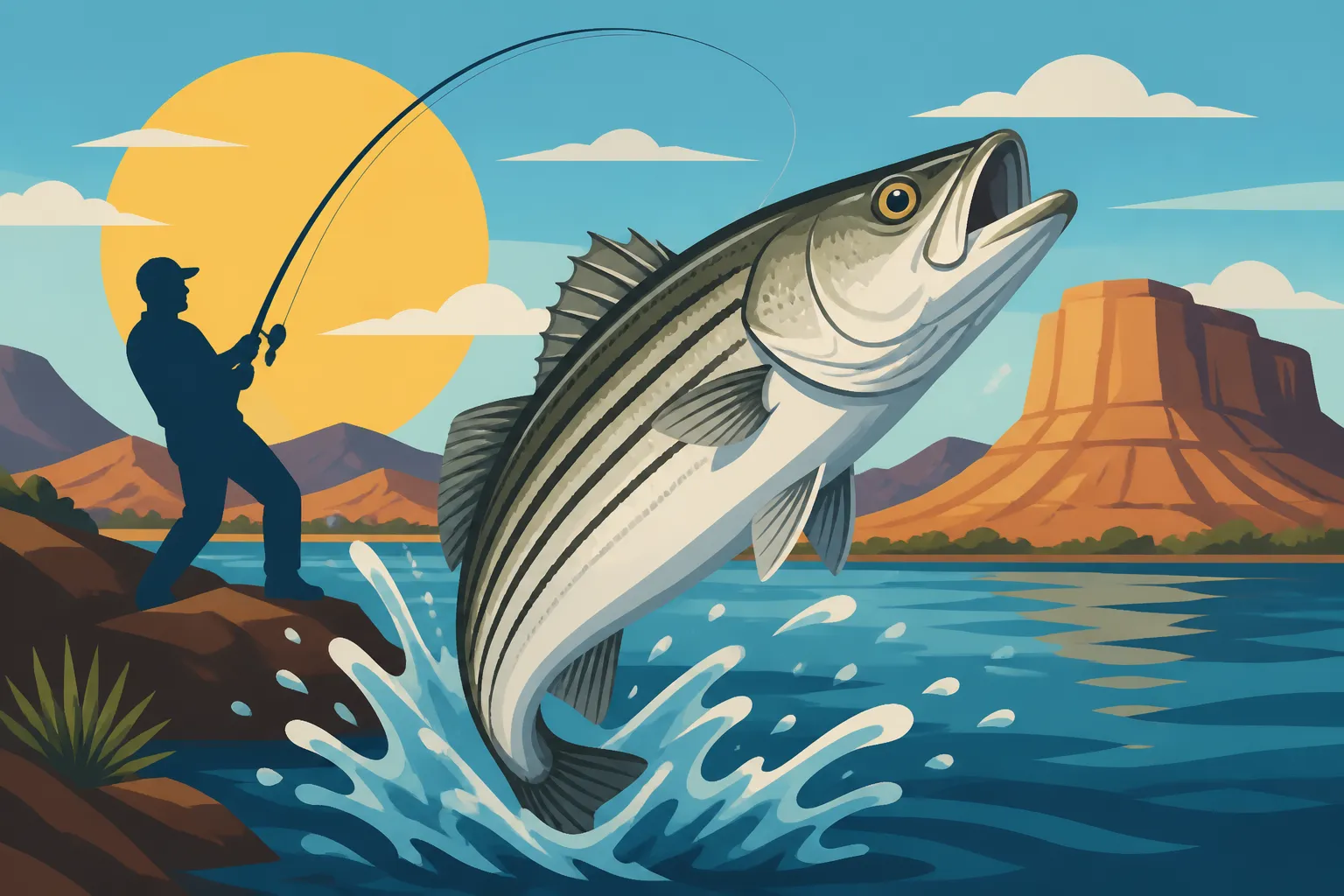
Striped Bass at Elephant Butte Lake
Few experiences in New Mexico fishing can match the sheer power and excitement of hooking into a hard-fighting striped bass, especially when you're out on the vast, beautiful waters of Elephant Butte Lake. However, finding and consistently catching these formidable predators can feel like chasing ghosts across a massive body of water. This comprehensive guide is designed to cut through the mystery, providing you with the knowledge and strategies to successfully target striped bass and enjoy epic days on New Mexico's largest reservoir.
The Allure of Striped Bass at Elephant Butte Lake
Elephant Butte Lake, a jewel in New Mexico's high desert, is renowned for its diverse fishery, but for many, the striped bass stands out as the ultimate prize. These fish aren't native to the Land of Enchantment, yet they've thrived in this massive reservoir, offering anglers a unique challenge and the potential for truly memorable catches. Understanding their origins and characteristics is the first step in unlocking their secrets.
A Brief History of Stripers in Elephant Butte
Striped bass, often simply called "stripers," were introduced to Elephant Butte Lake decades ago as part of a management strategy to utilize the abundant gizzard shad, a prolific forage fish. The idea was to create a predator that would grow large and provide an exciting sportfishing opportunity, and it certainly worked. While they might not be part of New Mexico's natural aquatic ecosystem, they have established themselves as a dominant force within the lake's food chain, becoming a favorite target for many dedicated anglers. Their success here speaks volumes about the lake's capacity to support a robust population, providing a fantastic, albeit challenging, fishery.
These introductions were carefully managed, balancing the ecological impact with the recreational benefits. The stripers found a perfect environment in Elephant Butte's large, warm waters and ample food supply. They adapted quickly, growing to impressive sizes and creating a thriving population that has sustained itself through stocking efforts and, at times, natural reproduction depending on conditions. It's a testament to the lake's productivity and the foresight of those who introduced them, making Elephant Butte a prime destination for striped bass fishing in the Southwest.
Identifying Elephant Butte Stripers
Distinguishing a true striped bass from its close relative, the white bass, or even a hybrid striper (which can also be present), is crucial for understanding regulations and expectations. True striped bass have distinct, unbroken horizontal lines running along their silver bodies, usually seven or eight of them. Their bodies are elongated and powerful, built for speed and fighting strong currents, even in a reservoir environment. White bass, by contrast, are generally smaller and rounder, with fainter, often broken lines. Hybrids will often show broken lines as well, especially below the lateral line.
When you hook into a sizable fish at Elephant Butte, take a moment to observe these markings. A full-grown striper will often have a more torpedo-like shape, a larger mouth, and typically weigh significantly more than even a big white bass. Knowing your quarry not only helps with compliance with New Mexico Fishing Regulations Overview but also helps you appreciate the specific fight and characteristics of these incredible fish. Their robust physique and powerful tail kicks are unmistakable once you've tangled with one.
Their Unique Behavior and Foraging Habits
Striped bass are highly predatory and opportunistic feeders. In Elephant Butte Lake, their primary diet revolves around the plentiful gizzard shad. This dependency on shad dictates much of their behavior, including their movements, depths, and preferred feeding times. Stripers are pelagic, meaning they often suspend in open water, constantly on the move, chasing down schools of baitfish. They are notorious for "schooling" behavior, where large groups of stripers will corral baitfish, driving them to the surface in spectacular feeding frenzies known as "boils" or "blow-ups."
These boils are a sight to behold and offer some of the most exciting fishing opportunities. However, they can be fleeting. Stripers also feed heavily on shad in deeper water, often holding along ledges, points, and humps where they can ambush passing schools. Understanding this predator-prey relationship is fundamental to successful striper fishing. They are constantly searching, constantly hungry, and their pursuit of shad is the key to unlocking where and when you'll find them. They are truly the apex predator in much of Elephant Butte's open water.
Where to Find These Powerful Predators
Elephant Butte Lake is immense, covering tens of thousands of acres when full, which can make locating a specific species like striped bass a daunting task. However, by understanding their preferred habitat and how they interact with the lake's structure and topography, you can significantly narrow down your search and increase your chances of success.
Structure and Depth Preferences
While stripers are often found in open water, they frequently relate to submerged structures, especially those that offer quick access to deep water. Look for long points that extend far into the lake, submerged humps, old river channels, and sudden depth changes like ledges or drop-offs. These areas act as ambush points where stripers can stage, waiting for schools of shad to pass by. The thermocline, a layer of water with a rapid temperature change, also plays a critical role in summer, as stripers will often suspend just above or within it, seeking cooler, oxygenated water while still having access to baitfish.
During cooler months, stripers might move into shallower coves or flats, especially if baitfish are present, but they rarely stray far from deeper water safety. In the peak of summer, they'll retreat to the coolest, most oxygenated depths available, often suspending over the old river channel or deep pockets of the lake. Areas near the dam are frequently productive due to the consistent deep water access. Understanding these depth preferences throughout the year is crucial; what works in spring might be completely ineffective in August.
Seasonal Migration Patterns
Striped bass at Elephant Butte exhibit clear seasonal patterns, primarily driven by water temperature and the availability of their shad forage. In spring, as water temperatures rise, stripers become highly active and can often be found in shallower coves and feeder creek mouths where shad are beginning to spawn. This is a prime time for bank fishing or targeting them with artificial lures. As spring progresses into summer, the heat pushes them deeper, often suspending in the main lake basin or congregating around significant points and humps. They'll follow the shad into deeper, cooler water.
Fall brings some of the most exciting action. As the lake cools, shad move shallower, and stripers follow suit, often leading to explosive surface feeding frenzies. This is arguably the best time for sheer action. During winter, stripers tend to hold in deep water, becoming less active but still catchable, often suspending in the main channel or deep holes. They'll feed less aggressively but can be targeted with slower presentations. Knowing these general movements, as detailed in guides like Best Time of Year to Fish in New Mexico, helps you focus your efforts dramatically.
Following the Baitfish
Ultimately, if you want to find striped bass, you need to find their food source: gizzard shad. Modern electronics, particularly good fish finders, are invaluable tools for locating baitfish schools. Look for large, dense clouds or arcs on your sonar, especially near structure or in open water. Where there's bait, stripers are usually not far behind, either actively feeding or waiting for an opportunity. Don't be afraid to cover a lot of water with your boat until you mark significant baitfish concentrations.
Observing the surface for "boils" or "nervous water" is another key strategy. Gulls and other seabirds circling and diving can also be a dead giveaway that stripers are pushing shad to the surface. These visual cues indicate active feeding and are often the best chance to hook into multiple fish in a short amount of time. If you see birds diving, get there quickly and cast! Investing in a quality fish finder, many of which are available on Amazon, can drastically improve your ability to locate these crucial bait schools and, by extension, the stripers themselves.
Timing Your Striper Hunt for Maximum Success
Beyond simply knowing where the fish are, understanding the optimal when can make all the difference in your striped bass success at Elephant Butte Lake. Different seasons, and even different times of day, present unique opportunities and challenges.
Spring Spawning Runs and Post-Spawn Feeding
Spring, typically from late March through May, is a phenomenal time for targeting striped bass at Elephant Butte. As water temperatures climb into the 60s Fahrenheit, stripers move into shallower areas, especially around the mouths of creeks and tributary arms, mimicking a spawning run. While they don't successfully reproduce in freshwater environments like they do in brackish water, this instinctual movement makes them more concentrated and aggressive. This is often when you'll find them in relatively shallow water, sometimes even within casting distance from the shore at accessible points.
After this "false spawn," stripers enter a post-spawn feeding frenzy to recover energy. They'll actively chase shad in coves and over shallow flats, and topwater action can be exceptional during early mornings and late evenings. This is a time when they are actively looking for a meal and are less finicky. Medium-diving crankbaits, swimbaits, and even live shad become highly effective during this period. Keep an eye on water temperatures and look for that magic range where the baitfish are active.
Summer Heat and Deep Water Tactics
New Mexico summers are notoriously hot, and Elephant Butte is no exception. As surface temperatures soar, stripers will retreat to deeper, cooler, and more oxygenated waters. During June, July, and August, you'll typically find them suspending in the main lake basin, often over the old river channel or near the dam, anywhere from 20 to 60 feet deep, sometimes even deeper. Don't waste your time casting to shallow banks in the middle of the day. The bite can still be excellent, but it requires a different approach.
Trolling with downriggers or heavy lead-core line to get your lures to the correct depth becomes a dominant strategy. Look for fish on your sonar and present your bait directly at their depth. Early mornings, late evenings, and even night fishing can be productive as stripers might move shallower under the cover of darkness or cooler temperatures to feed. Keep a close eye on your electronics; they are your best friend during the summer to pinpoint those deep-holding schools. Guides such as Fishing New Mexico Reservoirs in Summer Heat offer more tailored advice for these conditions.
Fall Feeding Frenzies
For many seasoned striper anglers, autumn is the absolute prime time at Elephant Butte. As air and water temperatures begin to cool in September and October, baitfish become incredibly active, sensing the approaching winter. Stripers respond with an intense feeding spree, trying to gorge themselves before the colder months. This often leads to widespread and prolonged surface activity. Boils become more common and can last longer, sometimes for hours, making for incredible sight-fishing opportunities.
During this period, stripers can be found almost anywhere baitfish are present – from main lake points and humps to large coves. Both casting to surfacing fish with topwater lures, swimbaits, and spoons, as well as trolling, can be highly effective. The fall bite is characterized by aggressive strikes and fast action, making it a favorite season for many anglers. This is the time when you definitely want to have your gear ready and keep an eye on the water for any signs of activity.
Winter Slow Downs
While winter might seem like an unlikely time to target stripers, don't write it off completely. From November through February, stripers become less active, but they are still catchable. They tend to congregate in large, lethargic schools in the deepest parts of the lake, often suspending tightly together in the main river channel or deep holes. Their metabolism slows down, and they're less likely to chase fast-moving baits.
Success in winter often comes down to precise vertical presentations. Jigging spoons, blade baits, or soft plastics directly over and through schools of deep-holding stripers can be effective. A slow, subtle retrieve is often key. You might not get the explosive strikes of summer or fall, but a solid thud and a heavy fight are still well within reach. This is a test of patience and precision, but for those willing to brave the colder weather, the rewards can be substantial, often yielding some of the largest fish of the year.
Mastering the Art of Catching Elephant Butte Stripers
Once you've located the fish and understand their seasonal movements, the next step is to present them with an irresistible offering. Elephant Butte stripers respond to a variety of techniques, but some are consistently more effective than others, depending on the conditions.
Trolling: The Go-To Method
Trolling is arguably the most consistent method for catching striped bass at Elephant Butte, especially when they are suspended in open water or scattered over large areas. This technique allows you to cover vast amounts of water and present lures at precise depths for extended periods. Common trolling setups involve using downriggers, lead-core line, or even planer boards to get lures down to where the fish are holding. Effective trolling lures include deep-diving crankbaits, swimbaits, and large bucktail jigs dressed with plastic trailers.
Vary your speed, depth, and lure colors until you find what's working. Many anglers will run multiple lines at different depths and with different lures until a pattern emerges. Keep a close eye on your fish finder while trolling; if you mark a school of stripers at a specific depth, adjust your lures to run right through that zone. Trolling is a fantastic way to find active fish and can lead to multiple hook-ups, especially during those summer months when stripers are holding deep. You can find a wide array of trolling lures on Amazon.
Casting and Topwater Action
When stripers are actively feeding on the surface, pushing shad into boils, casting is the most exciting and often productive method. Topwater lures like poppers, walking baits, and lipless crankbaits mimic distressed baitfish and often elicit explosive strikes. The key here is stealth and speed. Approach a boil cautiously to avoid spooking the fish, and cast your lure directly into the heart of the activity. Retrieve it quickly to simulate a fleeing baitfish.
Even when stripers aren't actively boiling, casting can be effective. If you mark fish on your sonar near a point or hump, cast swimbaits, spoons, or heavy jigs and retrieve them through the strike zone. Sometimes a slower, more deliberate retrieve will tempt a less aggressive fish. Soft plastic jerkbaits or flukes rigged weightless can also be deadly when stripers are shallower and cruising. This more active approach demands keen observation and quick reactions, but the visual thrill of a striper smashing a topwater lure is unparalleled.
Live Bait and Deadsticking
For a more relaxed, yet often incredibly effective, approach, live bait cannot be beaten, especially for larger, less active stripers. Gizzard shad, the stripers' natural forage, are the best choice for live bait. They can be caught with a cast net in shallower areas of the lake. Once you have your bait, rig them on a large circle hook (sizes 5/0 to 8/0 are common) either through the nose or just behind the dorsal fin. You can free-line them, suspend them under a balloon or slip bobber, or "deadstick" them on the bottom with a weight.
Deadsticking, where you suspend a live shad just above a deep-holding school of stripers and simply let it sit, can be particularly effective during slower times or in cold water. The live bait's natural movements are often enough to tempt a wary striper that might ignore an artificial lure. This method requires a good livewell to keep your shad healthy and active throughout the day. It's an often overlooked but highly productive technique, particularly for targeting trophy-sized fish.
Jigging and Vertical Presentations
When stripers are schooling tightly in deeper water, often over the old river channel or deep humps, vertical jigging can be a killer technique. This is especially true during the winter months or when fish are less spread out. Heavy jigging spoons, blade baits, or large bucktail jigs are dropped directly down to the fish's depth, then worked with sharp snaps and pauses. The idea is to trigger a reaction strike from stripers that might not be actively chasing.
Using your fish finder to pinpoint the exact depth of the school is paramount. Drop your lure just above them, or right into the middle, and begin your jigging cadence. Sometimes a fast, aggressive jig is best, other times a slower lift and fall. Pay close attention to subtle bites on the fall, as stripers will often hit as the lure flutters down. This method is highly effective for getting right into a dense school of fish and can lead to rapid-fire action once you find the right rhythm.
| Technique | Best Season | Preferred Depth | Lure/Bait Examples | Notes |
|---|---|---|---|---|
| Trolling | All Seasons | Mid to Deep (10-80ft) | Deep-diving crankbaits, swimbaits, bucktails | Excellent for covering water; often requires electronics. |
| Casting/Topwater | Spring, Fall, Summer | Shallow to Mid (0-20ft) | Poppers, walking baits, swimbaits, spoons | Exciting visual strikes; best for active, schooling fish. |
| Live Bait | All Seasons | All Depths | Live Gizzard Shad | Highly effective for wary or large fish; requires livewell. |
| Jigging/Vertical | Summer, Winter | Deep (20-100+ft) | Jigging spoons, blade baits, bucktails | Best for targeting suspended, tightly schooled fish. |
Essential Gear and Tactics for Striper Anglers
Having the right equipment can significantly enhance your enjoyment and success when chasing striped bass at Elephant Butte. These powerful fish demand gear that can handle their fight, and the vastness of the lake often calls for specialized tools.
Rods, Reels, and Line Choices
For striped bass, you'll want gear that can withstand a serious tug-of-war. A medium-heavy to heavy action spinning or baitcasting rod, typically 7 to 8 feet long, is ideal. This length provides good casting distance for topwater lures and enough leverage to fight larger fish. Pair it with a sturdy reel, size 4000 to 6000 for spinning, or a comparable baitcaster, loaded with 15-30 pound braided line. Braid offers incredible sensitivity and strength, crucial for feeling subtle bites at depth and handling powerful runs.
Attach a 2-4 foot fluorocarbon leader of 20-40 pound test to your braided main line. Fluorocarbon is nearly invisible underwater and offers excellent abrasion resistance, which is important around submerged timber or rocky bottom. The leader provides a buffer and helps prevent stripers from seeing your main line. You can find quality rods, reels, and lines for striped bass fishing from brands like Penn, Shimano, and Daiwa, many of which are readily available through retailers like Amazon. Remember, strength and durability are key when dealing with these hard-fighting fish.
Electronics: Fish Finders and GPS
On a lake the size of Elephant Butte, electronics are not just a luxury; they are almost a necessity for consistently finding striped bass. A good fish finder with down imaging and side imaging capabilities will allow you to scan vast areas quickly, identify baitfish schools, and pinpoint individual stripers or schools holding near structure or in open water. Look for units that offer clear, high-resolution displays.
GPS functionality is equally important. It allows you to mark productive spots, navigate back to them, and follow contours or old river channels. When you find a school of fish or experience a hot bite, mark that spot immediately. This data is invaluable for future trips and for understanding seasonal patterns. Brands like Lowrance, Garmin, and Humminbird offer excellent units suitable for Elephant Butte. Investing in a quality fish finder is perhaps the single best upgrade you can make to your striper fishing arsenal.
Lures and Terminal Tackle for Success
Your tackle box for Elephant Butte stripers should be well-stocked with a variety of offerings to match different conditions and feeding moods.
- Topwater Lures: Poppers, walk-the-dog baits (e.g., Zara Spooks), and pencil poppers are essential for surface boils. Choose larger sizes (4-6 inches) in chrome, white, or bone colors.
- Crankbaits: Deep-diving crankbaits that reach 15-30 feet are excellent for trolling or casting to suspended fish. Silver, bluegill, or shad patterns are typically good starting points.
- Spoons: Heavy jigging spoons (1-3 oz) like Hopkins or Kastmasters are fantastic for vertical jigging deep schools. Casting spoons are great for active surface feeders.
- Swimbaits: Soft plastic swimbaits, either weighted or rigged on a jig head, are incredibly versatile. They can be cast, trolled, or retrieved through schooling fish. Again, shad patterns are usually winners.
- Bucktail Jigs: These classic lures are incredibly effective, especially when paired with a soft plastic trailer. Sizes from 1/2 oz to 2 oz in white, chartreuse, or natural baitfish colors are great for casting or jigging.
- Live Bait Rigs: Always carry a selection of large, strong circle hooks (5/0-8/0), swivels, and an assortment of egg sinkers or slip sinkers (1/2 oz to 2 oz) for live bait presentations.
Don't forget robust pliers, a good pair of polarized sunglasses (which help spot boils and underwater structure), and a large landing net for safely handling these powerful fish. Before you head out, make sure your hooks are sharp and your knots are strong.
Regulations and Conservation
Fishing for striped bass at Elephant Butte Lake is an incredible experience, but it's important to remember that responsible angling practices and adherence to regulations are crucial for maintaining the health of the fishery for future generations.
New Mexico Specific Rules for Stripers
New Mexico, like all states, has specific rules governing the harvest of various fish species, and striped bass are no exception. While regulations can change, stripers in Elephant Butte Lake generally have very liberal bag and possession limits, reflecting their non-native status and their role in managing the gizzard shad population. However, it is absolutely vital to consult the current New Mexico Fishing Regulations Overview or the New Mexico Department of Game and Fish (NMDGF) official guide before you go fishing.
These regulations will clearly state the daily bag limit (how many you can keep in one day) and the possession limit (how many you can have in your possession, including at home). There are typically no size restrictions for stripers, but checking the most up-to-date guide is always your best bet to avoid any misunderstandings or penalties. Remember, ignorance of the law is never an excuse. Always double-check!
Catch and Release Best Practices
Even with liberal limits, practicing catch and release on some fish, especially those you don't intend to eat or trophy-sized specimens, is a valuable part of good conservation. Striped bass are powerful fighters, and the fight can sometimes stress the fish. To ensure a high survival rate for released stripers:
- Land Fish Quickly: Don't prolong the fight unnecessarily. Get the fish to the boat as efficiently as possible.
- Handle with Care: Support the fish horizontally, especially larger ones, to avoid damaging internal organs or the jaw. Avoid holding them vertically by the jaw.
- Use Wet Hands or a Net: Wet your hands before handling fish to protect their slime coat, which is their primary defense against disease. A rubber-coated landing net is ideal as it's gentle on scales and fins.
- Remove Hooks Promptly: Use pliers or a dehooking tool to quickly remove hooks. If the fish is deeply hooked, especially in the gills, it might be best to cut the line as close to the hook as possible.
- Revive If Necessary: If a fish seems sluggish, hold it gently in the water, facing into the current (if any), and move it back and forth to force water over its gills until it swims away strongly on its own.
Following these practices, similar to those outlined in Catch and Release Best Practices in New Mexico, ensures that the fish you release have the best chance of survival, contributing to the overall health and vitality of Elephant Butte's incredible striped bass fishery.
Disclaimer
This article is for general informational purposes only and does not constitute professional advice. Laws, prices and regulations vary by location and change over time. Consult a qualified professional for guidance on your specific situation.