Lake Trout in New Mexico
Finding lake trout in New Mexico is often like searching for a hidden treasure. While the state is absolutely brimming with incredible fishing opportunities for rainbow, brown, and even native cutthroat trout, the elusive lake trout, often called 'lakers,' aren't nearly as widespread. Many anglers come to the Land of Enchantment hoping to add this powerful, deep-dwelling species to their list, only to find themselves wondering where to even begin. This comprehensive guide will pull back the curtain on targeting lake trout in New Mexico, detailing where to find them, how to identify them, the specialized techniques required to catch them, and what gear you'll need to succeed.
Where to Find Lake Trout in New Mexico
When we talk about lake trout in New Mexico, we're really talking about one primary location: Navajo Lake. It’s the state’s undisputed hotspot for these incredible fish, offering the best chance by far to encounter them. While there might be whispers of lakers in a few other isolated, high-altitude waters, Navajo Lake is where serious anglers focus their efforts.
Navajo Lake: The Prime Spot
Navajo Lake State Park, nestled in the scenic northwestern part of New Mexico, is an angler's paradise for many reasons, but for lake trout, it stands alone. This massive reservoir, stretching across the New Mexico-Colorado border, boasts incredible depths and cold, oxygen-rich waters that are absolutely essential for lake trout survival. Unlike many other New Mexico lakes, Navajo Lake consistently holds a healthy, reproducing population of lakers, alongside its robust populations of Kokanee salmon, smallmouth bass, and rainbow trout. Anglers frequently report catching good numbers of lake trout here, with some impressive specimens tipping the scales. It's truly the flagship fishery for this species in the state, offering not just the opportunity, but the real possibility of success. If you're coming to New Mexico specifically for lake trout, make Navajo Lake your primary destination. It's a vast body of water, so understanding its contours and the deepest sections will be key to your success. You'll find plenty of boat ramps available, which are almost essential for effectively fishing this large lake. If you're interested in other species, check out our Navajo Lake Fishing Guide.
High-Altitude Lakes: A Rare Possibility
While Navajo Lake is the main event, there have been historical reports and occasional stocking efforts in a few very specific, high-altitude lakes in New Mexico's northern mountains. These instances are exceedingly rare and often sporadic, so relying on them for a consistent lake trout fishery is generally not advised. These remote, often difficult-to-access waters typically have extremely cold temperatures and can support a limited number of lakers. However, the populations are usually much smaller, and the fish themselves tend to be less numerous and smaller in average size compared to those found in Navajo Lake. Think of these as more of a "unicorn" find for an intrepid angler rather than a reliable destination. It's crucial to check the latest New Mexico Fishing Regulations Overview for any specific rules or closures if you plan to explore these less-known, high-elevation spots, as conditions and stocking programs can change. Often, if lakers are present, they are part of a very delicate ecosystem that requires careful handling.
Understanding Lake Trout Habitat
Lake trout are cold-water fish, through and through. They thrive in deep, clear, and cold lakes with plenty of oxygen. This means you won't find them in the shallower, warmer reservoirs or rivers that hold other species like bass or catfish. In a lake like Navajo, during the warmer months, lake trout will retreat to the deepest sections where water temperatures remain in their preferred range, often between 45-55 degrees Fahrenheit. They will often relate to underwater structure such as ledges, humps, old river channels, and steep drop-offs. These areas provide both cooler temperatures and ambush points for foraging on smaller baitfish like Kokanee salmon or even other smaller trout. Understanding the bathymetry of a lake – its underwater topography – is absolutely critical for finding lake trout. Using a good fish finder is not just helpful; it's practically a necessity for locating these deep-dwelling fish. Think of it this way: if you're not finding cold, deep water with plenty of structure, you're probably not in lake trout territory.
Identifying Lake Trout
Distinguishing a lake trout from other common trout species in New Mexico is important, especially when it comes to understanding regulations and appreciating your catch. While they share some similarities with other trout and char, lake trout possess several distinct features.
Key Physical Characteristics
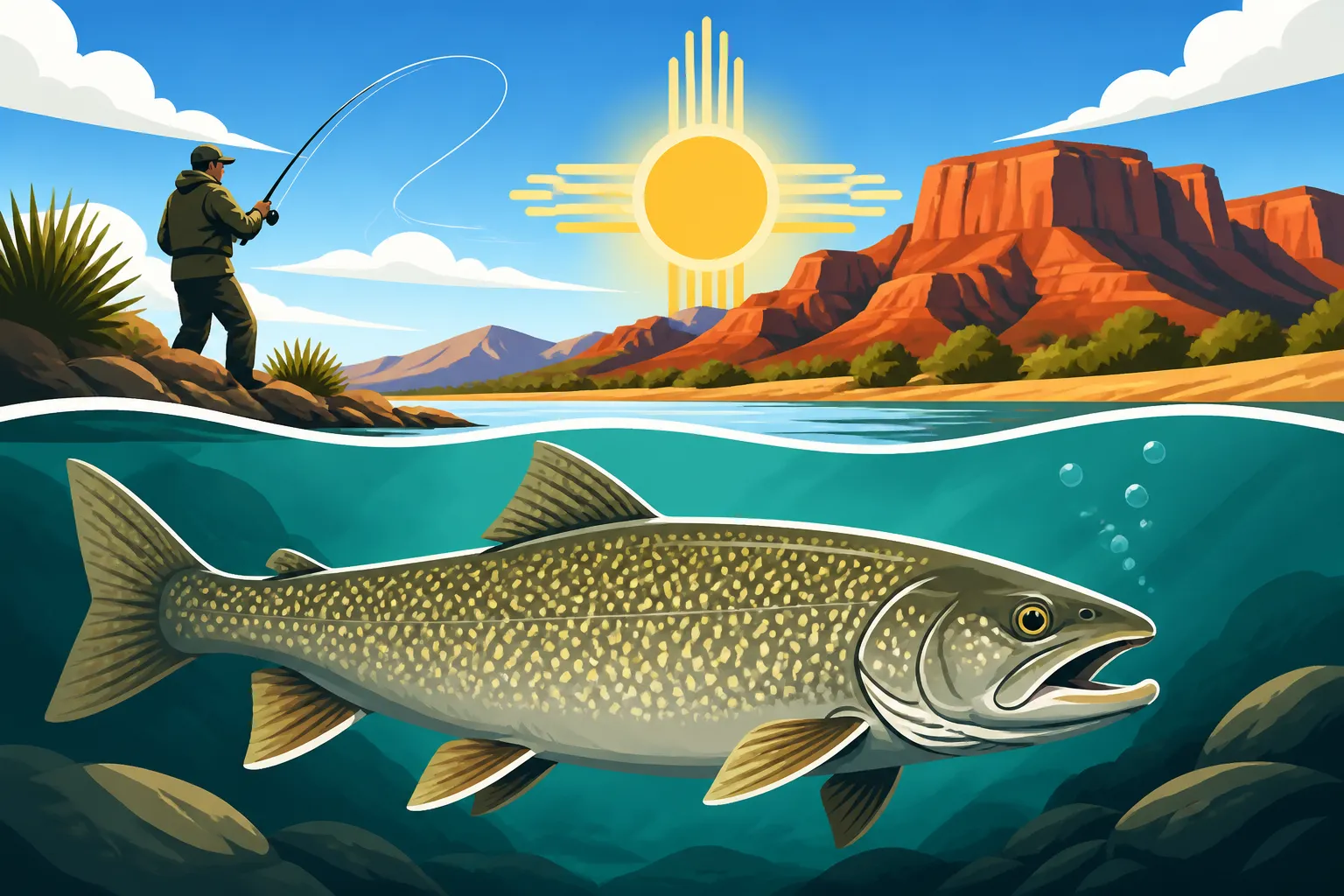
Lake trout have a torpedo-shaped body that is generally darker than other trout, often appearing olive, gray, or even brownish, fading to a lighter belly. Their most defining characteristic is the presence of numerous light spots on a darker background, which are typically cream-colored or yellowish. These spots extend over the head, body, and even on the dorsal and caudal (tail) fins. Unlike rainbow trout, which often have a pink or red lateral stripe, lake trout lack this coloration. Perhaps the most reliable identifier is their deeply forked tail, a feature much more pronounced than on rainbow or brown trout, which have squarer or only slightly emarginate tails. Another good indicator is the absence of teeth on the shaft of the vomer bone in the roof of their mouth, a detail often used by fisheries biologists but perhaps less practical for the casual angler on the water.
Distinguishing from Brown or Rainbow Trout
It’s easy to get confused when you're excited about a big fish, but paying attention to a few details can clear things up. Rainbow trout typically have black spots on a lighter body, often with that distinctive pink lateral band, and their tail is usually square or only slightly forked. Brown trout, on the other hand, have dark spots (some with red halos) on their upper body and sides, but usually no spots on their tail fin, which is also squarer than a laker's. The spots on a brown trout are typically much more sparse and randomly distributed compared to the dense, smaller spots of a lake trout. The deeply forked tail is truly the clearest visual cue for a lake trout. If you catch a fish from deep water with a deeply split tail and light spots all over a dark body, you’ve likely landed a lake trout. Familiarity with Trout Species Found in New Mexico can help you make these distinctions even faster.
Size and Age Expectations
Lake trout are known for their potential to grow to impressive sizes, much larger than typical rainbow or brown trout in New Mexico. While the average catch at Navajo Lake might be in the 2-5 pound range, fish in the double digits are certainly possible, and trophy lakers pushing 20 pounds or more are caught occasionally. These larger fish are often very old, as lake trout are a slow-growing, long-lived species. Their longevity means that managing the fishery carefully is important, especially for these older, larger individuals that contribute significantly to reproduction. Catching a large lake trout is a true testament to patience and specialized angling, and they are incredibly powerful fighters, making them a highly prized catch for any angler.
Effective Techniques for Lake Trout
Lake trout, being deep-water residents, require specialized techniques that differ significantly from shallow-water trout fishing. You can't just throw a spinner from the bank and expect to consistently hook into these giants. Success comes from getting your offering down to their preferred depths and presenting it effectively.
Trolling Deepwater Rigs
Trolling is arguably the most productive method for targeting lake trout in New Mexico, especially on a vast lake like Navajo. This involves using a boat to slowly pull lures or bait at specific depths, covering a lot of water until you find actively feeding fish. To get your bait down deep, you'll need specialized gear such as downriggers, lead core line, or heavy diving planes (like Dipsy Divers or Jet Divers). Downriggers are particularly effective as they allow you to precisely control the depth of your lure, dropping it right into the lake trout's zone, often hundreds of feet down. Common lures for trolling include large spoons, stickbaits, and even large tube jigs or swimbaits. The key is to match the hatch, often imitating the Kokanee salmon that lake trout prey on. Color choice can vary, but silver, blue, green, and chartreuse patterns are often productive. Pay close attention to your fish finder to identify schools of baitfish or individual lakers, and then try to present your lure just above them. Learning various Trolling Techniques for New Mexico Lakes will give you a significant advantage.
Vertical Jigging for Suspended Fish
When lake trout are located over structure or suspended in specific depth ranges, vertical jigging can be incredibly effective. This technique involves positioning your boat directly over the fish you see on your fish finder and dropping a heavy jig straight down to them. Lures for jigging often include large spoons, heavy tube jigs, or blade baits, typically ranging from 1/2 ounce to several ounces, depending on depth and current. The action involves lifting the jig sharply a few feet and then letting it flutter back down on a semi-slack line, mimicking a wounded baitfish. Strikes often occur on the fall, so a sensitive rod and braided line are crucial for detecting subtle bites. This method requires a good electronic fish finder to pinpoint the fish and a boat with a reliable trolling motor (electric bow-mount or similar) to hold position. It's an active and engaging way to fish, and when you connect with a big laker on a jig, the fight is truly exhilarating.
Bait and Lure Choices for Depth
Choosing the right bait and lures for lake trout means selecting items that can withstand the pressure of deep water and effectively imitate their natural prey. Large, heavy spoons like a "Crippled Herring" or "Sutton Spoon" are excellent for trolling or jigging, often purchased through retailers like Amazon. Stickbaits in larger sizes (4-6 inches) that dive deep, such as "Rapala Down Deep Husky Jerks," can also be effective when trolled with appropriate weighting. For bait, cut bait (like pieces of Kokanee or other oily fish) fished on a rig behind a dodger or flasher can be irresistible to lakers. Live bait, where permitted, can also be deadly. Remember, lake trout have larger mouths than typical rainbows, so don't be afraid to go with bigger presentations. For a more comprehensive look at what to tie on, consider exploring Best Lures for New Mexico Trout, keeping in mind that lakers often prefer larger, more robust offerings designed for bigger predators. Having a selection of these heavier, deep-diving options in your tackle box is paramount for lake trout success.
Best Time to Target Lake Trout
Just like any other fish, lake trout activity is heavily influenced by seasonal changes, water temperature, and daily patterns. Understanding these factors can dramatically increase your chances of success.
Seasonal Patterns and Behavior
While Navajo Lake provides year-round opportunities, the "best" time to target lake trout often depends on your preferred fishing method and tolerance for weather. Spring and fall are generally considered prime seasons. In spring, as ice recedes and surface waters begin to warm slightly, lake trout can sometimes be found in shallower depths (relatively speaking, still 40-80 feet) as they follow baitfish. This can make them a bit more accessible. Fall is another fantastic time, especially from September through November, as lake trout become very active in preparation for winter, and their metabolism ramps up. They feed aggressively, making them more willing to strike. During the summer, they retreat to the deepest, coolest sections of the lake, often requiring precise deepwater trolling or jigging. Winter ice fishing for lake trout is also popular at Navajo Lake when conditions allow, offering a unique challenge of jigging through the ice in deep water. Always consult local ice conditions before venturing out. For a broader overview of seasonal fishing, refer to Best Time of Year to Fish in New Mexico.
Daily Movements and Feeding Windows
Lake trout often exhibit distinct daily feeding patterns. Early mornings and late evenings, or even night fishing, can be highly productive. During these low-light periods, baitfish tend to be more active, and lake trout will move up in the water column (still deep, but perhaps shallower than midday) to feed on them. As the sun gets high and bright, they typically descend to the deepest, darkest parts of their habitat. However, a key factor for lake trout is stable conditions. If you find a school of baitfish at a certain depth, often the lakers won't be far behind, regardless of the time of day. Your fish finder is your best friend for tracking these movements and identifying active feeding windows. A consistent troll speed and depth, particularly during these prime times, can lead to consistent strikes.
Impact of Water Temperature
Water temperature is the single most critical factor influencing lake trout behavior. As stenothermal fish, they have a narrow preferred temperature range and will actively seek out water that falls within it. As mentioned, this is typically between 45-55 degrees Fahrenheit. In summer, this means they will be in the thermocline or below it, often 80 to 200 feet deep, or even deeper depending on the lake's structure. In spring and fall, the thermocline might be less defined, or the cooler surface waters allow them to roam a bit higher. Anglers who invest in a reliable water temperature gauge (some fish finders have this built-in) will have a significant advantage in locating these temperature-sensitive fish. Finding the right temperature layer is often more important than finding specific structure, as the fish will always go where they are most comfortable.
Conservation and Regulations for Lake Trout
Responsible angling is crucial, especially for species like lake trout that occupy a niche environment in New Mexico. Understanding and adhering to regulations helps ensure these magnificent fish continue to thrive for future generations.
New Mexico's Management Approach
The New Mexico Department of Game and Fish actively manages the state's fisheries, including the lake trout population at Navajo Lake. Their goal is to maintain a healthy and sustainable fishery through a combination of regulations, habitat protection, and monitoring. For lake trout, this often means specific bag and possession limits designed to allow for sport fishing while protecting the breeding stock, particularly the larger, older individuals. Because lake trout are slow to mature and long-lived, overharvesting can have a significant impact on their population structure. The department conducts surveys to assess population health, growth rates, and reproductive success to inform their management decisions. Anglers are encouraged to familiarize themselves with the annual New Mexico Fishing Regulations Overview booklet, as rules can be updated.
Bag and Possession Limits
Specific bag and possession limits are set for lake trout to prevent overfishing. These limits dictate how many fish you can keep per day (bag limit) and how many you can have in your possession at any given time, including those at home or in your cooler (possession limit). These numbers can change, so always check the most current regulations. It's not uncommon for there to be a general trout limit, but then specific exceptions or special rules for certain species like lake trout, especially if they are part of a targeted management plan. Sometimes, there might even be slot limits, where only fish within a certain size range can be kept, protecting both the smallest and the largest, most valuable breeders. Always be sure to know the New Mexico Daily Trout Bag Limit and any species-specific nuances before you head out.
Catch and Release Best Practices
Given that lake trout are a unique and often large species, practicing responsible catch and release, especially for bigger fish, is highly encouraged. When you decide to release a lake trout, minimize its time out of the water. Use a large, soft-mesh net (rubberized nets are best) to land the fish gently. If you're using a camera to snap a photo, have it ready so the fish is out of the water for the shortest possible duration. Use needle-nose pliers or a hook remover to quickly and carefully extract the hook. If the fish is hooked deeply, it's often better to cut the line rather than try to tear the hook out, especially if the fish has taken the bait in deep water. These fish can also suffer from barotrauma when brought up from extreme depths (like humans get the bends), so some anglers use descending devices to help them recover and return to deep water. Learning Catch and Release Best Practices in New Mexico is vital for preserving the health of our fisheries.
Essential Gear for Lake Trout Fishing
Successfully targeting lake trout in New Mexico, particularly at Navajo Lake, requires a specific set of gear designed for deepwater fishing and handling large, powerful fish. Trying to catch lakers with your typical stream trout setup will likely lead to frustration and lost fish.
Heavy Rods and Reels for Deepwater
When you're fishing hundreds of feet down, whether trolling with heavy weights or jigging substantial lures, you need gear that can handle the stress. For trolling, a medium-heavy to heavy action rod, typically 7 to 9 feet long, paired with a stout baitcasting reel (often a level-wind model) loaded with braided or lead core line is ideal. These rods have the backbone to manage heavy weights and the power to set the hook on a fish far below. For jigging, a shorter, more sensitive but still powerful medium-heavy rod, around 6.5 to 7.5 feet, paired with a robust spinning reel or a smaller baitcaster, will give you the control and sensitivity needed to feel subtle bites. The reels must have a strong drag system and high line capacity. Many anglers turn to trusted brands found on platforms like Amazon for these specialized setups.
Specialized Lines and Electronics
The type of line you use for lake trout fishing is critical. For trolling with downriggers, a strong braided mainline (30-50 lb test) is often favored for its low stretch, which helps detect bites and provides solid hooksets. For controlling depth without downriggers, lead core line or copper line are popular, as their weight sinks them to specific depths at certain trolling speeds. A good fluorocarbon leader (15-25 lb test) is often tied to the end of these lines for invisibility and abrasion resistance. As mentioned, a high-quality fish finder is non-negotiable. Look for models with good deep-water capabilities, clear sonar imaging, and GPS mapping to mark productive spots. A unit with side-imaging or down-imaging can give you an even better picture of underwater structure and fish presence. Selecting the right Choosing a Fish Finder for Deep Reservoirs can make or break your trip.
Cold Weather and Safety Gear
Fishing for lake trout, especially at deeper, colder lakes like Navajo, means being prepared for all conditions. Even in summer, early mornings or sudden weather changes can bring chilly temperatures, and cold water from depths can quickly drop air temperatures around your boat. Layered clothing, waterproof outerwear, and insulated boots are essential. During colder months or for ice fishing, thermal base layers, a warm insulated suit, and a reliable ice fishing shelter are crucial. Always remember safety first: a well-maintained boat with appropriate safety equipment, including life jackets (PFDs) for everyone on board, is paramount. Additionally, a marine radio or satellite communication device is a smart precaution when exploring large, remote bodies of water. Don't forget sun protection, even on cloudy days, as UV rays are stronger at higher altitudes. Having these items on hand, perhaps sourced efficiently from Amazon, ensures not only comfort but also safety. For general gear advice, our guide on Best Fishing Gear for New Mexico Anglers offers additional insights.
| Feature | Lake Trout (Salvelinus namaycush) | Rainbow Trout (Oncorhynchus mykiss) | Brown Trout (Salmo trutta) |
|---|---|---|---|
| Body Color | Dark (Olive/Gray/Brown) | Lighter (Silvery/Greenish) | Brown/Yellowish |
| Spotting | Light spots on dark background; extends to tail & head | Black spots on light background; usually on upper body/tail | Dark spots (some with red halos) on upper body/sides; usually no tail spots |
| Lateral Line | No distinct stripe | Often a pink/red stripe | No distinct stripe |
| Tail | Deeply Forked | Square or slightly emarginate | Square or slightly emarginate |
| Habitat | Deep, cold, oxygenated lakes | Rivers, lakes, ponds; wider temp tolerance | Rivers, lakes; prefers cool water, more structure-oriented |
| Max Size | Can grow very large (20+ lbs) | Moderate (1-10 lbs common) | Large (often larger than rainbows) |
Disclaimer
This article is for general informational purposes only and does not constitute professional advice. Laws, prices and regulations vary by location and change over time. Consult a qualified professional for guidance on your specific situation.