Brook Trout in New Mexico
There's nothing quite like the crisp mountain air and the thrill of spotting a flash of iridescent color in a crystal-clear stream, only to realize it's a vibrant brook trout. Many anglers dream of catching these beautiful fish, but often wonder where and how to find them in New Mexico's unique landscape, which can feel vast and sometimes intimidating for those chasing cold-water species. This comprehensive guide will walk you through everything you need to know about brook trout in the Land of Enchantment, from their preferred haunts to the best tactics for a successful and memorable outing.
The Allure of Brook Trout in New Mexico's High Country
Brook trout, or "brookies" as they are affectionately known, hold a special place in the hearts of many anglers. Their stunning coloration, feisty nature, and preference for pristine, remote environments make them a highly sought-after species, especially in the high-altitude regions of New Mexico. While they might not grow to the massive sizes of some other trout, their beauty and the challenge of reaching their secluded homes are rewards in themselves.
What Makes Brook Trout Special?
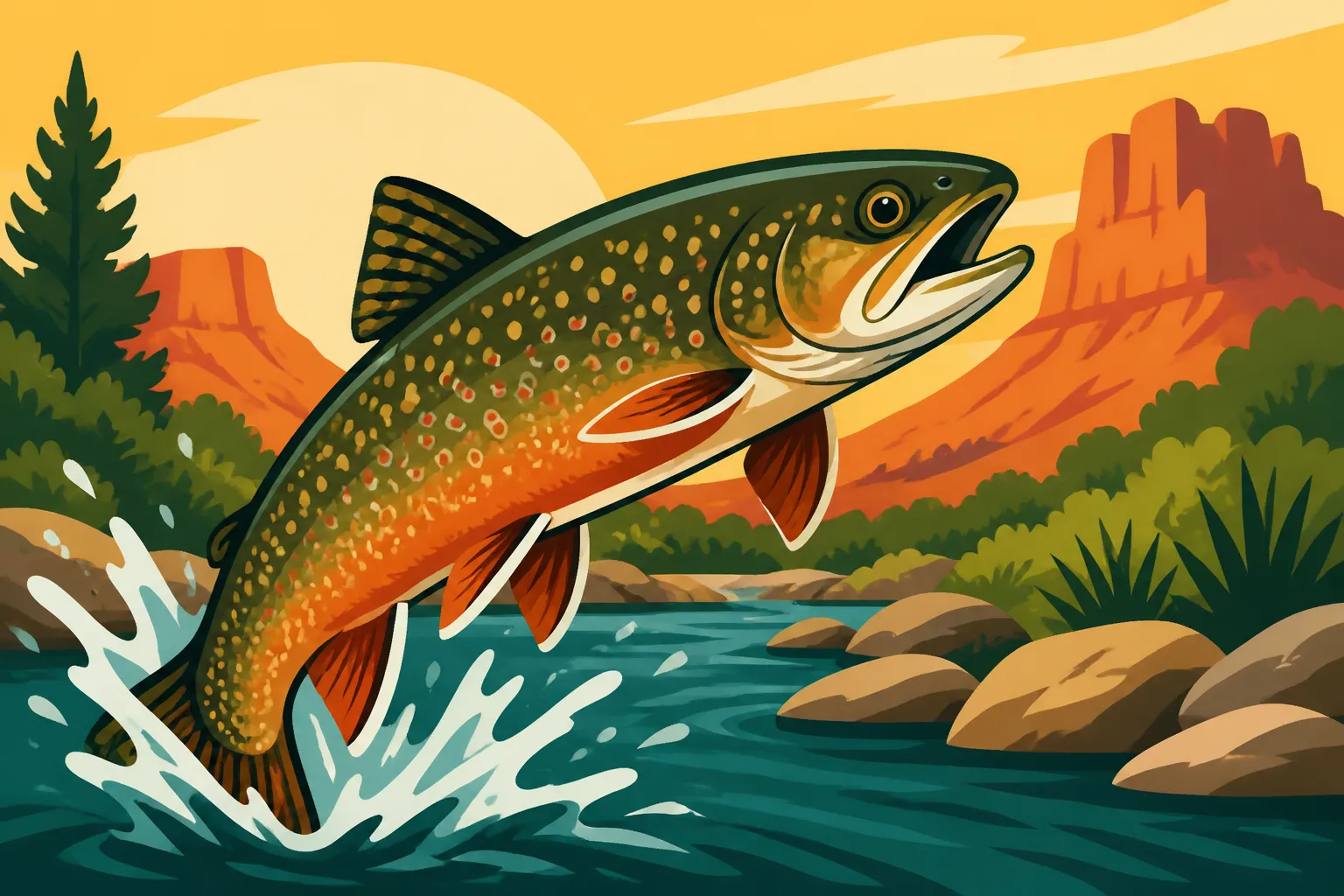
When you encounter a brook trout, you're immediately struck by its remarkable appearance. These fish are true jewels of the stream, boasting an olive-green back with distinctive worm-like (vermiculation) patterns, leading down to red or orange bellies, often adorned with pale spots surrounded by blue halos. Their fins, particularly the pectoral, pelvic, and anal fins, are typically edged with white, creating a striking contrast. It's a color palette that perfectly mirrors the autumn foliage of the high country, making them incredibly photogenic catches. Beyond their looks, brook trout are known for being quite aggressive for their size, readily attacking flies or small lures with surprising vigor. They thrive in very cold, clean, and well-oxygenated water, often preferring smaller headwater streams and alpine lakes that are less hospitable to larger, more competitive trout species like browns or rainbows. Their presence is a strong indicator of excellent water quality and a healthy ecosystem.
Historical Presence and Introduction to New Mexico
While many might consider brook trout a native species, they are actually not indigenous to New Mexico. Originally, brook trout are native to the eastern United States and Canada. They were introduced to western states, including New Mexico, primarily in the late 19th and early 20th centuries as part of widespread stocking efforts to enhance fishing opportunities. The thought at the time was to introduce hardy, cold-water species into suitable high-elevation environments where native trout populations might have been sparse or difficult to access. In New Mexico, these introductions were focused on colder, higher elevation streams and lakes, particularly in the northern mountain ranges. Over time, many of these stocked populations established wild, self-sustaining communities, especially in streams that are less accessible and thus experience less fishing pressure. Today, these wild brook trout populations represent a unique and valuable fishery, offering a distinct experience from chasing the state's native Rio Grande Cutthroat Trout in New Mexico or its more widely stocked rainbow trout.
Where to Find Brook Trout in the Land of Enchantment
If you're looking to target brook trout in New Mexico, you need to think high, cold, and often remote. These fish are typically found where the air is thin and the water runs pure, away from the warmer, more developed valleys. It's an adventure in itself just to get to their prime habitats, often involving hiking through scenic wilderness areas.
High Mountain Streams and Alpine Lakes
The best places to find brook trout are generally above 8,000 feet, sometimes even higher, nestled within the state's majestic mountain ranges. Think of the headwaters of the Pecos Wilderness in the Santa Fe National Forest, where countless small creeks and beaver ponds hold healthy populations. The Carson National Forest, particularly around areas like the Latir Wilderness or the upper reaches of the Rio Grande Gorge, also offers excellent brook trout opportunities in its smaller tributaries. Further south, the Gila National Forest, with its vast wilderness areas, contains some isolated brook trout strongholds in its higher elevation streams. These aren't your wide, famous rivers; we're talking about intimate, often brushy streams barely a few feet wide, or small, crystal-clear lakes tucked away in alpine basins. It's in these less-traveled spots that brookies truly thrive, away from the competition of larger fish and the pressures of development. Discovering these hidden gems is part of the true New Mexico fishing experience, requiring a bit of legwork but offering immense rewards. You can find more information on these pristine locations in our Best Places to Fish in New Mexico guide.
Identifying Prime Brook Trout Habitat
Knowing where to go is one thing, but knowing what to look for within those areas is another. Brook trout are habitat specialists. They absolutely demand cold, clear, well-oxygenated water. Look for streams with a good canopy cover from trees, which helps keep water temperatures down. Beaver ponds are often goldmines for brookies, as the deeper, slower water can hold more fish and offer them refuge. Structured water is also key: submerged logs, undercut banks, deep pools behind boulders, and even small riffles leading into a deeper pocket can all hold fish. They're often found in the shallower sections of these high-elevation waters compared to other trout, especially during feeding times, so don't overlook those seemingly insignificant pockets. The presence of aquatic insects, a healthy riparian zone, and minimal signs of human impact are all positive indicators. Pay attention to water clarity – if it's cloudy or silty, you're probably not in prime brook trout territory. Often, the stream itself will be narrow enough that you can practically step across it, winding its way through coniferous forests and rocky terrain. This specific type of habitat is crucial, as even slight changes can impact their delicate ecosystem.
| Habitat Feature | Likelihood of Brook Trout Presence | Notes |
|---|---|---|
| High Elevation (8000'+) | High | Crucial for cold water temperatures |
| Small, Clear Streams | High | Prefer tributaries, headwaters, and small creeks |
| Beaver Ponds | Very High | Excellent structure, deeper pools, and food sources |
| Alpine Lakes | High | Often stocked or self-sustaining in remote, cold lakes |
| Dense Tree Canopy | High | Provides shade, keeping water cool |
| Undercut Banks | High | Offers shelter and ambush points |
| Fast, Turbid Rivers | Low | Generally too warm, too much sediment, and too much competition |
| Low Elevation Valleys | Very Low | Water temperatures typically too high for survival |
Essential Gear and Techniques for New Mexico Brookies
Catching brook trout isn't about brute force; it's about finesse, stealth, and using appropriate gear for their often tight, brushy environments. You won't typically need heavy-duty equipment, but choosing the right setup can make all the difference between a frustrating day and a fantastic one.
Light Tackle for Small Streams
When you're fishing for brook trout in New Mexico, you'll almost always be dealing with smaller streams and tight quarters. This means ultra-light spinning gear is your best friend. A rod in the 4.5 to 6-foot range, with an extra-fast or fast action, paired with a small spinning reel, is ideal. Spool it with light line, perhaps 2 to 4-pound test monofilament or fluorocarbon. The light line helps with casting small lures and baits, and it's less visible in the clear water these fish inhabit. You'll often be making short, accurate casts or even "dapping" your lure into tight pockets. Brands like Amazon offer a wide array of affordable, lightweight rods and reels that are perfect for this kind of specific, delicate fishing. Having a small, lightweight tackle box or fishing vest with just the essentials is also key, as you'll often be hiking to reach these remote waters. For more on selecting your rod and reel, check out our guide on Best Rods and Reels for New Mexico Trout Fishing.
Fly Fishing for Brook Trout
Fly fishing for brookies is arguably one of the most rewarding ways to pursue them, especially if you love the art of matching the hatch. A lightweight fly rod, typically a 2-weight to 4-weight in a 6.5 to 8-foot length, is perfect. It allows for delicate presentations and makes even a small brook trout feel like a trophy. Leader and tippet should be fine, around 5x to 7x, to avoid spooking fish in the clear water. For flies, think small and imitative. Dry flies like an Elk Hair Caddis, Parachute Adams, or Royal Wulff in sizes 14-18 are often effective, especially during summer hatches. Nymphs such as Hare's Ear, Pheasant Tail, or a tiny Copper John in sizes 16-20 can be deadly when fish are feeding sub-surface. Small streamers like a Woolly Bugger (black or olive) in sizes 10-14 can also entice aggressive strikes. Remember, precision casting into tight spots and presenting your fly naturally are far more important than distance. Being able to roll cast or bow-and-arrow cast can be a huge advantage in brushy areas. For deeper dives into techniques, our Fly Fishing Techniques for New Mexico Rivers article is a great resource.
Spin Fishing Tactics
If fly fishing isn't your style, spin fishing can be incredibly effective for brook trout. The key is to use small, lightweight lures that mimic their natural prey. Micro spinners, such as those made by Panther Martin or Mepps, in sizes 00, 0, or 1, with silver, gold, or brass blades, are consistently productive. Small spoons, like Kastmasters or Little Cleos in similar sizes and colors, also work well. Soft plastics, especially small grubs or trout worms fished under a tiny bobber or on a light jig head, can be very effective when brookies are less aggressive. Natural baits like small worms or salmon eggs, fished with minimal weight, can also be a good option. When spin fishing, focus on casting upstream and retrieving just fast enough to get your lure working, letting it drift naturally through pools and runs. Be mindful of your presentation; heavy splashes can easily scare these wary fish. Using a slow, steady retrieve often works best, allowing the lure to tumble naturally in the current.
Conservation and Responsible Angling for Brook Trout
Brook trout populations in New Mexico, while often self-sustaining, are still vulnerable, especially due to their reliance on specific, pristine habitats. As anglers, we have a responsibility to protect these beautiful fish and their environments for future generations. Responsible angling practices are paramount when chasing brookies in the Land of Enchantment.
Understanding Regulations and Limits
Before you even head out, make sure you understand the current New Mexico Fishing Regulations Overview. While brook trout are generally more abundant than native trout species, their bag and possession limits can vary, and sometimes specific waters may have special restrictions. For example, some areas might be designated as catch-and-release only, or may have restrictions on bait usage to protect the fishery. Always check the current New Mexico Department of Game and Fish regulations handbook for the specific waters you plan to fish. Often, the daily limit for brook trout in general waters is quite generous, reflecting their non-native status and sometimes their high population density in certain remote areas. However, this doesn't mean you should keep every fish you catch. Consider practicing selective harvest, keeping only what you plan to eat and releasing the rest carefully. Proper handling techniques are crucial, especially if you're practicing catch and release, to ensure the fish has the best chance of survival.
Protecting Their Fragile Habitats
The biggest threat to brook trout isn't usually overfishing, but rather habitat degradation. Their reliance on cold, clean water makes them extremely susceptible to changes in water temperature, sedimentation, and pollution. As an angler, you can contribute to habitat protection by practicing Leave No Trace principles. Pack out everything you pack in, including fishing line and any food wrappers. Avoid trampling riparian vegetation, which helps stabilize stream banks and provides shade. When wading, do so carefully to minimize disturbing the stream bed and stirring up sediment. Be aware of invasive species; never introduce baitfish or other non-native aquatic organisms into a water body. Even something as simple as thoroughly cleaning your boots and gear between different waterways can prevent the spread of aquatic invasive species. By being mindful stewards of the environment, we help ensure these fragile, high-country ecosystems continue to thrive, supporting healthy brook trout populations and preserving the wild beauty of New Mexico.
Seasonal Considerations for Chasing Brookies
Like all fishing, timing can play a significant role in your success when targeting brook trout in New Mexico. The high-country environments they inhabit are subject to dramatic seasonal shifts, influencing fish behavior, accessibility, and fishing conditions. Understanding these patterns will help you plan your trips more effectively.
Spring and Early Summer Opportunities
Spring in the high mountains of New Mexico can be a challenging but rewarding time for brook trout. As the snowpack begins to melt, streams will experience increased flows and often colder, cloudier water due to runoff. Access to many high-elevation areas might still be limited by snow at this time of year. However, once the peak runoff subsides, usually by late May or early June, the waters begin to clear and warm slightly, sparking increased insect activity and, consequently, more active trout. Early summer, typically June, can be fantastic. The brookies are often actively feeding after a long winter, and while the water is still cold, it's becoming more hospitable. This is a great time to target them with nymphs and small streamers as they are still focused on subsurface food sources. Be prepared for variable weather conditions; even in June, a sudden snow shower isn't out of the question in the Pecos or Carson National Forests. Planning your trip around the New Mexico Fishing Season Dates and Limits can help you determine optimal times, but always consider the specific high-altitude conditions.
Peak Season: Summer and Fall
Mid-summer, from July through August, is generally considered the prime time for accessing New Mexico's high mountain brook trout waters. By this point, most of the snow has melted, trails are open, and water levels are usually stable and clear. Insect hatches are in full swing, making dry fly fishing incredibly exciting. The weather is typically warmer, though afternoon thunderstorms are common in July and August (something to keep in mind for safety in remote areas). This is when the brookies are most active, feeding aggressively on a variety of insects. Fly selection can be crucial, but general patterns like caddis, mayflies, and small terrestrials (ants, beetles) often produce.
As summer fades into fall, usually September and October, the brook trout fishing remains excellent, often even improving. The water temperatures begin to cool again, and the fish start their pre-winter feeding frenzy, bulking up for the lean months ahead. This is also when the brook trout develop their most vibrant spawning colors, making them even more stunning to catch. The vibrant fall foliage in the mountains provides an unforgettable backdrop for your fishing adventure. However, access can become an issue again later in the fall as the first snows begin to dust the high peaks. Always keep an eye on weather forecasts and road conditions, as many high-country roads can become impassable quickly. Our New Mexico Fishing by Season article offers a broader perspective on how different species behave throughout the year.
The Experience of a New Mexico Brook Trout Adventure
Chasing brook trout in New Mexico isn't just about catching fish; it's about the entire experience. It's an opportunity to immerse yourself in some of the state's most breathtaking and untouched landscapes, combining the challenge of angling with the serenity of wilderness exploration.
Beyond the Catch: Immersing Yourself in Nature
When you venture into the high country for brook trout, you're signing up for more than just fishing. You're signing up for solitude, stunning vistas, and an intimate connection with nature. Imagine hiking through fragrant pine forests, the air cool and crisp, with sunlight dappling through the trees. You might spot deer grazing peacefully, or an elk bugling in the distance. The sounds of birdsong and the gentle gurgle of a pristine stream replace the usual hum of daily life. The challenge of finding and reaching these remote waters often means you'll have entire stretches of stream or small alpine lakes all to yourself. This isn't just a fishing trip; it's a wilderness escape. The brook trout themselves, with their vibrant colors, are a perfect symbol of the health and beauty of these untouched environments. Many anglers find the peace and quiet of the high mountains to be as rewarding, if not more so, than the number of fish they catch. For those looking for multi-day trips, consider our Gear List for a Multi-Day Backcountry Fishing Trip.
Planning Your High-Country Excursion
A successful brook trout adventure requires careful planning and preparation. These are often remote, high-altitude environments, so safety and self-sufficiency are paramount.
Firstly, consider your physical fitness. Hiking at elevations above 8,000 feet can be strenuous, especially with a backpack full of gear. Start with shorter hikes and gradually increase your distance and elevation gain.
Secondly, always carry adequate water, snacks, and layers of clothing. Mountain weather can change rapidly, with warm sunny mornings turning into cold, wet afternoons. A waterproof outer layer is essential.
Thirdly, navigation is key. Many remote trails might not be well-marked, so a good map, compass, and GPS device (and knowing how to use them) are crucial. Inform someone of your itinerary and expected return time.
Finally, practice proper wildlife etiquette. Bear canisters for food storage are often a good idea, especially if you're camping overnight. Pack out all trash, and leave no trace of your visit. Resources like High Altitude Fishing Tips for New Mexico offer valuable advice for these unique conditions. By preparing thoroughly, you ensure not only a more successful fishing trip but also a safer and more enjoyable wilderness experience.
Disclaimer
This article is for general informational purposes only and does not constitute professional advice. Laws, prices and regulations vary by location and change over time. Consult a qualified professional for guidance on your specific situation.