What Kokanee Salmon Eat
As anglers, we often ponder what drives the fish we pursue, especially when they seem to ignore every lure and bait we offer. When it comes to the enigmatic Kokanee salmon in New Mexico, understanding their diet isn't just a matter of scientific curiosity; it's the key to unlocking consistent success on the water. These vibrant, landlocked salmon have a highly specialized menu, and cracking that code can drastically improve your fishing game. This guide will dive deep into what Kokanee salmon truly eat, how their diet changes with the seasons, and how you can use this knowledge to entice more bites.
Understanding the Kokanee Salmon: A Landlocked Legacy
Before we talk about what they eat, let's briefly get to know New Mexico's Kokanee salmon. These aren't your typical ocean-going salmon; they are actually a landlocked subspecies of sockeye salmon, thriving in the deep, cold waters of lakes like Navajo Lake, Heron Lake, and Eagle Nest Lake. Their life cycle is truly fascinating, involving a dramatic color transformation as they approach their final, reproductive phase. Kokanee Salmon Size in New Mexico can vary, but generally, these fish are prized for their fight and their delicious, firm flesh.
Who Are These Vibrant Fish?
Kokanee are unique in that they complete their entire life cycle within freshwater. Unlike their anadromous sockeye cousins that migrate to the ocean, Kokanee hatch in freshwater, grow there, and return to their natal streams (or sometimes lake shoals) to spawn and die, usually at three or four years of age. This landlocked existence means their diet is entirely dictated by the available food sources within these lake ecosystems. They don't have the vast buffet of marine life that ocean salmon do, which makes their feeding habits much more specific and, in some ways, predictable once you understand the system.
Their striking visual transformation, especially during the fall spawning run, from a silvery, somewhat drab fish to a brilliant red with a hooked jaw in males, tells a story of energy redirection. During this period, their focus shifts entirely away from feeding, which is a crucial detail for anglers. They're no longer actively hunting food; they're driven by the primal urge to reproduce.
The Core Diet of New Mexico's Kokanee Salmon: Microscopic Feasts
When you think of salmon, you might picture them chasing baitfish or large insects. For Kokanee, however, their primary diet is far more subtle and often invisible to the naked eye. These are filter feeders, and their world revolves around the tiny, drifting organisms in the water column.
The Dominance of Zooplankton
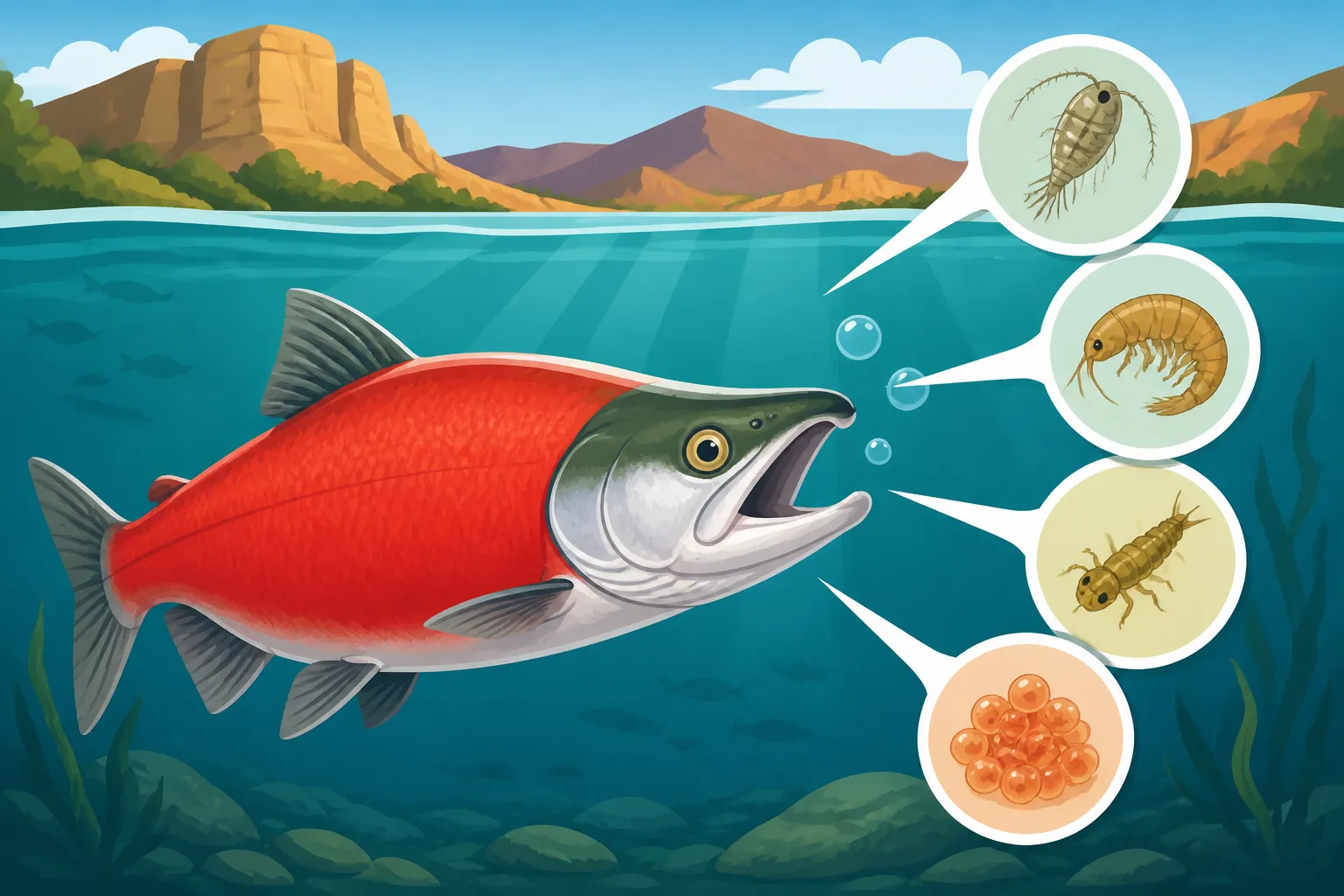
At the absolute top of the Kokanee salmon's menu are zooplankton. These are microscopic animals—tiny crustaceans like copepods and cladocerans (like Daphnia), and rotifers—that drift in the water, often moving in daily vertical migrations. Kokanee have specially adapted gill rakers, which are comb-like structures on their gills, designed to strain these minute organisms from the water as they swim. They are not chasing individual plankton; rather, they are swimming with their mouths open, sifting through clouds of these tiny creatures.
Understanding this is fundamental for anglers. If Kokanee are primarily eating something you can barely see, then any lure or bait you present needs to either perfectly mimic these tiny food items in a concentrated manner or trigger a different instinct altogether. The abundance and species composition of zooplankton can fluctuate significantly throughout the year and even throughout the day, influencing where Kokanee choose to feed and how actively they do so. A healthy zooplankton population is directly correlated with a thriving Kokanee fishery, which is why hatcheries and wildlife agencies closely monitor lake conditions.
Algae and Phytoplankton: The Foundation
While zooplankton are the direct food source, it's important to understand what those tiny animals eat: phytoplankton. Phytoplankton are microscopic, plant-like organisms that perform photosynthesis, forming the very base of the aquatic food web. Think of them as the grass of the underwater world. Kokanee don't directly consume large quantities of phytoplankton (though incidental ingestion is likely), but they rely entirely on the zooplankton that graze on these microscopic plants.
So, when you consider the Kokanee's diet, you're looking at an entire food chain. Healthy phytoplankton populations lead to healthy zooplankton populations, which in turn support healthy Kokanee populations. Factors like water clarity, nutrient levels, and sunlight penetration all play a role in the abundance of this foundational food source. This ecosystem balance is why conservation efforts often focus on water quality, as pollution or excessive nutrient runoff can disrupt the delicate balance of plankton, ultimately impacting the salmon.
Incidental Ingestions and Opportunistic Bites
While zooplankton undeniably form the bulk of a Kokanee's diet, it would be inaccurate to say they never eat anything else. Occasionally, Kokanee may opportunistically ingest small aquatic insects, larval stages of insects, or even very small fish fry if they are present and easy to capture. This isn't their primary feeding strategy, but rather an incidental or opportunistic behavior, especially if zooplankton concentrations are low or if a particularly easy meal presents itself.
For example, a Kokanee might snap at a tiny midge larva drifting by, or perhaps accidentally suck in a water flea while filtering for zooplankton. Anglers sometimes capitalize on this by using extremely small fly patterns or tiny jigs that might vaguely resemble these incidental food sources. However, it's crucial to remember that these are exceptions to the rule. The overwhelming majority of their nutritional intake comes from the vast, drifting schools of zooplankton, making any presentation that mimics a dense cloud of micro-organisms often more effective than trying to imitate a single, larger prey item.
Seasonal Shifts and Environmental Factors Affecting Kokanee Diet
The world underwater is constantly changing, and so are the feeding patterns of Kokanee salmon. Understanding these seasonal shifts and environmental factors is paramount for angling success in New Mexico's Kokanee lakes. New Mexico Fishing Season Calendar provides a great overview of the year, but let's drill down into how specific seasons impact what Kokanee eat, or appear to eat.
Springtime Feeding Frenzy
As winter's ice recedes and spring arrives, New Mexico's lakes begin to thaw and re-energize. Increasing sunlight penetrates the water, warming it gradually and initiating massive phytoplankton blooms. This burst of plant life feeds the zooplankton, leading to a significant increase in their populations. For Kokanee, spring is often a time of active feeding. They are recovering from leaner winter months and bulking up as their bodies prepare for the upcoming spawning cycle.
During this period, Kokanee can be found spread out, actively cruising the upper and middle layers of the water column where plankton is most abundant. Anglers will often find success trolling bright, small lures that mimic these dense concentrations of zooplankton. The fish are less wary and more eager to strike, making spring one of the most productive times to target them. Look for signs of surface activity, especially early and late in the day, as Kokanee might be feeding closer to the surface during these low-light conditions.
Summer's Deep Feast
When the intense New Mexico summer sun heats the surface waters, a phenomenon called "thermal stratification" occurs. The lake separates into distinct layers: a warm upper layer (epilimnion), a rapidly changing middle layer (thermocline), and a cold, deep layer (hypolimnion). Zooplankton, being sensitive to light and temperature, will move deeper to find cooler, more comfortable waters. Naturally, the Kokanee follow their food.
During summer, you'll often find Kokanee suspended in the cooler waters of the thermocline or even deeper, sometimes 30 to 60 feet or more below the surface, depending on the lake's depth and structure. Their feeding remains focused on zooplankton, but the challenge for anglers shifts to locating these deeper schools and presenting lures at the exact right depth. This is where specialized gear like downriggers becomes invaluable. While they are still primarily eating zooplankton, the sheer depth can make it seem like they're feeding on something else entirely when, in reality, it's just a depth change. Best Time of Year to Fish in New Mexico highlights that summer can still be great, but it requires different tactics.
Fall Spawning Season: Diet Changes for Reproduction
As autumn approaches and water temperatures cool, a dramatic shift occurs in the Kokanee's life cycle. This is the time when they begin their spawning migration, and their focus moves entirely away from feeding and towards reproduction. Their bodies undergo incredible physiological changes: they develop their striking red coloration, males grow a pronounced kype (hooked jaw), and their internal organs, including their digestive system, begin to atrophy.
During this period, particularly as they enter the spawning phase, Kokanee essentially stop eating. Any strikes on lures are more likely due to aggression, territorial defense, or an instinctive, reflexive bite rather than a true feeding response. Anglers who target them during the Kokanee Salmon Spawning Time at Navajo Lake often find that while the fish are vibrant and visible, they can be incredibly difficult to entice with traditional feeding presentations. They're running on stored energy, driven by ancient instincts. This is why techniques like "snagging" (where legal and ethical) become prevalent, but for ethical anglers, it's a period that requires a respectful approach, understanding the fish's priorities have changed.
Winter's Lean Months
Winter brings cold, and often, ice cover to many of New Mexico's Kokanee lakes. During these colder months, the overall biological activity in the lake slows down considerably. Phytoplankton production dwindles, and consequently, zooplankton populations become much less abundant. Kokanee salmon, those that haven't spawned, enter a period of greatly reduced activity. Their metabolism slows, and they conserve energy.
Their feeding activity during winter is minimal. They will still consume zooplankton, but in much smaller quantities and with less frequency. Anglers pursuing Kokanee through the ice need to adapt to this lethargic state. Presentations must be subtle, slow, and often involve tiny jigs or flies tipped with bait, presented directly to the fish in their deep, sluggish holding areas. Success in winter relies heavily on patience, finding those small schools, and triggering a reluctant bite rather than a full-on feeding frenzy. Understanding the fish's deep-seated energy conservation mode is key to finding success when the temperatures drop.
Imitating the Invisible: Angler's Approach to Kokanee Feeding Habits
Knowing that Kokanee mostly eat microscopic zooplankton might seem like a daunting challenge for an angler. How do you imitate something you can barely see? Fortunately, generations of Kokanee enthusiasts have developed effective strategies and tackle designed to trick these finicky feeders.
Mimicking Zooplankton with Lures
Since Kokanee are filter feeders, they're not typically chasing down large, flashy lures like a predator. Instead, successful Kokanee lures are designed to either represent a small, dense cloud of zooplankton or to trigger an aggressive, curious, or territorial strike. This is why you'll often see small, brightly colored lures in shades of pink, orange, chartreuse, and sometimes even red or green. These colors are thought to be particularly attractive to Kokanee, perhaps mimicking the carotenoids in their natural diet, or simply standing out in the low light of deeper waters.
Popular choices include "wedding rings," which are small, beaded spinners often tipped with corn, or tiny hootchies (mini squid skirts) that provide an erratic, fluttering action. Small spoons, typically no longer than two inches, with a wobbling or darting motion, are also highly effective. Many anglers swear by specialized Kokanee lures that can be found on online retailers like Amazon, offering a vast array of colors and patterns specifically designed for this fishery. The key is usually a small profile, often with a subtle flash or movement, combined with a slow retrieve or troll speed to allow the fish to "find" the offering as they filter water. Best Lures for New Mexico Trout will give you some general ideas, but for Kokanee, think small and bright.
The Role of Scent and Attractants
Kokanee salmon have an incredibly keen sense of smell, far more developed than their eyesight for detecting food. This olfactory prowess is a huge advantage for anglers. Because their natural food source (zooplankton) is so small, Kokanee likely use scent and taste to confirm the presence of edible items. This is why tipping your lures with scent-infused baits is almost universally recommended for Kokanee fishing.
The most common and arguably most effective bait tip is plain kernel corn. Why corn? It's believed that the slight sweetness and visual appeal (small, yellowish) entice Kokanee, but its primary function is to act as a carrier for various attractants. Commercial Kokanee scents, often containing blends of fish oils, amino acids, and other proprietary ingredients, are heavily applied to corn or directly onto lures. Brands like Pautzke's Fire Bait (especially corn-flavored) or Pro-Cure's Kokanee Killer are staples in many angler's tackle boxes. These scents disperse in the water, creating a scent trail that can draw Kokanee from a distance. You can often find a wide selection of these specialized scents and bait options on Amazon, allowing you to experiment with different combinations to see what the fish prefer on a given day. Best Bait for New Mexico Trout might give you some starting points, but for Kokanee, corn and specialized scents are king.
Trolling and Depth Presentation
Given that Kokanee are suspended in the water column and constantly on the move, actively filtering for zooplankton, trolling is by far the most effective method for consistently catching them. Trolling allows you to cover vast amounts of water and, crucially, to present your lures at the precise depth where the Kokanee are feeding.
This precision requires specialized gear beyond a rod and reel. Downriggers are essential tools for reaching specific depths and keeping your lure there consistently. They use a heavy weight to depress your fishing line to a set depth, allowing your lure to run true without excessive line out. Dodgers and flashers are also critical components of a Kokanee trolling setup. These are large, reflective plates that create erratic movements and flash, acting as attractors that simulate a school of smaller baitfish or even a larger predator chasing prey. While Kokanee don't eat these dodgers, the commotion and flash draw them in, and then they spot the smaller, baited lure trailing behind.
Understanding fish finders and sonar is also vital. Learning to read your electronics to locate schools of Kokanee and the depth of the thermocline (where their food often congregates) is a game-changer. The depth can vary daily and seasonally, so constant monitoring is necessary. How to Troll for Kokanee at Navajo Lake goes into more detail about specific techniques for that popular lake, but the principles of maintaining depth and providing attractants remain universal. Equipping yourself with the right trolling gear, from downriggers to specific dodger colors, can easily be done through sites like Amazon, ensuring you have the tools to effectively target these deep-dwelling salmon.
How Kokanee Feeding Habits Influence Angling Strategies
Understanding the "why" behind Kokanee feeding habits profoundly impacts the "how" of catching them. It's not just about throwing a lure in the water; it's about replicating their environment or exploiting their instincts.
The Vertical Migration Factor
Zooplankton, the Kokanee's primary food, often undergo daily vertical migrations. They rise towards the surface during low-light conditions (dawn, dusk, cloudy days) to feed on phytoplankton and then descend to deeper, darker waters during bright daylight hours to avoid predators. Kokanee, being opportunistic, follow this food source. This means the depth at which you find Kokanee can change significantly throughout the day.
For anglers, this translates to constantly adjusting your trolling depth. What worked at 8 AM might be too shallow by noon. Using a good fish finder to monitor bait balls (schools of zooplankton) and suspended fish is crucial. Paying attention to other anglers and local reports can also give you clues about the current "strike zone." It's a dynamic game of cat and mouse, where the "cheese" (zooplankton) is always moving.
Color and Scent Sensitivity in Low Light
When Kokanee are in deeper water, light penetration is minimal. This means that certain colors might appear differently or become invisible. Bright, fluorescent colors like chartreuse, pink, and orange often maintain their visibility better in low-light conditions, which is why they are so popular. However, the importance of scent arguably increases in these deep, dark environments.
In water where visual cues are limited, an angler's ability to create an appealing scent trail becomes paramount. The attractants mentioned earlier (corn, specialized pastes) become even more critical for drawing in fish that might not immediately see your lure. Think of it like a beacon in the dark; the flash draws attention, but the scent confirms it's something worth investigating. Using a variety of scented baits, from the widely available options on Amazon to locally produced favorites, allows you to fine-tune your presentation.
The Challenge of Spawning Season: A Different Kind of "Bite"
As discussed, Kokanee essentially stop feeding during their spawning run. They're on a mission, and that mission isn't about food. This makes them incredibly challenging to catch through traditional feeding methods. Any "bite" you get is likely a reaction strike – perhaps they're annoyed by the lure, curious, or it triggers an aggressive instinct related to protecting their spawning grounds.
Anglers targeting pre-spawn or spawning Kokanee often resort to tactics that are less about mimicking food and more about eliciting a reaction. This might involve brighter, more aggressive lure movements or even specific jigging patterns. However, it's important to be mindful of the fish during this vulnerable time. Many ethical anglers choose to avoid targeting salmon actively engaged in spawning to allow them to complete their natural life cycle. For those who do fish during this time, understanding that the fish aren't truly "eating" helps manage expectations and choose appropriate, non-feeding related tactics.
Summary of Kokanee Feeding & Angling
Here's a quick look at the core aspects of Kokanee salmon diet and how it translates to getting them on the hook:
| Aspect of Diet | What They Eat Primarily | How Anglers Respond |
|---|---|---|
| Main Food Source | Zooplankton (microscopic crustaceans) | Use small lures (wedding rings, hoochies, tiny spoons) that mimic concentrations of tiny organisms. Colors like pink, orange, chartreuse are popular. Often tipped with corn and strong scents. |
| Feeding Method | Filter feeders, highly olfactory | Rely heavily on scent. Employ strong attractants (fish oils, specialized pastes) on baits like corn to create a scent trail. Trolling is key to cover water and present lures in feeding zones. |
| Seasonal Variation | Spring: Active feeding, shallower | Fish are aggressive; bright, small lures are effective. |
| Summer: Deep feeding | Kokanee follow zooplankton to cooler depths (thermocline). Downriggers and precise depth control are essential. | |
| Fall (Spawning): Minimal feeding | Fish driven by reproduction, not hunger. Strikes are reactionary. Some anglers avoid fishing this period. | |
| Winter: Lethargic feeding, deeper | Very slow metabolism. Subtle presentations with tiny jigs and slow movements are required. Scent remains crucial. | |
| Environmental Impact | Water clarity, nutrient levels | Healthy plankton blooms depend on good water quality. Fish finders help locate plankton concentrations. Environmental factors dictate where plankton are, and thus, where Kokanee are. |
Understanding the invisible world of zooplankton and phytoplankton is truly the secret sauce to becoming a successful Kokanee angler in New Mexico. It's a game of precision, patience, and adapting your tactics to what these unique salmon are really looking for beneath the surface. Now that you're armed with this knowledge, you're much better equipped to enjoy the fantastic Navajo Lake Kokanee Salmon Fishing or try your hand at Heron Lake Kokanee Salmon Fishing.
Disclaimer
This article is for general informational purposes only and does not constitute professional advice. Laws, prices and regulations vary by location and change over time. Consult a qualified professional for guidance on your specific situation.