Are Striped Bass Native to New Mexico?
It's a common misconception that all the fish swimming in New Mexico's beautiful lakes and rivers are native to our unique high desert environment. When it comes to powerful, hard-fighting species like the striped bass, many anglers wonder if these formidable fish naturally occur in our waters. This guide will dive deep into the fascinating story of striped bass in New Mexico, revealing their origins, why they were introduced, and what that means for both our ecosystem and your fishing adventures.
Understanding Striped Bass in New Mexico: An Introduced Species
If you've ever hooked into a New Mexico striped bass, you know it's an experience that leaves your arms aching and your heart pounding. These aren't just any fish; they're formidable predators. But despite their strong presence and popularity in certain New Mexico waters, they are not, in fact, native to our state. This might surprise some, especially given how well they thrive.
The Non-Native Truth: Striped Bass Origins
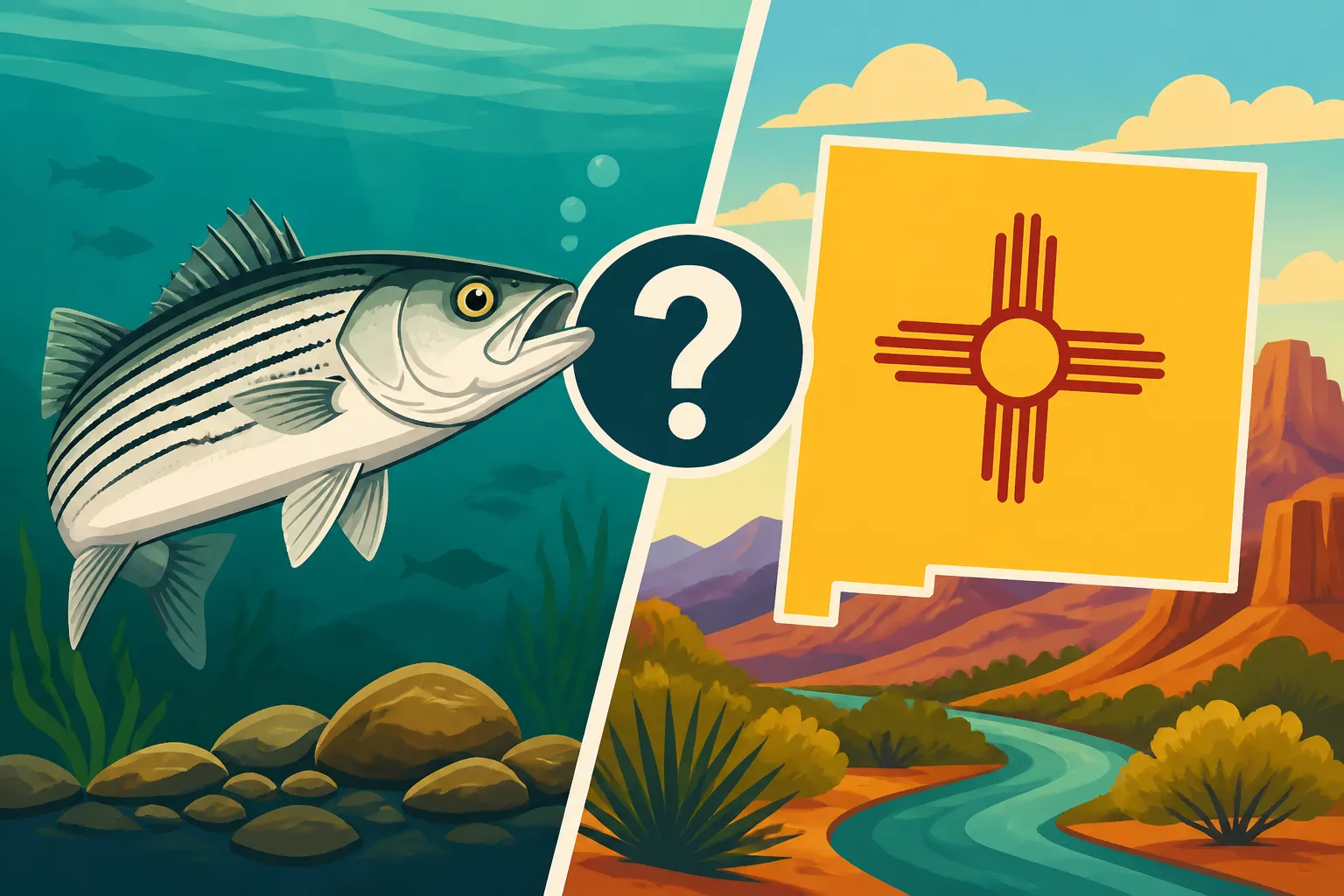
To understand why striped bass aren't native to New Mexico, we first need to look at their natural range. Striped bass ( Morone saxatilis) are primarily an anadromous species, meaning they spend most of their lives in saltwater but migrate to freshwater rivers to spawn. Their native habitat stretches along the Atlantic coast of North America, from the St. Lawrence River in Canada down to the St. Johns River in Florida, and also in some rivers that drain into the Gulf of Mexico. Think Chesapeake Bay, the Hudson River, or the coastal rivers of the Carolinas – those are their ancestral homes. In these environments, they undertake incredible migrations, sometimes traveling hundreds of miles between their ocean feeding grounds and their freshwater spawning areas.
New Mexico, as you know, is a landlocked state. We don't have coastlines or direct access to the ocean, nor do we have the large, free-flowing river systems connected to saltwater that would support their natural life cycle. Therefore, the very idea of a "native" striped bass population thriving here just doesn't align with their natural biology. The striped bass we enjoy catching in New Mexico are a testament to successful fisheries management and deliberate introduction.
Defining Native vs. Introduced Species
The distinction between a "native" and an "introduced" species is crucial in ecology and fisheries management. A native species is one that naturally evolved in a particular ecosystem and has existed there without human intervention for a very long time, typically since pre-settlement times. These species have adapted to their local environment over generations, forming complex relationships with other native plants and animals. They are an integral part of the natural food web and ecological balance.
An introduced species, also known as an exotic, non-native, or alien species, is one that has been brought into an area where it does not naturally occur, either intentionally or unintentionally, by human activity. In the case of New Mexico's striped bass, their introduction was very much intentional. While not all introduced species become problematic, their presence can sometimes disrupt existing ecosystems. However, with careful management and understanding, introduced species can also create incredible recreational opportunities, as we've seen with striped bass here in New Mexico. This management is part of what fisheries departments analyze to prevent truly Invasive Fish Species in New Mexico.
Why Striped Bass Were Introduced to New Mexico Waters
The decision to introduce a non-native species into any ecosystem is never taken lightly. For New Mexico, the introduction of striped bass was a strategic move aimed at enhancing recreational fishing opportunities and addressing specific ecological needs within our large reservoirs. It wasn't about trying to make a marine fish live in the desert for novelty; it was about smart fisheries management.
Filling an Ecological Niche and Creating Fishery Opportunities
Our state's expansive reservoirs, particularly Elephant Butte Lake, presented a unique opportunity. These large impoundments often develop robust populations of smaller forage fish, like gizzard shad, which can sometimes become overabundant. Left unchecked, an explosion of small, prolific baitfish can outcompete other species for resources and lead to an imbalance in the aquatic ecosystem. This is where the striped bass came in.
Fisheries biologists recognized that striped bass are voracious predators of schooling baitfish. By introducing them, the aim was to utilize the abundant shad populations as a food source for a large, fast-growing game fish. This creates a "put-grow-and-take" fishery, where the introduced species grows rapidly by consuming available forage, offering anglers a fantastic opportunity to catch impressive fish. It provides a different angling experience, diversifying the types of fish available beyond trout or other warm-water species that might already be present. This strategy has proven highly successful in many landlocked states with similar reservoir conditions.
The Success Story: Elephant Butte Lake
When we talk about striped bass in New Mexico, we are almost certainly talking about Elephant Butte Lake. This massive reservoir, the largest in New Mexico, became the prime candidate for striped bass introduction back in the mid-20th century. The sheer size of the lake, combined with its prolific shad population, created ideal conditions for these transplanted predators to thrive.
The initial stockings took hold, and the striped bass quickly adapted to their new freshwater environment. Without the need for oceanic migrations, they became a purely freshwater, or "landlocked," population. The abundance of food allowed them to grow to impressive sizes, far exceeding what many anglers might expect from a desert state. Elephant Butte Lake is now renowned as one of the premier landlocked striped bass fisheries in the American Southwest, drawing anglers from all over. The success story of these fish in Elephant Butte is truly remarkable, offering incredible battles and making it a bucket-list destination for many. You can learn more about this incredible fishery in our Elephant Butte Lake Striped Bass Fishing guide, or get a general overview of the lake in Elephant Butte Lake Fishing Guide.
Where to Find and Target Striped Bass in New Mexico
If you're looking to tangle with a New Mexico striped bass, there's one place that stands head and shoulders above the rest: Elephant Butte Lake. While you might hear whispers of stripers occasionally showing up in other connected waters, Elephant Butte is, without question, the undisputed heavyweight champion of striped bass fishing in the Land of Enchantment.
Key Striped Bass Hotspots in the Land of Enchantment
Elephant Butte Lake: This colossal reservoir near Truth or Consequences is the destination for striped bass. Its vast open waters and rocky shorelines provide ample habitat for these powerful fish. Stripers here cruise the depths, often schooling in pursuit of gizzard shad, their primary food source. You'll find them throughout the lake, but certain areas tend to be more productive depending on the season and water levels. Look for them around main lake points, submerged islands, channel bends, and especially where baitfish are congregating. The dam area and the deeper sections of the lake are often key during warmer months.
While Elephant Butte is the primary location, it's worth noting that other connected waters within the Rio Grande system, such as Caballo Lake immediately downstream, can occasionally see striped bass. However, these are typically transient fish that have moved from Elephant Butte, and a sustained, thriving population isn't usually present elsewhere. For a dedicated striper trip, Elephant Butte is where you need to be. If you're planning a wider angling adventure, our Best Places to Fish in New Mexico article can give you more ideas for diverse species.
Seasonal Movements and Behavior
Striped bass in New Mexico's reservoirs exhibit distinct seasonal patterns that savvy anglers learn to track. Understanding these movements is key to consistent success.
- Spring: As water temperatures begin to rise, stripers move shallower, often following baitfish into coves and along main lake points. This is a fantastic time for aggressive topwater action or casting large swimbaits as the fish become more active after the cooler winter months. They're looking to feed heavily.
- Summer: When the New Mexico sun heats the water, striped bass typically retreat to deeper, cooler waters, often suspending over main lake channels or congregating around submerged structures. This is prime time for trolling deep-diving crankbaits or vertically jigging spoons and heavy swimbaits. Early mornings and late evenings can still produce shallower bites, especially near oxygenated areas.
- Fall: As temperatures cool again, stripers once more become highly active and move shallower, often schooling aggressively on baitfish. This can lead to incredible "boiling" events where schools of stripers drive shad to the surface, creating a feeding frenzy that's unforgettable to witness and fish. Topwater lures, large swimbaits, and even live bait become highly effective.
- Winter: During the coldest months, striped bass movements slow, and they'll typically be found in the deepest parts of the lake. While challenging, they can still be caught by vertical jigging or slow-trolling deep, heavy lures. The bite might be subtle, but the fish are often still there, waiting for a meal. Understanding these patterns will greatly increase your chances, as detailed in our guide to the Best Time of Year to Fish in New Mexico.
The Angler's Perspective: Fishing for Striped Bass in New Mexico
Fishing for striped bass in New Mexico is an exhilarating experience. These fish are known for their powerful runs and relentless fights, making them a true trophy for any angler. To consistently hook into these giants, you'll need the right gear and a solid understanding of effective techniques.
Essential Gear for Striper Success
Given the size and strength of New Mexico's landlocked striped bass, you'll want to beef up your tackle compared to what you might use for trout or smaller bass.
- Rods and Reels: A medium-heavy to heavy action spinning or baitcasting rod, typically 7 to 8 feet long, is ideal. This provides the backbone needed to cast heavy lures and handle powerful fish. Pair it with a sturdy reel that has a smooth, reliable drag system and good line capacity. For baitcasting setups, a reel designed for saltwater or heavy freshwater use works well. For spinning, a 4000-6000 series reel or larger is a good starting point. You can find a fantastic selection of robust rods and reels suitable for striper fishing on Amazon.
- Line: Braided line, in the 30 to 65-pound test range, is highly recommended for its strength, sensitivity, and minimal stretch. You might then tie on a fluorocarbon leader (20 to 40-pound test) for abrasion resistance and invisibility. If you prefer monofilament, go with a heavier test, perhaps 17 to 25 pounds, to handle the powerful strikes.
- Lures and Baits: Stripers are opportunistic predators and will hit a variety of offerings.
- Live Bait: Gizzard shad, if legal and available, are often the most effective bait, mimicking their natural prey. Large shiners or bluegill can also work.
- Artificial Lures: Big crankbaits (both shallow and deep divers), swimbaits (soft plastic and hard-bodied), spoons (especially vertical jigging spoons), and topwater lures (poppers, walk-the-dog baits) are all highly productive. During those thrilling surface feeding frenzies, a large topwater plug can draw explosive strikes. For specific recommendations, check out our Best Lures for Striped Bass at Elephant Butte guide.
- Umbrella Rigs: These multi-lure setups are incredibly effective when trolling, mimicking a school of baitfish. They can be purchased pre-rigged or assembled with individual swimbaits.
Always ensure your hooks are sharp and strong enough to withstand the fight, and consider carrying a good pair of fishing pliers (like those you can find on Amazon) for easy hook removal and line cutting.
Popular Techniques and Strategies
Landing New Mexico stripers often involves a combination of techniques, depending on the season and where the fish are holding.
- Trolling: This is a very common and effective method, especially in the open waters of Elephant Butte. Anglers use boats to slowly pull large crankbaits, swimbaits, or umbrella rigs at varying depths. Downriggers can be invaluable for presenting lures precisely in the strike zone when fish are deep. Trolling allows you to cover vast amounts of water and locate schools of active fish.
- Casting and Retrieving: When stripers are shallower or actively chasing bait on the surface, casting is king. Target main lake points, submerged humps, and areas where you see baitfish or bird activity. Cast large swimbaits, topwater plugs, or big crankbaits and retrieve them with a steady, enticing motion.
- Live Bait Fishing: If you have access to live shad, fishing them free-lined or under a bobber can be deadly. Position your boat over submerged structure or where you mark schools of stripers, and let the live bait do its work. This can be effective both from a boat and, in certain accessible areas, from the bank.
- Jigging: When stripers are holding deep, vertical jigging with heavy spoons or large soft plastic jigs can be highly productive. Use your fish finder to locate schools, then drop your lure directly into them, working it with sharp lifts and drops.
Remember, striped bass are often nomadic, following their food. A good fish finder is an invaluable tool for locating bait schools and the stripers that feed on them. Don't be afraid to move around the lake until you find active fish. Having a suitable vessel for covering water, like those described in Best Boats for New Mexico Reservoir Fishing, is a major advantage.
The Broader Impact of Striped Bass in New Mexico
The presence of striped bass in New Mexico goes beyond just providing exciting fishing trips. As a non-native, apex predator, their introduction has had both ecological and recreational implications, reshaping aspects of our aquatic environments and angling culture.
Ecological Considerations
When a large, predatory fish like the striped bass is introduced into an ecosystem, it's bound to have an impact. In New Mexico, specifically in Elephant Butte Lake, striped bass have become a dominant predator.
- Forage Fish Control: As intended, striped bass have played a significant role in controlling populations of gizzard shad. While shad are an important part of the food chain, overpopulation can be detrimental. The stripers help keep these numbers in check, potentially benefiting other species by reducing competition for resources. However, it's a delicate balance; too much predation could also impact shad populations to the point where the stripers themselves face food shortages.
- Competition with Native Species: There's always a potential for introduced species to compete with native fish for food or habitat. While striped bass primarily target open-water schooling fish, their presence could, to some extent, affect other native predators or juveniles of game fish by consuming shared food sources. However, the specific niche they occupy in the large, open waters of a reservoir like Elephant Butte helps to mitigate direct competition with many of New Mexico's river-dwelling native species. The ongoing management by New Mexico Department of Game and Fish aims to maintain a healthy balance.
- Overall Ecosystem Health: The goal of introducing striped bass was to enhance the overall health and productivity of the reservoir fishery. By converting abundant forage fish into a larger, sought-after game fish, it adds another layer to the food web. However, constant monitoring of the fish populations and the ecosystem is crucial to ensure long-term sustainability. For a deeper look at the fish species living in our waters, you might want to read our comprehensive guide on Fish Species Found in New Mexico.
Recreational and Economic Benefits
From an angler's perspective, and from an economic standpoint for the state, the introduction of striped bass has been a resounding success.
- World-Class Fishery: Elephant Butte Lake has gained a reputation as a premier destination for landlocked striped bass, drawing anglers not just from New Mexico but from across the country. This creates significant tourism revenue for local communities around the lake, supporting bait shops, guides, restaurants, and lodging establishments. These economic benefits are a crucial part of the value derived from this fishery.
- Diverse Angling Opportunities: Striped bass offer a unique and exciting challenge distinct from trout fishing in mountain streams or bass fishing in smaller ponds. Their size, strength, and schooling behavior provide an angling experience that many seek out specifically. It adds variety to New Mexico's already diverse fishing portfolio, which includes everything from high-mountain trout to warm-water panfish. For those interested in the rules governing how many of these impressive fish you can keep, our article on New Mexico Statewide Bag Limit for Bass is a good resource.
- Accessible Adventure: While owning a boat certainly enhances the experience of chasing stripers on a vast lake, there are still opportunities for bank anglers, especially during certain seasons when stripers move closer to shore. This makes the thrill of catching a large, powerful fish accessible to a wider range of people, further boosting participation in outdoor recreation. New Mexico's fisheries management, including the decisions around species introduction and regulations, aims to balance ecological health with maximizing recreational enjoyment for everyone who loves to fish our beautiful state.
Disclaimer
This article is for general informational purposes only and does not constitute professional advice. Laws, prices and regulations vary by location and change over time. Consult a qualified professional for guidance on your specific situation.