Best Ice Fishing Shelter for New Mexico
When the crisp air of a New Mexico winter settles in, and the lakes begin to shimmer with a solid sheet of ice, many anglers dream of drilling a hole and dropping a line. However, the Land of Enchantment's high desert and mountain winters aren't always gentle; they can bring biting winds, intense sun, and frigid temperatures that make staying out for more than an hour or two nearly impossible without proper protection. This comprehensive guide will walk you through everything you need to know about choosing the best ice fishing shelter for New Mexico's unique conditions, helping you extend your time on the ice, stay comfortable, and ultimately, catch more fish.
Why an Ice Fishing Shelter is Your Best Friend on New Mexico Ice
Ice fishing in New Mexico, especially at popular spots like Eagle Nest Lake or Bluewater Lake, isn't just about punching a hole; it's an immersive experience that often demands resilience against the elements. A quality ice fishing shelter transforms a potentially miserable day into a comfortable, productive adventure, acting as your personal haven against whatever Mother Nature throws your way.
Battling the Elements: Wind, Cold, and Sun
Imagine standing on a vast, open expanse of ice at Heron Lake, miles from any tree line. The wind begins to whip across the frozen surface, driving down the already frigid temperatures and making it feel like your exposed skin is burning. In New Mexico, even on a sunny day, the wind can be relentless, and the thin air at higher elevations means the sun's UV rays are surprisingly intense. Without an ice fishing shelter, you’re not just battling the cold, you're fighting windburn, sunburn, and the rapid onset of hypothermia. A good shelter acts as a windbreak, a thermal barrier, and provides crucial shade, allowing you to focus on your fishing rather than simply enduring the conditions. It makes all the difference between a short, uncomfortable trip and a full day of enjoyable angling.
Enhancing Comfort and Safety on the Ice
Beyond mere protection, an ice fishing shelter dramatically increases your comfort level. With a portable heater inside, you can shed those bulky outer layers, allowing for better dexterity when tying knots or handling fish. This increased comfort directly translates to longer fishing sessions and a much more enjoyable experience overall. More importantly, it contributes significantly to your safety. Staying warm is paramount when out on the ice, as prolonged exposure to cold can lead to frostbite and hypothermia. A shelter provides a crucial buffer against these dangers, giving you a warm retreat when needed. For families or those new to the sport, the ability to warm up quickly can turn a daunting prospect into a cherished winter activity. It's especially valuable when you're exploring New Mexico Ice Fishing Season and want to make the most of every possible hour.
Creating a Productive Fishing Environment
Comfort and safety aren't just about feeling good; they directly impact your success as an angler. When you're warm and sheltered from the elements, your concentration improves. You can feel those subtle bites, manage your gear more effectively, and stay out longer during prime feeding times. Think about it: are you more likely to detect a light nibble when your hands are numb and shaking, or when you're comfortably seated, alert, and focused? Furthermore, some shelters, particularly those with darker interiors, can help reduce glare off the ice and provide better visibility into your fishing hole, making it easier to spot fish cruising below. This dedicated, controlled environment can truly elevate your fishing game, turning slow days into memorable catches.
Navigating the Options: Types of Ice Fishing Shelters
Just like choosing the right fishing rod, selecting an ice fishing shelter involves understanding the different types available and how they align with your personal fishing style and needs. Each design offers unique advantages for the New Mexico ice angler.
Portable Pop-Up Hub Shelters: Versatility for Many Anglers
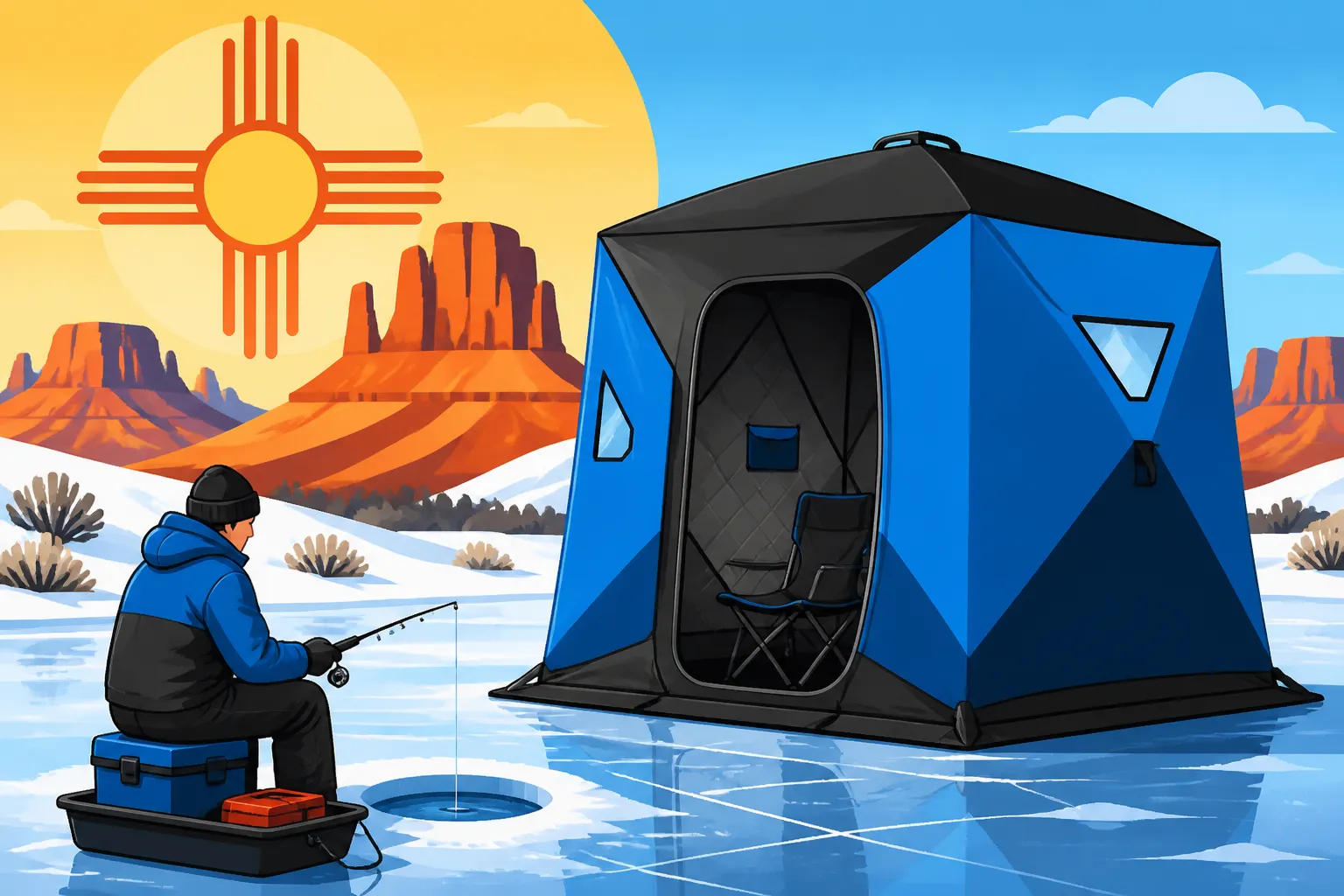
Pop-up hub shelters are arguably the most popular choice for ice anglers in New Mexico, and for good reason. These shelters consist of a lightweight frame with fabric walls that "pop out" or expand from a central hub, much like a camping tent. They collapse down into a compact bag, making them relatively easy to transport. Their key advantage is the amount of interior space they offer for their footprint. A 4-person hub shelter, for example, can comfortably fit two anglers with their gear and a heater, or a small family.
They are known for being quick to set up and take down, usually in a matter of minutes once you get the hang of it. Many models come with insulated fabric, which is a game-changer for staying warm on those truly brutal days at higher elevations. Brands like Eskimo and Clam offer excellent hub shelters. You can find a wide range of these shelters, from basic single-layer models to heavily insulated ones, often available at Bass Pro Shops or online at Amazon. Their versatility makes them ideal for anglers who like to move around a bit on the ice or for groups who want to socialize while fishing.
Flip-Over Shelters: Mobility and Quick Setup
Flip-over shelters are the speed demons of the ice fishing world, designed for anglers who prioritize mobility and instantaneous deployment. These shelters are typically built onto a sled base, which also doubles as a storage unit for your gear. When you arrive at your spot, you simply "flip" the top section over, and the shelter forms instantly. This design is fantastic for run-and-gun tactics, where you want to fish a spot for a short time, then move to another. They are also incredibly efficient at trapping heat, as they often sit directly on the ice, minimizing drafts.
While they may not offer as much communal space as a hub shelter, flip-overs excel for solo anglers or pairs who need to cover ground quickly, perhaps scouting for perch at a new lake. They often come with built-in seats and rod holders, making them a self-contained fishing station. The downside is that they can be heavier and bulkier to transport if you don't have a snowmobile or ATV to pull the sled. However, for sheer convenience and speed of deployment, nothing beats a flip-over shelter, especially when you're chasing active fish and need to be able to move and reset in a flash.
Permanent or Semi-Permanent Shelters: For Dedicated Spots
While less common in New Mexico's public ice fishing areas compared to states further north, it's worth noting the existence of permanent or semi-permanent ice fishing shelters. These are typically small shacks built from wood or other sturdy materials, designed to be left on a single spot for the entire season. They offer the ultimate in comfort and space, often outfitted with wood stoves, bunks, and even kitchens.
However, the regulations for leaving such structures on public waters are very strict, if allowed at all, and usually require permits. For instance, most of the popular lakes where ice fishing occurs, such as Eagle Nest Lake or Navajo Lake, would likely prohibit leaving a permanent structure. They are more often found on private land or in very specific, designated areas in other regions. For the average New Mexico angler, portable hub or flip-over shelters are the practical and regulated choices, offering flexibility without the long-term commitment or bureaucratic hurdles.
Essential Features for New Mexico's Unique Ice Conditions
New Mexico's ice fishing scene, characterized by its high altitude, strong winds, and often intense sunshine, demands specific features from an ice fishing shelter. Ignoring these can lead to a less enjoyable, or even unsafe, experience.
Insulation and Fabric: Staying Warm When the Wind Howls
When choosing an ice fishing shelter for New Mexico, insulation is not a luxury; it's a necessity. Many shelters come in either non-insulated or insulated versions, and for our climate, the insulated option is almost always the superior choice. Insulated shelters feature a multi-layer fabric, often with a thermal barrier stitched between the outer and inner shell. This construction dramatically reduces heat loss, making it much easier and more fuel-efficient to keep the interior warm with a portable heater.
Think of it this way: on a day with a biting 20 mph wind and ambient temperatures hovering around 10 degrees Fahrenheit, a non-insulated shelter will struggle to hold any meaningful heat. You'll be burning through propane like crazy, and still feel a chill. An insulated shelter, however, will retain that warmth, creating a comfortable environment where you might even be able to fish in lighter layers. The fabric denier (thickness) also plays a role in durability and wind resistance. Look for models with at least 300-denier fabric, but higher denier counts (like 600D or 900D) offer superior protection against tears and abrasion, which is important when dealing with sharp ice or rough transport. This insulation is key for those dedicated days, allowing you to maximize your time on the ice, especially when learning How to Catch Trout in New Mexico in the dead of winter.
Durability and Stability: Withstanding Gusts and Snowfall
New Mexico's winds can be ferocious, turning an otherwise pleasant day into a struggle against your equipment. A durable and stable ice fishing shelter is crucial. Look for shelters with sturdy pole systems, often made from fiberglass or aluminum, which can withstand bending and snapping under pressure. The quality of the hubs on pop-up shelters is also vital; reinforced plastic or metal hubs will last longer than flimsy alternatives.
For stability, features like external tie-downs and heavy-duty ice anchors are non-negotiable. Most quality shelters include these, but it's worth checking. When setting up, you'll want to securely anchor your shelter to the ice, especially if you plan on being out for a while or if the forecast predicts increasing winds. Nothing ruins a fishing trip faster than having your shelter take flight across the ice, potentially damaging your gear or injuring others. Reinforced corners and skirting around the base also help prevent drafts and add to the overall structural integrity, keeping your precious warmth inside where it belongs.
Ventilation and Safety: Managing Heaters and Airflow
While staying warm is a priority, proper ventilation is equally important for safety, particularly when using a propane heater inside your shelter. All combustion heaters produce carbon monoxide, an odorless, colorless gas that can be deadly. Therefore, your shelter must have adequate ventilation options, such as zippered windows or vents that can be opened.
Even with vents, it's highly recommended to use a battery-powered carbon monoxide detector inside your shelter whenever a heater is running. This small investment can save lives. Additionally, look for shelters with darker interior fabrics. While a bright interior might seem cheerful, a darker fabric can actually help you see down your fishing hole more clearly by reducing glare and creating a contrast with the water, especially useful for sight-fishing for trout. These features contribute to both your safety and your ability to focus on the fish, ensuring a more productive and worry-free day.
Sizing Your Shelter: Matching Your Angling Style and Company
Choosing the right size of ice fishing shelter isn't just about how many people you plan to bring; it’s about balancing comfort, portability, and the kind of fishing experience you're after. A shelter that’s too small will feel cramped and hinder your movements, while one that’s too large might be cumbersome to transport and heat efficiently.
Solo Missions and Small Groups: Compact and Efficient Designs
If your typical ice fishing trip involves just yourself, or perhaps one close friend, focusing on compact and efficient designs will serve you best. For solo anglers, a one-person flip-over shelter or a small, two-person hub shelter provides ample space for your gear, a heater, and yourself without being overly bulky. These smaller shelters are quicker to heat, easier to set up, and much more manageable to transport, especially if you’re pulling it by hand across the ice or loading it into a smaller vehicle. Brands like Eskimo and Clam offer excellent models in this category.
For example, a "shappell" or "clam" 1-man flip-over is perfect for the angler who likes to move from spot to spot, drilling new holes and chasing the bite. A compact hub shelter, like a 2-person cube style, still offers stand-up room (a major plus!) and more internal space than a comparable flip-over, but remains lightweight and easy to deploy. When you're heading out to catch Trout Species Found in New Mexico, having a nimble setup means you can quickly follow the fish if they're not biting in your initial spot.
Family Outings and Social Fishing: Room to Spread Out
When planning a family ice fishing day or an outing with a group of friends, having enough room is paramount for everyone's comfort and enjoyment. This is where larger hub shelters truly shine. Models designed for 3-5 people offer significant interior space, allowing multiple anglers to fish comfortably, bring extra chairs, and safely position a heater. These shelters often have multiple doors and windows, which is a nice touch for accessibility and ventilation.
Consider a 4-person or 6-person hub shelter if you regularly fish with your spouse and kids, or a couple of buddies. You'll have enough space to spread out your rods, tackle, and snacks without feeling like you're constantly bumping elbows. This extra room makes a huge difference in morale, especially on longer trips. Remember, a crowded shelter can quickly become uncomfortable, leading to frustrated anglers and shortened trips. Investing in a larger shelter for group fishing fosters a more social and relaxed atmosphere, making those memories on the ice even more special.
Weight and Portability: Hauling Gear Across the Ice
One of the most overlooked aspects of choosing an ice fishing shelter is its weight and overall portability, especially when you consider that many prime New Mexico ice fishing spots might require a decent trek across the ice. A lightweight shelter that packs down small is a godsend if you're hiking into a remote area or don't have an ATV or snowmobile to pull your gear.
Flip-over shelters, while quick to deploy, can be quite heavy due to their sled base, especially larger models. Hub shelters tend to be lighter for their interior volume, as they lack the heavy sled. However, even within hub shelters, weights can vary significantly based on size and insulation. If you're primarily fishing spots that allow vehicle access or have minimal distances to cover, weight might be less of a concern. But if you plan to explore less accessible areas, prioritize models explicitly designed for easy transport. Always check the packed dimensions and weight before purchasing, and consider how it will fit in your vehicle and how far you're willing to haul it on foot. A good quality sled for hauling your gear, available from stores like Bass Pro Shops, can make even heavier shelters more manageable.
| Shelter Type | Pros | Cons | Ideal Use Case |
|---|---|---|---|
| Pop-Up Hub | Spacious interior, easy setup/takedown | Can be blown around if not anchored well | Groups, families, stationary fishing, good for Ice Fishing in New Mexico |
| Flip-Over (Sled) | Instant setup, highly mobile, durable sled | Heavier, less interior head/elbow room | Run-and-gun anglers, solo/duo, easy to pull with ATV/snowmobile |
| Permanent Shack | Maximum comfort, very spacious, stable | Immobile, regulatory restrictions, costly | Private property, dedicated long-term spots (rarely used in public NM) |
Smart Setup and Effective Use of Your Ice Shelter
Having the best ice fishing shelter for New Mexico is only half the battle; knowing how to set it up correctly and use it effectively will truly maximize your comfort, safety, and fishing success.
Anchoring Techniques: Keeping Your Shelter Grounded
One of the most critical steps in setting up any ice fishing shelter, especially a pop-up hub style, is proper anchoring. New Mexico's winds are notorious, and an unanchored or poorly anchored shelter can quickly become a dangerous projectile. Most quality shelters come with ice anchors that screw directly into the ice. You'll typically want to use at least four anchors, one on each corner, and more if provided or if the wind is particularly strong.
When screwing in anchors, ensure they bite firmly into the ice. If the ice is soft or slushy, you might need to try a few spots to get a good hold. For added security, some anglers use deadman anchors (a piece of wood or metal buried in the snow/ice) or even attach guy lines to their vehicle if close enough. Never rely solely on placing gear inside your shelter to keep it from blowing away; a strong gust can lift even a fully loaded shelter. Taking the extra five minutes to properly anchor your shelter can save you from a major headache (and potentially costly damage) later in the day. It's a fundamental safety practice that should never be skipped.
Heating Your Shelter: Staying Toasty Safely
A heater is what transforms an ice shelter from a windbreak into a warm, comfortable fishing station. For most portable ice shelters, catalytic or radiant propane heaters are the go-to choice. Brands like Mr. Heater are incredibly popular and efficient, but remember the crucial safety considerations. Always ensure proper ventilation by keeping at least one vent or window partially open to allow for fresh air exchange. Even with ventilation, a portable carbon monoxide detector is a non-negotiable safety item when using any propane heater in an enclosed space.
Placement of your heater is also important. Keep it away from tent walls, flammable materials, and out of main walkways to prevent accidental burns or tip-overs. Always follow the manufacturer's instructions for operation and clearance. Depending on the size of your shelter and the ambient temperature, you might need a larger BTU output heater for a bigger, less insulated shelter, or a smaller one for a compact, well-insulated model. Proper heating allows you to enjoy activities like Winter Fishing in New Mexico comfortably for hours on end, rather than retreating early due to cold.
Lighting and Organization: Making the Most of Your Space
Once your shelter is up and warm, optimizing the interior for fishing and comfort is the next step. Even during daylight hours, the enclosed space can be dim, and if you're fishing into the evening, lighting is essential. Battery-powered LED lanterns or strip lights are perfect for illuminating the interior without the fire risk of open flames. Look for models with adjustable brightness to suit different needs.
Organization within the shelter helps keep things tidy and prevents tripping hazards. Use portable shelves, bucket organizers, or gear hangers to keep tackle, bait, snacks, and extra layers off the floor. Many flip-over shelters have built-in rod holders and storage, which is a great bonus. For hub shelters, consider adding simple hooks or bungee cords to the poles for hanging jackets or nets. A clean, organized shelter means less time fumbling for gear and more time fishing. This level of preparation ensures that when you're targeting Fish You Can Catch Ice Fishing in New Mexico, your focus remains entirely on the catch.
Maintaining Your Investment: Longevity and Care for Your Shelter
Your ice fishing shelter is an investment, and like any other piece of fishing gear, proper maintenance and storage will significantly extend its lifespan and keep it ready for action season after season. Neglecting these simple steps can lead to premature wear, mildew, and costly repairs.
Cleaning and Drying: Preventing Mold and Mildew
The most common enemy of any fabric-based shelter is moisture, which can lead to unsightly, foul-smelling, and damaging mold and mildew. After every trip, especially if the shelter has been exposed to snow, slush, or rain, it is absolutely crucial to dry it out completely before packing it away.
Even if the shelter feels dry to the touch when you pack it up at the lake, bring it home and set it up (or at least partially open it) in a garage, basement, or even outdoors on a sunny, dry day. Let it air out thoroughly for several hours, or even overnight, ensuring all surfaces are bone dry. If there's mud or dirt, gently brush it off or wipe it down with a damp cloth and mild soap. Avoid harsh chemicals, as they can damage the fabric's waterproofing or coloration. A clean, dry shelter not only smells better but also prevents the deterioration of fabric and stitching, ensuring it remains a reliable companion for your New Mexico Fishing Season Dates and Limits adventures for many years.
Repairs and Storage: Extending Its Lifespan
Even with the best care, sometimes things happen. A stray hook might snag the fabric, or a strong gust might bend a pole. Knowing how to make minor repairs can save you from having to replace your entire shelter. Many manufacturers offer patch kits for fabric tears, and replacement poles or hub components can often be ordered. For small holes, a simple patch of repair tape specifically designed for outdoor gear can work wonders. Addressing these small issues promptly prevents them from becoming bigger, more expensive problems.
When it comes to off-season storage, find a cool, dry place away from direct sunlight and pests. Sunlight's UV rays can degrade fabric over time, and rodents might find the fabric an appealing material for nests. If possible, store it in its original carry bag, ensuring it's not compressed too tightly, which can stress fabric and frame components. Some anglers hang their shelters in garages to allow for maximum air circulation. Proper storage ensures that when the first cold snap hits, your shelter is in prime condition, ready for your next trip to the ice.
Post-Season Checklist: Ready for Next Winter
Before you put your ice fishing shelter away for the long summer months, take some time to perform a thorough post-season inspection and prepare it for its next outing. This "seasonal checklist" approach ensures you won't be scrambling for repairs when the lakes freeze over again.
First, give the entire shelter a deep clean, wiping down all surfaces, checking for any lingering bait residue or dirt. Inspect all zippers to ensure they open and close smoothly; a little zipper lubricant can help prevent sticking. Check every seam and stitch for signs of wear or fraying, and repair any loose threads. Go over all poles and hubs, looking for cracks, bends, or corrosion. Make sure all ice anchors are clean, rust-free, and accounted for. If your shelter has built-in seats or benches, inspect their condition. Finally, once everything is clean, dry, and repaired, pack it away neatly. This diligent post-season care makes sure your shelter is perfectly poised for the next winter's ice, allowing you to quickly get out there and enjoy New Mexico Ice Fishing Season without any unexpected gear issues.
Disclaimer
This article is for general informational purposes only and does not constitute professional advice. Laws, prices and regulations vary by location and change over time. Consult a qualified professional for guidance on your specific situation.