Best Rod Holder for Bank Fishing on Windy Days
There's nothing quite like the peace of bank fishing, sitting by the water, casting your line, and soaking in the New Mexico scenery. But let's be honest, those serene moments can quickly turn into a wrestling match with the elements, especially when the infamous New Mexico winds decide to kick up. Suddenly, your carefully propped rod becomes a sail, threatening to tumble into the water, snap a tip, or drag your expensive reel through the dirt. It's a frustration many of us have faced, and this guide is here to help you find the best rod holder to keep your gear secure and your fishing day enjoyable, even when the gusts are trying their best to ruin it.
The Unique Challenge of Wind for New Mexico Bank Anglers
New Mexico is a land of stunning landscapes, but it's also a place where the wind often has a mind of its own. From the wide-open expanse of Elephant Butte Lake to the breezy banks of the Rio Grande, anglers fishing from shore are constantly battling gusts that can make a simple cast feel like an Olympic sport. It's not just about comfort; it's about protecting your valuable fishing equipment and making sure you don't miss that subtle bite because you're busy chasing a runaway rod.
Why Wind Wreaks Havoc on Your Setup
Imagine you've driven all the way out to a favorite spot, maybe on Navajo Lake, set up your chair, cast your line, and propped your rod against a rock or even laid it flat. Everything feels great until that sudden strong gust sweeps across the water. The wind catches your rod blank, leverages against your reel, and before you know it, your rod is airborne, or worse, tumbling into the water. This isn't just an inconvenience; it can be incredibly costly. A cracked guide, a reel full of sand, or a rod lost to the current are all real possibilities. For those of us who cherish our gear, it's a terrifying thought.
The physics are simple: a fishing rod, especially a longer one, acts like a lever. The wind applies force to the rod, and if the base isn't secure, that force translates into motion. Add a lightweight reel and a slick bank, and you've got a recipe for disaster. This is where a dedicated, wind-resistant rod holder truly shines, offering a stable anchor that your casual rock or stick just can't compete with.
The Mental Toll of Constant Vigilance
Beyond the physical risk to your gear, there's the mental toll. When you're constantly worried about your rod blowing over, it detracts from the whole experience. You can't relax, you can't fully focus on the water, and you're always on edge, ready to leap up and save your equipment. This isn't the peaceful escape we seek when we go fishing. A reliable rod holder allows you to truly "set it and forget it" (within reason, of course), letting you enjoy the quiet moments, observe nature, or even juggle multiple rods if you're fishing a wider spread. It turns a stressful situation into a calm, focused fishing session. For more general advice on getting started, check out our Beginner Fishing Gear Checklist for New Mexico.
Types of Rod Holders That Conquer the Wind
When it comes to keeping your rod secure on a blustery New Mexico day, not all rod holders are created equal. You need something designed to stand firm, regardless of whether you're on a sandy beach at Elephant Butte or a rocky shoreline up in the mountains. Here are the types that truly excel at battling the wind.
The Unwavering Stability of Spike Rod Holders
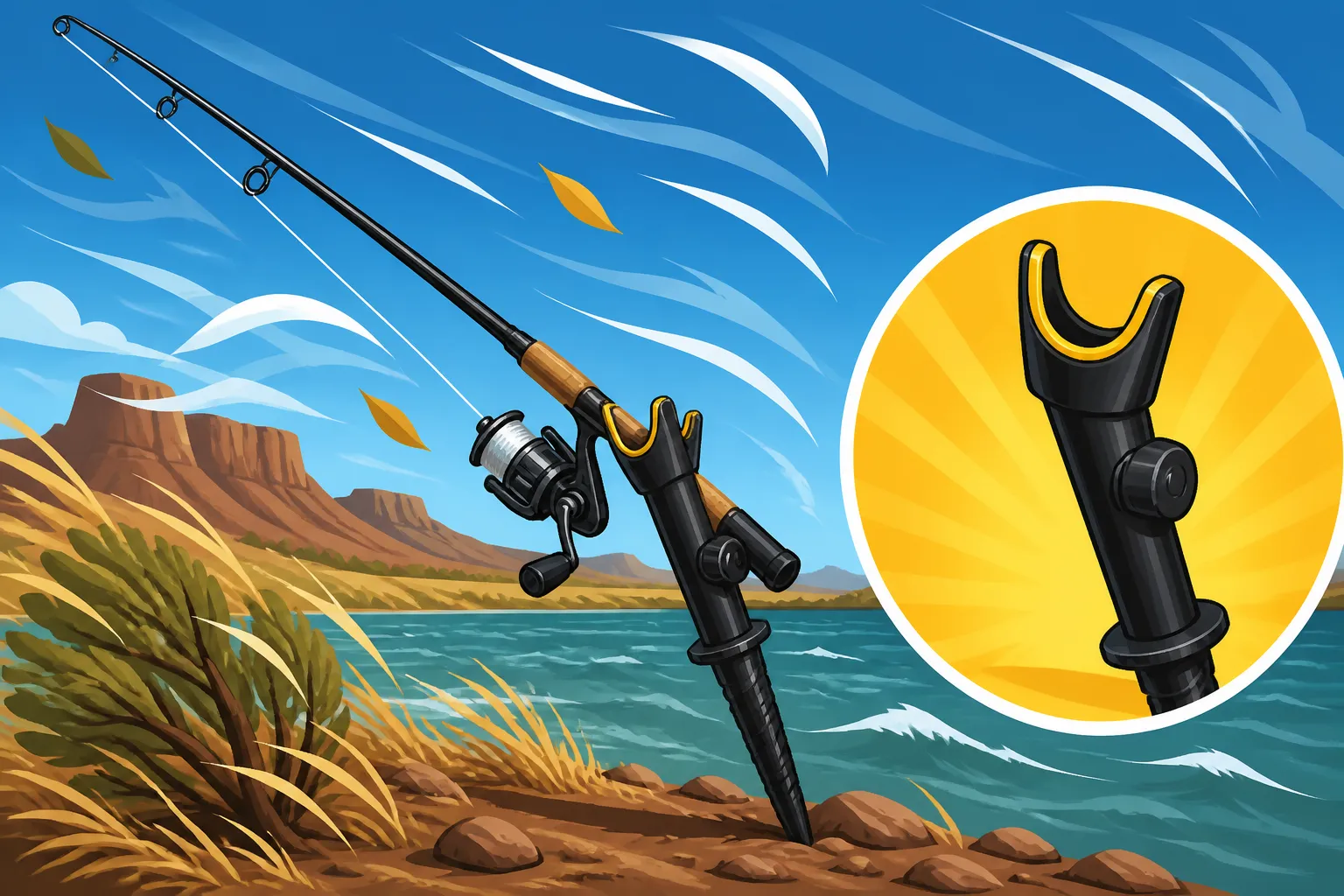
Spike rod holders are arguably the most popular choice for bank anglers, and for good reason: they offer fantastic stability. These are typically made of metal—steel or aluminum—and feature a long, pointed spike that drives into the ground, usually with a foot pedal or crossbar to help with leverage. The top section then cradles your rod.
- How they work: The beauty of a spike holder lies in its simplicity and deep ground penetration. Once the spike is firmly embedded, it creates a very low center of gravity and a strong anchor against lateral forces like wind. Many designs feature an angled tube or cup that holds the rod, preventing it from lifting out even if a fish tugs hard or the wind whips it. Some even have a small crossbar near the bottom that acts as a footrest, making it easier to push the spike deep into compacted soil or sand.
- Best use cases in New Mexico: These are fantastic for softer terrains common around many New Mexico lakes and rivers. Think of the sandy banks of the Rio Grande, the softer shores of Ute Lake, or even certain spots along Elephant Butte. They also work well in grassy areas. Their minimal footprint means they're easy to transport and don't take up much space in your Best Fishing Backpack and Wading Gear for New Mexico.
- Considerations: While excellent for most soft ground, they struggle with extremely rocky or hard-packed terrain where penetrating the surface is difficult. You might end up bending the spike or just not getting enough purchase. However, for sheer wind resistance in suitable ground, they are hard to beat.
Tripod and Quad-Pod Rod Stands for Versatility
For anglers who face more varied terrain, or those who prefer to keep their rods slightly elevated, tripod or quad-pod stands can be a lifesaver. These stands typically feature multiple legs that splay out, creating a wide, stable base, and often include a centralized holder for one or more rods.
- How they work: The wide leg stance of these stands distributes weight and force over a larger area, making them less prone to toppling. Many models are adjustable, allowing you to change the height and angle of your rod, which can be crucial for different fishing techniques or varying bank heights. Some even come with weighted bases or loops for adding sandbags for extra stability in extreme wind. You'll often find these constructed from lightweight aluminum or durable plastic.
- Best use cases in New Mexico: These are incredibly versatile for places where the ground might be too rocky for a spike, but still relatively flat. They excel on concrete jetties, docks, or even slightly uneven rocky shores at places like Conchas Lake or Heron Lake. They are also great if you want to fish with multiple rods, as some larger models can hold two or three rods simultaneously.
- Considerations: While stable, they can be bulkier to transport than a simple spike. They also might not offer the same "planted" feel as a deeply embedded spike, especially if the wind is really howling across an open reservoir. Always ensure the legs are fully extended and locked for maximum stability.
The DIY Ingenuity of Bucket and PVC Holders
Sometimes, the best solution is one you can make yourself or adapt from common items. Bucket and PVC pipe rod holders are a fantastic, often budget-friendly option, especially for those who need extreme stability or want to customize their setup.
- How they work: A common setup involves a 5-gallon bucket filled with sand, gravel, or concrete for weight, with PVC pipes secured inside to act as rod tubes. The weight of the bucket prevents it from blowing over, and the PVC pipes keep your rods upright and secure. The beauty is in the adaptability; you can cut the PVC to different lengths and angles to suit your needs.
- Best use cases in New Mexico: This is a perfect solution for those truly exposed, relentlessly windy spots like the wide-open shores of Elephant Butte Lake or certain areas on Ute Lake where the terrain can be mixed. It's also excellent for situations where you're fishing from a paved area or a very hard-packed dirt bank where spikes or tripods won't penetrate. If you plan to set up a semi-permanent camp for a few days, a bucket system offers unparalleled stability.
- Considerations: While incredibly stable, these are not the most portable. A heavy, sand-filled bucket isn't something you'll want to haul far from your vehicle. They are best for drive-up spots or when you're setting up for a longer session. However, for maximum wind resistance, especially for larger rods or multiple setups, they are tough to beat. You can often find materials for these at local hardware stores or even big box stores like Bass Pro Shops or Amazon, making them accessible to customize.
| Rod Holder Type | Best Terrain | Wind Resistance | Portability | Pros | Cons |
|---|---|---|---|---|---|
| Spike Holders | Sand, soft soil, grass | High | Excellent | Very stable when driven deep, lightweight, compact | Poor on hard rock/pavement, can bend if forced |
| Tripod/Quad-Pod | Varied, rocky, pavement | Medium to High | Good | Versatile, adjustable, can hold multiple rods, good on hard surfaces | Bulkier than spikes, less "planted" than a deep spike |
| Bucket/PVC Holders | Any (with weight) | Very High | Low | Extremely stable, customizable, budget-friendly | Heavy and bulky to transport, best for stationary fishing |
Key Features to Look For in a Wind-Resistant Rod Holder
Choosing the right rod holder isn't just about the type; it's about the details. When the wind is whipping across a New Mexico reservoir, those small features can make a huge difference in whether your rod stays put or takes a dive.
Material and Construction: Durability Matters
The material your rod holder is made from is paramount for durability, especially against the elements and the rigors of fishing. You need something that can withstand repeated use, exposure to sun and moisture, and the occasional battle with hard ground.
- Corrosion Resistance: Many New Mexico fishing environments involve water, and water plus metal equals rust if you're not careful. Look for holders made from stainless steel, anodized aluminum, or heavy-duty, UV-resistant plastics. Stainless steel offers excellent corrosion resistance, making it a great choice for long-term durability. Anodized aluminum is lighter but still very strong and resistant to rust. Heavy-duty plastics are often more affordable and impervious to rust, though they might not withstand extreme impacts as well as metal.
- Gauge and Thickness: For metal spike holders, pay attention to the gauge of the steel or thickness of the aluminum. A flimsy, thin-walled holder is more likely to bend or snap when you're trying to drive it into stubborn ground or when a strong gust puts pressure on it. A robust, thicker construction will give you confidence that your holder can take a beating. For tripod bases, thicker leg sections and sturdy joints are indicators of quality. Remember, a cheap rod holder that fails is far more expensive than investing a bit more in one that lasts.
Secure Rod Engagement: Keeping Your Rod In
A rod holder is only as good as its ability to actually hold the rod. When the wind is gusting, the last thing you want is for your rod to be lifted right out of the holder.
- Deep Cradles or Tubes: Look for holders with deep "cups" or tubes that cradle a good portion of the rod handle. Shallow V-shaped holders might be okay for calm days, but a deeper recess provides more security against upward lift from the wind or a sudden, hard strike from a fish. Some holders feature a full tube design where the rod handle slides completely into the holder, offering 360-degree protection.
- Locking Mechanisms or Retainers: Some advanced rod holders include a small strap, spring-loaded gate, or twist-lock mechanism that secures the rod into the holder. This is an incredibly valuable feature for windy conditions, as it physically prevents the rod from being accidentally pulled or blown out. Imagine fishing a lively spot on the San Juan River; a strong fish could pull your rod from an unsecured holder. These locking features give you peace of mind that your rod isn't going anywhere until you deliberately remove it.
Adjustability and Angle: Customizing Your Setup
Being able to adjust your rod holder's angle and height is more than just a convenience; it's a strategic advantage, especially when dealing with wind.
- Angle Adjustment: Wind tends to push things over, and if your rod is pointing straight up, it's a huge target. Many rod holders allow you to adjust the angle, letting you position your rod closer to the ground, which significantly reduces the surface area the wind can push against. This is also useful for different fishing techniques; you might want your rod tip high for certain bait fishing setups or closer to the water for light bite detection.
- Height Adjustment: While not as critical for wind resistance itself, height adjustment can be beneficial for comfort and line management. If you're fishing from a high bank, a taller holder keeps your line out of shoreline snags. If you're sitting in a low chair, you can adjust the holder to a comfortable height for monitoring. Look for simple, robust adjustment mechanisms that won't slip or wear out easily. Being able to set the angle just right can often mean the difference between a secure rod and one that's constantly swaying in the breeze. Many quality options from brands like Bass Pro Shops or even various sellers on Amazon will highlight these features.
Setting Up Your Rod Holder for Maximum Stability
Having the best rod holder for windy days in New Mexico is only half the battle; knowing how to properly set it up for maximum stability is crucial. Even the most robust holder can fail if not deployed correctly.
Proper Placement and Ground Penetration
The foundation of a stable rod holder is its connection to the ground. This is where most common mistakes occur, leading to wobbly rods and anxious anglers.
- Scout Your Spot: Before you even unpack your rod, take a moment to assess the bank. Look for areas with firm, compacted soil or sand. Avoid loose, freshly disturbed earth, gravel patches that won't hold, or areas directly over large, shallow rocks. Even on a seemingly uniform bank, there can be pockets of better holding ground.
- Deep and Angled for Spikes: If you're using a spike holder, push it as deep as it will comfortably go. Don't be shy – put your weight into it, using the foot pedal if available. For optimal wind resistance, consider angling the spike slightly into the prevailing wind. This way, the wind's force will be pushing the holder deeper into the ground rather than trying to lever it out. If the ground is really hard, try to find a small crack or softer spot to get started, or consider bringing a small, blunt piece of wood to tap the top of the spike (never directly with a hammer on metal, as it can deform).
- Wide Stance for Tripods: For tripod or quad-pod stands, ensure all legs are fully extended and locked into position. Splay them out as wide as possible to create the largest possible footprint. On uneven ground, try to adjust the legs so the stand is level, or slightly angled against the wind. If the ground is soft, consider placing small flat rocks or pieces of wood under the feet to prevent them from sinking unevenly. Some tripod models have loops for adding sandbags or weights, which can significantly enhance stability in extreme conditions. This is a common tactic when fishing the wide-open shores of a lake like Elephant Butte, where the wind can feel relentless.
Optimizing Rod Position and Tension
Once the holder is secure, how you place your rod within it can also contribute to overall stability. It's about minimizing the wind's leverage.
- Low Profile: When fishing in windy conditions, try to keep your rod as low to the ground as possible while still allowing for line clearance. A rod angled sharply upwards acts like a kite. Adjust your rod holder so that your rod tip is closer to the water, reducing the surface area exposed to the wind. This also helps with bite detection in choppy water, as less line is exposed to wind creating false bites.
- Minimize Slack, Not Too Tight: While you want your line relatively taut to detect bites, avoid excessive tension that might put undue stress on your rod and holder. The goal is enough tension to keep the line straight, but not so much that a sudden gust or wave tugs hard on the rod. If you're using live bait and anticipating a strong pull, ensure your drag is set appropriately so a fish can take line without yanking your rod out of the holder.
- Using Locking Features: If your rod holder has a locking mechanism or retainer, use it. This simple step is your best defense against your rod blowing or being pulled out of the holder. It provides a positive engagement that passive cradles just can't match. This is particularly important when fishing areas with strong currents or where larger fish are common, like the San Juan River Quality Waters Section.
Additional Tips for Windy New Mexico Days
A little extra preparation goes a long way when the wind is howling.
- Bring Extra Weight: For tripod or bucket setups, always consider bringing a small bag of sand or even a few heavy rocks to add to the base if your specific holder allows for it. Even a small amount of additional weight can dramatically increase stability.
- Consider Multiple Rod Holders: If you're fishing with more than one rod, individual, well-secured rod holders for each rod are usually more stable than trying to cram multiple rods into a single, less-than-ideal holder. This also prevents tangles if one rod blows over.
- Protect Your Reel: Even with the best rod holder, wind can kick up dust and sand. Consider using a reel cover or simply keeping a cloth handy to wipe down your reel periodically, especially if you're fishing on sandy shores. Sand is the enemy of delicate reel mechanisms!
- Check Forecasts: While you can't always predict every gust, checking the weather forecast for wind speeds before heading out can help you prepare. If it's going to be exceptionally windy, you might opt for a more robust rod holder or choose a more sheltered fishing spot. For fishing license information, make sure to read up on the New Mexico Fishing License Guide before you go.
By paying attention to these details, you can transform a potentially frustrating, wind-battered fishing trip into a relaxed and successful outing, knowing your valuable gear is secure and ready for that next big bite.
Disclaimer
This article is for general informational purposes only and does not constitute professional advice. Laws, prices and regulations vary by location and change over time. Consult a qualified professional for guidance on your specific situation.