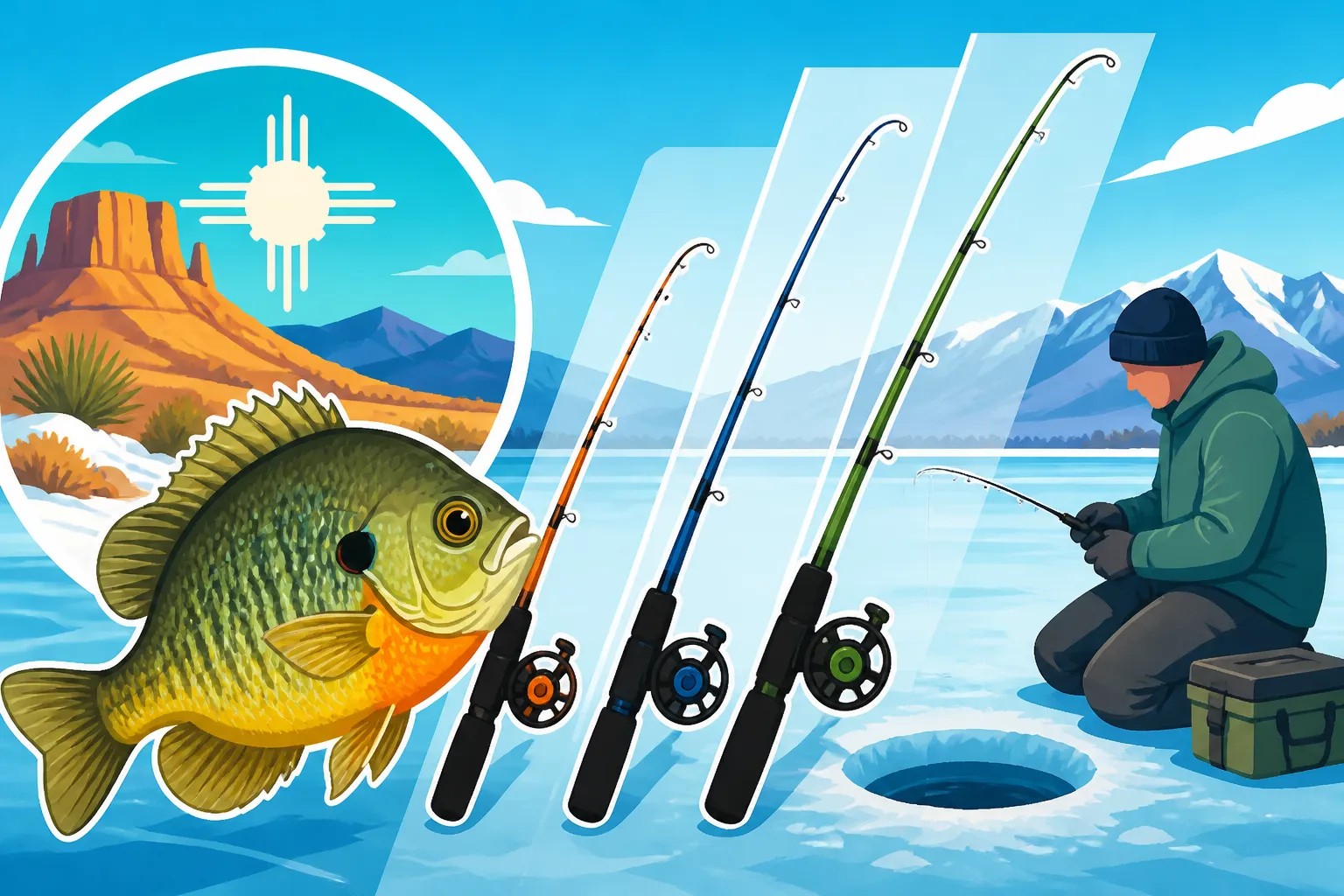
Best Ice Fishing Rod Length for Panfish
There's a special kind of zen that comes with staring down a small hole in a sheet of ice, waiting for that subtle twitch that tells you a panfish is nibbling your lure. But if you've ever felt like you're fighting your rod more than the fish, especially when dealing with those notoriously light panfish bites in New Mexico's chilly waters, you know the frustration. This guide is all about helping you dial in the perfect ice fishing rod length for panfish, ensuring your next trip to a frozen lake, whether it’s Bluewater or Eagle Nest, is more about catching and less about cursing your gear.
The Critical Role of Rod Length in Panfish Ice Fishing
When you're out on the hard water, every piece of your setup plays a crucial role, but the length of your ice fishing rod might just be one of the most overlooked factors, especially when targeting panfish like crappie, bluegill, or yellow perch. It’s not just about what feels comfortable; it’s about physics, finesse, and fighting power in a very specific environment.
Imagine trying to thread a needle with a broomstick – that's often what it feels like using a rod that's too long or too unwieldy for panfish. Conversely, too short, and you might lose out on leverage. The ideal length for panfish is a delicate balance. Shorter rods (think 24-28 inches) offer unparalleled sensitivity, allowing you to detect those incredibly light "breaths" or "sucks" that panfish often deliver to your bait. That minuscule upward flick of the spring bobber or a barely perceptible bump on the line is much easier to register when there's less rod between your hand and the lure. This heightened feedback is absolutely vital because panfish can be incredibly finicky, especially in cold water when their metabolism slows down. Missing those subtle cues means missing fish.
Beyond sensitivity, rod length significantly impacts your ability to impart the right action to your small jigs and lures. Panfish baits are often tiny, sometimes no bigger than a fingernail, and they require very specific, subtle movements to entice a bite. A shorter rod gives you far greater control over these delicate presentations. You can perform those micro-twitches, gentle lifts, and barely-there shivers that mimic struggling insects or dying minnows. A longer rod, while offering more sweep, can make these precise movements feel clumsy and exaggerated, potentially spooking cautious panfish. Think of it like a surgeon's scalpel versus a butter knife – precision matters.
Then there's the hook set. Panfish have notoriously soft mouths, and using the wrong rod length can lead to either missed hook sets or tearing the hook right out of their mouth. A shorter, ultra-light rod with a sensitive tip allows for a quicker, more controlled snap of the wrist, translating into a precise hook set that penetrates just enough. Too long, and the rod might have too much flex or too much leverage, making it harder to gauge the force needed. This is especially true when you're fishing with light line, where excessive force can easily snap your presentation. The compact nature of a shorter rod also means less overall rod arc, which can be advantageous in tight quarters.
Finally, consider the actual fight, particularly when you're battling a decent crappie or perch from a small hole in the ice, often within the confines of an ice shanty. A shorter rod helps keep the fish directly under the hole, reducing the chance of it rubbing against the ice edge or wrapping around the line. It gives you immediate control to guide the fish upward without having to awkwardly bend the rod or strain your back. While a longer rod might offer more shock absorption, the practicalities of reeling in a fish in close quarters often favor a more compact tool.
Matching Rod Length to Your New Mexico Panfish Pursuit
Choosing the right rod length isn't a one-size-fits-all situation. Your optimal choice will often depend on the specific panfish species you're targeting, the size of your fishing hole, whether you're in a portable shelter, and even your personal fishing style. Let's break down the different lengths and their ideal applications on New Mexico's frozen landscapes.
Short and Sweet: The Ultra-Finesse Rods (24-28 inches)
These are your precision tools, the scalpels of the ice fishing world. Rods in the 24 to 28-inch range are absolutely stellar for ultra-light presentations and when maximum sensitivity is paramount. If you're sight fishing for bluegill in crystal-clear waters, peering down a small hole, or tucked into a compact one-person ice shack, these rods shine. The short length gives you incredible control for micro-jigging, making those tiny tungsten jigs dance with the most subtle movements. You'll feel every breath, every bump, and every mouthing of your bait.
Imagine you're at a spot like Fenton Lake, known for its trout, but also offering some excellent panfish opportunities, especially in its shallower coves where you might encounter bluegill. With a 24-inch rod, you can hold your hand right near the hole, offering a direct line of communication to your lure. This also minimizes the amount of line you have out, which means less line stretch and even more sensitivity. The downside? They offer less leverage for larger fish, and if you're standing on open ice, bending over a tiny hole with a very short rod can become uncomfortable after a while. However, for pure finesse and delicate presentations, particularly when targeting smaller bluegill or finicky perch, these rods are hard to beat. You can find some fantastic ultra-light options in this range, often available at local shops or online retailers like Amazon.
Mid-Range Versatility: The All-Arounders (28-32 inches)
For many New Mexico ice anglers, a rod in the 28 to 32-inch range is the true workhorse for panfish. This length provides an excellent balance of sensitivity and versatility, making it a fantastic choice if you're only going to carry one or two panfish rods. These rods still offer great control for jigging small baits, but they provide a little more backbone and leverage than their shorter counterparts.
This length is ideal for a broader range of situations, from targeting crappie in slightly deeper water where a bit more sweeping action is beneficial, to fishing larger holes or when you're outside a shelter on open ice. The slightly longer blank allows for a more comfortable stance when standing or sitting on a bucket, without feeling like you're constantly hunched over. If you're fishing a popular spot like Bluewater Lake, known for its trout but also holding some decent perch, a 30-inch rod gives you that adaptability to switch between vertical jigging and perhaps a dead-sticking setup. The added length provides a bit more shock absorption, which can be a real asset when a bigger crappie or even an incidental trout decides to inhale your panfish offering. Many anglers find these rods to be the "sweet spot" for overall panfish success. New Mexico Ice Fishing Season is long enough that having a versatile rod makes a big difference.
Longer Reach: The Deeper Water & Open Ice Options (32-38+ inches)
While less common for panfish, rods in the 32-inch to 38-inch (or even longer) range do have their place, particularly for specific situations or larger panfish species. These rods excel when you need extra reach, perhaps fishing over a wider hole, trying to keep your line away from the hole's edge, or if you're fishing on open ice and prefer a more upright posture. They also offer excellent leverage for fighting larger fish or when you're targeting bigger crappie that might require a bit more backbone to pull them up.
Consider fishing a larger reservoir like Navajo Lake, where you might be targeting kokanee salmon in deeper water, but still encountering larger crappie or yellow perch incidentally. A longer rod can provide a greater sweep for imparting action to slightly larger panfish jigs or small spoons, allowing you to cover a wider water column with each jigging motion. However, their primary drawback for panfish is a slight reduction in ultimate sensitivity compared to shorter rods, and they can be quite cumbersome inside smaller ice shanties or when trying to manage multiple lines in a tight space. They also make precise, tiny jigging movements more challenging. For most dedicated panfish anglers, these longer rods are a secondary option, brought out for specific scenarios rather than as an everyday go-to.
Here's a quick comparison of rod lengths for common panfish ice fishing scenarios:
| Rod Length Range (Inches) | Ideal Panfish Species | Best Use Case | Key Advantages | Potential Disadvantages |
|---|---|---|---|---|
| 24-28 | Bluegill, Smaller Perch | Sight fishing, small shacks, ultra-finesse | Maximum sensitivity, precise jigging control | Less leverage, can be uncomfortable standing |
| 28-32 | Crappie, Perch, Bluegill | All-around versatility, medium holes, open ice | Good sensitivity, balanced leverage, comfortable | Less finesse than shorter, less reach than longer |
| 32-38+ | Larger Crappie, Perch, Incidental Trout | Deeper water, wide holes, open ice, standing | More leverage, wider sweep, comfortable standing | Reduced sensitivity, cumbersome in small shacks, less finesse |
Beyond Length: Other Key Rod Characteristics for Panfish
While rod length is paramount, it's certainly not the only factor to consider when choosing the best ice fishing rod for New Mexico's panfish. The action, power, and even the handle design all play significant roles in your success. Think of it like building a fishing machine; each component must work in harmony.
Rod Action: The Flex of the Tip
The "action" of a rod refers to where along the blank it bends when pressure is applied. For panfish, this is incredibly important for both sensitivity and protecting light lines.
- Fast Action: These rods primarily bend in the top third of the blank. They are extremely sensitive and transmit even the lightest bites directly to your hand. This is fantastic for detecting those subtle panfish nibbles. However, they have a stiffer backbone, which means you need to be very careful with your hook sets to avoid tearing hooks out of soft panfish mouths or breaking light line. Many dedicated crappie and perch rods will lean towards a fast or extra-fast action.
- Medium (or Moderate) Action: These rods bend through the top half of the blank. They offer a good balance of sensitivity and a more forgiving bend. This can be a great choice for beginners or for those times when panfish are biting more aggressively. The deeper bend helps to absorb the shock of a sudden run, protecting lighter lines.
- Slow Action: Bending throughout the entire blank, these rods are often quite parabolic. While less common for dedicated panfish ice fishing, they can be useful with extremely light lines or tiny baits when you want maximum shock absorption. They trade sensitivity for flexibility.
For most panfish scenarios, you'll want to lean towards fast or medium-fast action to capitalize on the species' light bite. The responsiveness of a fast-action tip helps convert those barely-there nudges into successful hook sets.
Rod Power: The Backbone for the Fight
"Power" refers to the rod's lifting strength or backbone. For panfish, you'll almost always be looking at ultra-light or light power ratings.
- Ultra-Light Power: This is the bread and butter for panfish. An ultra-light rod has a very flexible backbone that allows you to feel the slightest take. It's designed to cast or jig very small lures and protect extremely light lines (often 2-4 lb test). When a decent crappie or perch hits, this rod will bend significantly, distributing the stress and preventing line breaks.
- Light Power: A step up from ultra-light, a light power rod has a bit more backbone. It's suitable for slightly larger panfish, bigger jigs, or if you're expecting incidental catches of small trout. It can handle lines up to around 6 lb test. While still sensitive enough for panfish, an ultra-light will give you that extra edge in detection.
Choosing the right power ensures that your rod matches the size of the fish and the lures you're using. You can find a vast array of ultra-light and light power rods suitable for panfish at major retailers like Bass Pro Shops, or by browsing online selections on Amazon. Remember, the goal is to feel the fish, not overpower it.
Materials, Reel Seats, and Handles
Beyond length, action, and power, the construction materials and ergonomic features significantly impact your fishing experience.
- Materials: Graphite is king for ice fishing panfish rods due to its exceptional sensitivity and lightweight properties. It transmits vibrations from even the lightest bites up the blank to your hand. Some rods use composite blends, combining graphite with fiberglass to offer a bit more durability and a slightly more parabolic bend, which can be forgiving.
- Reel Seat: Look for a comfortable reel seat that allows for direct contact with the rod blank. Many ice rods forgo traditional reel seats entirely, opting for simple rings to hold the reel directly onto the cork or foam handle. This enhances sensitivity.
- Handle: Ergonomics are crucial in cold weather. Cork handles are popular for their warmth and comfortable grip. EVA foam handles are also excellent, being durable, lightweight, and maintaining warmth. A good handle design ensures comfort during hours of jigging and sensitivity transfer. Longer handles can offer more leverage, but for panfish, a shorter, more compact handle is often preferred to keep the overall rod length manageable.
Thinking about Best Rod Setup for New Mexico Trout Fishing might seem different, but the principles of matching rod components to target species and fishing style remain consistent.
Equipping Your Ice Fishing Adventure in New Mexico
Having the perfect rod length is just one piece of the puzzle for a successful panfish ice fishing trip in New Mexico. To truly maximize your chances, you need to consider the full spectrum of your gear, from the line on your reel to how you’re drilling your hole.
Line Choice: The Invisible Link
For panfish, stealth and sensitivity are paramount. You’ll want to spool your reel with very light line. Monofilament in 2-4 lb test is a popular choice for its subtle stretch, which can act as a shock absorber, and its ease of handling in cold temperatures. Fluorocarbon in similar weights offers less stretch, making it even more sensitive and nearly invisible underwater, but it can be a bit stiffer to work with. Some anglers even use braided line with a fluorocarbon leader for ultimate sensitivity, though the braid itself can be challenging in sub-freezing conditions. The key is to match your line to your ultra-light or light power rod to ensure the system works together to detect those light bites.
Lure Selection: Tiny Temptations
Panfish feed on small insects, larvae, and tiny minnows, so your lures need to reflect that. Tungsten jigs are incredibly popular because their density allows them to be much smaller than lead jigs of the same weight, meaning they fall faster and give you a more compact presentation. Pair these with small plastic grubs, tiny soft plastics, or a wax worm or minnow head for added attraction. Small spoons can also be effective, especially for perch and crappie. The subtle action of a small lure is often what triggers a bite from a hesitant panfish.
Drilling the Right Hole: Giving Yourself Room to Work
Your hole size matters. For most panfish, a 6-inch auger is perfectly adequate. It's easy to drill, and an average panfish will come through easily. However, if you're using a longer rod (say, 32+ inches) or anticipate catching larger crappie or even an incidental trout (which often hit panfish baits), a wider 8-inch hole can offer more room to maneuver your catch and reduce the chance of the fish rubbing against the ice edge. Always ensure your hole is clear of slush to prevent line freezing. Remember, having the Best Ice Fishing Auger for New Mexico will make drilling multiple holes a breeze.
Portable Shelters: Comfort Meets Strategy
Many New Mexico ice anglers utilize portable ice fishing shelters, ranging from one-person flip-overs to larger hub-style tents. Your shelter choice can directly influence your rod length decision. In a compact one-person flip-over, a shorter 24-28 inch rod is much easier to manage, preventing constant snagging on the ceiling or walls. In a larger hub shelter, you might have enough room for a 30-32 inch rod, giving you more flexibility. The comfort and warmth offered by a good shelter also allow you to focus more on those subtle bites.
When you're gathering your gear for an ice fishing trip, remember to check out what's available at Bass Pro Shops for specialized ice fishing equipment, or explore the extensive range of gear, from rods to shelters, that you can find on Amazon. Taking the time to properly equip yourself, considering both your rod length and complementary gear, will undoubtedly enhance your New Mexico ice fishing experience. Don't forget your warm layers; What to Wear Ice Fishing in New Mexico is crucial for comfort and safety on the ice!
Choosing the best ice fishing rod length for panfish in New Mexico is about understanding the delicate dance between sensitivity, control, and practicality. By matching your rod length to your target species, fishing style, and environment, you'll be well on your way to a more successful and enjoyable day on the ice. Explore some of New Mexico’s fantastic frozen fisheries, from Eagle Nest to Fenton Lake Winter Trout Fishing, armed with the right rod and the knowledge to use it effectively. You might also want to consult the New Mexico Fishing Season Calendar to plan your trips. For other gear considerations, check out Best Fishing Gear for New Mexico Anglers and Best Tackle Box Setup for New Mexico Anglers. And if you're curious about what else is biting, read up on Fish You Can Catch Ice Fishing in New Mexico.
Disclaimer
This article is for general informational purposes only and does not constitute professional advice. Laws, prices and regulations vary by location and change over time. Consult a qualified professional for guidance on your specific situation.