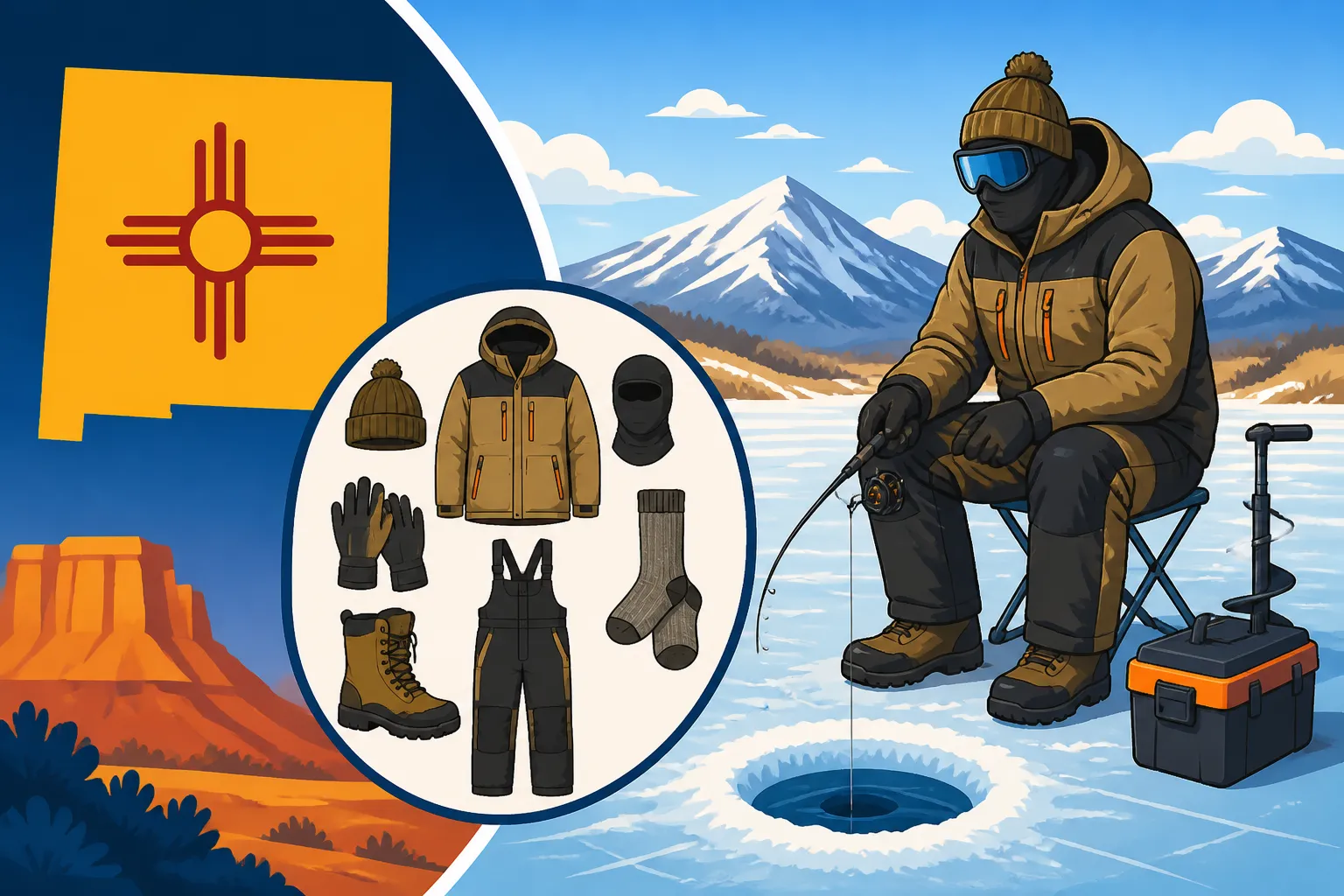
What to Wear Ice Fishing in New Mexico
Stepping out onto a frozen lake in New Mexico for a day of ice fishing can be an absolutely incredible experience, but it can also turn miserable in a heartbeat if you're not dressed properly. The biting winds, the intense high-altitude sun reflecting off the snow and ice, and those bone-chilling temperatures can sneak up on you faster than a northern pike hitting your jig. This guide is all about making sure you stay toasty warm and safe from head to toe, so your focus can remain squarely on catching those elusive winter fish, not on shivering your way back to the truck.
The Harsh Realities of New Mexico Ice Fishing Weather
New Mexico's winter landscapes are undeniably beautiful, especially when covered in a blanket of snow and ice. However, beneath that picturesque facade lies a climate that demands respect, especially when you're venturing out onto a frozen body of water. Ice fishing isn't like a gentle stroll in the park; it's an immersive experience in some seriously unforgiving conditions.
Why Layering is Non-Negotiable
You might think throwing on your bulkiest winter coat is enough, but believe me, that's a rookie mistake many of us have made, only to regret it hours later. New Mexico weather, even in winter, can be surprisingly dynamic. One minute the sun is beating down, making you sweat as you drill holes or set up your shelter, and the next, a cloud rolls in, or the wind picks up, and you're freezing.
The key to combating these fluctuations isn't one thick layer, but multiple, thinner layers. Think of it like building a house – you need a foundation, insulation, and a strong roof. Your body constantly generates heat, especially when you're active. If that heat and the resulting moisture (sweat) get trapped against your skin, it will quickly turn cold and clammy, chilling you to the bone. This isn't just uncomfortable; it's a direct path to hypothermia, which is a serious safety concern when you're out on the ice. The beauty of layering is that you can add or shed pieces as your activity level or the weather changes, allowing your body to regulate its temperature much more effectively.
Understanding Wind Chill and Exposure
One of the biggest culprits for discomfort when Ice Fishing in New Mexico is the wind chill. Many of New Mexico's best ice fishing lakes, like Eagle Nest Lake or Bluewater Lake, are located at higher elevations and often span wide-open expanses. This means there's little to block the wind, which can make a 20-degree Fahrenheit day feel like zero or even below. The dry air in New Mexico means moisture evaporates quickly from your skin, and when combined with wind, it accelerates heat loss dramatically.
It's a common misconception that the sun in winter isn't as strong. Here in New Mexico, at high altitudes, the UV rays are actually more intense, and the reflection off the snow and ice can be blinding and further dehydrating. While the sun might feel warm on your face, your exposed skin and any gaps in your clothing are constantly losing heat to the elements. This constant exposure can lead to frostbite in extreme conditions if not properly managed. Staying adequately covered and protected from the elements isn't just about comfort; it's about minimizing risks and ensuring you have a safe and enjoyable day out on the ice.
Your Essential Ice Fishing Layering System
Building the right clothing system for ice fishing is a lot like preparing for a multi-day backcountry hike; every piece serves a purpose. It's about combining materials that work together to keep you dry, warm, and protected from the elements. Forget about your everyday cotton hoodies and jeans; those are a recipe for disaster on the ice.
The Base Layer: Wicking Away Moisture
Your base layer is the foundation of your entire warmth system, and arguably the most crucial. Its primary job is to wick moisture (sweat) away from your skin, preventing that clammy, cold feeling that cotton so notoriously creates. Cotton absorbs moisture and holds it against your skin, effectively turning into a cold, wet rag that leaches heat from your body. This is why you should absolutely avoid cotton base layers when ice fishing.
Instead, opt for synthetic materials like polyester or natural fibers like merino wool. Synthetic base layers, often found under brands like Under Armour or Columbia, are fantastic at moving moisture and drying quickly. Merino wool, while often a bit pricier, offers superior warmth-to-weight ratio, is naturally odor-resistant, and can still insulate even when slightly damp. For both tops and bottoms, choose a snug fit – not so tight it restricts movement, but close enough to your skin to effectively pull away moisture. You can find excellent options for these on Amazon, making it easy to get what you need delivered right to your door before your next trip.
The Mid Layer: Insulation for Warmth
Once your base layer is doing its job of managing moisture, your mid-layer steps in to provide the bulk of your insulation. This is where you trap warm air close to your body. Think of it as your primary thermal barrier. Depending on how cold it is, and whether you're actively moving or sitting still in a shelter, you might wear one or even two mid-layers.
Common materials for mid-layers include fleece (polyester), synthetic "puff" jackets filled with materials like Primaloft, or even lightweight down jackets. Fleece is a popular and affordable choice, offering good warmth and breathability. Synthetic puff jackets are excellent for warmth even if they get a little wet, making them a reliable choice. Down offers the best warmth-to-weight ratio but loses its insulating properties if it gets soaked. The beauty of having multiple mid-layers is flexibility. On a mild day, a single fleece jacket might suffice. If you're out for Winter Fishing in New Mexico on a truly frigid day or spending long hours jigging a hole, you might layer a thicker fleece over a thinner one, or add a synthetic insulated vest over your fleece jacket. This allows you to fine-tune your warmth without overheating when you're active, like when you're drilling holes with your Best Ice Fishing Auger for New Mexico.
The Outer Layer: Waterproof and Windproof Protection
The final and arguably most visible part of your ice fishing ensemble is the outer layer. This is your armor against the direct assault of wind, snow, and slush. Your outer layer needs to be both waterproof (or at least highly water-resistant) and completely windproof. Imagine sitting on the ice, and a gust of wind cuts right through your jacket – game over for warmth.
Modern ice fishing suits, typically consisting of bib-style pants and a matching jacket, are specifically designed for these brutal conditions. They are often made from durable, rugged fabrics with waterproof membranes (like Gore-Tex or similar proprietary technologies) and sealed seams. Many top-tier ice fishing suits, such as those from Striker Ice or Ice Armor by Clam, even incorporate flotation assistance, adding a crucial layer of safety in case of an unexpected plunge through the ice. This is a feature worth considering, especially if you're venturing out on larger lakes where ice conditions can be variable. While a regular ski jacket and snow pants might get you by on a calm, mild day, a dedicated ice fishing suit provides superior insulation, enhanced durability, and specific features like reinforced knees and plenty of pockets tailored for the ice angler. They are built to withstand the elements and provide the best protection against the harsh environment.
Protecting Your Extremities: Head, Hands, and Feet
Once you've got your core layering system dialed in, don't overlook your extremities. Your head, hands, and feet are often the first parts of your body to get cold, and if they're not properly insulated, your entire body temperature will suffer.
Head and Neck Coverage
You lose a significant amount of body heat through your head, which is why a good hat is non-negotiable for ice fishing. A warm beanie made of wool or fleece is a great start. For colder or windier days, consider a trapper-style hat with ear flaps or a balaclava that covers your entire head, face, and neck, leaving just your eyes exposed. Neck gaiters are also fantastic for sealing off that gap between your jacket collar and your hat, preventing cold air from seeping in.
I've had countless days at Heron Lake where the sun was bright, but the wind was relentless. Having a thick fleece balaclava that I could pull up over my nose and mouth made all the difference in staying comfortable. It shields your skin from windburn and frostbite, and it can be easily adjusted or pulled down if you start to feel too warm while setting up your Best Ice Fishing Shelter for New Mexico.
Keeping Your Hands Warm and Functional
This is often the trickiest part of ice fishing attire because you need warmth and dexterity. Thin liner gloves made of merino wool or synthetic material are a great first step. Over these, you'll want waterproof and insulated gloves or mittens. Mittens are generally warmer because your fingers share body heat, but gloves offer better individual finger control.
Many anglers use a combination: thin liners for dexterity when tying knots or handling fish, and heavy, waterproof mittens that they can slip on and off quickly. Look for gloves with long gauntlets that extend over your jacket cuffs to prevent snow and water from getting in. Hand warmers, often found in bulk packs on Amazon, are also a lifesaver. You can tuck them into your mittens or even in your jacket pockets for an extra boost of warmth. When you're dealing with wet lines or handling freshly caught trout, your hands will get cold fast if they're not protected.
Footwear: The Foundation of Warmth
Cold feet can ruin an ice fishing trip faster than anything else. Your feet are in direct contact with the ice, making proper insulation paramount. Start with two pairs of socks: a thin synthetic or merino wool liner sock to wick moisture, and then a thick pair of heavy wool or insulated synthetic socks. Make sure your socks aren't too tight, as this can restrict circulation and actually make your feet colder.
For boots, you need highly insulated, waterproof winter boots. Brands like Sorel, Baffin, or Muck Boots are popular for a reason – they excel in cold, wet conditions. Look for boots with a high amount of insulation, often rated in grams of Thinsulate (400g to 1000g is common for serious ice fishing). Ensure they are completely waterproof, with thick rubber soles to create a barrier from the ice. Make sure your boots are spacious enough to accommodate your two layers of socks without compressing them, which again, can reduce insulation and circulation. Standing still on ice for hours, as you might do while targeting kokanee salmon at Navajo Lake, means your boots are your best friend.
Additional Gear for Comfort and Safety
While layering takes care of the bulk of your warmth needs, there are a few other essential items that will significantly improve your comfort, safety, and overall enjoyment of your New Mexico ice fishing adventure.
Eye Protection and Sunscreen
The high-altitude sun in New Mexico, combined with the reflective properties of snow and ice, creates an environment where UV radiation is intense. Without proper eye protection, you're not only squinting all day, but you're also at risk of snow blindness and long-term eye damage. Polarized sunglasses are essential; they cut glare, making it easier to see what you're doing and even sometimes spot fish under the ice.
Don't forget sunscreen and lip balm, even in winter. Your face, nose, and lips are highly susceptible to sunburn and windburn. A high SPF sunscreen applied to any exposed skin will prevent painful burns. Many anglers also carry a small tube of medicated lip balm to protect against chapping from the dry, cold air.
Portable Heaters and Shelters
While a good layering system is fundamental, an ice fishing shelter and a portable heater are absolute game-changers, especially if you plan on spending significant time on the ice or if the temperatures are truly frigid. A portable shelter, whether it's a pop-up hub style or a flip-over model, provides an immediate escape from the wind and drastically raises the ambient temperature around you.
Inside a good shelter, a small propane heater, such as a Mr. Heater Buddy, can make it warm enough to shed a layer or two, allowing you to fish in comfort. This is particularly valuable for those long stretches waiting for a bite or when taking a break. A warm shelter also provides a much-needed sanctuary for warming up your hands and feet. Just remember to always provide adequate ventilation when using any propane heater to prevent carbon monoxide buildup. This setup is a luxury that quickly feels like a necessity when the New Mexico winter truly sets in.
Hydration and Snacks
Even in cold weather, your body still requires ample hydration, especially at higher elevations where the air is dry. It's easy to forget to drink water when you don't feel thirsty from heat, but dehydration can lead to fatigue, headaches, and even impaired judgment, which is dangerous on the ice. Pack a thermos with hot coffee, tea, or even hot chocolate to warm you from the inside out. Bring a water bottle as well.
High-energy snacks are also crucial. Your body burns more calories to stay warm in cold conditions. Nuts, granola bars, jerky, fruit, and sandwiches are all excellent choices. Pack things that are easy to eat with gloves on or that won't freeze solid. Keep your snacks inside your shelter or jacket to prevent them from becoming icy.
Here's a quick overview of your ice fishing wardrobe:
| Layer Type | Purpose | Recommended Materials | Example Items |
|---|---|---|---|
| Base Layer | Wicks moisture, light warmth | Synthetic (polyester), Merino Wool | Long johns (top & bottom), Smartwool base layers |
| Mid Layer | Insulation, traps warmth | Fleece, Synthetic down, Down | Fleece jacket, Insulated vest, Puffy jacket |
| Outer Layer | Windproof, Waterproof, Breathable | Durable synthetics (Gore-Tex, proprietary) | Insulated ice fishing bibs and matching jacket |
| Head | Prevents heat loss, shields from wind | Wool, Fleece, Synthetic | Beanie, Balaclava, Trapper hat |
| Hands | Warmth, dexterity, waterproof | Merino wool, Synthetic insulation | Thin liner gloves, Waterproof insulated gloves/mittens |
| Feet | Extreme insulation, waterproof | Merino wool, Synthetic, Rubber | Wicking liner socks, Heavy wool socks, Insulated winter boots |
When you're preparing for a day on the ice, remember that conditions can change rapidly. Check the forecast for not just temperature, but also wind speed and precipitation before you head out. A quick search for New Mexico Fishing Season Dates and Limits will give you an idea of what fish are active and what regulations to follow, but always be prepared for the elements. Whether you're targeting trout in a smaller pond or going for the big ones at Elephant Butte Lake, being dressed right makes all the difference between a memorable day and a miserable one. Investing in good gear, especially from reputable sources like Amazon for base layers and specialized outdoor retailers for your outer shell, is truly an investment in your comfort and safety. Following these guidelines will ensure your next New Mexico Trout Fishing Rules adventure is a warm and successful one.
Disclaimer
Please note that ice fishing carries inherent risks, including the danger of falling through thin ice. Always prioritize safety by checking ice thickness, being aware of current conditions, and never fishing alone. This guide provides general recommendations for clothing; individual comfort levels and specific weather conditions may require adjustments. Always consult local regulations and ice conditions before venturing onto the ice.