Dry Fly Fishing in New Mexico
There’s nothing quite like the heart-stopping moment a trout sips your meticulously presented dry fly off the surface of a crystal-clear New Mexico stream. But if you’ve tried it, you know dry fly fishing in the Land of Enchantment can also feel incredibly challenging, with fickle fish, tricky currents, and sparse hatches. This guide is here to unravel the mysteries of dry fly fishing across New Mexico’s diverse waters, offering practical advice, gear recommendations, and location insights to help you achieve those unforgettable surface strikes.
Understanding New Mexico's Dry Fly Opportunities
New Mexico offers some truly unique dry fly fishing experiences, from high-desert rivers to alpine lakes. The sheer variety of landscapes and water types means you can find dry fly action almost year-round if you know where to look. It’s not always easy, but the rewards—like a wild Rio Grande cutthroat rising to your imitation—are immense.
The Appeal of Dry Fly Fishing in the Land of Enchantment
For many anglers, dry fly fishing isn't just a technique; it's an art form. It's about connecting with the fish in the most visual way possible, watching them move through the water column to intercept your offering. In New Mexico, this appeal is amplified by the stunning backdrops – think of casting over a sparkling pool in the Pecos Wilderness with towering pines, or drifting a tiny midge on the calm surface of a high mountain lake under a brilliant blue sky. The challenge here often lies in presenting your fly subtly and accurately, mimicking nature's delicate dance, which requires patience and a keen eye. Many of our waters, especially the smaller streams and high-elevation lakes, teem with hungry trout that are more than willing to look up, making these locales perfect training grounds for aspiring dry fly enthusiasts. You’ll find the experience far more engaging and often more productive in these settings than simply dredging nymphs.
Key Insect Hatches That Drive Dry Fly Action
Understanding the primary insect hatches is absolutely fundamental to successful dry fly fishing anywhere, and New Mexico is no exception. While hatches can be localized and vary with elevation and water temperature, some key insects consistently bring trout to the surface across the state. Mayflies, caddisflies, and stoneflies are the "big three" for most trout fisheries. For instance, tiny Blue-Winged Olives (BWOs) are a staple, often hatching in cooler weather during spring and fall, even on cloudy winter days, providing an exciting challenge for anglers using small imitations. Caddisflies, especially the Mother's Day Caddis hatch in late spring, can bring on a feeding frenzy, with trout aggressively slashing at the skittering adults. Pale Morning Duns (PMDs) are another important mayfly, typically emerging in late spring and early summer. Beyond these aquatics, terrestrials like grasshoppers, ants, and beetles become incredibly important during the warm summer months, especially in stream sections with overhanging banks or adjacent meadows. Knowing what bugs are active, or what's likely to be active given the season and water conditions, allows you to "match the hatch" and significantly increase your chances.
Challenges of Dry Fly Fishing in Arid Environments
Dry fly fishing in New Mexico’s high desert and mountainous terrain comes with its own set of unique challenges that anglers often overlook. Firstly, water levels can fluctuate dramatically due to snowmelt, monsoon rains, or drought conditions. Low, clear water can make trout incredibly wary, demanding extremely delicate presentations and long, fine leaders. Conversely, high, turbid water can make finding fish and achieving drag-free drifts nearly impossible. The intense New Mexico sun, particularly at higher altitudes, can also create strong glare, making it difficult to spot rising fish or track your fly. Wind is another constant companion, especially on larger reservoirs and exposed river sections, turning delicate casting into a wrestling match. Lastly, some of our high-country streams and lakes have short seasons, meaning anglers need to be prepared for rapid weather changes, from warm sunshine to sudden thunderstorms or even snow, often within a single day. These factors require adaptability, meticulous preparation, and often, a bit more grit than fishing in more predictable environments.
Essential Gear for New Mexico Dry Fly Anglers
Having the right equipment won't guarantee success, but it certainly tips the odds in your favor, especially when dealing with New Mexico's diverse fishing conditions. You want gear that allows for delicate presentations while still having enough backbone to handle a feisty trout in a swift current.
Rods, Reels, and Lines for Delicate Presentations
For most dry fly applications in New Mexico, especially on smaller to medium-sized rivers and streams, a 3-weight to 5-weight fly rod is generally ideal. A 7'6" to 9' rod in a moderate to fast action provides the perfect balance of delicacy and casting power. For instance, when targeting spooky trout in the clear, low flows of a high mountain stream, a softer 3-weight or 4-weight rod around 7'6" or 8' will help you make those whisper-soft presentations. If you're planning to fish larger rivers like the San Juan, or throwing larger terrestrial patterns, a 9-foot 5-weight rod offers more versatility, allowing for longer casts and better line control in windy conditions. Pairing your rod with a lightweight, balanced reel is important, though for most trout fishing, the reel primarily serves to hold your line. The real workhorse is your fly line. A weight-forward floating line (WF-F) is standard for dry fly fishing. Look for lines designed for delicate presentations, often labeled "trout taper" or "presentation taper." Brands like Rio or Scientific Anglers offer excellent options that can be found on online retailers like Amazon, designed to lay out gently on the water, minimizing splash and spooking fewer fish. Remember, a delicate presentation often starts with the right line choice.
Leaders, Tippet, and Floatant Essentials
Beyond your rod and line, your leader and tippet are critical components for effective dry fly fishing. The leader is the clear, tapered section of monofilament or fluorocarbon that connects your fly line to your tippet. Its tapered design helps transfer casting energy smoothly, allowing your fly to land softly and naturally. For dry flies, a longer leader, typically 9 to 12 feet, is preferred to create separation from your fly line and reduce drag. The "X" rating of your leader and tippet corresponds to its diameter and breaking strength; for general dry fly fishing in New Mexico, 5X or 6X tippet is a good starting point, possibly dropping to 7X for very small flies or extremely spooky fish, or bumping up to 4X for larger terrestrials or windy conditions. Fluorocarbon tippet is often favored for its invisibility underwater, but for dry flies, standard monofilament is perfectly fine, as your fly is on the surface.
To keep your dry fly riding high and proud, floatant is absolutely essential. There are various types: gel floatants like Loon Aquel or Tiemco Dry Shake work by coating the fly, while dessicant powders (often in a shaker pot) absorb moisture and restore buoyancy to waterlogged flies. You’ll want both in your Best Fishing Backpack and Wading Gear for New Mexico! Don’t forget nippers for trimming tippet, forceps for unhooking fish, and a small landing net, preferably one with a rubber basket to protect fish during catch and release.
Must-Have Dry Fly Patterns for New Mexico
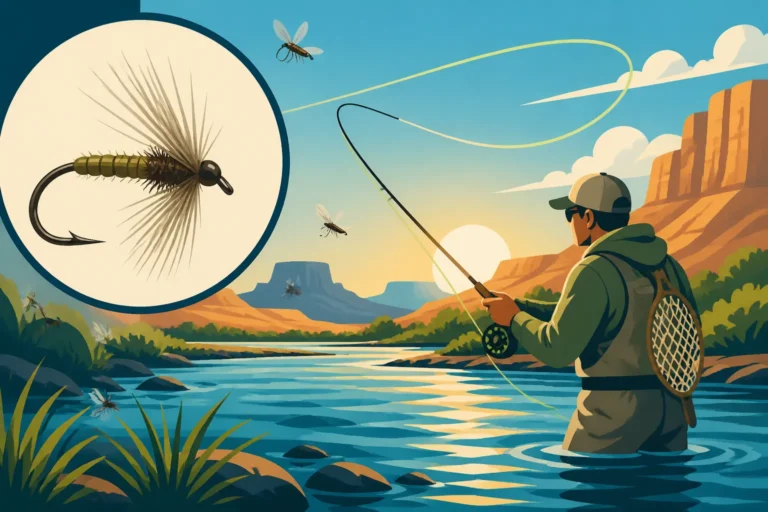
While local fly shops are your best resource for the most current hot patterns, a handful of dry flies consistently produce across New Mexico's waters. For mayfly imitations, having a selection of Parachute Adams, Blue-Winged Olives (BWOs), and Pale Morning Duns (PMDs) in various sizes (from tiny #20s to #14s) is crucial. The Parachute Adams is a fantastic all-around dry fly that imitates many different mayfly species and works well when you're unsure of the specific hatch. For caddisflies, Elk Hair Caddis in tan, olive, and grey in sizes #12 to #18 are absolute necessities. These flies float well and are great for prospecting or when caddis are skittering on the surface.
When summer arrives and aquatic insect activity might slow down, terrestrial patterns become king. Carrying an assortment of foam hoppers (like the Chernobyl Ant or Dave's Hopper), beetle imitations, and ant patterns (both black and cinnamon) in sizes #8 to #16 will serve you well, especially along grassy banks of the Rio Grande or high mountain streams. Don't forget emerger patterns like Sparkle Duns or Comparaduns, which imitate insects struggling to break through the surface film – these can be incredibly effective when fish are "sipping" just below the surface. A well-stocked fly box with these staples, often available in handy assortments on Amazon, will prepare you for most dry fly situations you'll encounter in New Mexico.
Mastering Dry Fly Casting Techniques
Dry fly fishing is as much about presentation as it is about fly pattern selection. A perfect drift often starts with a well-executed cast. Don’t worry, you don’t need to be a tournament caster, but understanding a few key techniques will vastly improve your success rate.
Achieving Accuracy and Soft Landings
When dry fly fishing, accuracy isn't just about hitting the target; it's about hitting the right spot with the right presentation. Trout, especially those feeding on the surface, can be incredibly spooky. A fly that lands with a splash or too close to the fish will often send them darting for cover. To achieve soft landings, focus on a controlled, smooth casting stroke rather than a powerful one. As your leader and fly approach the target, slightly check your forward cast. This technique, sometimes called a "parachute cast" or "reach cast" (where you stop the rod high), allows the leader to unroll gently and the fly to softly settle on the water.
Think about where the fish is positioned and where the current will carry your fly. Aim to land your fly a few feet upstream of the fish, allowing it time to settle and begin a natural drift before reaching the fish's feeding lane. For accuracy, practice casting to specific targets in your yard without a fly, focusing on stopping your rod tip precisely where you want the line to go. This precision is particularly crucial in technical waters like the San Juan River Quality Waters where fish see countless flies. The more accurate and gentle your cast, the less likely you are to alert the fish to your presence and the more willing they'll be to inspect your offering.
The Art of Mending and Drag-Free Drifts
Once your fly lands, the next critical step is achieving a drag-free drift. "Drag" occurs when your fly line or leader is pulled by currents moving at different speeds than the current carrying your fly. This unnatural movement immediately signals to a trout that your fly is not real, and they will almost always refuse it. Mending is the technique used to correct this. It involves subtly lifting and repositioning your fly line on the water upstream or downstream to compensate for varying current speeds.
Imagine your fly drifting down a seam where the main current is faster than the slower current near the bank. If your line is in the faster current, it will pull your fly unnaturally. To correct this, you'd execute an upstream mend: a flick of the wrist that throws a curve of line upstream, giving your fly more time to drift freely. Conversely, a downstream mend might be used to extend your drift through a slower section. Learning to mend effectively is an ongoing process, as every piece of water presents different challenges. It requires constant observation of your fly and line, and anticipating how the currents will affect your drift. Practice on different water types, paying close attention to how your fly behaves. A good, long leader (10-12 feet) also helps significantly in achieving those coveted drag-free drifts.
Setting the Hook with a Dry Fly
The strike, or "take," on a dry fly can be exhilarating. Sometimes it's a gentle sip, barely a dimple on the water's surface, while other times it's an aggressive splash or an explosive jump. The key to successfully setting the hook is resisting the urge to strike too hard or too fast. Many beginners "trout set," pulling the fly straight out of the fish's mouth due to excitement.
When you see a fish take your fly, simply lift your rod tip smoothly and firmly, but not violently, to the side or straight up. This gentle lift allows the fish to fully commit to the fly and helps embed the hook in their mouth. If it's a gentle sip, sometimes waiting a half-second after the fish closes its mouth can increase your hook-up ratio. For more aggressive takes, a quicker, but still controlled, lift is appropriate. Pay close attention to your fly; sometimes a fish will push water at it without actually taking it, or you might see a slight hesitation in its drift. Every subtle movement on or near your fly should be met with a calm, deliberate rod lift. Remember, a smaller hook on a dry fly means you don't need excessive force to set it. Once hooked, keep the rod tip high to maintain tension and absorb any sudden runs, especially if you're fishing for larger trout in the San Juan River Fishing Guide area.
Reading the Water for Dry Fly Success
Becoming proficient at dry fly fishing involves more than just casting; it's about understanding the subtle language of the water and the fish within it. Learning to "read the water" is a skill that develops with experience, but knowing what to look for can accelerate your learning curve.
Identifying Rising Fish and Feeding Patterns
The most obvious sign of dry fly opportunity is a rising fish, but not all rises are created equal. A slow, deliberate "sip" or "dimple" often indicates a trout feeding on small, emerging insects, or duns that have just hatched and are sitting quietly on the surface. These fish are usually focused and can be targeted with small, accurate presentations of patterns like BWOs or PMDs. An aggressive "slash" or "splashy rise," on the other hand, might suggest a trout chasing caddisflies as they skitter across the surface, or perhaps larger terrestrials like grasshoppers. For these, a larger, more active pattern might be more effective.
Sometimes, fish will be "porpoising," where their back briefly breaks the surface as they feed just below the film on emergers. In this scenario, a dry-dropper rig with an emerger suspended beneath a dry fly, or a dry fly with an unclipped shuck, can be deadly. Pay attention to the rhythm of the rises. Are they sporadic, or is there a consistent pattern? A consistent pattern suggests a solid hatch is underway and the fish are actively feeding. Observe the size of the rise, too; a tiny dimple might mean tiny flies and tiny fish, but it could also be a large, selective trout sipping something small. This detailed observation is a crucial step in How to Read Water on the San Juan River and other technical fisheries.
Decoding Current Lines and Seams
Water is rarely uniform. Rivers and even lakes develop distinct current lines and seams where different water speeds meet. These are prime feeding lies for trout. A seam is essentially a visible line on the water where a faster current brushes against a slower current. Insects and other food items get funneled along these seams, creating an aquatic conveyor belt for waiting fish. Look for areas downstream of rocks, logs, or other obstructions where the current slows, creating an "eddy" or a calm pocket. Trout will often sit in these slower zones, expending minimal energy while waiting for food to drift by in the adjacent faster current.
Other key areas include riffles that transition into deeper pools, the tail-outs of pools, and the edges where a river meets an undercut bank. Undercut banks not only provide cover but also often host terrestrial insects that fall into the water. When presenting your dry fly, aim to land it a foot or two upstream of these seams or holding lies, allowing it to drift naturally into the fish's suspected feeding zone. Understanding these micro-currents and how they interact with each other is fundamental to presenting a drag-free fly, which is the cornerstone of successful dry fly fishing.
Understanding When and Where to Present Your Fly
Knowing when and where to present your fly brings together all your water reading skills. The "when" often relates to the rise form and the hatch activity. If fish are consistently rising in a particular area, that's your cue. Don't cast randomly; rather, observe for a few minutes. See if there's a pattern to the rises – is it every 30 seconds, or every few minutes? This timing will help you understand how long you have for a presentation and drift.
The "where" is equally vital. If you see a fish rise, don't cast directly on top of it. Instead, position yourself so you can make a clean, unencumbered cast that will allow your fly to drift naturally into the fish's feeding lane a foot or two upstream of where it rose. Consider your casting angle, the direction of the current, and any obstacles that might create drag or spook the fish. Always try to approach fish from downstream or across the current, keeping a low profile. Sunlight and shadows also play a role; casting from a position where your shadow doesn't fall over the water you're fishing can make a huge difference, especially in the bright New Mexico sun. The goal is always to present your fly as naturally as possible, as if it were a real insect drifting on the current, without alerting the trout to your presence.
Top New Mexico Rivers and Lakes for Dry Fly Fishing
New Mexico boasts an incredible array of waters, each offering distinct dry fly opportunities. While the San Juan River gets much of the fame, there are many other gems waiting to be explored by the dedicated dry fly angler.
The Legendary San Juan River Quality Waters
No discussion of New Mexico fly fishing, particularly dry fly fishing, is complete without mentioning the San Juan River Quality Waters below Navajo Dam. This tailwater fishery is world-renowned for its incredible density of large, selective trout, primarily rainbow and brown trout. While it’s often celebrated for its nymphing, the dry fly fishing here can be truly exceptional, especially during specific hatches. Tiny midges are a year-round staple, and on calm days, you'll see large trout sipping these almost imperceptible insects from the surface. Blue-Winged Olives (BWOs) provide consistent dry fly action in spring and fall, with fish rising greedily to even the smallest #24 imitations.
The challenge on the San Juan lies in its technical nature. The water is often clear and relatively slow, and the fish have seen it all. This demands impeccable drag-free drifts, fine leaders, and perfectly matched, often tiny, dry fly patterns. Anglers often employ long leaders (12+ feet) and 6X or 7X tippet to fool these educated trout. Even if you're primarily nymphing, it's wise to have a few midge and BWO dries ready for opportunistic rises. Check out Fly Selection for New Mexico's San Juan River for more specifics. Access is excellent, with numerous public fishing areas and guides available from outfitters like Duranglers or Land of Enchantment Guides, which can also be a good place to find specialized gear beyond what you'd typically find on Amazon.
High Mountain Lakes and Streams of Northern New Mexico
Beyond the San Juan, New Mexico's northern mountains offer a completely different, yet equally rewarding, dry fly experience. Think of the pristine waters of the Pecos Wilderness, the Latir Wilderness, or the high-elevation lakes in the Carson National Forest. These waters are home to native Rio Grande cutthroat trout, brook trout, and wild browns and rainbows. The fishing here is often less technical than the San Juan, but requires effort, often involving a hike to reach remote locations.
Streams like the Rio Chama, Rio Grande Gorge, or various tributaries within the Gila National Forest provide classic pocket water dry fly opportunities. Here, you'll often be casting larger, more visible patterns like Elk Hair Caddis, Stimulators, or terrestrial imitations (hoppers, ants, beetles) into small pockets, seams, and undercut banks. The fish might not be as large as the San Juan's, but their wild beauty and willingness to rise aggressively make for an incredibly fun and rewarding day. High mountain lakes, such as those found around Taos or near Red River, also offer excellent dry fly opportunities, especially in summer when callibaetis mayflies and terrestrials are abundant. Stealth is key in these smaller waters, as is a good pair of polarized sunglasses to spot fish in the clear water. For more on these areas, explore Best Rivers for Fly Fishing in New Mexico and Best Fishing Spots in the Carson National Forest.
Other Promising Dry Fly Destinations
While the San Juan and the high country get much of the dry fly attention, other New Mexico waters offer fantastic, often overlooked, opportunities. The Cimarron River near Cimarron Canyon State Park is a beautiful freestone stream known for its healthy population of rainbow and brown trout. During summer caddis hatches or when terrestrials are abundant, dry fly fishing can be excellent here. Similar opportunities exist on the Pecos River, especially in its upper reaches where it flows through national forest land.
Even some of New Mexico’s urban ponds, which are regularly stocked with trout, can offer surprising dry fly action, particularly in the cooler months with midge and small BWO imitations. These are perfect spots for beginners to practice their casting and presentation skills close to home. Larger reservoirs can also have periods of dry fly activity, especially early and late in the day when callibaetis or damselflies are emerging along the shallow banks. While not a primary dry fly destination, if you’re already at a lake like Fenton Lake for its special regulations, it's always worth having a few dry flies on hand. Always check New Mexico Trout Fishing Rules before you go, as regulations can vary significantly from one water body to another.
Seasonal Strategies for Dry Fly Fishing in New Mexico
The seasonality of dry fly fishing in New Mexico is heavily influenced by weather, water temperatures, and insect life cycles. Understanding these rhythms allows you to plan your trips for the best possible surface action.
Spring: Emerging Insects and Rising Water
Spring in New Mexico is a season of transition, bringing with it both challenges and incredible dry fly opportunities. As the snow melts in the mountains, river levels begin to rise, and water temperatures slowly climb. Early spring can see strong hatches of Blue-Winged Olives (BWOs) on many rivers, particularly the San Juan, the Rio Grande, and the Cimarron. These small mayflies often hatch on cloudy or rainy days, bringing trout to the surface for delicate sips. Using small BWO imitations (like Parachute BWOs or Sprout BWOs) in sizes #18-22 will be your best bet.
As spring progresses into late April and May, water levels might peak due to runoff, making dry fly fishing difficult on some freestone rivers due to high, turbid water. However, tailwaters like the San Juan remain fishable, and as temperatures warm, caddis hatches, especially the "Mother's Day Caddis," can be prolific. When these emerge, trout often feed aggressively, slashing at the surface. Larger Elk Hair Caddis (#12-16) or Goddard Caddis can elicit exciting strikes. Many of New Mexico's high mountain lakes are still thawing out in early spring, but by late spring, some lower-elevation mountain lakes might start seeing callibaetis hatches. This is a crucial time to also consider a dry-dropper rig, with a small nymph or emerger trailing beneath your dry fly, as many fish will be keying in on insects in the process of emerging. For detailed information on optimal timing, consult the Best Time of Year to Fish in New Mexico.
Summer: Terrestrials and Cooler Mornings
Summer dry fly fishing in New Mexico shifts gears, moving away from aquatic insect-heavy hatches towards terrestrials and opportunistic feeding. As river flows recede and water temperatures rise in many lower-elevation rivers, trout become more active in the cooler parts of the day – early mornings and late evenings. The intense midday sun often sends fish to deeper, cooler water. This is when insects like grasshoppers, ants, and beetles become incredibly important. Look for grassy banks where these insects are likely to fall into the water. Casting hopper patterns, such as a Parachute Hopper or Dave’s Hopper, along these edges can lead to explosive strikes from larger trout. Ant and beetle patterns are also deadly, especially on smaller, intimate streams where trout are less selective.
High mountain lakes and streams truly shine in the summer, offering consistent dry fly action throughout the day due to cooler water temperatures. Callibaetis mayflies are a common hatch on many high-country lakes, and imitations like Callibaetis Spinners or Parachute Adams work well. Dragonflies and damselflies are also prevalent, and while difficult to imitate, their presence can trigger opportunistic feeding. Remember to carry plenty of sunscreen, water, and perhaps a wide-brimmed hat, as the summer sun at New Mexico’s altitude can be intense. For fishing in these higher elevations, consider tips from High Altitude Fishing Tips for New Mexico.
Fall: Baetis, Mahoganies, and Golden Days
Fall is often considered the most beautiful and productive season for dry fly fishing in New Mexico. The oppressive summer heat fades, water temperatures cool, and trout become more active and aggressive as they prepare for winter. This season is characterized by consistent and often dense hatches of Blue-Winged Olives (BWOs) and Mahogany Duns. These mayflies provide excellent dry fly opportunities on both rivers and larger streams, with fish rising steadily throughout the day, especially on cloudy or overcast afternoons. Small BWO patterns (sizes #18-24) and Mahogany Dun imitations (#14-18) are essential.
Beyond these prolific hatches, fall also sees the return of various caddisflies and occasional midges. Terrestrial patterns can still be effective, especially during warmer fall days when grasshoppers are still active. The crisp air, vibrant fall foliage, and willing trout make autumn an incredibly rewarding time for dry fly anglers. It's also a time when larger brown trout become more aggressive, making them more susceptible to larger dry flies like foam ants or even small streamer patterns stripped aggressively in conjunction with a dry. Fishing during these "golden days" of fall is an experience that keeps anglers coming back to New Mexico year after year.
Here's a quick overview of some common hatches and the best times to find them:
| Insect Type | Common Name | Key Seasons | Typical Sizes | Preferred Conditions |
|---|---|---|---|---|
| Mayflies | Blue-Winged Olive (BWO) | Spring, Fall, mild Winter | #18 – #24 | Overcast, cool, rainy days |
| Pale Morning Dun (PMD) | Late Spring, Early Summer | #14 – #18 | Sunny, warm days | |
| Callibaetis | Summer (High Country Lakes) | #14 – #18 | Calm, sunny afternoons | |
| Mahogany Dun | Fall | #14 – #18 | Clear, cool days | |
| Caddisflies | Various Caddis spp. | Spring, Summer, Fall | #12 – #18 | Warm evenings, sunny days |
| Terrestrials | Grasshoppers | Mid-Summer, Early Fall | #8 – #14 | Hot, windy days |
| Ants/Beetles | Summer, Early Fall | #14 – #20 | Warm, calm days | |
| Midges | Various Midge spp. | Year-round (especially Winter) | #20 – #26 | Calm, clear days |
Disclaimer
Fishing conditions and regulations in New Mexico can change rapidly due to weather, water levels, and conservation efforts. Always consult the most current New Mexico Department of Game and Fish regulations before heading out. The information provided in this guide is for general informational purposes only and does not constitute official legal advice.