Best Ice Auger Blade Size for New Mexico Ice
Trying to decide on the best ice auger blade size for your New Mexico ice fishing adventures can feel like a real head-scratcher. You don't want to show up to Eagle Nest Lake with a dinky auger that can't handle the thick ice, or conversely, lug a giant, heavy one around when a smaller blade would do the trick. This guide is here to break down everything you need to know about auger blade sizes so you can make an informed choice and spend more time catching fish and less time wrestling with your equipment.
Navigating New Mexico's Diverse Ice Conditions
New Mexico's ice fishing scene is as varied as its landscape, and that means the ice itself can be incredibly diverse. What you find in a high-altitude mountain lake in the north can be vastly different from a lower-elevation reservoir, even within the same season. Understanding these conditions is crucial before you even think about what size blade to screw onto your auger.
Ice Thickness Variability Across the State
When we talk about ice fishing in New Mexico, we're not just talking about one type of ice. Up north, lakes like Eagle Nest, Heron, and Fenton Lake are known for developing some seriously thick, solid ice, especially later in the season. We're talking many inches, sometimes a foot or more, of hard, clear ice that can be a real workout to drill through. The cold, consistent temperatures in these elevated areas encourage consistent ice growth. Anglers heading to these spots often brace themselves for deeper drilling, and their equipment needs to match that reality.
However, if you're fishing a slightly lower elevation spot, or maybe hitting the ice earlier in the season, the conditions can be much more variable. Some reservoirs might have patchy ice, or thinner layers that freeze and thaw with less consistent cold snaps. Even on the same lake, areas with currents or springs can have notoriously thinner ice. You might encounter layered ice, where snow has melted and refrozen, creating a softer, slushier layer between harder sheets. It's never a one-size-fits-all scenario, and the safety aspect of How Thick Does Ice Need to Be to Fish Safely? is always paramount.
Factors Affecting Ice Hardness and Cutting Performance
Beyond just thickness, the actual hardness and composition of the ice play a huge role in how your auger performs. Imagine trying to cut through a block of pure, clear ice versus a block of compacted snow and ice – it's a completely different experience. Clear, black ice is generally harder and offers less resistance for a sharp blade. It cuts cleanly. But if you've got several inches of slushy, refrozen snow-ice, your auger will have to work a lot harder. This kind of ice can gum up your blades, make them feel dull even if they're not, and require more effort from you or your powerhead.
Temperature fluctuations are a big culprit here. A lake that experiences warm days followed by cold nights can develop these layered conditions. Heavy snowfalls, especially early in the season, can also insulate the ice, preventing it from getting as thick or hard as it might otherwise. You'll often find that the first ice of the season, after a solid cold snap, is wonderfully hard and easy to cut. But as winter progresses and weather patterns change, you might encounter ice that's a mix of hard and soft, which can be frustrating if you're not prepared with the right blade.
Common Auger Blade Sizes and Their Optimal Use
Once you understand the type of ice you're likely to encounter, you can start thinking about the actual auger blade size. Each size has its sweet spot, offering different advantages depending on your target fish and fishing style.
The Versatile 6-Inch Blade
The 6-inch blade is often the go-to for many ice anglers who prioritize speed, portability, and minimal effort. If you're chasing panfish like bluegill or crappie, or even smaller stocked trout in lakes like Storrie Lake, this size is perfect. A 6-inch hole is plenty big for these species, and the smaller diameter means your auger cuts through the ice with significantly less resistance. This translates to faster drilling, especially if you're using a hand auger, and it puts less strain on battery-powered augers.
Think about it: a 6-inch hole removes a lot less ice than an 8-inch or 10-inch hole. For an angler who likes to "run and gun," drilling many holes to find active fish, a 6-inch blade is a game-changer. It's also ideal for kids or those who might struggle with the physical demands of a larger auger. While a 6-inch hole might feel snug for a really big trout or a trophy walleye, it's more than adequate for the majority of fish you'll encounter in many New Mexico waters. You can find replacement blades or even entire augers with 6-inch options from popular retailers like Bass Pro Shops.
The All-Around 8-Inch Blade: A New Mexico Favorite
If there's a "standard" or "most recommended" auger blade size for general ice fishing in New Mexico, it's often the 8-inch. This size strikes a fantastic balance between effort and utility. An 8-inch hole is large enough to comfortably land most trout, like the feisty rainbows at Bluewater Lake or browns at Eagle Nest, and it's certainly big enough for average-sized walleye or smaller tiger muskie. It also provides enough room to operate a small underwater camera or easily retrieve tip-ups without feeling cramped.
For many anglers, the extra effort to drill an 8-inch hole compared to a 6-inch is negligible, especially with a good power auger, but the added versatility is huge. You won't feel under-gunned if a larger fish decides to bite, and it still allows for relatively quick drilling when you're moving around. This size is probably the most popular choice for anglers who only want to own one auger, as it handles a wide range of fishing situations and target species across the state. Many anglers also appreciate the ability to easily swap between an 8-inch and smaller or larger blade if their fishing style or target changes, especially with newer auger models.
The Big Fish, Big Hole 10-Inch Blade
When you're serious about targeting larger species or you just prefer more maneuvering room, the 10-inch blade steps up to the plate. This is the choice for trophy hunters. If you're after those monstrous tiger muskies at Bluewater Lake or a truly enormous walleye, that extra couple of inches in diameter makes a world of difference when you're trying to coax a big fish through the ice. It provides ample space for large nets, wide-bodied fish, and even for dropping larger baits or transducers for bigger sonar units.
However, there's a significant trade-off. Drilling a 10-inch hole, especially through thick New Mexico ice, requires substantially more effort. It's often slow and arduous with a hand auger, and even power augers will drain batteries faster and work harder. This size is generally not recommended for anglers who plan to drill many holes or who are primarily targeting smaller fish. It's a specialist's tool, chosen when the potential reward of a giant catch outweighs the increased drilling effort. Before investing in a 10-inch blade, consider your primary fishing goals and whether the larger hole truly justifies the extra work. For an angler who knows they'll be targeting the Tiger Muskie Size at Bluewater Lake, this might be the perfect fit.
Choosing the Right Blade Size for Your New Mexico Fishing Style
Your personal fishing habits and the specific fish you're hoping to catch will ultimately dictate the best auger blade size for you. There's no single "right" answer, but rather a "right for you" answer.
Target Species and Hole Size
Let's get real about what you're fishing for. If your absolute favorite thing is catching a mess of panfish at one of New Mexico's smaller ponds, or filling your bucket with stocked rainbow trout, a 6-inch or 7-inch blade is fantastic. You'll make quick work of drilling holes, which means more time with a line in the water. Plus, a smaller hole often means less chance of a panfish getting off the hook right at the surface as you try to pull it through.
But what if you're dreaming of a massive walleye from Conchas Lake or an elusive northern pike (if you happen to find one!)? Or maybe you're really aiming for a big trout from a quality water like the San Juan River's accessible ice fishing spots? Then an 8-inch or even a 10-inch blade is going to give you the confidence and the physical space you need to land that fish of a lifetime. Imagine hooking a big one and having it get stuck halfway up because your hole is too small – that's a real frustration no angler wants to experience. An 8-inch hole is often the sweet spot for handling most game fish in New Mexico, allowing you to easily bring up a nice brown trout or a chunky largemouth bass.
| Blade Size | Ideal For | Target Species | Effort to Drill | Best Use Case |
|---|---|---|---|---|
| 6-Inch | Small fish, many holes, minimal effort | Panfish (Crappie, Bluegill), Stocked Trout, Perch | Very Low (Hand Augers) | Run-and-gun, kids, light tackle, quick scouting |
| 7-Inch | Slightly larger than 6-inch, still fast | Medium Stocked Trout, Smaller Walleye, Perch, Crappie | Low | Good compromise, popular for faster drilling |
| 8-Inch | All-around versatility, balanced effort | Most Trout (Rainbow, Brown), Walleye, Bass, Smaller Muskie | Medium | General purpose, most common choice for varied fishing |
| 10-Inch | Large fish, ample space, less holes | Trophy Walleye, Tiger Muskie, Large Lake Trout | High (Power Augers) | Targeting trophy fish, using large electronics, tip-ups |
Effort, Portability, and Number of Holes
This is where your physical stamina and fishing strategy really come into play. Are you the kind of angler who likes to set up a comfortable Best Ice Fishing Shelter for New Mexico and fish a few holes all day? Or do you prefer to actively move around, drilling a dozen or more holes until you locate a hot bite?
If you're covering a lot of ice and drilling many holes, especially with a hand auger, a 6-inch or 7-inch blade is going to save your arms and back a lot of pain. The lighter the load and the less ice you have to remove, the more holes you can drill before fatigue sets in. This is particularly true if you're hiking into a remote spot or fishing a sprawling lake like Navajo Lake. An electric auger with a smaller blade will also last much longer on a single battery charge compared to a larger blade, which is a crucial consideration if you're fishing far from a charging source.
However, if you're more about quality over quantity, perhaps just drilling a few strategically placed holes near a known structure, then the increased effort of an 8-inch or even 10-inch blade might be worth it for the larger access hole. Consider the total weight of your gear too. A larger auger blade often means a heavier auger overall. For deep snow or long treks, every pound counts, especially when you're carrying a Best Fishing Backpack for Hiking to High Lakes.
Future-Proofing Your Auger Choice
It's a good idea to think about your long-term ice fishing goals. Maybe right now you're happy catching panfish, but what if next season you decide you want to try your luck with the Best Lakes for Trophy Walleye in New Mexico or chase the notorious tiger muskies? Upgrading your blade size later might be an option, as some power augers allow for interchangeable blades. However, if you buy a hand auger with a fixed blade, you might be stuck.
Many experienced New Mexico anglers recommend starting with an 8-inch blade if you're unsure, as it offers the most versatility. It's a fantastic middle-ground that will serve you well for most of the state's popular ice fishing destinations and target species. If you later find yourself consistently wanting to drill smaller, faster holes for panfish, you can always pick up a smaller, lighter hand auger for those specific trips. Conversely, if you get hooked on big game and an 8-inch hole just isn't cutting it, you can invest in a dedicated 10-inch power auger. Think of it as investing in an all-purpose tool versus a specialized one – the 8-inch is usually the best all-purpose option.
Maintenance and Blade Types for Optimal Performance
Regardless of the size you choose, maintaining your auger blades is paramount. Even the perfect blade size is useless if it's dull or damaged.
Keeping Your Blades Sharp
This can't be stressed enough: sharp blades make all the difference. A dull blade, regardless of its size, will turn drilling into a miserable, exhausting chore. It will chew and scrape at the ice instead of cutting smoothly, often getting stuck and requiring immense effort. The difference between fresh, sharp blades and dull ones is literally night and day, especially when you're dealing with thick New Mexico ice. You'll thank yourself for having sharp blades when you're out there in the biting wind at Eagle Nest Lake.
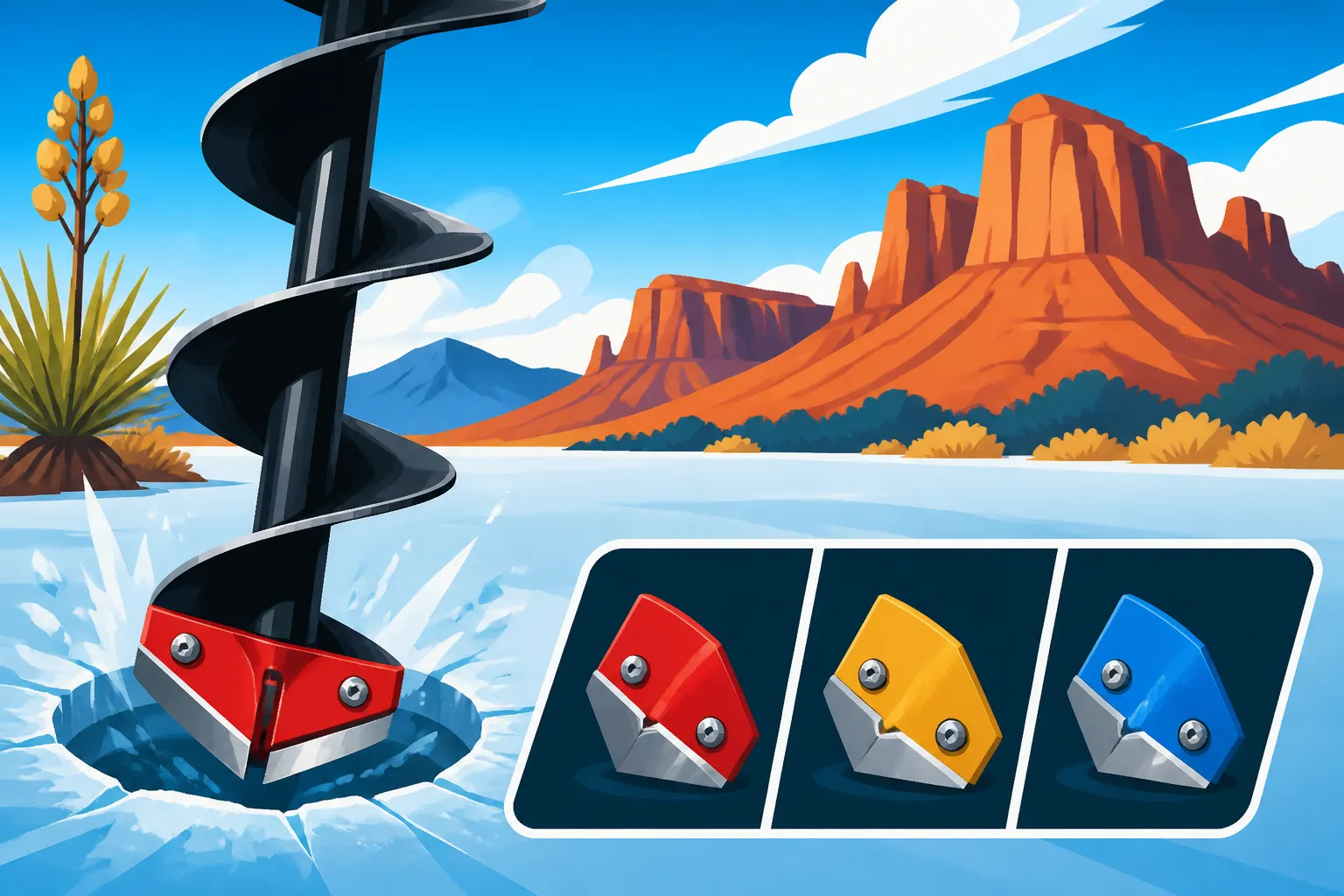
It's a good habit to inspect your blades before and after each trip. Look for nicks, dents, or rust. Many ice augers have replaceable blade sets, and it's always a good idea to have a spare set on hand, especially for multi-day trips. You can find replacement blades online at places like Amazon or at your local Bass Pro Shops. Some specialized shops also offer sharpening services, but for most standard blades, replacing them is often the most cost-effective and efficient solution for ensuring a pristine cut. Always store your blades with blade covers on to protect them and yourself!
Straight vs. Curved Blades and Material
While blade size is the primary focus, it's also worth noting that auger blades come in different designs and materials, which can subtly affect their performance.
- Straight Blades: Often found on older or more basic auger designs, straight blades typically sit at a slight angle to the ice. They tend to "shave" the ice. They can be very effective when sharp but might require a bit more downward pressure, especially on hard ice.
- Curved/Chipper Blades: Many modern augers, particularly power augers, feature curved or "chipper" blades. These are designed to dig into the ice more aggressively and efficiently, often pulling themselves down and requiring less downward force from the angler. They excel at quickly clearing ice.
- Material: Most auger blades are made from hardened steel, designed for durability and sharpness. Some ultra-light augers might feature composite materials, but for general New Mexico conditions, steel blades are the standard for their cutting power and longevity.
Ultimately, the type of blade often comes with the auger model you choose. Focus on keeping those blades razor-sharp, and you'll find that whichever design you have will perform much better. For more information on what to wear during a cold day on the ice, check out What to Wear Ice Fishing in New Mexico.
Disclaimer
This article is for general informational purposes only and does not constitute professional advice. Laws, prices and regulations vary by location and change over time. Consult a qualified professional for guidance on your specific situation.