Best Crankbait Colors for Muddy Reservoirs
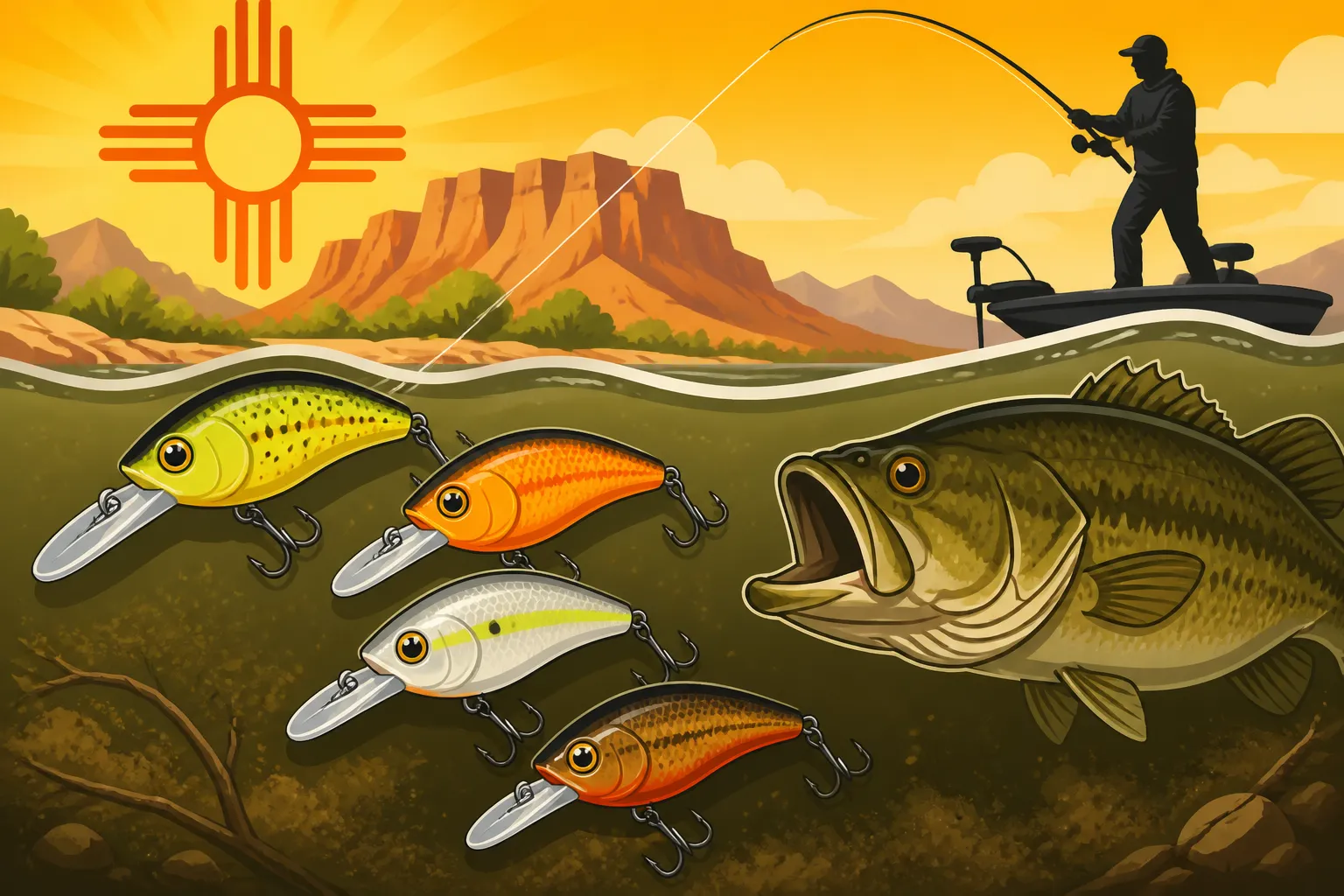
There's nothing quite as frustrating as showing up at your favorite New Mexico fishing spot, ready for a productive day, only to find the water churned up and muddy from recent rains or heavy winds. It feels like the fish have suddenly vanished, and every lure you throw disappears into the opaque murk. But don't despair! This guide is here to unravel the mystery of fishing muddy reservoirs and help you select the best crankbait colors to make those bass and walleye bite, even when visibility is zero.
Understanding Muddy Water and Its Impact on Crankbait Selection
Fishing in muddy water isn't just a minor inconvenience; it fundamentally changes how fish perceive their environment and, crucially, how they locate their next meal. What might work brilliantly in clear, shimmering waters will often fall flat when visibility drops to mere inches. Understanding this shift is the first step to choosing the right crankbait.
Why Muddy Water Presents a Challenge
When the water turns muddy, it means there are a lot of suspended particles – silt, clay, organic debris – that block light and reduce visibility. For fish, especially those that are sight feeders like bass and walleye, this is like trying to hunt in a dense fog. They can't rely on seeing a shimmering baitfish from a distance or picking out the subtle movements of an insect. Their primary sense of hunting is severely impaired, and they become far less effective at spotting your lure.
This lack of visibility forces fish to rely on their other senses much more heavily. Their lateral line, which detects vibrations and pressure changes in the water, becomes incredibly important. They're also using their sense of smell and, to some extent, sound. A crankbait that relies solely on its visual appeal in clear water won't cut it here; you need something that actively helps fish find it through other means, and that starts with the visual cues that can penetrate the murk, however limited.
How Light Penetration Affects Color Visibility
It's a common misconception that in muddy water, no color really matters because nothing can be seen. This isn't entirely true. While light penetration is severely reduced, certain colors and characteristics perform better than others because of how light waves interact with suspended particles. Think about it like a flashlight beam in a dusty room: some parts of the beam scatter, but others still push through.
Different colors have different wavelengths, and some wavelengths travel further and maintain their integrity better in low-light, turbid conditions. For instance, colors with longer wavelengths, like reds and oranges, can sometimes be surprisingly visible at certain shallow depths in stained water, but they can quickly fade to gray or black once light is truly absent. Shorter wavelength colors, like blues and purples, disappear almost immediately. What we're often looking for in muddy water isn't necessarily a "realistic" color, but rather a color that provides maximum contrast and brightness, or a distinct silhouette, to differentiate itself from the surrounding murk. This means colors that truly pop or colors that create a stark outline against the dim background.
Top Crankbait Colors for New Mexico's Muddy Reservoirs
When you're facing those turbid conditions on lakes like Elephant Butte Lake Fishing Guide or after a heavy rain along the Rio Grande, knowing which crankbait colors to reach for can be a game-changer. Forget realism and think contrast, vibration, and distinct presence.
Chartreuse and Bright Green: The Unsung Heroes
For many New Mexico anglers, chartreuse and bright green crankbaits are the first choice when the water turns murky, and for good reason. These colors have an almost uncanny ability to stand out in stained or muddy conditions. They don't try to blend in; instead, they scream, "Here I am!" to any fish within range. The vibrant, almost fluorescent quality of chartreuse in particular helps it reflect what little light is available, creating a visible beacon in the gloom.
Imagine a bass hugging a submerged stump on Conchas Lake Fishing Guide after a heavy spring runoff. Its visibility might be limited to a few inches. A natural-colored crankbait would likely pass by unnoticed. But a bright chartreuse lure, churning through the water, creates a highly contrasting glow that catches the fish's eye. It's not about looking like a specific baitfish; it's about being seen. These colors are fantastic for various crankbait styles, from lipless crankbaits that you can rip through grass to square bills designed to deflect off cover. You'll find that many successful patterns for Walleye Fishing in New Mexico in cloudy conditions often incorporate a significant amount of chartreuse or bright green.
Opaque and Bold Colors: Black, Blue, and Firetiger
When light penetration is truly minimal, and bright colors just turn into a hazy blob, the concept of silhouette becomes paramount. This is where opaque and bold colors like black, dark blue, or the distinctive Firetiger pattern truly shine. Instead of reflecting light, these colors absorb it, creating a strong, dark profile that fish can detect even in the dimmest conditions. It's like seeing a shadow puppet – you don't see the details, but you recognize the shape.
A black or dark blue crankbait provides maximum contrast against the lighter, muddy water. This stark silhouette makes the lure easier for fish to pick up with their eyes and, more importantly, with their lateral line as it displaces water. Think of a dark-colored crawfish scurrying along a muddy bottom; fish don't see it in detail, but they sense its movement and its distinct, dark shape. The Firetiger pattern, with its combination of vibrant green, yellow, orange, and black stripes, takes this a step further. The multiple high-contrast bands create a "flash" effect as the lure wobbles, and the black stripes enhance the silhouette. This pattern is exceptionally versatile and is a staple in many New Mexico anglers' boxes for Largemouth Bass Fishing in New Mexico and Smallmouth Bass Fishing in New Mexico in a variety of stained water scenarios.
Red and Orange: Tapping into Instincts
While chartreuse provides brightness and dark colors offer contrast, red and orange tap into something a bit different: primal instincts. Many anglers believe that red and orange hues simulate injured baitfish, crawfish, or even blood, triggering a predatory response in fish. In certain muddy conditions, particularly those that are more stained than truly opaque, these colors can maintain surprising visibility, especially in shallower water.
Consider a crankbait with a splash of red or orange around the gill plates or belly. When it's working through murky water, that flash of color can mimic a struggling baitfish, making it an irresistible target. This is especially true when targeting bass that feed heavily on crawfish, as many do in New Mexico's reservoirs. A crankbait with a red or orange belly, or even an entire red or orange body, can be incredibly effective when fish are keyed into bottom-dwelling prey. Experimenting with patterns that feature these colors, perhaps with a touch of brown or black to imitate a crawfish, can yield fantastic results when other colors are failing.
Here's a quick reference for choosing crankbait colors in varying turbid conditions:
| Water Clarity Condition | Primary Color Strategy | Suggested Crankbait Colors | Key Benefit | Examples |
|---|---|---|---|---|
| Lightly Stained/Off-Color | Maximize brightness and natural contrast | Chartreuse, Bright Green, Orange, White/Chartreuse | Pops visibly, simulates common prey | Elephant Butte (post-wind), Navajo Lake |
| Muddy/Turbid (Low Vis) | Maximize contrast and silhouette | Black, Dark Blue, Firetiger, Red/Black | Creates distinct shape, stands out in gloom | Conchas Lake (runoff), Rio Grande tributaries |
| Very Muddy/Chocolate Milk | Aggressive contrast, strong vibration | Black/Blue, Solid Black, Firetiger (heavy black) | Highest contrast, relies on silhouette | Post-storm inflows, extreme runoff |
Beyond Color: Other Factors for Success in Muddy Water
While color is a crucial piece of the puzzle, it's certainly not the only factor that will lead to success in muddy New Mexico waters. Fish rely on a suite of senses, and appealing to more than just their limited vision can make all the difference. Combining the right color with the right action, retrieve, and presentation is the secret sauce.
Vibration and Sound: The Non-Visual Cues
Remember how fish use their lateral line in low visibility? This is where a crankbait's vibration and sound become absolutely critical. In chocolate milk conditions, a fish might not see your lure until it's practically bumping its nose, but it can feel its presence from a much greater distance. Crankbaits are naturally designed to displace water and create vibrations, but some are far better at it than others.
Look for crankbaits that have a wide wobble or an aggressive, erratic action. These lures push more water, sending out stronger pressure waves that fish can detect with their lateral line. Even better are crankbaits with internal rattle chambers. These rattles produce sound frequencies that can travel through the water, acting like an audible beacon in the murk. The clicking and clacking of the internal BBs or tungsten balls are distinct and can draw curious fish in. Often, the bigger the rattle, the better in truly muddy water. When you're fishing areas like the lower Pecos River after a rain, where visibility can be tough, a loud, wide-wobbling crankbait might be the only thing that gets noticed.
Retrieval Speed and Depth Control
Another common mistake in muddy water is fishing too fast. When fish can't see well, they need more time to locate, track, and commit to your lure. A lightning-fast retrieve that might trigger reaction strikes in clear water will often zip past unseen in murky conditions. Slowing down your retrieve allows fish more opportunity to home in on the vibrations and sound. It gives them those extra precious seconds to react.
Furthermore, depth control is vital. In muddy water, fish often orient themselves shallow, especially bass, seeking warmer water, more oxygen, and baitfish that are also hugging cover or the surface. Crankbaits that run shallower and can be "waked" just under the surface or those that are specifically designed to deflect off shallow cover like stumps, rocks, or laydowns (think square bills) become incredibly effective. If you can make your crankbait bump into submerged structure, that added deflection and change in direction can act as a crucial trigger, drawing a strike from an otherwise hesitant fish. Remember to check local regulations, as New Mexico Fishing Regulations Overview will always be your best resource.
Water Clarity Variations and Adaptability
It's important to remember that "muddy" isn't a single, uniform state. Water clarity can range from slightly stained to a complete chocolate milk, and it can vary greatly even within the same body of water. A coved arm of Elephant Butte Lake Fishing Guide might be completely churned up while the main lake channel is merely stained. This means adaptability is key. Don't commit to a single color or type of crankbait for the whole day.
Always carry a variety of crankbaits in the colors discussed – bright chartreuse, opaque black/blue, and bold Firetiger/reds. Start by assessing the conditions: if it's just lightly stained, you might lean towards brighter, more visible options. If it's truly opaque, go for maximum contrast and vibration. Don't be afraid to switch lures every 15-20 minutes if you're not getting bites. Pay attention to changes in the water, too; as the day progresses or conditions stabilize, the clarity might improve slightly, allowing you to subtly shift your color choices. Even small differences can make a big impact on your success.
Practical Tips for New Mexico Anglers
Taking these principles from theory to practice is where the real fun begins. Equipping your tackle box for those less-than-ideal muddy days and knowing how to approach the water can turn a potentially frustrating outing into a memorable one on New Mexico's diverse fisheries.
Stocking Your Tackle Box for Muddy Days
Preparing your tackle box specifically for murky water conditions is a smart move for any New Mexico angler. You don't want to be caught off guard when a monsoon storm turns your favorite lake into a coffee-colored expanse. Make sure you have a good selection of crankbaits that hit all the key notes for muddy water.
Consider stocking up on lipless crankbaits in chartreuse, firetiger, and even solid black. These are great for covering water and their loud rattles are often irresistible. For shallower areas and targeting cover, square-bill crankbaits in chartreuse, black/blue, and crawfish patterns (featuring reds and oranges) are essential. Brands like Strike King, Rapala, and Berkley offer excellent options in these categories. You can find a huge variety of these lures at places like Bass Pro Shops or browse through countless choices online at Amazon. Having a good range of sizes, too, is beneficial – sometimes a slightly larger profile in the murk can make a difference. Check out our guide on Best Lures for a New Mexico Tackle Box for more comprehensive ideas.
Locating Fish in Murky Conditions
Finding fish in muddy water can feel like searching for a needle in a haystack, but there are certain patterns and types of cover that fish will gravitate towards. They're often looking for stability, cover, and ambush points where their impaired vision is less of a disadvantage.
Focus your efforts on areas with distinct changes in structure or depth. Points, humps, channel swings, and the edges of submerged vegetation are prime locations. Fish will often get tighter to cover in muddy water, seeking refuge and also using the cover as a funnel for any passing baitfish. Look for any clearer water pockets, such as those near inflows from smaller, cleaner streams, or areas where the wind might have pushed the muddier water away. If you have electronics, use them to locate submerged structure and bait balls, as fish will still be holding near their food source. Understanding New Mexico Fishing Season Calendar can help you predict when certain fish species might be more active or located in specific areas, even in muddy conditions.
Combining Techniques for Maximum Effect
Ultimately, becoming proficient in muddy water fishing means being willing to experiment and combine different techniques. It's not just about the crankbait; it's about the whole presentation. For instance, sometimes a slower retrieve with a loud, bright crankbait is the ticket, while other times, a medium retrieve with a subtle, dark crankbait that's constantly bumping off structure will get the bite.
Don't be afraid to complement your crankbait fishing with other presentations. If the crankbaits aren't producing, try slowing down even further with a jig or a Texas-rigged soft plastic in matching dark or high-contrast colors. The key is to keep presenting something that offers strong vibrations, a clear silhouette, or a unique "feel" that fish can detect. Pay attention to how the fish are reacting, if at all, and be prepared to change up your crankbaits often until you crack the code. Remember that understanding How Does Monsoon Season Affect New Mexico Fishing? can greatly assist in adapting your strategies to post-rain conditions.
Disclaimer
This article is for general informational purposes only and does not constitute professional advice. Laws, prices and regulations vary by location and change over time. Consult a qualified professional for guidance on your specific situation.