Midge Fishing Tips for the San Juan River
There's nothing quite as frustrating as standing knee-deep in the glorious San Juan River, watching trout sip bugs off the surface or flash beneath the water, yet your expertly tied fly patterns are getting zero attention. It's a common challenge, especially during those colder months when hatches seem sparse, and the fish get incredibly picky. This guide is all about equipping you with the knowledge and confidence to unlock the magic of midge fishing on the San Juan, transforming those frustrating days into memorable ones where you're consistently hooking into those beautiful, robust trout.
Why Midges Reign Supreme on the San Juan River
The San Juan River, particularly below Navajo Dam, is a unique fishery. Its consistent water flows and temperatures create a stable ecosystem where certain insect life thrives year-round, and none more so than the humble midge. Understanding why these tiny insects are so crucial to the San Juan trout's diet is the first step to becoming a successful midge angler.
The Year-Round Abundance of Midges
Unlike many freestone rivers that experience dramatic seasonal swings in insect populations, the San Juan River, being a tailwater, benefits from a regulated, cold-water release from Navajo Dam. This stability means that midge larvae, pupae, and adults are present in the water column nearly every single day of the year. Trout in the San Juan River Quality Waters Section become highly accustomed to feeding on these small, protein-rich morsels.
Think about it: from the moment a midge egg hatches into a larva clinging to the riverbed, through its vulnerable pupal stage ascending to the surface, and finally as a tiny adult struggling on the surface film, it represents a continuous food source. Fish don't have to wait for a major mayfly or caddisfly hatch; midges are always on the menu. This makes them especially important during the colder periods of fall, winter, and early spring when larger insect hatches are scarce. During these times, the trout's metabolism slows down, and they become less inclined to chase larger, more energetic prey. A slow, subtle midge presentation is often exactly what they're looking for, requiring minimal energy expenditure for a consistent meal. Their small size means trout might need to eat dozens, if not hundreds, of them in a single day, making them a primary dietary staple.
Reading the San Juan's Water for Midge Activity
Learning to "read the water" for midge activity is a subtle art on the San Juan, but it's incredibly rewarding. Unlike the splashy rises to a large dry fly, midge takes are often almost imperceptible. When you're looking for midge activity, you're not usually looking for dramatic boils or leaps. Instead, keep an eye out for tell-tale signs of trout feeding just below or on the surface.
Subtle head-and-tail rises, where a fish gently breaks the surface with its snout, followed by the tip of its tail, are classic indicators of trout sipping emerging pupae or adult midges. Sometimes, you'll see just a faint dimple on the water, almost like a raindrop, as a trout quietly takes a midge from the surface film. If you're seeing a shimmering cloud of tiny insects hovering just above the water on a calm day, that's your sign that adult midges are out and trout might be keying in on them. Below the surface, fish might be flashing or rolling, indicating they are intercepting ascending pupae. The San Juan's legendary clarity can be a double-edged sword here; while it allows you to see these subtle movements, it also means the fish can see you and your clumsy casts. Pay close attention to slower seams, eddies, and the quiet pockets behind larger rocks or structure. These are often prime areas where midges accumulate, and trout can feed without expending too much energy fighting the main current. A good pair of polarized sunglasses, available from retailers like Amazon, will dramatically improve your ability to spot these subtle feeding cues.
Essential Midge Patterns and Rigging for Success
Having the right midge patterns and understanding how to rig them effectively are paramount to success on the San Juan River. These tiny flies demand precision in both selection and presentation.
Top Midge Patterns for the San Juan
When it comes to midge patterns for the San Juan, simplicity and a small profile are key. You don't need a huge, complicated fly box filled with exotic patterns. A few reliable designs in various colors and sizes will cover most situations.
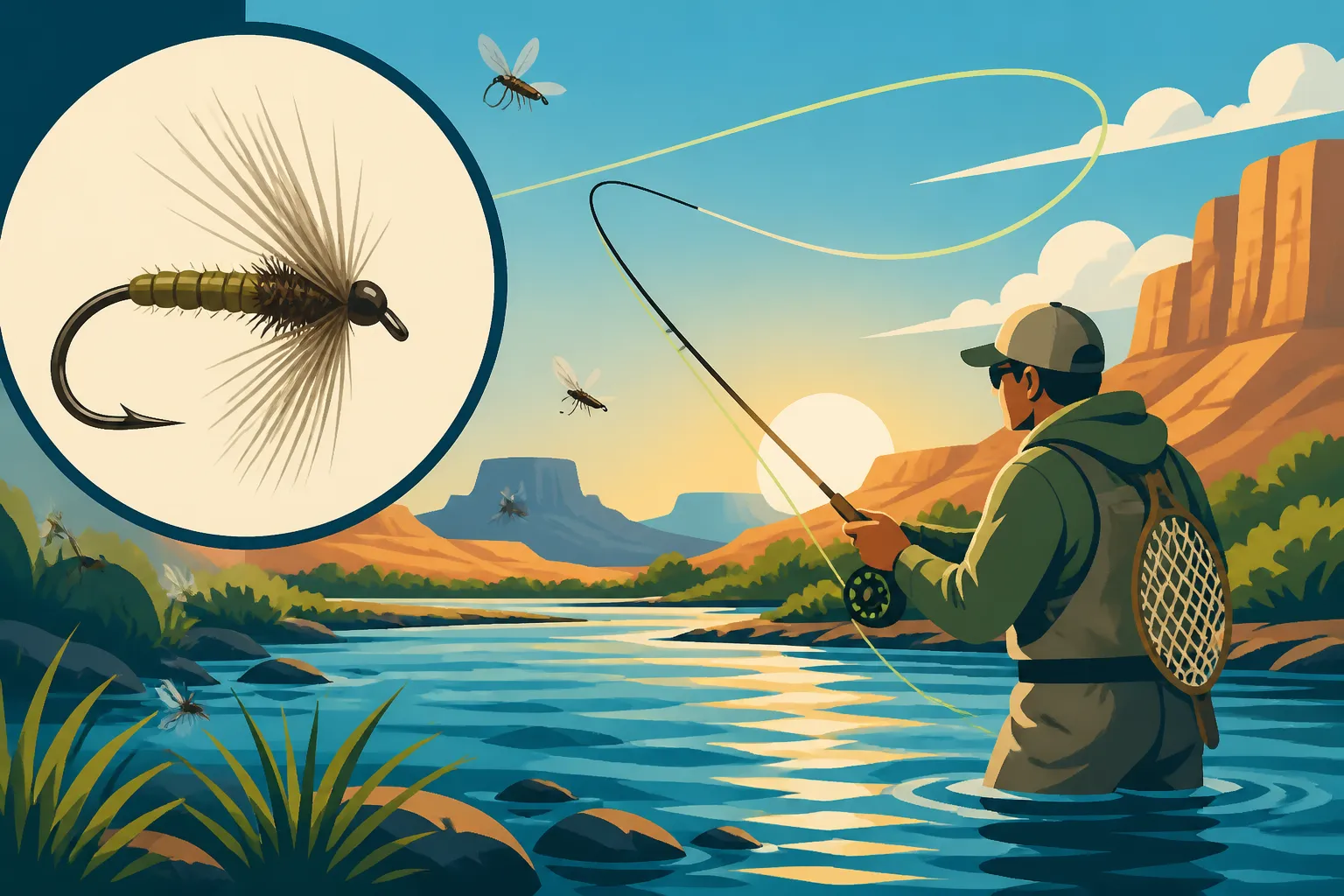
- Zebra Midge: This is arguably the workhorse of San Juan midge fishing. It's an imitation of the midge pupa and larva. Typically tied with a bead head (tungsten for getting down quickly), a thread body, and fine wire ribbing. The most common colors are black, red, olive, and purple. Black and red are usually excellent choices, but carrying a few in olive or purple can be a game-changer on slower days. These are effective all year long and are often tied in sizes #18 to #24.
- Griffith's Gnat: When trout are actively sipping adult midges off the surface, the Griffith's Gnat is your go-to dry fly. It's a simple pattern, usually tied with peacock herl and grizzly hackle, representing a cluster of adult midges or a single adult. Sizes #18 to #22 are standard. Its buggy profile sits low in the water, mimicking a natural adult.
- Miracle Midge / Disco Midge: These patterns are fantastic pupa imitations. The Miracle Midge uses a simple, tapered thread body with a clear or holographic rib, offering a translucent, segmented look. The Disco Midge takes it up a notch with flashy, UV materials, which can be incredibly effective on bright days or in slightly off-color water. These often come in cream, black, or red and are excellent when trout are feeding aggressively on pupae. You can find a wide assortment of these patterns on Amazon, often in multi-packs which is great for trying out different colors.
- Top Secret Midge: This is another excellent pupa imitation, known for its sparse profile and subtle flash. Often tied with a clear glass bead head and a thread body, it presents a very natural look. It's particularly good in very clear water or when the fish are exceptionally finicky.
- Blood Midge: These vibrant red or maroon midge larvae patterns are especially effective in colder water temperatures, often in the late fall and winter. The red color mimics hemoglobin that midge larvae develop in low-oxygen environments, making them highly visible and attractive to trout. Sizes #20-#24 are standard.
Having a good selection of these patterns, ready to go in your fly box, will significantly increase your chances of success.
The Art of Nymphing with Midge Rigs
Nymphing with midge patterns is probably the most consistently productive method on the San Juan River. The key is presenting these tiny flies naturally at the correct depth. A common and highly effective setup is a Two-Fly Rig Setup for the San Juan River, often consisting of a slightly larger, heavier lead fly (which can be another midge pattern or a small attractor nymph like a #18 Pheasant Tail or even a small worm pattern) and a smaller midge pattern trailing behind it.
- Leader and Tippet Selection: This is critical. You'll want a long leader, typically 9 to 12 feet, tapered down to a very fine tippet. For midge fishing, 6X or even 7X fluorocarbon tippet is often necessary due to the flies' small size and the San Juan's ultra-clear water and selective trout. Fluorocarbon is less visible to fish and sinks faster than monofilament, which helps get those tiny flies down. A general rule of thumb for Best Leader Length for San Juan River Nymphing with an indicator is to have your indicator set about 1.5 to 2 times the water depth from your lead fly.
- Indicator Choice: Forget those big, boisterous bobbers. For midge fishing, you need a sensitive indicator that registers the slightest take. Small Thingamabobbers, strike putty, or yarn indicators are excellent choices. They provide just enough buoyancy to suspend your flies but offer minimal resistance, allowing for subtle strike detection.
- Split Shot Placement: Sometimes, even with bead-head flies, you'll need a tiny piece of split shot to get your flies down to the feeding zone, especially in deeper runs. Place it about 6-12 inches above your lead fly. Use the smallest amount of weight possible; too much will kill your delicate drift and make strike detection difficult. Consider non-toxic options if you're concerned about environmental impact.
The goal is to get your midge patterns drifting naturally through the feeding lanes where trout are holding. This often means fishing them within a few inches of the bottom, so don't be afraid to adjust your indicator and add or remove split shot until you're occasionally tickling the bottom.
Dry Fly Midge Fishing and Emerger Tactics
While nymphing is king, don't overlook the magic of dry fly midge fishing, especially when you see those subtle rises. This often happens on calm, overcast days or during specific periods of stable weather, particularly in the late morning or early afternoon.
- When to Use Dry Midges: If you're observing trout making consistent, gentle rises to the surface without breaking the water aggressively, it's time to consider a dry midge pattern like a Griffith's Gnat or a tiny Parachute Adams (which can imitate a variety of small insects). Look for slower, glassy sections of the river where trout can easily spot and sip these tiny insects.
- Presentation Tips: Delicate casts are essential. Use a long, light leader that allows your fly to land softly without spooking the fish. A drag-free drift is absolutely critical. Any unnatural drag on your line will pull the tiny fly unnaturally, and the San Juan's educated trout will refuse it immediately. Longer casts that allow for plenty of line mending upstream of your fly can help achieve this.
- Emerger Patterns: Often, trout aren't taking the fully adult midge but rather the pupa as it struggles to emerge through the surface film. This is where midge emerger patterns shine. Flies like a Jujubee Midge or a small RS2 are excellent emerger imitations. These flies are often tied to hang just below the surface or with a CDC wing that breaks the surface tension, mimicking the emerging insect. Fishing an emerger in the surface film can be incredibly effective when trout are being particularly selective and ignoring dries.
Techniques for Presenting Midges Like a Pro
Successfully fishing midges on the San Juan River isn't just about having the right flies; it's about mastering the presentation. These fish see a lot of flies, and they demand perfection.
Mastering the Dead Drift and Micro-Drifts
The term "dead drift" is preached constantly in fly fishing, but with midges on the San Juan, it takes on an almost spiritual significance. A truly drag-free drift means your fly is moving at the exact same speed as the natural current, completely untethered by your fly line. This is much harder than it sounds, especially with tiny flies and light tippet.
- The Importance of a Perfect Drift: Trout on the San Juan have ample time to inspect your offering. If your fly is moving unnaturally, even slightly faster or slower than the surrounding current, they will detect it and refuse it. This is why line management is so critical. Cast upstream of your target, immediately mend your line to remove any drag, and try to keep only enough line on the water to maintain contact with your indicator and flies.
- Mend Often, Keep Slack to a Minimum: Your fly line wants to create drag. Constantly mend your line upstream to keep the belly out of the current. However, too much slack will prevent you from detecting a strike. It's a delicate balance. Practice making "micro-mends" – small, subtle adjustments to your line without disturbing your indicator or flies. This continuous adjustment is key to achieving those long, natural drifts that San Juan trout crave. Paying attention to how the current moves differently in various parts of the river, as discussed in How to Read Water on the San Juan River, will help you anticipate where and when to mend.
- How Subtle Movements Ruin a Presentation: Even the slightest pull from your line, a tiny ripple in the leader, or an indicator that isn't moving quite right can alert a savvy San Juan trout. Watch your indicator like a hawk; it should be moving consistently with the surface currents, without any hesitation or acceleration. If you suspect any drag, recast and reset your drift. Patience and persistence are rewarded.
Detecting the Subtle Take
Midge takes are not usually aggressive tugs. They are often incredibly subtle, and learning to detect them is a skill that comes with practice and intense focus. Many anglers miss more midge takes than they hook simply because they don't see the strike.
- Gentle Pauses and Twitches: Your indicator is your best friend. Instead of a strong pull under the surface, a midge take might manifest as a slight pause in the indicator's drift, a subtle twitch to the side, or even just a very slow, almost imperceptible downstream movement that doesn't match the current's speed. Any deviation from a natural drift warrants a strike.
- The "Set on Anything" Rule: This is a golden rule for San Juan midge fishing. If your indicator does anything out of the ordinary—pauses, twitches, moves sideways, or slowly slides under—set the hook! You'll often be surprised to find a fish on the other end, even if you thought it was just a snag or a bottom tick. It’s better to set on a phantom take than to miss a real one.
- Visual Indicators: In very clear water, or with a good pair of polarized sunglasses, you might actually see the fish flash as it turns to take your fly. Sometimes you'll see a white "mouth flash" as the trout opens its mouth. If you see any of these visual cues, set the hook immediately. The trout are often feeding in predictable rhythms, so observing one take can help you anticipate the next.
Water Depth and Current Speed Considerations
Trout will hold in different parts of the water column depending on current speed, water depth, and where the midges are most concentrated. Adjusting your setup to match these conditions is vital.
- Adjusting Depth: The simplest way to adjust your fishing depth is by moving your strike indicator up or down your leader. Remember, your flies need to be drifting at the fish's level. If you're not getting any takes, try moving your indicator in small increments (6-12 inches) until you find the sweet spot. Adding or removing a tiny split shot, carefully placed 6-12 inches above your lead fly, can also fine-tune your depth. If you're consistently snagging the bottom, your flies are too deep; if you're getting no action, they might be too shallow.
- Fishing Slower Seams and Eddies: Midges, especially pupae and adults, often accumulate in slower water, such as seams between faster currents, eddies behind rocks, or the calm tailouts of runs. Trout will often position themselves in these areas to conserve energy while waiting for the current to deliver a steady stream of food. These are prime targets for midge presentations. Cast into the faster current upstream of these features and allow your flies to drift naturally into the slower water.
- Adjusting Leader Length for Varying Currents: In faster, more turbulent water, a slightly shorter leader (e.g., 9 feet) can sometimes provide better control and strike detection. In slow, glassy water, a longer leader (10-12 feet) helps achieve a more delicate presentation and avoids spooking wary fish. The general idea is to match your setup to the specific characteristics of the water you're fishing.
Gear and Conditions for Optimal Midge Fishing
While midges themselves are tiny, having the right gear can make all the difference in effectively presenting them and successfully landing the San Juan's robust trout.
Rod, Reel, and Line for Delicate Presentations
Using the appropriate rod and reel setup is crucial for delicate midge presentations and protecting fine tippets on strong fish.
- Light Rods (3-5 weight): For the San Juan River, a medium-fast action fly rod in a 3-weight or 4-weight is often ideal, especially for nymphing and dry fly work with tiny flies. A 5-weight can also work, especially if you anticipate hooking into larger fish or need a bit more backbone for windy conditions. These lighter rods allow for delicate casts that won't spook fish and provide sensitivity to feel the subtle takes. They also offer a surprising amount of fight when hooked into one of the San Juan's thick-shouldered rainbow or brown trout. Choosing the Best Fly Rods for the San Juan River for your style will greatly enhance your experience.
- Appropriate Reels: Your reel should balance your rod well and have a smooth drag system. While San Juan trout aren't often running hundreds of yards, a smooth drag is essential when using 6X or 7X tippet. Even a slight stutter in the drag can break off a strong fish on such light line.
- Weight-Forward Floating Lines: A weight-forward floating fly line is standard. Look for lines designed for delicate presentations or "technical" fishing, as they often have a longer, finer front taper that helps turn over long leaders and tiny flies with grace. A quality fly line, such as those you can find on Amazon, will make a significant difference in your casting and presentation. For instance, brands like Scientific Anglers or Rio offer excellent technical trout lines that are perfect for this type of fishing.
Critical Accessories and What to Carry
Midge fishing often requires a few specialized accessories that can be easily overlooked but are incredibly important.
- Quality Tippet: As mentioned, 6X and 7X fluorocarbon tippet is non-negotiable. Carry multiple spools. Brands like Seaguar or Rio make excellent, thin, strong fluorocarbon that's perfect for this application.
- Forceps/Hemostats: These are essential for handling tiny flies, especially when they're buried in a fish's mouth. Look for fine-tipped options that can manipulate small hooks.
- Magnifiers/Readers: If you're like me and your eyes aren't quite what they used to be, a pair of magnifiers that attach to your hat brim or even reading glasses can be a lifesaver for tying on size #24 flies, particularly on a windy day.
- Fly Floatant: For dry midge patterns, a good quality liquid or gel floatant is a must to keep those tiny flies riding high on the surface.
- Extra Small Split Shot: Have a selection of very small split shot (e.g., Dinsmore's Shot or Water Gremlin sizes BB, B, 3/0, 2/0) for fine-tuning your nymphing depth.
- Small Fly Box: Keep your precious midge patterns in a dedicated small fly box, perhaps one with a magnetic bottom or slit foam that securely holds these tiny gems. Many anglers carry a selection of Fly Patterns Worth Carrying for the San Juan River, and having a specific midge box helps keep them organized. Many of these essential small fishing accessories, including tippet spools, forceps, and floatant, are readily available on Amazon for convenience.
Best Time and Conditions for Midge Fishing
One of the great advantages of midge fishing is its year-round effectiveness, making it a reliable option even when other hatches falter.
- Year-Round Applicability, Especially in Colder Months: While midges are always present, they become incredibly dominant in the trout's diet during the cooler water periods of late fall, winter, and early spring. During these times, major mayfly or caddisfly hatches are rare, and trout rely heavily on the consistent midge population. If you're planning a trip to the San Juan between November and March, be prepared for midge fishing to be your primary tactic. Check out What Flies Work Best on the San Juan River in Winter? for specific cold-weather advice.
- Calm, Overcast Days for Dry Fly Hatches: On calm, overcast days, especially when there's minimal wind, you might encounter significant midge hatches where adult midges cluster and trout rise to them. These conditions are ideal for delicate dry fly presentations.
- A Lifesaver on Bluebird Days: Interestingly, midge fishing can also be incredibly effective on those clear, bright, sunny "bluebird" days when other insects seem to disappear, and trout become extra wary. When the sun is high and bright, trout often settle into deeper, slower runs and feed consistently on subsurface midge pupae and larvae, ignoring larger, flashier patterns. This makes midge fishing a critical tool for success even on days that seem challenging. Understanding When Is the Best Time to Fish the San Juan River? throughout the year often involves considering the predominant insect activity, and midges are almost always a factor.
Always remember the Barbless Hook Fishing Technique for New Mexico Rivers is mandatory on the Quality Waters, so ensure all your midge patterns are either tied barbless or have their barbs pinched down. This ensures the health and vitality of the San Juan's incredible trout population for generations to come.
| Midge Pattern | Primary Stage Imitated | Common Size Range | Key Feature | When to Use |
|---|---|---|---|---|
| Zebra Midge | Pupa, Larva | #18 – #24 | Bead head, wire ribbing, simple thread body | Year-round, especially subsurface nymphing |
| Griffith's Gnat | Adult | #18 – #22 | Cluster of adult midges | Surface feeding, calm conditions, visible rises |
| Miracle Midge | Pupa | #20 – #24 | Translucent body, segmented look | Subsurface nymphing, clear water |
| Disco Midge | Pupa | #20 – #24 | Flashy, UV materials | Subsurface nymphing, bright days |
| Top Secret Midge | Pupa | #20 – #24 | Sparse, clear glass bead head | Finicky fish, very clear water |
| Blood Midge | Larva | #20 – #24 | Vibrant red/maroon body | Colder water, late fall, winter |
| Jujubee Midge / RS2 | Emerger | #18 – #22 | Sits in surface film | When trout are "sipping" just below surface |
Disclaimer
Please note that fishing regulations, conditions, and recommended techniques can change. Always consult the official New Mexico Department of Game and Fish website or their current fishing proclamation for the most up-to-date information before planning your trip. This guide is for informational purposes only and does not constitute legal advice or an endorsement of any specific product or service.