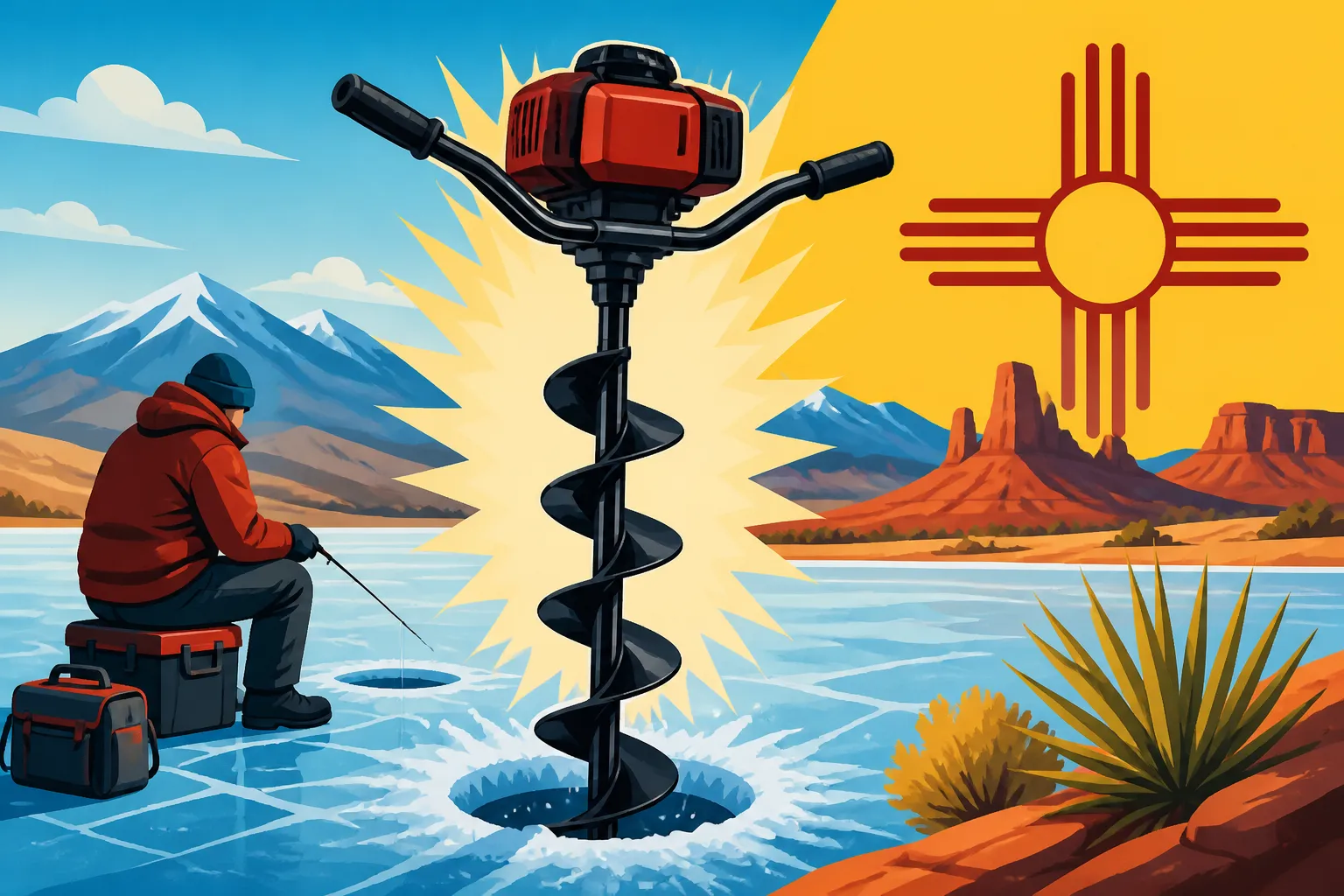
Best Auger for New Mexico Ice Fishing
There's nothing quite like the crisp, cold air of a New Mexico winter day, the stark beauty of a frozen lake, and the anticipation of dropping a line through a freshly cut hole. But let's be honest, getting that hole cut can sometimes feel like a monumental task, especially when the ice is thick, and your gear isn't quite up to snuff. Choosing the right ice auger can make all the difference between a frustrating, exhausting start to your day and a smooth, enjoyable fishing experience. This guide will walk you through everything you need to know to pick the best auger for navigating New Mexico's diverse and sometimes challenging ice fishing conditions.
Understanding New Mexico's Ice Fishing Landscape
Before you even think about which auger to buy, it's crucial to understand the unique environment you'll be fishing in. New Mexico isn't the Upper Midwest, where ice might be consistently three feet thick for months. Our conditions can vary wildly, and your auger needs to be able to adapt.
Variable Ice Conditions Across the State
One of the biggest factors influencing your auger choice in New Mexico is the sheer variability of our ice conditions. Up in the northern mountains, lakes like Eagle Nest Lake and Heron Lake often see consistent, thick ice that can hold for much of the winter. You might encounter ice that's 18-24 inches thick, sometimes even more. However, head south or to slightly lower elevations, and you might find thinner ice at places like Bluewater Lake or Storrie Lake, or even a season where some lakes don't freeze reliably enough for safe fishing.
This inconsistency means your auger can't be a one-trick pony. If you're a serious angler who travels across the state, you'll need something robust enough for those deep northern freezes but perhaps also portable enough for quicker trips when ice is lighter. A flimsy auger that struggles with 10 inches of ice will quickly become useless if you plan on targeting those deeper freezes, whereas an overly heavy, powerful auger might be overkill for a casual trip to a smaller, shallower pond where the ice rarely gets that thick. Always check local ice reports before heading out, and remember that How Thick Does Ice Need to Be to Fish Safely? is a critical question to answer before you even step on the ice.
Common Fish Species and Hole Sizes
The type of fish you're hoping to catch also plays a significant role in determining the ideal auger. For most panfish like bluegill or smaller trout, a 6-inch diameter hole is perfectly adequate. It's easy to drill, and you don't need a huge opening to land these smaller catches. This is a common size for folks enjoying Fenton Lake Winter Trout Fishing.
However, if you're chasing larger trout or especially kokanee salmon at Navajo Lake or Heron Lake, an 8-inch hole becomes much more practical. It gives you a wider margin for error when reeling in a feisty fish and reduces the chance of losing it at the hole. If you're really going for the big boys, like the infamous tiger muskie that reside in Bluewater Lake, you might even consider a 10-inch auger. While these larger augers require more power and effort to drill, they offer the peace of mind that comes with knowing you can land that trophy fish without having to worry about it getting stuck. Keep in mind the New Mexico Trout Bag and Possession Limits when planning your trip and hole sizes.
Types of Ice Augers and Their Suitability for New Mexico
With New Mexico's varied ice, understanding the different types of augers is essential. Each has its pros and cons, and what works for one angler might not be the best fit for another.
Manual Augers: The Budget-Friendly Workhorse
Manual augers are the classic choice, and for good reason. They are essentially a giant corkscrew that you twist into the ice by hand. They're incredibly simple, reliable, and by far the most budget-friendly option. If you're just getting started with Ice Fishing in New Mexico, or if you only plan on going out a few times a season to smaller, less intimidating bodies of water where the ice isn't excessively thick, a good manual auger can be a fantastic companion.
The biggest advantages of manual augers are their light weight, quiet operation, and lack of reliance on fuel or batteries. You can hike into more remote spots with ease, and you won't scare away any fish with engine noise. For a quick afternoon trip to a stocked pond or when the ice is only 4-8 inches thick, a manual auger is perfectly sufficient for drilling a few holes. The main drawback, of course, is the physical exertion required. Drilling multiple holes, or tackling ice thicker than a foot, can quickly become a real workout. But if you're strong and don't mind the exercise, it’s a solid, dependable choice that you can find readily on sites like Amazon, often at a very reasonable price.
Propane/Gas-Powered Augers: Power and Speed for Serious Anglers
When you need to drill a lot of holes quickly, or when you know you're going to encounter seriously thick ice, a gas-powered auger is what many seasoned anglers turn to. These machines are beasts, effortlessly churning through even the most stubborn ice with their powerful engines. Brands like Eskimo and Jiffy have long dominated this space, known for their reliability and raw power.
For those dedicated anglers who spend entire weekends on the ice, moving from spot to spot, or targeting those northern New Mexico lakes with consistently deep freezes, a gas auger can be invaluable. Imagine trying to drill twenty 18-inch holes by hand at Eagle Nest Lake – it'd be an exhausting ordeal. A gas auger makes short work of it. The trade-offs are significant, however. They are heavy, noisy, require gasoline or propane (and dealing with that in the cold can be a chore), and they produce exhaust fumes, which can be a concern if you're fishing in a small, enclosed ice shelter. Maintenance is also a factor, as these engines require regular care to run smoothly season after season.
Electric Battery-Powered Augers: The Modern Solution
Electric augers have truly revolutionized ice fishing in recent years, striking a fantastic balance between power and convenience. Powered by rechargeable lithium-ion batteries, these augers offer the speed and hole-drilling capability approaching that of gas models, but with none of the noise, fumes, or fuel hassle. Brands like ION and Strikemaster have led the charge in this category, offering impressive performance.
For many New Mexico anglers, an electric auger is the sweet spot. They are significantly lighter than gas augers, making them easier to transport across the ice, especially if you're walking a good distance from your vehicle. Their quiet operation is a huge bonus, not just for not disturbing the fish, but also for enjoying the peaceful solitude of the winter landscape. Battery life is the primary concern, especially in bitter cold, but carrying a spare battery (or two) can mitigate this. Many anglers will keep spare batteries in a warmed pocket or cooler to preserve their charge. For a full day of fishing, whether you're chasing kokanee at Heron Lake or exploring different spots at Bluewater Lake, a quality electric auger can keep you drilling all day long.
Cordless Drill Attachments: The Lightweight, Adaptable Choice
A more recent innovation that's gained immense popularity is the cordless drill attachment. This ingenious setup allows you to use a powerful cordless drill (the kind you might already own for home projects) to power a specialized auger bit. It’s essentially a hybrid solution, combining the portability of a manual auger with the power of a motor.
The biggest draw of these attachments is their incredibly light weight and compact size. You can toss your drill and the auger bit into a backpack and barely notice they're there. They are also remarkably quiet, similar to electric augers. This makes them perfect for quick scouting missions, trips to smaller lakes, or for beginners who want to try power drilling without the significant investment of a dedicated electric or gas auger. However, not all cordless drills are created equal for this task. You'll need a powerful 18V or 20V drill with a high torque rating (usually 700-1200 in-lbs) and a sturdy handle to absorb the torque. Standard drill batteries can also drain quickly in the cold, so a high-amp hour battery (4.0 Ah or more) and a spare are highly recommended. While they might struggle with consistently thick, hard ice over many holes, for the average New Mexico ice angler drilling a few holes for trout or crappie, this can be an incredibly efficient and versatile option. You can often find these attachments and the necessary robust drills for good prices on Amazon.
Key Features to Consider When Choosing an Auger for New Mexico
Beyond the basic type, several specific features will impact your auger's performance and suitability for New Mexico's fishing conditions.
Auger Diameter: Matching Your Target Species
As mentioned earlier, the diameter of the hole you drill is directly related to the size of the fish you're targeting. For most New Mexico ice fishing, an 8-inch auger is a fantastic all-around choice. It’s large enough for most trout, kokanee salmon, and even the occasional bass or walleye, yet still relatively easy to drill with any type of powered auger.
- 6-inch augers: Best for panfish (bluegill, crappie) and smaller trout. Easiest to drill, lightest, but limits the size of fish you can land. Perfect for a child's first ice fishing experience or for targeting smaller species in a place like Storrie Lake.
- 8-inch augers: The most popular and versatile size. Great for general trout fishing, kokanee salmon, walleye, and most other game fish you'll encounter. It's a good balance of drilling effort and hole size. This size is ideal for most situations, from Eagle Nest Lake to Navajo Lake.
- 10-inch augers: Reserved for targeting larger species like the big tiger muskie at Bluewater Lake or very large trout. These are harder to drill, especially with manual or drill attachments, and often require a powerful gas or electric auger. The larger hole also means you might get more slush back up, but the increased landing zone for a trophy fish is often worth it.
Consider your primary targets. If you're mainly after smaller trout, an 8-inch auger might be your largest practical need, but if you have dreams of a monster muskie, you'll want to size up.
Weight and Portability: Hauling Gear on the Ice
Ice fishing often involves lugging a fair amount of gear across slippery ice, sometimes for considerable distances. The weight of your auger will significantly impact your mobility and energy levels throughout the day. A heavy gas auger, while powerful, can be a real pain to haul, especially if you're frequently moving spots or if there's deep snow.
Electric augers are generally lighter than gas models, making them a popular choice for those who value mobility. Manual augers and drill attachments are the lightest of all, making them ideal for hiking into more secluded spots or for anglers who prefer to keep their setup minimalist. Think about how far you typically walk from your vehicle to your fishing spot at places like Navajo Lake or Heron Lake. If you plan to use a sled or ATV, weight might be less of a concern, but if you're carrying everything on your back, every pound counts. Consider what other gear you'll be taking, like an ice fishing shelter or a bucket of bait and tackle – it all adds up.
Blade Type and Durability: Cutting Through Tough Ice
The blades are the business end of your auger, and their quality and design are paramount. There are generally two types:
- Chipper blades: These are robust, single-blade designs that chip away at the ice. They tend to be very durable and can handle dirty ice (ice with embedded debris like rocks or sand) better than shaver blades. However, they are typically slower and require more downward pressure. Older gas augers often use chipper blades.
- Shaver blades: These typically consist of two sharp, flat blades that shave through the ice. They are incredibly fast and efficient, cutting smoothly with less effort. Most modern electric and manual augers use shaver blades. The downside is they are more prone to dulling or damage if they hit dirt, rocks, or old re-frozen slush.
Given New Mexico's often clear, clean mountain ice, shaver blades are usually the preferred choice for their speed and efficiency. However, if you frequently fish areas where the ice might be "dirty" due to receding water lines or heavy use, a chipper blade might offer more peace of mind regarding durability. Regardless of type, ensure you can easily replace or sharpen the blades. Dull blades are not only frustrating but can also be dangerous, forcing you to exert more effort and potentially slip. Always carry a spare set of blades or a blade cover to protect them during transport.
Battery Life and Cold Weather Performance for Electric Augers
For electric augers, battery performance in cold weather is a critical consideration. Lithium-ion batteries lose efficiency as temperatures drop, meaning your 5.0 Ah battery might only perform like a 3.0 Ah battery on a really frigid day.
When considering an electric auger or a drill attachment, look for:
- Higher Amp-Hour (Ah) ratings: A 4.0 Ah battery will last longer than a 2.0 Ah battery. Many serious anglers opt for 5.0 Ah or even 6.0 Ah batteries.
- Spare batteries: This is almost a necessity for a full day of drilling. Keep spare batteries in an insulated bag or inside your coat to keep them warm until needed.
- Cold-weather rated drills/augers: Some manufacturers design their batteries and motors to perform better in extreme cold. Check the specifications.
A reliable electric auger can easily drill dozens of holes on a single charge in moderate conditions, but when the mercury truly plunges, even the best batteries will be challenged. It's smart to plan for colder temperatures affecting your battery's capacity, especially if you're fishing one of New Mexico's colder high-mountain lakes during the peak New Mexico Ice Fishing Season.
Noise Levels: Minimizing Disturbance
The noise an auger makes might seem like a minor detail, but it can significantly impact your fishing experience and that of others. Gas augers are notoriously loud, and while some anglers don't mind, the loud roar can scare fish away from your immediate vicinity and disturb the peace for everyone else on the ice.
Electric augers and drill attachments are incredibly quiet, producing little more than a low whirring sound. Manual augers are, of course, completely silent. This quiet operation allows you to sneak up on fish in shallower water, and it contributes to a more serene and enjoyable day on the ice. If you prefer quiet solitude or want to avoid disturbing other anglers, opting for a quieter auger type is definitely the way to go.
Recommendations for Different New Mexico Anglers
Choosing an auger isn't just about features; it's about matching the gear to your specific needs and fishing style.
For the Beginner or Casual Angler
If you're just dipping your toes into ice fishing, or only plan a few casual trips a year to easily accessible spots like the urban ponds stocked with trout or the smaller, predictable ice of a local state park lake, simplicity and cost-effectiveness are key.
- Recommendation: A manual auger (6-8 inch) or a cordless drill attachment (6-inch).
- Why: A manual auger is the cheapest entry point, teaches you the basics, and is great for light use on thinner ice often found in New Mexico's lower elevation ice fisheries. If you already own a powerful cordless drill, an attachment offers more convenience and speed without a huge additional investment. It's perfect for a short outing to a place like Storrie Lake, or when you're taking kids out and just need a few quick holes. You can find excellent manual augers for under $100 on Amazon, and drill attachments typically range from $150-$250, assuming you already have a suitable drill. These choices mean less fuss, less maintenance, and more focus on the actual fishing.
For the Dedicated Weekend Warrior
You're beyond the beginner stage. You head out most weekends when the ice is safe, you might travel a bit further, and you're not afraid to drill a dozen or more holes to find fish. You need something reliable, efficient, and reasonably portable.
- Recommendation: A mid-range electric auger (8-inch) with at least one spare battery, or a reliable propane/gas auger (8-inch).
- Why: An 8-inch electric auger is the workhorse for many New Mexico weekend warriors. It offers plenty of power for the average ice thickness, is much lighter and quieter than gas, and with a spare battery, you can drill holes all day long. This is ideal for targeting kokanee salmon at Navajo Lake or Heron Lake, or covering various species at Eagle Nest Lake. If you're consistently hitting the thickest ice in the state, or prefer the raw, consistent power of an engine, a quality gas or propane auger is still a fantastic choice, just be prepared for the weight, noise, and fuel handling. Consider brands like ION for electric and Eskimo or Jiffy for gas-powered options. Don't forget to pack What to Wear Ice Fishing in New Mexico as well!
For the Hardcore Ice Fishing Enthusiast
You live for ice fishing season. You're out there in all safe conditions, sometimes multiple days a week. You're chasing trophy fish, venturing into remote areas, and constantly moving to find the hot bite. You demand top-tier performance and reliability.
- Recommendation: A high-end electric auger (8-10 inch) with multiple high-capacity spare batteries, or a powerful, robust gas auger (8-10 inch) known for extreme cold performance.
- Why: For the hardcore angler, maximizing drilling efficiency and power is paramount. A top-tier electric auger, like an ION or Strikemaster with multiple 5.0+ Ah batteries, provides the best blend of power, quiet operation, and portability for drilling dozens of holes in thick ice, even in frigid conditions. This is essential if you're trying to locate schools of Kokanee or actively pursuing tiger muskie at Bluewater Lake where a larger hole might be beneficial. If you prefer the brute force and extended drilling capacity without worrying about battery drain, a premium gas auger like an Eskimo Propane auger will never let you down, even if it means more weight. For these serious investments, comparing prices and features across major retailers and online platforms like Amazon can help you secure the best deal.
Here's a quick comparison table to help you visualize the choices:
| Auger Type | Weight (Approx.) | Drilling Speed (Thick Ice) | Noise Level | Upfront Cost (Approx.) | Best Use Case for New Mexico |
|---|---|---|---|---|---|
| Manual | Light (5-8 lbs) | Slow | Silent | $70 – $150 | Beginners, casual anglers, short trips, thin ice (under 10") |
| Cordless Drill | Light (8-12 lbs)* | Moderate – Fast | Quiet | $150 – $250 (bit only)* | Mobile anglers, existing drill owners, moderate ice (under 18") |
| Electric | Medium (15-25 lbs) | Fast | Very Quiet | $400 – $800 | Dedicated anglers, frequent use, all but extreme ice conditions |
| Gas/Propane | Heavy (25-35 lbs) | Very Fast | Loud | $350 – $650 | Hardcore anglers, very thick ice, high volume drilling, remote areas |
Note: Cordless Drill weight and cost do not include the drill itself.
Ultimately, the "best" auger isn't a universal answer; it's the one that best suits your fishing style, the specific New Mexico waters you frequent, and your personal budget. Whether you opt for the quiet efficiency of an electric model, the raw power of gas, or the simple reliability of a hand auger, getting that hole in the ice is your first step to a memorable day on New Mexico's frozen waters.
Disclaimer
The information provided in this guide is for general informational purposes only and does not constitute professional advice. Ice fishing can be dangerous, and conditions can change rapidly. Always exercise extreme caution, check local ice conditions, and prioritize safety. Consult the New Mexico Department of Game and Fish regulations for the most current rules and guidelines before engaging in any fishing activities.