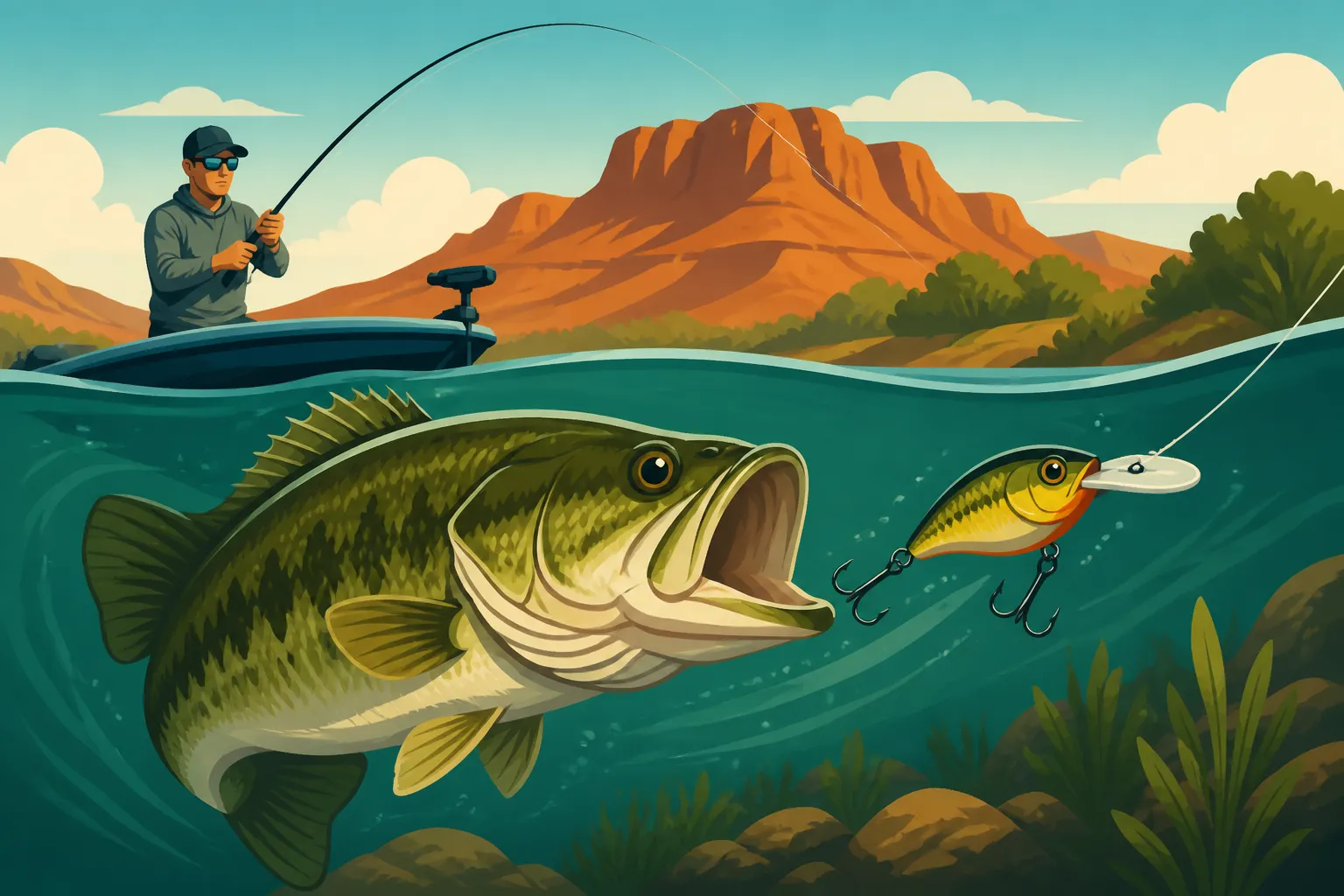
How to Fish a Crankbait for New Mexico Bass
It can be incredibly frustrating to hit the water in New Mexico, brimming with anticipation for some hard-hitting bass action, only to find your usual go-to lures aren't cutting it. Our high desert lakes and reservoirs present unique challenges, and getting your presentation right can feel like a constant puzzle. This comprehensive guide is here to untangle the complexities of crankbait fishing for New Mexico bass, helping you consistently put more fish in the boat or from the bank.
Understanding Crankbaits and Their Effectiveness for New Mexico Bass
Crankbaits are one of the most versatile and effective lures for targeting bass, but many anglers only scratch the surface of their potential. In New Mexico, where water conditions and fish behavior can vary wildly from one lake to the next, understanding the nuances of crankbait selection and presentation is absolutely critical.
What is a Crankbait?
At its heart, a crankbait is an artificial lure designed to imitate baitfish or crawfish. What makes them unique is their diving lip (or lack thereof, in the case of lipless crankbaits) and their inherent buoyancy, which dictates how deep they run and their specific action in the water. These lures are typically made of plastic or wood, feature a round or flat body profile, and come equipped with two treble hooks.
The lip, or bill, is the key component for most crankbaits. A longer, more angled lip will make the lure dive deeper, while a shorter, more perpendicular lip generally creates a shallower dive and a wider, more erratic wobble. Lipless crankbaits, on the other hand, rely on their weighted body to sink and create a tight, vibrating shimmy on the retrieve. When you cast a crankbait and begin your retrieve, the water pressure against the lip forces the lure to dive. When you pause the retrieve, most crankbaits will float back up, a crucial characteristic that allows them to "crawl" over structure without getting hung up. This versatility makes them excellent tools for covering a lot of water and eliciting aggressive strikes from both Largemouth Bass Fishing in New Mexico and Smallmouth Bass Fishing in New Mexico across the state.
Why Crankbaits are Effective for New Mexico Bass
New Mexico's bass waters, from the vast expanses of Elephant Butte Lake to the rocky shores of Ute Lake, demand a lure that can adapt. Crankbaits shine in these environments because they effectively mimic the primary forage of bass and can be fished across various depths and conditions.
One of their biggest strengths is their ability to cover water quickly. If you're exploring a new area or trying to locate active fish in a large reservoir, a crankbait allows you to cast a long distance and retrieve through a wide swath of water, quickly identifying potential holding areas. The erratic action of a crankbait, whether it's a tight wiggle or a wide wobble, often triggers a reaction strike, even from bass that aren't actively feeding. This is particularly effective in our clearer New Mexico waters, where bass can be more selective. The flash, vibration, and distinct movement of a crankbait are often too much for a territorial bass to ignore, compelling them to strike out of instinct or aggression. This makes them a top contender for the Best Lures for New Mexico Bass.
Choosing the Right Crankbait for New Mexico's Diverse Waters
Selecting the perfect crankbait isn't just about grabbing the prettiest one off the shelf; it's about matching the lure to the specific conditions and forage in your chosen New Mexico fishery. Considerations like water clarity, depth, and the prevailing baitfish species should guide your choices.
For instance, in the often clear, rocky waters of Abiquiu Lake, a crankbait with natural baitfish patterns like shad or perch, and a subtle wiggle, might be more effective. If you're fishing a lake like Conchas Lake, which can have varying clarity, a brighter, more aggressive color like chartreuse or fire tiger might grab attention, especially in stained water. The diving depth is also paramount. A shallow-diving crankbait is perfect for targeting bass along shorelines or over submerged weed beds in lakes like Santa Rosa Lake, while a deep-diving crankbait is essential for reaching bass holding on deep ledges, humps, or submerged timber in Elephant Butte Lake. You'll want to have a selection of crankbaits that can hit different depths, typically ranging from 3 to 20 feet, to be prepared for the varied structure you'll encounter. Browsing a wide selection of these lures on Amazon can help you build a versatile tackle box.
Essential Crankbait Techniques for New Mexico Anglers
Once you've got your crankbaits dialed in, the next step is mastering the techniques that will make them irresistible to New Mexico bass. It's not just about casting and reeling; it's about understanding how to make that lure dance and entice strikes.
The Cast and Retrieve
The fundamental technique for fishing a crankbait involves casting it out and retrieving it, but there's a lot more nuance to it than that. Your retrieve speed, pauses, and how you interact with structure can make all the difference.
Start by making a long cast, aiming past your intended target area. As soon as the lure hits the water, close your bail (or engage your reel if using a baitcaster) and begin your retrieve. The speed of your retrieve will influence the lure's action and depth. A slow, steady retrieve can be excellent in colder water or when fish are lethargic, giving the crankbait a wide, deliberate wobble. A faster retrieve creates a tighter, more frantic action, often triggering reaction strikes from active fish. Experiment with varying your retrieve. Try reeling steadily for a few cranks, then pausing briefly, allowing the crankbait to float up slightly before resuming your retrieve. This "stop-and-go" motion can often mimic an injured baitfish, making it an easy target. Don't be afraid to twitch your rod tip during the retrieve to add a more erratic, darting motion. This imitates a fleeing baitfish, which can be highly effective, especially when fishing around cover.
Targeting Specific Structure
New Mexico bass are masters of using structure to their advantage, whether for ambush points or for thermal comfort. Learning to effectively present a crankbait around these key areas is crucial for consistent success.
Look for areas with distinct changes in depth or bottom composition. Points, humps, ledges, and channels are prime locations for bass to intercept passing baitfish. When fishing points, cast your crankbait so it crosses the tip of the point, varying your retrieve to cover different depths along the slopes. For humps and ledges, cast beyond the structure and retrieve your crankbait so it "grinds" along the bottom or deflects off the edge. This deflection, where the crankbait suddenly changes direction upon hitting an obstacle, is a major trigger for aggressive strikes. Similarly, submerged brush piles, rock gardens, and rip-rap shorelines are magnets for bass. Cast your crankbait to hit these obstacles; the sudden change in movement often causes bass to react. The buoyancy of most crankbaits allows them to back up and float free when you pause your retrieve after hitting structure, making them surprisingly snag-resistant in these challenging areas. For those targeting Elephant Butte Lake, understanding the subtle contours and submerged brush piles is key to unlocking its crankbait potential.
Seasonal Considerations for Crankbait Fishing
New Mexico experiences distinct seasons, and the behavior of bass changes with them. Tailoring your crankbait approach to the time of year will dramatically improve your catch rates, aligning with the general New Mexico Fishing Season Calendar.
- Spring (Pre-Spawn): As water temperatures rise, bass move into shallower coves and flats to feed heavily before spawning. This is a prime time for medium-diving crankbaits (6-12 feet) in crawfish patterns or vibrant colors like red and orange. Target rocky points, secondary points, and the edges of emerging weed beds. Bass are aggressive and looking for substantial meals.
- Summer: Once the spawn is over and water temperatures really heat up, bass often move to deeper, cooler water. This is when deep-diving crankbaits (15-25+ feet) truly shine. Target main lake points, offshore humps, ledges, and deep creek channel bends. Think about how to fish New Mexico Reservoirs in Summer Heat – the fish will be seeking cooler, oxygenated water, and a crankbait is excellent for reaching them. Natural shad patterns are often best during this time as baitfish schools are prevalent in open water.
- Fall: As water temperatures begin to drop, bass become highly active and feed aggressively, fattening up for winter. This is a fantastic time for crankbait fishing. Medium to deep-diving crankbaits in shad or perch patterns are very effective. Bass will often be found chasing baitfish in creeks, on main lake points, and around channel swings. The fish are often more spread out but actively feeding, making crankbaits perfect for covering water and finding them.
Gear and Setup for Successful Crankbait Fishing
Having the right rod, reel, and line setup can significantly enhance your crankbait fishing experience, making your casts more accurate, your retrieves more efficient, and your ability to detect strikes much clearer. Don't underestimate the importance of your tackle.
Rod and Reel Selection
Choosing the right rod and reel combination is paramount for effective crankbait fishing. It's not about brute force, but about a balanced system that allows for optimal lure presentation and fatigue-free casting all day.
For most crankbait applications, a medium-heavy power rod with a moderate-fast action is ideal. The "moderate" action means the rod bends further down the blank, providing a parabolic bend that acts like a shock absorber. This is crucial for two reasons: it helps prevent tearing the treble hooks out of a bass's mouth during a fight, and it aids in launching heavier crankbaits further. A length between 7 feet and 7 feet 6 inches is a good all-around choice for covering water. When it comes to reels, a baitcasting reel with a gear ratio in the 5.1:1 to 6.4:1 range is excellent. Slower gear ratios allow you to fish deep-diving crankbaits more easily without wearing yourself out, and they help you maintain contact with the lure while it's "grinding" on the bottom. Reels with a faster retrieve might be better for lipless crankbaits or burning shallow runners, but for deep divers, a slower reel reduces fatigue. You can find many excellent rod and reel combinations specifically designed for crankbait fishing on Amazon.
Line Choices
The fishing line you choose has a direct impact on your crankbait's diving depth, action, and your ability to feel subtle bites. Each type of line has its advantages and disadvantages.
- Fluorocarbon: This is often the preferred choice for crankbait fishing. Its low stretch offers excellent sensitivity, allowing you to feel every bump and tick as your crankbait interacts with the bottom or cover. It's also nearly invisible underwater, a huge advantage in New Mexico's clearer lakes. Because fluorocarbon sinks, it can help your crankbaits reach their maximum diving depth more efficiently. A 10-15 lb test fluorocarbon line is a versatile choice for most crankbait sizes.
- Monofilament: While not as sensitive or invisible as fluorocarbon, monofilament line has more stretch, which can be beneficial in some situations. The added stretch acts as another shock absorber, further reducing the chance of tearing hooks out of a fish. It also floats, which can be advantageous if you want your crankbait to ride slightly higher in the water column or if you're fishing a squarebill in extremely shallow, snaggy cover. A 12-17 lb test monofilament is common.
- Braided Line: Braid offers incredible strength and no stretch, making it extremely sensitive. However, its visibility and tendency to "dig in" on a baitcasting reel can be drawbacks for crankbait fishing. If you do opt for braid, always use a fluorocarbon leader (10-15 lb test) to provide invisibility and a bit of stretch, connecting the two with a strong knot like an FG knot or an Albright knot. The choice really depends on how much sensitivity or forgiveness you need for your fishing style and target species.
Terminal Tackle and Accessories
While the crankbait itself is the star, the supporting cast of terminal tackle and accessories plays a vital role in presentation and success. Overlooking these small details can lead to missed opportunities or frustration. This is where your Best Tackle for New Mexico Bass Fishing really comes into play.
- Snaps/Split Rings: While some anglers tie directly to their crankbait, a small, high-quality snap can be incredibly useful. It allows for quick lure changes without retying and often imparts a bit more freedom of movement to the lure, enhancing its action. Ensure the snap is rated for the size of fish you're targeting. Using a split ring on the line tie can also achieve a similar effect if you prefer tying direct.
- Hook Upgrades: Many stock crankbaits come with hooks that are adequate but not top-tier. Upgrading to sharper, stronger treble hooks from brands like Gamakatsu or Owner can drastically improve your hook-up ratio and prevent straightened hooks, especially when battling larger bass. Ensure the replacement hooks are the same size or slightly larger to maintain the lure's intended action and balance. It's a small investment that can yield significant returns.
- Rod Holders: When boat fishing, having reliable rod holders can keep your rods secure and within reach, especially important when trolling or moving between spots on a larger lake like Navajo Lake.
- Pliers/Forceps: Essential for safely removing treble hooks from a bass's mouth, minimizing harm to the fish and yourself. A good pair of long-nose pliers or forceps is a must-have in your tackle box, along with a reliable pair of line cutters.
| Crankbait Type | Key Characteristics | Ideal New Mexico Conditions | Target Depth |
|---|---|---|---|
| Shallow-Diver | Short, steep lip; wide wobble | Early spring, summer mornings/evenings; over weeds | 0-5 feet |
| Medium-Diver | Medium-sized lip; varied wobble | Spring pre-spawn, fall; points, secondary breaks | 6-12 feet |
| Deep-Diver | Long, often slender lip; tight wiggle | Summer deep water; main lake points, ledges | 12-25+ feet |
| Lipless | No lip; internal rattle; tight vibration | Cold water, around grass/flats; vertical jigging | All depths (sinking) |
| Squarebill | Square-shaped lip; erratic deflections | Shallow, heavy cover (wood, rocks); dirty water | 0-4 feet |
Common Challenges and Troubleshooting
Even with the best gear and techniques, crankbait fishing can throw some curveballs. Snags, changing water conditions, and finicky fish are all part of the game. Knowing how to troubleshoot these common challenges will keep you from getting discouraged and help you adapt on the fly.
Dealing with Snags and Weeds
One of the most frustrating aspects of crankbait fishing, especially in New Mexico's often rocky or brushy lakes, is getting snagged. It happens to everyone, but there are ways to minimize it and retrieve your valuable lures.
Firstly, understanding the crankbait's design helps. Most lipped crankbaits are designed to "deflect" off structure. When you feel your lure hit a log or rock, don't stop reeling. Instead, give the rod a slight twitch or quickly snap it upwards, then continue your retrieve. Often, the lure will "hop" over the obstacle. If you do get snagged, the first thing to do is stop reeling and let a little slack in your line. Many times, the buoyancy of the crankbait will allow it to float free from the snag. If that doesn't work, try reeling up the slack until your rod tip is bent, then snap your rod tip back towards the snag. The sudden jolt can sometimes dislodge the lure. As a last resort, if you're in a boat, motor directly over the snag and try to pull the lure free from a different angle, being careful not to tangle your line in your prop. For severe snags in deep water, a "lure knocker" or "plug knocker" (available on Amazon) can be a lifesaver, often retrieving expensive crankbaits that would otherwise be lost.
Reading Water and Adjusting
New Mexico's waters are dynamic, and what worked yesterday might not work today. Being able to read the water and make quick adjustments to your crankbait presentation is a hallmark of a successful angler.
Pay close attention to water clarity. In clear water, fish tend to be more wary, so natural baitfish patterns and a slightly more subtle retrieve are often more effective. In stained or muddy water, brighter colors (like chartreuse, orange, or fire tiger) and a more aggressive, high-vibration crankbait can stand out and attract attention. Water temperature is another crucial factor; colder water usually means slower retrieves, while warmer water allows for faster, more energetic retrieves. Watch for baitfish activity – if you see shad busting on the surface, you know what color and size crankbait to tie on. Wind also plays a huge role. A strong wind can create current and concentrate baitfish, making wind-blown points excellent crankbait spots. However, it also makes boat control difficult, so adjust your casting angles and retrieve speeds accordingly. Don't be afraid to change crankbait colors, sizes, or diving depths frequently until you find what the bass are reacting to.
When Crankbaits Aren't Working
There will be days when the bass simply aren't interested in a crankbait, no matter what you try. It's important to recognize when to switch tactics rather than stubbornly sticking with a lure that isn't producing.
If you've thoroughly worked an area with various crankbaits, different retrieves, and depths, and you're still not getting bites, it's a clear sign to change. Perhaps the fish are holding tighter to cover, requiring a more precise presentation like a How to Fish a Texas Rig for New Mexico Bass. Or maybe they're suspended in open water, making a jig or drop shot a better choice. Sometimes, the bass are simply not aggressive and require a slower, more subtle bait like a soft plastic worm or a finesse jig. Consider changing locations, targeting different types of structure, or even switching to entirely different species if you're really struggling. The best anglers are those who can adapt and have a diverse set of techniques in their arsenal, not just those who can master one specific lure. Always have a backup plan ready.
Disclaimer
Fishing regulations in New Mexico can change, sometimes without much warning. Always consult the latest New Mexico Department of Game and Fish regulations handbook before heading out on the water. This guide is for informational purposes only and should not replace official sources.