How to Read Water on the San Juan River
The San Juan River, especially its fabled Quality Waters, can be both a dream and a puzzle for anglers. Many of us arrive, look at the seemingly uniform flow, and wonder where on earth the fish could be hiding in such an expansive, clear environment. It's frustrating to stand there, rod in hand, feeling like you're casting blind. But don't worry, this guide is going to peel back the layers and teach you the art of reading the San Juan River's water, transforming your experience from guesswork to informed strategy.
Understanding the San Juan River's Unique Flow and Characteristics
Before we even talk about specific holding lies, it's crucial to understand what makes the San Juan River so special and, frankly, a bit different from many other rivers. This isn't your typical freestone stream that rises and falls dramatically with rainfall. The San Juan is a tailwater, and that changes everything.
The Dam Effect and Tailwater Fishery
The San Juan River owes its consistent, cold-water characteristics to the Navajo Dam. This massive structure releases water from the depths of Navajo Lake, ensuring a stable temperature range year-round, which is absolutely vital for trout survival and growth. This constant flow and temperature mean that the fish don't experience the wild swings that can stress fish in other rivers. What this creates is a truly prolific environment, often referred to as a "tailwater fishery," renowned for its abundance of large, healthy trout.
However, this stability also means the river can sometimes appear deceptively uniform, making it harder to spot those subtle differences in current that hold fish. The dam release dictates the flow, and while it's generally consistent, even small changes can affect where trout decide to position themselves. Because the water is so clear and often nutrient-rich from the lake, the insects that thrive here, particularly midges and tiny mayflies, are abundant. Learning how to read the water here means understanding how these consistent conditions influence where the trout expend energy to feed and where they seek refuge. It's less about finding pockets of oxygenated water, and more about finding the perfect blend of food delivery and minimal effort. For any angler hoping to fish this incredible river, understanding the nuances of a tailwater fishery is the first step in successful navigation and ultimately, successful fishing. Many resources, including a general New Mexico Fishing Regulations Overview, touch on tailwater considerations.
River Sections: Quality Waters vs. Braids
The San Juan River isn't just one monolithic stretch of water; it changes significantly as it flows downstream from the dam. The most famous, and often most challenging, section is the "Quality Waters," a designated trophy trout fishery extending about 3.75 miles below the Navajo Dam. This section is characterized by its broad, relatively deep channels, often with subtle current variations, and incredibly clear water. It's here that you'll find some of the largest trout, but also some of the most educated and selective fish.
Downstream from the Quality Waters, the river begins to widen and often "braid" out into multiple smaller channels, particularly during lower flows. These braided sections, while still holding plenty of fish, present a different kind of challenge. Here, the water might be shallower, faster, and more broken, offering a myriad of smaller seams, pockets, and riffles. Fish in these areas might be less wary due to more cover and faster water, but finding them means meticulously picking apart each individual channel. The San Juan River Fishing Guide provides an in-depth look at these distinct sections. Whether you're in the broad expanse of the Quality Waters or navigating the intricate braids, your approach to reading the water must adapt. The clues might be more subtle in the former and more numerous and fragmented in the latter.
Key Water Features and What They Mean for Trout
Trout, like us, are creatures of efficiency. They want the most food for the least amount of effort, while also feeling safe. Every ripple, seam, and eddy on the San Juan tells a story about these priorities, and your job as an angler is to learn to decipher that narrative.
Riffles and Runs: Fast Water Feeding Lanes
Riffles are those sections of the river where the water tumbles over rocks, creating a broken, aerated surface and a shallower depth. Just downstream, runs are typically deeper, smoother, and faster-flowing sections. These areas are prime feeding lanes for trout, especially for smaller insects drifting along with the current. The turbulent water of a riffle helps dislodge insects from the bottom, sending them downstream right into a trout's waiting mouth.
When you're looking at a riffle, don't just see chaos. Look for the "sweet spots" – the slightly deeper channels or the calmer seams within the faster water. Trout will often position themselves just behind a larger rock or obstruction in a riffle, using the current break as a resting point, while still being able to dart out into the faster water to snatch passing food. In the runs, where the water is smoother, the challenge is seeing into the water. Trout here might be more spread out, cruising the bottom, picking off nymphs. Watch for any surface disturbance, even the slightest dimple, which could indicate a fish actively feeding. If you're trying to figure out the best flies for this type of water, a quick search on Amazon for "San Juan River fly assortment" might give you some ideas. Understanding the New Mexico Trout Fishing Rules is also essential for these productive areas.
Pools and Eddies: Resting and Deeper Holds
Pools are typically deeper, slower-moving sections of the river, often found on the outside bends or downstream from significant obstructions. Eddies are pockets of reverse or slower current, usually found directly behind large rocks, logs, or points of land. While riffles and runs are about active feeding, pools and eddies are where trout often come to rest, digest, and escape the main force of the current. However, that doesn't mean they aren't feeding here.
In pools, trout will hold closer to the bottom, especially in the deeper sections, where they feel secure from predators. They might rise to the surface for emerging insects during a hatch, or they might be actively feeding on nymphs and small baitfish that also seek refuge in the slower water. The edges of pools, where the slower water meets faster currents, can be incredibly productive. Eddies are fascinating because they can act as natural collection points for food. Insects, debris, and even small fish can get caught in the swirling currents, providing an easy meal for a trout positioned on the edge of the eddy or even within it. Pay close attention to the "soft water" directly behind an obstruction that creates the eddy; this is often a prime lie. For Fly Fishing Techniques for New Mexico Rivers, mastering the presentation in these varying current speeds is key.
Seams and Current Breaks: The Prime Real Estate
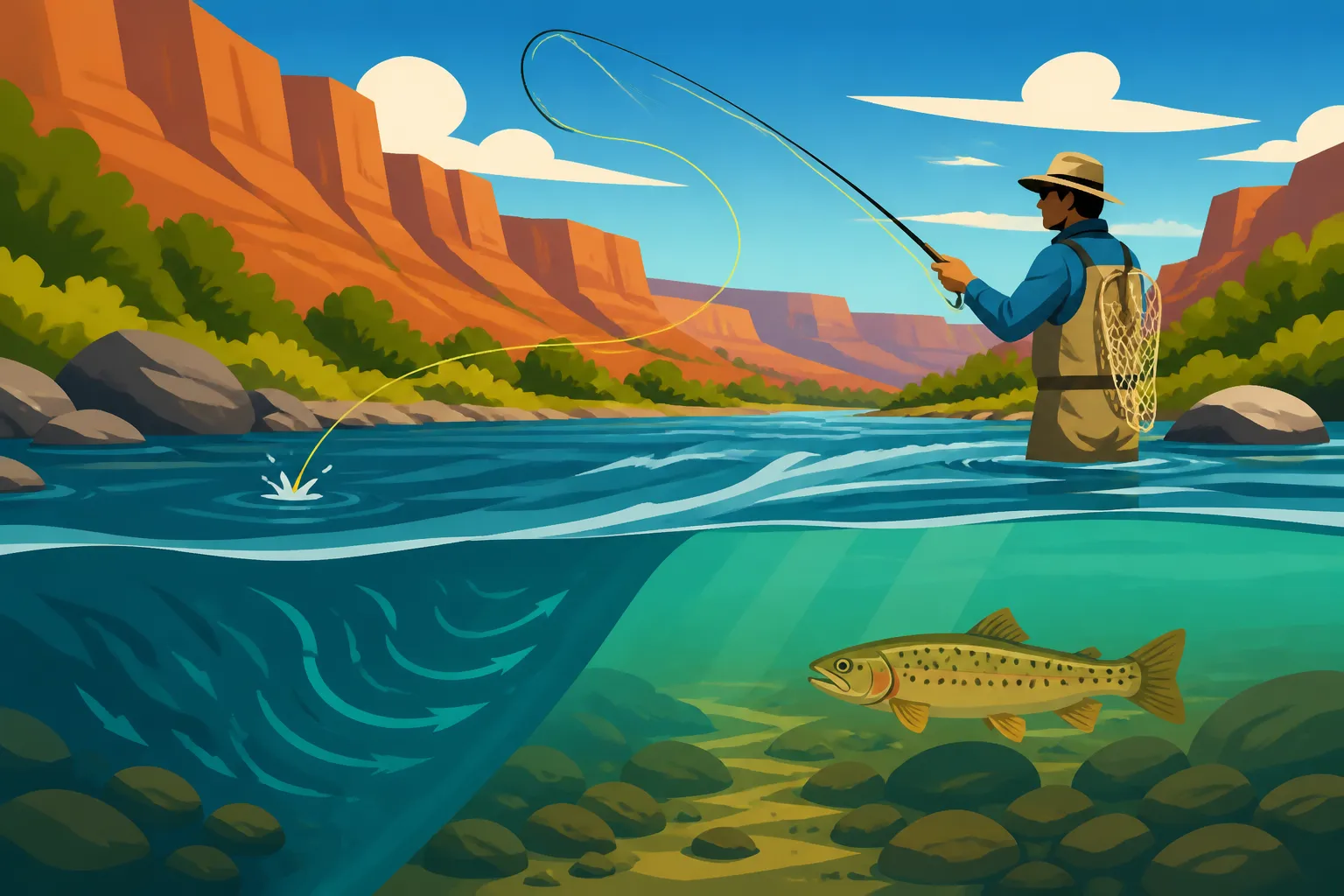
If you take one thing away from reading San Juan water, let it be this: find the seams. Seams are the interfaces where two different currents meet – a fast current and a slow current, or two currents moving in slightly different directions. These are absolute magnets for trout because they offer the best of both worlds: a conveyor belt of food on the faster side and a comfortable, low-energy resting spot on the slower side. A current break is a broader term, referring to any obstruction (a large rock, a log, a drop-off) that creates a pocket of slower water downstream.
Imagine a large boulder in the middle of a flowing run. The water will speed up around the sides, but directly behind it, there will be a pocket of slower, calmer water. This is a classic current break, and a trout will almost certainly be sitting there, waiting for food to drift past. Similarly, where the main current of the San Juan brushes up against the slower water along a bank, that's a seam. You might see a distinct line on the water's surface, or it might be a subtle change in the ripple pattern. Trout will patrol these seams, picking off nymphs and emergers. Casting your fly to drift naturally down one of these seams, right along the edge of the fast and slow water, often results in a strike. This is where you'll find healthy Rainbow Trout on the San Juan River and even some elusive Brown Trout on the San Juan River.
Here's a quick summary of water features and where fish typically hold:
| Water Feature | Appearance/Description | Where Fish Are Likely to Hold | Key for Anglers |
|---|---|---|---|
| Riffles | Shallow, turbulent, broken surface, tumbling over rocks. | Behind larger rocks/boulders; just below the fastest flow. | Focus on current breaks and seams within the riffle. |
| Runs | Deeper, smoother, consistent flow below riffles. | On the bottom, cruising; along subtle current seams. | Look for dimples or rises; target current changes. |
| Pools | Deep, slow-moving sections; often on outside bends. | Deepest parts for safety; edges where current meets slow water. | Effective for sight fishing; good during hatches. |
| Eddies | Swirling or reverse currents behind obstructions. | Inside the eddy where food collects; on the "seam" of the eddy. | Excellent for presenting nymphs; watch for opportunistic feeders. |
| Seams | Visible line where fast and slow currents meet. | Parallel to the seam, on the slower side, facing upstream. | Your absolute best bet for consistent strikes; drift precisely. |
| Current Breaks | Any obstruction (rock, log) creating slower water downstream. | Directly behind the obstruction, in the "soft spot." | Easy targets; present your fly to drift into this calm zone. |
| Structure/Cover | Submerged logs, undercut banks, deep rocks. | Directly adjacent to or within for safety and ambush points. | Crucial for wary fish; often holds larger trout. |
Practical Strategies for Reading the San Juan
Reading the water isn't just about identifying features; it's about active observation, critical thinking, and constantly adapting your approach. It's a skill that develops with practice and patience.
Observing the Water's Surface and Subsurface
The San Juan River demands meticulous observation. The surface tells you about hatches, rises, and current dynamics, while the subsurface is where most of the feeding action happens. When you first approach a section of the river, take a moment to just watch. Are there any insects fluttering above the water? Are there fish rising, and if so, how are they rising – subtly dimpling the surface, or aggressively splashing? A gentle "sip" might indicate a trout taking tiny midges or emergers just below the film, while a more vigorous splash could mean a larger insect or a baitfish.
Beyond rises, look at the current itself. Are there areas where the water looks calmer, even if surrounded by faster flow? These are often signs of deeper water or obstructions. Try to identify subtle seams where the water color or speed changes. Below the surface, if the clarity allows, try to spot any structure: submerged rocks, ledges, or weed beds. These provide cover and additional holding lies. Sometimes, you might even spot a fish holding still against the current. The San Juan's incredibly clear water is a double-edged sword; it allows you to see more, but it also means the fish can see you. Consider what Best Lures for New Mexico Trout would be appropriate given your observations.
Thinking Like a Trout: Food, Shelter, and Oxygen
To truly read the water effectively, you need to get inside the mind of a trout. What are their priorities? Primarily, it's about three things: food, shelter, and oxygen. On the San Juan, oxygen is rarely a limiting factor, so it boils down to food and shelter. Trout will always try to find a spot where they can intercept the maximum amount of food with the minimum expenditure of energy. This means they'll position themselves where food drifts naturally to them, but where they don't have to constantly battle strong currents.
Shelter is also paramount. This could mean deep water, an undercut bank, a submerged log, or even just the shadow of a large rock. Trout feel safest when they have some overhead cover or depth to escape predators like ospreys or even us anglers. So, when you see a deep pool with a slow current and a convenient seam running along its edge, think: "This is a five-star hotel for a trout." If you're observing a faster run, look for those subtle current breaks behind rocks where a trout can hold out of the main flow but still dart into the fast lane for a meal. By consistently asking yourself "If I were a trout, where would I want to be right now?", you'll naturally start identifying prime holding water. This thought process is crucial for understanding How to Catch Trout in New Mexico in various conditions.
Adapting to Changing Conditions
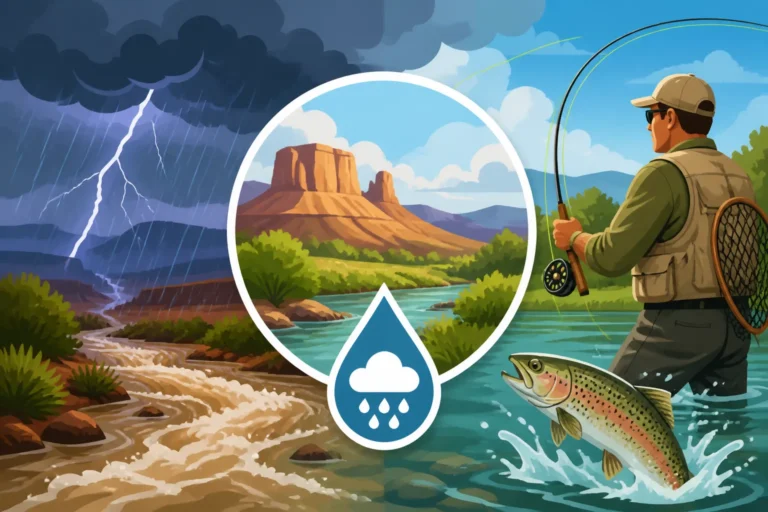
The San Juan, while a tailwater, isn't entirely static. Water levels can fluctuate due to dam releases, clarity can change after heavy upstream rains, and of course, the time of day, season, and weather all play a role. A good angler is constantly adapting how they read the water based on these variables. During higher flows, trout will often move closer to the banks, seeking refuge from the strong main current. They'll tuck into slower eddies, behind larger structures, or in deeper pockets closer to shore. Lower flows might spread fish out more, making them more visible but also potentially warier.
Clarity is another major factor. On those incredibly clear San Juan days, stealth is paramount. Long leaders and fine tippets are your friends, and you'll need to stay low and move slowly to avoid spooking fish. If the water gets a bit off-color (which is rare but can happen after a good rain), trout might become less spooky and move into areas they'd typically avoid. Hatches dictate feeding behavior; during a strong midge hatch, fish might be rising everywhere in slow, smooth water, making those sections suddenly more productive than the riffles. Always be observing, experimenting, and ready to adjust your strategy. A valuable resource for selecting the right fly is Fly Selection for New Mexico's San Juan River.
Gear and Tools to Help You Read the Water Better
While your eyes and brain are your primary tools for reading water, there are a few pieces of gear that can significantly enhance your ability to decipher the river's secrets. Think of them as extensions of your senses.
Polarized Sunglasses: Your Underwater Vision
This is arguably the single most important piece of gear for reading water. A good pair of polarized sunglasses cuts through the glare on the water's surface, allowing you to see into the depths. Without them, the reflection of the sky makes the water an opaque mirror, hiding all the crucial subsurface features and fish. With them, you can often spot submerged rocks, logs, weed beds, and even holding fish that you'd otherwise completely miss. This is especially true on a notoriously clear river like the San Juan.
Invest in a quality pair, perhaps from a brand like Costa, Smith, or even a more budget-friendly option you can find on Amazon. Different lens colors can also be beneficial: amber or copper lenses are great for lower light or overcast conditions, while grey lenses are often preferred for bright, sunny days. Having a good pair isn't just about comfort; it's about seeing the subtle structure and movement that gives away a trout's hiding spot, transforming guesswork into informed targeting. When you can literally see into a fish's living room, your chances of success skyrocket.
Wading Staff and Proper Footwear: Staying Safe and Mobile
While not directly a "reading" tool, a wading staff allows you to safely access more parts of the river, which in turn lets you read more water. The San Juan can have a slick, rocky bottom and surprisingly deep spots, even in seemingly shallow areas. A sturdy wading staff provides stability and allows you to probe the depth and texture of the bottom before you commit your weight. This helps you move confidently, get into better casting positions, and reach those prime seams and pockets that might be just a bit too far out to comfortably reach otherwise.
Coupled with a good pair of wading boots designed for slippery river bottoms, often with felt soles or carbide studs, a wading staff ensures you're not limited in your ability to explore. Being able to safely wade across a riffle to reach a productive run, or slowly navigate a deep pool to target an active fish, directly translates to better water reading and more effective fishing. Safety first, always, but the added mobility directly enhances your ability to observe and interpret the river. Good boots are indispensable; consider checking out the range of options for Best Wading Boots for New Mexico's San Juan River.
San Juan River Specific Maps and Guides
Before you even step into the water, arming yourself with knowledge from local maps and guides can give you a significant head start in reading the San Juan. Many fly shops in the area, or even online through retailers like Amazon, offer detailed maps of the Quality Waters and surrounding sections. These maps often highlight key features like parking areas, access points, known pools, runs, and riffles, and sometimes even indicate historical holding lies.
While the river is always changing subtly, these resources give you a foundational understanding of the layout. They can point out areas prone to certain hatches, where the deepest water typically lies, or where the river tends to braid. Combining this pre-trip research with your on-the-water observation creates a powerful synergy. You'll know what to look for and where specific types of water features generally occur, allowing you to more efficiently break down and "read" a new section of the river. And of course, having the right Best Rods and Reels for New Mexico Trout Fishing won't hurt either. Always remember to practice Catch and Release Best Practices in New Mexico to ensure the health of this incredible fishery. When it comes to landing those fish, having the Best Landing Nets for New Mexico Catch and Release Fishing is essential to minimize harm.
Disclaimer
This article is for general informational purposes only and does not constitute professional advice. Laws, prices and regulations vary by location and change over time. Consult a qualified professional for guidance on your specific situation.