Beginner’s Guide to Fly Casting in New Mexico
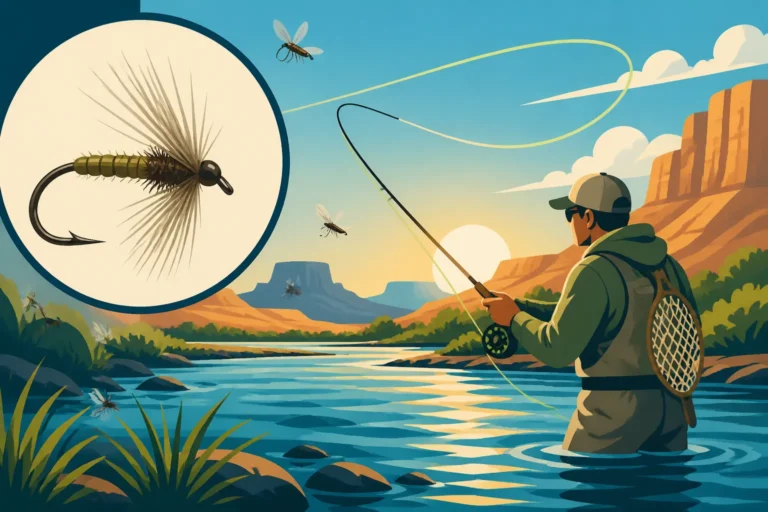
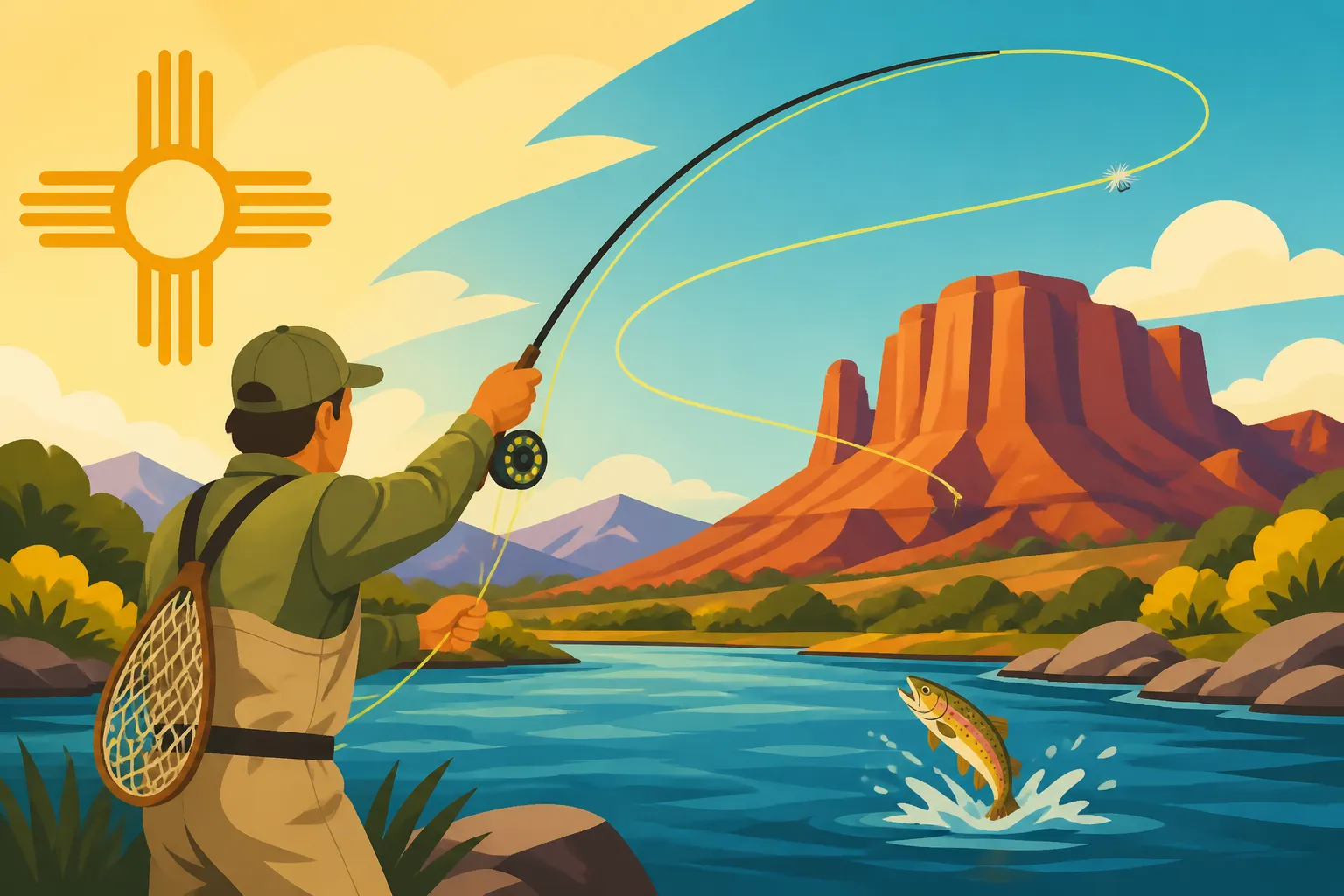
That feeling of a fly line unfurling perfectly, your fly landing like a feather exactly where you intended, is one of the most rewarding sensations in fishing. But let's be real: for many of us, the first few attempts at fly casting feel less like poetry in motion and more like wrestling a wet noodle, often resulting in frustrating tangles or a fly that crashes down like an anvil. Don't worry, every seasoned angler started there. This guide is all about demystifying the basic fly cast, giving you the tools to confidently get started on New Mexico's beautiful waters.
Understanding the Art of Fly Casting in New Mexico
Fly fishing isn't just a method; for many, it's an art form, a dance between angler, rod, and line. It's also an incredibly effective way to fool some of the wariest fish, especially trout. In New Mexico, with its diverse waters ranging from the world-renowned San Juan River to pristine high mountain lakes and meandering smaller streams, mastering the fly cast opens up a world of angling possibilities.
What Makes Fly Casting Different?
Unlike spin or baitcasting, where the weight of the lure pulls the line from the reel, in fly fishing, you're actually casting the weight of the line itself. The fly, often a tiny imitation of an insect, is virtually weightless. This fundamental difference is why the casting motion feels so unique and, initially, can be a little perplexing. You're using the rod to create momentum in the heavy fly line, forming graceful loops that carry your nearly weightless fly to its target. It's a bit like cracking a whip, where the energy transfers down the line.
The beauty of this system is the delicate presentation it allows. You can gently place a tiny dry fly on the surface of a ripple, mimicking a natural insect, or precisely drift a nymph subsurface. This precision and subtlety are often key to enticing fish in clear, calm, or heavily pressured waters.
New Mexico's Unique Casting Challenges and Rewards
New Mexico offers an incredible variety of fly fishing experiences, but also some specific challenges for the beginner caster. The high desert winds can turn a simple cast into a battle against nature, making line control paramount. Altitude can sometimes affect how quickly you tire, and the sheer vastness of some of our lakes might tempt you to cast further than you're ready for.
However, the rewards are immense. Imagine casting to rising trout on a crisp morning at a high-elevation lake in the Pecos Wilderness, or delicately presenting a fly on the fabled San Juan River Fly Fishing quality waters. Learning to cast well isn't just about catching more fish; it's about enjoying the entire experience more deeply, feeling the rhythm of the rod, and connecting with the environment around you. Before you even head out, remember to secure your New Mexico Fishing License Guide and understand the New Mexico Trout Fishing Rules to ensure a legal and enjoyable trip. Also, don't forget the necessary New Mexico Habitat Stamp and Validation Requirements for many public fishing areas.
The Core Mechanics: Deconstructing the Basic Cast
At its heart, fly casting is a simple back-and-forth motion, often referred to as the "pickup and laydown" or the "forward and back cast." But like any simple motion, it has nuances that, once understood, unlock consistency and distance.
The Foundation: Grip and Stance
First things first, your grip. Hold the rod like you're shaking hands, with your thumb on top of the cork handle, pointed straight down the rod blank. This gives you control and leverage. Keep your wrist relatively straight and firm; most of the casting power comes from your forearm, not just a floppy wrist.
For stance, face your target squarely, or slightly angled for comfort. Keep your feet about shoulder-width apart, ready to shift your weight slightly. A relaxed posture is crucial – tension is the enemy of a smooth cast.
The Back Cast: Loading the Rod
The back cast is where you "load" the fly rod, bending it to store energy. Think of the rod as a spring.
- Pickup: If your line is already on the water, start by lifting the rod tip smoothly and slowly, letting the line straighten out on the water. Once the line is mostly straight out in front of you, with just a little slack, you're ready.
- Acceleration: From this position (let's call it 9 o'clock), smoothly accelerate the rod tip upwards and slightly backward. The key word here is smoothly. Don't jerk it. Imagine you're painting a stripe on the ceiling from 9 o'clock to 1 o'clock.
- Stop: The most critical part! Stop the rod abruptly at about the 1 o'clock position (just past vertical). This sudden stop causes the rod to flex, sending the line flying backward in a tight, efficient loop. If you continue past 1 o'clock, you'll "throw" the line behind you, resulting in a wide, inefficient loop or tangles.
- The Pause: After the stop, pause. This is essential. The line needs time to unroll and straighten out behind you. The length of the pause depends on how much line you have out; more line equals a longer pause. This is often the hardest part for beginners – we tend to rush the forward cast. Look over your shoulder if you need to, to see the line straighten, but eventually, you'll learn to feel it.
The Forward Cast: Delivering the Fly
Once your line has straightened out behind you, you're ready to bring it forward.
- Acceleration: Again, smoothly accelerate the rod tip forward, moving from that 1 o'clock position down towards 10 o'clock. Think of pulling a heavy door shut. The power should come from your forearm, with a firm wrist.
- Stop: Just like the back cast, stop the rod abruptly, this time at about the 10 o'clock position (just above horizontal). This propels the line forward, forming another tight loop that unrolls towards your target.
- Follow Through: As the line unrolls, let the rod tip follow the line down towards the water, gently laying the fly down. This "follow through" is what gives you that delicate presentation.
When choosing your initial gear, don't feel overwhelmed. Many reputable brands offer excellent starter fly rod and reel combos. You can often find a good selection on platforms like Amazon, which makes it easy to compare different setups. For New Mexico's typical trout fishing, a 5-weight or 6-weight rod is a versatile choice. You can explore options like Best Rods and Reels for New Mexico Trout Fishing or even specialized gear like Best Fly Rods for the San Juan River once you've got the basics down. Understanding Best Fly Line Weight for New Mexico Trout will also help you match your line to your rod and target species.
Navigating Common Beginner Pitfalls on New Mexico Waters
Let's face it, nobody picks up a fly rod and casts like a pro on their first try. It's a process of trial and error, and certain common mistakes plague most beginners. Identifying these early can save you a lot of frustration.
The "Too Much Arm" Syndrome
One of the most frequent errors is trying to cast with your whole arm, swinging it like a baseball bat. This often leads to wide, inefficient loops, lack of control, and quickly tiring out. Remember, fly casting is primarily a forearm and wrist movement, with the rod doing the work. Keep your upper arm relatively close to your body and focus on that smooth acceleration and crisp stop with your forearm. Think about driving a nail into a wall with just your wrist and forearm, not your whole body.
Rushing the Cast: The Dreaded "Lack of Pause"
As mentioned earlier, impatience is a casting killer. If you don't allow the line to fully unroll behind you on the back cast before starting your forward cast, you'll experience what's called a "tailing loop" or "crashing loop." This happens when the line "folds over" itself, often resulting in knots (wind knots) and a poor presentation. For beginners, it's almost always better to pause a beat too long than a beat too short. Practice counting "one-thousand-one" on the back cast pause. It'll feel unnatural at first, but it makes a world of difference.
The "Trout Slap" and Lack of Presentation
Ever had your fly land on the water with a sound like a brick dropping? That's the "trout slap," and it's a surefire way to spook fish, especially in clear New Mexico waters. This usually stems from stopping the rod too low on the forward cast (e.g., at 9 o'clock instead of 10 o'clock) or not allowing for a gentle follow-through.
To fix this, focus on that higher, crisper stop at 10 o'clock. As the loop unrolls, let the rod tip follow the line down smoothly, almost "presenting" the fly rather than throwing it. It's about letting the line do the work, not forcing the fly down. This is especially important when you’re out with your Best Waders for New Mexico Rivers, trying to be stealthy in a shallow stream.
Dealing with New Mexico's Wind
Oh, the wind. It's a constant companion in many parts of New Mexico, and it can turn a perfect cast into a tangled mess in an instant. The key to casting in wind is to keep your loops tight and, often, to cast at an angle that uses the wind to your advantage, or at least minimizes its impact.
- Tight Loops: Wide loops catch the wind like a sail. Focus on that crisp, high stop on your back cast and a strong, positive stop on your forward cast to generate tight, aerodynamic loops.
- Lower Trajectory: In a headwind, a lower, more powerful cast will cut through the wind better than a high, floaty one. Conversely, with a tailwind, you can often use a slightly higher trajectory to let the wind carry your line.
- Side Casts: Sometimes, casting horizontally (a side cast) can keep your line out of the strongest wind currents, and away from your ear!
Here’s a quick reference for common casting issues:
| Problem | Appearance / Feeling | Common Cause | Solution |
|---|---|---|---|
| Tailing Loop | Line forms a knot or "pig tail" mid-air, lands poorly. | Rushing the forward cast; not enough pause. | Pause longer on the back cast. Let the line fully unroll behind you. Smooth acceleration, not a punch. |
| Open Loop | Line creates a wide, U-shaped loop instead of a V. | Stopping the rod too late/softly on either cast. | Focus on crisp, abrupt stops at 1 o'clock (back cast) and 10 o'clock (forward cast). Imagine hitting a wall. |
| Trout Slap | Fly lands noisily on the water, spooking fish. | Rod tip drops too low on forward cast; forcing fly. | Maintain a higher rod tip on the forward cast (around 10 o'clock). Let the line unroll naturally. Gentle follow-through. Avoid forcing the fly. |
| No Distance | Line just plops down in front of you. | Insufficient power/acceleration; short stroke. | Increase the power stroke – the distance the rod tip travels during acceleration. Ensure smooth, continuous acceleration, not a jerky motion. Engage more forearm. |
| Wind Knots | Small, tight knots appear in the leader or tippet. | Tailing loops, often caused by rushing. | Slow down! Eliminate tailing loops by pausing adequately and achieving tight, efficient loops. If the wind is bad, shorten your leader or use a more powerful (lower) cast. |
Gear and Form Synergy
Sometimes, issues aren't just about your technique but also how your gear is suited for you. A rod that's too heavy or too light for your strength and the conditions can make casting harder. Ensuring your Fly Selection for New Mexico's San Juan River matches your tippet strength and that your leader is properly tapered also contributes to a cleaner cast. Take the time to consider how your chosen equipment, perhaps found through browsing Amazon, complements your developing skills.
Practice, Patience, and Progress for New Mexico Fly Casters
Learning to fly cast is a journey, not a sprint. There's no substitute for practice, but smart practice will get you further, faster.
Dry Land Drills: Your Backyard Classroom
You don't need water to practice fly casting! In fact, practicing on grass or pavement is often better for beginners because you can clearly see what your line is doing.
- The Short Game (15-20 feet): Start with a manageable amount of line, say 15-20 feet. This length allows you to focus on the mechanics without battling too much line in the air. Practice the back cast and forward cast, focusing on those crisp stops and the all-important pause. Aim for tight loops that unroll smoothly.
- Target Practice: Place a hula hoop, a small towel, or even a leaf on the grass as a target. Practice casting to it from different distances. This helps develop accuracy and teaches you to control where your line lands. Try to land your fly as gently as possible.
- The "Pick Up and Lay Down" Drill: This simple drill is fundamental. Let your line lie straight on the ground. Pick it up smoothly into a back cast, pause, then bring it forward to lay it back down exactly where it started. This teaches control and timing. As you get better, try to lay it down a little further or to the side.
Practicing on dry land eliminates the distraction of fish, currents, and snagged flies, allowing you to focus solely on perfecting your stroke. Many anglers will even spool up their practice reels with old fly line or just some bright colored string, which is an inexpensive way to train the muscle memory. You can find practice aids and even full starter kits on Amazon to help you get started without breaking the bank.
Moving to Water: Real-World Application
Once you feel confident on dry land, it's time to hit the water. Start in a relatively calm, open area. A local pond, a slow-moving section of a river, or even one of the many Best Lakes for Family Fishing Trips in New Mexico can be ideal. The Urban and Community Waters Program in New Mexico stocks various ponds, providing perfect, accessible places to practice without the pressure of a wilderness stream.
- Observe the Water: Before you even cast, take a moment to understand How to Read Water on the San Juan River (or whatever water you're on). Look for currents, eddies, and potential fish holding spots. This will inform where and how you cast.
- Focus on Presentation: Your goal on the water isn't just distance, it's presentation. Can you make your fly land gently? Can you get a drag-free drift? These are often more important than how far you can cast.
- Short Casts First: Resist the urge to try for hero casts right away. Start with short, accurate casts to nearby targets. Gradually increase your distance as your confidence grows.
- Embrace the Journey: You'll still make mistakes. Your line will still tangle. That's okay! Every cast is a learning opportunity. The best anglers are those who are constantly observing, adapting, and refining their technique.
Patience is perhaps the most important tool in a fly caster's arsenal. The joy of fly fishing often lies in the process, not just the outcome. As you progress, you'll find yourself not only casting better but also thinking more about the fish, their environment, and the subtle art of the approach. Remember, every fish you catch and release helps sustain our waters, so always follow Catch and Release Best Practices in New Mexico.
Learning to fly cast is an incredibly rewarding skill that will deepen your connection to the outdoors and open up countless angling adventures in New Mexico. Embrace the learning curve, be patient with yourself, and most importantly, have fun!
Disclaimer
This article is for general informational purposes only and does not constitute professional advice. Laws, prices and regulations vary by location and change over time. Consult a qualified professional for guidance on your specific situation.