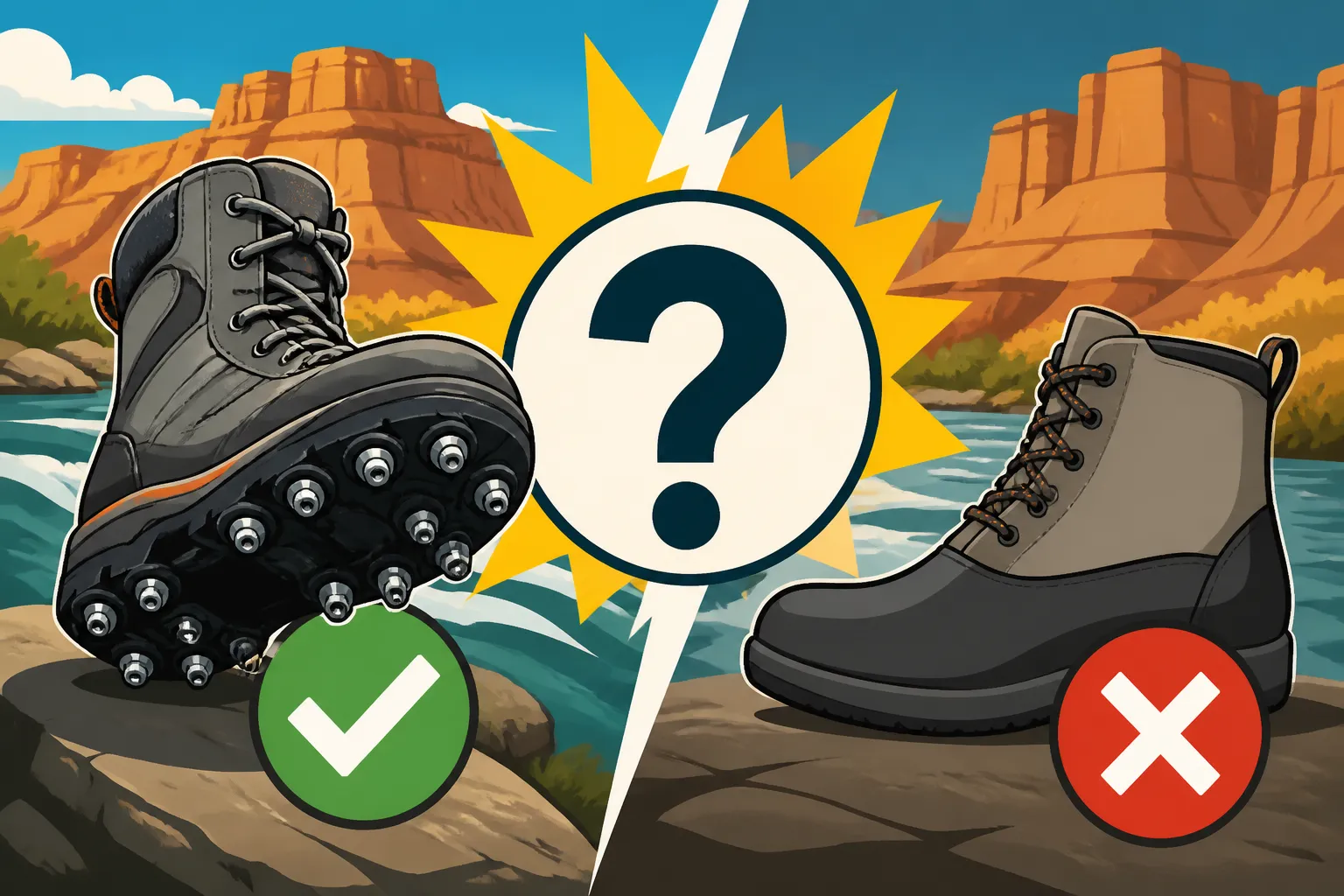
Do You Need Studded Boots for the San Juan River?
Navigating the beautiful, yet often challenging, waters of the San Juan River in New Mexico can be an incredible experience. However, a common frustration anglers face, especially those new to this renowned fishery, is figuring out the best footwear to avoid a slip and fall. The riverbed can be incredibly slick, and the wrong boots can turn a relaxing day into a precarious balancing act. This guide will dive deep into whether studded boots are a necessity for the San Juan River, exploring the terrain, the benefits of various sole types, and helping you make an informed decision for your safety and success.
Understanding the San Juan River's Unique Terrain
The San Juan River, particularly its famous "Quality Waters" section below Navajo Dam, presents a unique set of challenges for wading anglers. It's not just any river; it's a tailwater fishery, which means its conditions are largely dictated by the upstream dam releases, creating a consistent, cold environment that fosters specific types of aquatic life and unique riverbed features.
The San Juan's Famous "Quality Waters" Section
When folks talk about the San Juan River, often their minds jump straight to the legendary Quality Waters. This section, stretching roughly 3.75 miles downstream from the dam, is famed for its abundant, trophy-sized trout. But what makes it so productive for fish also makes it incredibly demanding for waders. The riverbed here is a patchwork of smooth, rounded rocks, gravel, and large boulders. Because the water flow is so consistent and cold, these submerged rocks are often coated in a thin, slimy layer of algae, along with microscopic organisms like diatoms, which create an unbelievably slick surface. It's like walking on greased bowling balls, especially in faster currents. Even with the clearest visibility, misjudging a step on one of these algae-covered rocks can send you tumbling in a heartbeat. The constant, cold flows from Navajo Dam mean that these conditions persist year-round, so it's not just a seasonal concern.
Beyond the obvious hazard, this constant slickness can really drain your energy. Instead of focusing on your cast or spotting that elusive trout, you're constantly fighting for balance, making your fishing experience less enjoyable and more exhausting. Many a seasoned angler, myself included, has found themselves unexpectedly submerged or scrambling to recover balance, realizing just how unforgiving this river can be.
Beyond the Quality Waters: Varying River Conditions
While the Quality Waters get most of the attention, the San Juan River continues downstream, offering different wading experiences. As you move further from the immediate tailwater section, the river's character begins to change. You might encounter stretches with more sand or different types of sediment, especially where smaller tributaries join the main flow. The gradient might lessen in some areas, and the rock composition can shift from the smooth, rounded stones of the upper section to more irregular, angular rocks or even softer mud and gravel banks.
For instance, below the Quality Waters, as the river snakes through flatter agricultural lands, you might find wider, shallower sections with more stable gravel bars. However, even here, patches of slick rock can still exist, especially near old structures or where current slows. These sections might be less consistently treacherous, but they still demand attention to your footing. The key takeaway is that while the entire river isn't uniformly slick, the most popular and productive sections, where most anglers spend their time, are notoriously challenging. Therefore, assuming that just because you're outside the "Special Trout Water" means you're safe from slippery conditions would be a mistake. Understanding these variations helps you appreciate why a versatile and secure wading boot is so crucial for any serious San Juan River angler.
The Case for Studded Wading Boots
Given the San Juan's slippery nature, it's no wonder many anglers gravitate towards studded wading boots. These aren't just a fancy accessory; for many, they're a vital piece of safety equipment that can significantly enhance your experience on treacherous riverbeds.
How Studs Provide Superior Traction
Studded wading boots are designed with small, hard carbide or tungsten-tipped studs embedded directly into the sole, or as an aftermarket addition to rubber or felt soles. The magic behind their effectiveness lies in their ability to literally bite into slick surfaces. Imagine trying to walk on ice with smooth shoes versus wearing cleats; it's a similar principle. While felt soles rely on friction with clean, wet rock, and rubber soles use sticky compounds, studs provide a mechanical grip. They penetrate the slimy layer of algae or soft sediment, finding purchase on the underlying rock or gravel.
This penetrating action gives you a much more secure foothold, especially when pushing off against a strong current or navigating uneven terrain. That added grip translates directly into confidence. Instead of gingerly shuffling your feet, constantly testing the bottom, you can move with greater purpose and stability. This isn't just about preventing a fall; it's about reducing the mental and physical fatigue associated with constant vigilance over your balance. Think of it as having tiny, specialized anchors on the bottom of your feet, constantly seeking out purchase.
Scenarios Where Studs Are a Lifesaver
There are specific situations on the San Juan where studded boots truly earn their keep and can be a genuine lifesaver, or at least a trip-saver. One of the most common and challenging scenarios is crossing deep, fast currents where the bottom is littered with large, algae-covered rocks. Without studs, each step can feel like a gamble, with the current pushing against you and your feet struggling to find purchase. Studs dramatically increase your stability in these situations, allowing you to focus on maintaining your balance and reading the current, rather than agonizing over every foot placement.
Winter fishing also presents another critical scenario. While the San Juan rarely freezes solid, rocks along the bank and in shallower areas can develop thin layers of ice or be covered in frozen spray. Felt and plain rubber soles offer almost no traction on ice. Studs, however, can provide the necessary grip to navigate these icy patches safely, preventing potentially dangerous slips into frigid water. Similarly, if you're navigating steep, muddy banks or approaches to the river, studs will dig in where other soles would simply slide, offering superior stability and preventing an unexpected tumble before you even reach the water. For anyone venturing into the San Juan River Quality Waters Section frequently, or planning to wade aggressively, studs are an investment in safety that pays dividends.
Alternatives to Studded Boots and Their Trade-offs
While studded boots offer undeniable advantages on the San Juan, they aren't the only option, and they come with their own set of considerations. Many anglers prefer other sole types, often supplementing them for added traction.
Felt Soles: The Traditional Choice
For decades, felt soles were the undisputed champion of wading footwear, and they still have their devotees. The tightly compressed fibers of felt excel at gripping clean, wet rock. When the river bottom is smooth stone, free of heavy algae, felt can provide a surprising amount of friction, making you feel connected to the riverbed. Many traditional fly anglers swear by them for their tactile feel and quiet approach, especially on rivers known for delicate presentations.
However, felt has some significant drawbacks, particularly in diverse conditions like those found on the San Juan. First, its performance plummets dramatically on mud, snow, or ice. If you're slogging through muddy banks to get to the water, or if you encounter any icy patches in winter, felt becomes dangerously slippery. Second, and perhaps most critically from an ecological standpoint, felt is notorious for transmitting aquatic invasive species, sometimes called "didymo" or "rock snot." The fibrous material can harbor these microscopic organisms, and if not thoroughly cleaned and dried between uses, felt soles can unintentionally spread them from one water body to another. This environmental concern has led some states and regions to ban felt soles outright, though typically not the San Juan itself. If you opt for felt, diligence in cleaning your Best Wading Boots for New Mexico's San Juan River is absolutely paramount.
Rubber Soles with Integrated or Add-on Traction
Modern rubber-soled wading boots have come a long, long way in recent years, offering a compelling alternative to both felt and permanently studded options. Manufacturers like Simms, Orvis, and Patagonia have invested heavily in developing proprietary rubber compounds that are specifically designed for maximum grip on wet surfaces. These "sticky rubber" soles often feature intricate tread patterns that channel water away, maintaining contact with the rock.
The beauty of modern rubber soles is their versatility. They perform well on a broader range of terrain compared to felt – from wet rock to dry land, mud, and even snow (though still not great on ice without additional traction). Critically, they are much less likely to harbor and spread invasive species, making them a more environmentally responsible choice. However, even the stickiest rubber can struggle on the most extreme, algae-coated rocks of the San Juan Quality Waters.
This is where integrated or add-on traction devices come into play. Many rubber-soled boots are now designed to accept screw-in studs, allowing you to customize your traction as needed. Brands like Korkers even offer interchangeable sole systems, where you can swap out felt, plain rubber, or studded rubber soles depending on the conditions and the water you're fishing that day. For a more universal approach, external traction devices, often referred to as cleated overshoes or "ice grips," can be strapped over any wading boot, turning a plain rubber or felt sole into a studded one temporarily. These are readily available from retailers like Amazon or Bass Pro Shops. This hybrid approach gives you the best of both worlds: the versatility and environmental benefits of rubber, with the option to add aggressive traction when confronting the San Juan's slickest spots.
Making Your Decision: Factors to Consider
Deciding whether studded boots are right for your San Juan River adventures isn't a one-size-fits-all answer. It comes down to a few key personal and practical considerations.
Your Wading Style and Experience Level
How you fish and how confident you are in the water will heavily influence your footwear choice. Are you an aggressive wader, constantly moving, crossing the river, and exploring new runs? If so, maximum traction is paramount. A fall in swift, cold water can be incredibly dangerous, not just for you but for your gear. For these types of anglers, especially those tackling the San Juan River Special Trout Water Section, studs offer a significant safety margin and boost confidence, allowing you to focus on fishing rather than fear of falling.
Conversely, if you're more of a bank angler, or you wade very cautiously in shallower, less turbulent water, you might find that high-quality felt or sticky rubber soles are sufficient, perhaps with the option to add external traction for occasional tricky spots. Beginners, regardless of their intended wading style, should always lean towards more traction. Learning to read currents and footing is challenging enough without constantly battling slippery rocks. As you gain experience on the San Juan, you'll develop a better sense of what level of grip makes you feel secure.
Environmental Concerns and Regulations
The issue of aquatic invasive species, particularly "didymo" or rock snot, is a serious concern for river health. Felt soles have historically been implicated in spreading these microscopic organisms because their fibers can easily trap and transport them from one body of water to another. While the San Juan River in New Mexico doesn't currently prohibit felt soles (always check the latest New Mexico Fishing Regulations Overview), many anglers choose rubber soles as a proactive measure to protect the ecosystem.
Studs, when used responsibly, generally pose less of an invasive species risk than felt, as they don't have the same fibrous structure to harbor organisms. However, any wading boot that enters the water should be thoroughly cleaned and dried between fishing trips, especially when moving between different watersheds. If you opt for a studded sole, consider whether the studs might damage sensitive riverbeds in other, softer-bottomed waters you might fish. While less of a concern on the rocky San Juan, it's a factor to keep in mind for your overall fishing ethics. The key here is always to practice "Clean, Drain, Dry" with all your gear, regardless of the sole type.
Budget and Versatility for Other Waters
Let's be realistic, fishing gear can be an investment! The cost of high-quality wading boots, especially those with advanced sole technology or interchangeable systems, can vary significantly. Permanently studded boots or those with integrated stud systems might be at the higher end of the price spectrum. However, you can also purchase screw-in studs to add to many rubber-soled boots, which can be a more budget-friendly way to get aggressive traction. You'll find a wide range of options, from entry-level boots to premium models, at places like Bass Pro Shops or through online retailers like Amazon.
Consider how much use you'll get out of a specialized boot. If the San Juan is your primary fishing destination, investing in top-tier traction makes sense. If you fish a variety of waters across New Mexico—some rocky, some muddy, some with gravel—a versatile rubber sole with the option to add screw-in studs or use external traction devices might be the most practical and cost-effective solution. This allows you to adapt your footwear to the specific demands of each fishery, ensuring safety and comfort wherever your angling adventures take you. Think about your entire fishing season; does your choice of boot need to work for Ice Fishing in New Mexico as well as summer river wading?
Here's a quick comparison of common wading boot sole types:
| Sole Type | Best For | Traction on San Juan's Slick Rocks | Invasive Species Risk | Versatility | Pros | Cons |
|---|---|---|---|---|---|---|
| Felt | Clean, wet, hard rock; traditional feel | Good (on clean rock) | High | Low | Excellent grip on specific surfaces, quiet wading | Poor on mud, snow, ice; high risk of spreading invasive species; can wear quickly |
| Rubber | Varied terrain; dry land; less invasive risk | Moderate (can be slick on algae) | Low | High | Good all-around performance, durable, environmentally friendly | Can be very slippery on heavy algae without additional traction; not ideal on ice |
| Rubber w/ Studs | Extremely slick rocks; mud; some ice | Excellent | Low | Moderate | Superior grip on most challenging surfaces, boosts confidence, reduces falls | Can damage boat floors; potentially uncomfortable on dry land; permanent studs might not be ideal for all waters (though often removable) |
| Felt w/ Studs | Very slick rocks; for felt traditionalists | Excellent | High | Low | Combines felt's traditional grip with added aggressive traction | Retains high invasive species risk of felt; studs can still damage boat floors or other surfaces |
| Interchangeable Soles | Any condition | Varies by sole selected | Low (rubber) / High (felt) | Very High | Adaptable to any river condition; one boot for all needs, environmentally flexible | Initial cost can be higher; requires carrying multiple sole types; changing soles riverside can be a minor inconvenience |
Ultimately, for the truly challenging, algae-coated sections of the San Juan River, especially within the Quality Waters, studded wading boots or rubber soles with added studs provide a level of safety and confidence that is hard to match with other options. While not a strict legal requirement, they are a strong recommendation for anyone serious about safely and effectively navigating this incredible fishery. Prioritize your safety and consider the environment, and you'll be well on your way to many memorable days on the water.
Disclaimer
This article is for general informational purposes only and does not constitute professional advice. Laws, prices and regulations vary by location and change over time. Consult a qualified professional for guidance on your specific situation.