Best Leader Length for San Juan River Nymphing
One of the trickiest parts of fly fishing, especially when you're nymphing the famous waters of the San Juan River, is getting your leader just right. It's not just about attaching your flies; it's about achieving that perfect, natural drift that convinces those notoriously selective trout to strike. This guide will dive deep into how to choose the ideal leader length for your San Juan River nymphing adventures, ensuring your rig is optimized for success.
Why Leader Length is Absolutely Crucial on the San Juan River
If you've ever fished the San Juan River, particularly the Quality Waters, you know it's a special, often challenging place. The trout there are smart, heavily pressured, and have seen every fly and presentation imaginable. This isn't your average high-country creek where you can get away with a sloppy cast. On the San Juan, every detail matters, and your leader length is a silent, unsung hero of your nymphing success. It's the critical link between your fly line and your flies, dictating how they behave in the current.
Achieving Proper Drift and Presentation
The primary goal of nymphing is to present your flies to the fish in a way that looks like natural insect larvae or nymphs drifting effortlessly with the current. This is called a "dead drift." If your leader is too short, the heavier fly line can impact the drift, creating drag that pulls your flies unnaturally. Think of it like trying to pull a tiny feather with a thick rope – it's going to be obvious. A properly chosen leader length allows your flies to sink and drift at the same speed as the surrounding water, presenting them as an easy meal. The San Juan's clear, consistent flows make this perfect drift even more important, as trout have plenty of time to inspect your offering.
Managing Line Drag and Micro-Currents
The San Juan River, while often appearing uniform, has subtle micro-currents and eddies that can wreak havoc on your drift. These hidden currents can grab your fly line or a poorly chosen leader, pulling your flies off course or at an unnatural speed. A longer leader helps to buffer these effects, keeping more of your colored fly line off the water and allowing your tippet and flies to ride freely in the fish's feeding lane. It creates a critical separation between the "pull" of your fly line and the delicate dance of your nymphs. This separation is particularly vital when you're trying to fish multiple nymphs at different depths.
Stealth and Avoiding Spooking Fish
San Juan trout are wary. They've seen anglers, leaders, and indicators for years, and they're quick to bolt at anything that looks out of place. A shorter, heavier leader can not only cause drag but also present a more visible profile in the water. Longer, finer leaders, especially those tapered down to a delicate tippet, offer increased stealth. They are less visible to the fish, minimizing the chance of them noticing your connection to the flies. Furthermore, a longer leader allows you to keep your fly line, and often your indicator, further away from the fish, reducing the visual disturbance of a thick line slapping the water overhead. This added distance and reduced visibility are paramount for success in such a pressured fishery.
Key Factors Influencing Your Leader Length Choice
There's no single "magic" leader length for the San Juan River because conditions are always shifting, and every angler has a slightly different style. Instead, you need to understand the variables that should guide your decision. Thinking through these factors before you even tie on your first fly will make a huge difference in your day. It’s about being adaptable and recognizing what the river is telling you.
Water Depth and Current Speed
This is perhaps the most significant factor. Are you fishing a deep, slow pool where trout are holding close to the bottom, or a shallow, faster run where they might be suspended?
For deeper water, you'll generally need a longer leader to allow your flies to sink to the desired depth without the fly line pulling them up prematurely. Imagine trying to get a fly 8 feet down in a deep hole with only a 6-foot leader – it's just not going to happen effectively. The flies won't have enough time or slack to get down there.
Conversely, in shallower, faster runs, an excessively long leader can be more of a hindrance. It makes casting harder, can tangle more easily, and might prevent you from getting a quick, controlled hook set. You're trying to get your flies in front of fish quickly, and too much slack can cause delays. A good rule of thumb is that your leader system (leader plus tippet) should be at least 1.5 to 2 times the depth of the water you're fishing to ensure your flies get down and drift naturally.
Fly Line Type and Weight
Your fly line plays a supporting role to your leader. Most nymphing on the San Juan will involve a weight-forward floating fly line, typically in a 4-weight or 5-weight. The weight and taper of this line directly influence how your leader needs to be constructed.
A heavier fly line (like a 6-weight) might require a slightly longer or heavier butt section on your leader to turn over properly, especially if you're throwing larger, heavier nymphs. Conversely, a lighter line (like a 3-weight) pairs well with a more delicate, possibly shorter leader. The goal is a seamless energy transfer from your cast, down your fly line, through your leader, and finally to your flies, allowing them to land softly and un-spookingly. If your leader isn't balanced with your line, your casts will suffer, and tangles will become more frequent.
Target Species and Their Feeding Habits
While the San Juan is famous for its rainbow and brown trout, their feeding habits can differ slightly. Rainbow trout often feed aggressively and are sometimes less leader-shy, especially in faster water. Brown trout, on the other hand, can be notoriously particular, especially the larger, older fish that have survived years of angling pressure. They tend to hold in more protected lies and scrutinize flies for longer.
If you're targeting those larger, more educated brown trout, opting for a longer, finer leader with a more gradual taper might increase your hook-up rates. This maximizes stealth and allows for the most natural drift possible, giving them less reason for suspicion. Conversely, if you're hitting an aggressive hatch and the fish are less picky, you might be able to get away with a slightly shorter, more robust leader for easier handling and quicker landing. Rainbow Trout on the San Juan River and Brown Trout on the San Juan River are both common targets.
Your Casting Style and Comfort
Let's be real, your personal casting style matters! Some anglers have a smooth, powerful cast that can effortlessly turn over a very long leader, even with multiple weighted nymphs. Others prefer a more compact, precise cast. Trying to cast an overly long leader if you're not comfortable with it can lead to frustrating tangles, wind knots, and poor presentations.
Don't sacrifice comfort and control for an "ideal" length if it's making your day miserable. It's often better to use a leader length you can cast effectively and accurately than to struggle with one that's technically perfect but poorly executed. As you gain experience, you might find yourself naturally extending your leader length. Also, consider your rod length – a longer fly rod (10-11 feet) for nymphing naturally handles longer leaders better, providing more reach and line control.
Recommended Leader Lengths for Different San Juan Scenarios
When you’re standing on the banks of the San Juan, looking at that inviting water, the first question is always, "How long should my leader be?" It’s a common dilemma, and the answer, as we've discussed, isn't always straightforward. However, there are some excellent starting points and adjustments you can make to dial in your setup for various conditions you'll encounter.
Standard Nymphing Setup (All-Around)
For a good, all-around nymphing setup on the San Juan, many experienced anglers will start with a leader that measures around 9 to 12 feet from the fly line connection to the point where you attach your first nymph or your tippet ring. This length provides a solid balance of presentation, drag reduction, and castability for a wide range of conditions. This leader is typically a tapered monofilament leader, reducing from a thicker butt section (around .020-.024 inches) down to a finer tip (around .007-.009 inches or 3X-5X).
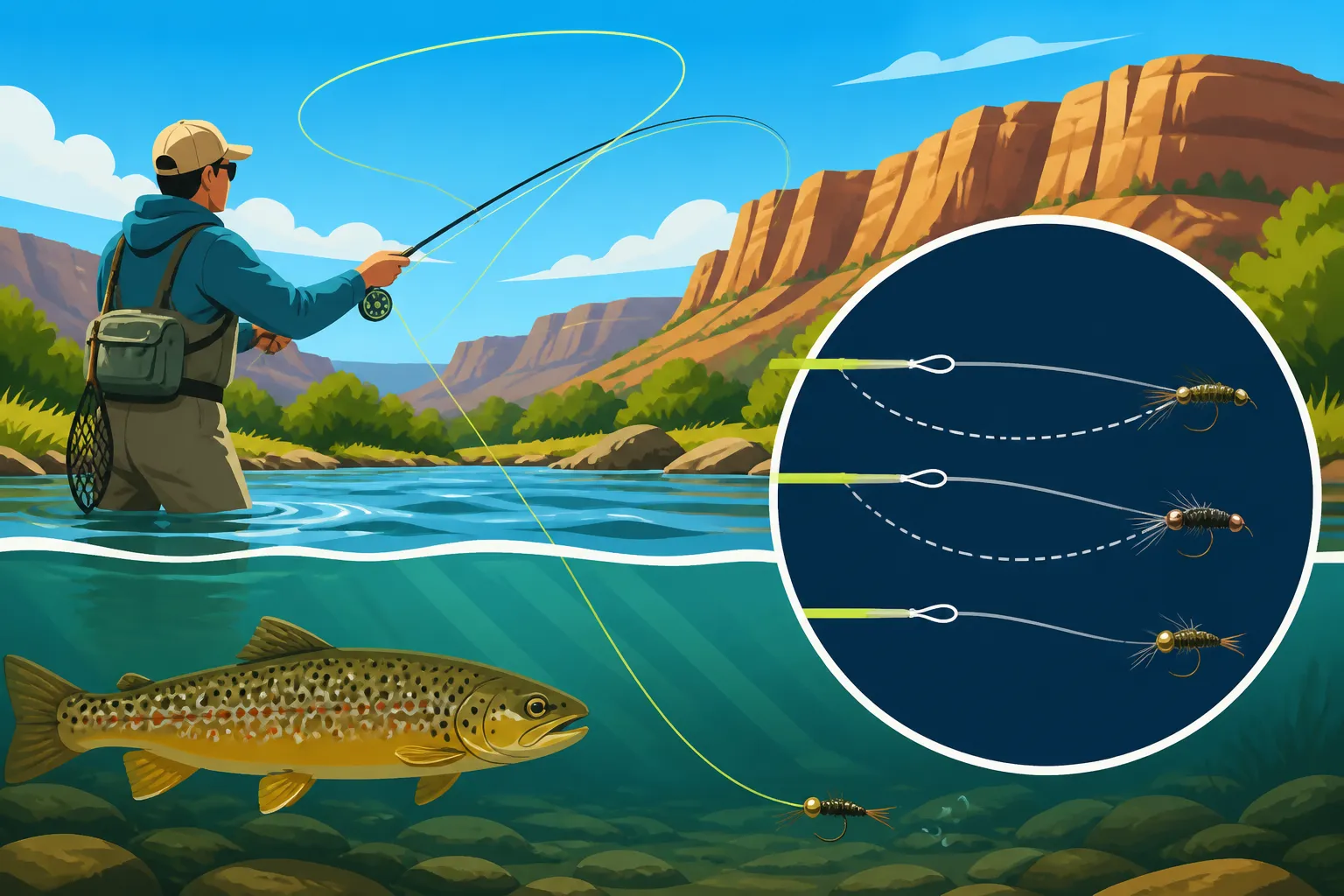
Once you attach your tapered leader, you'll then add tippet. For a typical San Juan two-nymph rig, you might add 18-24 inches of 5X or 6X tippet to your tapered leader, and then another 12-18 inches of even finer tippet (like 6X or 7X) to your second fly. This means your total length from fly line to your bottom fly could easily be 12 to 16 feet or even more. The key here is the tapered leader provides the foundation, and your tippet sections are where you fine-tune depth and stealth. This kind of setup allows your flies to get down to the bottom in most of the San Juan's moderate runs and pools without feeling disconnected from your indicator or fly line.
Longer Leaders for Technical Water and Shy Fish
When you encounter incredibly clear, still water, or when the San Juan trout are being particularly finicky – and trust me, they can be! – a longer leader becomes your best friend. For these technical situations, extending your overall leader system to 15-20 feet is not uncommon. This means starting with a 12-foot tapered leader and adding 3-8 feet of fine tippet (often 6X or 7X). The extra length maximizes the separation between your fly line and your flies, offering the absolute best opportunity for a drag-free drift.
This approach is especially effective in the slower, deeper eddies and glassy seams where fish have ample time to inspect your flies. The added length helps keep more of your brightly colored fly line off the water, minimizing any disturbance that might spook a wary fish. It does make casting a bit more challenging, so a smooth, open-loop cast is essential. Practice this technique away from the water first to avoid frustration on the river. Many anglers purchase longer 12-foot tapered leaders from brands like Rio or Umpqua on Amazon to start with for these conditions.
Shorter Leaders for Faster, Shallower Runs
Not all of the San Juan is deep and slow. There are sections with faster riffles and shallower runs where fish actively feed in the turbulent water. In these scenarios, an overly long leader can be detrimental. It's harder to control, prone to tangles, and might not allow your flies to get into the zone quickly enough. For these faster, shallower areas, consider shortening your overall leader system to 7-10 feet.
This might mean starting with a 7.5 or 9-foot tapered leader and adding less tippet, or using a slightly heavier tippet (like 5X) that can cut through the current more efficiently. The idea is to achieve a quicker sink rate and maintain better contact with your flies. You're sacrificing a bit of stealth for speed and control, which is often necessary when fish are actively feeding in broken water. A shorter leader also aids in quicker hook sets, as there's less slack to take up.
Specialized Rigs: Euro Nymphing vs. Indicator Nymphing
The choice of leader length can also be dictated by your nymphing style.
-
Indicator Nymphing: This is the most common style, where an indicator (like a bobber) helps detect strikes and suspends your flies at depth. For indicator nymphing on the San Juan, a leader system (leader + tippet) of 9-16 feet is typical, depending on depth and conditions. The indicator itself is placed on the leader, and its position also influences how your flies ride. The longer leaders mentioned above are particularly useful for keeping the indicator well away from the fish, minimizing spooking.
-
Euro Nymphing (Contact Nymphing): This technique, sometimes called French or Czech nymphing, uses a very long, specialized leader (often 20+ feet!) without an indicator. The leader itself is highly visible in sections (a sighter), and the angler maintains direct contact with the flies, detecting strikes by feel or slight visual cues on the sighter. The goal is an incredibly precise, drag-free drift. A typical Euro nymphing leader starts with a long, level section of monofilament (e.g., 20 lb test), then tapers down to a sighter, and finally to a very long section of fine tippet (often 0.005-0.007 inches or 6X-7X), with the flies tied on dropper tags or directly to the tippet. This style requires specific rods and techniques but can be incredibly effective on the San Juan's selective fish, especially in tighter runs where traditional indicator nymphing is difficult. Nymph Fishing on the San Juan River can explore these techniques further.
| San Juan Scenario | Recommended Leader System Length (Fly Line to Bottom Fly) | Leader Tapered Section (Approx.) | Tippet (Approx.) | Why This Works |
|---|---|---|---|---|
| All-Around / Moderate Depth | 12-16 feet | 9-10 feet (3X-5X) | 3-6 feet (5X-7X) | Good balance, adequate depth, decent stealth. |
| Deep, Slow Pools / Wary Fish | 16-20+ feet | 10-12 feet (4X-6X) | 6-8+ feet (6X-8X) | Maximize drag-free drift, ultimate stealth, reach deep holding fish. |
| Shallow, Fast Riffles | 7-10 feet | 7.5-9 feet (3X-5X) | 1-3 feet (5X-6X) | Quicker sink, better control, faster hook sets. |
| Euro Nymphing | 20-30+ feet (specialized construction) | Long level sections, sighter | 10-20+ feet (6X-8X) | Maximum contact and control, no indicator. |
Pro Tips for Rigging and Adjusting Your Leader for Success
Getting the right leader length is just the beginning. The way you rig it, how you adjust it on the fly, and the simple practices you adopt will drastically improve your nymphing game on the San Juan. It’s a dynamic process, not a set-it-and-forget-it deal. The river is constantly changing, and your setup needs to adapt with it.
Knot Selection and Strength
The strength and reliability of your leader system are only as good as your knots. On the San Juan, where fish can be large and current strong, a knot failure is heartbreaking. For attaching your tapered leader to your fly line, a simple but strong nail knot or an Albright knot works wonders. When adding tippet sections to your main leader, or connecting multiple pieces of tippet, a blood knot or a surgeon's knot are excellent choices. A tippet ring can also be a game-changer for extending leader life and making tippet changes easier without shortening your main leader. Brands like Loon Outdoors offer great tippet rings that you can find on Amazon.
When tying on your flies, especially those tiny San Juan midges and annelids, a reliable clinch knot or improved clinch knot is usually sufficient. Just make sure to moisten your knots before tightening them fully to ensure they seat correctly and maintain their full strength. For the San Juan River Quality Waters, barbless hooks are typically required, so ensure your knots are solid, as there's less friction from a barb to hold the fly in place once hooked. How to Tie an Improved Clinch Knot for Trout Fishing offers excellent guidance on this.
Adding Tippet and Weight
Your leader is the foundation, but the tippet is where much of the fine-tuning happens. As mentioned, you'll typically extend your tapered leader with finer tippet material, creating a more delicate presentation. Most San Juan nymphing uses 5X to 7X tippet, depending on the fly size and clarity of the water. Carry a spool of each, so you're ready for different conditions.
Weight is equally critical. Without enough weight, your flies won't get to the fish's feeding zone. Split shot or tungsten putty are the most common ways to add weight. The placement of this weight on your leader is crucial. For indicator nymphing, usually, you'll place your weight about 6-12 inches above your first fly. If you're running two flies, sometimes a small piece of weight between them can help. Experiment with how much weight you use – enough to tick the bottom occasionally, but not so much that you're constantly snagging. Remember, the San Juan's unique flows mean a little weight can go a long way.
On-the-Water Adjustments and Reading the River
The best leader length isn't static; it's something you constantly assess and adjust throughout the day. Pay close attention to your drifts. Are your flies getting down to where the fish are? Are you seeing your indicator hesitate or move unnaturally? Are you getting snags on the bottom too frequently? These are all clues.
- If your flies aren't getting deep enough or your indicator is dragging: Your leader might be too short, or you might need more weight. Try adding more tippet or a slightly heavier tapered leader if you're consistently having issues.
- If you're constantly snagging the bottom: Your leader might be too long, or you have too much weight. Remove some tippet or lighten your split shot.
- If you're getting refusals or seeing fish spook: Consider lengthening your leader and going down a tippet size (e.g., from 6X to 7X) to improve stealth.
The ability to "read the water" on the San Juan is vital. Observe where fish are holding, how the current flows, and how other successful anglers are set up. How to Read Water on the San Juan River is a great resource for developing this crucial skill. Don't be afraid to snip off a few feet of tippet or add another section to find that sweet spot.
Carrying Different Leader Options
Being prepared means having choices. Don't just carry one type of leader. I always have a few different tapered leaders in my vest: a standard 9-foot 5X, a longer 12-foot 4X, and maybe even a specialized Euro nymphing leader if I plan to switch styles. This allows me to quickly adapt to changing conditions without having to completely rebuild my leader from scratch on the water, which can be time-consuming and frustrating, especially when the fish are biting!
It's also wise to carry spools of tippet in various sizes (typically 4X, 5X, 6X, and 7X for the San Juan) and a small container of split shot or tungsten putty. Being able to modify your leader length and weight quickly can turn a slow day into a memorable one. Don't forget a small pair of nippers and a hemostat or forceps for easy access and handling of flies. Investing in quality tippet and leader material from reputable brands, easily found on Amazon, will also save you headaches in the long run.
Disclaimer
This article is for general informational purposes only and does not constitute professional advice. Laws, prices and regulations vary by location and change over time. Consult a qualified professional for guidance on your specific situation.