Striped Bass Fishing in New Mexico
It can feel like a real mystery trying to track down reliable information on fishing for certain species in New Mexico. While many folks immediately think of trout when they picture our state's beautiful waters, there's a whole other world of angling excitement waiting for you, especially if you're chasing something big and powerful. If you've ever dreamt of battling a hard-fighting fish that pushes your gear to the limit, but felt lost on where to start in the high desert, then you're in the right place. This comprehensive guide is dedicated to unlocking the secrets of striped bass fishing in New Mexico, focusing on everything from their preferred haunts to the best techniques to put them in your net.
Understanding New Mexico's Striped Bass Landscape
When most people think of striped bass, they picture vast saltwater estuaries or the Atlantic coast. It might even seem a little wild to imagine these powerful fish thriving in landlocked New Mexico. But believe me, they do, and they offer an incredible angling experience that many don't even realize is available right here in the Southwest. The presence of stripers in our lakes is a testament to their adaptability and the unique ecosystems we have.
Primary Striped Bass Strongholds in New Mexico
If you're serious about targeting striped bass in New Mexico, there's one name you absolutely need to know: Elephant Butte Lake. This massive reservoir, New Mexico's largest, is hands down the undisputed capital of striper fishing in the state. The sheer size of the lake, coupled with its ample forage base of shad, creates an ideal environment for stripers to grow to impressive sizes. It’s where many state records have been set and where the most consistent action can be found. While other waters might occasionally produce a striper, Elephant Butte is where you dedicate your time for these fantastic fish. You simply can't talk about them without mentioning this incredible body of water, and it truly earns its reputation as the hotspot for Elephant Butte Lake Striped Bass Fishing.
Beyond Elephant Butte, the opportunities for striped bass are minimal to non-existent for consistent fishing. They are a species that requires very specific conditions, primarily large bodies of water with abundant baitfish, which is why Elephant Butte has become such a unique and productive fishery for them. Anglers who venture out to other large reservoirs might occasionally stumble upon a rogue striper, especially if there's been some unintentional stocking or migration, but these are rare occurrences rather than viable fishing destinations for the species. Focusing your efforts on Elephant Butte will significantly increase your chances of success.
The Allure of Stripers in the High Desert
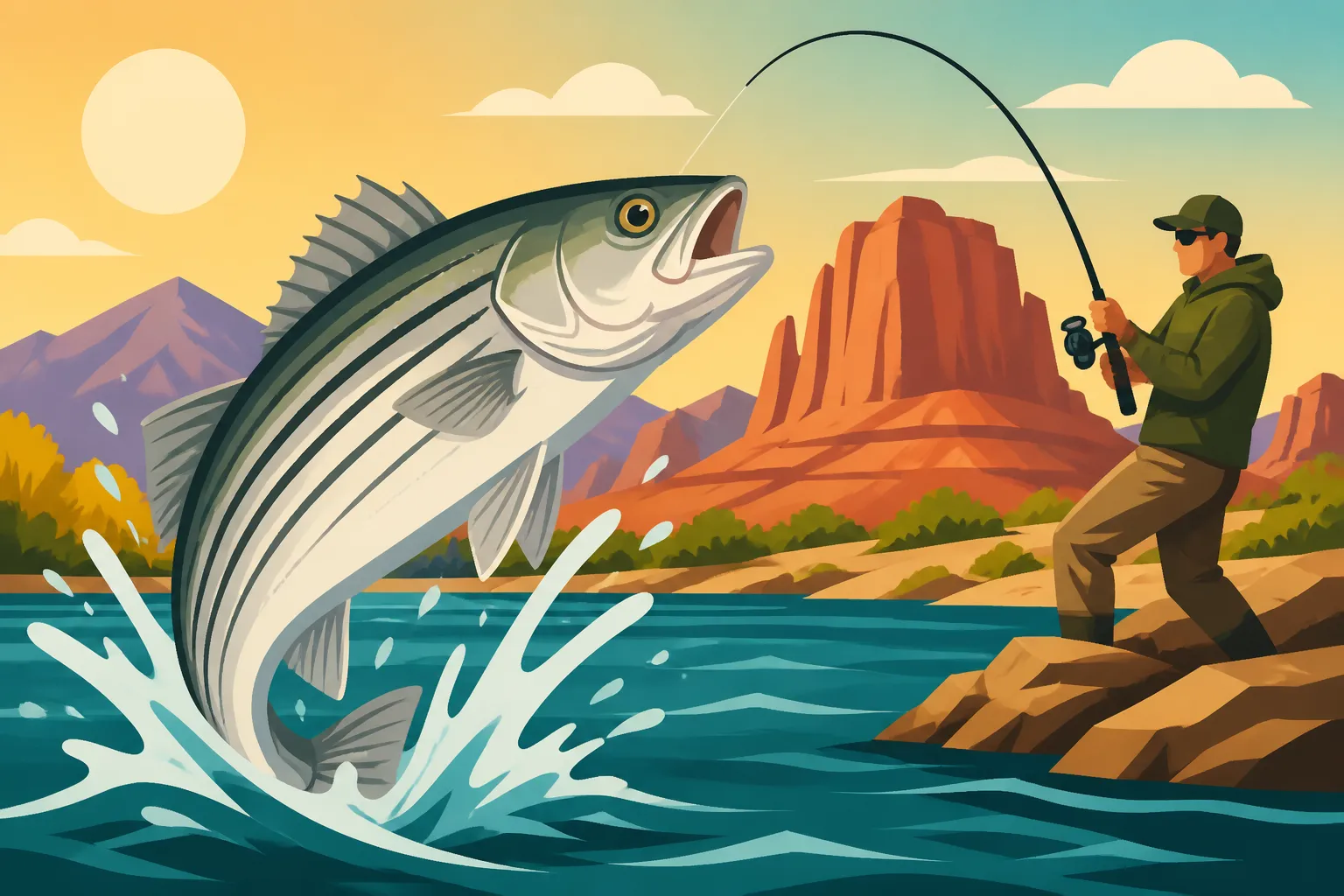
There's something incredibly special about catching a striped bass in the high desert of New Mexico. It's an experience that transcends the typical trout fishing often associated with our state. Stripers are known for their raw power and aggressive fights, making them a thrilling target for anglers of all skill levels. Imagine reeling in a fish that pulls like a freight train, far from the ocean, against the backdrop of our stunning New Mexico mesas and canyons. This unique juxtaposition makes every catch memorable.
The challenge of pursuing these fish in a landlocked environment also adds to their allure. It requires different strategies and an understanding of how they behave in a reservoir compared to a coastal environment. For many, it's about breaking away from the norm and seeking out a truly exciting fight. Plus, they can grow quite large here, offering the chance at a true trophy fish. Many anglers find the hunt for a big striper to be one of the most exciting forms of fishing in the state, drawing them back to Elephant Butte time and again.
Striped Bass Biology and Behavior in New Mexico Waters
To consistently catch striped bass, you need to understand them. These are not your average pond sunfish; they are apex predators with specific habits and preferences. Their behavior in a large, landlocked reservoir like Elephant Butte is influenced by water temperature, baitfish availability, and seasonal changes, making them both a predictable and sometimes elusive target. Knowing what makes them tick is half the battle.
Identifying New Mexico Stripers
When you hook into a striper in New Mexico, you'll immediately notice its distinctive features. They have a sleek, elongated body, typically silver with dark, prominent horizontal stripes running from gill to tail. These stripes are usually continuous, unbroken lines, which helps distinguish them from their close cousins, white bass or hybrid stripers, where the stripes might be broken or faded. Their powerful, forked tail is built for speed and endurance, allowing them to make those hard, drag-screaming runs that anglers love.
Their mouth is large and somewhat underslung, indicating their predatory nature – they're designed to engulf smaller baitfish. The average size of striped bass in New Mexico can vary greatly. While you'll catch plenty of "schoolies" in the 1-5 pound range, trophy stripers weighing 20 pounds or more are caught regularly, especially at Elephant Butte. If you're lucky enough to hook into one of the truly massive ones, you might even be looking at a potential New Mexico State Record Striped Bass contender. Knowing how to correctly identify your catch is important for adherence to regulations and for bragging rights!
Seasonal Movements and Feeding Patterns
Striped bass in New Mexico, particularly at Elephant Butte, exhibit distinct seasonal movement and feeding patterns driven primarily by water temperature and the presence of their main food source: gizzard and threadfin shad. In the spring, as water temperatures begin to rise, stripers become highly active and move into shallower areas, often near spawning grounds or creek channels, to feed aggressively. This is a fantastic time for anglers, as the fish are hungry and more accessible. They're often chasing schools of shad that are also moving into warmer waters.
As summer progresses and water temperatures soar, stripers tend to move to deeper, cooler waters, often suspending over main lake humps, points, and old river channels. They'll follow the thermocline and can be found congregating around baitfish schools at specific depths. During this time, they often feed heavily at dawn, dusk, and even throughout the night. Fall sees a resurgence of activity as temperatures cool, with stripers once again moving shallower and engaging in aggressive feeding frenzies, preparing for the colder months. Best Time of Year to Catch Striped Bass at Elephant Butte is often a hot topic among local anglers, and understanding these patterns is key.
How Stripers Adapt to Reservoir Environments
The fact that striped bass thrive in New Mexico's landlocked reservoirs is a testament to their incredible adaptability. Originally an anadromous species, meaning they migrate between fresh and saltwater, these particular populations have been successfully introduced and managed to live out their entire lives in freshwater. This adaptation often means they rely heavily on available baitfish populations, mainly shad, for their survival and growth. The larger the baitfish population, the larger and healthier the stripers tend to be.
Reservoirs like Elephant Butte provide the vast open water and varied depths that stripers need to hunt and escape pressure. While they don't migrate to the ocean, they still make extensive movements within the lake, following baitfish and seeking optimal water conditions. Their ability to adapt their spawning habits, often creating a "false" spawning run in rivers feeding the lake or in windy, open water areas that mimic current, also contributes to their success in these environments. It's a fascinating example of how a species can thrive in a completely new habitat when the core elements of food and space are present. Learning How Striped Bass Were Introduced to Elephant Butte Lake is a great way to appreciate this unique fishery.
Essential Gear for New Mexico Striped Bass Fishing
Chasing striped bass in New Mexico means gearing up for a serious fight. These fish are not to be underestimated, and showing up with flimsy tackle will only lead to heartbreak. You'll need robust rods, reels capable of handling strong runs, and a selection of baits and lures designed to mimic their preferred forage. Investing in the right gear will not only increase your chances of success but also make the battle more enjoyable and ensure you can land these powerful fish safely.
Rods, Reels, and Line for Striper Action
For striped bass in New Mexico, you're going to want a medium-heavy to heavy-action rod, typically 7 to 8 feet long. This length provides good casting distance from shore or boat, and the powerful backbone is essential for setting hooks and muscling in big fish. Look for rods designed for heavier lures and braided line. Pairing this with a sturdy baitcasting reel or a large spinning reel (sizes 4000-6000) that has a smooth, reliable drag system is crucial. When a big striper takes off, a sticky drag will snap your line in an instant.
As for line, braided line is a popular choice for its strength, sensitivity, and lack of stretch, allowing for solid hooksets even at long distances. A 30-50 pound test braided line is a good starting point, often paired with a fluorocarbon leader of 20-40 pound test for abrasion resistance and invisibility in the water. For those who prefer monofilament, step up to at least 15-25 pound test. You can find a fantastic selection of these robust setups, from rods to reels, on sites like Amazon, often with reviews from other anglers who target similar hard-fighting fish.
Baits and Lures That Get Results
Striped bass are primarily piscivorous, meaning they eat other fish, so your baits and lures should reflect that. The number one natural bait for stripers at Elephant Butte is live shad. If you can get your hands on them, they are incredibly effective, especially when fished on a free-line or under a bobber. For those without access to live bait, cut bait, like shad or even carp, can also be very effective, especially for larger, more sluggish fish on the bottom.
When it comes to artificial lures, there's a wide array of options. Large swimbaits, both soft plastic and hard-bodied, that imitate shad are excellent. Topwater lures, like poppers or walk-the-dog baits, can create explosive strikes, especially during low-light conditions. Sinking lipless crankbaits, jigging spoons, and large bucktail jigs are also phenomenal for vertical jigging or casting to schooling fish. Don't forget large grub tails or paddle tails on heavy jig heads. The key is to match the hatch – use lures that are similar in size and color to the baitfish the stripers are currently feeding on.
| Lure/Bait Type | Ideal Scenario | Key Features |
|---|---|---|
| Live Shad | Trophy hunting, slow trolling | High scent, natural movement, irresistible to hungry stripers |
| Cut Bait | Bottom fishing, night fishing | Strong scent trail, good for stationary setups, attracts larger fish |
| Large Swimbaits | Imitating schooling shad | Realistic profile, varied retrieves, effective when fish are chasing |
| Topwater Plugs | Low light, aggressive fish | Creates surface commotion, exciting visual strikes, covers water quickly |
| Sinking Lipless Cranks | Vertical jigging, covering depth | Vibrating action, casts far, good for active schools at various depths |
| Bucktail Jigs | Bottom bouncing, casting to structure | Versatile, can be tipped with bait, good for current or deep water |
| Grub/Paddle Tails | Jigging, slow retrieves | Soft plastic, good vibration, highly customizable with jig head weight |
For more ideas on specific lures, you might want to check out articles like Best Lures for Striped Bass at Elephant Butte.
Boating and Electronics for Successful Striper Hunts
Given the vastness of Elephant Butte Lake, a boat is almost essential for serious striped bass fishing. It allows you to cover large areas, chase schooling fish, and access prime locations that are unreachable from shore. A sturdy fishing boat with a reliable outboard motor is ideal. However, even smaller jon boats or kayaks can be effective if you stick to coves and calmer sections, though always prioritize safety on such a large body of water.
Beyond the boat itself, good electronics can make or break a striper trip. A quality fish finder with side imaging and down imaging capabilities will help you locate baitfish schools and the stripers that are almost certainly following them. GPS is invaluable for marking productive spots, navigating the lake, and finding your way back, especially during early morning or late evening excursions. A good trolling motor, especially one with GPS anchoring capabilities, can help you stay on schools of fish once you find them. Remember to ensure your boat meets all New Mexico Boat Registration and Titling Guide requirements before heading out.
Effective Techniques for Catching Striped Bass in New Mexico
Catching striped bass is often a game of strategy, adapting to conditions, and understanding how these fish behave. There's no single magic bullet, but rather a collection of techniques that, when used effectively, can lead to consistent success. Whether you prefer the thrill of trolling, the precision of casting, or the quiet solitude of night fishing, there’s a method for every angler.
Trolling and Downrigging Strategies
Trolling is perhaps one of the most popular and effective methods for locating and catching striped bass on large reservoirs like Elephant Butte. This technique involves dragging lures or bait behind a moving boat, covering significant stretches of water and presenting your offerings to fish at various depths. The key is to match your trolling speed and lure depth to where the fish are holding. Often, stripers will be found suspending in the water column, rather than tight to the bottom, especially when chasing shad.
For targeting specific depths, downriggers are invaluable tools. They allow you to precisely present lures or live bait at a predetermined depth, which is crucial when stripers are holding in a narrow temperature band or following baitfish schools at, say, 25 feet. Planer boards can also be used to spread out your lines, covering a wider swath of water and preventing tangles, especially when multiple anglers are fishing. Experiment with different lure types, colors, and depths until you find what the fish are responding to. Pay close attention to your fish finder; if you see bait schools or striper arches at a certain depth, make sure your lures are running right through them.
Bank Fishing and Casting for Stripers
While a boat offers significant advantages, you absolutely can catch striped bass from the bank in New Mexico, especially at Elephant Butte. This often requires a bit more patience and knowing when and where to focus your efforts. Look for accessible points, humps, or rocky shorelines that drop off quickly into deeper water. These areas can act as ambush points for stripers, particularly during spring and fall when they move shallower. Early mornings and late evenings are prime times for bank anglers, as stripers often push baitfish into accessible areas.
Casting techniques from shore usually involve long casts with heavy lures that can reach distant structure or schooling fish. Large swimbaits, spoons, and lipless crankbaits are excellent for covering water. If you're using live or cut bait, a heavy bottom rig with a pyramid or no-roll sinker can keep your bait in place on the bottom, especially when cast into deeper channels. Patience is key, but don't be afraid to move around. If a spot isn't producing, try another stretch of shoreline. Sometimes, stripers will cruise close to the bank, so keep an eye out for any surface activity.
Night Fishing for Striped Bass
Night fishing for striped bass is a whole different ball game, and for many New Mexico anglers, it's one of the most productive and exciting ways to target these fish, especially during the warm summer months. Stripers are highly active nocturnal predators, using the cover of darkness to ambush baitfish that may be disoriented or less wary. Plus, the cooler night temperatures are often more comfortable for both fish and angler.
When fishing at night, safety is paramount. Always tell someone where you're going and when you expect to return, especially if you're on a boat. Use navigation lights on your boat and have headlamps or lanterns on shore. Light sources, like submersible lights, can be incredibly effective at drawing in plankton, which then attracts baitfish, and subsequently, stripers. Casting large dark-colored swimbaits, topwater plugs (their silhouette is key against the moonlight), or soaking cut bait on the bottom are all proven night fishing tactics. The sound and vibration of lures become even more critical in the dark, so choose baits with rattles or strong wobbling actions. The quiet of the night, broken only by the splash of a feeding striper, is an experience you won't soon forget.
Navigating Regulations and Conservation for Striped Bass
Fishing for striped bass in New Mexico, like any other species, comes with its own set of rules and responsibilities. Understanding and adhering to these regulations isn't just about avoiding a fine; it's about contributing to the health and sustainability of this unique fishery for future generations. Our Department of Game and Fish works hard to manage these populations, and anglers play a vital role in that effort.
New Mexico Striped Bass Bag and Possession Limits
The specific bag and possession limits for striped bass in New Mexico can change, so it's absolutely crucial to consult the most current New Mexico Fishing Regulations Overview or the official New Mexico Department of Game and Fish website before each fishing trip. Generally, these limits are set to ensure a healthy population while allowing anglers to enjoy their catch. These limits dictate how many fish you can keep in a single day (bag limit) and how many you can have in your possession at any given time (possession limit), which often includes fish from previous days of fishing.
There might also be size restrictions, such as a minimum or maximum length, which further helps protect younger fish or larger breeding stock. Always carry a measuring tape with you and know how to properly measure your fish from the tip of the snout to the end of the tail. Being a responsible angler means being knowledgeable about these rules. If you're ever unsure, err on the side of caution or release the fish. It's better to be safe than sorry, and it helps preserve the fishing for everyone.
Promoting Sustainable Striper Fishing Practices
Beyond just following the regulations, promoting sustainable fishing practices is key to ensuring the long-term health of New Mexico's striped bass populations. This involves several thoughtful approaches. For starters, if you're practicing catch and release, handle fish with care. Minimize their time out of the water, use wet hands when handling, and consider using barbless hooks, especially if you're not planning to keep your catch. A good rubberized landing net is also much gentler on a fish's slime coat than a knotted nylon net.
Another aspect of sustainability is responsible disposal of waste. Never leave fishing line, lures, or any trash behind at the lake. Monofilament line, in particular, can be incredibly damaging to wildlife. Participating in local clean-up efforts or simply taking extra trash with you helps maintain the pristine environment these fish inhabit. Supporting conservation efforts and organizations that focus on protecting New Mexico's aquatic resources also goes a long way. By thinking beyond just the catch, we can ensure that New Mexico Fishing Season Dates and Limits continue to offer opportunities for striped bass for years to come.
Timing Your Trip: Best Seasons for Striped Bass in New Mexico
Knowing when to go fishing can be just as important as knowing where and how. Striped bass activity levels in New Mexico are heavily influenced by the changing seasons, primarily due to fluctuations in water temperature and the behavior of their primary food source, shad. While you can catch stripers year-round, certain seasons offer significantly better prospects and more consistent action.
Spring and Fall: Prime Time for Stripers
If you're looking for the absolute best times to target striped bass in New Mexico, mark your calendar for spring and fall. These are undeniably the prime seasons. In the spring, as the water temperatures begin to climb after the cold winter, stripers emerge from their deeper haunts and become incredibly active. They are hungry and eager to feed, often moving into shallower coves, creek channels, and points where shad are also congregating. This period offers fantastic opportunities for both casting from shore and trolling. The fish are often more aggressive, hitting a wider variety of lures, and can be found in larger schools.
Similarly, the fall offers another incredible window of opportunity. As the scorching summer heat begins to wane and water temperatures cool down, stripers once again go on a feeding frenzy. They're bulking up for the coming winter, and this often leads to explosive topwater action, especially during the early morning and late evening hours. Shad schools are often pushed to the surface or into shallow bays, leading to visible "boils" where stripers aggressively attack baitfish. This can be one of the most exciting times to fish, with multiple hookups and fast action. Many seasoned anglers consider the crisp air and vibrant colors of a New Mexico fall to be the perfect backdrop for chasing trophy stripers.
Summer and Winter Adjustments
While spring and fall are prime, that doesn't mean you can't catch striped bass during the summer and winter months in New Mexico – it just means you'll need to adjust your tactics. Summer fishing for stripers can be challenging due to the intense heat and high water temperatures. During this time, stripers will retreat to deeper, cooler water, often suspending over main lake basins or near thermoclines. Your best bet is to fish during low-light hours – very early mornings, late evenings, or even throughout the night. This is where trolling with downriggers or vertical jigging in deeper water becomes essential to get your lures down to where the fish are holding. Striped Bass Summer Holding Depth becomes a critical piece of information.
Winter fishing presents its own set of challenges, mainly colder water and sometimes slower fish. However, stripers are still present and can be caught. They will often school up tightly in deeper areas, often around structure like old river channels or submerged humps. Your approach in winter will typically be slower and more methodical. Vertical jigging with spoons or heavy jigs, or slowly presenting live or cut bait on the bottom, can be effective. The bite might be subtle, but if you find a school, you can often pick off several fish. Regardless of the season, consistently checking water temperatures and understanding the baitfish movements are the keys to success.
Disclaimer
This article is for general informational purposes only and does not constitute professional advice. Laws, prices and regulations vary by location and change over time. Consult a qualified professional for guidance on your specific situation.