Striped Bass Summer Holding Depth
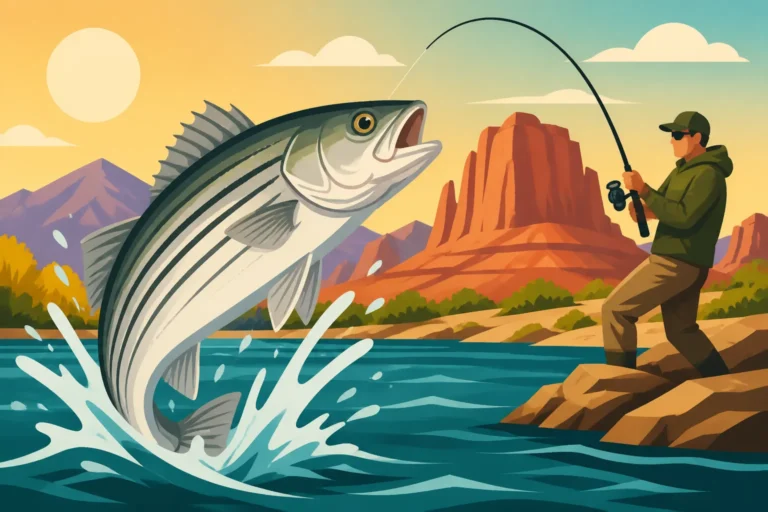
One of the trickiest things about chasing striped bass in New Mexico, especially when that scorching summer sun beats down, is figuring out where these elusive fish are actually holding. It's incredibly frustrating to spend hours casting into what looks like prime water, only to come up empty-handed because the stripers have moved to deeper, cooler haunts. This guide is all about demystifying that challenge, helping you understand where striped bass go when the temperatures rise and giving you the knowledge and techniques to find them.
Understanding Striped Bass Behavior in Summer Heat
Summer in New Mexico brings a unique set of challenges for anglers, particularly when targeting a powerful fish like the striped bass. These aren't your typical panfish that might just huddle under a lily pad. Stripers are apex predators that need specific conditions to thrive, and when their environment changes dramatically with the seasons, so does their behavior.
Why Stripers Seek Deeper Water in Summer
When the surface water temperatures in lakes like Elephant Butte start to climb into the 80s, it's not just uncomfortable for us anglers; it's genuinely stressful for many fish species, including striped bass. Warm water holds less dissolved oxygen, which is essential for fish respiration. Think of it like trying to run a marathon in thin, hot air—it's just not sustainable.
Striped bass, being a cold-water tolerant species originally from coastal areas, are particularly sensitive to these changes. As the shallow waters heat up, they're instinctively driven to find a more hospitable environment. This means heading down, often to significant depths, where the water is cooler and oxygen levels are more stable. This thermocline, a distinct layer where water temperature changes rapidly with depth, becomes their refuge. They're not just looking for comfort; they're looking for survival. This migration can happen quite suddenly once the summer truly sets in, making early summer transitions a key time to observe their movements.
Preferred Summer Habitats and Structures
Even when seeking depth, striped bass aren't just suspended aimlessly in the middle of a deep basin. They still relate to structure, just deeper versions of it. Imagine them like underwater mountaineers, navigating the contours of the lakebed. They'll often school up around deep points, submerged humps, old creek channels, or the deeper sides of ledges. Any area that offers both cooler water and some form of ambush point or congregation spot for baitfish will be a prime target.
For instance, at a vast reservoir like Elephant Butte, fishing around the old river channel or deep structure near rocky islands and submerged cliffs can be incredibly productive. These areas offer distinct changes in depth and often act as highways for baitfish moving between different zones. It's not uncommon to find massive schools of stripers holding tight to these structures, waiting for an opportunity to feed. Understanding these deep-water highways and holding patterns is crucial to consistent success in the summer months. You might find them suspended over 60 feet of water, but they're often still over a submerged ridge or drop-off that provides a reference point.
Factors Influencing Striped Bass Depth in New Mexico
Pinpointing the exact depth where striped bass are holding isn't an exact science, as several environmental factors play a significant role. It's like a complex puzzle where each piece influences the overall picture. Understanding these variables will help you make more informed decisions on the water.
Water Temperature and Dissolved Oxygen
The most critical factors driving striped bass deeper in the summer are water temperature and dissolved oxygen (DO) levels. As mentioned earlier, warmer water holds less oxygen. In larger reservoirs, you often find a distinct thermocline where the warm, oxygen-depdepleted surface water meets cooler, more oxygen-rich water below. Stripers will typically hold just above, within, or just below this thermocline. It's their "comfort zone."
This ideal temperature range for striped bass in New Mexico often falls between the high 60s and low 70s Fahrenheit. If the surface water is 85 degrees, you can bet they're not there. Instead, they'll seek out that sweet spot at 20, 30, or even 50 feet down where the temperature is more suitable and they can breathe easily. Regularly checking a depth finder with temperature readings can be incredibly helpful. You're not just looking for fish, but for the right water conditions. Areas with cooler inflows, like a river channel or a spring, can also create localized pockets of favorable conditions.
Baitfish Presence and Movements
Even if the water temperature and oxygen are perfect, stripers won't be far from their food source. Striped bass are voracious predators, and their movements are heavily dictated by the presence and activity of baitfish like shad, bluegill, or even smaller crappie. If the baitfish are schooling at 35 feet, the stripers are likely to be lurking at that same depth or just below them, ready to strike.
Monitoring your fish finder for bait balls is just as important as looking for stripers themselves. Often, you'll see large clouds of baitfish suspended, and the larger, arch-like returns of stripers will be nearby, either below the bait, to the sides, or sometimes even pushing through them from below. Changes in current or wind can also influence where baitfish congregate, which in turn shifts the striper's preferred depth. If a strong wind pushes bait into a particular coves or against a deep bluff wall, the stripers won't be far behind, even if it means a slight adjustment in their average depth. Pay attention to what's happening around you and adjust your strategy accordingly. This is especially true at lakes like Elephant Butte where these schools can be enormous.
Light Penetration and Time of Day
Another less obvious but significant factor is light penetration. Striped bass, while not strictly nocturnal, often prefer lower light conditions, especially in clear New Mexico waters. Bright sun can push them deeper during the day, making them seek the relative darkness of greater depths. This is why early mornings and late evenings, or even night fishing, can be incredibly productive for shallower stripers.
As the sun climbs high in the sky, expect them to drop down. On overcast days, or during the monsoon season when the sky is often cloudy, stripers might hold slightly shallower than on a bluebird day. This effect is compounded in very clear lakes where light penetrates deeper. When fishing deep, remember that your lure needs to be visible, but also that the fish might be using the deeper water to ambush prey from below without being silhouetted against the surface. Understanding this helps you choose not only the right depth but also the right lure color and presentation.
Techniques for Locating Deep Summer Stripers
Finding those deep-holding striped bass in the vastness of a New Mexico reservoir can feel like searching for a needle in a haystack. However, with the right techniques and a little persistence, you can significantly increase your chances of success. It's all about methodically working the water column and interpreting what your electronics are telling you.
Utilizing Sonar and Fish Finders
Your fish finder is arguably your most critical tool when targeting deep summer stripers. It's your eyes below the surface, allowing you to "see" the underwater topography, the thermocline, baitfish, and the stripers themselves. Don't just look for big red arches; learn to interpret the entire screen. Pay attention to water temperature readings, which can help you identify the thermocline.
When you see large schools of baitfish, mark that depth. The stripers will be in that vicinity. Look for those characteristic large, dense arches, especially if they are suspended just below or within the bait schools. Some of the newer side-imaging and down-imaging units can provide an incredibly clear picture of structure and fish holding tightly to it. Trolling slowly over deep points and humps while constantly monitoring your sonar is a fantastic way to cover water and locate active schools. If you find a school, make a mental note or mark a waypoint on your GPS. Chances are, if the conditions remain stable, they'll be in that general area. Many anglers find excellent deals on advanced fish finders on Amazon.
Trolling Deep Diving Lures and Baits
Once you've identified a promising depth or a school of fish, trolling is often the most effective method for covering water and presenting your lure consistently at that specific depth. This isn't just dragging a lure behind the boat; it's a calculated approach. You'll need deep-diving crankbaits that are rated to reach the depths where stripers are holding. Look for lures that dive to 20, 30, or even 40 feet, depending on your target depth.
Pair these with lead core line or downriggers for even more precise depth control. Lead core line, with its color-coded segments, helps you estimate how much line to let out to reach a certain depth. Downriggers, on the other hand, allow you to present a lure at an exact depth, regardless of trolling speed or line type. You can also use umbrella rigs, which imitate a school of baitfish, often with a larger "chaser" lure at the back. When trolling, vary your speed slightly, make gentle turns, and pay attention to any sudden changes in depth or structure. For more on this, check out Trolling Techniques for New Mexico Lakes.
Vertical Jigging and Dropping Live Bait
When you've pinpointed a school of stripers on your sonar, especially if they are tightly grouped, vertical jigging or dropping live bait directly onto them can be incredibly effective. This method is all about precision. Heavy jigs, like flutter spoons or lead jigs, can be dropped quickly to the desired depth. Once there, a series of lifts and drops, mimicking a wounded baitfish, can trigger aggressive strikes.
For live bait, threadfin shad or gizzard shad are often preferred. Use a heavy sinker to get the bait down quickly to the striper's depth. A Carolina rig or a three-way swivel rig works well for this. Make sure your live bait is active and healthy; a sluggish bait won't entice a striper. This technique is particularly potent when the fish are concentrated and not actively chasing. It's a "put it in front of their face" approach that can yield consistent results. If you can't find live bait, consider using high-quality soft plastic swimbaits that imitate shad, often available for purchase on Amazon.
Essential Gear for Deepwater Striped Bass Fishing
Tackling deep-holding striped bass requires more than just your everyday fishing setup. These fish are powerful, and the depths they inhabit demand specialized gear that can handle the pressure, the heavier lures, and the strong fight. Investing in the right equipment will make your summer striper pursuit far more enjoyable and successful.
Rods, Reels, and Line
For deepwater striped bass, you'll want a stout rod, typically a medium-heavy to heavy power rod with a fast to moderate action. This gives you the backbone to handle heavy lures and fight large fish, but enough tip sensitivity to detect subtle bites at depth. A rod in the 7 to 8-foot range is versatile for both trolling and jigging.
Matching this with a robust baitcasting reel is key. Look for reels with a strong drag system and a high line capacity. You'll be using heavier lines and needing to let out a lot of it, so capacity is crucial. Many anglers prefer reels with a lower gear ratio for cranking heavy lures or fighting powerful fish from deep. As for line, braided line in the 30-65 lb test range is a popular choice for its strength, lack of stretch, and thin diameter, which helps with depth. You'll often tie a fluorocarbon leader (20-40 lb test) to the braid for invisibility and abrasion resistance. If you’re trolling, don’t overlook lead core line for precise depth control, often found in various weights and colors. You can find excellent options for all these components on Amazon.
Lures and Terminal Tackle
Your lure selection for deepwater striped bass needs to focus on reaching depth and imitating the available baitfish. Deep-diving crankbaits are a staple. Look for models with large bills that are designed to plummet quickly. Colors should mimic shad, but don't be afraid to experiment with brighter colors on overcast days or in stained water. Flutter spoons, in weights from 1 to 3 ounces, are deadly for vertical jigging. Consider larger bucktail jigs, especially if you tip them with a soft plastic trailer.
Terminal tackle is equally important. Heavy-duty snap swivels (rated for at least 50 lbs) are essential for connecting lures and preventing line twist, especially with trolling. Quality treble hooks are a must; stripers have hard mouths, and you want hooks that will penetrate and hold. Keep a selection of heavy sinkers (1-3 oz) for live bait rigs or when you need to get your offerings down quickly. For more specific recommendations, a good read would be Best Lures for Striped Bass at Elephant Butte.
Essential Accessories for Deep Striper Fishing
Beyond the core rod, reel, and tackle, several accessories will make your deepwater striper fishing much more efficient and enjoyable. A good pair of heavy-duty pliers or hook removers is crucial for safely unhooking fish, especially if they've swallowed the lure. A reliable measuring board and scale are important for documenting your catch, whether for personal records or tournament entries.
Since you'll likely be on the water for extended periods in the summer heat, a large cooler with plenty of ice is essential for keeping any harvested fish fresh. Polarized sunglasses are also incredibly helpful for spotting surface activity or reading water contours. Finally, don't forget boat safety equipment, including life jackets, and a first-aid kit. A well-stocked boat is a happy boat! For a broader understanding of fishing safety and regulations, consider New Mexico Boat Registration and Titling Guide.
| Technique | Primary Gear | Best Conditions | Pros | Cons |
|---|---|---|---|---|
| Trolling | Deep-diving crankbaits, lead core/downriggers, stout rod, high-capacity reel | Covering large areas, locating schools, consistent depth | Covers vast water, presents lure at constant depth | Requires boat, can be slow, less "feel" for bites |
| Vertical Jigging | Heavy spoons, lead jigs, jigging rod, baitcasting reel | Fish concentrated and marked on sonar, active feeders | Precise targeting, good for active schools, exciting fight | Requires precise boat positioning, less search-oriented |
| Dropping Live Bait | Live shad, heavy sinkers, Carolina/three-way rig, sensitive rod | Fish marked on sonar, finicky or slower bite | Highly effective for reluctant fish, natural presentation | Requires live bait management, slower presentation |
| Casting (to structure) | Heavy swimbaits, jerkbaits, beefy spinning/casting rod | Stripers near deep points/ledges, low light, quick casts | Active fishing, covers specific structures | Limited to shallower fringes of deep water |
Summer Striper Hotspots and Behavior
While striped bass can be found in various New Mexico waters, certain locations are renowned for their summer striper fishing. Understanding the specific dynamics of these hotspots can give you a significant advantage.
Elephant Butte Lake: The Striper Mecca
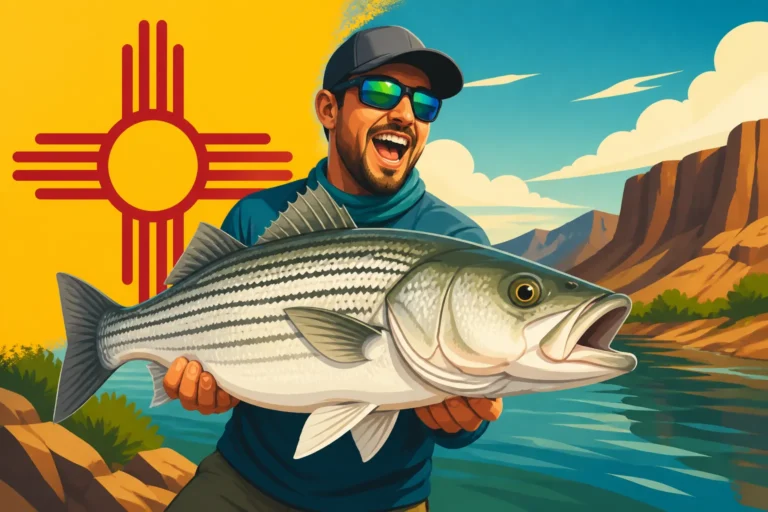
When we talk about Striped Bass Fishing in New Mexico, Elephant Butte Lake immediately comes to mind. This massive reservoir is the undisputed king for stripers in the state, and during the summer, it's where most anglers focus their deepwater efforts. The sheer size of the lake means there's a lot of water to cover, but it also means there are abundant deep structures and vast populations of baitfish.
Summer at Elephant Butte sees stripers moving from the shallower coves and river mouths into the main lake basin, often concentrating around the deep channel of the old Rio Grande, submerged points, and vast offshore humps. They will follow the thermocline and the bait. Pay close attention to areas near the dam, Longpoint, or the deeper sections around Headquarters Canyon. These locations often provide the depth, current breaks, and structure that big schools of stripers seek out. Remember to consult your sonar frequently and be ready to move until you mark fish.
Navigating Other New Mexico Waters
While Elephant Butte is the primary destination, other lakes might hold smaller populations of striped bass or hybrid stripers (wipers). Lakes like Ute Lake also have healthy populations, and the principles of deepwater summer fishing still apply. Look for the deepest parts of these reservoirs, especially near the dam or major creek channels. These fish will also be seeking cooler, oxygenated water.
Keep in mind that the exact holding depth can vary slightly from lake to lake, depending on the overall depth, clarity, and specific forage base. Always check the current fishing reports and regulations for the specific body of water you're planning to visit. Even if you're targeting other species like walleye, you might stumble upon a school of stripers in the same deep water, as their habitat requirements often overlap in the summer. For a general overview of other prime fishing locations, see Best Places to Fish in New Mexico.
Disclaimer
This article is for general informational purposes only and does not constitute professional advice. Laws, prices and regulations vary by location and change over time. Consult a qualified professional for guidance on your specific situation.