How to Identify New Mexico Game Fish From a Photo
There's nothing quite as frustrating as reeling in a truly magnificent fish here in New Mexico, getting that perfect photo, and then staring at it later, completely stumped. Was that a brown trout or a rainbow? A smallmouth or a largemouth bass? Knowing exactly what you've caught isn't just about bragging rights; it's crucial for adhering to our sometimes complex fishing regulations. This guide will help you decipher those finned mysteries from your photos, focusing on the key visual clues that distinguish one species from another in our Land of Enchantment waters.
Why Photo Identification Matters for New Mexico Anglers
Let's be honest, we've all been there. You catch a fish, snap a quick photo, and then realize later you're not entirely sure what it was. But beyond just satisfying your curiosity, knowing how to identify fish from a photo is a surprisingly vital skill for any angler fishing New Mexico's diverse waters.
Navigating Regulations with Confidence
New Mexico has specific regulations for different fish species, and these rules can vary dramatically depending on the water body. For example, the bag limit for rainbow trout might be generous in a stocked pond, but a native Gila Trout found in a remote stream could be strictly catch-and-release, or have a very small, specific limit. Misidentifying a fish, even by accident, could lead to keeping a protected species or exceeding the legal limit for another, potentially resulting in fines or other penalties. Knowing your fish helps you stay on the right side of the law. Imagine fishing a stream that holds both brown trout and our cherished Rio Grande Cutthroat Trout in New Mexico. If you can't tell the difference from a quick glance or a photo, you might accidentally harvest a fish that's meant to be released, or fail to appreciate the significance of a rare native catch. This is especially true for our New Mexico Trout Fishing Rules, where species identification is paramount.
Bragging Rights and Accurate Records
Beyond the legalities, there's a deep satisfaction that comes from correctly identifying your catch. When you show off that photo to your buddies or share it online, you want to call it by its proper name. "Check out this beautiful walleye I pulled from Conchas Lake!" sounds a lot better than "Look at this… big fish with teeth!" Accurate identification also helps you keep better fishing records, allowing you to track what species you're catching in certain locations, what baits or lures were effective, and how your skills are developing over time. If you're serious about your angling journey, keeping a journal with detailed notes about your catches – including species identification – is a fantastic way to learn and grow. You can even find field guides on Amazon that help you log your catches and identify species on the spot.
Understanding Fish Behavior and Habitats
Every fish species has its own unique preferences for habitat, diet, and behavior. By accurately identifying the fish in your photos, you gain valuable insights into the ecosystem you're fishing. Did you catch a smallmouth bass in rocky, clear water? That makes perfect sense, as they prefer those environments. A channel catfish in a slow, murky river? Classic. This knowledge helps you become a more effective angler by understanding why you caught what you did, and where you might find similar species in the future. It's like unlocking a secret code to the underwater world. Learning to identify them connects you more deeply to the Fish Species Found in New Mexico.
Key Features to Look For When Identifying Fish
When you're staring at a photo of your catch, trying to figure out what it is, don't just guess. Train your eye to look for specific details. These aren't just random markings; they are often the definitive characteristics that separate one species from another.
Body Shape and Fin Characteristics
The overall silhouette of a fish, along with the shape and placement of its fins, are often the first major clues. Is the body long and slender like a trout, or deep and laterally compressed like a crappie? Take note of the dorsal fins – does it have one continuous dorsal fin, or two separate ones? Are they spiny or soft-rayed? Trout, for instance, have a small fleshy adipose fin between their dorsal and tail fin, a feature absent in most other game fish. The tail fin, or caudal fin, is also telling: is it deeply forked like a channel catfish, slightly forked like a brown trout, or more rounded like a bluegill? These are fundamental differences that immediately narrow down your possibilities. Pay attention to the pectoral and pelvic fins as well; their size and position can sometimes offer additional hints, especially when looking at the overall profile.
Coloration, Patterns, and Markings
While coloration can vary greatly based on factors like water clarity, diet, and even spawning seasons, specific patterns and markings are often more consistent. Look for distinct spots – are they large or small? Are they uniform or varied? Do they extend onto the fins? Some trout, like the Rainbow Trout Fishing in New Mexico, are known for their distinctive pink or red lateral stripe, while others, such as the Brown Trout Fishing in New Mexico, often display prominent dark and sometimes red spots, often with pale halos. Bass species might have a clear lateral line that looks like a dark stripe, or distinct vertical bars. Always consider the primary background color as well – is it olive, silver, golden, or mottled? Remember that colors can fade quickly once a fish is out of water, so a fresh photo is always best for accurate color assessment.
Mouth and Teeth Structure
The mouth of a fish can tell you a lot about its feeding habits and, consequently, its species. Look at the jaws: does the upper jaw extend beyond the eye, or does the lower jaw protrude more significantly? Does the fish have obvious teeth? Walleye, for instance, are famous for their prominent, needle-sharp canine teeth. Catfish, while lacking traditional teeth, are characterized by their distinctive barbels around their mouths, which act as sensory organs. Bass species also have differences in jaw length that are key identification points. Understanding these features helps differentiate similar-looking species that might inhabit the same waters. For a closer look, sometimes you might need to gently open the fish's mouth for the photo, if regulations allow and you can do so quickly and safely for the fish.
Scale Size and Lateral Line
Finally, consider the size of the scales and the prominence of the lateral line. Some fish, like many trout, have relatively small scales, giving them a smoother appearance, while others, like carp, have very large, obvious scales. The lateral line is a sensory organ that runs along each side of the fish, often appearing as a distinct stripe or a series of pores. Its path can sometimes be a subtle clue. For instance, the lateral line on some bass species can appear as a broken or solid dark stripe. On catfish, of course, the absence of scales is a dead giveaway, indicating a different family of fish entirely. Examining these details helps confirm your initial impressions gathered from body shape and coloration.
Identifying Common New Mexico Trout Species from Photos
New Mexico is a trout angler's paradise, but with several species present, identifying your catch can sometimes be tricky. Let's break down the key features of the most common trout you'll encounter.
Rainbow Trout
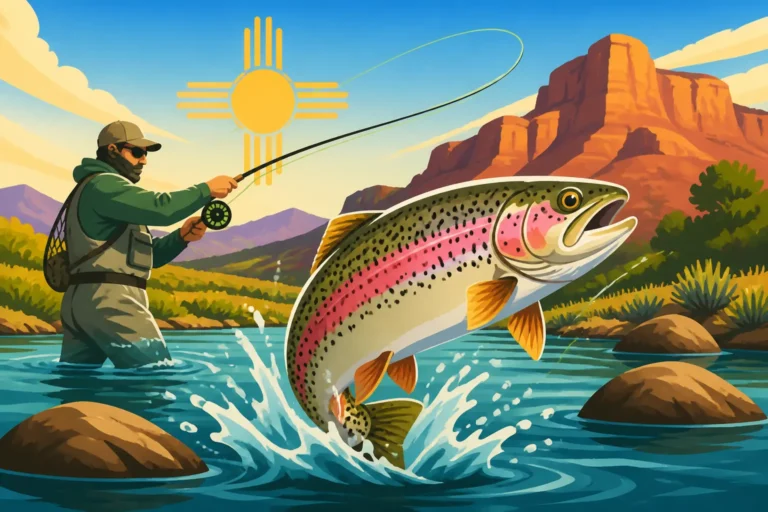
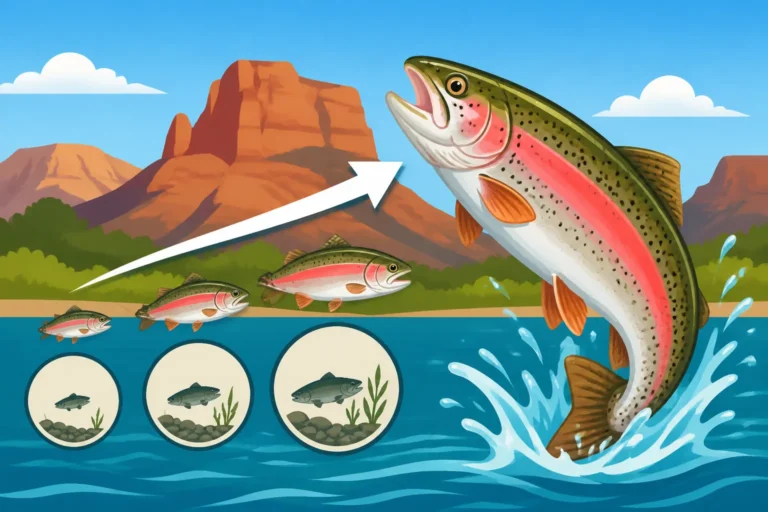
The rainbow trout is perhaps the most widely recognized and frequently stocked trout in New Mexico. From a photo, look for a prominent, often vibrant pink or reddish stripe running horizontally along its side, from its gill plate to its tail. Their body is typically silvery with a darker back, and they are usually covered in numerous small, dark spots, which often extend into their dorsal and caudal (tail) fins. The tail fin is usually square or slightly forked. While hatchery-raised rainbows tend to be more uniformly colored, wild or stream-dwelling rainbows can exhibit more intense coloration and a more streamlined body. If you're fishing in a heavily stocked lake or pond, chances are good your catch is a rainbow. You can find many guides on How to Catch Trout in New Mexico, and they frequently feature rainbows.
Brown Trout
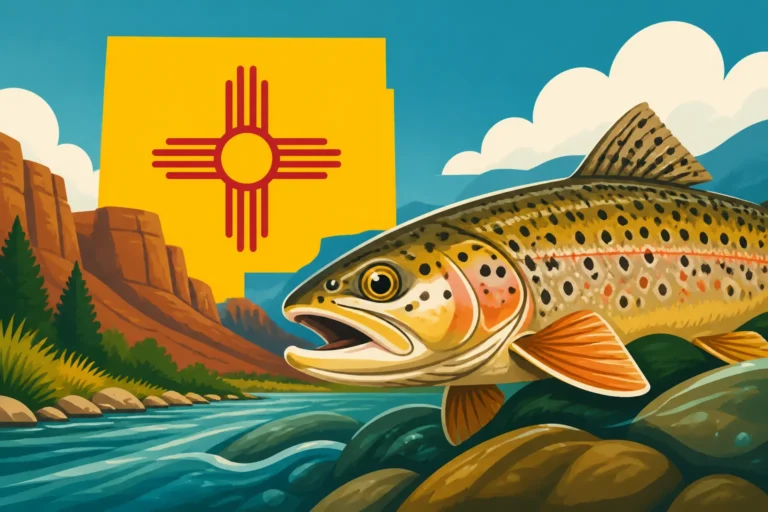
Brown trout are known for their cunning and beautiful, often muted, coloration. In a photo, browns typically have a more olive-brown or golden-brown back, fading to yellowish sides and a creamy belly. A key identifier is the presence of large, dark spots with pale halos (like a bullseye), mixed with some red or orange spots, particularly along their sides. These spots often extend onto the dorsal fin but are usually absent from the tail fin, which is typically square or slightly forked, and often has some dark spotting. The pink lateral stripe common to rainbows is usually absent or very faint on a brown. Wild brown trout, especially large ones, can develop a formidable, hooked lower jaw (a "kype") during spawning season, a striking feature for a photo. They are often found in the same waters as rainbows, requiring careful identification.
Rio Grande Cutthroat Trout
Our state fish, the Rio Grande Cutthroat Trout in New Mexico, is a true gem and requires careful handling and identification. The most definitive feature to look for in a photo is the distinctive red or orange "cutthroat" slash marks on the underside of its lower jaw. Beyond that, their body color tends to be a beautiful golden-olive or bronze, fading to a lighter belly. Their spots are typically small and dark, often concentrated towards the tail, and can extend onto the caudal fin. The overall pattern is usually sparser than a rainbow. Being native, their habitat is often in higher elevation, pristine waters. Recognizing a cutthroat is a special moment, and proper identification is critical for their conservation.
Gila Trout
Another incredibly special native trout, the Gila Trout in New Mexico is rarer and highly protected. Identifying them from a photo can be challenging, but there are distinct clues. Gila trout generally have a subtle, golden-olive body color, sometimes with hints of copper, and a brighter yellow belly. Their scales are notably small, giving them a very smooth, almost scaleless appearance. The spots are typically small, sparse, and irregular, mostly concentrated along the back and sides, not usually extending onto the fins. Unlike cutthroat, pure Gila trout typically lack the distinct red slash under the jaw, though some hybridized individuals might show faint markings. Their fins are often dusky yellow or orange. If you believe you've caught a Gila trout, a clear photo is vital for documentation, and it should always be released unharmed immediately.
Brook Trout and Lake Trout
While not as widespread as rainbows or browns in New Mexico, brook trout and lake trout do inhabit certain high-elevation and deep-water environments respectively.
Brook Trout: In a photo, look for the unique, worm-like wavy markings (vermiculations) on their olive-green back, which fade into lighter sides. They have distinctive red or orange spots, often with blue halos, along their sides. Their most striking feature is the white leading edges on their lower fins (pectoral, pelvic, and anal), often followed by a black stripe. Their tail fin is typically square or only slightly forked. They're a smaller, vibrant fish often found in cold mountain streams. If you're exploring the high country, you might encounter Brook Trout in New Mexico.
Lake Trout: These are often much larger, with a longer, more streamlined body and a very deeply forked tail, a crucial distinguishing characteristic. Their coloration is generally dark grey, olive, or brown on the back, fading to lighter sides and a pale belly, covered in numerous irregular, light-colored spots that are typically smaller than those of a brown trout. These spots extend onto their dorsal and caudal fins. Lake trout are typically found in the deepest, coldest parts of large lakes, such as some of our larger reservoirs. Learning to distinguish them helps understand specific regulations for Lake Trout in New Mexico.
| Trout Species | Key Body Color & Stripe | Spotting Pattern | Fin Characteristics | Other Notable Features |
|---|---|---|---|---|
| Rainbow | Silvery to dark back, often distinct pink/red lateral stripe | Numerous small, dark spots all over body & fins | Square or slightly forked tail; small adipose fin | Most common, widely stocked |
| Brown | Olive-brown to golden back, yellowish sides, no distinct stripe | Large, dark spots with pale halos (some red spots) | Square or slightly forked tail; small adipose fin | Predatory look, can have hooked jaw (kype) |
| Rio Grande Cutthroat | Golden-olive/bronze back, lighter belly | Small, dark spots, often concentrated near tail | Square or slightly forked tail; small adipose fin | Red/orange "cutthroat" slash under jaw |
| Gila | Golden-olive/copper back, yellow belly | Very sparse, small, irregular dark spots | Square or slightly rounded tail; small adipose fin | Very small scales, smooth appearance; often no cutthroat mark |
| Brook | Olive-green back with worm-like markings | Red/orange spots with blue halos on sides | Square tail; white leading edges on lower fins | Vibrant colors, smaller size |
| Lake | Dark grey/olive, light spots all over body & fins | Numerous irregular, light-colored spots | Deeply forked tail; small adipose fin | Larger size, deep-water dwelling |
Identifying Popular Warmwater Game Fish from Photos
New Mexico isn't just about trout! Our warmer lakes and rivers teem with exciting warmwater species. Learning to distinguish them from a photo is just as important as with trout, especially given varied bag and size limits.
Largemouth and Smallmouth Bass
These two highly popular bass species can be tricky to tell apart from a quick glance, but a photo can reveal their distinct features.
Largemouth Bass: The biggest clue is the mouth. The hinge of the jaw on a largemouth extends distinctly past the rear edge of the eye when its mouth is closed. Their body is typically green with a prominent, often broken, dark horizontal stripe running along their lateral line. Their dorsal fin appears deeply notched, almost like two separate fins. They prefer weedy, warm, and often murkier waters. You'll find plenty of tips for Largemouth Bass Fishing in New Mexico.
Smallmouth Bass: In contrast, the jaw hinge on a smallmouth bass typically does not extend past the rear edge of the eye. Their body coloration is usually bronze, brown, or olive, with distinct vertical bars or blotches along their sides, rather than a solid horizontal stripe. Their eyes often have a reddish tint. The dorsal fin is less deeply notched than a largemouth's. Smallmouth prefer cooler, clearer water with rocky or gravel bottoms. Many anglers love targeting Smallmouth Bass Fishing in New Mexico for their feisty fight.
Walleye
Walleye are a prized catch in several New Mexico lakes, recognizable by several key features in a photo. The most striking characteristic is their large, glassy, somewhat opaque eyes, which are adapted for low-light conditions. They have a sleek, elongated body that is typically olive-brown or golden, fading to a lighter belly, often with subtle darker mottling or bars. In their dorsal fin, look for a distinct dark spot at the base of the last few spines of the first (spiny) dorsal fin. Another crucial identifier is a prominent white tip on the lower lobe of their caudal (tail) fin. Lastly, their mouth is armed with formidable, needle-sharp canine teeth. If you catch one, you'll immediately understand why Walleye Fishing in New Mexico is so popular.
Catfish (Channel and Flathead)
Catfish are a blast to catch and relatively easy to identify in photos due to a lack of scales and their distinctive barbels.
Channel Catfish: These are the most common catfish in New Mexico, often found in rivers and many reservoirs. In a photo, look for a deeply forked tail, making them look quite streamlined. Their skin is smooth and scale-less, and their body color can range from olive-brown to slate-grey, often with scattered dark spots, especially when they are younger. They possess eight prominent barbels around their mouth (whiskers), which they use to find food. A classic Channel Catfish in New Mexico is a true fighter.
Flathead Catfish: Flatheads are easily distinguished from channels by their appearance. Their head is noticeably flattened and broad, giving them their name. Their tail is square or only slightly notched, not deeply forked like a channel catfish. Their body coloration is typically mottled brown, yellow, and black, providing excellent camouflage in murky waters. They also have eight barbels, but their overall bulkier, less streamlined appearance and flattened head are key identifiers. Encountering a Flathead Catfish in New Mexico is a serious angling challenge!
Striped Bass
Striped bass, often called "stripers," are a powerful and popular game fish in New Mexico's larger reservoirs. Identifying them from a photo is quite straightforward. Look for their distinctive, dark, unbroken horizontal stripes running along their silvery-white sides. These stripes are typically continuous from gill to tail, though sometimes the lower ones can be broken or irregular. They have two distinct dorsal fins, separated by a gap. Their body is torpedo-shaped, indicative of their pelagic, open-water lifestyle. A good photo showing the full side of the fish will clearly display these stripes. If you hook into one of these, you'll know exactly why Striped Bass Fishing in New Mexico is such a thrill.
Crappie and Bluegill
These panfish are favorites for many anglers, especially those introducing kids to fishing. While both are "sunfish," they have clear distinctions.
Crappie: In a photo, crappie have a very deep, laterally compressed (thin from side to side) body shape, almost disc-like. They have a large dorsal fin that is roughly the same length as their anal fin.
* Black Crappie: Typically silvery with irregular black speckles and blotches scattered across their body. They usually have 7 or 8 dorsal spines.
* White Crappie: Generally more silvery with distinct vertical bars on their sides. They usually have 6 dorsal spines.
Both are fantastic table fare. You can often find Crappie Fishing in New Mexico at places like Conchas Lake.
Bluegill: Bluegill are easily recognized by their small mouth and their distinctive "ear flap" – a prominent, entirely black opercular tab (the bony flap covering the gills). Their body is also deep and compressed, typically greenish-blue on the back, fading to yellowish or orange on the belly, often with several faint vertical bars. They may have a dark spot at the base of the dorsal fin. They are known for their feisty fight on light tackle. Finding Bluegill Fishing in New Mexico is often a great way to guarantee some action for beginners.
Advanced Tips for Accurate Photo Identification
Even with all these specific features in mind, sometimes a fish can still be a puzzle. Here are some advanced strategies to help you get that definitive identification.
The Importance of Clear Photography
A blurry, poorly lit photo taken from a bad angle is your worst enemy when trying to identify a fish. To maximize your chances of a positive ID:
- Get Close and Clear: Focus on the fish, making sure its entire body, especially key features like fins, mouth, and any distinct markings, are in sharp focus.
- Good Lighting: Natural, diffused light is best. Avoid harsh shadows or direct sunlight that can wash out colors. If possible, try to get the photo with the light source coming from behind you and illuminating the fish.
- Multiple Angles: Take several photos. Get a broadside shot that shows the full profile, including the entire lateral line and all fins. Then, get a closer shot of the head, focusing on the mouth, eye, and gill plate. If it's a trout, a clear shot of the underside of the jaw for a cutthroat slash is essential.
- Minimizing Distortion: Avoid holding the fish in a way that distorts its natural shape or obscures features. If you can, place it on a wet, flat surface (like a measuring board if you have one) for a moment to get a clear shot. Always handle fish gently and return them to the water quickly, especially if practicing catch and release. A quick search on Amazon for "fishing photo tips" can yield some great advice.
Utilizing Online Resources and Community Forums
You don't have to be a ichthyologist to identify every fish. The internet is a fantastic tool for crowdsourcing identification.
- Image Search: Once you have a good photo, you can use reverse image search tools, or simply describe the fish ("New Mexico trout with red spots") in a search engine and compare your photo to the results.
- Official Guides: The New Mexico Department of Game and Fish website often has excellent guides and images of local species. You can also find comprehensive New Mexico-specific fish identification books on Amazon, which are invaluable references to have in your tackle box or at home.
- Online Forums and Social Media Groups: There are numerous fishing communities online, including Facebook groups specifically for New Mexico anglers. Post your photo there! Experienced local anglers are often eager to help, and you'll likely get several opinions, which you can then cross-reference with official guides. Just remember to be patient and polite.
Consulting Local Experts
Sometimes, there's no substitute for the wisdom of someone who lives and breathes New Mexico fishing.
- Local Tackle Shops: The folks who run our local bait and tackle shops are often incredibly knowledgeable. They see hundreds of fish photos every season and are usually happy to lend their expertise. Bring your phone in and show them the picture!
- Game and Fish Offices: Our New Mexico Department of Game and Fish biologists and officers are the ultimate authorities on local species. While you might not be able to just walk in for an ID, if you have a particularly unusual or important catch (like a potential state record or a rare species), contacting them directly with a clear photo is always a good idea. They are dedicated to managing and conserving New Mexico's Quality Waters Program and the species within.
- Experienced Guides: If you ever hire a fishing guide, they are a wealth of information. Not only can they help you identify fish on the spot, but they can teach you what to look for, sharpening your own identification skills for future trips.
By combining these strategies – clear photos, online research, and local expertise – you'll quickly become proficient at identifying almost any fish you pull from New Mexico's waters.
Disclaimer
This article is for general informational purposes only and does not constitute professional advice. Laws, prices and regulations vary by location and change over time. Consult a qualified professional for guidance on your specific situation.