What Striped Bass Eat at Elephant Butte Lake
The thrill of chasing striped bass across the vast expanse of Elephant Butte Lake is an experience unlike any other in New Mexico, but consistent success often hinges on a deep understanding of what these powerful predators are actually eating. Anglers frequently find themselves frustrated when their usual baits aren't working, often because the stripers have shifted their diet. This comprehensive guide will pull back the curtain on the primary food sources of Elephant Butte's striped bass, giving you the knowledge to better anticipate their movements and entice them to bite.
The Relentless Appetite of Elephant Butte's Striped Bass
Striped bass, often simply called "stripers" by enthusiasts, are truly the apex predators of Elephant Butte Lake. They didn't get their reputation as hard-fighting game fish by being picky eaters. Their entire existence revolves around finding and consuming forage, which means their diet is not just a preference, but a fundamental driver of their behavior. Understanding this intrinsic drive is the first step to unlocking consistent success when targeting them.
Born to Hunt: The Striped Bass's Predatory Instincts
From the moment they're fingerlings, striped bass are wired to hunt. They possess excellent eyesight, a keen lateral line system to detect vibrations, and incredible speed and agility that allow them to ambush or corral schools of baitfish. In a large reservoir like Elephant Butte, with its vast open waters and complex underwater topography, these senses are constantly at work. They don't just passively wait for food; they actively patrol, search, and herd their prey. This predatory instinct means they are constantly on the move, chasing down schools of bait. If you're not where the food is, you're likely not where the stripers are. Their schooling behavior, particularly among younger fish, also aids in more efficient hunting, as a large group can more effectively trap baitfish against the surface or a submerged structure.
Size, Energy, and the Constant Quest for Calories
Imagine trying to fuel a high-performance engine; that's essentially what a striped bass is. These fish can grow quite large in Elephant Butte Lake, with many reaching impressive sizes, and larger fish require an enormous amount of energy to sustain themselves and grow. This means they are constantly on the lookout for calorie-rich meals. Smaller stripers might be content with individual baitfish or even insect larvae, but as they grow, their dietary needs escalate dramatically. They need to consume substantial quantities of protein to maintain their powerful musculature and aggressive nature. This constant quest for calories dictates not only what they eat, but also how and when they eat. It's why you often see them busting bait on the surface or find them congregating in areas where forage is most dense. The bigger the striper, the more critical it is for them to find significant schools of bait to make the hunt worthwhile.
The Main Courses: Forage Fish in Elephant Butte Lake
While striped bass are opportunistic feeders and will eat a variety of things, their diet in Elephant Butte Lake is predominantly made up of certain baitfish species that thrive in the reservoir's warm waters. Knowing these key forage species is like knowing the menu at their favorite restaurant – it helps you understand what they're truly looking for.
Gizzard Shad: The Cornerstone of the Striper Diet
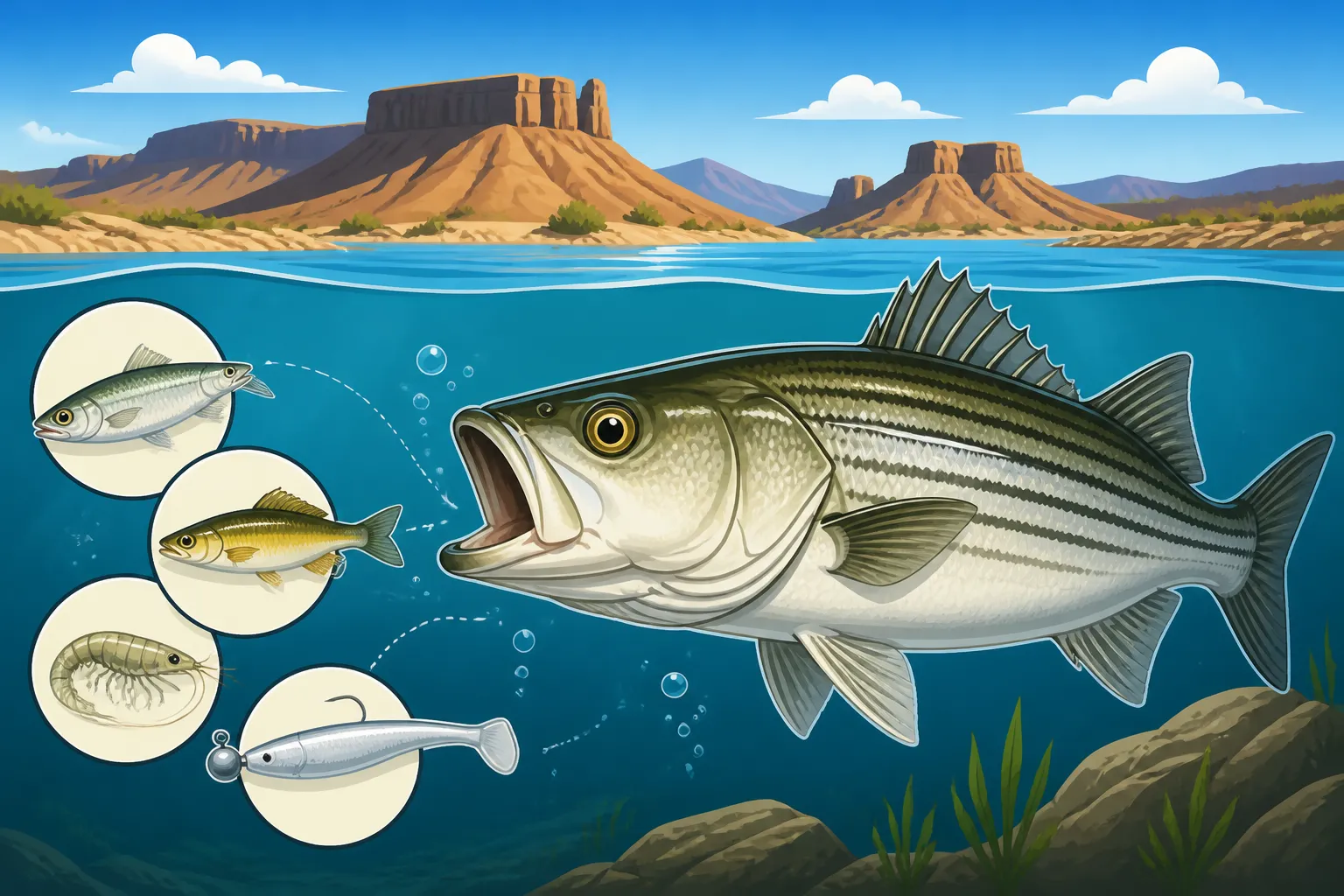
Without a doubt, gizzard shad are the bread and butter of the Elephant Butte striped bass diet. These prolific baitfish are abundant throughout the lake and form the base of the food chain for many predatory species. Gizzard shad can grow to a considerable size, offering a substantial meal for a hungry striper. Their soft, oily flesh makes them a nutritious and easily digestible food source. Stripers will relentlessly pursue schools of gizzard shad, often pushing them to the surface in spectacular feeding frenzies known as "topwater boils."
These feeding events are what many anglers dream of encountering. When you see gizzard shad scattering and jumping out of the water, chances are there are stripers below them, driving the chaos. Even when not on the surface, stripers will follow these schools through the water column, from the shallow flats to deep main lake points. If you can locate the gizzard shad, you're halfway to locating the striped bass. Imitating the size, shape, and color of gizzard shad with your lures is often the most effective strategy.
Threadfin Shad: A Smaller, Agile Meal
Alongside the larger gizzard shad, threadfin shad also play a vital role in the striped bass diet at Elephant Butte, particularly for smaller to medium-sized stripers or when gizzard shad are less accessible. Threadfins are generally smaller and more streamlined than their gizzard counterparts, making them incredibly agile. They also school in massive numbers, forming dense bait balls that are prime targets for hungry stripers.
While a single threadfin might not be as filling as a g gizzard shad, the sheer quantity available means stripers can gorge themselves on these smaller, easier-to-catch morsels. During certain times of the year, particularly when threadfins are spawning or newly hatched, they become an irresistible meal. Anglers might notice stripers feeding on much smaller bait than usual, indicating they're keying in on threadfins. This is where smaller lures, jigs, or flies can shine, mimicking the size and frantic movements of these compact baitfish. Best Lures for Striped Bass at Elephant Butte often include options for both larger and smaller shad imitations.
Opportunistic Feeding: Other Species on the Menu
While shad are king, striped bass at Elephant Butte are not exclusive eaters. They are true opportunists and will consume a variety of other organisms if the opportunity arises. This can include smaller white bass, crappie, or even young catfish that venture too close. They are not above scavenging injured fish or picking off smaller, slower prey. In fact, if the shad populations are temporarily low, stripers will quickly adapt to whatever else is available in the ecosystem.
Another interesting aspect of their diet is their willingness to eat invertebrates, especially when they are younger. Aquatic insects, crustaceans, and even worms can supplement their diet, though these become less significant as the stripers grow larger and require more substantial meals. This adaptability is part of what makes striped bass such successful predators, able to survive and thrive even when their primary food source fluctuates.
Environmental Factors and Seasonal Dietary Shifts
The dining habits of striped bass aren't static; they ebb and flow with the seasons and are heavily influenced by environmental conditions within Elephant Butte Lake. What they eat and where they find it can change dramatically throughout the year, making it crucial for anglers to adapt their strategies.
Warm Water, Deep Bites: Summer Feeding Patterns
Summer at Elephant Butte brings scorching temperatures, and while that might make fishing challenging for anglers, it also affects the entire ecosystem. As surface water temperatures rise, many baitfish, especially shad, will seek cooler, more oxygenated water in deeper sections of the lake. Striped bass follow this movement. During the peak of summer, you'll often find both stripers and their forage congregating in deeper water, around humps, points, and submerged structures where the thermocline provides a comfortable zone.
At this time, stripers might be feeding more actively in low-light conditions – dawn, dusk, or even at night – when the surface temperatures are cooler. Their diet still consists mainly of shad, but the location of the feeding shifts. Trolling deep-diving crankbaits or presenting live bait (if permitted) in these deeper zones becomes highly effective. Understanding Striped Bass Summer Holding Depth is key to intercepting these fish when they've moved off the shallows. The intense heat of the day can make Fishing New Mexico Reservoirs in Summer Heat a test of endurance, but knowing where the food is makes it worthwhile.
Cooler Waters, Fickle Appetites: Winter Challenges
As the seasons turn and winter descends upon New Mexico, Elephant Butte's water temperatures drop significantly. This change affects the metabolism of striped bass, causing them to become less active and their feeding windows to shrink. Baitfish also become less energetic, often balling up tightly in deeper, stable water or migrating to warmer coves. Stripers will still eat, but their strikes can be more subtle, and they may not chase lures as aggressively.
During winter, precise bait presentation and a slower retrieve are often necessary. The stripers might be feeding on the same types of shad, but they'll expend less energy to catch them. Locating these dense schools of lethargic baitfish is paramount. They might be suspended over deep water or hugging the bottom near thermal refuges. Anglers need patience and a good fish finder to pinpoint these winter concentrations of fish and their food.
The Influence of Water Levels and Clarity on Forage
Elephant Butte Lake's water levels can fluctuate significantly, and these changes have a profound impact on the availability and behavior of forage fish, and consequently, the stripers' diet. When water levels are high, new vegetation might be flooded, providing cover and food for smaller baitfish. Conversely, dropping water levels can concentrate baitfish in smaller areas, making them easier targets for stripers, but also potentially stressing the population.
Water clarity also plays a role. In clear water, stripers rely heavily on their eyesight to hunt, making natural-looking lures and presentation crucial. In murky or stained water, they might depend more on their lateral line to detect vibrations, making noisy lures or live bait more effective. Heavy rains can introduce murky water and debris, scattering baitfish and making it harder for stripers to hunt. Being aware of these environmental factors, often noted in a New Mexico Fishing Season Calendar, allows anglers to adjust their strategies, whether it's changing lure colors, adding rattles, or seeking out areas with more favorable conditions.
Translating Diet Knowledge into Angling Success
Knowing what striped bass eat is invaluable, but the true skill lies in translating that knowledge into actionable fishing strategies. It's about thinking like a predator and understanding how to capitalize on their feeding patterns.
"Matching the Hatch" with Lures and Baits
The concept of "matching the hatch" is usually associated with fly fishing, but it applies perfectly to striped bass fishing in Elephant Butte. If stripers are gorging on gizzard shad, your lures should mimic gizzard shad in size, shape, color, and action. For threadfin-focused feeding, you'll want smaller, perhaps more erratic, lure presentations. Many artificial lures are specifically designed to imitate these common baitfish.
| Forage Type | Lure/Bait Recommendation | Preferred Action/Presentation |
|---|---|---|
| Gizzard Shad | Large swimbaits (soft or hard), big crankbaits, topwater plugs (spooks, poppers), live gizzard shad (where legal) | Steady retrieve, erratic "walk the dog" on top, deep trolling |
| Threadfin Shad | Smaller swimbaits, jerkbaits, spoons, jigs (lead head with soft plastic), small topwater lures, live threadfin shad | Fast retrieve, twitch-pause, vertical jigging, casting into boils |
| Opportunistic | Larger jigs, plastic worms, cut bait (for catfish, but can attract stripers), larger spoons, umbrella rigs (imitating a school) | Slow retrieve near bottom, suspended presentation, covering vast amounts of water via trolling |
You'll find a wide variety of these specialized lures available from retailers, and many anglers often browse platforms like Amazon to stock up on their favorites before a big trip. Look for lures in chrome, silver, white, or shad patterns. The action of the lure is just as important as the look; a wobbling crankbait or a darting jerkbait can perfectly imitate a struggling baitfish.
Locating Stripers by Following Their Food
This is where the detective work comes in. Stripers will almost always be found near their food. Here's how to use that knowledge:
- Look for Baitfish: Keep an eye on your fish finder for bait balls. If you see dense schools of bait, especially near submerged humps, points, or river channels, there's a very high chance stripers are nearby or actively feeding on them.
- Observe Surface Activity: The most obvious sign is a topwater boil, where stripers are actively busting bait on the surface. Head straight for the action, but approach cautiously to avoid spooking the fish.
- Monitor Bird Activity: Diving birds, especially gulls, are often indicators of baitfish being pushed to the surface by predatory fish below. Where the birds are feeding, stripers might not be far behind.
- Consider Wind Direction: Wind can push baitfish into certain coves or against specific shorelines. Stripers will follow these concentrations. How Wind Affects Fishing at Elephant Butte Lake can significantly alter where you find both predator and prey.
Using these observations in conjunction with your knowledge of striper movements will dramatically increase your chances of finding them.
Adapting Your Approach for Optimal Results
Finally, don't be afraid to experiment and adapt. What worked yesterday might not work today, especially with changing weather or water conditions. If the stripers aren't hitting your gizzard shad imitation, try a smaller threadfin pattern. If they're deep and sluggish, switch to a slow-moving jig.
Consider different Trolling Techniques for New Mexico Lakes to cover vast areas and find active schools. Don't limit yourself to one presentation. Having a selection of rods rigged with different lures or baits means you can quickly switch tactics if you're not getting bites. Pay attention to retrieve speed, depth, and presentation. Sometimes, a subtle change is all it takes to trigger a strike. By continuously learning and adjusting based on the stripers' diet and the lake's conditions, you'll become a more effective and successful angler at Elephant Butte Lake.
Disclaimer
This article is for general informational purposes only and does not constitute professional advice. Laws, prices and regulations vary by location and change over time. Consult a qualified professional for guidance on your specific situation.