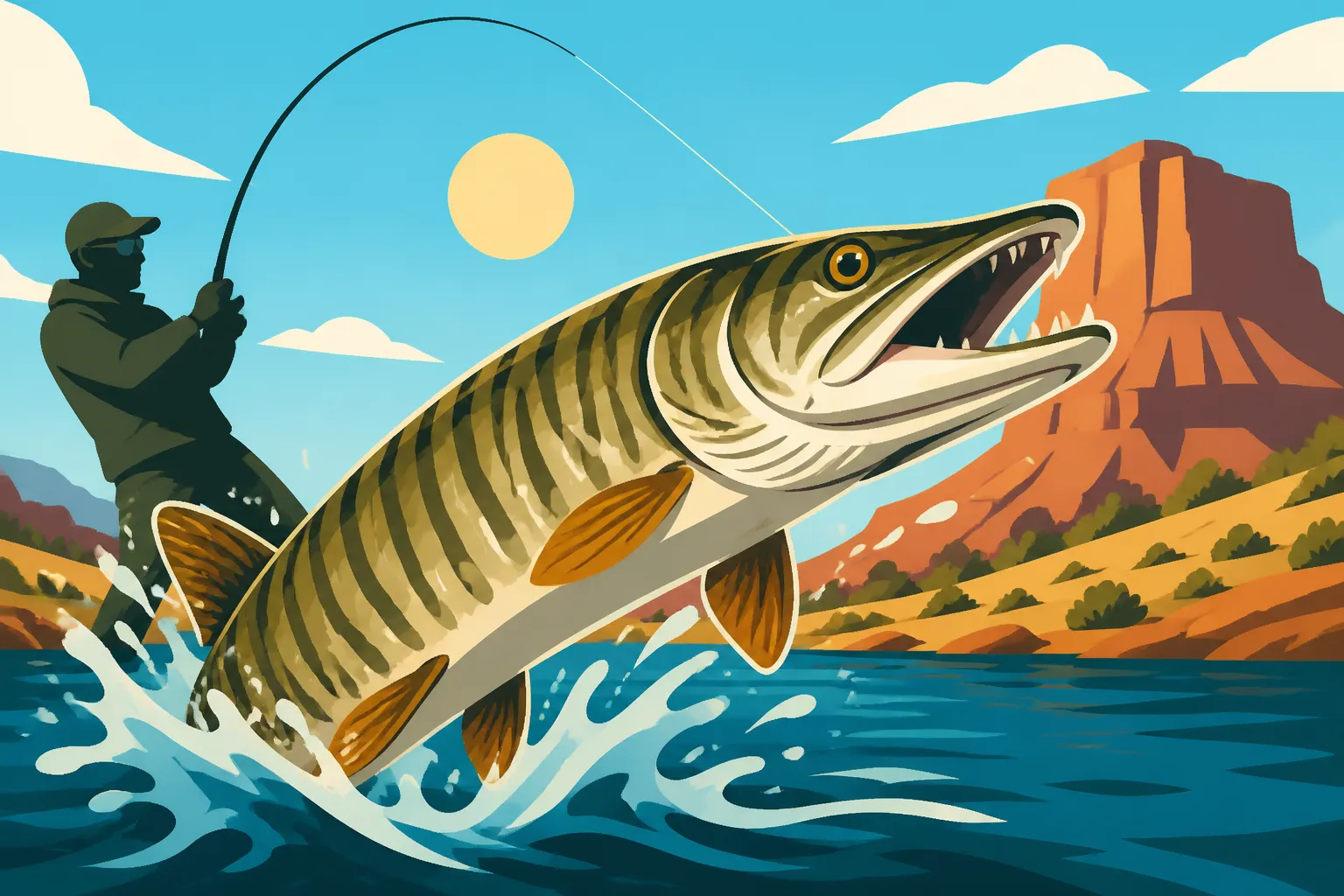
Tiger Muskie in New Mexico
For many anglers exploring the diverse waters of New Mexico, stumbling upon a tiger muskie can be a genuinely head-scratching moment. These formidable, toothy predators are a unique sight, often sparking questions like, "What even is that?" and "How did it get here?" This comprehensive guide will pull back the curtain on New Mexico's tiger muskie fishery, delving into their origins, where you can find them, and how you might just land one of these elusive, hard-fighting fish.
What Exactly Is a Tiger Muskie?
Imagine a fish that looks like it belongs in a wild, untamed river of the far north, yet you encounter it in the high desert lakes of New Mexico. That's often the first impression of a tiger muskie. They're striking, powerful, and undeniably intriguing, standing out dramatically from the more common bass, trout, and catfish species that dominate many local fisheries.
The Hybrid Nature of This Fish
The tiger muskie isn't a naturally occurring species in the wild. It's a fascinating hybrid, a cross between two different members of the pike family: the muskellunge (often called "muskie") and the northern pike. Think of it like a mule – a hybrid animal that combines the best (and sometimes most stubborn) traits of its parents. In the case of the tiger muskie, this genetic mash-up results in a fish with incredible growth rates, robust health, and a notoriously aggressive feeding style. They also tend to be sterile, meaning they cannot reproduce on their own, which is a key factor in why they are introduced into certain fisheries. This sterility allows wildlife managers to control their populations precisely, preventing them from overrunning a lake or becoming an invasive nuisance.
What does this mean for anglers? It means that every tiger muskie you encounter in New Mexico waters was intentionally stocked there. They are not reproducing and expanding their numbers naturally, which speaks volumes about the careful management required to maintain a trophy fishery like this. Their hybrid vigor often translates to a fish that's even harder fighting than either of its parent species, making them a true challenge for even seasoned anglers.
Identifying a Tiger Muskie: Key Features
Spotting a tiger muskie usually isn't too difficult once you know what you're looking for. Their appearance is distinct, setting them apart from other pike or pickerel species you might encounter. The most obvious characteristic, and the one that gives them their name, is the distinctive "tiger" pattern on their sides. This typically consists of dark, irregular vertical bars or spots over a lighter background, often appearing as wavy stripes or blotches that resemble camouflage. Northern pike, on the other hand, usually have lighter spots on a darker background, while pure muskellunge often display more defined bars or spots, or sometimes are completely unpatterned (the "clear" phase).
Beyond the markings, look at the sensory pores on the underside of their lower jaw. This is a tell-tale sign if you can safely observe it. Northern pike generally have five or fewer pores on each side, while muskellunge have six or more. Tiger muskies, being a hybrid, often fall somewhere in the middle, or exhibit a mix. They also have a fully scaled cheek and gill cover, similar to a northern pike. Their body shape is long and torpedo-like, perfectly designed for ambush predation, and they possess a large mouth filled with rows of razor-sharp teeth. Always exercise extreme caution when handling these fish to protect both yourself and the fish.
Why New Mexico Introduced Tiger Muskie
The decision to introduce a non-native, sterile hybrid like the tiger muskie isn't made lightly by wildlife management agencies. It's a strategic move, often aimed at solving specific ecological problems while simultaneously enhancing recreational opportunities for anglers. In New Mexico, the tiger muskie program serves a dual purpose, addressing both population control and the creation of a unique, exciting fishery. If you're interested in the broader regulations governing fishing in the state, you might want to check out the New Mexico Fishing Regulations Overview.
Controlling Unwanted Fish Populations
One of the primary reasons for introducing tiger muskies into a water body is their voracious appetite. They are apex predators, and their diet consists largely of other fish. This makes them incredibly useful tools for controlling overpopulated or invasive species that might be negatively impacting the ecosystem. For example, some New Mexico lakes can experience an explosion in the numbers of undesirable rough fish or smaller panfish, which compete with more prized game fish for resources, or even consume their eggs and fry.
By introducing tiger muskies, fisheries biologists can leverage these fish as natural "clean-up crews." The muskies will actively hunt and consume these nuisance fish, helping to bring the population back into balance. Because tiger muskies are sterile, there's no risk of them over-reproducing and becoming a problem themselves. Once their job is done, or if the food source dwindles, their numbers naturally decline without needing further intervention, providing a sustainable, biological method of population management that avoids chemical treatments or extensive netting operations. This is truly a marvel of modern fisheries management, using nature's own mechanisms to maintain healthy ecosystems. For more on this specific initiative, read about Why New Mexico Stocked Tiger Muskies in Its Lakes.
Creating a Unique Trophy Fishery
Beyond their role as biological control agents, tiger muskies offer an incredible opportunity to create a trophy fishery that is distinct from typical bass or trout offerings. For many anglers, especially those seeking a challenge, the pursuit of a large, elusive predator like a tiger muskie is the pinnacle of freshwater fishing. New Mexico, with its diverse landscapes and often stark beauty, is not typically associated with muskie fishing, making the presence of these fish even more intriguing.
These fish grow large, fight incredibly hard, and are notoriously difficult to catch, earning them the nickname "the fish of 10,000 casts." This difficulty, however, is precisely what appeals to a dedicated segment of the angling community. Landing a tiger muskie is often considered a true accomplishment, a testament to patience, skill, and perseverance. It provides a unique draw for anglers who might otherwise overlook New Mexico for their fishing adventures, adding another dimension to the state's already rich angling scene. The chance to hook into something truly big and powerful keeps many anglers coming back, hoping to beat their personal best or simply experience the adrenaline rush of a muskie strike.
Where to Find Tiger Muskie in New Mexico
While tiger muskies have been stocked in a few different waters over the years in New Mexico, one location stands out as the consistent, premier destination for pursuing these elusive giants. Knowing where to focus your efforts is half the battle when targeting a fish known for its rarity.
Bluewater Lake: The Primary Destination
When you talk about tiger muskie fishing in New Mexico, the conversation almost always turns to Bluewater Lake. Located west of Grants, this state park lake has been the flagship fishery for tiger muskies in the state for many years. It's a relatively high-elevation lake nestled in the Zuni Mountains, offering beautiful scenery alongside its angling opportunities. The lake's deep, cool waters and ample forage fish, such as suckers and smaller trout, provide an ideal habitat for tiger muskies to thrive and grow to impressive sizes.
Anglers specifically targeting muskie at Bluewater Lake should focus on areas with submerged structure, weed lines (if present), points, and sudden depth changes. These ambush predators prefer to lurk near cover, waiting for an unsuspecting meal to swim by. While they can be caught anywhere in the lake, these structural features are prime hunting grounds. It's not uncommon for anglers to spend days on the water, meticulously casting large baits, before even getting a follow or a strike. The solitude and challenge are part of the allure for many who frequent Bluewater. For a deeper dive into this specific location, check out the Bluewater Lake Fishing Guide.
Other Potential Waters and Stocking Efforts
While Bluewater Lake remains the most consistent and well-known tiger muskie destination, there have been other waters in New Mexico that have received tiger muskie stockings in the past. These efforts are often experimental or aimed at addressing specific management needs in other reservoirs. However, these stockings may not always result in a self-sustaining or widely recognized fishery due to various factors like water conditions, forage availability, or angler pressure. It's always a good idea to consult the most current New Mexico Department of Game and Fish regulations and stocking reports for up-to-date information on any other locations where tiger muskies might be present.
Some of these other waters may have had limited stockings, and the populations might be sporadic or less robust than at Bluewater Lake. For the dedicated muskie angler, staying informed about current programs is crucial. The nature of tiger muskie as a sterile hybrid means that their presence is entirely dependent on ongoing stocking efforts. Without continued management and introduction, these populations would eventually dwindle. Therefore, if you hear whispers of muskie in other lakes, always confirm with official sources before planning a dedicated trip, as information can change.
Targeting Tiger Muskie: Techniques and Gear
Successfully catching a tiger muskie is a test of patience, perseverance, and proper technique. These fish are not only rare but also incredibly smart and aggressive. You can't just throw out a worm and expect results; you need specialized gear and a methodical approach.
Essential Gear for Tiger Muskie Anglers
Tiger muskies are big fish, and they fight dirty. This means your typical bass or trout setup simply won't cut it. You need heavy-duty equipment designed to handle powerful runs and razor-sharp teeth.
- Rods and Reels: A sturdy, fast-action baitcasting rod in the 7 to 9-foot range is ideal. Look for a heavy power rating, capable of handling large lures and absorbing the shock of a muskie strike. Pair this with a high-quality baitcasting reel with a robust drag system and plenty of line capacity. You'll be making hundreds of casts with heavy baits, so comfort and durability are key. Many anglers find durable, high-performance reels and rods on platforms like Amazon, ensuring they have the right tools for the job.
- Line: Spool up with a strong braided line, typically 60-100 pound test. Braid offers superior strength, sensitivity, and resistance to abrasion compared to monofilament. The heavy braid is essential for controlling these powerful fish and for casting heavy lures over long distances.
- Leaders: This is non-negotiable. Tiger muskies have teeth that can easily slice through standard fishing line. You must use a steel or heavy fluorocarbon leader (100-150 lb test) that is at least 12-18 inches long. Without it, you'll lose fish and expensive lures, and worse, leave hooks in the fish, which is detrimental to their health. Many specialized muskie leaders can be found for sale on Amazon, ready to go. You can learn more about specific requirements in Do You Need Steel Leader for Tiger Muskie? or Best Leader Wire for Tiger Muskie Fishing.
- Landing Net: Forget a small trout net. You need a large, muskie-specific landing net with a long handle and a wide, deep, rubberized mesh basket. The rubberized mesh protects the fish's slime coat and fins, which is crucial for catch and release. Trying to boat flip or hand-land a muskie is dangerous for both you and the fish.
- Pliers/Hook Removers: Long-nosed pliers, bolt cutters (for cutting hooks if necessary), and jaw spreaders are essential. Never stick your hand in a muskie's mouth. Their teeth are formidable, and they can cause serious injury.
This table provides a quick overview of essential gear for targeting tiger muskie:
| Gear Type | Key Specifications | Why It's Important |
|---|---|---|
| Rod | Heavy Power, Fast Action, 7-9 feet | Handles heavy lures, absorbs shock, controls large fish |
| Reel | Baitcasting, Robust Drag, High Line Capacity | Durability for heavy casting, strong enough for powerful runs |
| Main Line | Braided, 60-100 lb Test | Strength, sensitivity, abrasion resistance, long casting |
| Leader | Steel or Heavy Fluorocarbon (100-150 lb), 12-18 inches | Prevents bite-offs, crucial for fish and lure safety |
| Landing Net | Large, Long Handle, Rubberized Mesh | Safe landing for angler and fish, preserves fish's health |
| Tools | Long Pliers, Bolt Cutters, Jaw Spreaders | Safe hook removal, protects angler from sharp teeth |
Best Lures and Presentations for Success
Tiger muskies are opportunistic predators, but they respond best to large, aggressive presentations that mimic their natural prey. Your tackle box for muskie fishing will look quite different from what you use for other New Mexico species. You can find many of these specialized lures from reputable brands, often available through retailers like Amazon.
- Large Bucktail Spinners: These are a muskie staple. The flash and vibration of the blades, combined with the pulsating bucktail, are irresistible to muskies. Cast them out and retrieve them with a steady, fast pace. "Burning" bucktails is a common technique that can trigger an aggressive chase and strike.
- Jerkbaits and Glide Baits: These lures are designed to be worked with rod twitches and pauses, creating an erratic, wounded-baitfish action. They require a bit more skill to master but can be incredibly effective when muskies are being finicky. The way they dart and glide through the water can often elicit a reaction strike from a following fish.
- Crankbaits and Swimbaits: Large, deep-diving crankbaits can be trolled or cast to cover deeper areas or when fish are holding further down. Big swimbaits, either hard-bodied or soft plastic, accurately imitate large baitfish and can be deadly when retrieved steadily.
- Topwater Lures: There's nothing quite like a muskie exploding on a topwater lure. Large prop baits, walk-the-dog lures, and creepers can provide heart-stopping action, especially during low-light conditions or when fish are actively feeding near the surface. The sheer violence of a muskie strike on the surface is an unforgettable experience.
Remember the "figure-eight" or "L-turn" at the end of every retrieve, right at the boat. Muskies are known to follow a lure all the way to the boat before striking. Performing a large, aggressive figure-eight or L-turn with your lure next to the boat can often trigger a follow to finally commit. Don't be surprised if a massive muskie appears out of nowhere!
The Thrill of the Fight and Responsible Angling
Hooking a tiger muskie is an experience unlike any other in freshwater fishing. Their power and cunning make them one of the most exciting and challenging fish to pursue. However, with such a formidable opponent comes a great responsibility to ensure their survival, especially since these are stocked, non-reproducing fish in New Mexico.
The Power and Challenge of a Muskie Battle
When a tiger muskie strikes, it's rarely subtle. It can feel like your lure just hit a submerged log, only that log immediately starts tearing line from your reel with incredible force. These fish are known for their explosive runs, head shakes, and sometimes even aerial acrobatics. They will use their powerful bodies to try and throw the hook, and their sharp teeth can quickly fray lines if you don't have a proper leader. The fight is intense and typically lasts several minutes, testing both your gear and your angling skills.
Many anglers describe the muskie fight as a series of short, powerful bursts rather than long, sustained runs. You might gain some line, only for the fish to dig deep or make another powerful surge, trying to get into cover. Keeping the rod tip up, maintaining constant pressure, and using your drag effectively are crucial. It's a game of give and take, where every inch of line gained feels hard-won. The adrenaline rush you get from battling one of these giants is precisely why dedicated muskie anglers are willing to put in the "10,000 casts" for that one epic strike.
Catch and Release Best Practices for Tiger Muskie
Given that tiger muskies are a stocked, sterile hybrid in New Mexico, practicing responsible catch and release is not just recommended, it's absolutely essential for maintaining this unique fishery. Every fish caught and safely released is a future opportunity for another angler.
Here are some critical best practices:
- Minimize Fight Time: While exciting, prolonged fights can exhaust a muskie, making its survival post-release less likely. Use appropriate heavy tackle to land the fish as quickly and efficiently as possible without over-stressing it.
- Keep the Fish in the Water: Whenever possible, avoid bringing the muskie into the boat. Use your large landing net to secure the fish alongside the boat. This keeps the fish hydrated and protects its delicate slime coat, which is vital for disease prevention. If a photo is desired, hold the fish horizontally for a quick shot, supporting its entire body, and get it back into the water immediately.
- Quick Hook Removal: Have your long-nosed pliers and other tools ready before you net the fish. Work quickly and carefully to remove hooks, being mindful of their sharp teeth. If a hook is deeply embedded and difficult to remove without causing significant damage, use bolt cutters to snip the hook, allowing the barb to fall out later. Never rip or tear at the fish's flesh.
- Revive the Fish: After hook removal, hold the fish gently in the water, supporting its belly, and facing it into any current or slowly moving it back and forth to push oxygenated water over its gills. Look for strong, steady tail kicks before letting it go. If the fish swims off too early and rolls over, retrieve it and continue the revival process.
- Avoid Handling Gills or Eyes: These are extremely sensitive areas. Never grab a muskie by the gills.
- Educate Others: Share these best practices with fellow anglers to ensure everyone contributes to the health and sustainability of New Mexico's tiger muskie populations.
By following these guidelines, you're not just protecting a fish; you're safeguarding a rare and thrilling fishing experience for generations to come. This aligns with broader principles of conservation for all species, including trout, as detailed in Catch and Release Best Practices in New Mexico.
Disclaimer
This article is for general informational purposes only and does not constitute professional advice. Laws, prices and regulations vary by location and change over time. Consult a qualified professional for guidance on your specific situation.