Best Tippet Size for Clear Water Trout
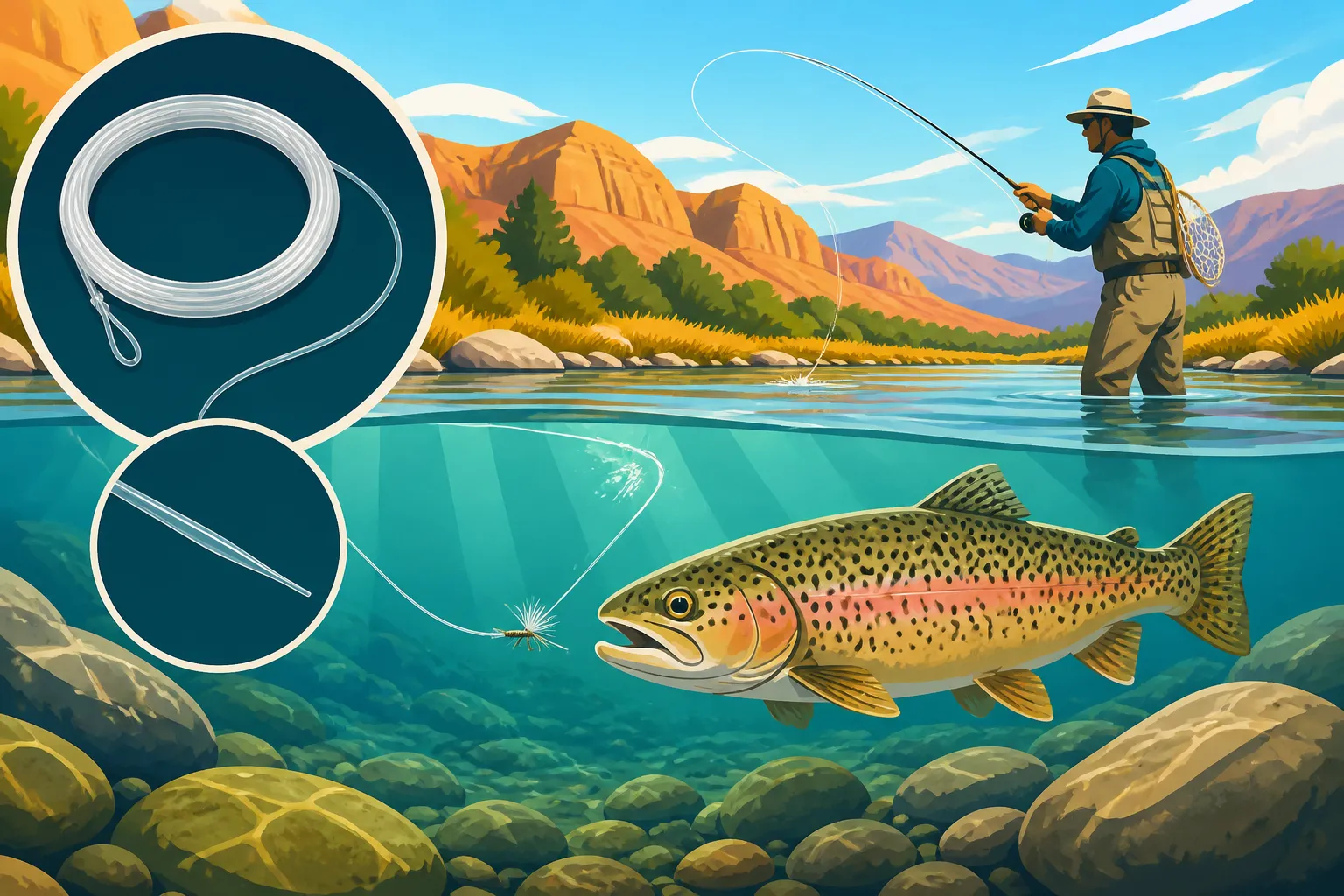
There’s nothing quite like the beauty of a clear, pristine trout stream or the glassy surface of a high mountain lake here in New Mexico. But let's be honest, as stunning as those waters are, they can also be incredibly frustrating for an angler. Those wary trout seem to have X-ray vision, often spooking at the slightest glint of line. Choosing the best tippet size for these clear water conditions isn't just a preference; it's absolutely crucial for success, and this guide is here to help you crack that code.
The Frustration of Clear Water Trout Fishing
If you’ve spent any time fishing for trout in New Mexico's crystal-clear waters, you know the struggle is real. It’s not your imagination; those fish really do seem to see everything. This isn't just about stealth; it’s about understanding the environment and how it influences a trout’s behavior and, ultimately, your chances of a hookup.
Why Clear Water Presents a Challenge
Imagine trying to snatch a meal from a conveyor belt if you could see the entire mechanism delivering it. That's a bit like what a trout experiences in clear water. Their eyesight is incredibly keen, especially in the undisturbed environments they often inhabit. In places like the famous San Juan River Quality Waters, or the many breathtaking high mountain lakes tucked away in the Sangre de Cristos, the water clarity means less cover for both fish and your fishing line. Every subtle detail of your presentation is on display.
This heightened visibility makes trout incredibly skittish. A thicker, more visible tippet can cast a shadow, create a subtle wake, or simply appear as an unnatural object in their otherwise perfect world. They’ve evolved to survive by being cautious, and anything out of place immediately triggers an alarm. You might be casting a perfect fly pattern, but if it's tethered to a tippet that screams "trap!", those trout will simply turn their noses up and swim away, leaving you wondering what went wrong. It's a humbling experience many of us have faced.
The Delicate Balance: Strength vs. Stealth
Here's the eternal dilemma of clear water fishing: you need a tippet fine enough to be invisible to these hyper-aware trout, but strong enough to actually land one of those beauties once it takes your fly. It's a tightrope walk that can often lead to heartbreak. Go too thin, and that trophy trout you’ve been dreaming of could snap you off on a sudden run, leaving you with just a story about "the one that got away." Go too thick, and you might not even get a sniff, as the fish will completely ignore your offering.
Finding that sweet spot requires a deep understanding of tippet materials, sizes, and how they interact with different fishing scenarios. There's no single "magic" tippet, but rather an informed choice based on a combination of factors. It's about minimizing your presence in the water while maximizing your chances of a successful fight. This balance is especially critical when you're targeting larger, more experienced trout who have seen it all and are less forgiving of mistakes.
Understanding Tippet Materials and Sizes
Before we dive into specific recommendations, let's get a handle on the tools of the trade. Not all tippet is created equal, and knowing the differences can make a significant impact on your success, especially in New Mexico's clear waters.
Fluorocarbon vs. Monofilament for Clear Water
When it comes to tippet, you generally have two main material choices: monofilament (mono) and fluorocarbon (fluoro). Each has its own set of characteristics that make it suitable for different situations.
Monofilament
Monofilament is the traditional choice, made from nylon. It's generally more supple, floats better, and is typically less expensive. For dry fly fishing, its buoyancy can be an advantage, helping your leader and tippet stay on the surface with your fly. However, in clear water, mono can be more visible than fluorocarbon because it absorbs light and has a higher refractive index, meaning light bends more sharply when passing through it, making it stand out underwater. Its abrasion resistance is also generally lower, meaning it can fray more easily on rocks or fish teeth.
Fluorocarbon
Fluorocarbon is often considered the stealth bomber of tippet materials. Its key advantage in clear water is its low refractive index, which is very close to that of water. This makes it incredibly difficult for fish to see, almost disappearing underwater. Fluorocarbon is also denser than mono, causing it to sink, which is a huge benefit when nymphing or fishing streamers, helping your flies get down to the strike zone faster and stay there. Additionally, it offers superior abrasion resistance and is less susceptible to UV degradation, meaning it lasts longer. The trade-off? It’s usually stiffer and more expensive than monofilament. For most clear water nymphing or sub-surface presentations, fluorocarbon is the preferred choice for many seasoned New Mexico anglers.
Deciphering Tippet Designations (X Ratings)
You'll notice tippet is primarily designated by an "X" rating system, ranging from 0X up to 8X, and sometimes even higher. This system indicates the diameter of the line, which in turn correlates to its breaking strength. The general rule is: the smaller the X-number, the thicker the line and the higher its breaking strength. Conversely, a larger X-number signifies a finer, more delicate tippet with a lower breaking strength.
Here's a quick breakdown to help make sense of it:
| X-Rating | Approximate Diameter (Inches) | Approximate Diameter (mm) | Approximate Breaking Strength (Lbs) | Common Use Case |
|---|---|---|---|---|
| 0X | 0.011 | 0.279 | 15+ | Heavy Streamers, Saltwater |
| 1X | 0.010 | 0.254 | 13-15 | Bass, Large Streamers |
| 2X | 0.009 | 0.229 | 10-12 | Larger Trout, Streamers |
| 3X | 0.008 | 0.203 | 8-10 | General Trout, Larger Nymphs |
| 4X | 0.007 | 0.178 | 6-8 | Fussy Trout, Mid-size Nymphs |
| 5X | 0.006 | 0.152 | 4-6 | Very Fussy Trout, Smaller Nymphs |
| 6X | 0.005 | 0.127 | 2-4 | Delicate Dry Flies, Tiny Nymphs |
| 7X | 0.004 | 0.102 | 1.5-3 | Micro Flies, Extremely Wary Fish |
| 8X | 0.003 | 0.076 | 1-2 | Smallest Dry Flies, Ultra-Delicate |
Understanding this chart is your first step to making an informed decision. For example, if you’re fishing a tiny size 22 midge on the San Juan River, a 6X or 7X tippet might be necessary to present it naturally. But if you’re throwing a larger streamer in a less pressured, slightly off-color stream, you might be able to get away with 3X or 4X.
Matching Tippet to Fly Size
One of the most fundamental rules of fly fishing, especially in clear water, is to match your tippet size to your fly size. A good rule of thumb is often called the "Rule of 3" or "Rule of 4." This suggests dividing the fly hook size by 3 or 4 to get a general idea of the appropriate X-rating for your tippet.
For example, if you're fishing a size 12 fly:
- 12 / 3 = 4 (meaning 4X tippet)
- 12 / 4 = 3 (meaning 3X tippet)
So, for a size 12 fly, you'd likely be in the 3X to 4X range. For a size 20 fly, 20 / 3 = 6.6, suggesting 6X or 7X. This guideline isn't rigid, but it provides an excellent starting point. The reason this match is important is twofold:
- Presentation: A tippet that's too thick for a small fly will make the fly look unnatural, hindering its movement and drag. A tippet that's too thin for a large, heavy fly might not allow for a strong knot or could snap under the stress of casting.
- Knot Integrity: Smaller hooks often have smaller eyes. Trying to tie a heavy tippet to a tiny hook can result in a bulky, weak knot, or simply be impossible. Conversely, a very fine tippet on a large hook might not hold well. Always aim for a harmonious balance to ensure both stealth and strength. You can find excellent quality tippet from a variety of manufacturers, available at local fly shops, or through retailers like Bass Pro Shops or Amazon.
Choosing the Best Tippet Size for New Mexico's Clear Water Trout
Now that we've covered the basics, let's get down to the nitty-gritty of making the right choice for your New Mexico fishing adventures. This isn't a "one-size-fits-all" situation; the best tippet will depend on where you're fishing and what the conditions are throwing at you.
Situational Tippet Selection: Rivers vs. Lakes
New Mexico offers an incredible diversity of trout water, from freestone rivers to large reservoirs and alpine lakes. Each environment demands a slightly different approach to tippet selection.
Rivers and Streams
In moving water, especially tailwaters like the San Juan River Quality Waters, fish are highly accustomed to seeing debris float by. They have less time to inspect your offering, but they are also incredibly sensitive to drag. For nymphing in these crystal-clear, often highly pressured rivers, most anglers will lean towards 5X, 6X, or even 7X fluorocarbon. The finer diameter helps your flies sink naturally and minimizes the "drag" created by the current pulling on your line, which can immediately alert fish to an unnatural presentation. If you're dry fly fishing tiny midges or mayflies, even 7X or 8X monofilament might be necessary to ensure a perfect, natural drift.
Freestone streams, while often clear, might have slightly more turbulence or less pressured fish, allowing you to go a little heavier, perhaps 4X or 5X, especially if you're throwing slightly larger nymphs or small streamers. However, remember that clear water is still clear water, and stealth remains paramount. New Mexico Special Trout Water Rules often dictate specific gear or bait restrictions that can influence tippet choice, too.
Lakes and Stillwaters
Stillwater fishing for trout in clear lakes, especially those high-altitude gems, presents its own unique challenges. Here, fish have all the time in the world to inspect your fly. With no current to help mask your line, visibility is even more critical. For this reason, many lake anglers will gravitate towards 5X or 6X fluorocarbon. The sinking nature of fluorocarbon helps your subsurface flies (like leeches, scuds, or chironomids) get to depth and maintain a natural position without being buoyed by the tippet.
When fishing smaller, stocked ponds that might be very clear, you might find success with 4X or 5X as well, depending on the size of the trout and how recently they were stocked. Generally, the more wary the fish and the clearer the water, the finer you'll need to go. If you are specifically fishing the San Juan River Quality Waters Section, you'll find that anglers often push the limits of fine tippet to fool the educated trout there.
Factors Influencing Your Choice
Beyond the general environment, several dynamic factors will help you fine-tune your tippet decision on any given day.
- Water Clarity: This is the primary driver. The clearer the water, the finer your tippet needs to be. Simple as that. A slightly off-color river after a rainstorm might allow for 3X, whereas that same river in pristine conditions might demand 5X.
- Fish Size: While stealth is crucial, you still need to land the fish. If you know there are genuinely large trout in the system, you might sacrifice a tiny bit of stealth for strength, perhaps opting for 4X where 5X might otherwise be ideal. This is a judgment call, but don't go so thin that you're just donating flies.
- Current Speed/Flow: In faster currents, a thicker tippet can create more drag. A finer tippet will allow your fly to drift more naturally. However, if you're trying to control a heavier fly in a fast current, a slightly stronger tippet might give you more confidence. It's about finding that balance for drift and control.
- Fly Size: As discussed earlier, matching your tippet to your fly size is paramount. Trying to put a size 16 nymph on 2X tippet will likely result in a sloppy presentation and a wary fish. Conversely, a size 24 midge on 5X tippet will look like a microscopic fly attached to a rope.
- Target Species: Different trout species can exhibit varying levels of wariness. Rio Grande Cutthroat Trout in their native, pristine habitats are often incredibly wary and demand fine tippets. Stocked Rainbow Trout in urban ponds might be less selective, allowing you to get away with a heavier tippet. New Mexico Trout Fishing Rules apply to all species.
- Light Conditions: Bright, sunny days make your line much more visible. On overcast days or in low light conditions (dawn/dusk), you might be able to get away with a slightly heavier tippet than you would at midday.
- Angler Skill: This is a big one. A skilled angler who can cast delicately, mend perfectly, and fight a fish gently can often get away with finer tippets than a beginner. Don't push yourself to dangerously thin tippets if you're still mastering your casting and fish-fighting techniques.
Practical Recommendations for New Mexico Anglers
Let's get specific. Based on common New Mexico scenarios, here are some practical tippet recommendations:
- Ultra-clear, Pressured Tailwaters (e.g., San Juan River Quality Waters): This is where you'll be reaching for the fine stuff. For nymphing, 6X or 7X fluorocarbon is almost always the standard. If fish are rising to truly tiny midges on the surface, 7X or even 8X monofilament might be necessary for those delicate dry fly presentations. You'll often be using tiny flies, so matching tippet to fly size becomes critical. Look into Fly Selection for New Mexico's San Juan River for more specific patterns.
- High Mountain Lakes (like Fenton Lake, Heron Lake): The clarity here is astounding. For subsurface presentations, 5X or 6X fluorocarbon is generally a safe bet. If you're throwing slightly larger leeches or buggers, 4X might work, but always err on the side of caution. When the fish are cruising near the surface, a good pair of polarized sunglasses will help you spot them and adjust your presentation.
- General Clear Streams (Pecos River, Rio Chama): These freestone rivers can vary, but when clear, 4X or 5X fluorocarbon is a good starting point for nymphing or throwing small streamers. If you're fishing dry flies, 5X or 6X monofilament for smaller patterns. For Trout Fishing Techniques for New Mexico, you'll find that versatility is key.
- When Targeting Larger Fish but Still in Clear Water: If you're pursuing a genuinely large brown trout in clear water, you're in a tough spot. You might try 4X fluorocarbon, but you'll need to fight the fish extremely gently, using your rod to absorb shocks and keeping tension without "horsing" the fish. It's a game of patience and finesse.
- Small, Stocked Urban Ponds (e.g., Tingley Beach): While these can be clear, the fish are often less wary due to regular stocking. You might get away with 3X or 4X tippet more easily, especially if you're using bait or larger lures. However, for fly fishing, 5X is still a good choice.
Tips for Success with Fine Tippets
Using fine tippets requires a bit more care and attention, but the rewards of fooling wary trout are well worth the effort.
Knot Tying Matters More
When you're dealing with tippets as fine as 6X or 7X, the quality of your knots becomes paramount. A poorly tied knot can reduce the breaking strength of your line by 50% or more, turning that delicate 2lb test into something that snaps at a mere whisper. Always take your time to tie strong, reliable knots. The Improved Clinch Knot is a workhorse for attaching flies, while the Blood Knot or Surgeon's Knot are excellent for joining tippet to leader or adding a new section of tippet.
Practicing knot tying at home, away from the elements and the pressure of fishing, is a game-changer. Ensure you moisten your knots thoroughly with saliva before tightening them. This lubricates the line, allowing the knot to seat properly and preventing friction heat from weakening the material. It's a small step that makes a huge difference, especially when you've got a feisty New Mexico trout on the line.
Handling Fish Carefully
With fine tippets, you can't just wrench a fish in. You need to play the fish, using the flexibility of your rod to absorb the shocks and runs. Keep steady pressure on the fish, but let your rod do the work. If the fish makes a sudden dash, let it run, applying just enough pressure to turn its head, rather than trying to stop it dead in its tracks. Catch and Release Best Practices in New Mexico become even more important when using light tackle, as minimizing fight time and handling stress is crucial for the fish's survival.
A good landing net, preferably one with a rubber or silicon mesh, is also invaluable. This helps you quickly and safely net the fish without causing damage to its fins or slime coat, and it gives you better control for a swift release, especially on smaller tippets that could break if the fish flops on the bank. Consider a good Best Landing Nets for New Mexico Catch and Release Fishing to ensure you're ready.
Regularly Inspecting and Replacing Tippet
Fine tippet, whether it's fluorocarbon or monofilament, is more susceptible to nicks, abrasions, and weakening from constant casting and fighting fish. After every fish, or even after snagging on a rock or piece of debris, take a moment to run your fingers along your tippet. Feel for any rough spots or nicks. Even a tiny imperfection can drastically reduce the line's breaking strength.
It's a good practice to cut off and re-tie your tippet after a few fish or if you notice any signs of wear. Don't be stingy; a few extra inches of tippet are far less valuable than losing a trophy trout because of a weak line. Many anglers will keep a spool of their preferred tippet on hand, whether it's from a trusted brand like Rio, Scientific Anglers, or Orvis, to constantly refresh their setup. You can easily find various spools of tippet at your local fly shop, or online through retailers like Bass Pro Shops or Amazon. Replacing your entire leader and tippet setup periodically, especially if you fish frequently, will also help maintain maximum strength and presentation quality.
Disclaimer
This article is for general informational purposes only and does not constitute professional advice. Laws, prices and regulations vary by location and change over time. Consult a qualified professional for guidance on your specific situation.