Best Kayak Anchor for Windy Reservoirs
There’s nothing quite like the peace of gliding across a pristine New Mexico lake in your kayak, paddle dipping rhythmically, until that familiar gust of wind hits. Suddenly, your serene fishing trip turns into an Olympic-level paddling sprint as you try to hold your spot against the relentless breeze. It's incredibly frustrating to get blown off your perfect fishing hole just as the bite turns on, and it often means missing out on those prize catches. This guide is all about helping you fight back against the wind by choosing and using the best kayak anchor for those blustery New Mexico reservoirs.
Why a Standard Anchor Won't Cut It on New Mexico's Windy Reservoirs
When you're out on big, open waters like Elephant Butte, Navajo Lake, or Conchas Lake, the wind isn't just a gentle breeze—it can be a force of nature. Kayaks, by their very design, are light and have a lot of surface area above the waterline, making them particularly susceptible to being pushed around. A small, lightweight anchor that might work fine in a calm pond or a slow-moving river simply won't hold you against the kind of sustained winds we often experience here.
Imagine you've paddled tirelessly to reach that sweet spot on Ute Lake where the walleye are schooling. You drop your tiny anchor, hoping to stay put, only to find yourself steadily drifting away from the action. Not only is it irritating, but it can also be genuinely unsafe if you're not prepared. Being blown into hazards, or simply too far from shore, can turn a fun day into a worrisome ordeal. This is why understanding the specific challenges of New Mexico's windy reservoirs is crucial, and why your anchoring strategy needs an upgrade from a basic river anchor. You need something designed to dig in and hold, offering stability when the wind tries to have its way with you.
The Frustration of Uncontrolled Drifting
Let's be real: drifting isn't fishing. It's just moving around. When you're constantly paddling to correct your position, you're not focused on your line, feeling those subtle bites, or enjoying the quiet of the outdoors. You're fighting your gear and the elements. This becomes particularly disheartening when you’ve invested time and effort into locating a promising fishing spot. Maybe you've checked the New Mexico Fishing Season Calendar and planned your trip around optimal conditions, only to be foiled by an unexpected gust.
Furthermore, uncontrolled drifting can impact your presentation significantly. If you're trying to work a jig slowly along the bottom for crappie or present a finesse worm for bass, a constantly moving kayak means your lure isn't behaving naturally. It's being dragged, lifting off the bottom prematurely, or getting snagged because you're not in control. The frustration of losing fish because your kayak is acting like a sail is something many New Mexico anglers know all too well.
Safety Concerns When the Wind Picks Up
Beyond just losing your fishing spot, strong winds on large reservoirs can quickly escalate into a safety concern. Kayaks, especially recreational models, can become unstable in choppy water generated by strong winds. If you're battling the wind and trying to manage your gear simultaneously, the risk of capsizing increases. Even if you don't capsize, being pushed far from your launch point or desired area can quickly exhaust you, making the paddle back a serious challenge.
Consider an afternoon on Heron Lake. It might start calm, but afternoon thermals can whip up significant chop. If your anchor fails, you could find yourself in rough water a long way from shore. This is why having a reliable anchoring system isn't just about convenience; it's a critical safety measure. It allows you to stay in one place, manage your gear, and assess your surroundings without constantly fighting the current and wind. Being able to choose when and where you move is paramount to a safe and enjoyable kayak fishing experience in New Mexico.
Anchor Types and Their Effectiveness in Windy Conditions
When it comes to kayak anchors, it's not a one-size-fits-all world. Different anchor designs excel in different bottom conditions, and some are far better at resisting wind than others. Understanding these variations is key to picking the right anchor for your New Mexico adventures. You might find a selection of these at your local outdoor retailer or even browse a wide array on Amazon.
The Grapnel Anchor: A Popular but Limited Choice
The grapnel anchor, often called a "claw" or "folding" anchor, is probably the most common type you'll see with kayaks. It features four prongs that fold in for compact storage and spread out to grab hold of the bottom. They are fantastic for rocky or weedy bottoms, where the prongs can really dig in. For many anglers, it's the first anchor they buy, often available at stores like Bass Pro Shops.
However, the grapnel has its limitations, especially in windy, open reservoirs. In soft mud or sand, the prongs can sometimes just drag through without getting a solid bite. In high winds, this dragging can become a major issue. While a 3 to 5-pound grapnel might hold you in light to moderate conditions, a sustained gust can make it skip across the bottom. If you're fishing a hard-packed clay bottom, it might not grab effectively either. They're excellent for specific conditions, but don't expect them to be your heavy-duty, wind-proof solution every time you hit the water.
The Mushroom Anchor: Best for Mud, Less for Wind
Mushroom anchors are exactly what they sound like: heavy, rounded anchors designed to sink into soft, muddy bottoms and create suction. They're often used for mooring buoys or small boats in sheltered coves. They can be found at various marine supply stores.
For a kayak, a small mushroom anchor (typically 5 to 10 pounds) can work reasonably well in purely muddy conditions without much wind. The suction effect helps them stay put. The problem is, on many New Mexico reservoirs, you'll encounter a mix of gravel, rock, sand, and mud. If the bottom isn't consistently soft, a mushroom anchor can struggle to dig in and will easily get dragged by the wind. Its smooth profile doesn't offer much in the way of "bite" compared to other designs, making it less reliable when gusts hit and try to pull it horizontally.
The Fluke/Danforth Anchor: A Strong Contender for Soft Bottoms
The fluke, or Danforth style, anchor is characterized by two large, flat flukes that pivot and dig deep into soft bottoms like sand or mud. These anchors are designed for superior holding power by burying themselves and creating resistance. You can typically find a good range of these anchors, often with galvanized finishes for durability, at stores like Bass Pro Shops.
A small fluke anchor, perhaps 2 to 3.5 pounds for a kayak, can offer surprisingly good holding power in suitable conditions. The challenge on New Mexico reservoirs is finding consistently soft bottoms. If you're fishing over gravel or rock, the flukes won't be able to penetrate and get the bite they need. However, if your target spots are known to have sandy or muddy flats, a fluke anchor can be incredibly effective, providing a much more stable hold than a grapnel in windy conditions over that specific substrate.
The River/Pyramid Anchor: Reliable for Current, Decent for Wind
River or pyramid anchors are designed with a heavy, triangular or pyramid shape, sometimes with small studs or claws, to dig into riverbeds and resist current. Their weight and shape help them sink quickly and hold in moving water. While their primary design is for current, their substantial weight and ability to dig in make them a decent option for windy reservoirs too, especially on bottoms with some give.
A 5 to 10-pound river anchor provides a good amount of dead weight that even a strong gust of wind will struggle to move initially. While not as specialized for wind resistance as a dedicated boat anchor, their sheer mass combined with their ability to grab river bottoms translates well to resisting horizontal pull on a lake. They are less prone to dragging on mixed bottoms than a grapnel or mushroom. You might find a good selection of these on Amazon or at local sporting goods stores catering to river anglers.
| Anchor Type | Ideal Bottom | Wind Performance (1-5, 5=Best) | Pros | Cons |
|---|---|---|---|---|
| Grapnel | Rocky, Weedy | 2 | Compact, good for snags | Drags in soft mud/sand, poor in high wind |
| Mushroom | Soft Mud, Silt | 1 | Good suction in ideal conditions | Easily drags on mixed bottoms, poor in wind |
| Fluke/Danforth | Sand, Mud | 4 | Excellent holding in soft bottoms | Needs specific bottom type to be effective |
| River/Pyramid | Gravel, Sand, Mud (mixed) | 3 | Good weight, decent bite, versatile | Heavier, can still drag in extreme wind |
Key Features to Look for in a Kayak Anchor for Windy Conditions
Choosing an anchor isn't just about its shape; it's about the entire system. When battling the New Mexico winds, you need an anchor that's appropriately weighted, paired with a robust anchor line, and deployed with the right accessories to maximize its holding power and ease of use. This holistic approach ensures you stay put when it counts.
Appropriate Anchor Weight
This is perhaps the most critical factor. For small ponds or calm days, a 1.5 to 3-pound anchor might be sufficient. But for windy New Mexico reservoirs like the expansive Elephant Butte, you're going to need more heft. Most experienced kayak anglers recommend a minimum of 3 pounds for general use, and upwards of 5-8 pounds when wind is a real factor. Some even go for 10 pounds if they fish very large reservoirs regularly or want maximum security.
The exact weight you need will depend on your kayak's size and weight, how much gear you carry, and the typical wind conditions you face. If you frequently fish on open water where "mild breeze" can quickly turn into 15-20 mph winds, err on the side of heavier. A heavier anchor simply has more mass to resist being pulled, even if it doesn't "dig in" perfectly. It also helps your kayak settle faster, reducing initial drift.
Strong, Durable Anchor Line
Your anchor is useless without a reliable line. For kayak fishing, you need an anchor line that is strong, abrasion-resistant, and ideally, floats. A line with a tensile strength of at least 200-300 pounds is a good starting point. Braided nylon or polypropylene ropes are popular choices because they are strong, relatively thin, and don't stretch excessively, which can dampen the anchor's effectiveness. You'll find these high-quality braided ropes, often in a variety of colors, at outdoor retailers like Bass Pro Shops or by searching for marine rope on Amazon.
Length is also important. A good rule of thumb is to have 3-5 times the anchor line as the maximum water depth you plan to fish. So, if you're fishing in 20 feet of water, you'd want at least 60-100 feet of line. This ensures a proper scope, allowing the anchor to dig in horizontally rather than pulling straight up. Too short a line, and even the best anchor will fail in the wind.
Anchor Trolley System: Essential for Kayak Control
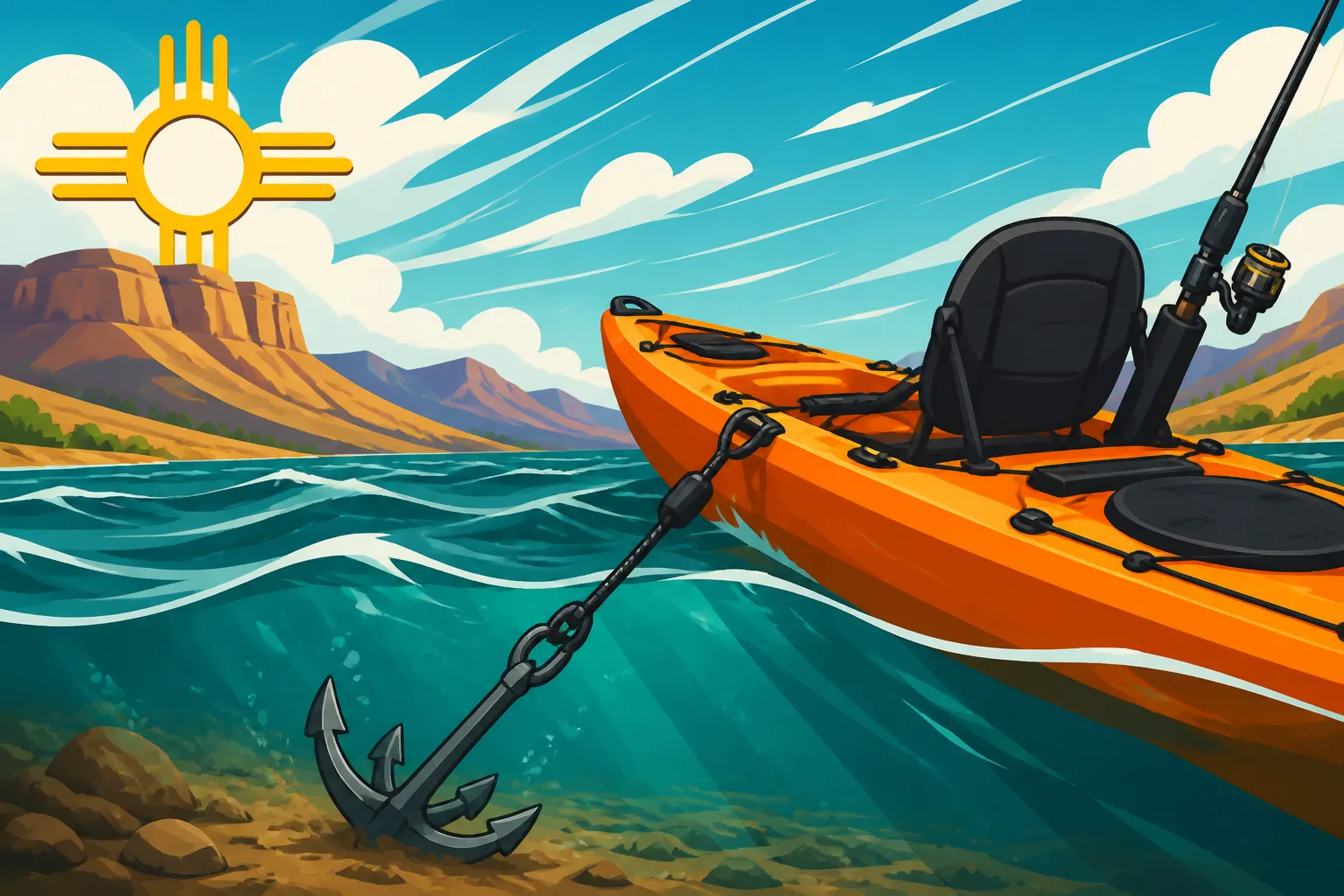
An anchor trolley system is an absolute game-changer for kayak anglers, especially in wind. It's a simple rope and pulley system that runs along the length of your kayak from bow to stern. It allows you to quickly and easily reposition your anchor point from the front to the back (or anywhere in between) of your kayak without having to pull up the anchor. This is crucial for controlling your boat's orientation relative to the wind and current.
Without a trolley, if you drop your anchor from the bow, a crosswind will catch the side of your kayak and spin you around. With a trolley, you can drop the anchor, then use the trolley to move the anchor line attachment point to the stern, turning your kayak to face directly into the wind, minimizing its surface area and stabilizing your position. This dramatically reduces how much your kayak gets pushed around, even if the anchor itself isn't perfectly set. This system is a must-have for anyone serious about fishing windy New Mexico lakes from a kayak. Kayak Fishing Gear for New Mexico Lakes often highlights the importance of such systems.
Setting Up Your Kayak Anchor System for Maximum Effectiveness
Having the right anchor and line is only half the battle. How you rig and deploy your system makes all the difference, especially when New Mexico's unpredictable winds decide to join your fishing trip. A well-designed setup not only holds you securely but also ensures safety and convenience.
The Importance of Anchor Scope and Position
Anchor scope refers to the ratio of your anchor line length to the depth of the water. As mentioned, a minimum 3:1 ratio is generally recommended, with 5:1 or even 7:1 being better in strong winds or rough conditions. For example, if you're in 15 feet of water, you should have at least 45 feet of anchor line out. This long scope allows the anchor to pull almost horizontally, giving its flukes or claws the best chance to dig deeply into the bottom. If the line is too vertical, the anchor will just skip or lift out.
Once you’ve got the right scope, the anchor trolley comes into play for positioning. In windy conditions, you want your kayak to act like a weather vane, pointing directly into the wind. This minimizes your kayak's profile to the wind, reducing drag and making your hold more secure. Drop your anchor, let out enough line for proper scope, and then use your anchor trolley to pull your anchor line attachment point to the bow. Your kayak will naturally swing to face the wind. If the wind direction shifts, you can adjust the trolley to keep your bow pointed into it, maintaining stability. This level of control is essential, especially on large bodies of water like Elephant Butte or Navajo Lake. How Wind Affects Fishing at Elephant Butte Lake can give you more insight into these dynamics.
Quick Release and Buoy Systems for Safety
Safety should always be your top priority, particularly when anchoring in potentially strong winds or currents. An anchor quick-release system is crucial. This typically involves a simple cleat or cam-cleat on your kayak that allows you to instantly detach your anchor line from the boat if you get hung up, encounter unexpected hazards, or need to move quickly in an emergency. Never tie your anchor line directly to your kayak with a knot that can't be swiftly undone.
Pairing your quick release with an anchor buoy is another smart move. Once you've released your anchor line, you simply throw the buoy overboard. The buoy, attached to the end of your anchor line, will mark your anchor's location, allowing you to retrieve it later once the immediate danger has passed or you’re ready to move. This system means you don't have to sacrifice your valuable anchor and line in an emergency. It's an investment in both safety and convenience that any kayak angler in New Mexico should consider.
Considerations for Different Bottom Types and Wind Strengths
New Mexico's reservoirs offer a variety of bottom compositions, from rocky shorelines to muddy flats and sandy coves. Being prepared for these variations is key. If you know you'll be fishing over a lot of rock, a grapnel anchor is often your best bet, as its prongs can wedge into crevices. However, if strong winds are expected, you might pair it with a heavier weight or consider a river anchor for better overall stability on mixed bottoms. For purely sandy or muddy areas, a fluke anchor, with its excellent digging power, will be a strong choice, even if it's lighter. You might even consider carrying two different types of anchors if you fish a wide range of spots.
For truly heavy winds, the best strategy involves maximizing your anchor's holding power, increasing your anchor scope, and ensuring your anchor trolley is properly set to orient your kayak. If the winds become extreme, sometimes the safest and smartest decision is to reel in your line, pull up your anchor, and head for a sheltered cove or even call it a day. No fish is worth risking your safety. Always be aware of weather forecasts and consider the general Best Time of Year to Fish in New Mexico which often correlates with calmer conditions, but always be ready for the unexpected.
Remember, a solid anchoring system isn't just about the anchor itself. It's the combination of the right anchor type and weight, a strong and adequate line, a functional anchor trolley, and a safe quick-release system that gives you the confidence to enjoy your fishing, even when the wind tries to blow you away.
Disclaimer
This article is for general informational purposes only and does not constitute professional advice. Laws, prices and regulations vary by location and change over time. Consult a qualified professional for guidance on your specific situation.