Fly Patterns Worth Carrying for the San Juan River
For many anglers, the legendary San Juan River in New Mexico represents the pinnacle of trout fishing, offering the chance at truly magnificent fish. But let's be honest, standing on its banks, looking at that clear, rich water, you might feel a little overwhelmed by the sheer volume of flies out there and wonder which ones actually make a difference on such hallowed ground. This guide is here to cut through the noise, helping you understand the specific fly patterns that consistently fool the savvy trout of the San Juan, making your next trip a truly successful one.
Understanding the San Juan River's Unique Ecosystem for Fly Selection
The San Juan River below Navajo Dam isn't just any trout stream; it's a world-renowned tailwater fishery with an incredibly stable environment. This constant flow of cold, nutrient-rich water from the bottom of the dam creates a unique ecosystem, fostering an abundance of aquatic insect life year-round. Understanding this consistency is key to unlocking its secrets and selecting the right flies.
The Tailwater Influence on Insect Life
Because the water temperature remains relatively stable throughout the year, the San Juan doesn't experience the dramatic seasonal insect hatches you might find on freestone rivers. Instead, it offers a consistent menu of smaller, protein-rich food sources. Midges, annelids (worms), and various small mayflies (like Baetis, often called Blue Winged Olives) are the bread and butter here. The trout are accustomed to seeing these organisms day in and day out, making precise imitations incredibly effective. It's less about guessing what might hatch next and more about presenting what's almost always there, in the right size and color. This predictability, however, also means the fish can become incredibly selective, so presentation and subtle variations in your fly choice become paramount.
Anglers often discuss the San Juan River Quality Waters Section and its specific characteristics, which directly relate to the abundant aquatic life. These sections are managed for high fish densities and catch-and-release practices, leading to trout that are highly educated and demanding when it comes to fly selection. You'll often hear discussions about nymphing rigs and the importance of having the right weight to get your flies down to where the fish are feeding actively on these consistent food sources.
The Clarity and Abundance of the Water
The San Juan's water is often exceptionally clear, especially during periods of low flow, which means the trout have an excellent view of your offerings. This crystal-clear environment is both a blessing and a curse. It allows you to sight-fish to cruising trout, but it also makes it easier for them to spot anything unnatural about your presentation or fly. Therefore, matching the hatch, even a micro-hatch of tiny midges, becomes critical. The sheer abundance of insects also means that the trout don't have to work hard for food; they can afford to be picky. You might see thousands of midges drifting by, but if your fly isn't exactly right, they'll simply ignore it for the real thing. This is where subtle details like flash, segmentation, and even the exact shade of olive or brown can make a significant difference.
Many anglers travel specifically to experience San Juan River Fly Fishing, drawn by its reputation for large, healthy trout. The river's consistent flows and rich nutrient base contribute to trout that are not only numerous but also grow to impressive sizes, making the effort to master fly selection truly worthwhile.
Essential Fly Categories for the San Juan River
When you're looking at the myriad of flies available, it helps to break them down into categories. For the San Juan, your primary arsenal will consist of nymphs, with dry flies and a few streamers filling important, albeit less frequent, roles.
Nymphs: The Unquestioned Workhorses
Nymphs are, without a doubt, the most important flies to carry for the San Juan River. The vast majority of the trout's diet consists of aquatic insects and worms found drifting near the bottom or suspended in the water column. You'll want a good selection of various sizes and colors.
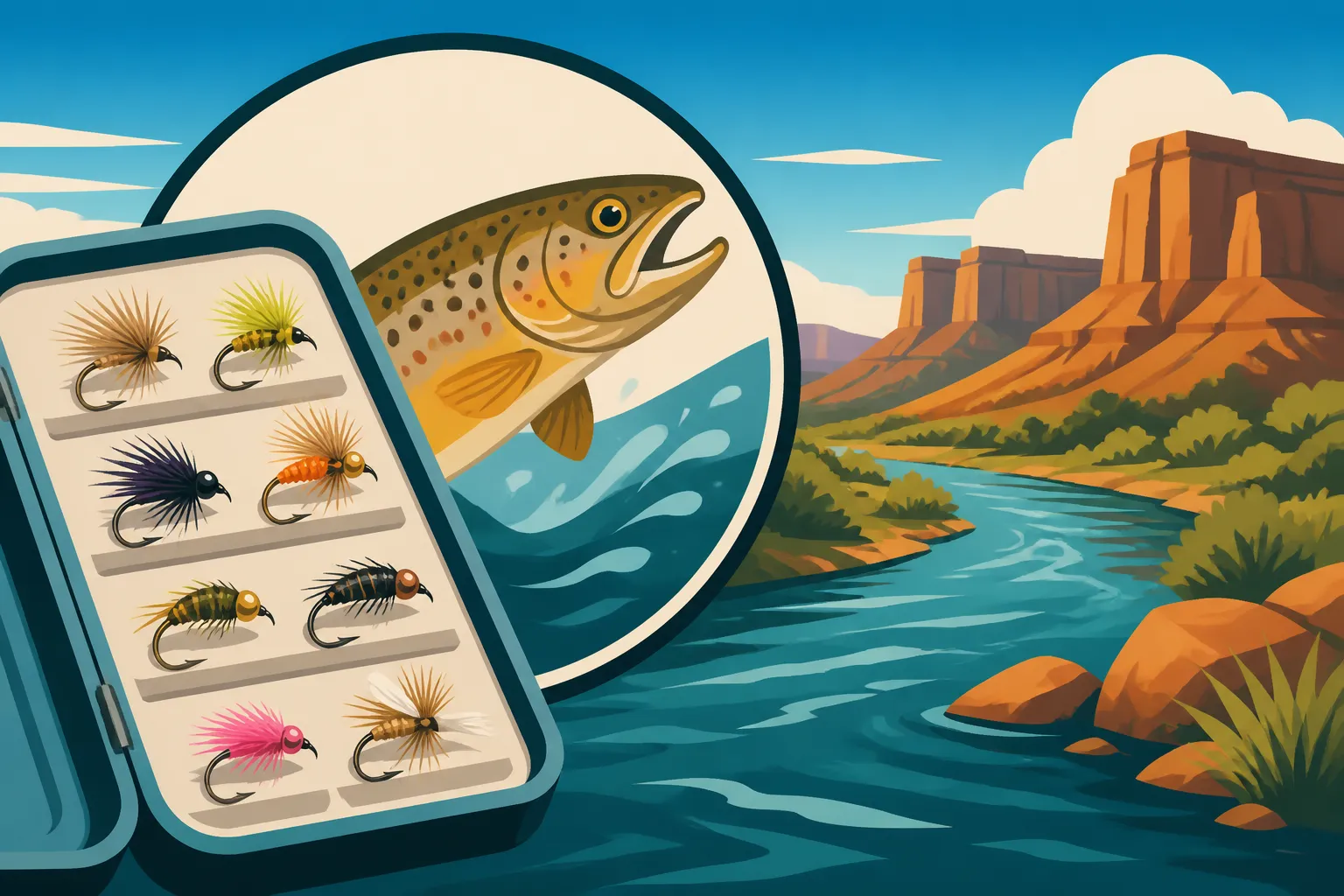
- Annelids (Worms): The San Juan Worm, in its many variations, is legendary here for a reason. These simple, often chenille-bodied flies imitate aquatic worms that are abundant in the riverbed. Trout can't seem to resist them. Carry them in red, pink, brown, and even chartreuse, in sizes 14-20. They are fantastic anchor flies in a multi-nymph rig. Other variations like bloodworms (often red or maroon, with thin, segmented bodies) also perform exceptionally well, particularly when fish are keyed in on the smaller, naturally occurring aquatic worms.
- Real-life scenario: Imagine a slightly off-color day after a minor rain shower upstream, or when the dam's release fluctuates. The increased flow can dislodge worms from the substrate, making the San Juan Worm an absolute go-to. I’ve had days where nothing else worked, and a simple size 16 red San Juan Worm tied as my lead fly got all the action. It's often the first fly I'll tie on when I'm just trying to figure out what the fish are interested in.
- Midges: These tiny insects are a staple for San Juan trout year-round. They are always present, and often the fish are gorging on their larval and pupal stages. Your fly box should be bursting with midge patterns. Essential patterns include the Zebra Midge (black, red, olive, purple, pearl, copper), Jujubee Midge, Disco Midge, and various Brassies. Sizes 18-24 are standard, but don't shy away from 26s and even 28s if the fish are extra finicky.
- Real-life scenario: You arrive at the river, and the water is glass-clear, with no visible surface activity. You might even see subtle flashes in the water, indicating trout feeding subsurface. This is prime midge time. I’ll often run a two-nymph rig, with a slightly heavier Zebra Midge as the lead, followed by a smaller, unweighted Jujubee Midge or a tiny Brassie on a long, fine tippet. The subtle flash and small profile of these flies can be irresistible to even the most educated San Juan trout. You might even want to check out Fly Selection for New Mexico's San Juan River for more midge specifics.
- Mayflies (Baetis/Blue Winged Olives): While not always in full-blown "hatch" mode, Baetis nymphs are an important food source. Have a variety of patterns like the Juju Baetis, RS2 (gray, black), Pure Midge (small, slender body), and Poxyback Baetis. Sizes 18-22 are most common. These become even more crucial during overcast days or in the late fall and early spring when Baetis mayflies are more active.
- Real-life scenario: On a cloudy spring afternoon, you might start seeing a few adult Baetis fluttering off the water. This tells you the nymphs are active. Switching to a Baetis nymph pattern like a size 20 Juju Baetis as your trailing fly, behind an annelid or midge, can suddenly spark aggressive takes. Sometimes the trout will key in on the emergers, so having a few cripple patterns or soft hackles can also be effective during these subtle emergence periods.
- Caddis: Although less prevalent than midges and Baetis in the Quality Waters, caddis larvae and pupae can still be important, especially in the upper or lower stretches of the Special Trout Water. Patterns like the Mercury Caddis, LaFontaine's Emergent Sparkle Pupa, and various green or tan caddis larvae imitations are worth having. Sizes 16-18 are usually sufficient.
- Real-life scenario: If you're fishing a slightly faster riffle or pocket water, caddis might be more active. I remember a day in a quicker current where a small, olive Mercury Caddis on a short leader was getting hit consistently while my midge and worm patterns were largely ignored. It taught me not to entirely neglect them, even on the San Juan.
Dry Flies: The Opportunistic Delight
While nymphing dominates, there are definitely times when dry flies shine on the San Juan, offering some of the most exciting fishing. These windows of opportunity are often driven by midge or Baetis hatches.
- Midges: Dry midge patterns like the Griffith's Gnat, Frying Pan Midge, or a tiny Parachute Adams (size 20-24) can be deadly during dense midge emergences. These are often best fished when you see fish sipping consistently on the surface.
- Real-life scenario: On a calm winter afternoon, the surface might be blanketed with tiny adult midges. The trout will rise with almost imperceptible sips. This is when a size 22 Griffith's Gnat, dead-drifted perfectly, can elicit strong takes. It's incredibly challenging but incredibly rewarding to match these tiny insects.
- Baetis (Blue Winged Olives): During strong Baetis hatches, typically on cloudy days in spring or fall, you'll want patterns like a Parachute Baetis, CDC Comparadun, or a Sparkle Dun. Sizes 18-22 are standard.
- Real-life scenario: I’ve been on the river when a heavy cloud cover rolled in, and suddenly, the water boiled with rising trout. A quick switch to a size 20 Parachute Baetis often results in immediate success. These hatches can be short-lived but intense, so being prepared with the right dry flies is crucial.
- Caddis: While less frequent, sporadic caddis hatches do occur, particularly in the warmer months. An Elk Hair Caddis (tan or olive, size 16-18) is a reliable general imitation.
- Real-life scenario: In early summer, as evening approaches, you might see some larger caddis fluttering about. If trout start slashing at the surface, an Elk Hair Caddis skated or dead-drifted can be just the ticket. It's not a daily occurrence, but when it happens, it's explosive.
Streamers: The Aggressive Option
Streamer fishing isn't the primary method for the San Juan's Quality Waters, but it can be surprisingly effective, especially for targeting larger, more aggressive trout or when fish are less active on nymphs.
- Woolly Buggers: An olive, black, or white Woolly Bugger (sizes 8-12) can tempt those bigger fish hiding in deeper pools or along cut banks. Try retrieving them with short strips or swinging them through current seams.
- Real-life scenario: I was once fishing a deep bend on a slow, gray morning, and the nymph bite was just off. On a whim, I tied on an olive Woolly Bugger, cast it across, and let it swing. A massive brown trout slammed it, giving me one of the most memorable fights of my life. It's a method that often surprises anglers who are strictly focused on nymphs.
Seasonal Fly Selection Strategies for the San Juan
While the San Juan offers consistent fishing year-round, subtle shifts in insect activity and fish behavior mean adapting your fly choice can lead to better results.
Spring and Fall: The Baetis Boom
These shoulder seasons often bring the most consistent and prolific Baetis hatches, especially on overcast days. During these times, focus heavily on Baetis nymph patterns, and be ready with dry Baetis imitations if fish start rising. Midges are still a constant, so don't neglect them. Annelid patterns remain reliable staples.
- In spring, after the colder winter months, trout are often eager to feed. You might find success with slightly larger nymphs as they become more active. Carrying a mix of New Mexico rainbow trout and New Mexico Brown Trout Fishing flies will serve you well.
- Fall fishing can be spectacular, with fish bulking up for winter. The Baetis hatches can be incredibly strong, providing excellent dry fly opportunities. This is a great time to ensure your dry fly box is well-stocked for those magical moments.
Summer: Tiny Tactics and Evening Risers
Summer on the San Juan means clear, consistent flows and often abundant midge activity. This is when going small and subtle truly pays off. Tiny midge nymphs and dries are paramount. During the hottest parts of the day, trout might hold in deeper, cooler water, making heavier nymph rigs essential. As evening approaches, look for opportunistic caddis or even Trico hatches, which require incredibly small dry flies.
- The bright sunshine and lower flows can make fish extra wary. Long leaders and fine tippets (6x or 7x) are crucial. This is when your ability to fish a Two-Fly Rig Setup for the San Juan River becomes invaluable, allowing you to present a tiny trailing midge effectively.
- While mornings can be productive, the late afternoon and early evening can bring some surprising surface action as the light fades and aquatic insects become more active.
Winter: Midge and Worm Dominance
Winter fishing on the San Juan is legendary for its consistency. With water temperatures remaining steady, midges are active year-round and often form the bulk of the trout's diet. Annelid patterns are also incredibly effective as a reliable food source. Dry fly opportunities are less frequent but can occur during strong, sunny midge hatches on calm days.
- Don't underestimate the power of minuscule flies in winter. Trout conserve energy and will often feed on the smallest, most readily available food. Sizes 22-26 midges are not uncommon. Understanding New Mexico's Cold Tailwaters in Winter will help you choose not just the right fly, but also the right presentation to get it into the fish’s feeding lane.
- Layering up is key for winter comfort, as the mornings can be frigid, even if the fishing is hot!
Stocking Your Fly Box: Practical Tips and Recommendations
Having the right flies is one thing, but having a well-organized and diverse fly box is another. Think of your fly box as your portable tackle shop, ready for any situation the San Juan throws at you.
Quantity and Variety: More is Always Better
When it comes to the San Juan, you can never have too many midges or San Juan Worms. These flies are staples. Instead of just one or two of each, aim for a dozen or more of your most reliable patterns in varying sizes and colors. For example, have black Zebra Midges in sizes 18, 20, 22, and 24. Do the same for red, olive, and purple. The same goes for San Juan Worms in different shades and sizes. For less frequent hatches, like specific Baetis dries, having 3-6 of each size and color might suffice.
Think about the structure of your fly box. Many anglers prefer different boxes for nymphs, dry flies, and streamers. This keeps everything organized and makes it easier to find what you need quickly when the bite is on. I always recommend having a separate small box dedicated to nothing but tiny midges and Baetis, as these are easy to lose amongst larger patterns.
Where to Acquire Your San Juan Flies
You've got a couple of solid options for stocking up on these essential patterns. Local fly shops in New Mexico, especially those near the San Juan River, are invaluable. They often tie or stock patterns specifically designed for the river, and their staff can provide real-time advice on what's currently working. You can also find a vast selection online. Big retailers like Bass Pro Shops often carry a good range of general patterns, and specialty fly tying stores on Amazon will have specific patterns like Jujubee Midges or Poxyback Baetis.
- When ordering online, make sure you pay close attention to the size and color descriptions. A size 22 midge can be shockingly small compared to what you might typically fish on other rivers. When you're looking for new patterns or just need to resupply, remember that Amazon often has a good selection of smaller, more specialized flies from various tiers. Similarly, if you're looking for more general patterns or even fly tying materials to tie your own, Bass Pro Shops can be a great resource.
Organizing for Success on the Water
A disorganized fly box can cost you precious fishing time. Arrange your flies logically: by type, size, or even by color. Use small compartment boxes for tiny flies to prevent them from becoming a jumbled mess. Consider a "working" fly box that holds your go-to patterns for the day, keeping your main stash safe and organized in your pack. Always carry a small container for spent or damaged flies, so you don't clutter your main boxes or leave trash on the river.
| Fly Category | Primary Purpose | Essential Patterns | Key Sizes (Hook) | Key Colors |
|---|---|---|---|---|
| Nymphs | Subsurface food imitations | San Juan Worm, Zebra Midge, Jujubee Midge, Juju Baetis | 14-24 | Red, Pink, Black, Olive, Purple, Gray, Brown |
| Dry Flies | Surface insect imitations | Griffith's Gnat, Parachute Adams, Parachute Baetis, Elk Hair Caddis | 18-24 | Black, Gray, Olive, Tan |
| Streamers | Baitfish/large insect imitations | Woolly Bugger | 8-12 | Olive, Black, White |
| Eggs | Fish egg imitations | Glo-Bug, Otter's Soft Milking Egg | 14-18 | Orange, Chartreuse, Pink, Red |
This table provides a concise overview, but remember that variations within each pattern (e.g., bead colors on a Zebra Midge) also make a difference. The San Juan is a phenomenal fishery, and by thoughtfully preparing your fly box with these essential patterns, you'll be well-equipped to tackle its challenges and enjoy its incredible rewards.
Disclaimer
This article is for general informational purposes only and does not constitute professional advice. Laws, prices and regulations vary by location and change over time. Consult a qualified professional for guidance on your specific situation.