Best Paddle Boards for Fishing New Mexico Lakes
The thought of getting out on New Mexico's stunning lakes and rivers for a peaceful day of fishing often conjures images of weighty boats, trailers, and crowded ramps. But what if there was a way to embrace the water with minimal fuss, granting you access to those serene, hard-to-reach coves? That's exactly where fishing paddle boards shine, offering anglers a unique blend of portability, stealth, and a truly intimate connection with the water, and this guide will walk you through everything you need to know to pick the perfect one for your New Mexico adventures.
Why Paddle Boards Are Great for Fishing in New Mexico
Let's face it, the traditional boat setup, while fantastic for some scenarios, can be a real headache. Hauling a boat, dealing with launch ramps, maintenance, and storage fees—it all adds up, both in cost and effort. Paddle boards, especially those designed for fishing, have carved out a significant niche because they address many of these frustrations, making fishing more accessible and, dare I say, even more enjoyable for many.
The Appeal of a Low-Profile Approach
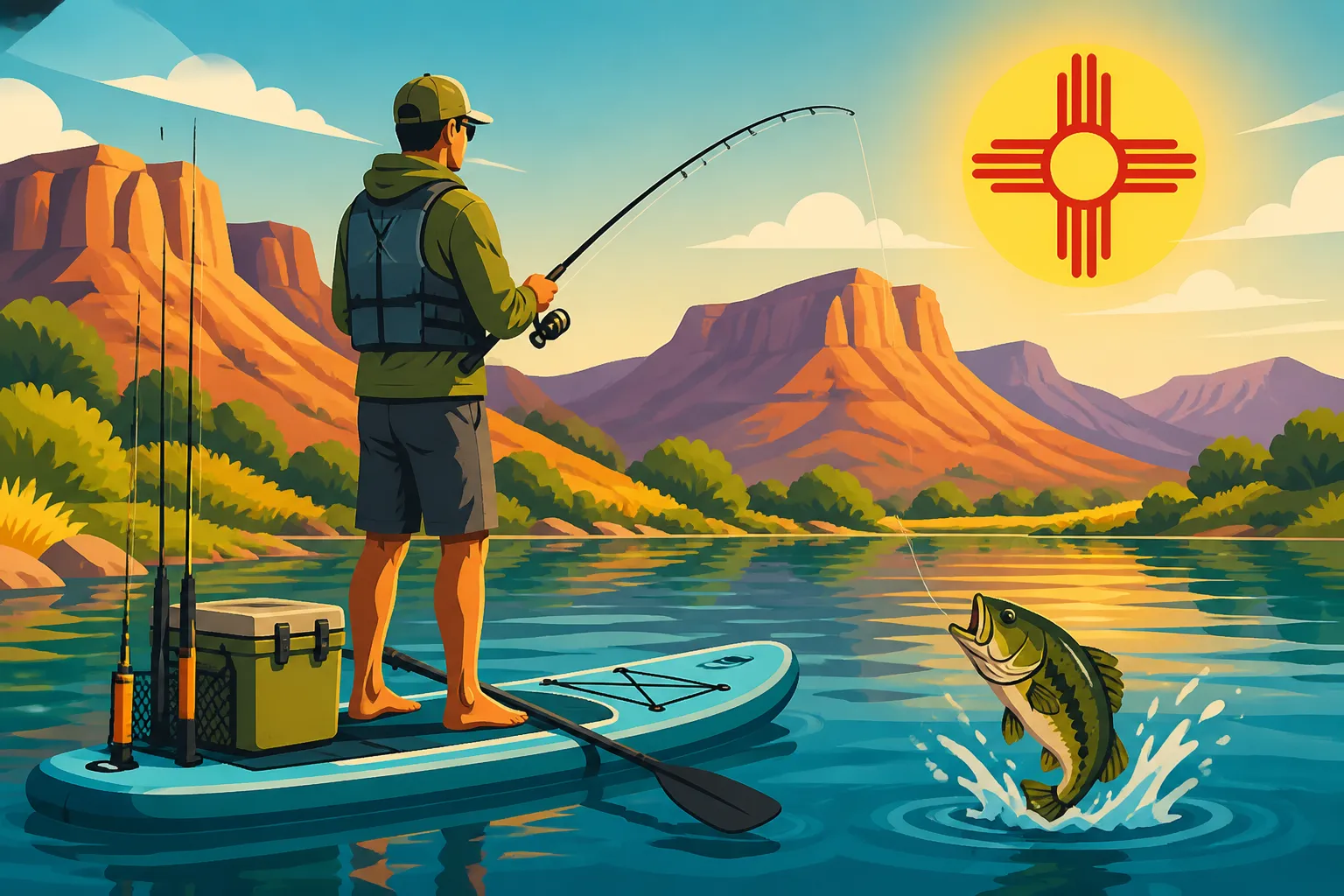
One of the biggest draws of a fishing paddle board is its low-profile nature. When you're standing or sitting on a SUP, you're not towering over the water in a noisy motorboat, which can spook wary fish. Instead, you're practically one with the surface, allowing for incredibly stealthy approaches. Imagine quietly paddling along a rocky shoreline at Elephant Butte Lake Fishing Guide or carefully navigating the reeds at Navajo Lake Fishing Guide, slipping into prime habitats without creating a ripple of disturbance. This quiet approach not only makes the fishing better but also enhances the overall experience of being out in nature, letting you truly soak in the tranquil beauty of New Mexico's landscapes.
Furthermore, paddle boards offer a fantastic vantage point. Standing up gives you an elevated perspective that allows you to spot fish, observe structure, and even cast with greater precision. It's like having a mobile observation deck, providing a level of visibility that's difficult to achieve from a traditional sitting kayak or a larger boat. This can be particularly advantageous in clear, shallow waters where sight fishing is an option, helping you identify those elusive trout or bass hiding beneath the surface.
Accessing Hidden Fishing Spots
This is where fishing paddle boards truly excel in a state like New Mexico. Our vast and varied waters include countless small coves, shallow flats, and narrow river sections that are simply impossible to reach with larger vessels. Imagine trying to navigate a bass boat into a secluded marshy area, or attempting to launch a heavy aluminum boat where there's no designated ramp. It's just not feasible.
A paddle board, however, can be carried over obstacles, launched from virtually any bank, and paddled into the most tucked-away corners. Think about exploring the upper reaches of smaller rivers or finding those secret pockets on larger reservoirs where nobody else bothers to go. These are often the places where fish feel safest and are less pressured, meaning your chances of a successful outing can dramatically increase. This unhindered access opens up a whole new world of angling opportunities, making those remote, pristine New Mexico waters your personal fishing grounds. You can literally drag your board down a dirt path and be on the water in minutes, bypassing the crowded main ramps entirely.
Health Benefits and Quiet Serenity
Beyond the pure fishing advantages, paddle boarding offers a fantastic way to combine your passion for angling with physical activity. Paddling provides a gentle, full-body workout, engaging your core, arms, and legs. It's a wonderful alternative to sitting in a boat all day, allowing you to stay active while enjoying the outdoors. And let's not forget the mental benefits. There's a profound sense of peace and quiet that comes with silently gliding across the water. Without the drone of an outboard motor or the chatter of other boaters, you're immersed in the sounds of nature—the ripple of water, the call of birds, the gentle whisper of the wind.
This tranquility is amplified when you're fishing. It's a meditative experience, allowing you to focus completely on the cast, the retrieve, and the subtle takes. For many anglers, fishing isn't just about catching fish; it's about disconnecting from the daily grind and reconnecting with nature. A fishing paddle board amplifies this connection, offering a serene escape that rejuvenates both body and mind. It's a truly unique way to experience Best Places to Fish in New Mexico from a fresh, quiet perspective.
Key Features to Look For in a Fishing Paddle Board
Choosing the right fishing paddle board isn't just about grabbing the first one you see. New Mexico's waters, from choppy reservoirs to calm mountain lakes, demand certain characteristics to ensure a safe, enjoyable, and effective fishing experience. You'll want to carefully consider how the board performs in various conditions and how well it supports your fishing style.
Stability Is King on New Mexico Waters
When you're casting, reeling in a feisty trout, or even just reaching for your tackle box, stability is paramount. The last thing you want is to feel like you're constantly teetering on the edge of a swim. Fishing-specific paddle boards are typically wider and often have a more rectangular or "pontoon" style hull design compared to recreational or touring SUPs. This increased width and displacement translate directly into greater stability.
Consider how you plan to fish. Do you primarily sit, or do you prefer to stand and cast? If standing is your goal, look for boards that are at least 32-35 inches wide, and some even go wider. A good, stable platform will allow you to confidently shift your weight, pivot, and even lean into a cast without fear of an unexpected dip in the New Mexico waters. Beyond just width, a flatter deck and a lower center of gravity contribute significantly to that solid feel underfoot, allowing you to focus on the fish, not on keeping your balance.
Durability for Rocky Shores and Rough Transport
New Mexico is a land of rugged beauty, and that often means rocky shorelines, dirt roads, and diverse terrain. Your fishing paddle board needs to be able to withstand some abuse. This is where the choice between an inflatable SUP (iSUP) and a rigid, hard-shell board becomes important.
Inflatable paddle boards, made from durable PVC and drop-stitch technology, are surprisingly tough and can handle bumps against rocks and logs with less risk of permanent damage than a fiberglass hard board. They're also much more forgiving if you accidentally drop them or ding them during transport. For those who frequently launch from unimproved banks or have to navigate rough access points, an iSUP can be a real game-changer. However, even rigid boards have their place; those made from rotomolded polyethylene can be incredibly robust, shrugging off impacts that would shatter a composite board. Think about your typical launch and retrieval points, as well as how you'll be transporting the board, to determine the level of durability you truly need. You might even find yourself hauling it across stretches of arid land to get to a secluded pond.
Storage and Rigging Options for Your Gear
Fishing requires gear, and a lot of it sometimes! Rods, tackle boxes, coolers, a PFD, maybe a small anchor—it all needs a secure place. A dedicated fishing paddle board will have ample deck space and built-in features to accommodate this. Look for multiple D-rings, bungee cords, or cargo nets at both the bow and stern for securing dry bags and coolers.
Many fishing SUPs also come equipped with track systems or mounting points that allow you to customize your setup with various accessories. This is crucial for adding things like rod holders, fish finders, camera mounts, or even a small tackle tray. Some boards even feature integrated cooler tie-downs or specialized inserts for buckets. The ability to rig your board exactly how you like it, keeping your essential gear organized and easily accessible, will significantly enhance your fishing efficiency and comfort on the water. Imagine needing to grab a new lure while battling a bass at Ute Lake Fishing, you want it within arm's reach.
Types of Fishing Paddle Boards Suitable for New Mexico
When you decide a fishing SUP is for you, you'll quickly discover there isn't just one kind. The choice often boils down to balancing convenience, performance, and your budget. For New Mexico anglers, the primary distinction usually comes down to inflatable versus rigid boards, with a few hybrid options thrown into the mix. Each has its pros and cons, especially given our unique landscapes and diverse fishing opportunities.
Inflatable Paddle Boards (iSUPs)
Inflatable paddle boards have exploded in popularity, and for good reason. They are, without a doubt, the most convenient option for many New Mexico anglers. The biggest advantage is portability. When deflated, an iSUP rolls up into a backpack-sized bag, making it incredibly easy to transport in the back of a small car, an ATV, or even on a hike to a remote mountain lake. This is a huge win for those who don't have roof racks, a truck, or ample storage space at home. You can easily buy one from a large online retailer like Amazon or pick one up from a local outdoor shop.
Modern iSUPs are also remarkably rigid and stable once inflated, thanks to advanced drop-stitch construction. They can handle quite a bit of abuse from rocky shorelines and unexpected bumps better than a fiberglass hard board. While they might feel a tiny bit less stiff than a rigid board, the difference is often negligible, especially for casual fishing. The main downsides? Inflation time (usually 5-10 minutes with an electric pump, longer by hand) and the slight potential for punctures, though repairs are often straightforward. For exploring various New Mexico waters, from the high country to our larger lakes, the sheer convenience of an iSUP often outweighs these minor drawbacks.
Hard-Shell (Rigid) Paddle Boards
Hard-shell paddle boards are what many people initially picture when they think of a SUP. These are typically made from fiberglass, epoxy, carbon fiber, or rotomolded plastic. Their primary advantage lies in performance; they generally offer superior glide, speed, and a slightly more "connected" feel to the water. For dedicated anglers who value maximum rigidity and the absolute best paddling efficiency, a hard-shell board might be the preferred choice. They also often come with more integrated features for fishing, like molded-in rod holders or robust deck rigging, straight off the production line.
However, the downsides are significant, especially in New Mexico's rugged environment. Transport and storage are the main hurdles. You'll need a roof rack, a truck, or a trailer, and a dedicated space to store a board that can be 10-14 feet long. They are also more susceptible to dings and scratches from impacts with rocks, meaning you need to be more careful at unimproved launch sites. For those who frequent large, open bodies of water like Conchas Lake Fishing Guide and value speed and a truly solid platform, and have the means to transport and store it, a rigid board is an excellent option.
Hybrid Kayak-SUP Models
In an effort to bridge the gap between stability, portability, and fishing features, some manufacturers have developed hybrid models. These boards often feature a wider, more stable platform like a SUP but include integrated seating options, higher sides, or even a more pronounced keel for better tracking, reminiscent of a kayak. Some even come with pedal drives, offering hands-free propulsion which is a huge advantage for fishing.
These hybrids are fantastic for New Mexico anglers who want the elevated perspective of a paddle board but also the option to sit comfortably for long periods, or who value the extra storage and stability of a kayak-like platform. They offer the best of both worlds in many respects, though they can be heavier and sometimes less nimble than a pure SUP. If you're torn between a kayak and a paddle board for your fishing adventures, a hybrid might be the perfect compromise, providing versatility for various fishing styles and locations across New Mexico.
Here's a quick comparison of the main types:
| Feature | Inflatable (iSUP) Fishing Board | Rigid (Hard-Shell) Fishing Board | Hybrid Kayak-SUP Fishing Board |
|---|---|---|---|
| Portability | Excellent (rolls into backpack) | Poor (requires roof rack/trailer) | Moderate (often bulky, may require roof rack) |
| Stability | Very Good (wide, stable designs) | Excellent (solid platform, less flex) | Excellent (kayak-like stability, seating) |
| Durability | Very Good (PVC, flexible, ding-resistant) | Good (materials vary, more prone to dings/scratches) | Very Good (often rotomolded plastic) |
| Performance | Good (slightly less glide than rigid) | Excellent (fast, efficient glide) | Good (focus on stability over speed, pedal options) |
| Storage/Rigging | Ample D-rings, bungee, track systems common | Often more integrated features, track systems | Integrated seating, ample storage, track systems |
| Ideal Use Case | Remote lakes, diverse access, limited storage, travel | Open water, speed, maximum rigidity, dedicated setup | Versatile, sitting comfort, hands-free options |
Essential Accessories for New Mexico Fishing SUPs
Having the right paddle board is just the beginning. To truly optimize your experience fishing New Mexico's diverse waters, you'll need a suite of essential accessories. These aren't just about comfort; many are about safety, convenience, and compliance with regulations. Overlooking them can turn a great day into a frustrating one, or worse, a dangerous one.
Personal Flotation Devices PFDs and Safety Gear
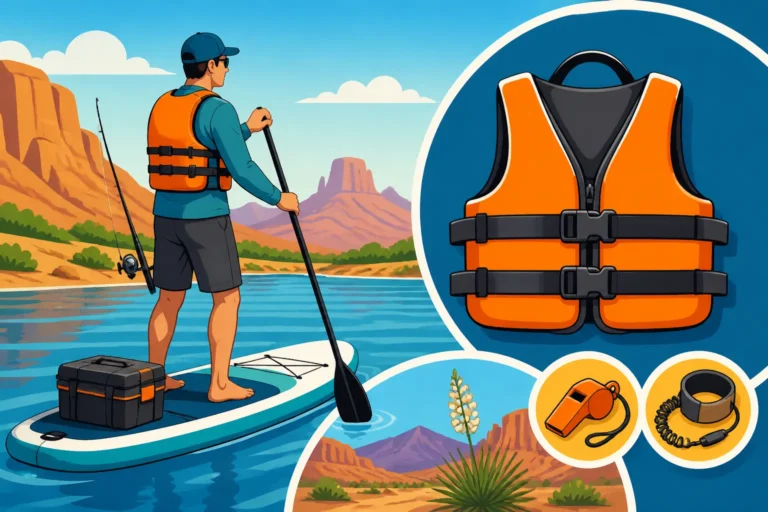
First and foremost, safety cannot be overstated, especially when you're out on the water by yourself. Even on calm days, conditions can change quickly on large New Mexico reservoirs. A properly fitted Personal Flotation Device (PFD), or life jacket, is not just recommended, it's a legal requirement in many situations and simply smart practice. Even if you're an excellent swimmer, a PFD provides crucial buoyancy if you fall in, especially in cold water or if you hit your head. Check out the Personal Flotation Device Rules for Paddle Boards to ensure you're compliant.
Beyond the PFD, consider other safety essentials:
- Whistle or Horn: Required on many waterways to signal distress or alert other boaters.
- Leash: Attaches your board to you, preventing it from drifting away if you fall off. This is absolutely critical in windy conditions.
- Sun Protection: New Mexico's sun can be intense, even in cooler months. A wide-brimmed hat, sunglasses (polarized lenses are amazing for spotting fish!), and high-SPF sunscreen are non-negotiable.
- First-Aid Kit: A small, waterproof kit for minor cuts, scrapes, or insect bites.
- Water Bottle/Hydration Pack: Staying hydrated is key, especially during long days under the desert sun.
Anchors, Rod Holders, and Cooler Setup
Now, let's talk about the gear that makes fishing from a paddle board genuinely effective.
- Anchor: A small, collapsible grapnel anchor (typically 1.5-3 pounds) with about 30-50 feet of line is indispensable. It allows you to hold your position over a productive fishing spot, preventing wind or current from pushing you away while you're focused on fishing. Without one, you'll constantly be paddling to stay put, which is exhausting and disruptive.
- Rod Holders: These are absolute must-haves. Whether they're flush-mount, rail-mount, or suction-cup designs, rod holders free up your hands for paddling, rigging, or landing a fish. Look for adjustable models that allow you to position your rods for easy access and trolling if desired. Bass Pro Shops often carries a wide variety of these.
- Cooler: A small, insulated cooler serves multiple purposes. It keeps your drinks and snacks cold, but more importantly, it can hold your catch (if you're keeping fish) and can double as a comfortable seat on your board. Many fishing SUPs have dedicated areas or tie-downs for coolers, and some anglers even modify them with cushions for extra comfort. For warm weather, having a reliable cooler like those discussed in Best Coolers for Keeping Fish Fresh in New Mexico is critical.
Propulsion and Navigation Aids
While your paddle is your primary means of propulsion, there are other tools that can enhance your mobility and fishing success.
- Paddle Leash: Just like your board leash, a paddle leash keeps your paddle from floating away if you accidentally drop it. Trust me, losing your paddle in the middle of a large lake is a terrible feeling.
- Small Electric Trolling Motor: Yes, you can even put a small electric trolling motor on some fishing SUPs! This isn't for high-speed travel, but it's fantastic for hands-free propulsion, holding position against wind, or covering longer distances without paddling fatigue. You'll need a battery, but the convenience for serious fishing can be worth the extra weight and setup.
- Fish Finder: A compact, portable fish finder can be a game-changer, especially on unfamiliar lakes or when targeting specific depths. Many models are designed with transducers that attach easily to a paddle board, giving you real-time information about depth, structure, and fish presence. This is invaluable when exploring new areas of Elephant Butte Lake Fishing Guide or trying to locate walleye on Conchas Lake Walleye Fishing.
- GPS/Map: Even if it's just your phone with a reliable mapping app, knowing your location, especially on large reservoirs, is crucial. This helps you navigate, mark productive spots, and safely return to your launch point, particularly if you're exploring for the first time or if weather conditions change unexpectedly.
Top Considerations for New Mexico's Diverse Waters
New Mexico is a land of incredible contrasts, from arid deserts to alpine forests, and its fishing waters reflect this diversity. What works perfectly on a placid mountain pond might be entirely inadequate for a vast, windswept reservoir. When choosing and outfitting your fishing paddle board, it's crucial to consider the specific types of water you'll be frequenting most often.
High Elevation Lakes and Mountain Ponds
Imagine venturing into the Pecos Wilderness to cast for cutthroat trout in a pristine alpine lake, or finding a quiet little pond nestled in the Carson National Forest. These are often crystal-clear, relatively calm waters, but they come with their own set of challenges and requirements for a fishing SUP.
For these environments, portability is often king. You might have to hike some distance to reach these gems, so an inflatable paddle board (iSUP) is usually the superior choice. Its ability to pack down into a manageable size for backpacking makes it ideal. You'll want a board that's stable enough for comfortable casting, but perhaps not excessively large, as larger boards can be cumbersome to carry. In these serene settings, the stealth of a paddle board is particularly effective for approaching wary trout. Ensure your gear is lightweight and minimalist, focusing on essential items like a small net, a few flies or lures, and a compact anchor if needed. Remember that regulations for these sensitive waters might include New Mexico Special Trout Water Rules or specific tackle restrictions.
Large Reservoirs like Elephant Butte and Navajo Lake
New Mexico's major reservoirs, such as Elephant Butte, Navajo Lake, and Ute Lake, are entirely different beasts. These are vast bodies of water where wind can kick up quickly, creating significant chop and challenging conditions. Here, stability and tracking become paramount. You'll need a board that can handle wakes from other boats and maintain its course in windy conditions.
For these larger waters, a longer, wider, and more stable fishing SUP is generally recommended. While an iSUP can still be a good choice due to its robustness, a rigid board might offer superior tracking and a more solid feel when battling waves. Look for boards with good displacement and a design that cuts through chop rather than rides on top of it. A strong leash is crucial here, as is a reliable anchor to hold your position against wind and current. Furthermore, consider adding a small electric trolling motor if you plan to cover significant distances or troll for species like walleye or striped bass. Safety gear, especially a good PFD and a whistle, is absolutely non-negotiable on these expansive, often busy, waters. Navigating these waters safely means understanding New Mexico Boat Registration and Titling Guide requirements for any motorized additions.
River and Stream Challenges
Fishing New Mexico's rivers and larger streams, like sections of the Rio Grande or the Pecos River, presents a different kind of challenge. Current, obstacles like submerged logs or rocks, and varying depths mean your paddle board needs to be maneuverable and durable. While some anglers do use SUPs on rivers, it requires a different skill set and a board designed for the task.
Shorter, more maneuverable boards are generally better for rivers, allowing for quick turns and obstacle avoidance. Again, an iSUP's durability against impacts with rocks is a significant advantage. You'll need strong paddling skills to navigate currents and understand how to "read" the water. For river fishing, a secure attachment for all your gear is critical, as a capsize in moving water can quickly scatter your tackle downstream. Focus on boards that track well but can also pivot quickly. A robust anchor system might still be useful for holding in slower eddies or pools, but a strong paddle and good balance are your primary tools. Always be aware of local regulations, especially on designated trout waters like the San Juan River Quality Waters, which have strict rules on tackle and catch limits, detailed in New Mexico Fishing Regulations Overview.
Getting Started: From Purchase to Your First Cast
So, you're convinced a fishing paddle board is the way to go. That's fantastic! The journey from research to your first successful cast from your new SUP is an exciting one. It involves making smart purchasing decisions, understanding the logistics of transport and launch, and then simply getting out there and learning by doing.
Where to Find Quality Fishing SUPs and Gear
Finding the right fishing paddle board and all its accompanying gear is easier than ever, thanks to a mix of online and brick-and-mortar options. Local outdoor retailers can be a great starting point, as they often have staff with local knowledge who can provide recommendations specific to New Mexico's waters. They might even let you get a feel for the boards in person, which is invaluable for assessing stability and size.
However, the internet offers an unparalleled selection. Major online retailers like Amazon offer a huge range of brands and models, often with competitive pricing and user reviews that can provide deep insights. Specialized paddle board and kayak shops online also often carry high-quality fishing-specific models with robust features. Don't forget larger sporting goods stores like Bass Pro Shops, which typically have a dedicated water sports section that includes paddle boards, kayaks, and all the fishing accessories you could dream of. When buying online, make sure to read reviews about customer service and warranty policies, as a good support system is crucial if any issues arise.
Transporting and Launching Your Board
Once you've made your purchase, the practicalities of getting your board to the water come into play.
- Inflatable Boards: These are the easiest. Deflated and rolled into their storage bag, they fit into virtually any vehicle. When you arrive at your chosen launch spot, unroll, attach your pump (an electric pump that plugs into your car's 12V outlet is a lifesaver!), and inflate to the recommended PSI. This usually takes less than 10 minutes. Then simply carry it to the water's edge.
- Rigid Boards: These require a bit more planning. A reliable roof rack system for your car or truck is essential. Make sure your rack's weight capacity and board length compatibility are adequate. Always secure your board tightly with proper straps, ensuring no loose ends flap in the wind. For shorter distances, a specialized SUP cart with wheels can be incredibly helpful for moving a heavy rigid board from your vehicle to the water. Launching is typically straightforward, just carefully slide it into the water from a bank or designated ramp.
No matter the type, always scope out your launch area. Look for safe access points, clear of sharp debris, and consider how far you'll need to carry your board. Many of New Mexico's state parks offer excellent access, but remote areas might require a bit of improvisation.
Learning to Fish from a Paddle Board
Fishing from a paddle board is a unique experience that combines elements of kayaking, wading, and standing-up fishing. It has a slight learning curve, but it's incredibly rewarding.
- Start on Calm Water: Your first few outings should be on flat, calm water without much wind. This allows you to get comfortable with the board's stability and how it responds to your weight shifts. Best Time of Year to Fish in New Mexico might offer quieter water conditions.
- Practice Standing and Sitting: Experiment with both positions. Standing offers a better vantage point, while sitting can be more comfortable for longer periods or in choppier conditions. Learn to transition smoothly between the two.
- Master Basic Paddling: Efficient paddling techniques will save you energy and help you maneuver more effectively. Practice turning, stopping, and paddling straight.
- Rigging and Accessibility: Before you cast, lay out your gear. Make sure your rod holders are easily accessible, your tackle is within reach, and your anchor deploys smoothly. You don't want to be fumbling for items when a fish bites.
- Casting Technique: You might need to adjust your casting stroke slightly, especially if you're standing. Start with shorter, controlled casts until you feel confident.
- Landing Fish: This is where good planning comes in. Have your net ready, and ideally, a secure place to put your rod down quickly. Practice bringing fish alongside the board and safely netting them. If you're practicing Catch and Release Best Practices in New Mexico, minimize handling time and keep the fish in the water as much as possible.
Remember, every outing is a learning experience. Don't be afraid to experiment with different setups and techniques. The beauty of fishing from a paddle board is the freedom and intimacy it offers, allowing you to connect with New Mexico's waters in a truly special way.
Disclaimer
This article is for general informational purposes only and does not constitute professional advice. Laws, prices and regulations vary by location and change over time. Consult a qualified professional for guidance on your specific situation.