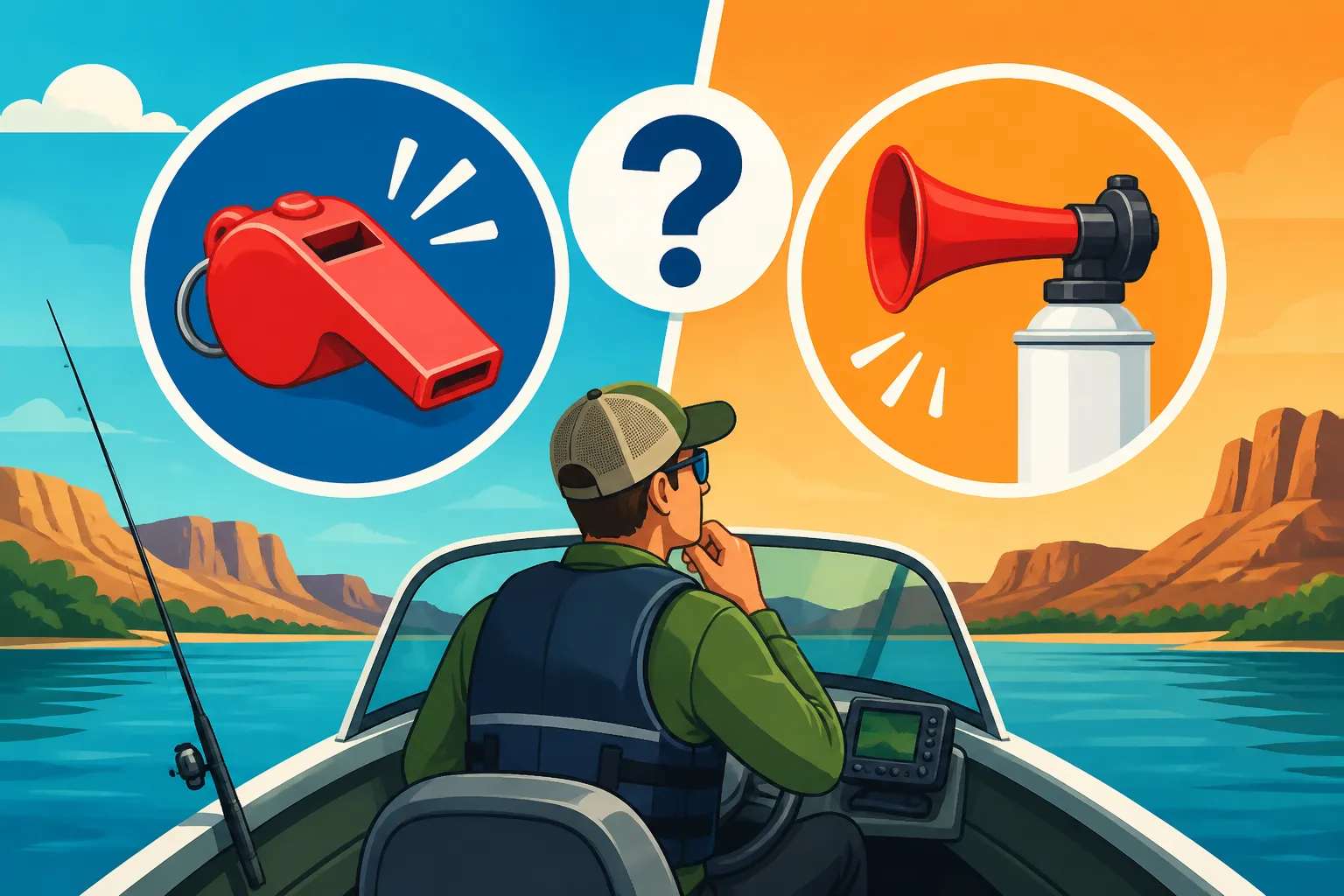
Do You Need a Whistle or Horn on a New Mexico Boat?
It's easy to overlook some of the smaller, seemingly insignificant details when you're gearing up for a fantastic day of fishing on New Mexico's beautiful lakes and rivers. One question that often pops up, especially for new boat owners or those coming from out-of-state, is whether you actually need a whistle or a horn on your boat. This guide will cut through the confusion and explain exactly why a sound-producing device isn't just a good idea, but a crucial piece of safety equipment required by law.
The Short Answer: Yes, You Absolutely Do!
Let's clear the air right away: if you're operating almost any type of boat on New Mexico's public waters, you are legally required to have a sound-producing device onboard. This isn't just a suggestion; it's a non-negotiable part of safe boating, and it applies whether you're cruising on a big pontoon boat or paddling a small fishing kayak. Ignoring this simple requirement can not only put you and your passengers at risk but also lead to a hefty fine from wildlife officers or other marine patrol.
Why Sound-Producing Devices Are Essential
Imagine you're out on Elephant Butte Lake, the sun is shining, and you're focused on reeling in a trophy striped bass. Suddenly, a thick fog rolls in, or a storm kicks up, drastically reducing visibility. How do you alert other boats to your presence? How do you signal distress if your engine dies? This is where your whistle or horn becomes an absolute lifesaver. These devices are designed for communication on the water, allowing you to signal your intentions, warn of hazards, and call for help in situations where visual signals or shouting simply won't cut it. It’s about preventing collisions and ensuring everyone's safety.
What the Regulations Actually Say
New Mexico's boating regulations align very closely with federal guidelines set forth by the U.S. Coast Guard, which makes things fairly consistent across state lines. The core of these regulations is that every vessel must carry a sound-producing device capable of producing an efficient sound signal audible for at least half a nautical mile. For most recreational boats, this means either a manual whistle or an air horn. The specifics can vary slightly depending on the length of your vessel, but the fundamental need for a sound signal remains constant. It's a key part of your Required Safety Gear on a New Mexico Boat checklist, right alongside life jackets.
Understanding Sound-Producing Devices
When we talk about "sound-producing devices," it's not just any noisemaker. The regulations are fairly specific about what constitutes an acceptable device. This isn't the time to rely on your car horn or a stadium air horn that's just rattling around in your fishing bag. Marine-specific devices are designed to cut through engine noise, wind, and water, ensuring your signal is heard when it truly matters.
Manual vs. Mechanical Whistles and Horns
For smaller vessels, especially those under 12 meters (about 39.4 feet), a simple, good-quality manual whistle is usually sufficient. Think of the kind of whistle a referee uses – it needs to be easily audible and distinct. These are great because they don't require batteries or compressed air, making them reliable in almost any condition. You can find robust marine whistles at outdoor stores like Bass Pro Shops.
However, once you get into slightly larger boats, or if you simply prefer more power and ease of use, a mechanical or air horn comes into play. These typically use compressed air to produce a much louder, more sustained blast. While powerful, remember that air horns rely on a canister of compressed air, which can run out. Always have a spare, or better yet, carry both an air horn and a manual whistle as a backup. The louder the environment, the more you'll appreciate a mechanical horn.
The Importance of Audibility
The key phrase in the regulations is "efficient sound signal audible for at least half a nautical mile." This isn't just some arbitrary distance; it's the minimum range at which your signal needs to be clearly heard by another vessel. This is particularly important on large, open waters like Navajo Lake or Conchas Lake, where distances can be deceiving and other boats might be traveling at speed. A small, weak whistle might not cut it, especially if there's wind, waves, or other boat noise competing with your signal. Always test your device periodically to ensure it’s loud and clear. If you find yourself having to strain to hear it from a short distance, it's time for a replacement.
Specific Requirements by Boat Length
The type of sound-producing device you need can actually depend on the size of your vessel. It’s important to know your boat’s length to ensure you’re compliant, rather than just guessing. This differentiation helps match the appropriate level of safety equipment to the potential risks associated with different boat sizes and their operational areas.
Vessels Less Than 12 Meters (39.4 feet) in Length
This category covers the vast majority of recreational fishing boats, pleasure craft, and even personal watercraft you'll find on New Mexico's waters. For these boats, the requirement is straightforward: you need to carry some means of making an efficient sound signal. This generally means a manual whistle or a portable air horn. There's no requirement for a permanently installed, power-driven horn, though you're certainly welcome to have one. The crucial part is that whatever you choose, it must meet the half-mile audibility standard. Many anglers tuck a marine whistle onto their life vest or keep a small air horn in an easily accessible storage compartment. Just make sure it's not buried under all your fishing tackle!
Vessels 12 Meters (39.4 feet) or More in Length
If you're lucky enough to be operating a larger vessel, such as a substantial cabin cruiser or a larger house-boat, the rules become a bit more stringent. For boats in this size class, you must have a power-driven whistle or horn that is audible for at least half a nautical mile. Additionally, you need to carry a bell or gong that is capable of producing effective sound signals. While bells and gongs are less common on recreational vessels of this size, they are part of the legal requirement for larger craft, particularly when anchoring or navigating in restricted visibility. These larger boats are often on the water for extended periods and may venture further, necessitating more robust signaling capabilities.
What About Canoes, Kayaks, and Paddleboards?
This is a frequently asked question, and it's a common misconception that smaller, paddle-powered vessels are exempt. The truth is, they are not. Even if you're out on a peaceful morning fishing trip in your kayak on Fenton Lake, you still need a sound-producing device. A simple, plastic marine whistle attached to your PFD (Personal Flotation Device) is perfectly acceptable and meets the regulatory standard. This is critical for safety, especially if you venture out into busy areas or unexpected weather conditions. Imagine trying to signal a speeding motorboat from a kayak without a whistle – it's nearly impossible. Don't overlook this crucial piece of gear for your smallest crafts; it's just as important for a kayak as it is for a motorboat.
Beyond the Basics: Practical Tips and Maintenance
Just having the right device isn't enough; you also need to make sure it's always ready for action and that you know how to use it effectively. Think of your sound-producing device as a fundamental safety tool, not just another item to tick off a checklist.
Carrying Extra and Checking Functionality
A good practice is to not only have your primary sound device but also a backup. If your air horn runs out of air, or if your whistle falls overboard, you don't want to be caught unprepared. Keeping a spare manual whistle tethered to your life jacket is an excellent, low-cost solution. Before every trip, especially at the start of the New Mexico Fishing Season Calendar, take a moment to test your horn or whistle. Give it a blast. Does it sound strong and clear? Is the air canister full? For whistles, ensure there's no debris blocking the sound hole. Regular checks ensure that when an emergency strikes, your device will perform as expected.
When to Use Your Whistle or Horn
Knowing when to use your sound device is as important as having it. These signals aren't just for emergencies. They're a form of communication.
- Warning of Danger/Collision Course: If you see another boat on a collision course, a series of short, rapid blasts can alert them to your presence and danger.
- Restricted Visibility: In fog, heavy rain, or other conditions of reduced visibility, specific signals are used to indicate your vessel's presence and direction. For instance, a prolonged blast every two minutes can signal that you are a power-driven vessel underway.
- Overtaking or Passing: Specific short blasts (one for "I intend to pass you on your starboard side," two for "I intend to pass you on your port side") are used to signal your intentions to other vessels.
- Distress Signal: A continuous sounding of your horn or whistle is a universally recognized distress signal. If you're in trouble, lay on that horn!
Familiarize yourself with the basic sound signals. You can often find a chart of common signals in your New Mexico Fishing Regulations Overview booklet or online.
Where to Purchase a Compliant Device
Finding a compliant sound-producing device is generally quite easy. Most marine supply stores, outdoor recreation shops, and even many larger department stores that carry fishing gear will have them. You can also readily find them online through retailers like Amazon or specialist sites. Brands like Bass Pro Shops offer a wide selection of marine-grade whistles, air horns, and even integrated horn systems for larger boats. When purchasing, look for devices specifically rated for marine use and check that they meet the "half-mile audibility" standard. Don't just grab any whistle; ensure it's designed for the demanding conditions on the water.
The Consequences of Non-Compliance
It can be tempting to skip a small item like a whistle when you're focused on getting your rods, bait, and cooler ready for a day of fishing. However, overlooking this detail can have significant repercussions, both legal and personal. It’s simply not worth the risk, especially when compliant devices are so affordable and readily available.
Fines and Safety Risks
If a New Mexico Department of Game and Fish officer or other marine patrol stops you and finds your vessel lacking the required sound-producing device, you will likely receive a citation. The specific fine amount can vary, but it's typically an avoidable expense that far outweighs the cost of a simple whistle or horn. Beyond the financial penalty, the real danger lies in the increased safety risk. Without a way to communicate audibly, you're severely handicapped in preventing collisions or signaling distress. A small craft silently drifting in fog, unable to alert an approaching powerboat, is a recipe for disaster. This risk becomes even more pronounced if you're fishing in busy areas like the main channels of Elephant Butte Lake or around boat ramps.
Why It's Not Worth the Risk
Think about the peace of mind that comes with knowing you have all your safety gear in order. It allows you to focus on the enjoyment of fishing, rather than worrying about potential hazards or legal troubles. A compliant whistle or horn is a minimal investment that provides maximum protection and adherence to the law. It’s a fundamental part of responsible boating and contributes to the safety of everyone sharing New Mexico's beautiful waterways. Don't let a forgotten whistle turn your relaxing fishing trip into a stressful, or even dangerous, ordeal. Ensuring your boat has all the necessary Boat Safety Equipment Required in New Mexico is just good common sense.
Here’s a quick summary of the requirements:
| Vessel Length | Required Sound-Producing Device | Other Requirements (if any) |
|---|---|---|
| Less than 12 meters (39.4 feet) | Whistle or Air Horn (manual or powered) | Must be audible for 0.5 nautical mile |
| 12 meters (39.4 feet) or more | Power-driven Whistle or Horn | Bell or Gong also required, audible for 0.5 nautical mile |
| Canoes, Kayaks, Paddleboards, etc. | Whistle (manual is common) | Must be audible for 0.5 nautical mile |
This applies to all vessels operating on federally controlled waters and generally throughout New Mexico’s public waters. Whether you're planning a full day out on Heron Lake Fishing or just dropping a line in an urban pond, make sure you're equipped. Remember, staying safe on the water is just as important as knowing the Best Lures for New Mexico Trout or checking the New Mexico Fishing Season Dates and Limits.
Disclaimer
This article is for general informational purposes only and does not constitute professional advice. Laws, prices and regulations vary by location and change over time. Consult a qualified professional for guidance on your specific situation.