Best Depth to Troll for Walleye at Elephant Butte
One of the biggest head-scratchers for any angler hitting New Mexico's legendary Elephant Butte Lake is figuring out where the walleye are hiding. It’s a vast, dynamic body of water, and those elusive walleye can be anywhere from shallow flats to the deepest channels, leaving many of us scratching our heads and wondering if we're just blindly dragging lures. This guide aims to pull back the curtain on the best depths to troll for walleye at Elephant Butte, arming you with the knowledge to consistently put fish in the boat and make your time on the water truly productive.
Understanding Walleye Behavior and Habitat at Elephant Butte
Before we even talk about specific depths, it's crucial to understand the fundamental nature of walleye and how Elephant Butte's unique environment shapes their behavior. Walleye are predators, pure and simple, and their movements are almost always dictated by two things: light conditions and the location of their prey. Elephant Butte, with its fluctuating water levels, diverse submerged structures, and clear to stained water clarity, presents a complex puzzle.
The Impact of Light on Walleye
Walleye have large, light-sensitive eyes, which is why they earned their reputation as low-light feeders. Unlike bass or sunfish that rely more on sight in bright conditions, walleye are perfectly adapted to hunting in dim light, whether that's during dawn, dusk, cloudy days, or in deeper, darker water. This sensitivity to light is perhaps the single most important factor influencing their vertical movement throughout the day and across different water clarities.
Imagine a bright, cloudless New Mexico summer day. The sun is blazing, and the surface water is teeming with light. A walleye near the surface would be highly uncomfortable, its eyes overwhelmed. To escape this, they'll seek refuge in deeper water where the light penetration is significantly reduced, or they might tuck themselves tightly against a piece of submerged structure, like a rock pile or a submerged tree, using the shadow it casts. Conversely, on an overcast day, or during the early morning and late evening, the ambient light is much softer. This is when walleye feel more confident moving shallower, even venturing into just a few feet of water to ambush unsuspecting baitfish. Understanding this light sensitivity is your first clue to deciphering their depth.
Following the Baitfish
Walleye are opportunistic feeders, and they will always be where the food is. At Elephant Butte, the primary forage for walleye includes threadfin shad, gizzard shad, and various panfish. These baitfish also have their own preferences for depth based on water temperature, oxygen levels, and safety from predators. If you can locate the baitfish, especially schools of shad, you're usually hot on the trail of walleye.
Modern electronics, particularly a good fish finder, become your best friend here. You're not just looking for "fish" arches; you're looking for dense clouds of bait. Pay attention to what depth these bait balls are holding at. Are they suspended over open water, or are they hugging a contour line or a submerged point? Walleye will often sit just below or on the edges of these bait schools, ready to dart in for a meal. The beauty of trolling is that you can effectively cover different depths within these zones, experimenting until you find the sweet spot where the walleye are actively feeding. Often, the bigger bait schools will congregate in areas with stable water temperatures and good oxygen, which frequently means the thermocline layer during warmer months.
Key Factors Influencing Walleye Trolling Depth
Pinpointing the best depth isn't a "set it and forget it" kind of deal. Several environmental factors constantly shift, and smart anglers adapt their trolling strategy accordingly.
Water Temperature and the Thermocline
Water temperature is a critical, often overlooked, factor. Like most fish, walleye have a preferred temperature range. For walleye, this typically falls between 60-70 degrees Fahrenheit (15-21 degrees Celsius). In Elephant Butte, especially during the warmer months, the lake stratifies into layers with different temperatures. The warmest water is at the surface, and the coldest is at the bottom. The "thermocline" is the transition zone where the temperature changes most rapidly.
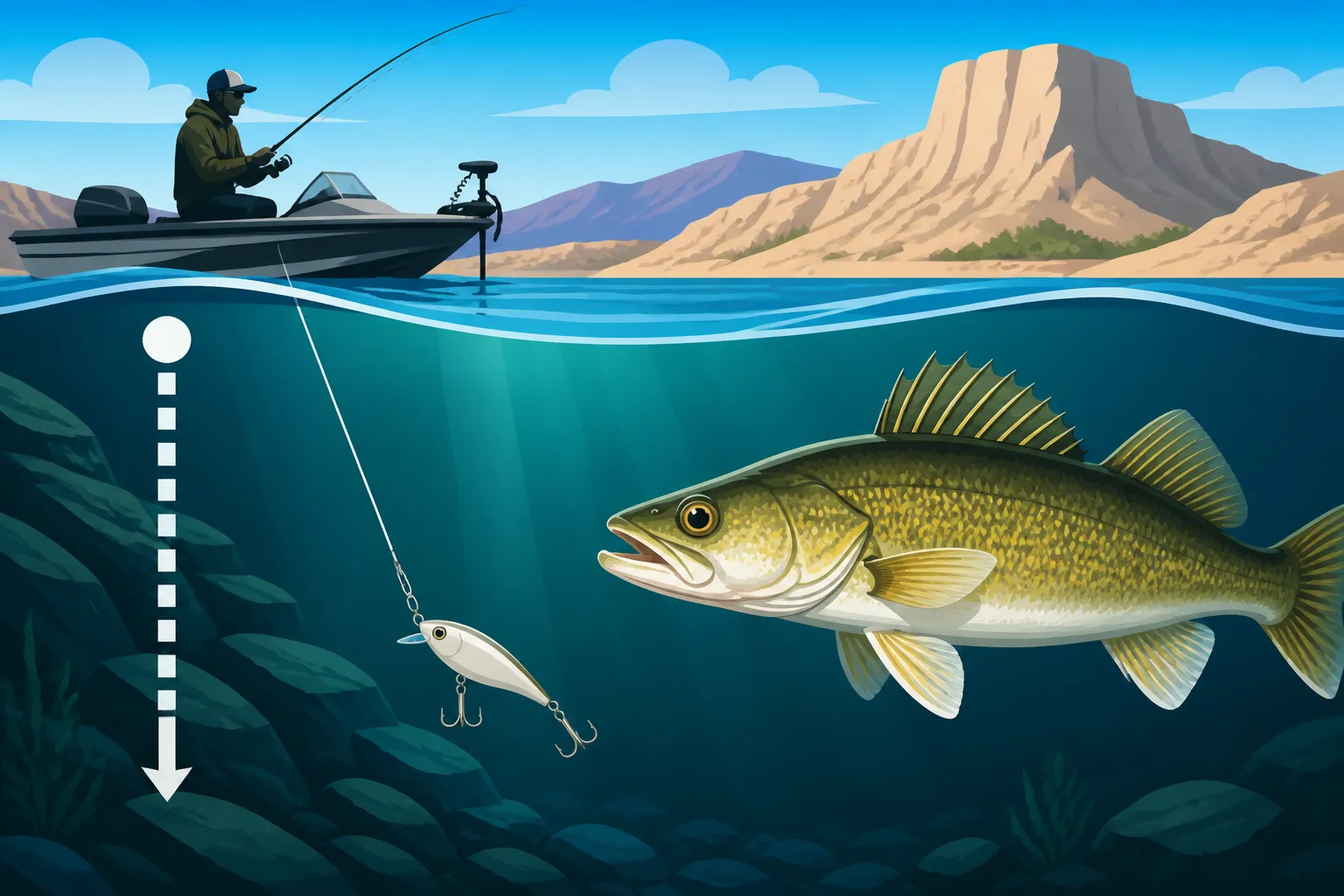
During summer, walleye often relate very closely to this thermocline. It's usually the zone where there's sufficient oxygen, cooler temperatures than the surface, and often where baitfish are concentrated. Your fish finder might show a distinct layer or a fuzzy line indicating this thermocline. Once you identify it, you have a strong starting point for your trolling depth. If the thermocline is at 25 feet, you'll want your lures running in or just above that 25-foot mark.
However, during spring and fall, when the water column is more uniform in temperature (known as "turnover"), walleye might be found at a wider range of depths, often shallower. In winter, they'll seek out the warmest available water, which is often deeper but not necessarily the very bottom. Understanding New Mexico Fishing Season Calendar can help you anticipate these changes.
Water Clarity
Elephant Butte's water clarity can vary significantly, from relatively clear in some sections to quite stained, especially after heavy rains or in shallower, wind-affected coves. Water clarity directly impacts how deep light penetrates, which, as we discussed, impacts walleye comfort.
In clear water, walleye will generally be deeper during the day to avoid the intense sunlight. You might find them in 25-40 feet of water, even more, on a sunny day. Conversely, in stained or murky water, walleye can often be much shallower, even in the middle of the day, because the limited light penetration provides them with natural cover. This means they might be active in 10-20 feet, or even shallower, in areas where you wouldn't expect them in clearer conditions. Always adjust your trolling depth based on the current water clarity in the area you are fishing.
Structure and Cover
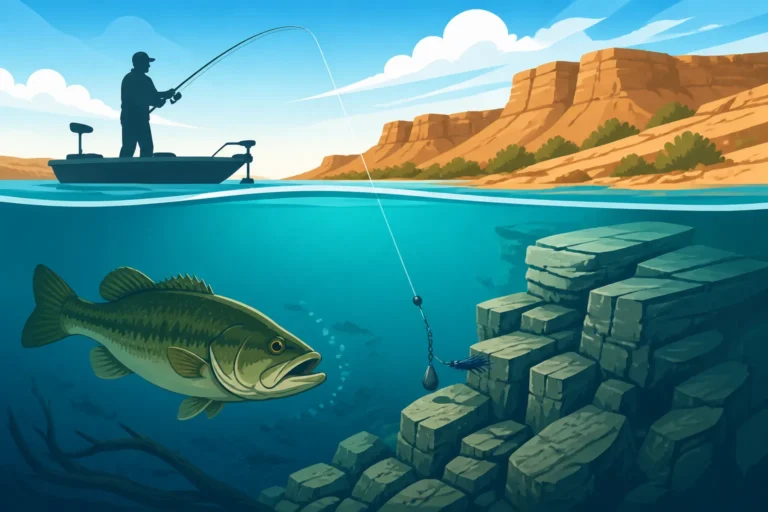
Walleye are often structure-oriented. Submerged points, humps, ledges, old creek channels, and even standing timber provide ambush points and thermal refuge. When trolling, you're not just covering open water; you're trying to present your lure precisely to these structures.
Think about how a walleye would use a specific piece of structure. If it's a long, sloping point, they might be on the windward side, waiting for baitfish to be blown towards them. If it's a steep drop-off into a creek channel, they could be suspended along the edge. Trolling parallel to contour lines at a consistent depth can be incredibly effective when walleye are relating to these features. Many seasoned anglers use contour maps, whether paper or on their Best Fish Finders for New Mexico Reservoirs, to identify these key structures and plan their trolling passes. The best depth might not be a single number but a range of depths that hugs a specific contour.
Practical Trolling Strategies and Gear for Elephant Butte Walleye
Now that we've covered the "why," let's dive into the "how." Trolling effectively for walleye at Elephant Butte requires the right gear and a thoughtful approach to presentation.
Lure Selection and Diving Depths
The type of lure you choose directly impacts the depth it will run. Crankbaits are king for walleye trolling, but they come in myriad shapes and sizes, each designed to reach a specific depth.
- Shallow Divers: These might run 5-10 feet deep, perfect for early morning, late evening, or overcast days when walleye are cruising shallower banks or points.
- Medium Divers: These are your workhorses, typically running 10-20 feet deep. Brands like Bandit Walleye Deep, Rapala DownDeep Husky Jerk, or Berkley Flicker Shad are popular and effective. They're great for covering that mid-range depth where walleye often suspend or relate to shallower structure.
- Deep Divers: These lures are designed to get down quickly, often reaching 20-30+ feet on their own with enough line out. Examples include Bomber Long A Deep or some of the larger Rapala Deep Husky Jerks. These are invaluable when walleye are holding in deeper thermoclines or on deep structure during bright conditions.
You can often find a wide selection of these lures, including specific colors known to be effective in New Mexico, on platforms like Amazon. It's smart to have a range of diving depths in your tackle box.
Line Type and Diameter
Your fishing line also plays a significant role in how deep your lure runs.
- Monofilament: This is the most common trolling line. It has a good amount of stretch and typically floats. A thinner diameter mono will allow your lure to dive deeper than a thicker diameter at the same amount of line out.
- Fluorocarbon: This line is nearly invisible underwater and sinks, allowing lures to run slightly deeper than mono. Its low stretch offers better sensitivity, which can be a real advantage for detecting subtle walleye bites.
- Braided Line: Braid has virtually no stretch and a very thin diameter for its strength. This thin diameter allows lures to run the deepest for a given amount of line out. However, its visibility can be an issue in clear water, so many anglers will use a fluorocarbon leader of 10-20 feet to connect their braid to the lure.
A useful trick to increase lure depth without changing the lure is to use a smaller diameter line, or switch from mono to fluorocarbon or braided line. Conversely, a thicker line or one with more buoyancy will keep your lure shallower. For New Mexico walleye fishing, a good starting point is 10-12 lb test fluorocarbon or braid with a leader for most crankbait trolling.
Trolling Speed and Line Out
These two factors are directly linked to your lure's running depth.
- Trolling Speed: Generally, faster speeds make crankbaits run shallower and create more action, while slower speeds allow them to dive deeper and have a more subtle wiggle. Walleye often prefer a slower, methodical retrieve, so many anglers troll between 1.5 to 2.5 mph for walleye. However, don't be afraid to experiment. Sometimes a slight increase or decrease in speed can trigger a bite.
- Line Out: This is straightforward: the more line you have out, the deeper your lure will dive, up to a certain point where it reaches its maximum design depth. Many lure manufacturers provide dive curves for their baits, which indicate how deep the lure will run with different lengths of line out. You can also buy apps or use online calculators to estimate lure depth based on line type, speed, and line out. Tools like a line counter reel (which you can easily find on Amazon) are incredibly useful for replicating successful depths once you find them.
Weighting Systems
Sometimes, even the deepest diving crankbaits won't get you to the walleye's desired depth, or you might want to present a different type of lure, like a spinner rig or a spoon, at a specific depth. That's where weighting systems come into play.
- Snap Weights: These are weights that clip onto your main line a distance in front of your lure. They're easy to use and allow you to quickly adjust depth without re-tying. The "10-foot rule" is a common guideline: for every ounce of snap weight, your lure will run approximately 10 feet deeper for every 50 feet of line between the weight and the lure.
- Bottom Bouncers: While often associated with live bait rigs, bottom bouncers can also be trolled with crankbaits or spinner rigs. They are designed to keep your bait hovering just above the bottom, allowing you to follow contours closely. They're excellent for targeting walleye holding tight to the bottom structure.
- Downriggers: These are the most precise depth control devices. A downrigger uses a heavy ball to carry your main line down to a precise depth, with your lure clipped to the line above the ball. When a fish strikes, your line releases from the clip, allowing you to fight the fish directly. Downriggers are common for species like kokanee salmon but can be highly effective for walleye in very deep, open-water situations at Elephant Butte, especially when they are suspended. For those interested in deeper trolling, understanding Trolling Techniques for New Mexico Lakes can be very beneficial.
Seasonal and Time-of-Day Considerations
Walleye trolling depth isn't static; it shifts with the seasons and even throughout a single day. Elephant Butte's climate means these shifts can be quite pronounced.
Spring (March – May)
In spring, walleye are often shallower, especially during the pre-spawn and spawn. As water temperatures rise into the 40s and 50s Fahrenheit, they move towards rocky points, submerged humps, and gravelly flats to stage for spawning. You might find them in 5-20 feet of water. After the spawn, they'll gradually move deeper, but will still be relatively shallow, focusing on areas where baitfish are abundant in the warming waters. This is a great time for trolling medium-diving crankbaits or even spinner rigs with worms or plastics. Don't forget to check New Mexico Fishing Regulations Overview for any specific spring rules.
Summer (June – August)
Summer is when the thermocline becomes your primary guide. During the brightest parts of the day, walleye will generally retreat to deeper, cooler water, often holding right in or around the thermocline. This could mean depths of 20-40 feet, or even deeper depending on the lake's conditions. In the early morning, late evening, or on cloudy days, they might move shallower, into 10-25 feet, to feed more aggressively. Trolling deep-diving crankbaits, or using snap weights with medium divers, is often effective. Night fishing can also be incredibly productive in summer, as walleye move very shallow under the cover of darkness.
Fall (September – November)
As water temperatures begin to cool in fall, Elephant Butte starts to undergo its "turnover" process, and the thermocline dissipates. Walleye become more active and can be found at a wider range of depths. They often follow schools of baitfish that are fattening up for winter. You might find them suspended over old creek channels, relating to prominent points, or even chasing bait in shallower coves as the sun goes down. Depths can range from 15-35 feet during the day, with shallower pushes during low light. This is a fantastic time for aggressive trolling with various crankbaits.
Winter (December – February)
Winter fishing at Elephant Butte can be challenging but rewarding. Walleye will move to their deepest haunts, seeking out the most stable water temperatures, which are typically found in the deepest basins and channels of the lake. They'll often suspend over these deep areas or hug the very bottom. Look for them in 30-60 feet of water, possibly even deeper. Slower trolling speeds and lures that get down deep, or the use of heavy snap weights, are essential. Jigs fished vertically or slowly trolled blade baits can also be very effective during this cold period. Remember, even in winter, walleye will follow schools of bait, so watch your electronics.
Table: General Walleye Trolling Depth Guidelines for Elephant Butte
| Season | Time of Day | Water Clarity | Structure Type | Typical Depth Range (feet) | Recommended Lure/Method |
|---|---|---|---|---|---|
| Spring | Pre-dawn/Dusk | Clear/Stained | Rocky points, flats | 5-15 | Shallow/Medium crankbaits, spinner rigs |
| Midday (Sunny) | Clear | Ledges, humps, deeper points | 15-25 | Medium/Deep crankbaits | |
| Midday (Overcast) | Stained | Shallows, windy banks | 5-15 | Shallow crankbaits, jigging | |
| Summer | Pre-dawn/Dusk | Clear/Stained | Main lake points, flats | 10-20 | Medium/Deep crankbaits |
| Midday (Sunny) | Clear | Thermocline, deep channels | 20-40+ | Deep crankbaits, snap weights, downriggers | |
| Midday (Overcast) | Stained | Points, creek channels | 15-30 | Medium/Deep crankbaits | |
| Fall | Pre-dawn/Dusk | Clear/Stained | Anywhere baitfish gather | 10-25 | Medium/Deep crankbaits, spinner rigs |
| Midday (Sunny) | Clear | Humps, ledges, channels | 20-35 | Deep crankbaits, snap weights | |
| Midday (Overcast) | Stained | Flats, coves | 10-20 | Medium crankbaits | |
| Winter | All Day | Clear/Stained | Deep basins, channels | 30-60+ | Deep crankbaits (slow), snap weights, vertical jigs |
This table provides general guidelines. Always use your electronics and adapt to current conditions.
Fine-Tuning Your Walleye Depth with Electronics
Your fish finder isn't just for locating fish; it's a vital tool for determining depth, understanding bottom contours, and seeing how your lures are performing. Learning to use it effectively will dramatically increase your success.
Sonar and Down Imaging
Modern fish finders offer incredibly detailed views of the underwater world. Pay close attention to:
- Bottom Contour: See how the lake bottom is structured. Are there sudden drop-offs, gradual slopes, or rocky humps? Walleye often relate to these changes.
- Baitfish Schools: Look for those tell-tale clouds of bait. If you see bait at 20 feet, that’s a great place to start your lure presentation.
- Individual Fish Arches: When you see larger arches, especially near structure or bait, those are likely your target walleye.
- Thermocline: On color displays, the thermocline often appears as a distinct band, helping you pinpoint the critical depth zone during summer.
- Lure Tracking: With some advanced units, you can actually see your trolled lure on the screen, allowing you to fine-tune its depth relative to fish and structure. This is an incredibly powerful feature for precise depth control. Brands like Humminbird and Lowrance offer excellent options in this regard, and many components can be found readily on Amazon. Getting a good grasp of the Best Fish Finders for New Mexico Reservoirs will be a huge step up for your walleye game.
GPS and Mapping
Using GPS to mark waypoints for successful trolling passes or to record the location of key structures is invaluable. If you catch a walleye at a certain depth over a particular hump, mark that spot. You can then return to it and precisely repeat your successful troll. Many fish finders include detailed mapping, allowing you to pre-plan your trolling routes along contour lines or around submerged islands.
Don't Be Afraid to Experiment
The biggest mistake an angler can make when trolling for walleye is to be rigid. Conditions on Elephant Butte can change hourly. Always be prepared to experiment with:
- Depth: If you're not getting bites, try adjusting your line out by 5-10 feet, or switch to a lure that runs slightly deeper or shallower.
- Speed: A subtle change in trolling speed can often trigger a strike.
- Lure Color: While not directly depth-related, color can be critical. Have a range of colors, from natural baitfish patterns to bright, aggressive hues.
- Lure Type: Don't stick to just one crankbait. Try different profiles, rattles, and wiggles. Sometimes a subtle change is all it takes.
Keep a mental log, or even a physical one, of what worked, when, and where. Note the depth, speed, lure, and conditions. Over time, you'll develop a keen understanding of walleye patterns at Elephant Butte. If you're new to the area, checking out our guide on Elephant Butte Lake Fishing Guide can provide an excellent overview of the lake.
Final Thoughts on Elephant Butte Walleye
Trolling for walleye at Elephant Butte is a rewarding endeavor that combines science with art. There's no single magic depth that works every time. Instead, it's about understanding walleye behavior, interpreting environmental cues, and using your gear smartly. By paying attention to light, baitfish, water temperature, structure, and constantly adjusting your presentation, you'll dramatically improve your chances of locating those toothy critters. So, get out there, experiment, and enjoy the incredible walleye fishing New Mexico has to offer!
Disclaimer
Please note that fishing regulations, water levels, and fish behavior can change. Always consult the latest New Mexico Department of Game and Fish regulations before heading out. Safety on the water is paramount.