New Mexico State Record Walleye
Every angler in New Mexico dreams of that one legendary fish, the kind of catch that not only makes memories but perhaps even makes history. While many of us are happy just to feel a tug on the line, there's a special thrill in knowing a true giant lurks in our waters, prompting the question: just how big was the New Mexico state record walleye, and what does it take to even begin chasing such a leviathan? This guide will dive deep into the story of the current record holder, explore the waters where these impressive fish thrive, and share insights into the techniques and mindset needed to pursue your own trophy walleye in the Land of Enchantment.
The Elusive Champion: New Mexico's State Record Walleye
The quest for a state record fish is more than just a fishing trip; it's a saga of dedication, skill, and a fair bit of luck. For walleye enthusiasts in New Mexico, the benchmark is set by a truly magnificent specimen that has held its title for decades, a testament to the potential of our waters.
The Tale of the Record Fish: Where and When it Happened
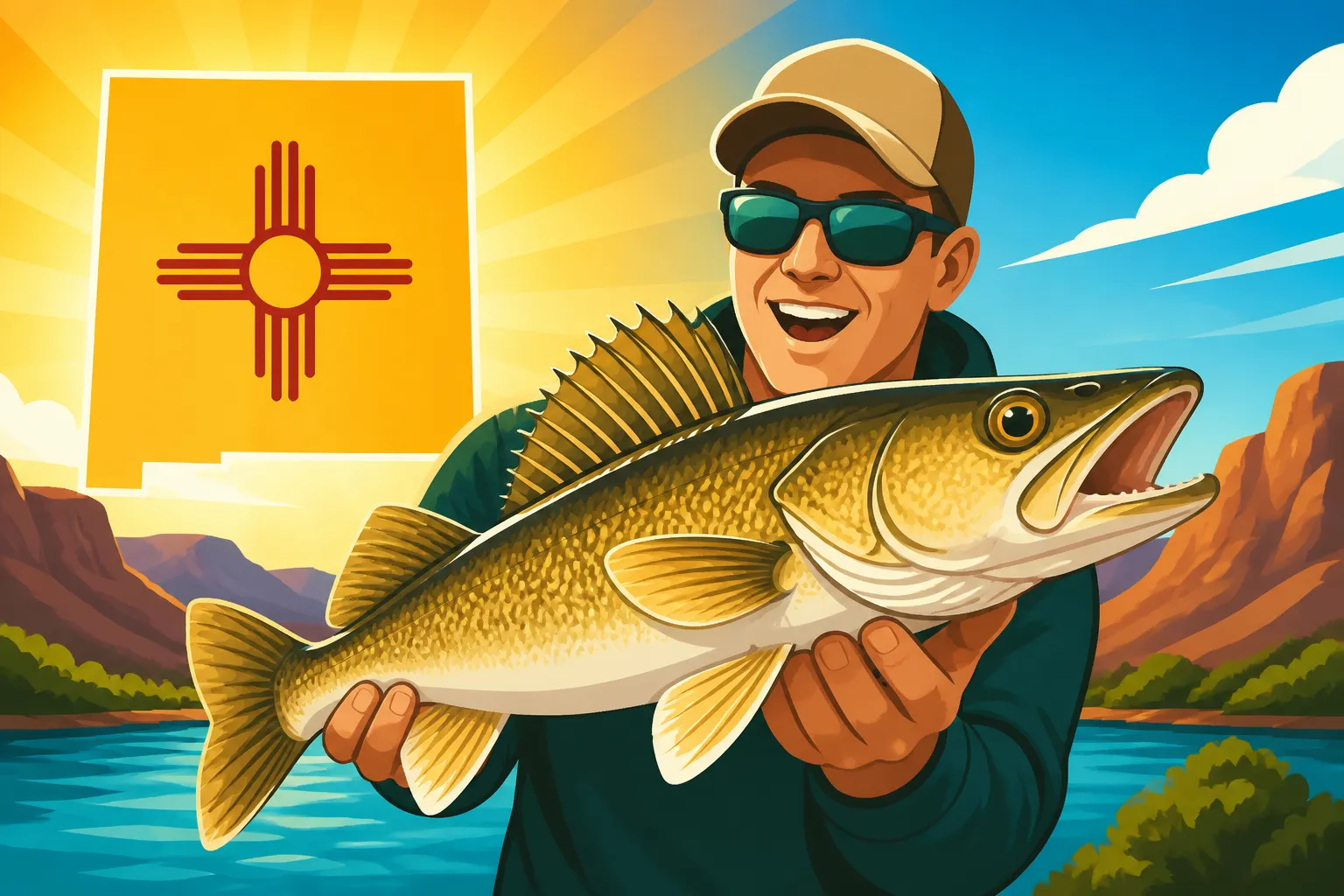
The New Mexico state record walleye is a fish that truly captures the imagination: a staggering 16 pounds, 9 ounces. This monumental walleye wasn't caught in some obscure, hidden pond, but in one of our most popular and productive reservoirs: Ute Lake. Imagine the excitement, the trembling hands, and the sheer disbelief when that fish finally came to the boat. This incredible catch took place back in 1969, by angler Arthur Schwartz. It's a record that has stood the test of time, enduring through countless fishing seasons and changes in fishing pressure, making it an almost legendary catch.
The fact that this record has held for so long speaks volumes about the quality of Ute Lake's walleye fishery at the time and the remarkable size walleye can achieve here. Many anglers today still visit Ute Lake with the hope of catching a glimpse of a potential contender, proving that the dream of a new record is always alive. While lakes like Conchas Lake also have a reputation for producing big walleye, Ute Lake holds the distinction of producing the reigning champion. It’s a powerful reminder that while tactics evolve, some of our lakes have a consistent history of producing giants.
What Makes a Record Walleye?
A state record walleye isn't just a big fish; it's a fish that has beaten incredible odds, evading predators, surviving harsh conditions, and finding ample food to grow to an exceptional size. For walleye, this typically means a long lifespan and a rich, diverse forage base. In New Mexico, large walleye often key in on baitfish like shad, which are abundant in our larger reservoirs. They are also opportunistic feeders, not above eating smaller panfish or even their own species if the opportunity arises.
Beyond sheer weight, a record walleye often exhibits robust health and impressive length and girth. For anglers, the pursuit of such a fish isn't just about the numbers; it's about the challenge. Catching a walleye over 10 pounds is considered a trophy by most standards, so to break into the double digits and then add another six pounds is truly extraordinary. The pursuit of such a fish requires not only the right location but also an intimate understanding of walleye behavior, their feeding patterns, and the subtle cues that indicate their presence. You need to be ready for the opportunity when it strikes.
Where Trophy Walleye Lurk in New Mexico
New Mexico boasts several fantastic walleye fisheries, but some lakes consistently produce larger fish and are consequently the focus for those dreaming of a record-breaker. Understanding these prime locations is the first step in your trophy walleye quest.
Top Lakes Known for Big Walleye: Conchas and Beyond
When it comes to New Mexico walleye fishing, a few names always come up in conversation, and for good reason. These lakes offer the right combination of habitat, forage, and management to support impressive walleye populations, including those elusive giants.
Conchas Lake is perhaps the most celebrated walleye fishery in the state right now, widely recognized for its consistent production of quality walleye, many of which push the upper limits of "trophy" size. Its extensive coves, rocky points, and submerged structure provide ideal ambush points for walleye. Anglers flock to Conchas in hopes of landing fish in the 5-10 pound range, and occasionally, bigger ones that just might challenge the record. The lake's clear-to-stained waters make it a classic walleye haven, where subtle presentations and an understanding of the fish's light-sensitive nature are key. You can learn a lot more in our detailed Conchas Lake Fishing Guide.
While Ute Lake holds the state record, its walleye population has had its ups and downs over the years. However, it still holds potential, especially in years with good water levels and strong baitfish populations. Ute Lake Fishing is another destination where history has proven that giants can swim. Anglers often focus on its main lake points and humps.
Other lakes like Santa Rosa Lake and Sumner Lake also offer excellent walleye fishing, often producing good numbers of eater-sized fish, with larger specimens showing up regularly. While perhaps not as renowned for the sheer size of their walleye as Conchas, these lakes still present opportunities for anglers to encounter sizable fish, especially during peak feeding times or specific seasons. Don't underestimate any body of water, as a walleye's growth is often tied to its individual feeding success.
Seasonal Strategies for Targeting Large Walleye
Just like any species, walleye behavior changes dramatically with the seasons, and understanding these shifts is crucial for targeting the largest fish. Timing your approach can make all the difference between a good day and a truly unforgettable one.
Spring is arguably the most popular time for trophy walleye. As ice recedes and water temperatures climb into the 40s and 50s Fahrenheit, walleye move to shallower rocky areas to spawn. This pre-spawn and spawn period makes them highly concentrated and aggressive, often feeding heavily to fuel the reproductive process. Targeting these shallow staging areas with jerkbaits, jigs, and slow-trolled crankbaits can be incredibly effective. Pay close attention to water temperature and structure, as fish will stage at different depths depending on the conditions. You'll find helpful insights in our Spring Trout Fishing in New Mexico article, even though it's trout-focused, the seasonal principles apply to fish movement.
As summer progresses, walleye typically move to deeper, cooler waters, often suspending over structure or congregating on deep humps and ledges. This is where your electronics become invaluable, helping you locate schools of baitfish and the walleye lurking beneath them. Trolling deep-diving crankbaits, jigging spoons, or using bottom-bouncing rigs with spinnerbaits or live bait (where allowed) are common tactics. Fishing during low-light conditions, like dawn, dusk, or even at night, can also be particularly effective, as walleye are known for their excellent low-light vision. Check out Best Time of Year to Fish in New Mexico for general guidance.
Fall sees walleye beginning to put on the feedbag for winter, moving shallower again during cooler periods, especially during the turnover. They can be found around sharp breaks, points, and the edges of submerged weed beds. Crankbaits, jigs, and live bait presentations (like shiners or large minnows) are excellent choices. As winter approaches and water temperatures drop further, walleye become less active, often holding close to the bottom in deeper basins. Ice fishing can be productive if the ice is safe, using jigging spoons and small minnows.
Gear and Techniques for Pursuing Giants
Chasing a state record walleye requires more than just knowing where they live; it demands the right tools and refined techniques. You'll need reliable gear that can handle a potential monster, and the skill to present your offerings effectively.
Rods, Reels, and Line for Trophy Walleye
For truly large walleye, you'll want gear that offers a blend of sensitivity and backbone. A medium-heavy spinning or casting rod, typically 6'6" to 7'6" in length, is a good starting point. This length provides excellent casting distance for covering water and enough leverage to control a heavy fish. The "medium-heavy" power ensures you have the strength to set the hook firmly and keep a big fish from burying itself in structure.
Pair your rod with a quality spinning reel in a 2500-4000 series size, or a baitcasting reel that's smooth and has a reliable drag system. When a 16-pound fish hits, that drag system will be your best friend, absorbing powerful runs. You want something that won't falter under pressure. Many anglers find excellent options, often at competitive prices, on platforms like Amazon, where reviews can help guide your choice toward durable and high-performing equipment.
For line, a braided main line (10-20 lb test) is often preferred for its sensitivity and strength, especially when fishing deeper water or in windy conditions. The no-stretch property of braid allows you to feel the most subtle bites. However, it's crucial to add a fluorocarbon leader (8-12 lb test) of 4-6 feet. Fluorocarbon is nearly invisible underwater, which is a huge advantage in New Mexico's often clear reservoirs, and it provides excellent abrasion resistance against rocks and toothy walleye. The combination gives you the best of both worlds. For general guidance, our Best Line Weight for New Mexico Fishing article might offer more context.
Essential Lures and Baits for Big Walleye
Trophy walleye often respond to larger presentations, as they are looking for a substantial meal. However, they can also be notoriously finicky, so variety is key.
- Jigs: Jigs are perhaps the most versatile walleye lure. From 1/4 ounce up to 1 ounce or more, depending on depth and current, jigs tipped with soft plastic bodies (like paddle tails, grub tails, or minnow imitators) or live bait (like large minnows or leeches, if allowed) are incredibly effective. Colors like chartreuse, white, perch, and natural baitfish patterns are popular. When fishing for big walleye, don't be afraid to size up your plastics. You can find a vast array of jig heads and soft plastics on Amazon to experiment with. Learning about Best Jig Color for New Mexico Walleye can fine-tune your approach.
- Crankbaits: Deep-diving crankbaits are deadly when trolling for suspended walleye or fishing deep contours. Choosing baits that dive to the target depth and mimic local forage is crucial. Lipless crankbaits can also be effective when casting or jigging vertically.
- Bottom Bouncers & Spinner Rigs: These are staples for covering water, especially when walleye are spread out or hugging the bottom. A bottom bouncer keeps your bait near the bottom without constantly snagging, while a spinner rig presents a flashy blade and live bait (usually a nightcrawler or minnow) in an enticing manner.
- Live Bait: Where legal, live bait can be irresistible to large walleye. Large minnows, nightcrawlers, and leeches presented on jigs, slip bobbers, or spinner rigs are often the ticket when other methods fail. Always check New Mexico Fishing Regulations Overview for bait restrictions in specific waters.
Advanced Tactics for Targeting Record Contenders
Beyond the basic gear and lures, certain tactics can give you an edge when targeting truly large walleye. These often involve precision, patience, and a bit of technological help.
Electronics are Your Eyes Underwater: A quality fish finder with side-imaging or down-imaging capabilities is indispensable. Big walleye are often found relating to specific pieces of structure – a submerged rock pile, a sharp drop-off, a sunken timber bed. Being able to mark these features, and more importantly, to identify individual fish arches or schools of baitfish, allows you to present your lure exactly where it needs to be. Understanding how to interpret what your fish finder is telling you is a skill that comes with practice, but it's one worth developing.
Precision Trolling: For covering large areas and locating scattered fish, trolling is a highly effective method. However, for record walleye, it's not just about dragging a lure around. Pay attention to speed, lure depth, and boat control. Use your electronics to find contours and baitfish, then present your lures precisely at or just above the depth where fish are holding. Using planer boards can help spread out your lines and cover a wider swath of water, especially in lakes like Conchas Lake.
Night Fishing: Walleye are notoriously light-sensitive and become much more active under the cover of darkness. Many of the largest walleye are caught at night, especially during the warmer months when they move into shallower feeding grounds. Using dark-colored crankbaits, slow-trolled spinner rigs, or casting jigs into illuminated areas (like under dock lights or bridge pilings) can yield incredible results. Always ensure you have appropriate safety gear, like a reliable headlamp (you can find robust options on Amazon), and inform someone of your plans when fishing at night.
| Walleye Fishing Season | Key Locations | Effective Techniques | Preferred Baits/Lures |
|---|---|---|---|
| Early Spring | Shallow rocky banks, spawning flats | Casting jigs, slow trolling crankbaits | Minnow imitations, jerkbaits, large minnows |
| Late Spring/Early Summer | Points, humps, structural breaks | Trolling deep crankbaits, slip bobber fishing | Worm harnesses, crankbaits, leeches |
| Mid-Summer | Deep humps, ledges, thermocline | Deep jigging, vertical jigging, night fishing | Jigging spoons, plastic worms, large minnows |
| Fall | Transitional areas, submerged weeds | Crankbait casting, bottom bouncing, jigging | Large crankbaits, heavier jigs, shiners |
| Winter (Ice) | Deep basins, structural breaks | Vertical jigging | Small jigging spoons, minnows, plastics |
The Journey to a Potential Record
Catching a fish of state record caliber is a rare feat, the culmination of passion, persistence, and often, years of on-water experience. It's about understanding the nuances of the species and respecting the incredible effort it takes for a fish to reach such a size.
Understanding Walleye Behavior for Larger Catches
Large walleye didn't get that way by being easy to catch. They are often more wary, more cunning, and more selective in their feeding than their smaller counterparts. They've learned to avoid dangers and prioritize efficient feeding.
One key aspect is recognizing their habitat preferences. Trophy walleye often relate to structure – whether it's submerged timber, rock piles, sudden depth changes, or even old roadbeds – using these features for ambush and cover. They are also highly attuned to changes in light, temperature, and current. How to Locate Walleye at Conchas Lake delves into this. Understanding the local forage base in your chosen lake is also critical. If the walleye are feeding heavily on shad, then presenting lures or baits that mimic shad in size, color, and action will be more productive.
Patience is paramount. You might make hundreds of casts or troll for hours without a bite, but that one powerful strike from a truly massive walleye makes all the waiting worthwhile. Learning to feel subtle bites, often described as a slight "tick" or "mushy" feeling, is another skill that improves your chances significantly, especially when dealing with the lighter bites of larger, more cautious fish.
Documentation and Official Recognition
Let's say you've done it. You've landed a walleye that looks absolutely enormous, potentially larger than anything you've ever seen. What next? The excitement is undeniable, but quickly, a checklist needs to run through your mind to ensure your catch can be considered for a state record.
First and foremost, keep the fish alive if possible. While records are typically based on weight, demonstrating the fish's vitality is crucial for verification.
Next, find a certified scale as quickly as possible. This usually means a grocery store, a tackle shop, or a post office that has a legally certified scale. The scale must be inspected and stamped by a weights and measures authority. Have the fish weighed in front of witnesses, and ensure the weight is recorded accurately, ideally to the nearest ounce or fraction thereof.
Take clear, high-quality photographs from multiple angles. Include a photo of the fish next to a measuring tape to show its length. Get a photo with you and the fish, but also clear close-ups of the fish itself.
You'll also need to identify the exact species. For walleye, this is usually straightforward, but having a qualified fisheries biologist confirm it can be helpful. Finally, you'll need to fill out the official state record application form from the New Mexico Department of Game and Fish. This form will ask for details about the catch, including location, date, time, tackle used, and witness information. Adhering to all New Mexico Fishing Regulations Overview during the catch is also vital.
It's a process that requires swift action and attention to detail, but imagine the pride of having your name etched into New Mexico's angling history! Even if your fish doesn't break the record, proper documentation allows for recognition in other categories, like local lake records or personal bests. Remember, the journey and the memory of catching such an impressive fish are often the greatest rewards.
Disclaimer
This article is for general informational purposes only and does not constitute professional advice. Laws, prices and regulations vary by location and change over time. Consult a qualified professional for guidance on your specific situation.