Are There Paddlefish in New Mexico?
One of the most fascinating aspects of fishing in New Mexico is uncovering the unique aquatic life that calls our rivers and lakes home. Many anglers, especially those new to the state or traveling from regions with different species, often wonder about the presence of certain iconic fish. Today, we're diving deep into a specific question that often pops up: are there paddlefish swimming in the Land of Enchantment's waters? We'll explore their biology, historical distribution, and why you're unlikely to encounter one here, while also helping you identify other large, exciting fish you can catch.
Understanding Paddlefish
The American Paddlefish is truly one of a kind, a prehistoric relic that has captivated naturalists and anglers for centuries. Before we address their presence (or absence) in New Mexico, it's helpful to understand what makes these fish so unique.
What Exactly is a Paddlefish?
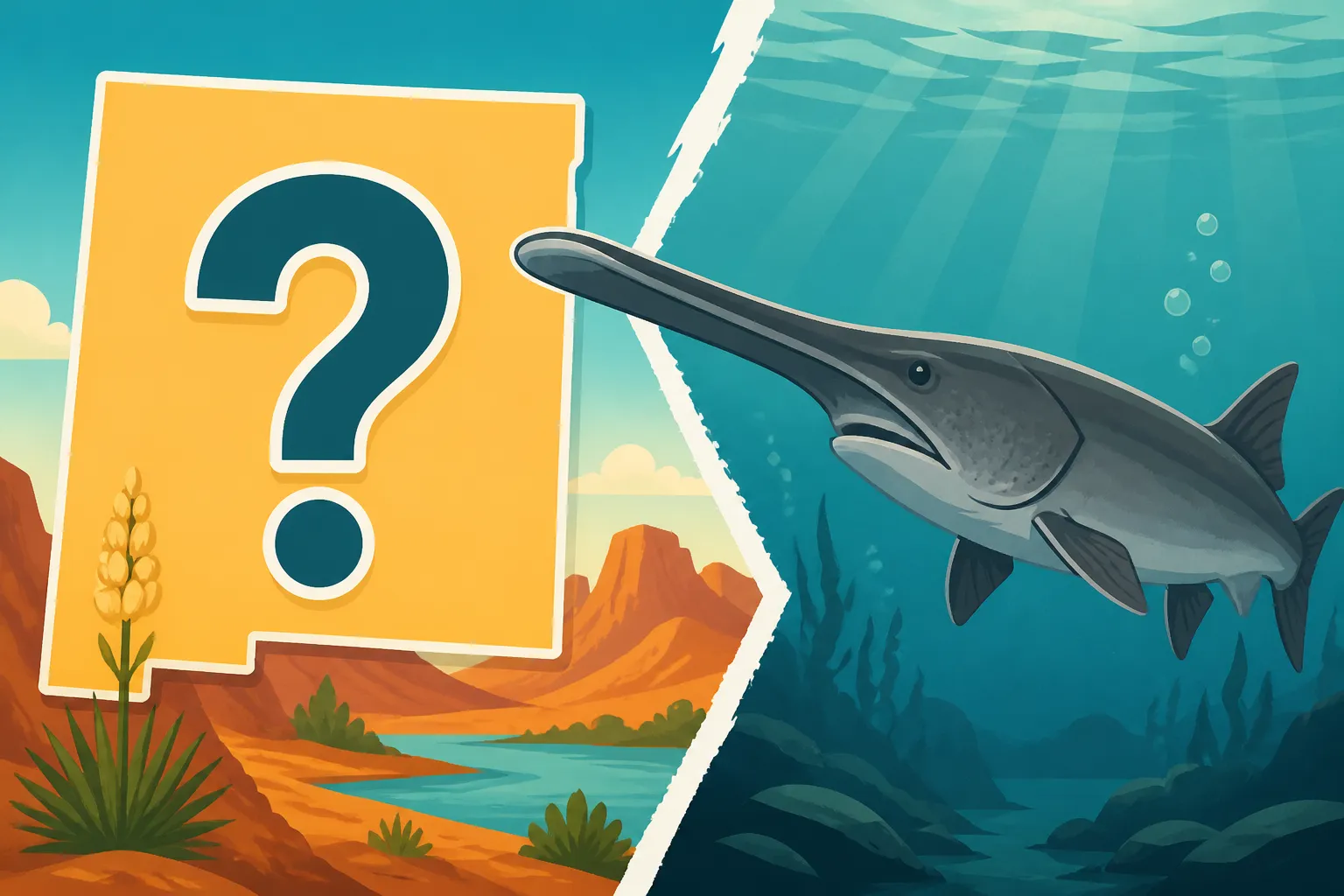
Imagine a fish with a snout that looks like a flattened paddle, often making up about a third of its entire body length. That's the paddlefish! These ancient creatures, formally known as Polyodon spathula, are actually a type of cartilaginous fish, more closely related to sharks and rays than to the bony fish we typically catch. They are filter feeders, swimming with their enormous mouths open, sifting plankton and tiny invertebrates from the water. This unique feeding strategy means they don't respond to traditional baits or lures, making them a rare and challenging catch for those who specifically target them – usually through snagging where legal. They can grow to impressive sizes, often exceeding five feet in length and weighing over 100 pounds, making them truly formidable freshwater giants. Their smooth, scaleless skin and heterocercal (shark-like) tail further set them apart from most other North American freshwater fish.
Beyond their physical appearance, paddlefish are fascinating for their long lifespans, sometimes living over 30 years, and their migratory behaviors. They typically inhabit large, slow-moving rivers and associated backwater lakes and impoundments. Their survival depends on access to clear, flowing water for spawning, where they broadcast their eggs over gravel bars. Disruptions to these migratory routes, such as large dams, and habitat degradation have significantly impacted their populations across their historical range. Their unique biology and ecological role as primary consumers in river systems make them a vital part of the ecosystems they inhabit.
Historical Range vs. Current Distribution
Historically, paddlefish had a much broader distribution across the Mississippi River Basin and its tributaries, extending from New York westward to Montana, and southward to the Gulf Coast states. They were once found in at least 26 states, thriving in vast river systems that offered ample space, plankton-rich waters, and undisturbed spawning grounds. Large rivers like the Missouri, Ohio, and Mississippi were strongholds for these ancient fish. Think of the immense, untamed rivers before extensive damming and alteration; these were prime paddlefish habitats.
However, over the last century, their range has significantly contracted. Habitat loss, primarily due to river channelization, dredging, and the construction of numerous dams, has severely fragmented their populations. Dams, in particular, block their upstream spawning migrations and alter the crucial flow regimes that trigger successful reproduction. Additionally, overharvesting for their valuable roe (a caviar substitute) in some areas further exacerbated their decline. Today, while conservation efforts are underway in several states to reintroduce or protect existing populations, their distribution is much more limited. States like Oklahoma, Missouri, Kentucky, and parts of the upper Mississippi River still have viable populations, often supported by stocking programs and strict regulations. Their current presence is largely confined to the major river systems where their specific ecological needs can still be met, or where dedicated human intervention ensures their survival.
The Question of Paddlefish in New Mexico Waters
Given their historical range and specific habitat requirements, the question of paddlefish in New Mexico is a natural one. New Mexico is known for its diverse landscapes and aquatic environments, but are they suitable for paddlefish?
Native Presence in New Mexico?
Let's cut right to the chase: no, paddlefish are not native to New Mexico, and you won't find them naturally occurring in the state's waters. While New Mexico is part of the larger North American continent, its primary river systems, notably the Rio Grande, Pecos River, and Gila River, fall outside the historical and current range of the American Paddlefish. These river systems, while vital and rich in their own unique fish species, generally do not possess the expansive, slow-moving, plankton-rich main channels and broad, gravelly spawning grounds that paddlefish require to thrive.
The historical distribution of paddlefish was largely centered around the Mississippi River drainage. New Mexico's rivers flow into different basins – the Rio Grande flows south into the Gulf of Mexico but not via the Mississippi, and the Gila River system is part of the Colorado River Basin, which also doesn't connect to the historical paddlefish range. There have been no confirmed reports or historical records of paddlefish ever inhabiting New Mexico's waters, whether through natural migration or stocking efforts. While many states have introduced various fish species, paddlefish have not been a target for introduction here, likely due to the unsuitable habitat and the considerable effort and specialized requirements for their management. Fish Species Found in New Mexico provides a great overview of what you can find here.
Why New Mexico Isn't Typical Paddlefish Habitat
Several key environmental factors make New Mexico's aquatic ecosystems generally unsuitable for paddlefish:
- River Systems and Flow Regimes: The Rio Grande, New Mexico's most prominent river, is characterized by significant stretches of arid land, fluctuating water levels, and numerous dams that drastically alter natural flow. While the Rio Grande certainly has large stretches, especially further south, the specific conditions needed for paddlefish spawning – consistent spring floods over gravel bars, for example – are largely absent or severely modified. Other rivers like the Pecos and Gila also have very different hydrological characteristics and often much smaller main channels compared to the vast rivers where paddlefish thrive.
- Water Clarity and Food Source: Paddlefish are obligate filter feeders, relying heavily on abundant zooplankton for their survival. While New Mexico's lakes and reservoirs support plankton, the sheer volume and continuous supply needed for a population of large, filter-feeding fish like paddlefish might not be consistently met across extensive riverine stretches. Many of our rivers, particularly during monsoon season or after heavy snowmelt, can carry significant sediment loads, which can make filter feeding less efficient.
- Impoundments and Migration Barriers: New Mexico has many impressive reservoirs like Elephant Butte Lake, Navajo Lake, and Conchas Lake. However, these impoundments, while creating diverse fishing opportunities for species like bass, walleye, and trout, also act as significant barriers for migratory species. Paddlefish need long, unobstructed stretches of river to complete their spawning migrations. The numerous dams on New Mexico's major rivers would prevent them from accessing vital upstream spawning grounds, even if downstream habitat were otherwise suitable. This is a critical factor limiting the presence of many migratory fish species, not just paddlefish. For more on local regulations, see New Mexico Fishing Regulations Overview.
In essence, while New Mexico offers incredible fishing for a wide array of species, the unique and demanding ecological niche of the paddlefish simply isn't present here.
Misconceptions and Similar-Looking Fish
It's easy to see why someone might wonder about paddlefish in New Mexico, especially when encountering some of our larger, more unusual fish species. Many anglers might catch a glimpse of something big and unique and immediately think of the paddlefish's distinctive appearance.
Common Misidentifications
When discussing large, unique fish in New Mexico, it's common for anglers to occasionally misidentify certain species or wonder if they've stumbled upon something truly rare. While paddlefish are out of the picture, there are other impressive fish that might spark curiosity:
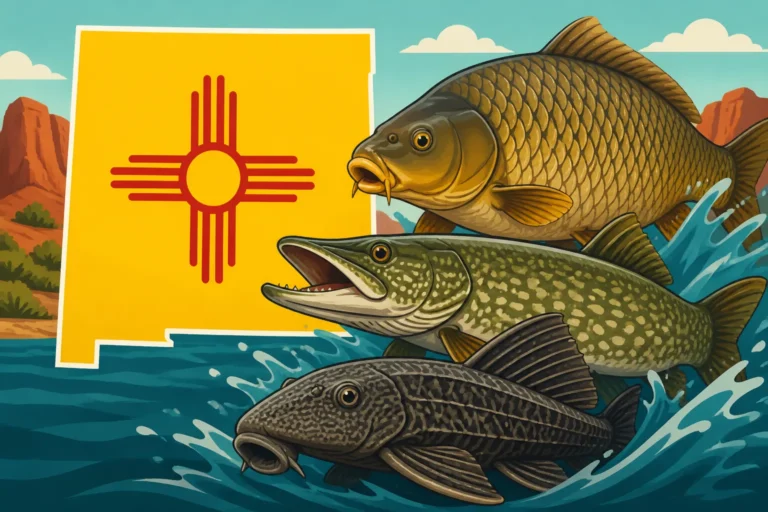
- Large Catfish: New Mexico is home to some truly massive catfish, particularly flathead catfish and channel catfish. A very large flathead, with its broad, flattened head and often darker, mottled coloration, might, from a distance or in murky water, give a fleeting impression of something unusual. Their sheer size can be startling, with flatheads reaching well over 50 pounds in some of our larger reservoirs. Catfish Fishing in New Mexico details how popular these species are. These fish are bottom dwellers and ambush predators, a completely different lifestyle from the filter-feeding paddlefish.
- Carp: Common carp, especially very large specimens, can also be quite robust and powerful. While their appearance is distinctly different from a paddlefish (they have scales, barbels around their mouths, and a more typical fish body shape), their impressive size and bottom-feeding habits in turbid waters might lead to momentary confusion for an inexperienced eye. Carp are abundant in many New Mexico waters and can provide an exciting fight.
- Other Large Game Fish: Occasionally, a trophy-sized walleye or even an exceptionally large bass might surprise an angler, leading them to question the species. However, these fish have very distinct body shapes, mouths, and scale patterns that are easily distinguishable from the unique features of a paddlefish. For example, a big striped bass from Elephant Butte Lake is a powerful fighter, but looks nothing like a paddlefish.
The key takeaway is that if you encounter a large, unusual fish in New Mexico, it's almost certainly a species already well-documented within the state, just perhaps an exceptionally large or particularly robust specimen. Always consult a reliable guide or the state's fishing regulations booklet to confirm identification.
How to Identify Other Large Fish in New Mexico
To help clear up any lingering confusion and properly identify the majestic creatures that do inhabit our waters, here's a quick guide to some of the larger fish species you might encounter in New Mexico:
- Flathead Catfish: These are truly impressive. Look for a broad, flattened head (hence the name) and a lower jaw that protrudes beyond the upper jaw. They typically have a mottled, olive-brown to yellow-brown body with dark spots, and a somewhat rounded tail fin. They lack the long, paddle-like snout and are covered in smooth, scaleless skin. Flatheads are solitary ambush predators, often found in deep holes or around submerged timber in rivers and large reservoirs. They are a highly sought-after species by trophy anglers. You can find more about them in Flathead Catfish in New Mexico.
- Channel Catfish: More widespread than flatheads, channel catfish have a sleek, slender body, deeply forked tail, and usually scattered dark spots, especially when young. Their head is not as flattened as the flathead's, and their mouth is terminal or slightly sub-terminal. They prefer clean-bottomed rivers and lakes and are often caught on a variety of baits.
- Common Carp: These fish are easily identified by their large, golden-brown scales and two pairs of distinctive barbels (whiskers) around their downturned mouth. Their body is robust and deep, and they have a single dorsal fin with a serrated spine. They are often found in slower-moving waters, lakes, and ponds, where they root around in the bottom for food.
- Striped Bass: Primarily found in huge reservoirs like Elephant Butte, these fish have prominent horizontal stripes running along their silver bodies. They have two dorsal fins and a powerful, torpedo-shaped body built for speed. They are schooling predators that chase baitfish in open water. Striped Bass Fishing in New Mexico offers more insight.
When you're out on the water, having a good field guide or even a quick reference on your phone (you can often find excellent fish identification apps or guides on platforms like Amazon) can be invaluable. Always pay attention to key features like mouth shape, presence or absence of scales, fin configurations, and body coloration.
Here’s a simple table to help differentiate:
| Feature | American Paddlefish | Flathead Catfish | Common Carp |
|---|---|---|---|
| Snout/Head | Extremely long, flattened paddle-like snout | Broad, flattened head; lower jaw protrudes | Typical fish head; small, downturned mouth with barbels |
| Scales | No scales (smooth skin) | No scales (smooth skin) | Large, distinct scales |
| Mouth | Large, wide filter-feeding mouth (terminal) | Large, wide mouth (terminal to slightly sub-terminal) | Small, downturned mouth (sub-terminal) |
| Tail Fin | Heterocercal (shark-like, upper lobe longer) | Rounded, often slightly notched | Slightly forked |
| Diet | Zooplankton (filter feeder) | Fish, crayfish, invertebrates (ambush predator) | Omnivorous (bottom feeder) |
| Typical Habitat | Large, slow rivers; backwaters | Deep river holes, submerged timber | Slow rivers, lakes, ponds (vegetated) |
| Native to NM? | No | Yes | Yes (introduced) |
Conservation and Management of Native Fish in New Mexico
While paddlefish aren't part of New Mexico's natural aquatic heritage, the state is incredibly rich in its own unique and precious native fish species, many of which require significant conservation efforts.
Focus on New Mexico's Unique Native Species
New Mexico's waters are home to a diverse array of native fish, some of which are found nowhere else in the world. Our focus here is rightly on protecting and enhancing these indigenous populations. Two species immediately come to mind:
- Gila Trout: This beautiful, endangered trout (Oncorhynchus gilae) is truly a gem of New Mexico's Gila Wilderness. With its golden-bronze coloration and small, dark spots, it's a sight to behold. For years, Gila trout faced severe threats from habitat degradation, hybridization with rainbow trout, and catastrophic wildfires. Intensive conservation efforts, including habitat restoration, removal of non-native species, and reintroductions into historical streams, have been crucial to its survival. Anglers who wish to target Gila Trout must adhere to very specific regulations, often including catch-and-release only and specific gear restrictions, to ensure their protection. Learning about and respecting these rules is part of being a responsible angler in New Mexico. Gila Trout in New Mexico provides extensive details.
- Rio Grande Cutthroat Trout: New Mexico's state fish, the Rio Grande Cutthroat Trout (Oncorhynchus clarkii virginalis), is another iconic native species. Distinguished by the characteristic "cutthroat" orange or red slash under its lower jaw, these trout thrive in the cold, clear mountain streams of the Rio Grande Basin. Like Gila trout, they have faced challenges from habitat fragmentation, non-native trout competition, and historical overfishing. Conservation programs focus on preserving their genetic purity and restoring their habitat, ensuring this vibrant part of our natural heritage continues to flourish. Rio Grande Cutthroat Trout in New Mexico offers more information for interested anglers.
These native species, along with others like the Rio Grande Chub and Speckled Dace, are a testament to New Mexico's unique biodiversity. Protecting them is a collective responsibility for all who enjoy our state's outdoors.
Efforts to Protect and Restore Aquatic Ecosystems
The New Mexico Department of Game and Fish, along with various conservation groups and federal agencies, is deeply committed to the protection and restoration of the state's aquatic ecosystems. These efforts are broad and encompass much more than just individual fish species:
- Habitat Restoration: A major focus is restoring natural river flows, stream banks, and riparian areas. This involves removing invasive plant species, replanting native vegetation to stabilize banks and provide shade, and improving water quality. Projects often address issues like erosion caused by livestock grazing or unsustainable land use, directly benefiting fish habitat.
- Barrier Removal and Fish Passage: Where possible, efforts are made to remove small, obsolete dams or culverts that block fish migration, allowing native species to access historical spawning and feeding grounds. For larger, essential dams, innovative fish ladders or bypasses are sometimes implemented, although this is a complex and costly endeavor.
- Non-Native Species Management: Non-native fish, such as certain bass or trout species introduced in the past, can outcompete native fish for resources, prey on them, or hybridize with them, diluting their genetic integrity. Management strategies include targeted removal programs and public education to prevent illegal introductions. This helps ensure that the fish species living in places like the Fish Species Living in the Rio Grande are appropriate for the ecosystem.
- Water Quality Monitoring and Enforcement: Maintaining good water quality is fundamental. This involves monitoring pollution sources, regulating discharges, and enforcing environmental laws. Healthy water is essential for all aquatic life, from the smallest invertebrates to the largest game fish.
- Angler Education and Regulations: Educating anglers about catch-and-release best practices, the importance of using barbless hooks in sensitive areas, and adhering to specific bag and possession limits for native species is crucial. The annual New Mexico Fishing Season Dates and Limits guide and the New Mexico Fishing Regulations Overview are indispensable resources for staying informed. The goal is to balance recreational opportunities with the imperative to conserve our natural resources.
These comprehensive efforts, often involving local communities, volunteers, and funding from fishing license sales and federal grants, aim to ensure that New Mexico's unique aquatic biodiversity thrives for generations to come. While you won't be catching a paddlefish in New Mexico, you'll find plenty of other incredible native and introduced species that offer a lifetime of angling adventures. You can even find many of the tools and resources to become a responsible angler on platforms like Amazon, from field guides to ethical catch-and-release tools.
Disclaimer
This article is for general informational purposes only and does not constitute professional advice. Laws, prices and regulations vary by location and change over time. Consult a qualified professional for guidance on your specific situation.