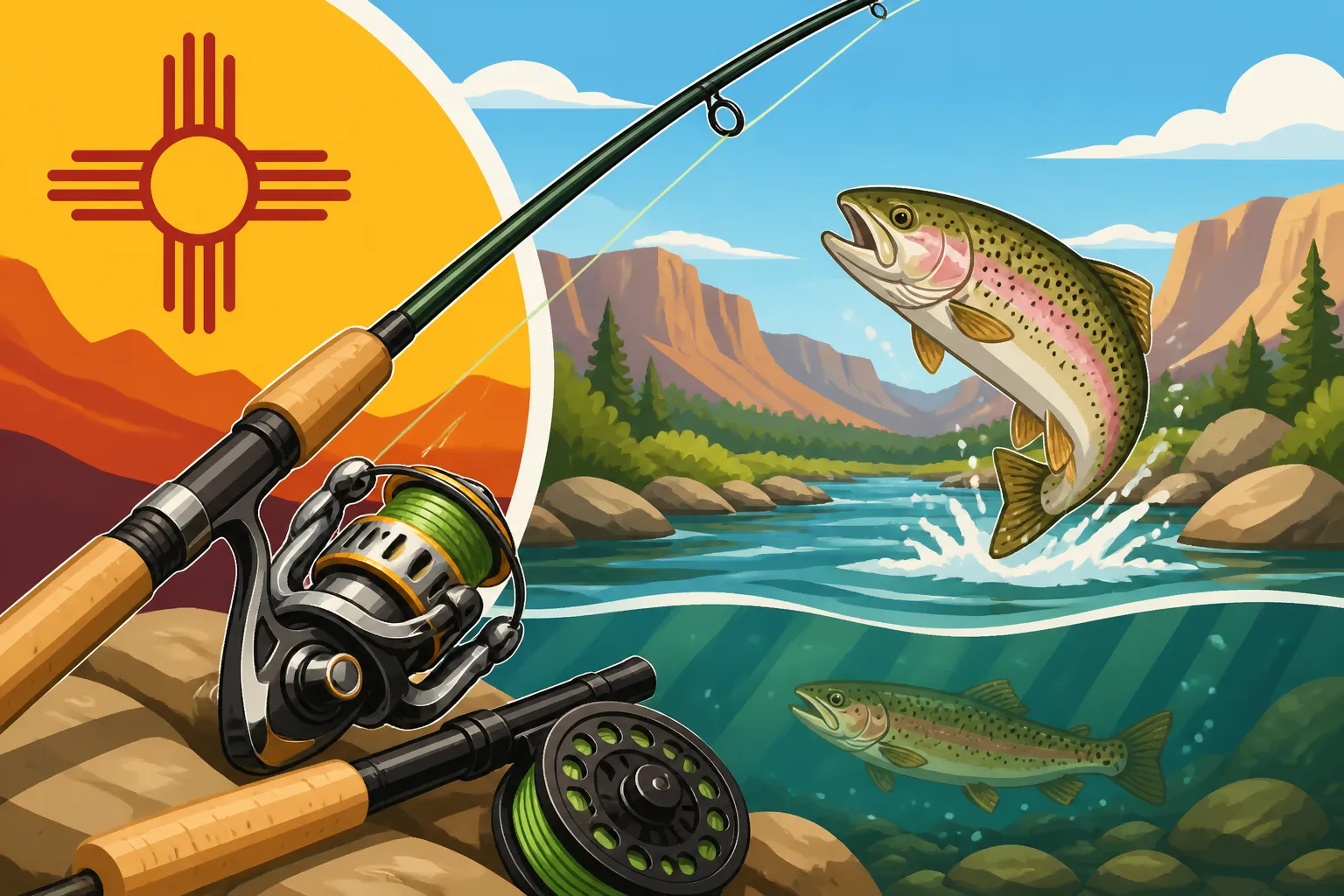
Best Rods and Reels for New Mexico Trout Fishing
If you've ever stood in a fishing aisle, staring at a dizzying array of rods and reels, wondering which one will actually help you land those elusive trout in New Mexico's incredibly diverse waters, you're not alone. It's a common frustration, trying to decipher all the jargon about rod power, action, and reel ratios when all you really want is a setup that feels right and performs reliably, whether you're flicking tiny dries on a mountain stream or casting heavy nymphs on the San Juan. This comprehensive guide will cut through the noise, helping you understand the key considerations for choosing the best rods and reels specifically tailored for trout fishing across New Mexico's unique angling landscapes.
Understanding New Mexico's Diverse Trout Waters and Their Demands
New Mexico isn't just one type of trout fishery; it's a tapestry of environments, each presenting its own challenges and rewards. From the high-altitude serenity of alpine lakes to the famed tailwaters of the San Juan River, the demands on your gear can vary dramatically. What works wonders in a tiny, brush-choked stream might feel cumbersome and ineffective on a wide-open reservoir. Recognizing these differences is the first crucial step in selecting the right rod and reel.
High Mountain Lakes and Small Streams Delicate Presentations
Imagine yourself hiking into a pristine high mountain lake in the Pecos Wilderness or wading a narrow, crystal-clear stream tucked away in the Gila National Forest. These are often intimate settings where the fish are spooky, and precise, delicate presentations are paramount. The trout here might not be giants, but they are wild, wary, and demand a subtle approach. Overpowering gear will only hinder your ability to cast accurately and feel those subtle takes.
In these environments, you'll be making shorter casts, often through tight vegetation, and aiming for small pockets of water. Think about pitching a small spinner into a riffle or gently laying a dry fly under an overhanging branch. The need for sensitivity to detect light bites and flexibility to absorb sudden runs from feisty trout is critical. Gear that is too heavy or stiff will make these delicate tasks feel like trying to write with a sledgehammer.
The fish in these smaller waters, while often plentiful, tend to be on the smaller side – typically 8 to 14 inches, though bigger surprises certainly happen. You’re not fighting current or huge depths, but rather navigating tight spaces and ensuring your presentation doesn't spook the fish. This calls for a lighter, more responsive setup that maximizes the fun and challenge of landing smaller, but spirited, wild trout.
Large Rivers and Tailwaters Power and Precision
Now, shift your mental image to the world-renowned San Juan River below Navajo Dam, or perhaps a broader stretch of the Rio Grande. These are expansive waters, often with significant current, where trout can grow to impressive sizes and put up truly powerful fights. Here, the requirements shift from pure delicacy to a blend of power for casting, backbone for fighting big fish, and precision for deep nymphing rigs or reaching across wide channels.
On these larger rivers, you might be casting heavier indicator nymph rigs, throwing large streamers, or making long, accurate casts to rising fish in broad flats. The San Juan Quality Waters, for instance, are known for their dense populations of large, strong rainbow and brown trout. These fish will test your drag and rod's backbone, demanding equipment that can handle long, sustained runs and turn a fish in heavy current without fear of breakage.
Furthermore, these environments often require specialized techniques. Think about managing multiple flies on a nymph rig in strong current, or needing the extra reach to mend your line effectively on a long drift. A longer rod can be invaluable for line control, while a reel with a smooth, reliable drag is non-negotiable when a 20-inch rainbow decides to sprint downstream. Your gear needs to be robust enough to handle heavier tackle, larger fish, and more challenging conditions.
Stocked Ponds and Urban Waters Versatility for Everyday Anglers
New Mexico also boasts a fantastic network of stocked ponds and urban waters, often managed by the New Mexico Department of Game and Fish. These spots, like Tingley Beach in Albuquerque or numerous community fishing ponds, are designed to provide accessible fishing opportunities for families and beginners. The trout stocked here are typically rainbow trout, often of a catchable size, making for a fun and less demanding angling experience.
For these waters, versatility is key. You might be using anything from PowerBait and worms under a bobber to small spinners or even a simple fly. The fish are generally less wary and more aggressive, making it an excellent environment for honing basic skills. The need for ultra-finesse or heavy power is reduced; instead, you want a setup that's easy to use, forgiving, and capable of handling a variety of common trout baits and lures.
These urban and stocked environments are perfect for introducing kids to fishing or for a relaxed afternoon outing. While you won't typically encounter trophy fish, a reliable, medium-light setup allows for enjoyable angling without the steep learning curve or high cost associated with more specialized gear. It's about maximizing the fun and accessibility, ensuring that anyone can enjoy the thrill of catching a New Mexico trout. You can often find great entry-level combos for these scenarios at retailers like Bass Pro Shops or even general sporting goods stores.
Essential Rod Characteristics for New Mexico Trout
When you're sifting through all the options, understanding the core characteristics of a fishing rod – its length, action, and power – is paramount. These aren't just arbitrary terms; they directly influence how the rod performs in different fishing situations and how effectively you can present your bait or lure and fight a fish. Getting these elements right makes all the difference in your New Mexico trout fishing success.
Rod Length Matching the Water You Fish
Rod length plays a crucial role in casting distance, accuracy, and line control. It's not a "one size fits all" situation, especially with the diverse trout waters New Mexico offers. A good general rule is that longer rods offer more casting distance and better line control, while shorter rods provide greater accuracy in tight quarters and are easier to maneuver.
For those tackling small streams or high mountain lakes with heavy brush and tight casting lanes, a shorter rod, typically in the 5 to 6-foot range, is often ideal. These rods excel at making accurate, short-to-medium casts, allowing you to pick apart small pools and pockets without constantly snagging on overhead branches. They are also lighter and less fatiguing to carry on a long hike to a secluded alpine lake. Think about fishing the upper Pecos River or smaller tributaries in the Carson National Forest; a compact rod is a blessing.
Conversely, when you're on larger rivers like the San Juan, the Chama, or vast open reservoirs, a longer rod, usually 6 feet 6 inches to 7 feet 6 inches (or even longer for fly rods), becomes incredibly advantageous. The extra length allows for greater casting distance, which is essential for covering more water or reaching fish across wide currents. More importantly, it provides superior line control, allowing you to mend your line effectively, manage long drifts, and keep your bait or lure in the strike zone longer. This improved line management is critical for proper presentation in moving water, helping you avoid drag and achieve natural drifts, which often translates to more hook-ups.
Rod Action Fast, Moderate, or Slow?
Rod action refers to where a rod bends when pressure is applied. It dictates how sensitive the rod feels and how much power it has for casting and fighting fish. There are generally three main categories: fast, moderate (or medium), and slow.
A fast action rod bends primarily in the upper third or quarter of the blank. This design provides maximum sensitivity, allowing you to feel even the most subtle bites, which is vital when trout are delicately mouthing your bait or fly. Fast action rods also have a strong "backbone" lower down, giving them excellent hook-setting power and the ability to cast heavy lures or fight larger fish more effectively. They snap back quickly after a cast, leading to more accurate presentations, but require good timing. For aggressive techniques or larger fish, such as those found on the San Juan River Fishing Guide, a fast-action rod can be a real asset.
Moderate action rods bend in the top half of the blank, offering a good balance of sensitivity and forgiveness. They are more versatile, excelling in a wider range of situations. A moderate action rod provides a smoother casting arc, which can be more forgiving for beginners, and offers good shock absorption, reducing the chances of pulling the hook on a hard-fighting trout. This action is a fantastic all-around choice for many New Mexico trout scenarios, especially if you're targeting a mix of small streams and medium-sized rivers or stocked ponds.
Slow action rods, often called "full-flex" rods, bend almost from the handle to the tip. While less common for spinning or casting rods in trout fishing, slow action is prevalent in certain types of fly rods, particularly those designed for delicate dry fly presentations on small streams. For traditional gear, a slow action rod is very forgiving for casting light lures or baits, and it offers excellent shock absorption, protecting light lines. However, they lack the backbone for powerful hook sets or fighting larger fish in heavy current and typically offer less casting distance.
| Rod Action | Bend Location | Sensitivity | Casting Performance | Hook Set Power | Ideal Use Case (New Mexico Trout) |
|---|---|---|---|---|---|
| Fast | Upper 1/3 to 1/4 | High | Accurate, Long Casts (experienced) | Strong | Large rivers, heavy lures, nymphing, big trout |
| Moderate | Upper 1/2 | Medium | Versatile, Forgiving | Good | All-around, various baits/lures, mixed waters |
| Slow | Entire Blank | Low-Medium | Short, Delicate Casts | Gentle | Ultra-light baits, small streams, specific fly fishing |
Rod Power/Weight Balancing Sensitivity and Strength
Rod power, also referred to as rod weight, describes the rod's strength or lifting ability. This is different from action. A rod can have a fast action but be ultra-light power, meaning it bends at the tip but doesn't have much overall backbone. Power ratings typically range from Ultra-Light (UL) to Heavy (H), with various increments like Light (L), Medium-Light (ML), Medium (M), and Medium-Heavy (MH) in between.
For trout fishing in New Mexico, Ultra-Light, Light, and Medium-Light are the most common and appropriate choices. An Ultra-Light power rod is incredibly sensitive and designed for the lightest lines (2-6 lb test) and smallest lures or baits. It makes even smaller trout feel like giants, maximizing the thrill of the fight. This is perfect for those delicate presentations on tiny streams or highly pressured clear waters, where even a small split shot can feel like a brick. You'll feel every twitch and bump, which is a huge advantage when fish are finicky.
A Light power rod offers a step up in versatility and backbone. It can handle slightly heavier lines (4-8 lb test) and lures, making it suitable for a broader range of trout sizes and water conditions. It still provides excellent sensitivity but gives you a bit more authority to cast further or handle a larger fish without feeling completely outmatched. Many anglers find a light power rod to be a great choice for general-purpose trout fishing in smaller to medium-sized rivers and most stocked ponds.
Medium-Light power rods are arguably the most versatile for New Mexico trout fishing, especially if you can only have one spinning setup. They can effectively cast a wider range of lure weights and handle lines from 6-10 lb test. This power provides enough backbone to tackle larger trout on the San Juan or in deeper lakes, while still being sensitive enough to detect bites. If you're targeting a variety of trout sizes and water types, including some warmer water species that might inhabit trout waters, a medium-light rod offers that sweet spot between finesse and brute force. It's robust enough for a surprise walleye in a trout lake, but still fun for a panfish.
Selecting the Right Reel for New Mexico Trout
Just like rods, reels come in various types and sizes, each suited for different fishing applications. For trout fishing in New Mexico, spinning reels and fly reels are the overwhelming favorites, with baitcasting reels sometimes making an appearance for heavier applications. The reel's primary job is to hold your line, allow for smooth casting, and provide a reliable drag system to tire out fighting fish.
Spinning Reels The All-Around Workhorse
Spinning reels are by far the most popular and versatile choice for trout anglers using conventional tackle, and for good reason. They are easy to use, making them excellent for beginners, yet offer the precision and power needed for experienced anglers. For New Mexico's diverse trout fisheries, a quality spinning reel is a staple. If you're looking for recommendations, check out our guide on Best Spinning Reels for New Mexico Trout.
When choosing a spinning reel for trout, size is a primary consideration. Reel sizes are typically indicated by numbers like 1000, 2000, 2500, or 10, 20, 25. For most trout fishing in New Mexico, a reel in the 1000 to 2500 size range (or 10 to 25 in some numbering systems) is perfect. The 1000-size reels pair wonderfully with ultra-light rods and lighter lines, making for incredibly sensitive and delicate presentations in small streams. They're light, compact, and perfectly balanced for finesse techniques.
Moving up, a 2000 or 2500-size reel offers slightly more line capacity, a bit more stopping power, and a generally sturdier build, making it suitable for medium-light rods and larger rivers or lakes where you might encounter bigger trout. This size is a great all-rounder, capable of handling a variety of lures and fighting fish without feeling underpowered. Regardless of size, look for a reel with a smooth, consistent drag system, as this is your primary tool for fighting fish and preventing line breaks. A jerky drag can lead to lost fish, especially with lighter lines.
Fly Reels More Than Just Line Storage
For the dedicated fly angler, the fly reel is an integral part of the system, though its function differs significantly from a spinning reel. While a spinning reel's drag is constantly in play, a fly reel's drag is often only truly engaged when a larger fish makes a strong run, pulling line directly from the reel. For smaller trout, anglers typically "hand-line" the fish, using the line itself for control.
When selecting a fly reel for New Mexico trout, matching the reel to your fly rod's weight is crucial. Fly rods are rated by "weight" (e.g., 3-weight, 5-weight, 7-weight), and the reel should be designed for that specific range. For most trout fishing, a 3-weight to 6-weight reel is appropriate. A 3-weight or 4-weight reel is ideal for delicate dry fly fishing on small streams with light rods, while a 5-weight or 6-weight reel is more versatile, capable of handling larger trout, heavier nymph rigs, and streamer fishing on bigger rivers like the San Juan. You can learn more about specific fly fishing gear in our Fly Fishing Gear for New Mexico Rivers article.
Key features to look for in a fly reel include a smooth, adjustable drag system, sufficient line capacity for your fly line and backing, and a durable construction. Large arbor reels are very popular because they retrieve line faster and reduce line memory, leading to fewer tangles. While you might not rely on the drag for every fish, a strong, consistent drag is essential when a trophy brown trout decides to make a powerful run. Durability is also important, as fly reels can take a beating on the water, especially if you're hiking into remote locations.
Baitcasting Reels A Niche Choice for Heavier Trout
Baitcasting reels are less common for general trout fishing in New Mexico but can be a specialized choice for certain applications, particularly when targeting larger trout with heavier lures or for anglers who prefer this casting style. They excel at casting heavy lures with precision and offer superior power for fighting large fish.
However, baitcasters have a steeper learning curve compared to spinning reels, as they are prone to "backlashes" (a tangled mess of line) if not used properly. For typical trout fishing where light lines and small baits are common, a baitcaster isn't usually the first choice. They are more at home with heavier lines and lures used for bass or pike.
If you are an experienced baitcaster and plan to throw larger crankbaits or heavy spoons for bigger trout in large reservoirs like Navajo Lake or Elephant Butte, then a low-profile baitcasting reel paired with a medium-light or medium power rod could be an option. The precision and power they offer can be beneficial in these specific scenarios, but for the average trout angler, a spinning setup is generally more practical and user-friendly.
Recommended Rod and Reel Combos for Specific New Mexico Scenarios
Instead of trying to find one "perfect" rod and reel for every New Mexico trout scenario, it's often more effective to think about combinations that are best suited for different types of fishing. This approach acknowledges the diverse demands of our state's waters and helps you build a versatile arsenal, or at least choose the right starter setup for your most common fishing trips.
The Ultralight Setup for Finesse Fishing
This is the combo for those delicate presentations and small, wary trout. It's incredibly fun to fish, making every fish feel like a prize fight, and it excels in situations where subtlety is paramount. If you're planning trips to smaller streams in the national forests or targeting finicky fish in clear water, this setup is your best friend.
A typical ultralight setup would consist of an ultra-light power spinning rod, usually 5 to 6 feet long, with a fast or moderate-fast action. This rod will have a very sensitive tip, allowing you to detect the slightest tap from a cautious trout. Pair this with a 1000-size spinning reel. The small reel keeps the overall weight down and balances perfectly with the light rod. Spool it with 2-4 pound test monofilament or fluorocarbon line.
This combo is ideal for casting tiny spinners (like Panther Martins or Mepps size 0-1), small inline weights with bait (worms, corn, PowerBait), or micro jigs. The sensitivity allows you to feel the wobble of your smallest lure or the subtle movement of a bait-eating trout. When a fish hits, the soft tip protects your light line, while the overall flex of the rod absorbs the shock. You'll truly appreciate this setup when targeting wild Rio Grande Cutthroat Trout in New Mexico in their native high mountain streams.
The Versatile Medium-Light for All-Purpose Angling
If you're looking for one rod and reel combo that can do a little bit of everything in New Mexico, from stocked ponds to larger rivers, the medium-light setup is the undisputed champion. This is the workhorse combo that can handle a wide array of baits and lures, and a good range of trout sizes.
This versatile setup typically features a medium-light power spinning rod, between 6 feet 6 inches and 7 feet in length, with a moderate or moderate-fast action. This length offers a good balance of casting distance and accuracy. The medium-light power provides enough backbone to fight larger fish and cast heavier lures, while still offering decent sensitivity. You'll pair this rod with a 2000 or 2500-size spinning reel. This size reel offers a good line capacity and a reliable drag system for those unexpected bigger trout.
Spool your reel with 6-8 pound test monofilament or fluorocarbon. This combo is fantastic for casting a variety of lures like larger spinners, spoons, small crankbaits, or fishing bait rigs with heavier weights. It’s perfect for hitting the urban ponds, smaller state parks, or even stretches of the Rio Grande. It's also a great setup for a beginner who wants a capable rod that won't limit them as they explore different techniques and locations across New Mexico. You can find excellent, affordable options for this setup at popular retailers.
The Dedicated Fly Fishing Outfit
For the purist or those looking to dive into the art of fly fishing, a dedicated fly fishing outfit is essential. The choice of outfit will largely depend on the specific type of fly fishing you intend to do most often in New Mexico. We have fantastic opportunities for both delicate dry fly fishing and robust nymphing.
For general all-around trout fly fishing in New Mexico, particularly on medium to large rivers like the San Juan, a 9-foot, 5-weight, moderate-fast action fly rod is a highly recommended starting point. This rod is incredibly versatile, capable of casting dry flies, nymphs, and even small streamers. Pair it with a 5/6-weight fly reel (meaning it's designed for 5 or 6 weight lines) with a smooth, reliable disc drag and a large arbor. Spool it with a high-quality weight-forward floating fly line, matched to your rod's weight, and add 100 yards of 20 lb backing.
If your focus is primarily on the smaller, brush-lined streams and delicate dry fly presentations for wild trout, then a 7 to 8-foot, 3-weight or 4-weight fly rod with a moderate or slow action would be a more suitable choice. This lighter setup makes even small trout exciting and allows for very subtle presentations. Match it with a corresponding 3/4-weight fly reel and a delicate weight-forward floating line. This lighter outfit is perfect for sneaking up on those wary fish. Don't forget to explore resources like Fly Selection for New Mexico's San Juan River when you're stocking your fly box.
Considering Line, Leader, and Terminal Tackle
Having the best rod and reel combination is only half the battle. What connects your rod to the fish – your line, leader, and terminal tackle – is equally crucial. These elements must be chosen carefully to complement your rod and reel, match the conditions, and effectively present your chosen bait or lure to a New Mexico trout.
Choosing the Right Fishing Line
The fishing line is your direct connection to the fish, and its importance cannot be overstated. For trout fishing in New Mexico, you'll primarily be choosing between monofilament, fluorocarbon, and braided line, or a combination of them.
Monofilament (mono) is a classic choice, known for its stretch, knot strength, and affordability. The stretch acts as a shock absorber, which can be beneficial when a fish makes a sudden run, preventing hook pulls on aggressive strikes. It's also very easy to cast and handle, making it a good option for beginners. For general trout fishing with spinning gear, 4-8 pound test monofilament is a solid choice. Brands like Stren or Trilene offer reliable options.
Fluorocarbon has become increasingly popular due to its low visibility underwater and higher abrasion resistance. It has less stretch than monofilament, offering greater sensitivity and more direct feel, which can be advantageous for detecting subtle bites. It also sinks faster than mono, making it a good choice for nymphing or getting lures down quicker. Many anglers use fluorocarbon as a leader material for its invisibility, even if their main line is mono or braid. For main line use, 4-6 pound test is common.
Braided line offers incredible strength-to-diameter ratio, zero stretch, and exceptional sensitivity. This means you can use a much thinner line for its breaking strength, and you'll feel everything that happens at the end of your line. However, braid is highly visible underwater and has poor abrasion resistance, making it unsuitable for direct connection to your lure or hook for trout. It's typically used as a main line with a fluorocarbon or monofilament leader tied to it. For spinning reels targeting trout, 6-10 pound test braid with a 4-6 pound fluorocarbon leader is a very effective setup, especially in waters like the San Juan River Quality Waters Section where sensitivity is key.
Understanding Leaders and Tippets
Leaders and tippets are critical components, especially for fly fishing and increasingly for spinning and baitcasting setups as well. They serve several important functions: providing low visibility near your lure/bait, absorbing shock, and protecting your main line from abrasion.
For fly fishing, the leader is a tapered section of monofilament or fluorocarbon that connects your fly line to your tippet. It's designed to transfer the casting energy smoothly from the heavy fly line to the delicate fly, ensuring a natural presentation. The tippet is a thinner, untapered section of line tied to the end of the leader, to which you attach your fly. Using tippet allows you to change flies without shortening your expensive tapered leader. Tippet sizes are designated by "X" ratings (e.g., 4X, 5X, 6X), with higher numbers indicating thinner line. For general New Mexico trout fly fishing, 4X-6X tippet is common.
For spinning or baitcasting gear, a leader is often used as a section of line tied between your main line and your lure/hook. If you're using braided main line, a fluorocarbon leader is almost essential to provide invisibility and abrasion resistance. Even with monofilament main line, a fluorocarbon leader can be beneficial in clear water conditions or for added protection against sharp rocks. Typically, 2-6 feet of leader material, slightly lighter or the same strength as your main line, is sufficient.
Hooks, Weights, and Swivels The Small Details That Matter
These small, often overlooked components can significantly impact your fishing success. Getting them right, and choosing quality options, is just as important as your rod and reel.
Hooks need to be sharp and strong. For trout, smaller hooks are generally more effective. Sizes 10-18 are common for bait fishing, while fly hooks range from tiny 24s to larger 6s or 8s depending on the fly pattern. Always match the hook size to your bait or lure and the size of the trout you expect to catch. Barbless hooks are required or strongly recommended in many special trout waters in New Mexico to protect the fish, aligning with New Mexico Catch and Release Regulations.
Weights, such as split shots or sliding egg sinkers, are used to get your bait or lure down to the fish's feeding depth. Choose the lightest weight possible to achieve your desired depth and drift, as excessive weight can hinder sensitivity and make your presentation unnatural. For fly fishing, tungsten putty or small pinch-on weights are used on leaders for nymphing rigs.
Swivels and snaps prevent line twist and allow for quick changes of lures. A small barrel swivel can be placed above your leader when using spinning lures to prevent line twist. Snaps are handy for changing spoons or spinners quickly without re-tying. However, for the most natural presentation, many trout anglers prefer to tie their lure or hook directly to their leader, especially in clear water or with sensitive fish. Remember, every piece of hardware can potentially detract from a natural presentation, so use them judiciously. You can find a vast selection of these smaller components at places like Amazon, making it easy to stock up.
Maintenance and Care for Your Trout Fishing Gear
Your fishing gear is an investment, and proper maintenance will significantly extend its lifespan and ensure peak performance when you're out on the water. Neglecting your rods and reels, especially after a long day of exposure to sun, dust, and water, can lead to costly repairs or premature replacement. Taking a few extra minutes for care after each trip can save you headaches in the long run.
Cleaning and Lubricating Your Reel
After every fishing trip, especially if your reel has been exposed to dirt, sand, or heavy rain, a quick cleaning is essential. Start by rinsing the exterior of your reel with fresh water to remove any salt, dirt, or debris. A damp cloth can be used to wipe down the body. Never submerge your reel unless it's specifically designed for that purpose, as water can get into the internal mechanisms and cause corrosion.
Once the reel is dry, pay attention to the moving parts. Apply a small amount of reel oil to the bail arm pivot points on a spinning reel and the handle knobs. For baitcasting reels, a tiny drop of oil on the worm gear and handle shafts is beneficial. For the internal gears, it's best to use a specialized reel grease, but internal cleaning and greasing are usually annual tasks that might be best left to a professional, or someone very experienced with reel mechanics. Always use products specifically designed for fishing reels, as other lubricants can damage components. Regularly checking and cleaning the drag washers is also important; ensure they are free of grit and lightly lubricated if they are felt washers.
Rod Care and Storage
Rods are tough, but they're not invincible. After each outing, give your rod a quick wipe-down with a damp cloth to remove any dirt or grime. Pay special attention to the guides, as dried line residue or salt buildup can abrade your fishing line over time. Check the guides for any cracks or damage – a damaged guide can quickly fray and break your line during a fight.
When transporting your rod, use a rod sleeve or a hard case to protect it from impacts. Never store a rod leaning against a wall where it can bend or get stepped on; this can cause permanent warps or hidden stress fractures. Store rods horizontally or vertically in a dedicated rod rack, away from direct sunlight and extreme temperatures. For multi-piece rods, always make sure the ferrules (the joints) are clean before assembling and disassembling to prevent wear and tear. Proper storage is crucial for maintaining the rod's integrity and preventing damage to the delicate blank.
Pre-Trip Checks and On-the-Water Adjustments
Before you even head out the door for a day of Trout Fishing Techniques for New Mexico, take a few moments to inspect your gear. Check your line for any abrasions, nicks, or weak spots, especially the first few feet near your lure or bait. It's often wise to snip off a few feet of line and re-tie your knot, as the line nearest your terminal tackle takes the most abuse. If your line looks old or shows signs of excessive memory (coiling), it might be time to respool.
On the water, be mindful of your gear. If you drop your reel in the sand, try to rinse it immediately with water from the stream or lake. If you snag your lure, avoid yanking aggressively on the rod; instead, try to pull the line directly, or use a method to free the lure that minimizes stress on the rod tip. Adjust your reel's drag setting according to the fish you're targeting and the strength of your line. A good rule of thumb is to set the drag to about 25% of your line's breaking strength. These small, ongoing checks and adjustments will not only extend the life of your equipment but also prevent frustrating equipment failures during critical moments.
Budgeting for Your New Mexico Trout Setup
One of the great things about trout fishing in New Mexico is that you don't need to spend a fortune to get started and have a great time. There are excellent options available at every price point, from budget-friendly beginner combos to high-end, specialized gear. Understanding the trade-offs at each level will help you make an informed decision that suits your wallet and your angling ambitions.
Entry-Level Options Getting Started Without Breaking the Bank
For those just getting into trout fishing, or for families looking for an affordable way to enjoy New Mexico's stocked ponds, entry-level rod and reel combos are a fantastic starting point. These setups are designed to be user-friendly, durable enough for occasional use, and won't break the bank. You can often find decent combos for around $50-$100.
These combos typically feature a fiberglass or composite rod with a simple spinning reel. While they might not offer the ultra-sensitivity or refined feel of more expensive gear, they are perfectly capable of catching trout. Look for a medium-light power, moderate-action spinning combo in the 6 to 7-foot range. Brands like Ugly Stik, Shimano (their entry-level lines), or Penn often have reliable, affordable options. Many general sporting goods stores or big box retailers like Bass Pro Shops will carry these types of combos.
The primary advantage here is accessibility. You can grab one, spool it up with some 6lb monofilament, and be out fishing at Tingley Beach or a local community pond that very afternoon. Don't let the idea that you need expensive gear deter you from experiencing the joy of New Mexico fishing. These starter setups are a great way to learn the basics and decide if you want to invest further down the line.
Mid-Range Performance The Sweet Spot for Many Anglers
The mid-range price point, typically from $100 to $300 (per rod and reel, or for a combo), often represents the sweet spot for many New Mexico trout anglers. Here, you start to see significant improvements in sensitivity, durability, and overall performance without venturing into professional-grade costs. This is where you find gear that offers a great balance of quality and value.
Rods in this category will often feature lighter, more sensitive graphite blanks, better quality guides, and more comfortable handles (cork or higher-grade EVA foam). Reels will have smoother drag systems, more ball bearings for fluid operation, and lighter, more corrosion-resistant materials. A mid-range setup could be a 6'6" medium-light graphite spinning rod paired with a 2000-size spinning reel from brands like Daiwa, Fenwick, or St. Croix.
Anglers who fish regularly, or who are looking to tackle more challenging waters like the San Juan River or high mountain lakes, will greatly appreciate the improved feel and reliability of mid-range gear. It allows for more precise presentations, better feel for subtle bites, and the confidence that your reel's drag won't fail when you hook into a larger trout. This is often the best investment for anglers who are serious about their hobby but don't need custom-built equipment.
High-End Gear Investing in Precision and Durability
At the top end of the spectrum, you'll find high-end rods and reels, often costing $300 to $1000+ per piece. This gear is built with the finest materials, cutting-edge technology, and meticulous craftsmanship, designed for peak performance, extreme sensitivity, and exceptional durability. This is the realm of the serious enthusiast or professional angler who demands the absolute best.
High-end rods will boast ultra-light, high-modulus graphite or exotic composite blanks, titanium guides, and custom-tuned actions. Reels will feature precision-machined gears, advanced sealed drag systems, ultra-lightweight alloys, and often dozens of shielded ball bearings for unparalleled smoothness. Brands like Loomis, Sage, Orvis (for fly fishing), or high-end Shimano and Daiwa spinning reels populate this category.
The benefits of high-end gear include incredible sensitivity to detect the most delicate takes, superior casting performance for distance and accuracy, and the robust durability to withstand years of hard use in challenging conditions. While not necessary for everyone, for those who spend countless hours on the water, whether it's chasing trophy trout on the San Juan River or hiking into remote New Mexico's Quality Waters List, the investment in top-tier equipment can truly enhance the fishing experience and provide a competitive edge. It's a choice for those who value every fraction of an ounce, every nuance of feel, and the absolute reliability that comes with premium manufacturing.
Final Tips for Choosing Your New Mexico Trout Rod and Reel
Choosing the right rod and reel can feel overwhelming, but a few guiding principles can help simplify the decision process. Ultimately, the "best" gear is highly subjective and depends on your personal preferences, fishing style, and the specific waters you frequent.
Don't Overlook Comfort and Feel
More than any specification on a label, how a rod and reel feels in your hand is paramount. A perfectly balanced setup will feel like an extension of your arm, making casting effortless and allowing you to fish for hours without fatigue. This is especially important for New Mexico Fishing Season Calendar outings where you might be casting thousands of times over the course of a day.
When you're shopping, pick up various rod and reel combinations. Attach a reel to a rod and hold it in your dominant hand, as if you were casting. Does it feel heavy? Is it tip-heavy or butt-heavy? Does the reel seat feel comfortable? Are the handle grips (cork or EVA foam) pleasant to hold? The ergonomics of a combo can significantly impact your enjoyment and performance on the water. A rod and reel that feel awkward or unbalanced, regardless of their impressive specs, will likely be a source of frustration rather than pleasure.
Consider the weight of the combo too. Lighter isn't always better if it results in an unbalanced feel, but generally, for trout fishing, a lighter setup is less fatiguing for repetitive casting. Pay attention to how the reel seats and handle designs fit your hand size and grip style. Remember, you'll be holding this equipment for hours, so comfort is key to sustained focus and enjoyment.
Matching Your Style to Your Gear
Are you a patient bait angler, soaking PowerBait at a stocked pond? Are you an aggressive lure caster, constantly retrieving spinners and spoons in a river? Or are you a finesse fly angler, meticulously presenting tiny dries on the surface? Your personal fishing style should heavily influence your gear choices.
If you enjoy the slow, deliberate pace of bait fishing, a moderate action, medium-light rod with a versatile spinning reel might be perfect. It's forgiving for those slower hooksets and can handle a variety of bottom-fishing rigs. For the active lure caster, a fast action rod paired with a responsive spinning reel allows for quick retrieves, snappy jigging, and powerful hooksets that are necessary for enticing strikes and landing fast-moving fish. Fly anglers, naturally, will gravitate towards outfits that match their preferred techniques, whether it's nymphing with a longer rod for line control or dry-fly fishing with a shorter, softer rod for delicate presentations.
There's no single "right" way to fish for trout in New Mexico, so choose gear that complements your preferred methods. Trying to force a style onto gear that isn't designed for it will only lead to frustration. Embrace your personal approach and select tools that enhance it. Don't forget that many specialized techniques, like those detailed in New Mexico Special Trout Water Rules, may also dictate specific gear choices.
Trying Before Buying If Possible
This is perhaps the most valuable piece of advice: if at all possible, try out a rod and reel before you commit to purchasing it. This could mean borrowing a friend's setup, demoing gear at a local fly shop or fishing event, or even just extensively handling different combos in a store. Major retailers often have a wide selection to test the feel.
While you can't cast in most stores, you can get a sense of the balance, weight, and ergonomics. Hold different rods, feel the action by giving them a slight wiggle, and experiment with different reel sizes on different rods to find a balance point that feels good to you. If you're buying online from a reputable brand or retailer like Amazon, read reviews carefully and check their return policy in case the feel isn't quite right once it arrives.
Ultimately, the best rod and reel for you will be the one that feels comfortable, balances well, and inspires confidence in your ability to fish effectively in New Mexico's stunning trout waters. Don't be afraid to ask questions, do your research, and trust your gut feeling when you find that perfect setup that just clicks. Happy fishing!
Disclaimer
This article is for general informational purposes only and does not constitute professional advice. Laws, prices and regulations vary by location and change over time. Consult a qualified professional for guidance on your specific situation.