How Cold Is the Water Below Navajo Dam?
Many anglers planning a trip to New Mexico’s famous San Juan River below Navajo Dam often wonder about the water temperature. It's a valid concern, because consistent water temperature is one of the most critical factors influencing trout behavior and, consequently, your fishing success. If you’ve ever found yourself bundled up, shivering on the riverbank, or wondering why the fish aren't biting despite perfect conditions, understanding this cold, clear water is your secret weapon. This guide will dive deep into exactly how cold the water is, why it stays that way, and how that impacts your fishing strategy.
Understanding Tailwater Temperatures Below Navajo Dam
The San Juan River below Navajo Dam isn't just cold; it's consistently, predictably cold, and that's precisely what makes it one of the most renowned trout fisheries in the world. This isn't a river that sees wild temperature swings from scorching summer days to icy winter mornings once you're in the Quality Waters section. This consistent chill creates an almost year-round perfect environment for trout, but it also demands specific approaches from anglers.
Why Dam Releases Matter
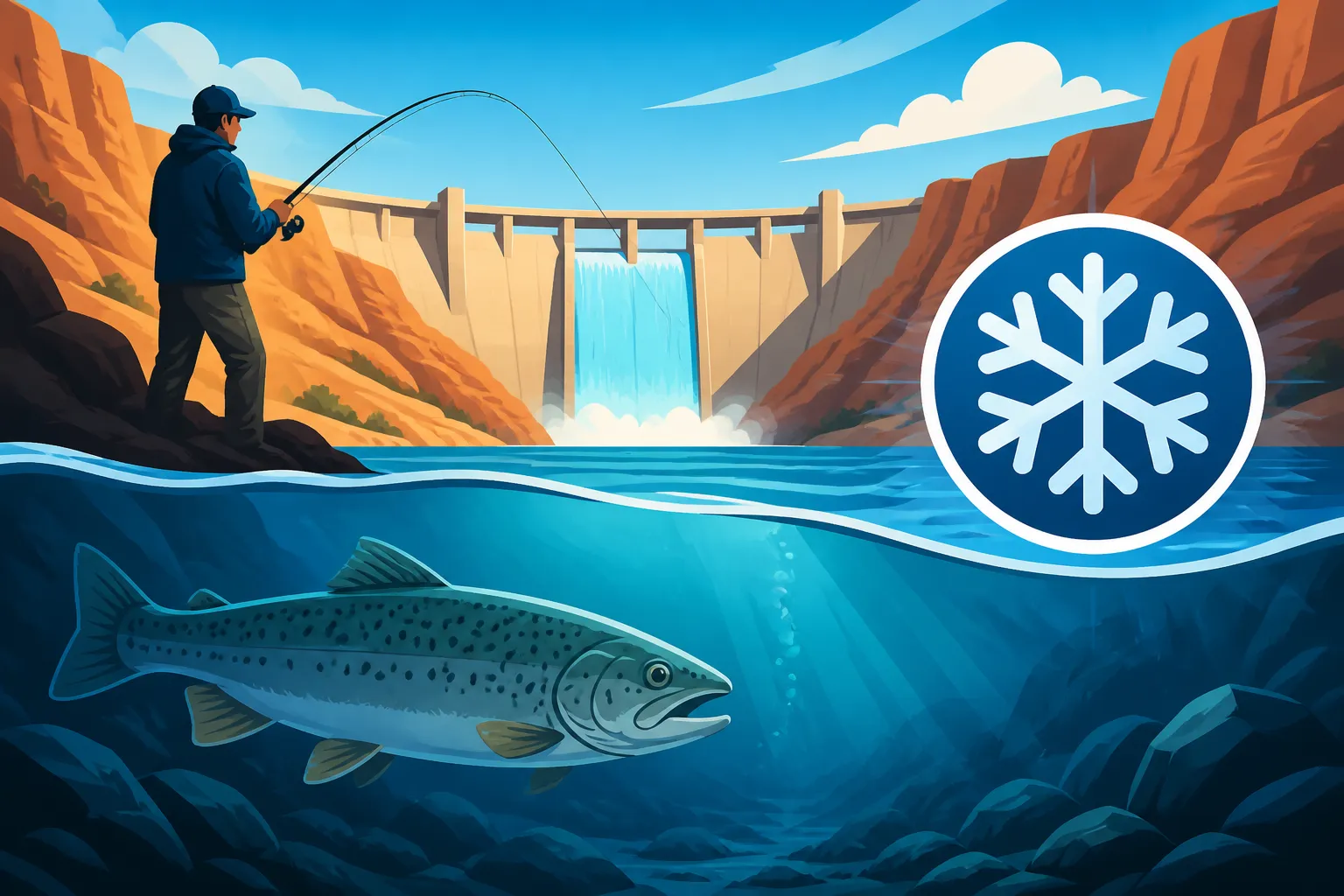
The secret to the San Juan's legendary cold water lies in the Navajo Dam itself. Unlike many dams that release water from the surface of a reservoir, Navajo Dam is designed for "bottom release." This means that the water flowing into the San Juan River originates from the deepest, coldest parts of Navajo Lake. Imagine a giant refrigerator working 24/7, sending out perfectly chilled water. This process bypasses the warmer surface layers of the lake that would otherwise heat up under the New Mexico sun.
This bottom-release mechanism creates what's known as a "tailwater fishery." Tailwaters are rivers downstream from dams that exhibit much more stable flow and temperature regimes than natural rivers. For the San Juan, it means the river temperature remains remarkably constant throughout the year, rarely deviating much from its cold baseline. This consistency is a boon for trout, providing them with stable oxygen levels and a comfortable metabolic environment, which allows them to grow large and robust. For anglers, it means you're generally dealing with fish that are accustomed to the chill, rather than being stressed by rapid temperature changes.
Average Temperature Ranges by Season
While the water below Navajo Dam is consistently cold, there are still subtle seasonal shifts that can influence fishing patterns. Generally speaking, the water temperature hovers in the low to mid-40s Fahrenheit (around 4-7°C) for much of the year, with slight increases during the warmest summer months and dips during the coldest winter periods.
- Winter (December – February): Expect temperatures to be at their coldest, typically ranging from 38°F to 42°F (3-5°C). The stability here is incredible; even when ambient air temperatures drop well below freezing, the water temperature remains relatively constant due to the deep lake release. This is often when the San Juan can feel the most unforgiving to anglers, but the fish are still there, simply more lethargic.
- Spring (March – May): As spring arrives and runoff begins elsewhere, the San Juan's tailwater remains largely unaffected. Temperatures might creep up a degree or two, usually staying between 40°F and 45°F (4-7°C). This can sometimes trigger increased insect activity and, consequently, more active feeding by trout.
- Summer (June – August): Even during the peak of summer when air temperatures can soar into the 90s or even 100s Fahrenheit, the water directly below the dam stays surprisingly cool. You're typically looking at temperatures in the 45°F to 52°F (7-11°C) range. This makes the San Juan a fantastic escape for anglers seeking cold water fishing when other rivers are too warm and stressful for trout.
- Fall (September – November): As autumn sets in, the water temperature gradually declines, usually returning to the mid-40s (5-7°C). This is a prime time for fishing, as trout become more active in preparation for winter, and insect hatches can be prolific.
This stable, cold environment is the bedrock of the San Juan's incredible fishery. It’s why you can have fantastic fishing here even when other New Mexico waters are either too warm or completely frozen over. Understanding these averages helps you prepare for the conditions you'll face and anticipate how the fish might behave.
The Impact of Cold Water on Fish Behavior and Fishing Success
When you're dealing with consistently cold water like that found in the San Juan River's San Juan River Quality Waters Section, it fundamentally changes how fish behave and, by extension, how you need to approach your fishing. It’s not about intimidating the fish with your presence; it's about understanding their biology and adapting your tactics.
How Trout React to Consistent Cold
Trout are cold-blooded creatures, meaning their metabolism is directly tied to the water temperature around them. In consistently cold water, their metabolic rate slows down significantly. This has several key implications:
- Slower Digestion and Less Frequent Feeding: Unlike in warmer waters where trout might feed aggressively multiple times a day, in cold water, their digestion is much slower. They don't need to eat as often to sustain themselves. This means shorter, more concentrated feeding windows.
- Reduced Energy Expenditure: Trout will instinctively conserve energy. They won't chase food over long distances or fight currents unnecessarily. They'll find prime holding lies – spots where they can expend minimal energy while still having access to food. This often means deeper, slower currents, behind structure, or in seams where food drifts right to them.
- Fewer, Smaller Movements: Don't expect aggressive, acrobatic takes in cold water. Trout might barely move to intercept a fly. Their strikes can be incredibly subtle, feeling more like a slight tug or a sudden heaviness on your line. You need to be hyper-aware of your indicator or line movement.
- Increased Sensitivity to Pressure: While the San Juan is known for high fish counts, the consistently cold water means that fish can become more sensitive to fishing pressure. If they’ve seen too many flies, they might become pickier, or simply refuse to move for anything that doesn't look absolutely perfect.
- Concentrated Holding Areas: Because they seek energy efficiency, trout often stack up in specific areas that provide both shelter and a consistent food supply. Finding these "honey holes" is crucial. Look for depressions, current seams, behind large rocks, or deep pools. The Rainbow Trout on the San Juan River and Brown Trout on the San Juan River found here thrive in these conditions, often growing to impressive sizes.
Strategies for Fishing Cold Tailwaters
Adapting your approach to these cold-water behaviors is paramount to success on the San Juan.
- Slow and Low Presentation: This is perhaps the most critical adjustment. Your flies need to drift naturally, slowly, and often deep. The fish aren't going to dart across the river for your offering.
- Weighting: Don't be afraid to add plenty of weight to get your flies down to where the fish are holding. Often, this means multiple split shot above your nymph rig.
- Longer Leaders/Tippets: A longer leader and tippet help achieve a more natural drift. For nymphing, a 9-12 foot leader with additional tippet to your flies is common.
- Focus on the Seams and Slow Water: Target the edges of faster currents, deep pockets, and slow runs. These are the energy-efficient zones where trout will stage.
- Smaller Flies, More Natural Patterns: While the San Juan can have impressive hatches, the primary diet of the trout in its tailwaters consists of tiny aquatic insects like midges and small mayflies. Your fly box should be stocked with patterns like Griffith's Gnats, tiny Baetis nymphs, annelids like San Juan Worms, and various midge pupa and larva imitations, often in sizes 18 to 24, or even smaller. Don't forget the popular "worm" patterns; they can be incredibly effective when fish are sluggish. If you’re into San Juan River Fly Fishing, choosing the right patterns is key. For more specific advice, check out Fly Selection for New Mexico's San Juan River.
- Patience and Persistence: Cold water fishing isn't about covering a lot of water quickly. It’s about methodically working a promising run, making multiple drifts, and waiting for those subtle takes. If you think you had a bite, set the hook! It's often better to set on a phantom strike than to miss a real one.
- Indicator Fishing and Tight Line Nymphing: Both methods are highly effective. Indicator fishing allows you to detect the slightest hesitation or dip of your float, while tight line nymphing (Euro nymphing) gives you a direct connection to your flies, letting you feel even the most delicate takes.
- Consider Timing: While the temperature is stable, slight diurnal (daily) warming from the sun during the middle of the day can sometimes make fish a little more active. Often, the best fishing can be from late morning through mid-afternoon, especially in winter.
By understanding how these cold temperatures dictate trout behavior, you can significantly increase your chances of success on this incredible New Mexico fishery. If you're planning your trip and want to connect with a local expert who knows these nuances inside and out, platforms like FishingBooker can help you find experienced guides specializing in the San Juan's unique conditions. They can provide invaluable insights into the river's current state and fish behavior.
Factors Influencing Water Temperature Fluctuations
While the water below Navajo Dam is famously consistent, it’s not an absolute monolith. There are subtle, yet important, factors that can cause minor fluctuations in temperature, impacting fish activity and requiring anglers to pay close attention. Understanding these influences can give you an edge, especially on those days when the fish seem particularly finicky.
Lake Stratification and Release Depths
Navajo Lake itself plays the primary role in regulating the San Juan's tailwater temperature. Like most deep lakes, Navajo Lake experiences thermal stratification. This means that during warmer months, the lake forms distinct layers: a warmer, less dense surface layer (epilimnion), a transition layer with a rapid temperature drop (thermocline), and a colder, denser bottom layer (hypolimnion).
The Navajo Dam's bottom-release mechanism draws water directly from this cold hypolimnion. However, the exact depth from which the water is released can sometimes be adjusted, or the stratification itself can change slightly over time. For instance, if dam operators need to release water from a slightly higher depth due to maintenance or specific operational needs, that water could be marginally warmer than the deepest water. Conversely, if the lake's overall volume changes significantly, the "bottom" water might be from a slightly different thermal zone.
These subtle shifts are typically managed to maintain the fishery, but it’s worth noting that the dam’s operation is the ultimate control point for the river’s temperature. Large flood releases, while rare, can also introduce slightly different thermal profiles into the river temporarily. You can often get up-to-date information on dam releases and flow rates directly from the Bureau of Reclamation or the New Mexico Department of Game and Fish, which can sometimes provide clues about temperature consistency. Always check Checking River Flow Before Fishing the San Juan before heading out.
Air Temperature and Sunlight's Role Downstream
While the water directly below the dam emerges consistently cold, its temperature isn't immune to external factors indefinitely. As the river flows downstream, away from the immediate influence of the dam, it begins to interact more with the environment.
- Air Temperature: On exceptionally hot, sunny days, the ambient air temperature can subtly warm the surface layers of the river, especially in shallower, slower sections. Conversely, during periods of extreme cold, sections of the river exposed to freezing air might cool further, though the overall influence is often minimal in the main channel due to the sheer volume of cold water from the dam.
- Sunlight Exposure: Sections of the river that are wide open and receive prolonged direct sunlight will experience slightly more warming than shaded stretches. This warming is usually negligible in the famous Quality Waters section, which is characterized by deep runs and considerable tree cover in many areas. However, further downstream, outside the tailwater's most direct influence, sun exposure becomes a more significant factor.
- Tributary Inflows: The San Juan River does receive inflows from other tributaries as it progresses. These tributaries, not originating from a deep, cold lake, will have water temperatures more reflective of the ambient air and surface runoff. While the volume of these tributaries is generally small compared to the San Juan's main flow, they can introduce localized pockets of slightly warmer or colder water, especially near their confluence points.
For the core San Juan River Special Trout Water Section, these external factors cause only marginal temperature changes, often only a degree or two. However, even these small shifts can sometimes trigger a slight increase in insect activity or make trout marginally more willing to move for a fly. This is why paying attention to the weather forecast and observing conditions on the river can still be beneficial, even in such a stable environment.
When planning a trip, especially if you're traveling a long distance, it’s always a good idea to consult local resources or even fishing reports on sites like FishingBooker. Local guides often have real-time information about current water conditions, including any subtle temperature nuances that could affect the bite.
Essential Gear and Safety for Cold-Water Angling
Fishing the consistently cold waters below Navajo Dam requires more than just the right flies; it demands appropriate gear for comfort and, critically, for safety. You’re dealing with low water temperatures year-round, which means even on a seemingly warm day, an accidental dunk can quickly become a dangerous situation.
Recommended Apparel and Wading Gear
Staying warm and dry is paramount when fishing in cold water. Hypothermia is a real risk if you're not properly prepared, even if the air temperature feels mild.
- Waders: High-quality, breathable waders are non-negotiable. Neoprene waders offer more insulation but can be bulky. Breathable waders, paired with good layering underneath, are often preferred for their versatility and comfort. Look for models from brands like Simms or Orvis, known for their durability and warmth. Many anglers find that Best Waders for New Mexico Rivers are a critical investment.
- Wading Boots: Sturdy wading boots with good ankle support are essential for navigating the often-rocky and slippery riverbed. Felt soles provide excellent grip on slick rocks but can be illegal in some areas due to invasive species concerns (always check current regulations). Rubber soles with studs or interchangeable sole systems are popular alternatives.
- Layering System: This is key. Start with a moisture-wicking base layer (merino wool or synthetic, never cotton) against your skin to pull sweat away. Add a warm mid-layer, such as fleece pants or a down alternative. On top, wear a waterproof and windproof wading jacket. Even on a sunny day, the wind can be piercing, especially on the open river.
- Socks: Multiple pairs of wool or synthetic socks are crucial. A thin liner sock under a thicker wool sock can provide both warmth and blister prevention.
- Headwear: A warm beanie or wool hat is vital, as a significant amount of body heat is lost through the head. On sunny days, a wide-brimmed hat worn over a beanie can offer both warmth and sun protection.
- Gloves: Neoprene or fleece gloves are a lifesaver, especially in colder months. Fingerless gloves allow for better dexterity with knots and tackle, while full gloves are better for warmth. Consider having a pair of thin liners and a thicker, waterproof outer pair.
- Rain Gear: Even if the forecast is clear, New Mexico weather can be unpredictable. A lightweight, packable rain jacket that fits over your layering system is always a good idea.
| Season | Typical Water Temp (F) | Recommended Layering | Key Gear Additions |
|---|---|---|---|
| Winter | 38-42°F | Heavy base, two mid-layers (fleece/down), heavy jacket | Neoprene gloves, wool beanie, hand warmers, thick socks |
| Spring | 40-45°F | Mid-weight base, one mid-layer, waterproof jacket | Fingerless gloves, warm hat |
| Summer | 45-52°F | Lightweight base, light fleece, light waterproof jacket | Sun hat, polarized sunglasses, light wading socks |
| Fall | 42-48°F | Mid-weight base, one mid-layer, warm waterproof jacket | Warm gloves, wool beanie |
Safety Considerations in Cold Water
Cold water fishing inherently carries certain risks, and being prepared means being aware of them and knowing how to respond.
- Hypothermia: This is the primary concern. Symptoms include shivering, confusion, slurred speech, and loss of coordination. If you fall in, get out of the water immediately, change into dry clothes, and seek warmth. Always bring a dry change of clothes in a waterproof bag, even if you don't expect to fall.
- Wading Safely: The San Juan River can have strong currents and a rocky, uneven bottom. Always use a wading staff, especially if you're unfamiliar with the area or if water levels are up. Wade slowly and deliberately, testing the bottom with your staff before each step. Never wade alone, or at least inform someone of your plans and expected return time. Knowing How Dam Releases Affect San Juan River Fishing is also crucial, as sudden increases in flow can make wading dangerous.
- Carrying Essentials: Always have a small waterproof dry bag or pack with essentials: first-aid kit, emergency blanket, high-energy snacks, plenty of water (even in cold weather, you can get dehydrated), and a fully charged phone. A whistle can be useful for attracting attention in an emergency.
- Awareness of Surroundings: Pay attention to weather changes, slippery banks, and potential wildlife. Even in such a popular area, it's a wilderness environment.
- Know Your Limits: Don't attempt to wade water that looks too deep or too fast for your comfort level. There are plenty of accessible spots on the San Juan that don't require risky wading.
Preparing for the cold water conditions of the San Juan River is a significant part of ensuring a successful and enjoyable trip. By investing in the right gear and prioritizing safety, you can focus on the incredible fishing experience this unique New Mexico tailwater offers. If you’re looking to get out on the water and want to ensure you have the safest and most productive experience, consider booking a guided trip. Many guides listed on platforms like FishingBooker are experts in San Juan River safety and techniques for Trout Fishing Techniques for New Mexico.
Disclaimer
Please note that fishing regulations, water conditions, and temperatures can change. Always consult the New Mexico Department of Game and Fish website for the most current regulations and conditions before planning your trip. Safety should always be your top priority when enjoying the outdoors.