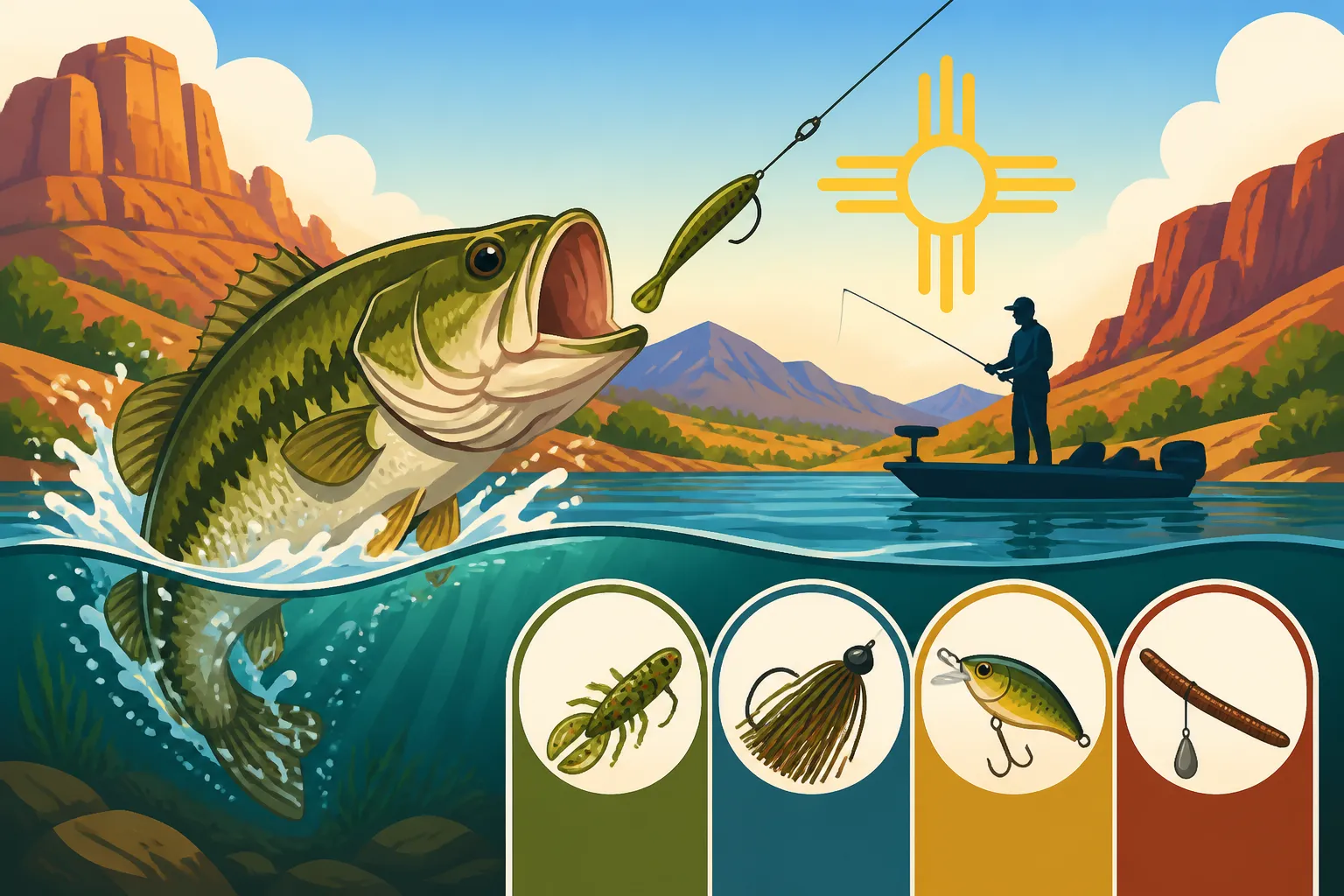
Bass Fishing Techniques for New Mexico Lakes
There's nothing quite like the thrill of a bass hitting your line, but let's be honest, fishing for bass in New Mexico's diverse lakes can feel like a whole different ballgame. The clear, often deep waters, coupled with significant elevation changes and fluctuating water levels, can make finding and enticing these elusive fighters a real head-scratcher. This guide is here to unravel those complexities, providing you with a deep dive into proven techniques, essential gear, and seasonal strategies to help you consistently land more bass across the Land of Enchantment.
Understanding New Mexico's Bass Fishing Landscape
New Mexico might not be the first place that comes to mind when you think of bass fishing, especially for those accustomed to the murky, vegetation-choked lakes of the southeastern U.S. However, our high desert reservoirs and mountain lakes hold incredible opportunities for anglers willing to adapt. The unique environmental factors here demand a different approach, and understanding the species you're targeting is the first step toward success.
Key Bass Species in New Mexico Lakes
When we talk about bass in New Mexico, we're generally focusing on a few key species, each with its own preferred habitats and behaviors. Knowing your target helps immensely in selecting the right techniques and gear.
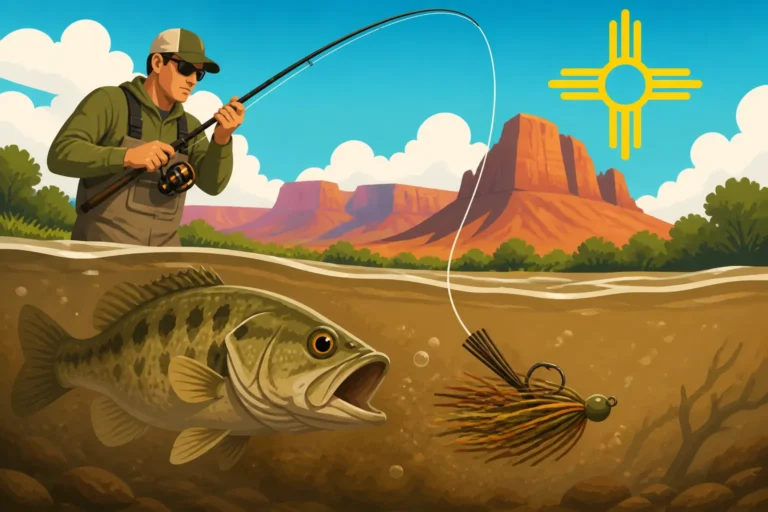
First up, the Largemouth Bass. These are the classic "bucketmouths" most people picture. In New Mexico, you'll find them primarily in warmer, shallower sections of reservoirs like Ute Lake, Santa Rosa Lake, and Conchas Lake. They love cover – think submerged timber, brush piles, rocky outcrops, and any remaining vegetation. Their ambush predator nature means they're often waiting for prey to swim by, making them a prime target for lures that mimic baitfish or crawfish. Learning more about Largemouth Bass Fishing in New Mexico can help you narrow down your focus.
Then there's the Smallmouth Bass. These feisty fighters are often found in clearer, cooler waters with rocky bottoms, ledges, and drop-offs. Lakes such as Navajo Lake and Elephant Butte Lake are known for their smallmouth populations. They tend to be more nomadic than largemouths, often cruising open water or deep structure, and they're notorious for their hard fights and acrobatic jumps. Their diet often includes crawfish, minnows, and insects, influencing lure choices.
Finally, we have the Striped Bass, a powerful species distinct from the black bass (largemouth and smallmouth). Stripers are saltwater fish that have adapted to freshwater environments in large reservoirs, most notably Elephant Butte Lake. They are schooling predators that chase baitfish, often feeding in open water. Unlike largemouths and smallmouths, which are typically targeted with casting lures or jigs, stripers are often caught trolling or on live bait. Their sheer size and fighting power make them a popular target, and a dedicated Striped Bass Fishing in New Mexico approach is necessary.
The Unique Challenges of New Mexico Waters
Fishing in New Mexico isn't without its quirks, and these challenges are what make success here so rewarding. Our waters present a different set of obstacles compared to many other popular bass fishing destinations, but with understanding, they can be overcome.
One of the most significant factors is water clarity. Many New Mexico lakes, especially those fed by mountain runoff or with rocky bottoms, can be exceptionally clear. While this allows for exciting sight fishing opportunities, it also means bass have an excellent view of your line, leader, and even you! This often necessitates lighter lines, longer leaders, and more natural, subtle presentations. Overly flashy or noisy lures can spook fish in these conditions, though there are always exceptions.
Another major consideration is depth and structure. New Mexico's reservoirs are often deep, with steep drop-offs, submerged canyons, and vast expanses of open water. Finding bass can be like searching for a needle in a haystack, especially in the larger lakes like Elephant Butte Lake or Navajo Lake. Reliance on good electronics, understanding contour maps, and focusing on key structural elements like points, humps, and submerged timber is critical. The fish aren't always hugging the bank; sometimes they're suspended over deep water or relating to subtle changes in bottom composition.
Lastly, fluctuating water levels are a constant reality in our arid state. Drought conditions, irrigation demands, and varying snowpack can cause water levels to rise and fall significantly, sometimes by dozens of feet within a season. This drastically alters the shoreline, submerging new cover or exposing old structure, and forces bass to constantly adapt their patterns. Anglers must be flexible, scouting new areas and understanding how current water levels impact fish behavior and access points. A spot that was hot last month might be high and dry today.
Seasonal Strategies for New Mexico Bass
Just like anywhere else, bass behavior in New Mexico is heavily influenced by the seasons. Understanding these shifts is paramount to developing a successful game plan, whether you're chasing a lunker largemouth or a hard-fighting smallmouth. Our New Mexico Fishing Season Calendar provides a great overview, but let's dive into the specifics for bass.
Spring Bass Fishing: Pre-Spawn and Spawn Tactics
Spring is arguably the most anticipated time for bass anglers in New Mexico. As water temperatures begin to rise, bass become increasingly active, moving from their wintering grounds to shallower waters in preparation for spawning. This period offers some of the best opportunities for catching big fish.
The pre-spawn phase typically kicks off when water temperatures reach the high 40s to low 50s (Fahrenheit). During this time, bass are gorging themselves, trying to pack on weight before the energy-intensive spawn. They'll often stage on points, humps, and channel swings adjacent to spawning flats, looking for easy meals. Crankbaits, spinnerbaits, and jerkbaits worked aggressively can be incredibly effective as these fish are actively feeding. Focus on transitions where deeper water meets shallower flats, and don't be afraid to cover a lot of water.
As water temperatures creep into the mid-50s to low 60s, the spawn begins. Bass move onto the shallow flats, seeking hard bottoms like gravel or sand, often near protective cover such as submerged brush or rocks. During the spawn, male bass guard the nests, and both males and females become highly aggressive towards anything perceived as a threat. Soft plastics like Senkos, creature baits, and jigs are excellent choices for sight fishing or probing known spawning areas. Look for visible nests (clear spots on the bottom) and cast beyond them, gently working your lure into the bed. Remember, these fish are vulnerable, so consider catch and release.
After the spawn, there's a brief post-spawn period where female bass are recovering and males are still guarding fry. Fish can be lethargic immediately after spawning, but soon they start feeding again, often on bluegill or other small fish that prey on their young. Topwater lures, finesse worms, and small crankbaits can be productive. Focus on the edges of spawning flats, shaded areas, and any cover that provides a sanctuary from the sun.
Summer Bass Fishing: Deep Water and Night Techniques
Summer in New Mexico brings intense heat, and with it, bass often move to deeper, cooler waters to escape the scorching sun. This doesn't mean fishing is over; it just means you need to adjust your strategy significantly.
During the daytime, especially as water temperatures soar into the 70s and 80s, bass will retreat to deeper water. Look for them along main lake points, ledges, submerged humps, and creek channels, often holding at depths of 20 to 40 feet or more, depending on the lake's thermocline. Techniques like deep cranking with large-billed crankbaits, jigging spoons, or drop-shotting soft plastics become key. For larger reservoirs like Elephant Butte Lake, trolling with deep-diving plugs can also be effective, especially for Elephant Butte Lake Striped Bass Fishing. Utilizing your fish finder to locate schools of bait and structure is absolutely crucial during this time.
Night fishing becomes an incredibly effective strategy for bass during the hot summer months. As the sun sets and temperatures drop, bass often move shallower to feed under the cover of darkness. This can lead to explosive topwater action or excellent results with spinnerbaits, buzzbaits, or large worms fished slowly along shorelines, docks, and points. Many anglers swear by dark-colored lures at night, as they create a more distinct silhouette against the moonlight. Remember to bring a good headlamp, but use it sparingly to avoid spooking fish.
The key to summer bass fishing in New Mexico is often related to the sun. Early mornings and late evenings offer brief windows when bass might move shallower to feed, but once the sun is high, they're typically heading for the cool, dark depths. Understanding how to fish deep structure effectively can unlock fantastic summer fishing opportunities.
Fall Bass Fishing: Feeding Frenzies and Transitions
Fall is another fantastic season for New Mexico bass fishing, often rivaling spring in terms of action and the potential for big fish. As water temperatures begin to cool, bass sense the approaching winter and engage in a massive feeding frenzy to build up reserves.
This is a time of transition. Baitfish, like shad, often school up in large numbers, and bass follow them relentlessly. Look for schooling activity on the surface, especially in the mornings and evenings, where bass are pushing bait against the surface. Topwater lures, poppers, and walking baits can be incredibly exciting when bass are chasing bait. Spinnerbaits and lipless crankbaits, retrieved quickly through bait schools or along rocky points, are also deadly.
As fall progresses and water temperatures continue to drop, bass will move from aggressive chasing to more predictable patterns, often relating to shallower pockets during warmer parts of the day and retreating to deeper structure as evening approaches. Target areas with remaining green vegetation or rocky banks that absorb and hold heat. Jerkbaits are particularly effective in cooler fall waters, as their erratic darting action can trigger strikes from sluggish but still hungry bass. Consider fishing the sunny side of points and coves in the late fall.
The fall bite can be some of the most consistent and action-packed fishing of the year. The cooler air makes for more comfortable fishing, and the bass are typically very cooperative. This is an excellent time to cover water and experiment with different presentations until you find what the fish are keying on.
Winter Bass Fishing: Slow Presentations and Patience
Winter in New Mexico can be a challenging time for bass fishing, but it's far from impossible. While the bite slows considerably, persistent anglers can still find success by employing very specific, slow techniques.
As water temperatures drop into the 40s and even 30s, bass become much less active. Their metabolism slows down, and they're not going to chase a fast-moving lure very far. They'll typically congregate in deeper wintering holes, often near steep drops, channel swings, or submerged timber that offers thermal refuge. The key is to present baits slowly, directly to the fish, and be incredibly patient.
Finesse techniques truly shine in winter. Jigging spoons, worked vertically over deep schools of bait or bass, can be very effective. Drop-shot rigs with small worms or creature baits, presented almost motionless, can tempt lethargic bass. Blade baits and slow-rolled jigs with plastic trailers are also good options. The retrieve should be excruciatingly slow, often just a twitch or a barely perceptible drag along the bottom. Don't be surprised if a "bite" feels more like added weight on your line rather than an aggressive strike.
The best times to fish in winter are usually during the warmest parts of the day, typically midday when the sun has had a chance to warm the water slightly. Focus on areas that receive direct sunlight, such as north-facing banks or rocky shorelines that retain heat. While you might not catch a lot of fish, the ones you do catch can often be larger, as bigger bass are more resilient to cold and sometimes more willing to feed in these conditions. This is definitely a time for careful planning and precision.
Essential Gear and Tackle for New Mexico Bass
Having the right tools for the job can make all the difference, especially when you're adapting to the unique conditions of New Mexico's bass fisheries. Your gear setup should be versatile, allowing you to switch between finesse and power techniques as needed.
Rods, Reels, and Line Selection
Choosing the right rod, reel, and line is critical for effective bass fishing. You'll want a versatile setup that can handle various lures and fighting styles.
For most bass fishing applications, a medium-heavy power, fast-action casting rod in the 6'8" to 7'4" range is an excellent all-around choice. This rod will allow you to cast heavier lures like crankbaits, spinnerbaits, and jigs, while the fast action provides sensitivity and strong hooksets. Pairing this with a baitcasting reel with a gear ratio around 7.1:1 offers a good balance of retrieve speed for different techniques. However, for finesse presentations like drop-shotting, lighter jigs, or fishing small worms in clear water, a medium power, fast-action spinning rod (around 6'6" to 7'0") with a matching spinning reel is indispensable. This setup allows for lighter lines and more delicate presentations, especially when bass are finicky.
When it comes to fishing line, versatility is key. For baitcasting setups, 12-17 lb fluorocarbon is an excellent choice for its low visibility, sensitivity, and abrasion resistance, especially in clear New Mexico waters with rocky structures. Some anglers prefer braided line (30-50 lb) for its strength and no-stretch properties, especially when flipping or pitching heavy cover, often tying a fluorocarbon leader for stealth. For spinning gear, 6-10 lb fluorocarbon or a light braided line with a fluorocarbon leader is ideal for finesse techniques. You can find a wide array of options for rods, reels, and lines on online retailers like Amazon, ensuring you have the right tools for any scenario.
Go-To Lures and Baits for New Mexico Bass
The tackle box of a New Mexico bass angler should be well-stocked with a variety of lures to cover different depths, conditions, and bass moods.
For covering water and eliciting reaction strikes, crankbaits are essential. Carry a range of sizes and diving depths, from shallow runners to deep divers. Colors mimicking crawfish (browns, reds, oranges) and baitfish (shad, perch patterns) are usually productive. Spinnerbaits and chatterbaits are great for fishing around cover and in stained water, offering flash and vibration. For open water and schooling fish, particularly stripers, jerkbaits and topwater lures like walking baits and poppers can be exhilarating. You can learn more about Best Lures for New Mexico Bass in a dedicated guide.
However, soft plastics are arguably the most versatile and consistently productive category. Plastic worms (Senkos, ribbon tails, straight tails) rigged Texas-style or wacky, jigs with craw trailers, and creature baits are staples for both largemouth and smallmouth. For finesse techniques, small drop-shot worms and tube baits are indispensable for smallmouth and deep-water largemouth. Don't forget swimbaits for imitating larger baitfish, especially for bigger bass. Having a good selection of colors – natural tones (green pumpkin, watermelon) for clear water and darker colors (black and blue) for stained conditions or night fishing – will keep you prepared.
Electronics and Boat Setup Considerations
Modern electronics have revolutionized bass fishing, turning what used to be guesswork into a much more informed pursuit. For New Mexico's larger, deeper lakes, these tools are not just a luxury but a necessity.
A reliable fish finder/sonar unit is paramount. Look for units with high-definition side imaging and down imaging capabilities, which allow you to scan wide areas for structure, cover, and fish schools. GPS mapping is also crucial for navigating large reservoirs and marking productive spots. Brands like Humminbird and Lowrance offer excellent options that are often available on Amazon. Being able to visualize the underwater world – points, ledges, humps, and submerged timber – gives you a massive advantage in locating bass. For more detailed insights, check out Best Fish Finders for New Mexico Reservoirs.
Your boat setup should also be optimized for bass fishing. A sturdy bass boat or a well-equipped jon boat with a good trolling motor (preferably with GPS spot-lock capabilities) will allow you to navigate effectively and hold position over key structure. Ample storage for rods, tackle, and safety gear is also important. For those without a boat, kayak fishing is gaining popularity, offering access to areas larger boats can't reach. Just ensure your kayak is stable and equipped with essential safety items. Consider reviewing Best Boats for New Mexico Reservoir Fishing if you're in the market for a new vessel.
Top Techniques for Largemouth Bass in New Mexico
Largemouth bass, with their penchant for cover and ambush tactics, respond well to certain techniques that put your lure right in their strike zone. Understanding how to present baits effectively in and around structure is key.
Flipping and Pitching Heavy Cover
New Mexico's lakes, despite their often clear nature, still offer plenty of heavy cover where largemouth bass love to hide. Think submerged brush piles, standing timber, rock gardens, and even flooded terrestrial vegetation during high water periods. Flipping and pitching are stealthy, precision casting techniques designed to get your lure into these tight spots without making a big splash.
Flipping involves using a long rod (typically 7'6" to 8') to pendulum your lure into very close cover, often within a rod's length. You strip line off the reel by hand, swing the bait, and guide it into the target. This technique allows for extreme accuracy and a quiet entry. Pitching is similar but involves a slightly longer cast, using a short underhand or sidearm motion to propel the bait into cover that's a bit further away. Both methods minimize splash and allow you to quickly present a lure to fish hiding deep within structure, such as those found in the brushy coves of Conchas Lake.
For these techniques, heavy fluorocarbon or braided line (30-65 lb), a stout medium-heavy to heavy power casting rod, and a fast-retrieve reel are essential. Your go-to lures will typically be jigs with creature bait trailers or Texas-rigged creature baits/soft plastic worms with a heavy tungsten weight. The heavy weight helps the lure penetrate thick cover and fall quickly, triggering an immediate reaction strike. The key is to get the lure in, let it fall, give it a few gentle shakes, and then retrieve to repeat the process. Don't linger too long if no bite occurs; bass in cover often strike quickly.
Spinnerbaits and Crankbaits for Active Fish
When largemouth bass are active and willing to chase, especially during pre-spawn, post-spawn, or fall feeding binges, spinnerbaits and crankbaits can be incredibly effective for covering water and triggering aggressive strikes.
Spinnerbaits create a lot of flash and vibration, making them highly visible and attractive to bass, particularly in stained water or around sparse cover. They are exceptionally weedless, allowing you to retrieve them through submerged grass, fallen trees, and over rocky bottoms where other lures might snag. Experiment with blade combinations (Colorado for more thump, willow leaf for more flash) and skirt colors (white/chartreuse for shad, greens/browns for crawfish). A steady retrieve, occasionally interrupted by a pause or twitch, is often all it takes. For aggressive fish, a fast, burning retrieve can be deadly.
Crankbaits are designed to dive to specific depths, making them perfect for targeting different parts of the water column. Shallow-diving crankbaits work well along rocky shorelines, over submerged grass beds, or along shallow points. Medium and deep-diving crankbaits are excellent for hitting deeper ledges, humps, and channel edges, especially in the summer. Lipless crankbaits, which sink and vibrate on the retrieve, are fantastic for ripping through grass or covering open water quickly. Match your crankbait size and color to the local forage (shad, crawfish, sunfish). A good retrieve often involves a steady retrieve with occasional deflections off cover, which can often trigger a strike.
These reaction baits are fantastic for when bass are spread out and you need to cover a lot of territory to find them. They excel at eliciting a strike from a bass that might not be actively feeding but can't resist a flashy, noisy meal passing by.
Soft Plastics: Worms, Jigs, and Senkos
Soft plastics are the workhorses of bass fishing, offering unparalleled versatility, lifelike action, and the ability to entice even the most finicky largemouth. They truly are a must-have in any New Mexico angler's arsenal.
Plastic worms are perhaps the most iconic soft plastic, and for good reason. From long, ribbon-tail worms excellent for slow-dragging on the bottom to stick baits like the Yamamoto Senko, their subtle action is irresistible. The Texas rig is king for fishing worms in cover, making them virtually snag-proof. The wacky rig, where the worm is hooked in the middle, creates a tantalizing shimmy on the fall, perfect for open water or around docks. When bass are lethargic or pressured, a slow, deliberate retrieve of a plastic worm can often be the ticket, especially around points and drops at places like Ute Lake.
Jigs are another incredibly effective soft plastic presentation. A football jig or a casting jig, paired with a crawfish or creature bait trailer, perfectly mimics a crawfish, a primary food source for bass. Jigs are best fished by dragging, hopping, or slowly pitching them around rocky bottom, ledges, and submerged timber. The texture and movement of the trailer add to the appeal. Different jig head weights allow you to fish various depths and current conditions. The fall of a jig is often when a bass strikes, so pay close attention as your lure descends.
Creature baits offer a bulkier profile and unique appendages that create a lot of subtle movement, often mimicking crawfish, small baitfish, or even amphibians. They excel when Texas-rigged, Carolina-rigged, or used as jig trailers. Their erratic action can often trigger strikes when bass are looking for something a little different. Many anglers use these in conjunction with heavier weights to quickly punch through dense cover, making them excellent choices for flipping and pitching.
Mastering Smallmouth Bass Techniques in New Mexico
Smallmouth bass are known for their preference for clear, cool, rocky environments and their aggressive, hard-fighting nature. Fishing for them in New Mexico's larger reservoirs demands techniques that cater to their specific habits and habitats.
Targeting Rocky Structure with Jigs and Tubes
Smallmouth bass are synonymous with rocky environments. They thrive in clear water with abundant rock piles, ledges, points, and gravelly flats, seeking out crawfish and minnows. Precision presentations with jigs and tube baits are often deadly.
Tube baits are incredibly effective for smallmouth. Their hollow, cylindrical bodies with tentacles mimic crawfish or distressed baitfish, and their spiral fall is often irresistible. They can be rigged in several ways: Texas-rigged with an internal weight for sparse cover, or on an exposed jig head for open water over rocks. The key is to "drag" or "hop" the tube along the bottom, mimicking a crawfish scurrying away. Fish them on points, ledges, and transition areas where rock meets sand, particularly in places like Navajo Lake. Pay close attention to subtle taps or increased weight on your line, as smallmouth bites can be very light.
Jigs, especially those designed for smallmouth, are also excellent. A small hair jig or a football jig with a subtle plastic trailer can be fantastic. These are best fished by casting them out, letting them sink to the bottom, and then slowly dragging or hopping them along the rocky terrain. The natural materials of a hair jig or the precise presentation of a football jig with a craw trailer often tempt hesitant smallmouth. Fishing with a sensitive rod and braided line with a fluorocarbon leader will help you detect those subtle bites in deeper water.
The mantra for smallmouth over rocky structure is often "slow and deliberate." They are curious but can be finicky in clear water, so a natural, unhurried presentation is usually best.
Drop-Shotting and Finesse Tactics
When smallmouth are pressured, inactive, or holding deep in clear water, finesse techniques like drop-shotting become absolutely invaluable. These methods present a small bait in a very natural way, often suspending it at the fish's eye level.
The drop-shot rig involves tying a hook directly to the main line, typically 12-18 inches above a weight tied to the tag end. This allows the bait to suspend horizontally off the bottom, presenting it perfectly to bass without the weight interfering with its action. Small, soft plastic worms, minnow imitations, or creature baits are excellent drop-shot baits. The beauty of the drop-shot is that you can impart subtle action to the bait by gently shaking the rod tip, while the weight remains on the bottom, keeping the lure in the strike zone longer. This is particularly effective in places like Elephant Butte Lake where smallmouth often relate to deep ledges and drop-offs.
Other finesse tactics include using Ned Rigs and small swimbait heads with tiny paddle tail grubs. The Ned Rig is a mushroom-shaped jig head paired with a small, buoyant soft plastic, allowing it to stand straight up off the bottom, mimicking a feeding minnow or crawfish. It's incredibly subtle and can coax bites from the most finicky smallmouth. Small grubs on a lightweight jig head, retrieved with a slow, steady swim, are also highly effective, especially when smallmouth are chasing smaller baitfish.
Finesse fishing for smallmouth requires a sensitive spinning rod, light fluorocarbon line (6-8 lb), and a lot of patience. The bites can be extremely subtle, sometimes just a slight tap or a feeling of added weight. Learning to discern these light bites is a crucial skill for consistent smallmouth success.
Crankbaits and Jerkbaits for Aggressive Smallies
While finesse is often key, aggressive smallmouth bass, especially during active feeding periods in spring and fall, will readily chase down faster-moving baits like crankbaits and jerkbaits. These lures are excellent for covering water and triggering reaction strikes.
Crankbaits for smallmouth tend to be slightly smaller than those used for largemouth, often in the 1.5 to 2.5-inch range, with natural colors mimicking crawfish or baitfish like shad. Medium-diving crankbaits are particularly effective for working rocky points, humps, and submerged flats. A key technique is to "crash" the crankbait into rocks or other bottom structure. The deflection often triggers an immediate strike from an inquisitive smallmouth. Consider baits from brands like Rapala or Strike King that offer diverse color options and diving depths.
Jerkbaits are absolutely deadly for smallmouth, especially in cooler water temperatures. Their erratic, darting action perfectly imitates a wounded baitfish, and smallmouth can't resist them. Suspending jerkbaits are particularly effective, as you can twitch them down to a certain depth and then pause, letting the bait hang motionless in the strike zone, daring a smallmouth to commit. Work them with a "twitch, twitch, pause" retrieve, varying the cadence until you find what the fish prefer. Long pauses can be very effective in cold water.
These reaction baits are fantastic for when smallmouth are actively feeding and you want to locate schools quickly. They allow you to cover significant amounts of water while still presenting a realistic, enticing meal.
Effective Strategies for Striped Bass in New Mexico
Striped bass are a different beast entirely. Found predominantly in Elephant Butte Lake, these powerful, schooling predators require specific strategies due to their nomadic nature and preference for open water and deep baitfish schools. Targeting Elephant Butte Lake Striped Bass Fishing is a unique experience.
Trolling and Live Bait Rigs
Trolling is one of the most popular and effective ways to catch striped bass in New Mexico, especially on large reservoirs like Elephant Butte Lake. This technique allows you to cover vast expanses of water and present lures at various depths.
For trolling, use heavy-duty rods and reels capable of handling powerful fish. Deep-diving crankbaits, swimbaits, and umbrella rigs are popular choices. Vary your trolling speed until you find what the fish prefer, typically between 2-4 mph. Downriggers or lead core line can be essential for getting lures down to the depths where stripers are holding, especially in summer. Pay close attention to your fish finder to locate bait schools and suspended stripers, and then adjust your trolling depth accordingly. Some anglers have great success with white, chrome, or shad-patterned lures.
Live bait is also exceptionally effective for stripers. Gizzard shad, large minnows, or sunfish are preferred baits. They can be fished on free lines near schooling fish, under balloons, or on a Carolina rig near the bottom. When stripers are chasing bait on the surface, casting a live shad into the fray can result in an instant hookup. Ensure you check local regulations on bait collection and use, as not all live bait is permitted in all waters.
Topwater and Reaction Baits for Schools
When striped bass are actively feeding on the surface, often indicated by diving birds or visible boils, it's one of the most exciting times to target them. This is when topwater and other reaction baits truly shine.
Topwater lures like poppers, walking baits (e.g., Heddon Super Spook), or large pencil poppers can elicit explosive strikes when stripers are busting bait on the surface. Cast your lure into the feeding frenzy and work it aggressively, mimicking a panicked baitfish. The visual aspect of a topwater strike from a powerful striper is something every angler should experience. This action often happens early in the morning or late in the evening when the water is calmer.
Other reaction baits that work well for schooling stripers include large swimbaits, flutter spoons, and heavy Kastmasters. When fish are just below the surface, cast these lures into the school and retrieve them quickly. Flutter spoons, in particular, have a unique falling action that often triggers strikes when stripers are suspended. The key is to get your lure into the school as quickly as possible once you spot the feeding activity, as these frenzies can be short-lived.
Vertical Jigging and Downrigging in Deep Water
When stripers are holding deep, which is common during the warmer months, vertical jigging and downrigging become essential techniques to get your lure in front of them.
Vertical jigging involves dropping heavy jigs, spoons, or even large soft plastics rigged on heavy jig heads directly down to where you've marked fish on your sonar. Let the lure fall to the desired depth, then aggressively snap or lift the rod tip, allowing the lure to flutter back down. Most strikes occur on the fall, so pay close attention. Heavy spoons or blade baits are excellent for this method. This is a very effective way to target individual fish or tight schools you've located on your fish finder.
Downrigging allows you to precisely control the depth of your lure, presenting it directly to suspended schools of stripers. This involves using a heavy lead ball (the "cannonball") attached to a wire cable, which is then lowered to a specific depth. Your fishing line is clipped to a release mechanism on the downrigger cable, and when a fish strikes, the line releases, allowing you to fight the fish directly. Downrigging is particularly useful for presenting large crankbaits, swimbaits, or even live bait at very specific depths over long periods. This method is often preferred for targeting deeper fish across large areas.
Reading the Water and Locating Bass in New Mexico
Successfully catching bass, regardless of the species, often boils down to one critical skill: finding them. New Mexico's waters require keen observation and an understanding of how bass relate to their environment.
Understanding Structure and Cover
Bass are creatures of habit, and their habits are almost always tied to structure and cover. Learning to "read" these elements, both above and below the surface, is fundamental.
Structure refers to changes in the lake bottom's topography. This includes points, humps, ledges, creek channels, roadbeds, and submerged islands. These are natural congregation points for baitfish, and consequently, for bass. Bass will use the contours of structure to ambush prey, escape predators, or find comfortable water temperatures. For example, a point extending into a lake provides a thoroughfare for bass moving from shallow to deep water. A drop-off along a creek channel offers a perfect ambush point. Learning to identify these structures on your electronics and maps, and then understanding how fish use them, is crucial.
Cover, on the other hand, refers to physical objects in the water, whether natural or man-made. This includes submerged timber, brush piles, rock piles, docks, boat ramps, and even patches of emergent or submerged vegetation. Bass use cover for shade, protection from predators, and as ambush points for prey. Largemouth, in particular, are notorious for holding tight to dense cover. When you see a laydown tree extending into the water at Conchas Lake, or a rock pile along a shoreline at Navajo Lake, you should immediately think "bass." The most productive cover often exists in conjunction with good structure.
Interpreting Environmental Factors
Beyond structure and cover, various environmental factors constantly influence bass behavior. Successful anglers learn to interpret these cues and adjust their approach.
Weather patterns play a significant role. A stable period of warm, sunny weather often leads to predictable bass behavior. However, cold fronts, high winds, or sudden temperature drops can shut down the bite or force bass to deeper, more protected areas. After a cold front, bass often become lethargic and might require slower, more subtle presentations. Overcast days, conversely, can often keep bass active in shallower water longer, making spinnerbaits and crankbaits more effective. Understanding how barometric pressure changes with weather fronts can also offer insights, as rapidly dropping pressure often precedes active feeding.
Water clarity and temperature are also major determinants. As mentioned, clear water usually calls for lighter lines and natural presentations. Stained or muddy water, on the other hand, can reduce visibility, making noisy or flashy lures more effective. Water temperature is perhaps the most critical factor, dictating bass metabolism and spawn cycles. Knowing the ideal temperature ranges for active feeding for each species is a huge advantage. For instance, largemouth prefer warmer water than smallmouth. Strong current from dam releases or inflows can also position bass in specific ambush points, as they use the current to bring food to them.
Utilizing Sonar and Mapping Technologies
In New Mexico's vast and often deep lakes, simply guessing where the bass might be is a recipe for frustration. Modern sonar and mapping technologies are indispensable tools for locating fish efficiently.
Your fish finder is your window into the underwater world. Use your 2D sonar to identify fish arches and bait balls, and pay close attention to the bottom contour. Side imaging and down imaging are game-changers for identifying structure and cover that you might otherwise miss. Scan areas for submerged timber, rock piles, ledges, and channels. Many fish finders also allow you to identify thermoclines, which are crucial for finding comfortable water for bass during summer. If you see baitfish schools, bass are usually not far behind.
GPS mapping on your fish finder or a dedicated marine chart plotter allows you to navigate confidently and, more importantly, to mark waypoints. When you find a productive spot – a submerged brush pile, a rock hump, or an area where you caught several fish – mark it! This allows you to return to it quickly in the future. Many map cards offer highly detailed contours for major New Mexico lakes, giving you a comprehensive understanding of the underwater landscape before you even launch your boat. Pre-fishing by studying these maps at home can save you hours on the water, helping you identify potential hotspots before you even wet a line.
Conservation and Best Practices for New Mexico Bass Anglers
As responsible anglers, it's our duty to protect New Mexico's valuable bass fisheries for future generations. Practicing ethical angling techniques and adhering to regulations are paramount.
Catch and Release for Healthy Populations
Many New Mexico bass fisheries, especially for largemouth and smallmouth, benefit greatly from catch and release practices. While it's perfectly fine to keep a legal limit of fish for a meal, selectively releasing larger, healthier bass helps maintain robust populations and improves the overall quality of the fishery.
When practicing catch and release, prioritize the fish's well-being. Handle fish gently, minimizing their time out of the water. Use a net with a rubberized mesh, which is less likely to remove the fish's protective slime coat. Remove hooks quickly with pliers or a de-hooking tool. If a fish is deeply hooked, it's often best to cut the line rather than try to extract the hook, as this can cause more damage. Wet your hands before handling the fish to protect its slime.
For stressed fish, especially during warmer months, take extra time to revive them. Hold them gently upright in the water, facing into any current, until they are able to swim away strongly on their own. Avoid excessive squeezing or rough handling, which can damage internal organs. These simple steps ensure that the bass you release have the best chance of survival and can contribute to future spawning successes.
Respecting Regulations and Fellow Anglers
Adhering to New Mexico's fishing regulations is not just about avoiding fines; it's about contributing to the sustainable management of our natural resources. Always carry a valid New Mexico Fishing License Guide and be familiar with the rules for the specific body of water you're fishing.
Pay close attention to bag and possession limits for bass species, as these can vary by lake. For example, knowing the New Mexico Statewide Bag Limit for Bass and whether Is There a Size Limit on Bass in New Mexico? for the lake you're targeting is crucial. These limits are set by the New Mexico Department of Game and Fish to ensure healthy fish populations. Ignorance of the rules is never an excuse, so always check the latest regulations booklet or the NMDGF website before you head out.
Finally, always show respect for fellow anglers and the environment. This means maintaining a courteous distance from other boats or bank anglers, avoiding loud noises, and never littering. Pack out everything you pack in, and leave the shoreline and water cleaner than you found it. By being good stewards of our fisheries, we ensure that New Mexico remains a fantastic destination for bass fishing for years to come.
Disclaimer
The information provided in this guide is for general informational purposes only. Fishing regulations, conditions, and fish behavior can change rapidly. Always consult the latest New Mexico Department of Game and Fish regulations, check current weather and water conditions, and exercise caution while fishing. The author and publisher are not responsible for any accidents, injuries, or legal infractions that may occur.