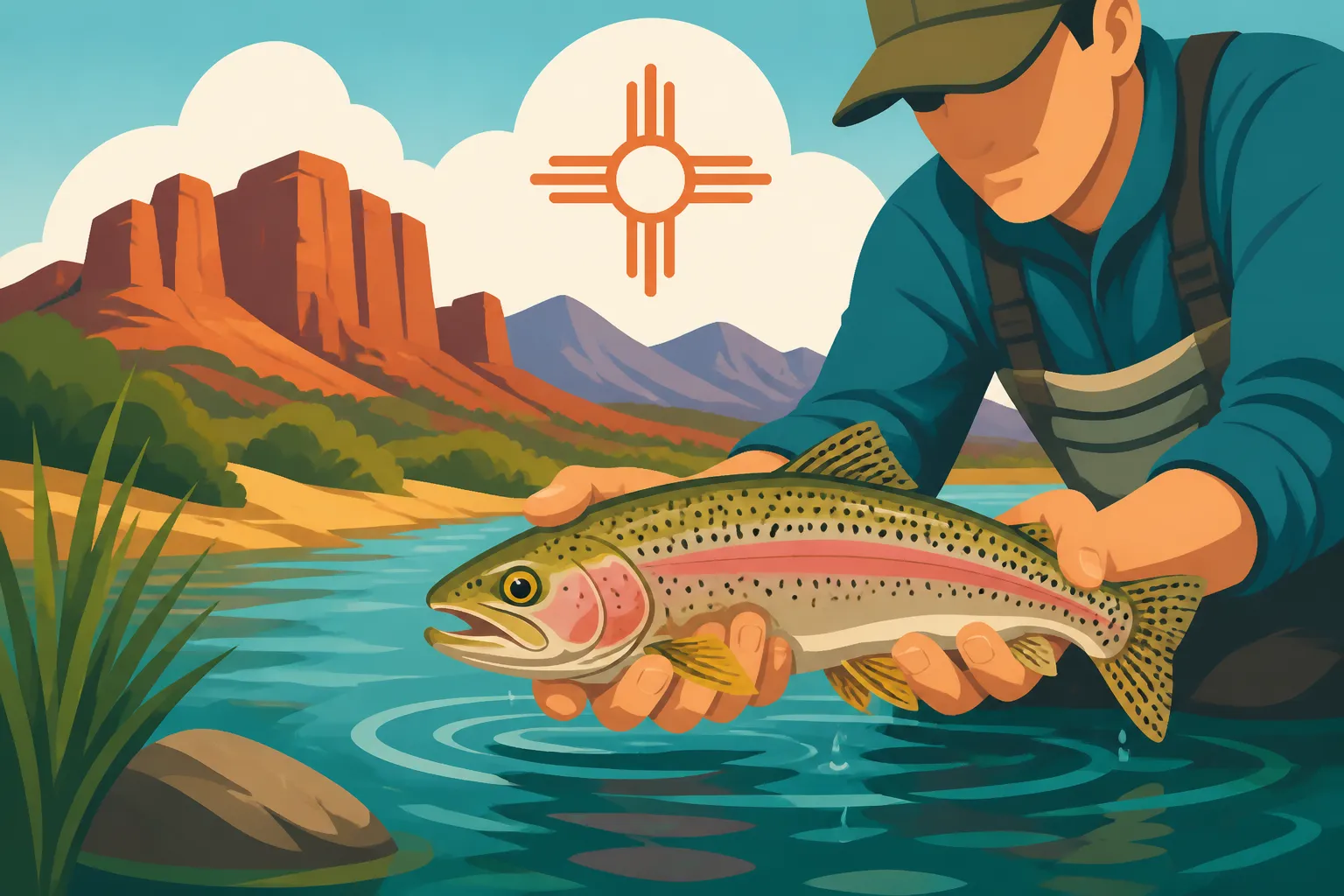
Catch and Release Best Practices in New Mexico
One of the most profound responsibilities we have as anglers in New Mexico is ensuring the health and vitality of our precious fisheries. There's nothing more disheartening than seeing a beautiful fish float away, stressed and unlikely to survive, after being caught. This guide is all about equipping you with the knowledge and techniques to practice catch and release effectively, minimizing harm and giving every fish the best possible chance to thrive after you send it back into New Mexico's diverse waters.
Why Catch and Release Matters in New Mexico
Catch and release isn't just a suggestion; for many of New Mexico's most sensitive and popular fisheries, it's an absolute necessity. The land of enchantment boasts an incredible variety of aquatic ecosystems, from high-mountain trout streams to vast warm water reservoirs, and each requires our careful consideration to remain vibrant for future generations.
Preserving Native Trout Populations
New Mexico is home to two remarkable native trout species: the Rio Grande Cutthroat Trout and the Gila Trout. These fish represent living history, having adapted to their unique environments over millennia. Their populations are often fragile, existing in isolated pockets, and they face constant challenges from habitat loss, drought, and competition from non-native species.
When you fish for these incredible natives, catch and release is paramount. Every fish returned successfully helps maintain genetic diversity and bolster numbers, ensuring these iconic species continue to grace our streams. Understanding the delicate balance of these ecosystems is key to preserving their legacy, which is often reflected in specific rules like those detailed in the New Mexico Trout Fishing Rules.
Sustaining Stocked Fisheries
Beyond our natives, New Mexico Game and Fish works tirelessly to stock numerous lakes and rivers with species like rainbow trout, bass, and walleye to provide abundant fishing opportunities. While some of these areas are designated for harvest, many also benefit from a strong catch-and-release ethic.
Even in stocked waters, responsible release practices help spread the angling pressure and allow fish to grow to larger sizes. This means more memorable catches for everyone, year after year. It's about ensuring a sustainable resource, rather than simply depleting it, making every effort to understand the broader New Mexico Fishing Regulations Overview an essential part of your trip planning.
Ethical Angling Principles
Beyond the biological necessities, catch and release is deeply rooted in the ethical principles of sportsmanship and respect for nature. It acknowledges that fish are not merely targets but living creatures that deserve humane treatment.
Practicing ethical catch and release demonstrates a commitment to conservation and sets a positive example for other anglers, especially children. It fosters a deeper connection to the natural world and reminds us that fishing is about more than just what we take home; it's about the experience, the challenge, and the responsibility we bear.
Minimizing Stress During the Fight
The moment a fish takes your bait or lure, the clock starts ticking on its stress levels. How you play the fish can significantly impact its chances of survival once released. A prolonged, brutal fight can exhaust a fish to the point of no return, especially in warmer water or during spawning seasons.
Choosing Appropriate Gear
Using appropriate gear is your first line of defense against over-stressing a fish. This means matching your rod, reel, and line to the size of the fish you're likely to encounter and the conditions you're fishing in. For instance, using ultralight tackle for large bass in heavy cover will inevitably lead to a long, exhausting battle, if you even land the fish.
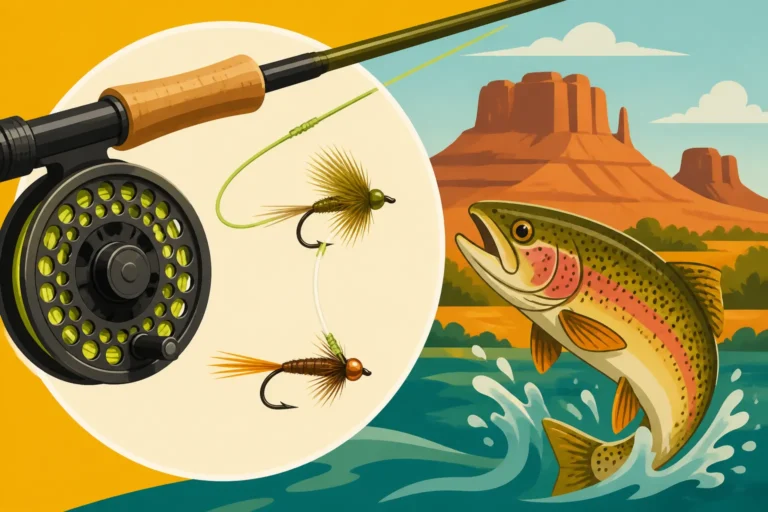
A rod with enough backbone to turn a fish away from snags and retrieve it efficiently, combined with a reel with a smooth, reliable drag system, is crucial. For trout fishing in rivers like the San Juan, a 4- to 6-weight fly rod or a light-to-medium spinning setup with 4-6 lb test line is generally appropriate, allowing for a quick fight without overpowering smaller fish or being undergunned for larger ones.
Fighting Fish Efficiently
Once hooked, the goal is to land the fish as quickly and safely as possible without putting excessive strain on it or your tackle. Keep your rod tip up and maintain consistent pressure. This allows the rod to absorb shocks and prevents the fish from getting an advantage.
Avoid letting the fish run excessively, especially into heavy cover. If you're on a boat, try to position yourself to follow the fish if it makes a strong run. For bank anglers, this might mean moving along the shore. The quicker you can bring the fish to hand or net, the less lactic acid builds up in its muscles, increasing its survival odds.
Avoiding Over-Playing Fish
There's a fine line between a good fight and an over-played fish. When a fish is fought to complete exhaustion, it often struggles to recover, making it vulnerable to predators or unable to maintain its equilibrium. You'll notice this when a fish lies on its side or struggles to swim away upon release.
If you feel a fish is particularly strong or running hot, don't be afraid to take a moment to let it make a few short runs, tiring it out gradually rather than trying to horse it in. However, once it shows signs of tiring, such as less powerful head shakes or shorter runs, apply steady pressure to bring it in quickly for handling and release. This balance is critical, particularly when fishing sensitive areas that are part of the New Mexico Quality Waters Program.
Proper Handling Techniques for All Species
Once you've brought the fish close, how you handle it outside the water is critically important. Many fish deaths after release are due to improper handling that damages their protective slime coat, gills, or internal organs.
Wet Hands and Net Use
Always, always wet your hands thoroughly before touching a fish. Dry hands can remove the fish's protective slime coat, which acts as a barrier against parasites, bacteria, and fungi. Any break in this coat leaves the fish vulnerable to infection.
Using a soft, knotless rubber or silicone landing net is highly recommended. These nets minimize slime removal and prevent fin damage, unlike traditional knotted nylon nets. You can find excellent options on Amazon, and they are truly a game-changer for catch and release. A good net can also help subdue a lively fish quickly, reducing its time out of water. For a detailed look at selecting one, check out guides on Best Landing Nets for New Mexico Catch and Release Fishing.
Supporting the Fish's Body
When lifting a fish for hook removal or a quick photo, always support its entire body, especially larger fish. Avoid holding a fish vertically by its jaw or tail alone, as this can cause severe damage to its internal organs, spine, and jaw structure. For bigger fish, use two hands – one supporting the belly, the other cradling the head or tail.
Smaller fish can be held gently with wet hands, ensuring not to squeeze them. If you absolutely need a photo, do it quickly and with the fish as close to the water as possible. For very large fish, it's often best to keep them in the net, in the water, for hook removal and a quick, submerged photo if necessary.
Minimizing Air Exposure
The absolute golden rule for catch and release is to minimize the amount of time a fish spends out of the water. Fish cannot breathe air, and even a few seconds of air exposure can cause significant physiological stress, especially to their delicate gills.
If you must remove a fish from the water, do so for the absolute minimum time required to remove the hook and snap a quick picture (if desired). If the fish is particularly feisty or hard to unhook, keep it in the net, submerged in the water, until you're ready. For smaller trout, consider simply reaching into the water with your wet hand to remove the hook without ever lifting the fish.
Effective Hook Removal Strategies
Getting the hook out cleanly and quickly is one of the most critical steps in successful catch and release. This is where preparation and the right tools make all the difference.
Barbless Hooks: The Golden Rule
If you are serious about catch and release, especially for trout or native species, barbless hooks are non-negotiable. Many of New Mexico's special trout waters, including the quality waters of the San Juan River, legally require barbless hooks. Even where not required, using them dramatically simplifies hook removal and minimizes tissue damage.
You can buy hooks that are already barbless, or you can easily crimp down the barb on any barbed hook with a pair of pliers. This simple modification can turn a potentially traumatic hook removal into a swift, painless process for the fish, increasing its survival rate exponentially. More on this practice can be found in Barbless Hook Fishing Technique for New Mexico Rivers.
Tools for Quick Removal
Having the right tools at your fingertips is essential. A good pair of long-nosed pliers or forceps (hemostats) should be a staple in every catch-and-release angler's kit. These tools allow you to grip the hook firmly and leverage it out quickly, minimizing handling time.
For flies, a pair of hemostats is often perfect. For larger, stouter hooks, especially on warm water species like bass or walleye, strong, sturdy pliers from brands like Rapala or Berkley, readily available on Amazon, are indispensable. Keep them easily accessible, perhaps on a lanyard or in a fishing vest pocket, so you don't have to fumble for them when a fish is on the line.
Dealing with Deep-Hooked Fish
Occasionally, a fish will swallow the hook deeply, making removal difficult and potentially fatal. If a fish is bleeding heavily from the gills or gut, or if the hook is simply too far down to remove without causing further damage, the best course of action is to cut the line as close to the hook as possible.
While it feels counter-intuitive, leaving the hook in is often the kinder choice. Most hooks, especially smaller ones, will rust out within a few days or weeks, and the fish's body will often expel them. Attempting to dig a deep-set hook out will almost certainly cause irreparable damage and kill the fish. This is a tough decision but ultimately prioritizes the fish's welfare.
Reviving and Releasing Fish Safely
The actual release is not just about letting go; it's about ensuring the fish is fully recovered and ready to swim strongly back into its habitat. A weak release is almost as bad as improper handling.
Water Flow and Oxygenation
After a stressful fight, a fish needs oxygen to recover. Place the fish gently into the water, facing upstream into a current if you're in a river or stream. The natural flow of water over its gills helps force oxygenated water through them, aiding in recovery.
In stillwater lakes or ponds, gently move the fish forward and backward to achieve a similar effect, allowing water to circulate through its gills. Avoid dragging it sideways, as this can impede gill function. Keep the fish submerged upright, supporting its belly, and allow it to recuperate at its own pace.
Observing for Full Recovery
Be patient. Don't rush the revival process. Hold the fish in the water, maintaining a gentle grip, until it starts to show signs of regaining strength. You'll feel it start to kick its tail, try to swim away, and hold itself upright without your support.
The fish should be able to maintain its equilibrium and swim off under its own power. If it rolls over or struggles to stay upright, continue the revival process. This might take anywhere from a few seconds to several minutes, especially for larger fish or those caught in warmer water. Knowing How to Keep Trout Cool and Alive for Catch and Release is particularly important here.
Gentle Release Methods
Once the fish is revived, simply open your hand and allow it to swim away on its own. Avoid tossing or dropping the fish back into the water, as this can cause injury and undue stress. A gentle release allows the fish to orient itself and escape any immediate threats.
Watch the fish swim off. A strong, purposeful swim is a good indicator of a successful release. If it lingers near the surface or appears disoriented, you might need to continue the revival process for a bit longer. Your goal is for the fish to return to its environment in the best possible condition, ready to resume its normal activities.
Special Considerations for New Mexico's Unique Waters
New Mexico offers a vast array of fishing experiences, and each environment can present unique challenges for catch and release. Being aware of these specific conditions will further improve your success rate.
Cold vs. Warm Water Species
The water temperature plays a massive role in a fish's ability to recover. Coldwater species like trout are generally more resilient to handling, but warm water can quickly become deadly. As water temperatures rise (typically above 65-70°F for trout, or above 75-80°F for some warm water species), the dissolved oxygen levels in the water decrease, and fish become more susceptible to stress and exhaustion.
If you're fishing for trout in the heat of a New Mexico summer, consider fishing during cooler parts of the day, like early mornings or evenings, as discussed in Best Time of Day to Catch Trout in Summer Heat. For warm water species like bass and catfish, while generally more tolerant of heat, extreme temperatures still warrant quick handling. Be extra vigilant with warm water species during peak summer months; a quick release is always best. Understanding Warm Water Fishing Techniques for New Mexico can also help you adapt.
High Altitude Fishing Challenges
Many of New Mexico's pristine trout waters are found at high elevations, where UV radiation is more intense, and weather can change rapidly. While the water itself is often cold and oxygen-rich, the thinner air can affect anglers. Always be prepared for varying conditions, and remember that intense sun can heat up rocks and dry hands quickly.
When fishing high-altitude lakes or streams, protect yourself from the sun, and remember that even cold water can stress a fish if the air temperature is significantly different or if handling is prolonged in direct sunlight. Keep the fish in the water as much as possible, and be mindful of exposed skin on the fish during hook removal.
Sensitive Fisheries: Gila Trout and Rio Grande Cutthroat
As mentioned earlier, New Mexico's native trout, the Gila Trout and the Rio Grande Cutthroat Trout, are exceptionally valuable and often vulnerable. Regulations for these species are typically very strict, often mandating catch and release only, sometimes with specific gear restrictions (e.g., artificial flies and lures with single barbless hooks).
When targeting these species, found in designated areas like specific streams in the Gila and Carson National Forests, your catch-and-release skills need to be top-notch. Every Gila Trout or Rio Grande Cutthroat returned successfully is a victory for conservation. Familiarize yourself with specific rules for these unique fish, as covered in Gila Trout in New Mexico and Rio Grande Cutthroat Trout in New Mexico, and always adhere to any special area-specific regulations, which can change seasonally as per the New Mexico Fishing Season Calendar.
Catch and Release Best Practices Summary Table
To help consolidate these best practices, here's a quick reference table:
| Action Category | Best Practice | Why It Matters | Recommended Gear |
|---|---|---|---|
| During the Fight | Match tackle to fish size; land quickly and efficiently | Minimizes exhaustion, lactic acid buildup, and stress | Appropriately sized rod/reel, smooth drag |
| Handling Fish | Wet hands, use soft net; support body; minimize air exposure | Protects slime coat, prevents internal/spinal injury | Knotless rubberized net (available on Amazon), forceps |
| Hook Removal | Use barbless hooks; have tools ready; cut line if deep-hooked | Speeds up removal, reduces tissue damage; prevents fatal injury | Pliers/forceps, line cutters; crimp barbs on hooks |
| Revival & Release | Submerge fully; face into current; observe for full recovery; gentle release | Aids gill oxygenation; ensures fish can swim strongly | Hands-on observation, patience |
| Environmental Context | Adjust to water temperature; respect sensitive species | Prevents thermal shock; critical for conservation | Thermometer, knowledge of species-specific regulations |
Disclaimer
Please remember that fishing regulations can change. Always consult the latest New Mexico Department of Game and Fish regulations booklet or their official website before heading out. This guide provides general best practices, but specific waters may have unique rules that supersede these general recommendations.