What Flies Work Best on the San Juan River in Winter?
Winter fly fishing on New Mexico's San Juan River can be one of the most rewarding, yet equally frustrating, experiences for an angler. The challenge often boils down to one critical question: what flies are these incredibly selective trout actually eating in the frigid, crystal-clear water? This guide is designed to cut through the guesswork, offering practical advice and detailing the essential fly patterns that consistently produce fish on the San Juan during the colder months.
Understanding the San Juan River in Winter
The San Juan River, particularly its famous Quality Waters section below Navajo Dam, offers a unique winter fishery. Unlike many freestone rivers that become unfishable or freeze over, the San Juan maintains relatively consistent water temperatures year-round thanks to the deep release from the dam. However, "consistent" doesn't mean "warm," and the cold, clear conditions demand a highly specialized approach.
Unique Winter Conditions
Winter on the San Juan River brings a set of conditions that significantly influence trout behavior and, consequently, our fly selection. The water remains consistently cold, often hovering in the low 40s Fahrenheit. This cold temperature slows down trout metabolism, making them less aggressive and more lethargic. They're not going to chase a fly far; they want it presented perfectly, right in their feeding lane. The water clarity is usually exceptional, often gin-clear, which makes the fish incredibly wary. Any unnatural drag, heavy tippet, or oversized fly will likely send them scattering.
Moreover, the steady tailwater flow means insect hatches are predictable, but often sparse. Unlike explosive summer hatches, winter sees a dominance of tiny midges and the occasional blue-winged olive (BWO) emergence. These insects are small, and their nymphal and emergent stages are what trout primarily key in on. Knowing this fundamental shift in their diet is the first step to unlocking winter success. For a comprehensive overview of the river, check out our San Juan River Fishing Guide.
The Importance of Micro-Nymphs
Given the cold, clear water and the dominant insect life, it's no surprise that micro-nymphs are king on the San Juan in winter. Trout, being cold-blooded, expend minimal energy in cold water, choosing to hold in slow, deep eddies or seams where food drifts directly to them. They become incredibly selective, often refusing anything but the most precise imitations of the tiny midges and annelids that make up the bulk of their winter diet.
You might be used to fishing larger, flashier flies in other waters, but on the San Juan in winter, thinking small is paramount. We're talking about flies in sizes #20 all the way down to #26 or even #28. The trout's diet consists mainly of these minuscule aquatic insects, so your flies must match not just the profile but also the size. This is where many anglers struggle, using flies that are simply too large for the conditions.
Essential Fly Patterns for San Juan Winter Success
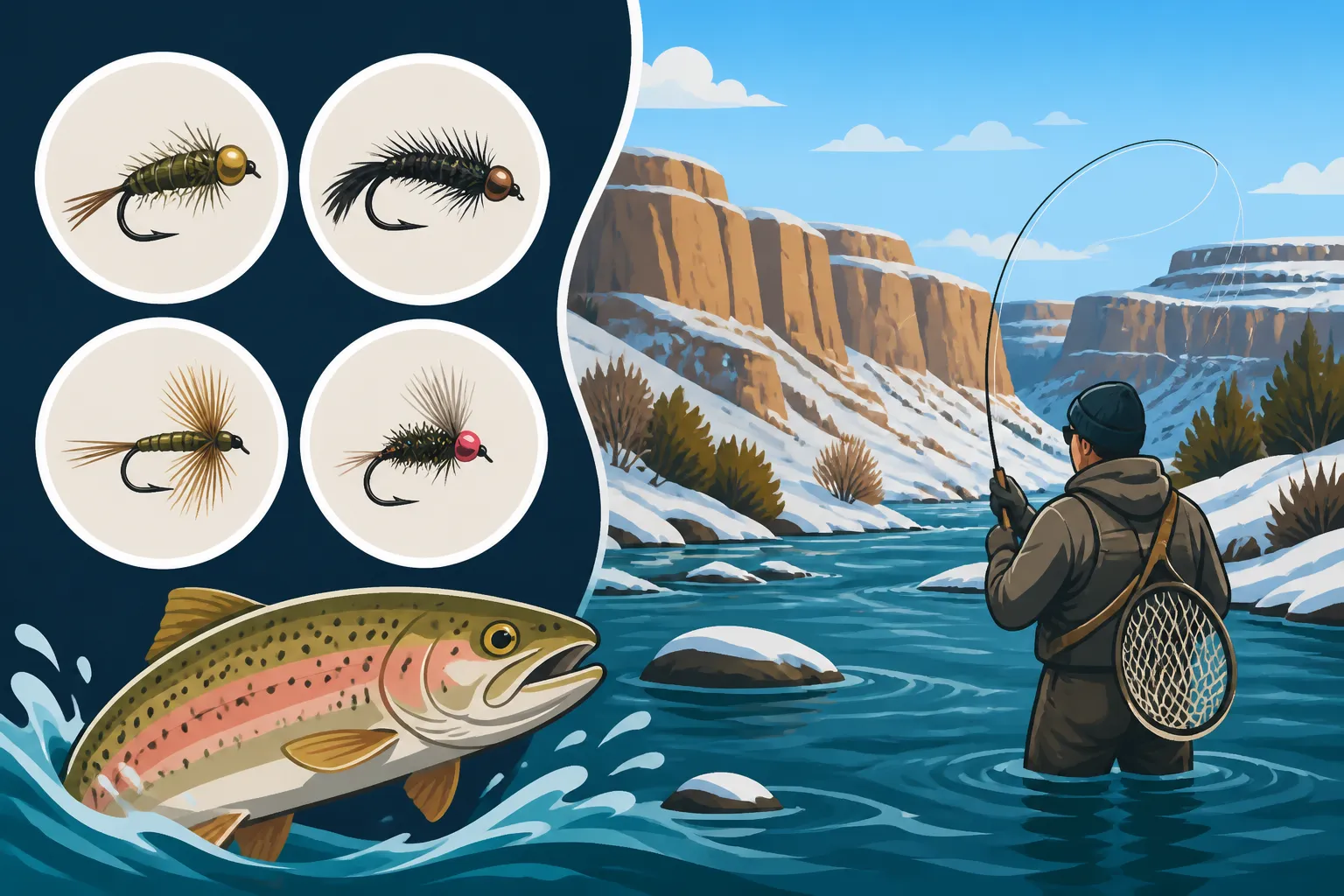
When you're rigging up for a day on the San Juan in winter, your fly box should be brimming with tiny, subtle patterns. These aren't necessarily the flashiest flies, but they are incredibly effective because they accurately mimic the primary food sources available to the trout during the colder months. Remember, the fish are often podded up in the deeper runs of the San Juan River Quality Waters Section, and getting your fly down to them with a natural drift is crucial.
Midge Patterns
Midges are the bread and butter of winter fly fishing on the San Juan. They are present year-round, but their emergence becomes the most consistent and important food source when other insects are dormant. Trout become highly tuned to these tiny insects, feeding on their larval, pupal, and adult stages.
- Blood Midge (Zebra Midge, Miracle Midge): These are absolute staples. The Blood Midge, often tied with red thread or wire, imitates the bloodworm stage of a midge, which is a common food item in the silty bottom of the San Juan. Zebra Midges, with a black body and silver wire rib, and Miracle Midges (often in black, red, or olive) are also incredibly effective. You'll want these in sizes #20-#26. They're often fished as your bottom fly, mimicking a larva or pupa slowly drifting along the substrate. You can find a good variety of these patterns on platforms like Amazon, making it easy to stock up.
- Top Secret Midge: This pattern is a local favorite, renowned for its simple, subtle effectiveness. It typically features a black or gray body, a small bead head, and often a sparse wing case or collar. It's designed to mimic the pupal stage, which trout often intercept as it drifts upwards in the water column. Sizes #20-#24 are standard.
- Griffith's Gnat: While primarily an adult midge imitation, a Griffith's Gnat can be deadly on calmer, warmer winter days when adult midges might be clustered on the surface. It's often fished as an emerger or dry fly, especially in slower eddies where fish might be subtly rising.
When fishing midge patterns, pay close attention to depth. Trout are often hugging the bottom in winter. A typical setup might involve a Blood Midge on the bottom with a Top Secret Midge tied 10-12 inches above it, suspended under a small indicator. For more specific insights, read our guide on Midge Fishing Tips for the San Juan River.
Annelid/Worm Patterns
The San Juan River has a healthy population of aquatic worms, or annelids, which get dislodged from the riverbed naturally or by spawning trout. These provide a significant caloric intake for trout, especially when insect activity is low.
- San Juan Worm: This is perhaps the most iconic fly pattern on the river, and for good reason. It's simple, highly effective, and mimics the segmented body of a small aquatic worm. You'll want them in various colors, with red, pink, and tan being the most popular. Don't overlook purple or even chartreuse. Sizes #16-#22 are common. The key is to use a relatively sparse, thin worm pattern, not a thick, bushy one.
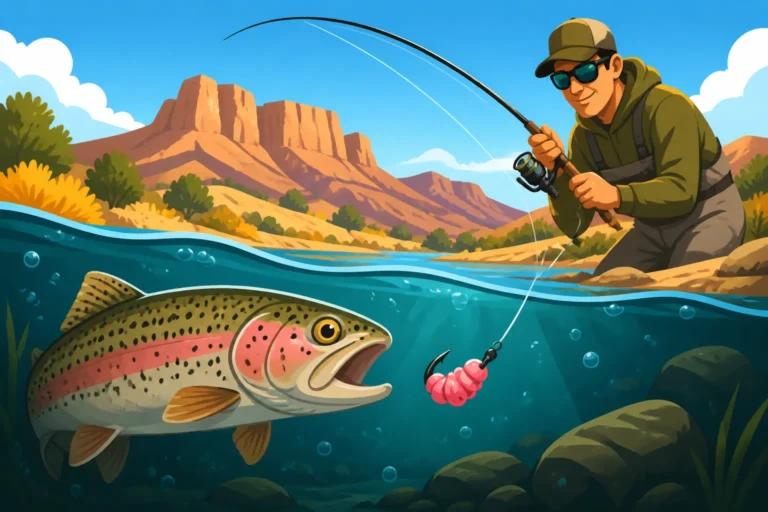
- Squirmy Wormy: A more modern take on the worm, made with stretchy, synthetic material. These have incredible action in the water. While some purists shy away from them, they are undeniably effective. Again, focus on natural colors like red, pink, and tan, and keep them relatively small, in sizes #16-#20.
Worm patterns are excellent "searcher" flies, often fished as the anchor fly in a tandem nymph rig. They get down quickly and provide a larger profile than midges, which can sometimes entice a less active fish. They are especially potent when runoff from rain or snowmelt dislodges them, or during the late fall/early winter brown trout spawn when eggs and dislodged worms are abundant.
Baetis Blue-Winged Olive Nymphs
Even in the dead of winter, New Mexico's San Juan River experiences periodic hatches of Baetis, or Blue-Winged Olives (BWOs). These mayfly nymphs are small, dark, and provide another crucial food source for trout. While not as consistent as midge hatches, a good BWO hatch can bring fish to the surface or significantly increase nymphing activity.
- Juju Baetis: This is a fantastic, slender nymph pattern that perfectly imitates the natural Baetis. It often features a segmented body, a dark wing case, and sometimes a flash of pearlescent material. Olive, black, and brown are the go-to colors. Sizes #20-#24 are essential.
- RS2 (Rimrock Midge, Rick's Special 2): While its name suggests a midge, the RS2 is an incredibly versatile pattern that effectively mimics both midge and BWO emergers. It's sparsely tied with a segmented body and a small "wing" of CDC or Zelon. Gray, black, and olive are key colors, and sizes #20-#24 are a must. The RS2 is designed to be fished high in the water column or just below the surface during an emergence.
- Barr's Emerger: Another excellent emerger pattern, often tied with a turkey biot body and a CDC wing. This pattern is particularly deadly when fish are keying in on insects transitioning from nymph to adult. Keep it in dark olive or gray, sizes #20-#24.
Fishing BWO nymphs often requires even more delicate presentation than midges. Use light tippet and focus on seams and slower runs where these insects might be drifting. Pairing a BWO nymph with a midge pattern is a common and effective strategy. Our Nymph Fishing on the San Juan River guide offers more detailed rigging insights.
Egg Patterns
Egg patterns are an important, albeit seasonal, addition to your winter fly box, especially in the early winter months following trout spawning. Brown trout, which are abundant on the San Juan, typically spawn in the fall and early winter. During and after this period, their eggs become a readily available, high-protein food source for other trout species, particularly rainbows.
- Glo Bug: This is a classic egg pattern, often tied in bright, visible colors like orange, chartreuse, or even a natural peachy-pink. Sizes #14-#18 are common, as trout eggs are relatively large compared to midges.
- Sucker Spawn: Another popular egg imitation that mimics clusters of eggs. These patterns are often tied with multiple strands of yarn or similar material, giving them a more irregular, natural appearance. Again, orange, pink, and chartreuse are effective colors, typically in sizes #14-#18.
Egg patterns are typically fished as the heaviest fly in your rig to get down quickly, often just above a small midge or worm pattern. While some anglers consider them less "purist," they are a natural part of the trout's diet during certain times of the year and can be incredibly effective when fish are keying on them. Remember to check the New Mexico Trout Fishing Rules for any specific regulations regarding egg patterns or other baits on certain waters, though on the San Juan Quality Waters, artificial flies are generally allowed.
Rigging and Presentation for Winter Flies
Having the right flies is only half the battle. On the San Juan, especially in winter, how you rig and present those flies is just as, if not more, important. These trout are notoriously "educated" and highly sensitive to drag or unnatural drifts.
Indicator Nymphing Setups
Indicator nymphing is the most common and effective technique for winter fishing on the San Juan. The goal is to get your tiny flies down to the fish's feeding level and maintain a perfectly drag-free drift.
- Sensitive Indicators: Forget large, buoyant bobbers. You need a small, sensitive indicator that registers even the slightest take. Yarn indicators, small Thingamabobbers, or even a small piece of brightly colored fly line grease are ideal. The key is minimal splash and quick detection.
- Leader and Tippet Considerations: This is where many anglers falter. The clear water demands long leaders (9-12 feet) and very light fluorocarbon tippet. Fluorocarbon is less visible in water and sinks faster than monofilament, which helps get those tiny flies down. You'll typically be fishing 6x or even 7x tippet. Using a high-quality fluorocarbon from brands like Seaguar or Rio, available on Amazon, can make a noticeable difference in your hook-up rates. For more on this, consult our Best Leader Length for San Juan River Nymphing guide.
- Weight Placement: Often, your flies are so small they don't have enough weight to sink quickly. Small split shot or a piece of lead-free putty should be added 8-12 inches above your first fly. Experiment with minimal weight to ensure a natural drift, adding more only if your flies aren't getting deep enough.
Tandem Rigging Strategies
Tandem rigs are essential for maximizing your chances on the San Juan. By presenting two flies simultaneously, you're offering the fish a choice and covering more of the water column.
- Worm/Midge Combo: A classic and highly effective setup. Tie a San Juan Worm (or other annelid pattern) as your lead fly (the heaviest), and then tie a midge pattern (like a Blood Midge or Top Secret Midge) off the bend of the worm hook using a short piece (8-12 inches) of light tippet. This ensures the worm acts as an attractor and weight, while the midge offers a smaller, more specific food source.
- Midge/BWO Combo: If fish are being particularly selective, or during a slight BWO emergence, a midge followed by a BWO nymph is a great choice. You could use a Zebra Midge as the lead fly, followed by a Juju Baetis.
- Egg/Midge or Egg/Worm Combo: During the post-spawn period, pairing an egg pattern with a midge or worm can be deadly. The egg provides a large, visible target, and the smaller fly offers a constant food source.
Always ensure your tippet knots are strong and your dropper length allows for a natural separation between flies without tangling.
Reading the Water and Drifting
In winter, trout congregate in predictable locations. Focus your efforts on:
- Slow, Deep Runs: These areas offer refuge from stronger currents and often hold a steady supply of drifting food.
- Eddies and Current Seams: Fish will tuck into the calmer water behind obstructions or along the edges of faster currents, waiting for food to drift by.
- Tailouts of Pools: The shallower, slower water at the very end of a pool can also hold fish looking for an easy meal.
Your drift needs to be absolutely drag-free. This means mending your line upstream to match the speed of the current and keep your indicator drifting at the same pace as your flies. Any unnatural drag will make your flies look suspicious, and the wary San Juan trout will ignore them. Remember, these fish have seen it all. Paying attention to your New Mexico Fishing Season Dates and Limits will also help you understand peak fishing pressure times to find less disturbed water.
Other Considerations for Winter Fly Fishing on the San Juan
Beyond the flies and rigging, successful winter fishing on the San Juan requires attention to broader environmental factors and personal preparedness. The high desert winter can be unpredictable, and comfort significantly impacts your focus and enjoyment.
Weather and Water Conditions
While the San Juan is a tailwater and maintains more stable temperatures than freestone rivers, external factors still play a role.
- Air Temperature: A cold snap will make trout even more lethargic, pushing them into the deepest, slowest water. On milder, sunny days, you might see more insect activity and even some fish looking up for emergers.
- Water Temperature: Though regulated by the dam, slight fluctuations can occur. Colder water often means slower fish.
- Snowmelt/Rainfall: While the dam controls the main flow, significant local snowmelt or heavy rain can slightly increase turbidity in the river, which can sometimes make fish less wary and more willing to take a slightly larger or more visible fly. However, generally, the San Juan remains clear. Always check current river conditions and flow rates before heading out. Information on How Dam Releases Affect San Juan River Fishing can be very useful.
Gear Essentials for Cold Weather
Staying warm and dry is paramount for an enjoyable winter fishing trip.
- Waders and Layering: Quality breathable waders with good insulation are a must. Layering is key: start with a good base layer (wool or synthetic), add a mid-layer (fleece or down), and top it with a waterproof, windproof outer shell. Bring extra layers; it's always better to have too much than too little. For advice on appropriate legwear, check out Best Waders for New Mexico Rivers.
- Hand Warmers and Gloves: Cold fingers make tying knots nearly impossible. Bring chemical hand warmers and consider fingerless gloves or convertible mittens that allow you to tie knots without completely exposing your hands.
- Proper Footwear: Insulated wading boots and thick wool socks are crucial. If you plan to be standing in the water for extended periods, even insulated boots might get cold; consider adding neoprene socks or a second pair of thick wool socks.
- Hat and Neck Gaiter: A warm hat is essential for retaining body heat, and a neck gaiter provides crucial protection from wind and cold.
- Hydration and Snacks: Even in cold weather, it's easy to get dehydrated. Bring plenty of water and calorie-rich snacks to maintain energy levels.
Preparing properly for the elements ensures you can focus on your presentation and enjoy the serene beauty of winter on the San Juan. For broader gear considerations, our Best Rod Setup for New Mexico Trout Fishing might offer valuable insights for your overall setup.
Here’s a quick reference for your winter fly selection on the San Juan:
| Fly Pattern Category | Specific Patterns Recommended | Sizes (Hook) | Primary Imitation | Best Conditions/Notes |
|---|---|---|---|---|
| Midges | Blood Midge (Red, Black) | #20 – #26 | Midge Larva/Pupa | All winter; great anchor fly. |
| Zebra Midge (Black, Olive) | #20 – #26 | Midge Larva/Pupa | All winter; very consistent. | |
| Miracle Midge (Black, Red) | #20 – #26 | Midge Larva/Pupa | All winter; subtle and effective. | |
| Top Secret Midge (Black, Grey) | #20 – #24 | Midge Pupa | Excellent emerger pattern. | |
| Griffith's Gnat (Dry/Emerger) | #20 – #24 | Adult Midge | Calmer, warmer days with subtle risers. | |
| Annelids/Worms | San Juan Worm (Red, Pink, Tan) | #16 – #22 | Aquatic Worm | All winter; especially good after dislodgement or during spawn. |
| Squirmy Wormy (Red, Pink, Tan) | #16 – #20 | Aquatic Worm | High action; effective attractor. | |
| Baetis/BWOs | Juju Baetis (Olive, Black) | #20 – #24 | BWO Nymph | During BWO hatches or when fish are selective. |
| RS2 (Gray, Black, Olive) | #20 – #24 | BWO/Midge Emerger | Highly versatile emerger. | |
| Barr's Emerger (Dark Olive, Gray) | #20 – #24 | BWO Emerger | When fish are keying on emerging insects. | |
| Egg Patterns | Glo Bug (Orange, Pink, Chartreuse) | #14 – #18 | Trout/Sucker Eggs | Early winter, post-spawn, especially for rainbows. |
| Sucker Spawn (Orange, Pink) | #14 – #18 | Egg Clusters | Similar to Glo Bug, good during spawning periods. |
Remember to always consult the current New Mexico Fishing Regulations Overview before heading out, as rules and conditions can change. The San Juan River is a New Mexico Special Trout Water Rules area, and specific rules like Why Are Barbless Hooks Required on the San Juan River? are in place to protect its valuable fishery.
Disclaimer
Fishing conditions and regulations in New Mexico can change frequently. Always consult the latest New Mexico Department of Game and Fish regulations before planning your trip. This guide is for informational purposes only and should not be considered a substitute for official regulations. Stay safe and respect the environment.