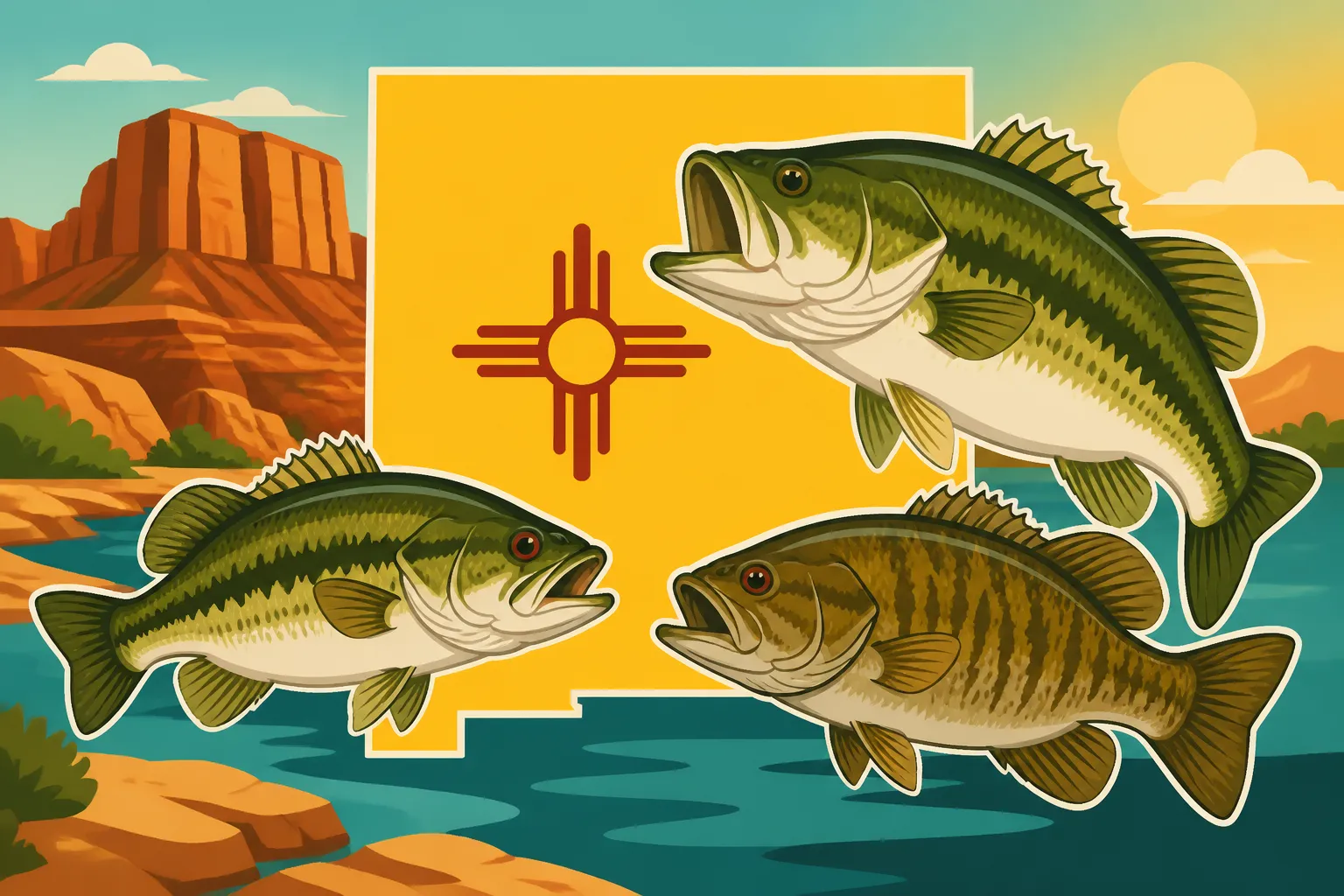
Black Bass Species in New Mexico
It can be incredibly frustrating to hit a New Mexico lake or river, convinced you're targeting a certain bass, only to pull up something a little different. Many anglers, even seasoned ones, can struggle to differentiate between the various black bass species that call our waters home. This guide aims to clear up that confusion, offering a comprehensive look at the black bass species thriving in New Mexico, their unique characteristics, preferred habitats, and how you can identify and target them effectively.
Understanding Black Bass in the Land of Enchantment
New Mexico might be known for its stunning mountain scenery and high desert landscapes, but beneath the surface of many of its lakes and rivers, a vibrant world of black bass thrives. These powerful, intelligent game fish provide exciting challenges for anglers, whether you're a seasoned pro or just starting out. Understanding the nuances of each species is key to successful fishing and appreciating the unique ecosystems they inhabit.
What Defines a "Black Bass"?
When we talk about "black bass," we're generally referring to a group of freshwater fish within the Micropterus genus, which is part of the sunfish family (Centrarchidae). The most famous members, of course, are the largemouth and smallmouth bass. But it's not just about their color; the term signifies a collection of species that share certain characteristics, like their generally robust, oval-shaped bodies, large mouths (though sizes vary between species), and predatory nature. They are prized by anglers for their aggressive strikes and strong fighting spirit, making them a popular target across the state. In New Mexico, specifically, we primarily focus on three main species: Largemouth Bass, Smallmouth Bass, and to a lesser extent, Spotted Bass. Each has evolved or adapted to distinct environments, influencing their appearance, behavior, and the best ways to catch them.
Why New Mexico's Diverse Waters Suit Black Bass
New Mexico’s diverse aquatic environments, ranging from large reservoirs to clear, flowing rivers, offer a surprising variety of habitats that black bass have adapted to. The state’s warmer, often turbid reservoirs with abundant submerged vegetation are perfect for largemouth bass, providing ample cover for ambush predators. Conversely, the cooler, rockier, and often clearer waters of certain rivers and lake sections are ideal for smallmouth bass, which prefer to hunt crayfish and other prey among submerged structures. While our state might conjure images of trout streams, the significant portions of our water bodies with appropriate temperatures and forage bases mean black bass have found a comfortable home. This habitat diversity is what makes fishing for black bass here so dynamic and rewarding; you could be fishing for a largemouth in a weed bed in the morning and targeting a smallmouth on a rocky point by afternoon. Understanding these preferences helps immensely when planning your fishing trips, allowing you to match your target species to the right Best New Mexico Lakes for Bass.
The Largemouth Bass: New Mexico's King of the Weeds
The largemouth bass (Micropterus salmoides) is arguably the most recognized and widely pursued freshwater game fish in North America, and it certainly holds a regal status in many New Mexico waters. Known for its explosive strikes and powerful dives, the largemouth offers an exhilarating fight that keeps anglers coming back for more. In our state, they thrive in specific environments, making them a predictable and rewarding target once you understand their preferences.
Identifying Characteristics and Preferred Habitat
The key to identifying a largemouth bass lies right in its name: its mouth is noticeably large. When its mouth is closed, the corner of its jaw extends beyond the back of its eye. Its body is typically a dark green on the back, fading to lighter green or white on the belly, often with a distinct, irregular dark lateral line running along its sides. This lateral line can sometimes appear as a series of blotches rather than a continuous stripe, especially in younger fish or those in particularly clear water. Their dorsal fin is deeply notched, giving the appearance of two separate fins. These fish are masters of camouflage, their coloration blending seamlessly with their preferred vegetated environments.
Habitat-wise, largemouth bass are true structure and cover fanatics. They absolutely adore areas with abundant aquatic vegetation, such as lily pads, cattails, submerged grass beds, and brush piles. They also gravitate towards flooded timber, docks, and any form of submerged structure that provides shade, ambush points, and protection from predators. In New Mexico, this means you'll find them most often in the warmer, shallower, and often murkier sections of large reservoirs and ponds. These areas provide the perfect blend of cover for them to hide and ambush prey like baitfish, crawfish, and even frogs.
Best New Mexico Waters for Largemouth Bass
New Mexico boasts several fantastic largemouth bass fisheries, primarily its larger, warmer reservoirs. These lakes offer the expansive shallow flats, coves, and submerged cover that largemouth crave. Elephant Butte Lake Fishing Guide is perhaps the most famous, renowned for its massive largemouth population and the potential for trophy-sized fish. Anglers often find success in its countless coves, around submerged brush, and along rocky shorelines that transition into deeper water.
Another prime destination is Conchas Lake Fishing Guide, particularly its upper reaches and the coves off the main channel. Here, anglers often find largemouth hiding in flooded timber or around rocky points. Ute Lake Fishing also offers excellent largemouth opportunities, especially around its various submerged structures and weed lines. Even some of the state's urban ponds, which are regularly stocked, can hold surprisingly good numbers of largemouth, providing accessible fishing for many. When planning a trip, checking recent stocking reports and water levels can give you an edge in locating these fish.
Effective Techniques for Catching Largemouth Bass
Catching largemouth bass in New Mexico often comes down to presenting your lure in or near their preferred cover and provoking an aggressive strike. Techniques vary widely depending on the season and water conditions. During warmer months, topwater lures like frogs, poppers, and walking baits can be incredibly exciting, as largemouth will explode on them from cover. Soft plastic baits, such as Texas-rigged worms, Senkos, and creature baits, are always a reliable choice for pitching into heavy cover or slowly working along the bottom. You can find a vast selection of these lures on platforms like Amazon, making it easy to experiment with different colors and styles.
Jigs with plastic trailers are also highly effective, especially when fished around brush piles or ledges. During cooler seasons or when fish move deeper, crankbaits, spinnerbaits, and even umbrella rigs can be productive for covering more water. Understanding Bass Fishing Techniques for New Mexico Lakes and adapting them to the specific conditions of the day is crucial. Always pay attention to water temperature, clarity, and the presence of baitfish, as these factors will dictate the largemouth's behavior and feeding patterns. Don't be afraid to try different presentations; sometimes a subtle change in retrieve speed or a different color can make all the difference.
The Smallmouth Bass: River Runner and Rocky Dweller
While the largemouth often gets the spotlight, the smallmouth bass (Micropterus dolomieu) offers an equally thrilling, if not more acrobatic, fight. Known for their powerful runs and aerial displays, smallmouth are a favorite among many New Mexico anglers who prefer battling these bronzebacks in cooler, clearer waters. They are a testament to the diverse fishing experiences New Mexico provides.
Identifying Characteristics and Preferred Habitat
The smallmouth bass can be distinguished from its largemouth cousin by a few key features. Most notably, its mouth is smaller; when closed, the corner of its jaw does not extend beyond the back of its eye. Its coloration tends to be more bronze or golden-brown, often with vertical bars or blotches along its sides, rather than a distinct horizontal line. These vertical markings often give them a "tiger stripe" appearance, particularly in clear water. Their dorsal fin, unlike the largemouth's deeply notched one, is more uniformly connected, appearing as a single, continuous fin.
Smallmouth bass are true denizens of rocky environments. They thrive in cooler, clearer waters with gravel, rock, and boulder-strewn bottoms. Think fast-moving rivers with riffles and eddies, or rocky points, ledges, and deep drop-offs in lakes and reservoirs. They use these submerged structures for cover, to ambush prey, and for spawning. Unlike largemouth that hide in weeds, smallmouth prefer to hug rocks and navigate currents. In New Mexico, this often means you'll find them in the cooler tailwaters below dams or in the upstream, rockier sections of reservoirs.
Top New Mexico Spots for Smallmouth Bass
New Mexico offers some excellent smallmouth bass opportunities, particularly in waters with significant rocky structures and cooler temperatures. Navajo Lake Fishing Guide is widely recognized as a premier smallmouth fishery, offering robust populations and the chance to catch sizable fish, especially around its countless rocky points, cliffs, and submerged structures. The clear waters of Navajo Lake make sight-fishing an exciting possibility on calm days.
Another fantastic option is Ute Lake Fishing, particularly its main lake body and rocky areas. Anglers often target smallmouth here by working jigs and crankbaits along the rocky banks and submerged features. Some sections of the Rio Grande and its tributaries, especially those with good current and rocky bottoms, can also hold populations of smallmouth bass, providing a unique river fishing experience. For those looking for diverse bass action, focusing on these types of habitats is key to finding the elusive bronzeback.
Tactics for Hooking Smallmouth Bass
Targeting smallmouth bass requires a slightly different approach than their largemouth counterparts. Since they prefer rocky, open water, presentations that mimic their primary food sources – crayfish and baitfish – are highly effective. Small crankbaits, jerkbaits, and swimbaits that imitate small minnows are excellent choices, especially when retrieved near rocky points or drop-offs. Soft plastics like tubes and grubs, fished on jig heads and dragged along the bottom, are deadly for mimicking crayfish scuttling among the rocks. On platforms like Amazon, you can find specialty smallmouth lures designed for these conditions.
In rivers, small spinnerbaits and inline spinners can be very effective when cast upstream and reeled through current seams and eddies. Fly fishing with crayfish patterns or minnow imitations can also be incredibly productive in suitable river sections. When fishing for smallmouth, it's often about precision casting to structure and varying your retrieve to entice a bite. They are aggressive feeders but can be particular about presentation. Learning Smallmouth Bass Fishing in New Mexico techniques and practicing accurate casts will significantly increase your success rate.
Spotting the Spotted Bass (and why it matters)
The spotted bass (Micropterus punctulatus) often gets overlooked or misidentified, frequently mistaken for a largemouth bass due to similar coloration. However, distinguishing the spotted bass is important, not just for identification, but because their behavior and habitat preferences can differ subtly, requiring a different approach. While not as widespread in New Mexico as largemouth or smallmouth, they do exist and provide another exciting option for anglers.
Distinguishing Features and Where They Live
At first glance, a spotted bass can look very much like a largemouth. However, there are a few key features that set it apart. The most reliable identifier is the rough patch of teeth on its tongue – if you can feel a distinct patch, it's a spotted bass. Its mouth is also generally smaller than a largemouth's, but larger than a smallmouth's; the corner of its jaw typically aligns with the back of its eye or extends just slightly past it. The lateral line is usually more pronounced and continuous than a largemouth's, and beneath this line, the spotted bass often has distinct rows of dark spots on its lower flanks, giving it its name. Its dorsal fin is also less deeply notched than a largemouth's.
Habitat-wise, spotted bass often occupy a niche between largemouth and smallmouth. They prefer clear to moderately clear water and are often found around rocky structures, gravel, and submerged timber, similar to smallmouth. However, they can also tolerate some vegetation, making them adaptable to areas that might also hold largemouth. They tend to be found deeper than largemouth bass, particularly during the hot summer months, preferring cooler water but not necessarily the strong currents favored by smallmouth. This makes them a bit more versatile in their habitat choices within a given body of water.
New Mexico's Spotted Bass Fisheries
While spotted bass aren't as prevalent or widely publicized in New Mexico as the other two black bass species, they do exist in certain waters, often alongside largemouth populations. They might go unnoticed by many anglers who simply classify them as "largemouth." However, diligent anglers may encounter them in larger reservoirs that have a mix of rocky and moderately vegetated areas. Identifying them correctly allows you to better understand the fishery you're on and tailor your techniques.
They can offer a good fight, similar to a smallmouth, often pulling hard and staying deep. If you suspect you've caught a spotted bass, examining the tongue for that tell-tale patch of teeth is the best way to confirm. Learning about Black Bass Species in New Mexico thoroughly helps to correctly identify your catch and understand the specific regulations that might apply to each species, such as New Mexico Statewide Bag Limit for Bass or Is There a Size Limit on Bass in New Mexico?.
Here’s a quick comparison of the three primary black bass species found in New Mexico:
| Feature | Largemouth Bass | Smallmouth Bass | Spotted Bass |
|---|---|---|---|
| Mouth Size | Jaw extends past eye | Jaw does not extend past eye | Jaw aligns with or slightly past eye |
| Lateral Line | Distinct dark horizontal stripe (often broken) | Faint, vertical bars/blotches on sides | Distinct horizontal stripe with rows of spots below |
| Coloration | Dark green back, lighter belly | Bronze/brown back, lighter belly | Greenish-brown, lighter belly, distinct spots |
| Dorsal Fin | Deeply notched, appears almost separated | Connected, not deeply notched | Connected, less deeply notched than largemouth |
| Tongue Patch | Absent | Absent | Present (rough patch of teeth) |
| Preferred Habitat | Heavy cover, weeds, timber, shallow, warmer water | Rocky bottoms, clear cool water, current, deep structures | Rocky areas, moderate current, deeper than largemouth |
Conservation and Management of Black Bass in New Mexico
Protecting New Mexico's black bass populations is vital for ensuring healthy ecosystems and continued angling opportunities. The New Mexico Department of Game and Fish (NMDGF) actively manages these fisheries through stocking programs, habitat restoration, and strict regulations. Anglers play a critical role in supporting these efforts by understanding and adhering to the rules, practicing responsible catch-and-release, and staying informed about the health of local fisheries. It’s a collective effort that benefits everyone who cherishes the experience of fishing in the Land of Enchantment.
Protecting Native Species and Managing Introductions
While largemouth, smallmouth, and spotted bass are all popular game fish, their presence and management in New Mexico are carefully considered. Historically, only the Guadalupe Bass, a close relative, was truly native to certain border regions, but the introduced black bass species have become naturalized and widely accepted game fish in the state’s reservoirs. The NMDGF focuses on maintaining robust populations through scientific management, which includes monitoring fish health, conducting creel surveys, and enforcing bag and size limits to prevent overfishing. They also assess potential impacts on native fish species, especially when considering new introductions or management strategies. Understanding your New Mexico Fishing Regulations Overview is crucial, as rules can vary by water body to support these conservation goals. This sometimes involves special regulations on specific lakes or rivers to protect spawning fish or allow certain size classes to grow.
The Role of Anglers in Sustainable Black Bass Fishing
As anglers, we are the first line of defense in ensuring the future of black bass fishing in New Mexico. Practicing proper catch-and-release techniques is paramount, especially when targeting larger, older fish that are crucial for breeding. This means using appropriate gear, minimizing handling time, and always supporting the fish horizontally. Tools like rubberized landing nets and long-nosed pliers, easily found on Amazon, can greatly reduce stress and injury to fish, increasing their chances of survival after release.
Beyond catch and release, anglers should be aware of and abide by all New Mexico Fishing License Guide requirements, bag limits, and size restrictions. These regulations are put in place for a reason – to sustain healthy fish populations. Reporting any suspected poaching or environmental violations to the authorities also contributes significantly to conservation efforts. By educating ourselves on the different Fish Species Found in New Mexico and adopting ethical angling practices, we ensure that future generations can enjoy the thrill of pursuing black bass in New Mexico's beautiful waters.
Disclaimer
This article is for general informational purposes only and does not constitute professional advice. Laws, prices and regulations vary by location and change over time. Consult a qualified professional for guidance on your specific situation.